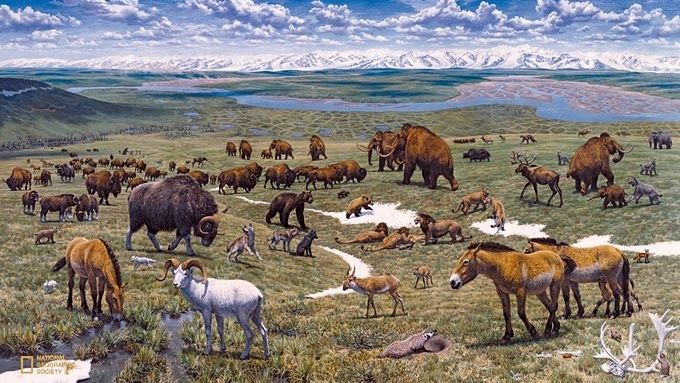
Picture a version of North America where enormous, shaggy elephants thunder across open grasslands, wolf packs the size of small armies chase down camels taller than basketball hoops, and a bear the size of a pickup truck sprints after its prey at highway speeds. That wasn’t a fantasy world. That was the real North America, just a geological heartbeat ago.
About 50,000 years ago, North America was ruled by megafauna. Lumbering mammoths roamed the tundra, while forests were home to towering mastodons, fierce saber-toothed tigers, and enormous wolves. Honestly, it’s staggering to think about. Before the great extinction, the diversity of large mammals in North America was similar to that of modern Africa. Then, in what amounts to a blink of geological time, nearly all of it was gone.
What were these creatures, exactly? How did they live, and how on earth did they disappear? The answers are as dramatic as the animals themselves. Let’s dive in.
1. The Woolly Mammoth (Mammuthus primigenius): King of the Frozen Plains
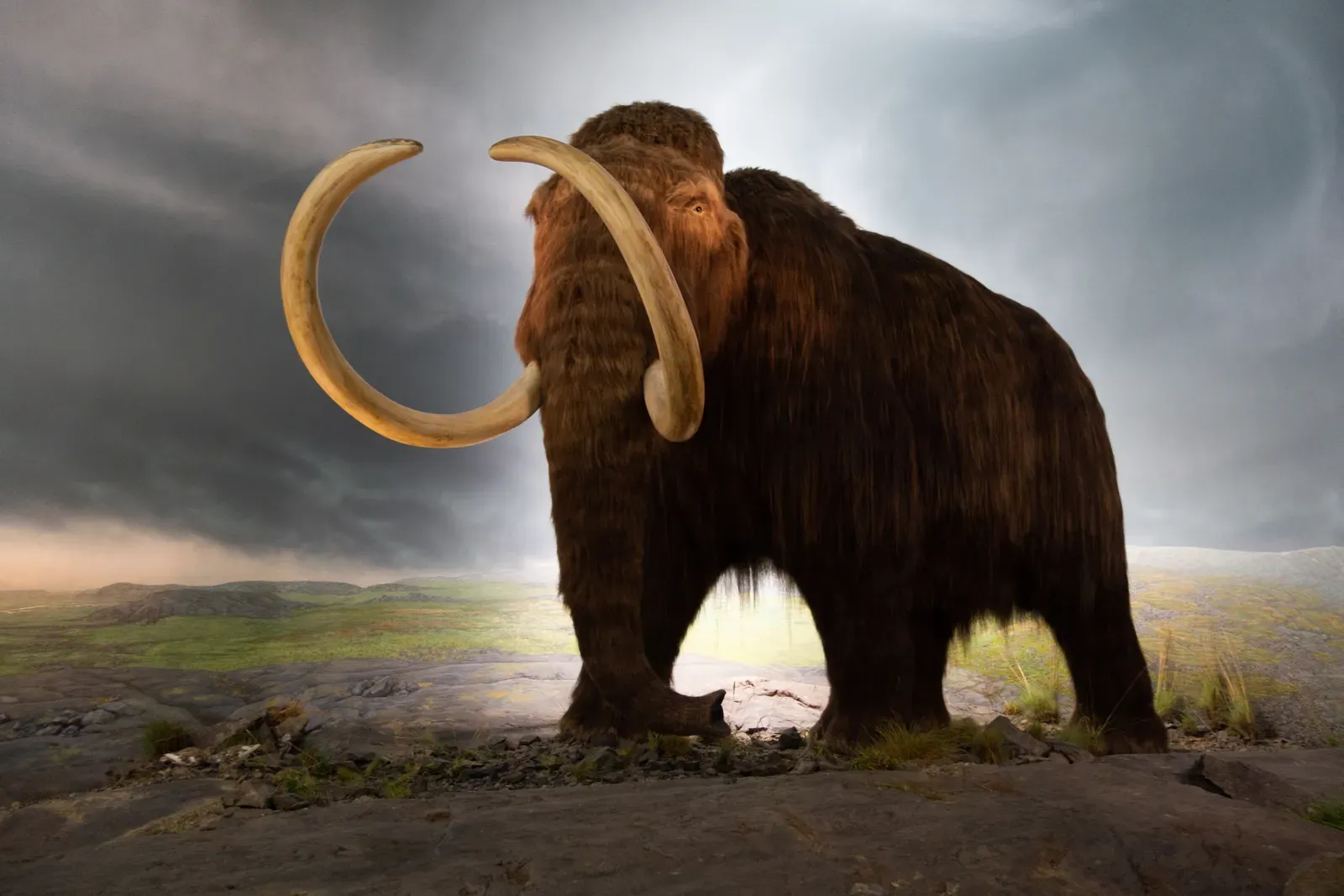
When you think of Ice Age North America, you almost certainly picture this one first. The woolly mammoth is one of the most famous extinct Ice Age megafauna. Standing 12 feet tall at the shoulders and weighing six to eight tons, the woolly mammoth grazed the northern steppes of Ice Age North America using its colossal, 15-foot curved tusks. That’s not a big animal. That’s a living bulldozer.
Mammoths came to North America between 1.7 million and 1.2 million years ago. During icy seasons, these mammals had fatty humps on their backs which likely provided them with nutrients and warmth. It is interesting to note that mammoths share more in common with modern elephants, especially the Asian elephant, than mastodons do. Their extinction, hotly debated, likely involved a combination of climate warming and human hunting pressure as the Pleistocene came to a close.
2. The American Mastodon (Mammut americanum): The Mammoth’s Often-Confused Cousin
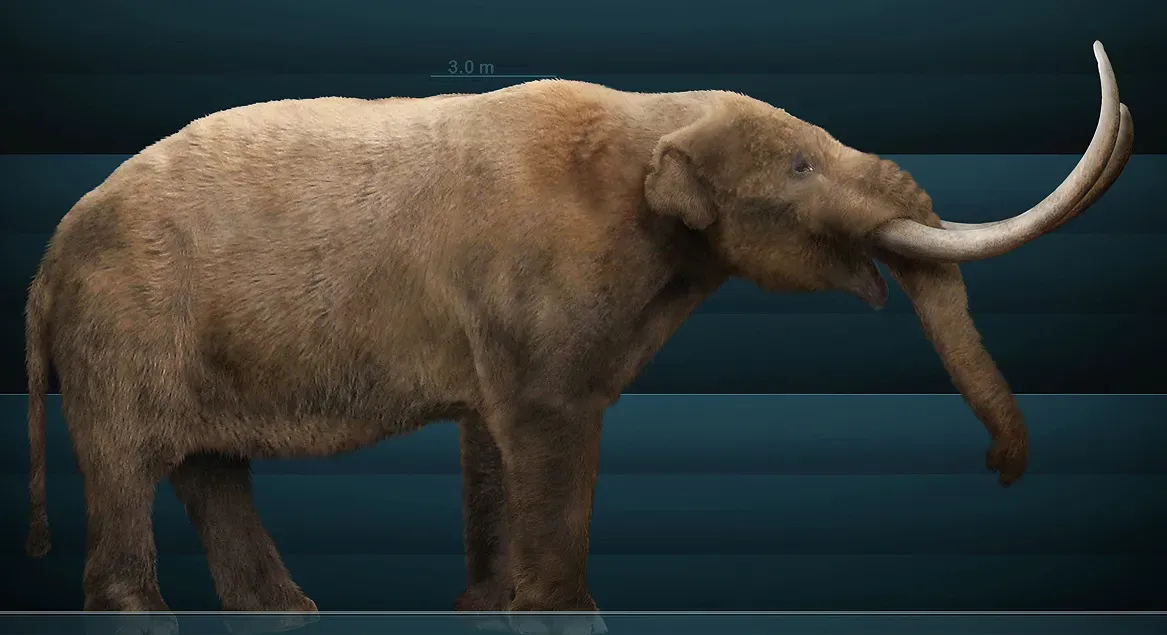
A lot of times, mastodons and mammoths are confused with each other. This is understandable since they are both large, shaggy, elephantine creatures living on the prehistoric plains of North America. Let’s be real though, they were quite different animals. Mastodons resembled mammoths but had longer bodies and shorter legs. Despite the similarities, they weren’t closely related to mammoths or elephants.
Some researchers have argued that out of 36 animals that went extinct, only two – the mammoth and the mastodon – show clear signs of having been hunted, such as cuts on their bones made by stone tools. That’s a fascinating and somewhat haunting detail. A study using mastodon DNA has suggested the animals migrated many times across North America during fluctuations in climate and environment, painting a picture of a resilient but ultimately doomed species.
3. Smilodon (Saber-Toothed Cat): The Most Iconic Predator You Never Want to Meet
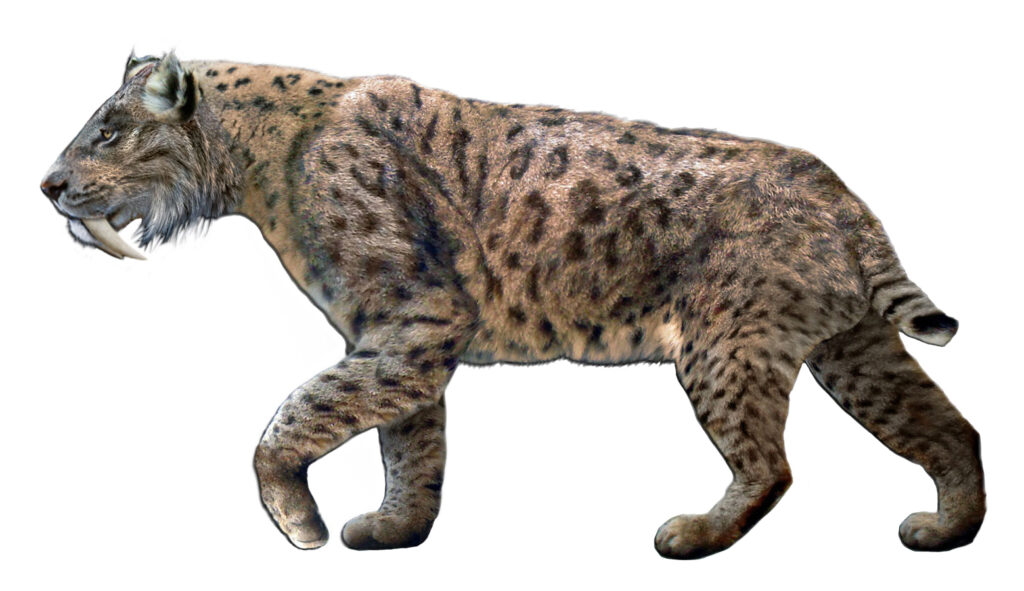
Smilodon is a genus of extinct felids. It is one of the best-known saber-toothed predators and prehistoric mammals. Although commonly known as the saber-toothed tiger, it was not closely related to the tiger or other modern cats, belonging to the extinct subfamily Machairodontinae. Those iconic canine teeth? Its immense upper canine teeth, up to 20 cm (8 inches) long, were probably used for stabbing and slashing attacks, possibly on large herbivores such as the mastodon.
The bones of many Smilodon specimens have been recovered from the La Brea Tar Pits in Los Angeles, California; the cats were apparently mired in the tar as they preyed on other animals that had also become trapped. I think this detail is one of the most poetic in all of paleontology. The social behavior of these feline predators is a highly debated topic. Scientists have found fossils of multiple individuals in close proximity at the La Brea Tar Pits, suggesting that other cats were attracted to the dangerous liquid asphalt when one of them got trapped – which is potential evidence that Smilodon may have lived in groups.
4. The Giant Short-Faced Bear (Arctodus simus): The Fastest Bear That Ever Lived
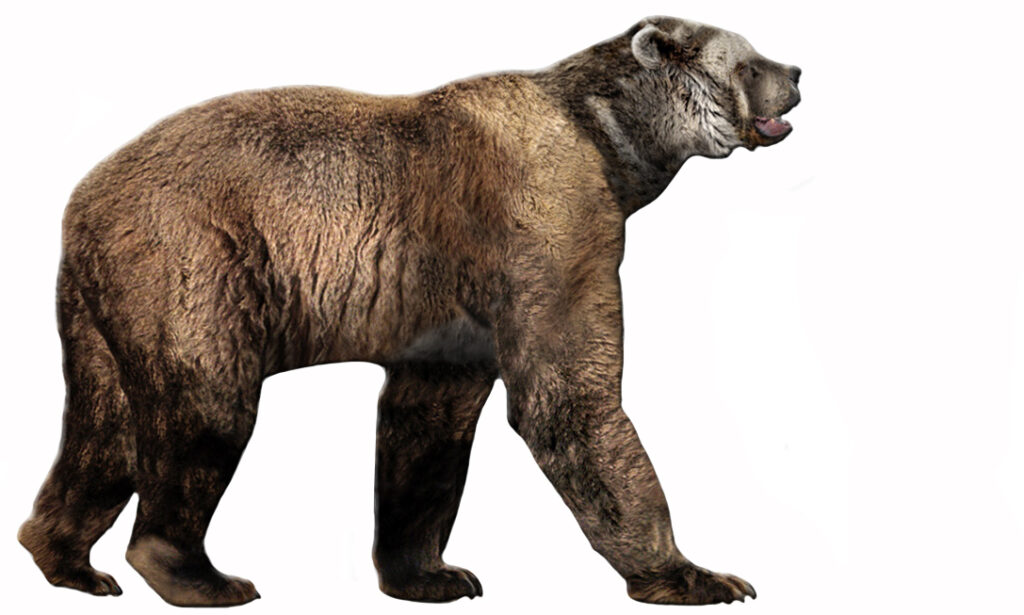
The giant short-faced bear was the largest carnivorous mammal to ever roam North America. Standing on its hind legs, an adult giant short-faced bear boasted a vertical reach of more than 14 feet. Just pause and picture that for a second. That’s taller than most rooms you’ve ever stood in. The most striking difference between modern North American bears and the giant short-faced bear were its long, lean, and muscular legs.
The short-faced bear was once the most plentiful bear in California, but the pug-nosed species did not survive into the modern era. Paleontologists calculate, based on skeletal remains, that this bear could reach speeds topping 40 miles per hour, making it the fastest bear to ever live. North America also supported other large carnivores including the dire wolf and the American lion alongside this formidable creature, making the prehistoric continent a gauntlet of predators we can barely imagine today.
5. The Dire Wolf (Aenocyon dirus): The Real Wolf Behind the Legend
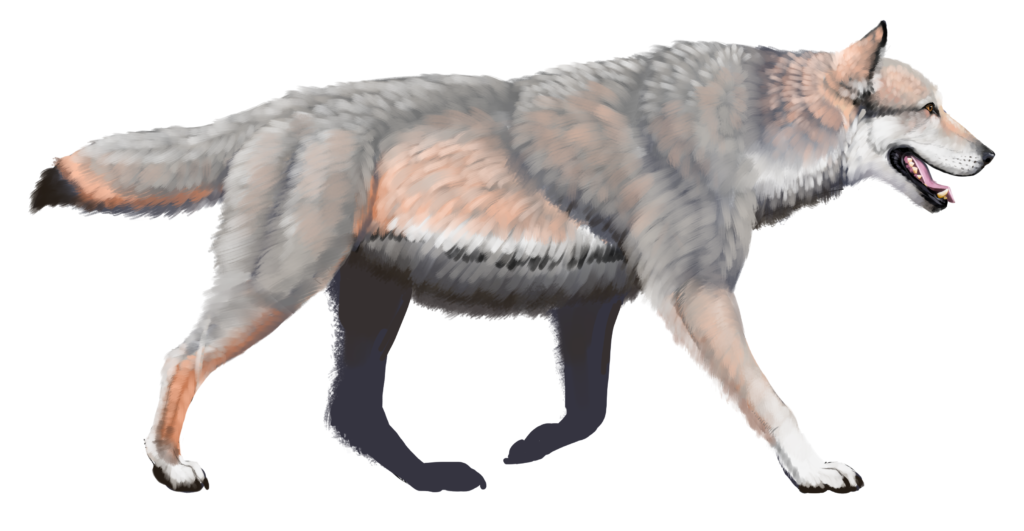
Dire wolves are the largest of the Genus Canis group, which includes wolves, coyotes, jackals, and domestic dogs. Game of Thrones didn’t invent the dire wolf breed – in North America, they actually existed. Although dire wolves went extinct about 13,000 years ago, their bones are abundant in California’s La Brea Tar Pits and Wyoming’s Natural Trap Cave. More remains of dire wolves have been pulled from La Brea than any other mammal species found there.
Ancient DNA studies have revealed that the dire wolf was less of a wolf than a super-sized, ferocious coyote. Like gray wolves, dire wolves hunted in packs of 30 or more and fed on large prey like mammoths, giant sloths, and Ice Age horses. Its skull could reach up to 12 inches in length, and its teeth were larger than today’s gray wolves. It’s hard to say for sure exactly how they coordinated hunts, but the evidence strongly suggests they were formidable pack hunters capable of taking down the continent’s largest animals.
6. The Giant Ground Sloth (Megalonyx jeffersonii): Jefferson’s Gentle Giant
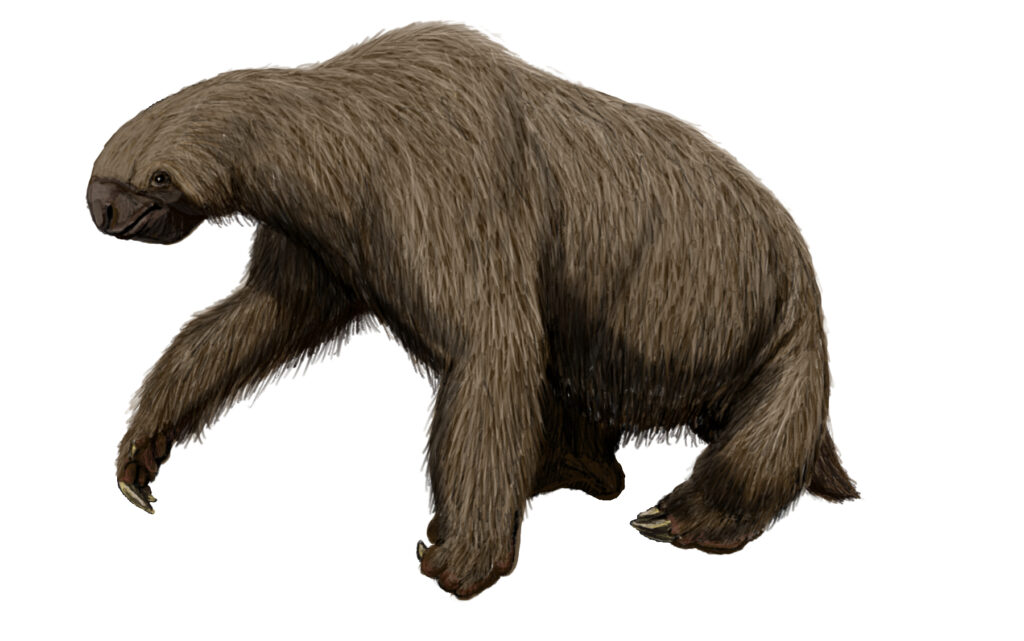
The giant ground sloths of the late Pleistocene were bear-sized herbivores that stood 12 feet on their hind legs and weighed up to 3,000 pounds. One species, Jefferson’s ground sloth, was named for Thomas Jefferson, who initially believed the fossils were a type of colossal cat. Yes, that Thomas Jefferson. The first Megalonyx fossils were described by President Thomas Jefferson in 1797, which he thought originally belonged to a giant lion – sometimes this sloth is referred to as “Jefferson’s ground sloth.”
Megalonyx jeffersonii ranged over much of North America, with its range spanning nearly the whole contiguous United States and parts of southern Canada, with some remains known as far south as central Mexico. Their remains have been found as far north as Alaska and the Yukon during interglacial intervals. Ground sloths had elongated claws like modern sloths, which they would have used to strip leaves and dig for roots. DNA analysis indicates that all extinct North American ground sloths, including the massive Harlan’s ground sloth, originated in South America and migrated north.
7. The Glyptodon: Nature’s Living Tank
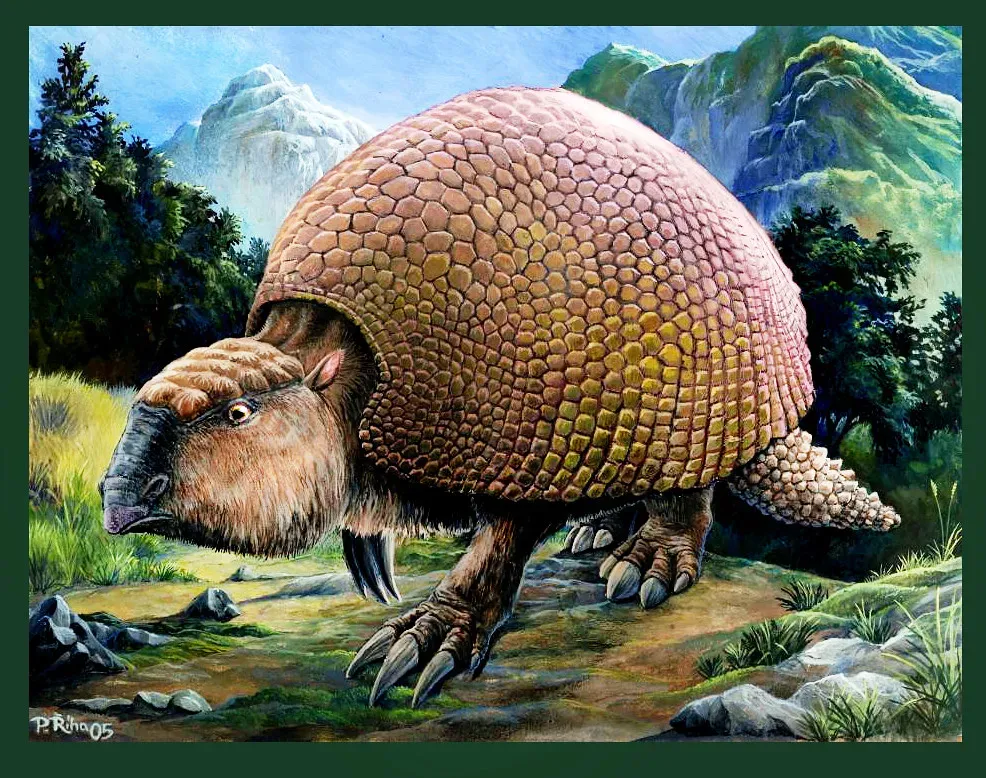
The creature we have come to know as the Glyptodon looked like a giant version of its distant relative, the armadillo. The shell of Glyptodon was made of bony plates, just like an armadillo. Now imagine that armadillo scaled up to the size of a small car. From South America, this armored, one-ton creature probably traveled across the Isthmus of Panama to North America. Glyptodon flourished in what is now coastal Texas and Florida about 2 million years ago.
Glyptodon looked like a supersize version of its distant relative, the armadillo. Like its cousin, Glyptodon protected itself with a shell made of bony plates. The armored, 1-ton creature likely traveled to North America from South America via the Isthmus of Panama. Overhunting by humans caused the last glyptodons to die out shortly after the last Ice Age, which tells you something sobering about how much damage early human populations could inflict on animals that had no evolutionary reason to fear them.
8. The Ancient North American Horse (Equus): The Original Mustang
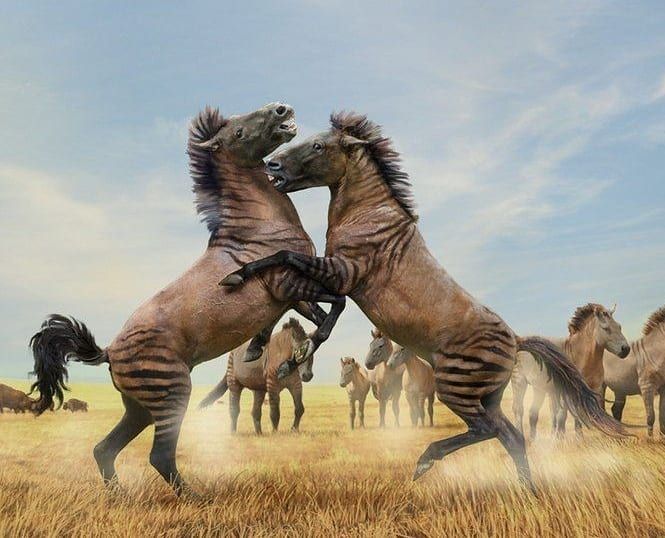
Here’s something most people don’t know: horses didn’t come to North America with the Spanish. They evolved here. It’s now clear that indigenous horses roamed North America for 55 million years before going extinct along with other Ice Age megafauna roughly 10,000 years ago. One of the oldest and most widespread ancient horse species in North America was the American zebra, also known as the Hagerman horse. The American zebra is the oldest known member of the genus Equus, which includes all modern horses, both wild and domesticated.
The American zebra stood around five feet tall at the shoulders, had a stocky build, and faint stripes along its neck and flank. Around 2 to 3 million years ago, herds of American horses traveled west over the land bridge into Asia, eventually spreading to Africa. Those ancient horses were the distant ancestors of the domesticated horses that the Spanish re-introduced to North America 500 years ago. So, in a very real sense, the horses galloping across the American plains today are a homecoming, not an invasion.
9. The American Camel (Camelops hesternus): Yesterday’s Camel
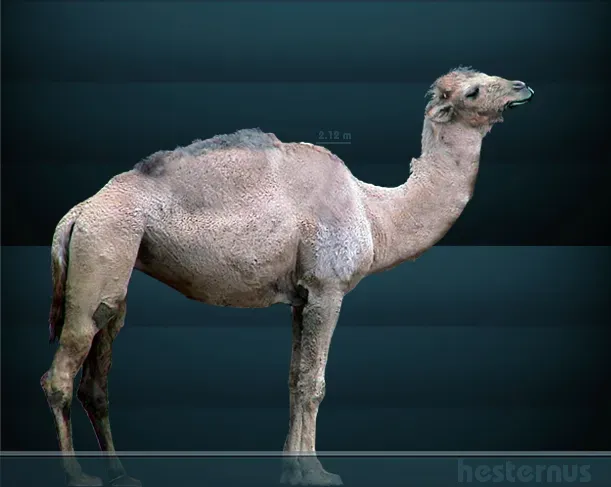
Think camels are strictly an Old World animal? Think again. The very first camels on the planet evolved in North America around 44 million years ago. Those ancient camels migrated westward over the Bering land bridge around 7 million years ago, later becoming the one-humped and two-humped camels of North Africa and Asia. Other ancient species of North American camels migrated south and became the llamas and alpacas of South America.
One of the most widespread camel species in Ice Age North America was the Camelops, or “yesterday’s camel.” This two-toed, furry camel stood seven feet tall at its shoulders, weighed 1,800 pounds, and had no hump at all. The Camelops could travel long distances on its long and lean legs, but it’s not clear if they could survive long periods without water like modern camels. Two different genera of camelids have been identified from late Pleistocene fossil deposits, and fossils of the ancient camel make up roughly one third of the total large Pleistocene mammals identified at some sites.
10. The American Cheetah (Miracinonyx): The Speedster of the Pleistocene Plains
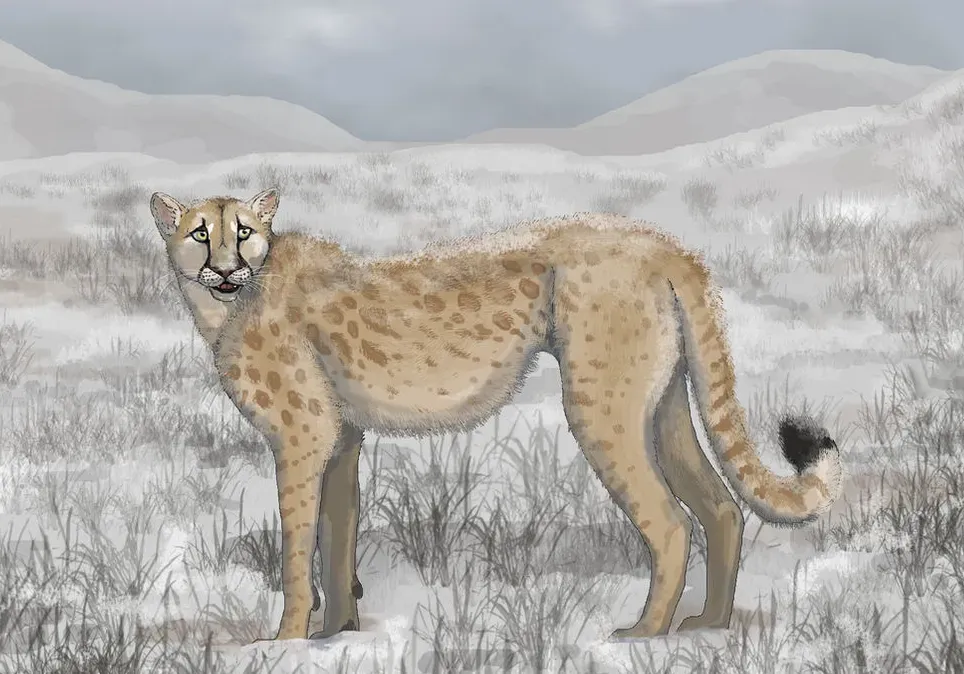
The American Cheetah lived in North America before the last Ice Age. Its bones have been discovered from West Virginia to Arizona and even Wyoming. Thousands of years ago, snow leopard-like cheetahs hunted mountain goats across tricky terrain in America, according to fossilized remains. That image, a sleek, fast cat threading through rocky mountain terrain, is something straight out of a nature documentary that never got made.
Extinct giants such as the American cheetah and ground sloth lived in North America until they mysteriously died out about 10,000 years ago. The American cheetah is thought to have been remarkably similar in build and speed to its African counterpart, which raises one of prehistory’s great ecological puzzles: why did speed evolve so dramatically in North American predators? The most likely answer is that this continent’s prey animals were themselves extraordinarily fast, creating a kind of prehistoric arms race. Between 15,000 and 10,000 years ago in North America, a megafaunal extinction event claimed up to 34 genera of large mammals, including various large predators such as saber-toothed cats and dire wolves, and the American cheetah vanished along with them.
11. The Giant Beaver (Castoroides ohioensis): The Rodent That Defied All Logic
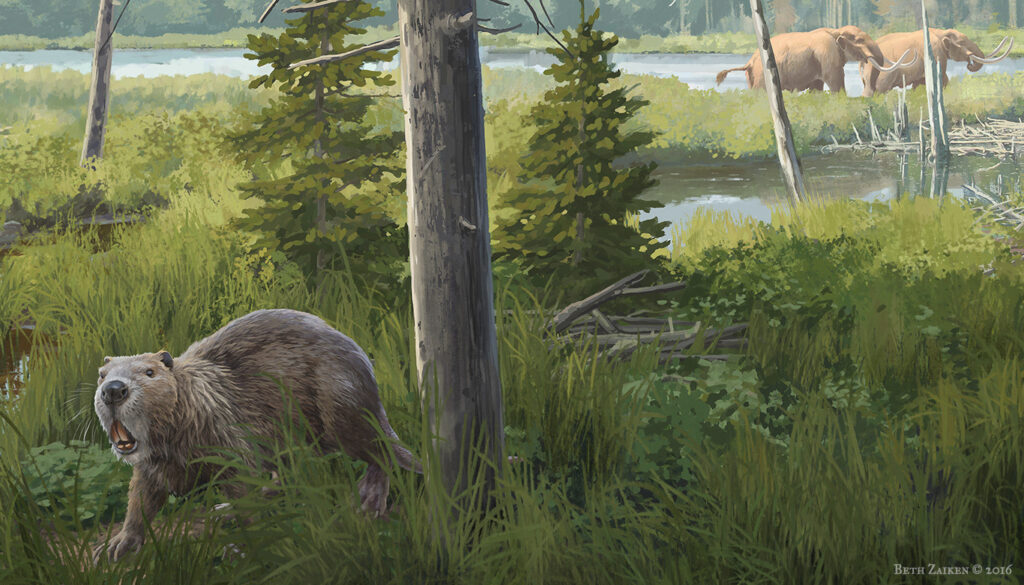
Giant beavers were once found in North America. The animal was part of the megafauna, or giant animals living in North America during and after the last ice age. This rodent was the largest ever found in North America. In size, it was comparable to a black bear. A beaver the size of a black bear. Let that sink in for a moment. An aquatic plant-eating animal, the giant beaver lived in lakes and ponds.
Until about 11,000 years ago, mammoths, giant beavers, and other massive mammals roamed North America. The end of the Pleistocene was marked by the extinction of many genera of large mammals, including mammoths, mastodons, ground sloths, and giant beavers. Unlike many of its megafaunal companions, the giant beaver’s extinction wasn’t about being a dangerous predator’s prey. It was more likely about habitat loss as warming climates dried up the wetland ecosystems it depended on. Nature, it turns out, is not always kind, even to the harmless ones.
A Lost World, and a Warning Worth Heeding
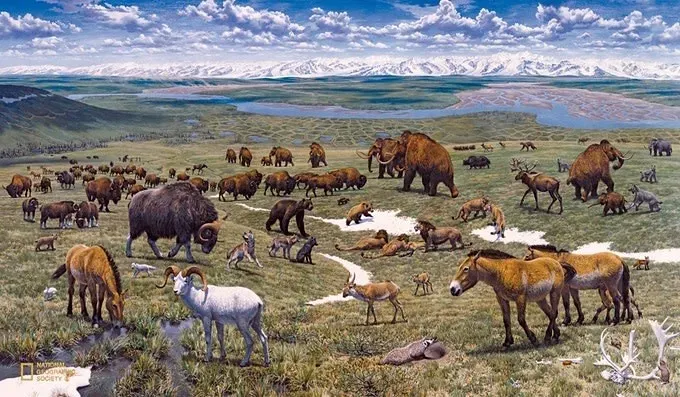
What happened to all these extraordinary animals? The honest answer is that scientists are still arguing about it. The extinction event is most distinct in North America, where 32 genera of large mammals vanished during an interval of about 2,000 years, centred around 11,000 years before present. The cause of the extinctions has been vigorously debated, with two main hypotheses: the extinctions were the result of overpredation by human hunters, or they were the result of abrupt climatic and vegetation changes during the last glacial-interglacial transition.
Data suggests that human hunting of large mammals, likely together with climate change at the end of the Pleistocene, led to the extinction of megafauna in North America. It was probably both, working in terrible combination. Before this extinction, the diversity of large mammals in North America was similar to that of modern Africa. As a result of the extinction, relatively few large mammals are now found in North America. We went from African savanna-level richness to what you see today, white-tailed deer, the occasional black bear, and a bison population that nearly went the same way.
These 11 creatures are a reminder that the natural world we take for granted is not the natural world that existed. It is a diminished, quieter version of something far more spectacular. The conservation status of large-bodied mammals today is dire, and their decline has serious consequences because they have unique ecological roles not replicated by smaller-bodied animals. That lesson from the Pleistocene feels more relevant now than ever.
What do you find most surprising about North America’s lost megafauna? Tell us in the comments below.