When you picture the distant past, your mind probably jumps straight to dinosaurs. T. rex, Triceratops, Brachiosaurus – the usual suspects. But here’s the thing: long before any of those giants ever set foot on Earth, a completely different cast of creatures was already running the show. We’re talking about an era so ancient it makes the Jurassic look recent, a world where sprawling proto-mammals, saber-toothed hunters, and bizarre sail-backed predators dominated every ecosystem on the planet.
Before dinosaurs ruled the Earth, at the end of the Palaeozoic Era, the land was dominated by the synapsids. The Permian period lasted from 299 to 251 million years ago and produced the first large plant-eating and meat-eating animals. These creatures weren’t just warm-up acts. They were the true rulers of their time, and some of them were every bit as terrifying, fascinating, and strange as anything the Age of Dinosaurs ever produced. Let’s dive in.
Dimetrodon: The Sail-Backed Predator Everyone Mistakes for a Dinosaur
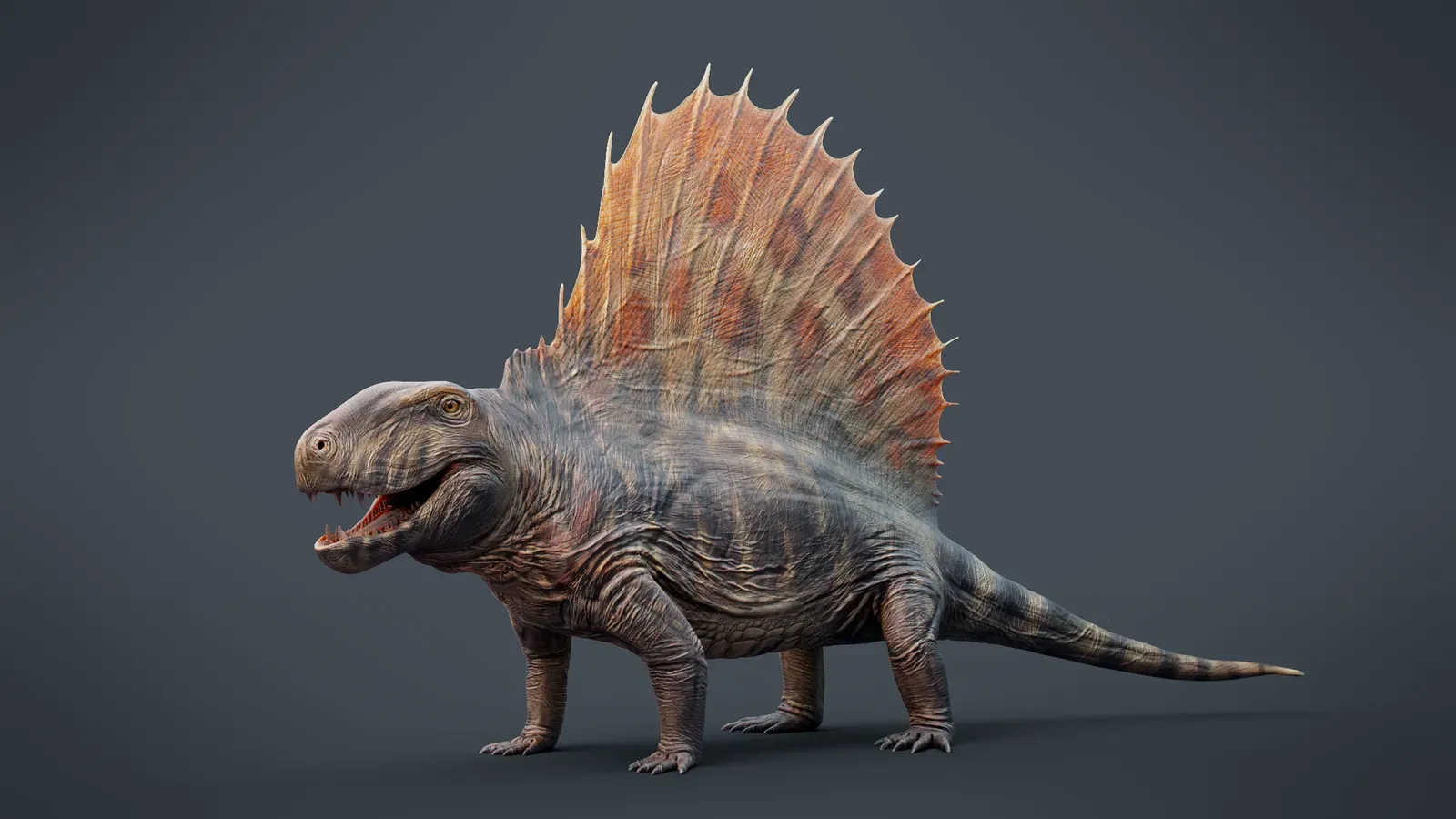
If you’ve ever seen a Dimetrodon toy in a dinosaur playset, you’ve witnessed one of paleontology’s most persistent mix-ups. Honestly, it’s not your fault. This had led to the sadly still common misconception that Dimetrodon is a type of dinosaur, when really it falls nowhere near dinosaurs in the vertebrate tree of life and is more closely related to you and I. Think about that for a second. The creature with the giant fin on its back is closer to a modern human than it is to a T. rex.
With most species measuring between roughly 1.7 to 4.6 meters long and weighing between 28 and 250 kilograms, the most prominent feature of Dimetrodon is the large neural spine sail on its back formed by elongated spines extending from the vertebrae. Palaeontologists continue to debate whether these sails were devices for display or for thermoregulation, acting like big solar panels to warm the blood. Either way, Dimetrodon was the apex predator of its swampy ecosystem, and nothing in its world dared to challenge it.
Inostrancevia: The Original Saber-Tooth
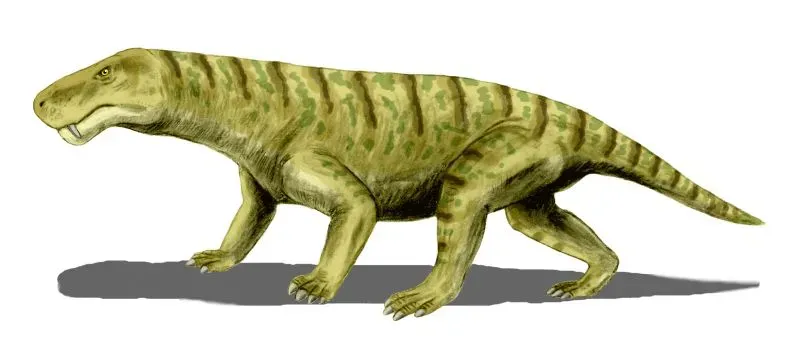
Forget Smilodon. Long before the famous saber-toothed cat prowled the ice age plains, a creature called Inostrancevia was already doing the same job with terrifying efficiency. Gorgonopsians were one of the first groups of animals ever to evolve a saber-toothed morphology, and they did it roughly 250 million years before Smilodon. That is a mind-bending amount of evolutionary foreshadowing.
Earlier gorgonopsids in the Middle Permian were quite small, but some later genera attained massive, bear-like sizes, with the largest being Inostrancevia, reaching up to 3.5 meters in length and 300 kilograms in body mass. For hunting large prey, they possibly used a bite-and-retreat tactic, ambushing and taking a debilitating bite out of the target, and following it at a safe distance before its injuries exhausted it, whereupon the gorgonopsian would grapple the animal and deliver a killing bite. Cold, calculated, and lethal. You wouldn’t want to meet this one in the Permian dark.
Lystrosaurus: Earth’s Most Dominant Survivor
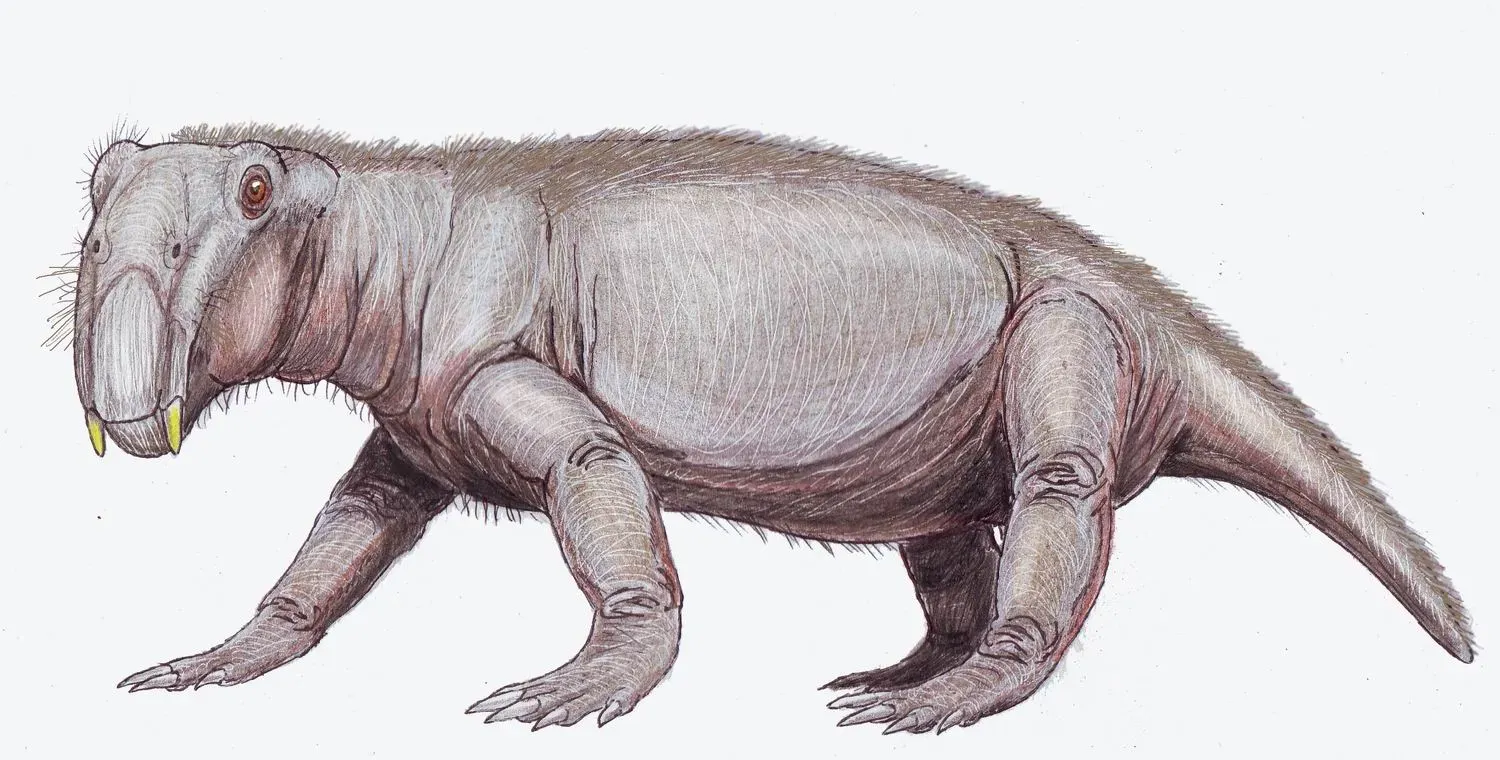
Here’s a creature that, by all rights, should have been just another extinction casualty. Instead, Lystrosaurus became arguably the most successful land animal in the history of life. The remarkable thing about Lystrosaurus is that it not only was one of the survivors of the Great Dying, the worst mass extinction in Earth’s history, but it thrived through the transition, representing 95% of fossils in boundary deposits. Imagine one species making up virtually all of the land animal life on an entire planet. Wild.
They ranged in size from that of a small dog to about 2.5 meters long. As a dicynodont, Lystrosaurus had only two teeth, a pair of tusk-like canines, and is thought to have had a horny beak that was used for biting off pieces of vegetation. It was a burrower, so it could hide out underground to wait out particularly harsh apocalypse conditions, and it may have been already adapted to a low-oxygen environment since burrows are not known for their circulation. Tougher than it looks, this little survivor outlasted almost everything.
Moschops: The Barrel-Bodied Giant Grazer
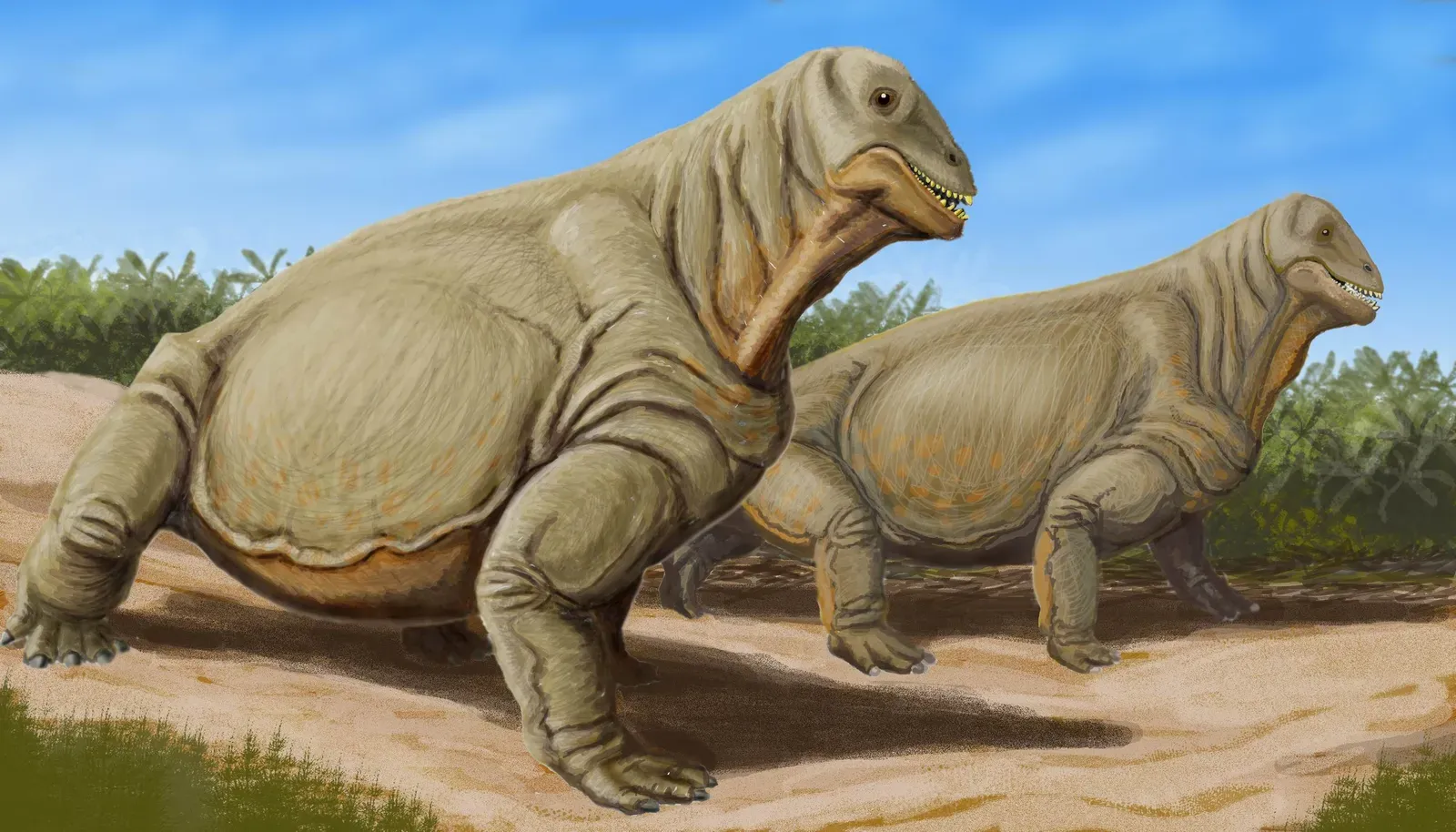
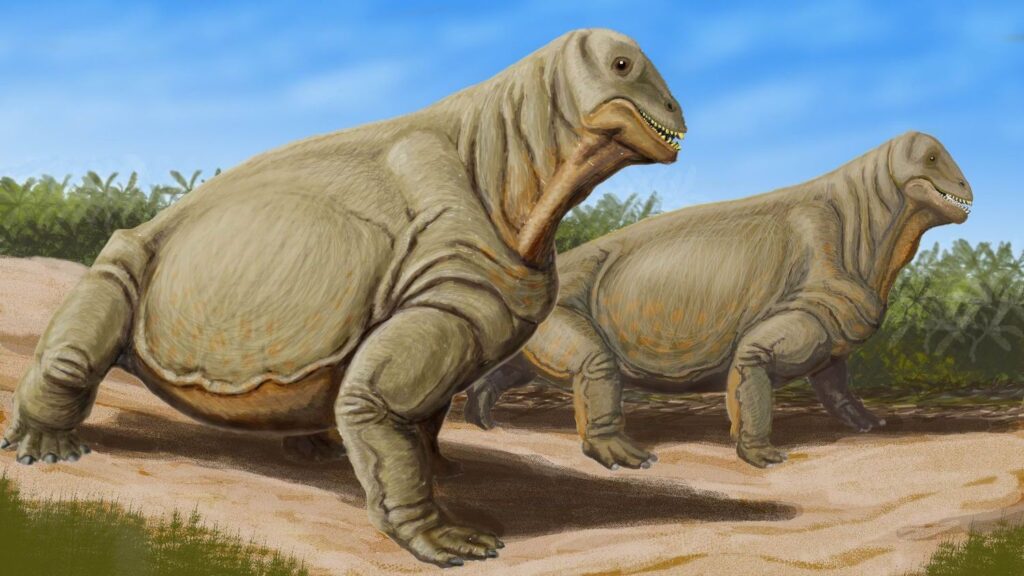
Picture an animal with the face of something vaguely dog-like, a body shaped roughly like a barrel on legs, a disproportionately thick skull, and a surprisingly docile diet of plants. That’s Moschops. The therapsids, a more advanced group of synapsids, appeared during the Middle Permian and included the largest terrestrial animals in the Middle and Late Permian, ranging from small animals the size of a rat all the way up to large, bulky herbivores of a ton or more in weight, such as Moschops.
Moschops lived in what is now South Africa during the Middle Permian and was one of the dominant plant-eaters of its time. Its extraordinarily thick skull bones suggest it may have engaged in head-butting contests with rivals, much like modern musk oxen do today. Dinocephalians, the group Moschops belonged to, included both carnivores and herbivores, were large, and some carnivores had semi-erect hindlimbs, but all dinocephalians had sprawling forelimbs. It may not have been elegant, but in its world, Moschops was a force to be reckoned with.
Cynognathus: The Wolf That Wasn’t
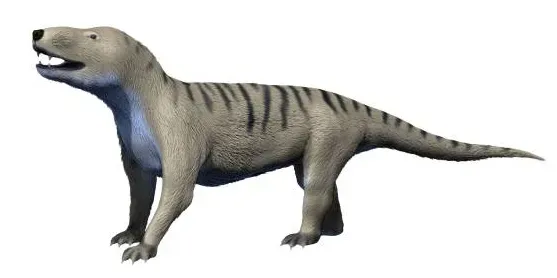
If you had encountered Cynognathus on an ancient riverbank, your first instinct might have been to back away slowly, because it looked surprisingly like a large, powerful dog. In reality, it was something far more interesting. Cynognathus was a carnivorous mammal-like cynodont from the Early Triassic. The cynodont Cynognathus was a characteristic top predator in the Olenekian and Anisian of Gondwana, meaning it ruled vast stretches of the ancient supercontinent.
The cynodonts, a theriodont group that arose in the late Permian, include the ancestors of all mammals. Their mammal-like features include further reduction in the number of bones in the lower jaw, a secondary bony palate, cheek teeth with a complex pattern in the crowns, and a brain that filled the endocranial cavity. Cynognathus was near the top of this remarkable lineage, positioned right in the middle of the bridge between ancient synapsids and true mammals. It’s hard not to feel a certain awe knowing your own ancestry traces back through creatures like this one.
Anteosaurus: The Permian’s Most Terrifying Predator
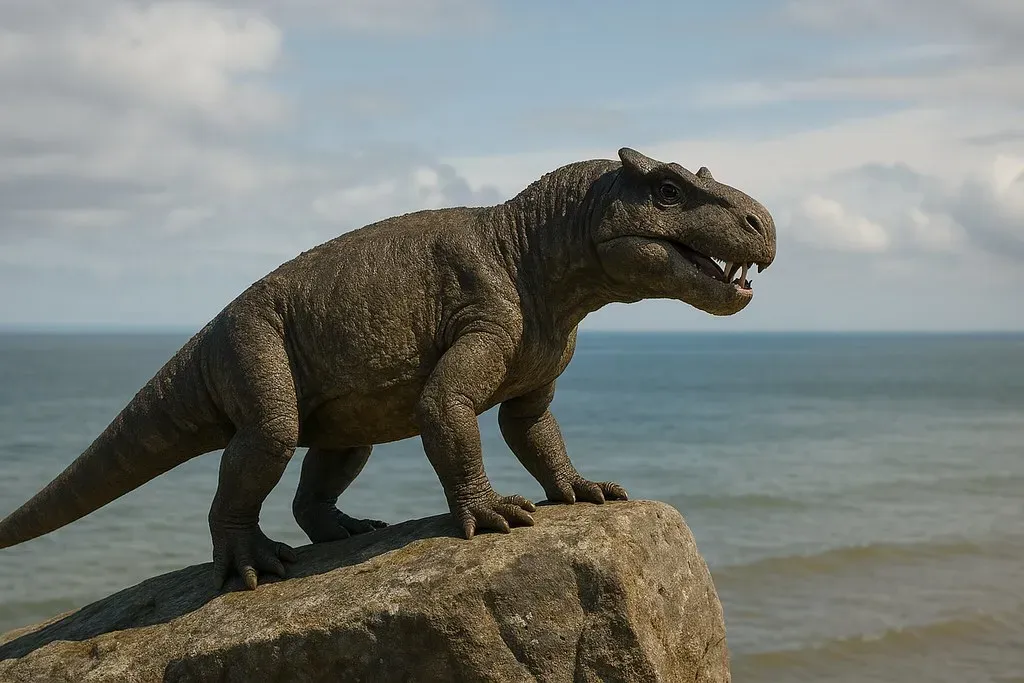
Anteosaurus doesn’t get nearly enough attention in popular science, and that’s a genuine shame. Dinocephalians, meaning “terrible heads,” included both carnivores and herbivores, and were large, with Anteosaurus reaching up to about 6 meters long. To put that in perspective, that’s bigger than most modern crocodiles, and Anteosaurus was built for killing. It was a Middle Permian predator that sat firmly at the very top of its food chain.
Anteosaurus possessed a heavily reinforced skull, and some researchers believe its thick, dome-like head was used for intraspecies combat, possibly ramming rivals in contests over territory or mates. Think of it as the Permian’s answer to a monstrous, skull-bashing, land-going predator. The Middle Permian faunas of South Africa and Russia were dominated by therapsids, most abundantly by the diverse Dinocephalia. Dinocephalians became extinct at the end of the Middle Permian during the Capitanian mass extinction event. Anteosaurus never made it to the end of the Permian, but for its time, it was a true apex killer.
Dicynodon: The Tusked Herb-Browser That Conquered the World
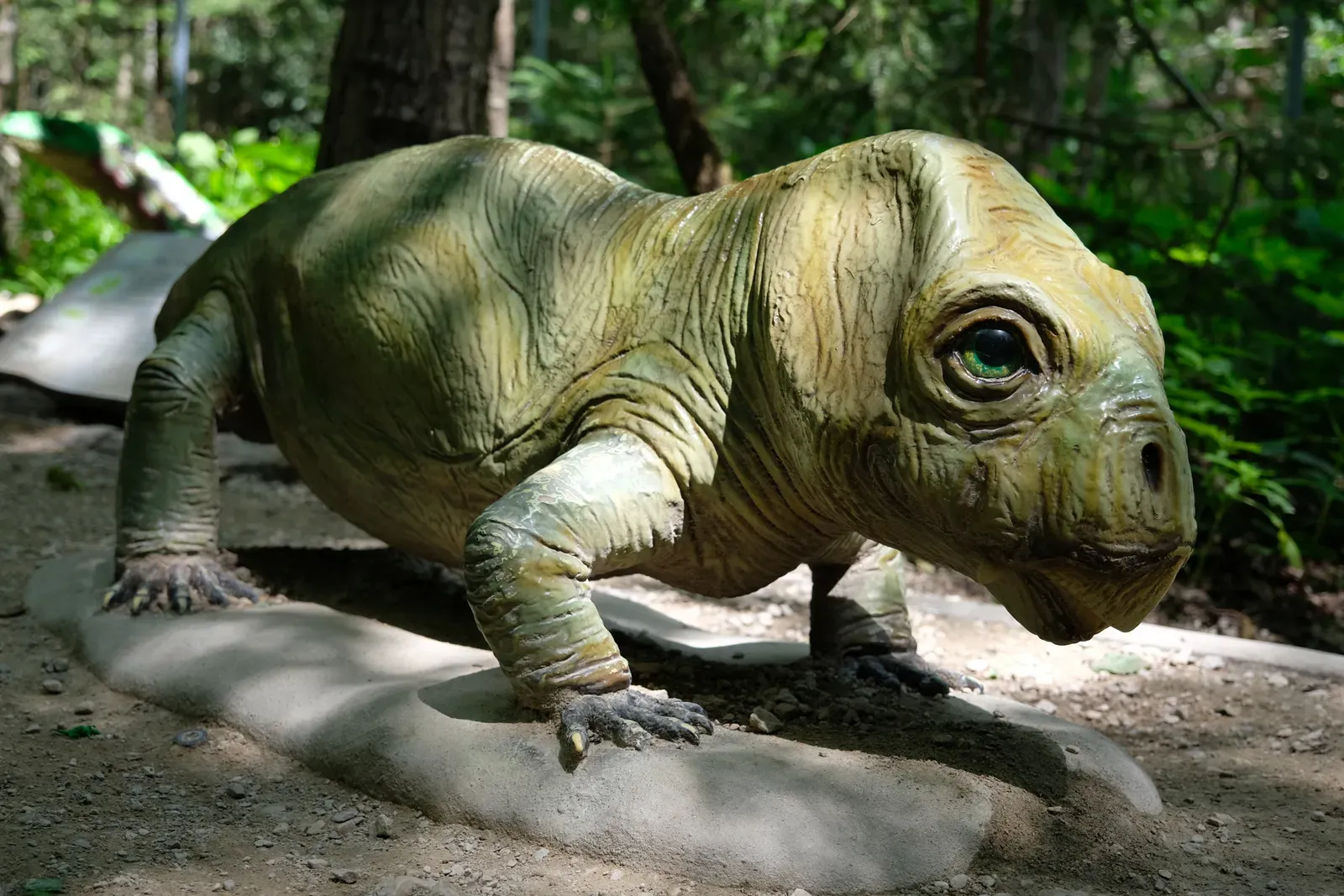
You might not expect a chubby, toothless, beak-faced herbivore to be among the most successful animals in Earth’s history. Yet Dicynodon and its relatives were everywhere. A notable therapsid side branch was that of the herbivorous dicynodonts, or “two-tuskers,” in which upper canines were retained but the other teeth were replaced by a horny bill. It’s an odd design, almost like a prehistoric cross between a turtle and a pig, but it clearly worked.
Late Permian faunas are dominated by advanced therapsids such as the predatory sabertoothed gorgonopsians and herbivorous beaked dicynodonts, alongside large herbivorous pareiasaur parareptiles. Dicynodonts were the most common large herbivores of the Permian, filling the same ecological role that deer, cattle, and hippos fill today. Dicynodonts came in all sizes, from the foot-long Myosaurus to the elephant-sized Lisowicia, but they all shared the same roly-poly, semi-sprawling body plan. There’s something charming, honestly, about a group this weird being this dominant for this long.
Thrinaxodon: The Burrowing Ancestor You Never Knew You Had
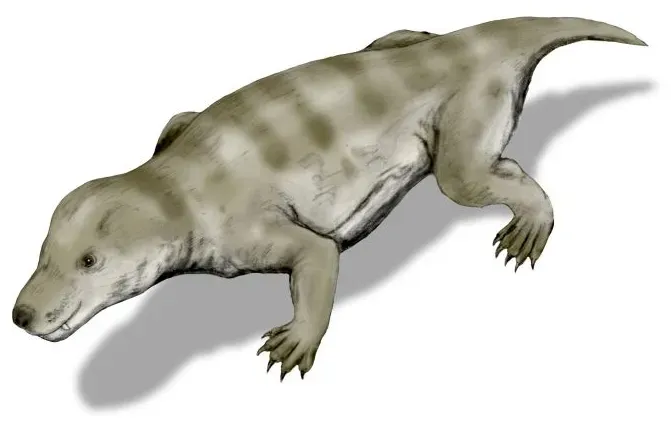
Small, unassuming, and surprisingly social, Thrinaxodon is one of those creatures that doesn’t look like much at first glance. But its importance to our own evolutionary story is enormous. Multi-chambered burrows have been found containing as many as 20 skeletons of the Early Triassic cynodont Trirachodon, and the animals are thought to have been drowned by a flash flood. The extensive shared burrows indicate that these animals were capable of complex social behaviors. Thrinaxodon belonged to the same cynodont group, sharing many of these traits.
Cynodonts are a group of advanced therapsids that were the closest relatives to mammals. They possessed many mammal-like characteristics, such as a secondary palate and a more complex jaw structure. Thrinaxodon was among the earliest cynodonts to show these traits clearly in the fossil record, and researchers have long studied its snout foramina as possible evidence of whiskers. It is thought that a nocturnal lifestyle is what actually propelled the development of fur coats in this group, because in therapsids endothermy appeared before fur did. It’s almost poetic that the animal who helped set the stage for every furry creature alive today was itself a modest, burrowing little survivor.
Edaphosaurus: The Peaceful Sail-Backed Grazer
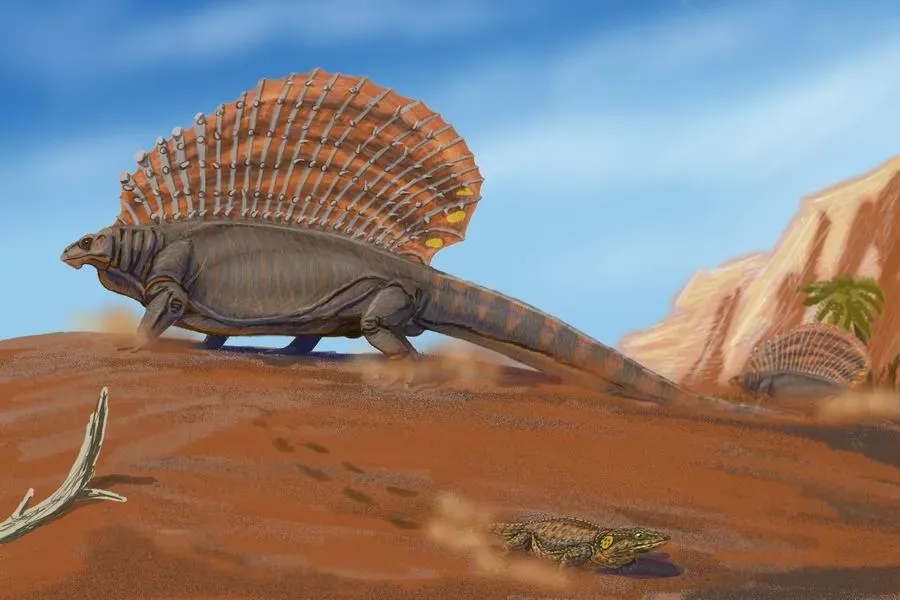
Often overshadowed by its more famous sail-backed cousin Dimetrodon, Edaphosaurus deserves its own moment in the spotlight. While Dimetrodon was a predator, Edaphosaurus took a very different path through life. Just before the appearance of the more advanced therapsids, some groups of early synapsids evolved and occupied most land ecosystems. Both groups shared a tall sail along their backs formed by tall neural spines, which in life was probably covered in skin and had plenty of blood vessels, and although they were still likely ectothermic, this sail was probably used to gain or lose heat more easily.
Edaphosaurus was one of the earliest large plant-eaters among the synapsids, paving the way for the great herds of dicynodonts and other herbivores that would follow millions of years later. Throughout the Permian period, the synapsids included the dominant carnivores and several important herbivores. Edaphosaurus was one of those early plant-processing pioneers, experimenting with herbivory at a time when the world was still figuring out how to be a land ecosystem. I think that deserves a little more credit than it gets.
Gorgonops: The Apex Predator Designed by Nightmares
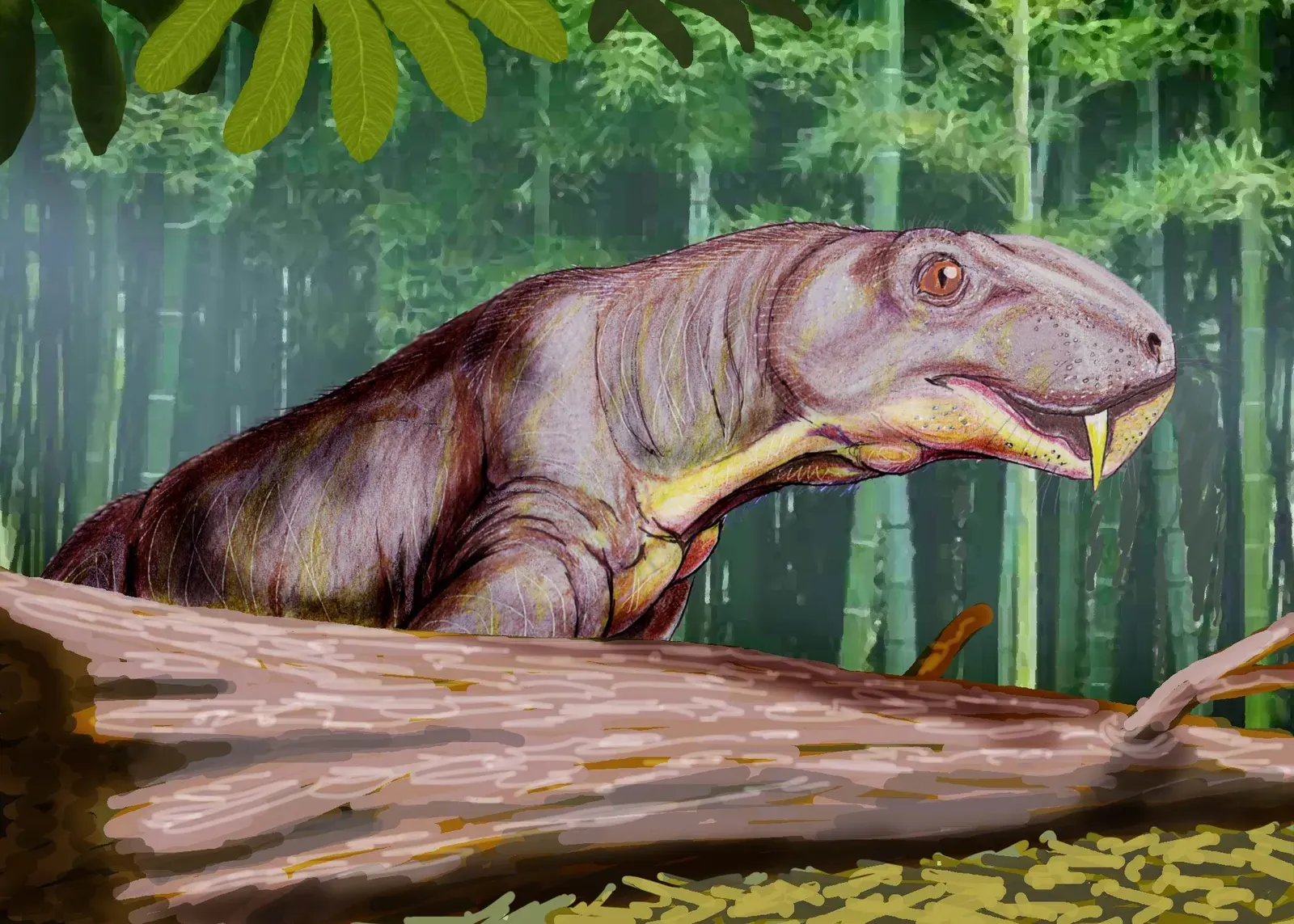
Let’s be real. Gorgonops looks like something a Hollywood creature designer would come up with after a very bad dream. It was a gorgonopsian, one of the late Permian’s most ferocious hunters, and it wore its saber teeth like badges of honor. In the majority of gorgonopsians, the incisors were large and the upper canines were elongated into sabres, much like those of later sabre-toothed cats. Some gorgonopsians had exceptionally long upper canines, such as Inostrancevia, and some of them had a flange on the lower jaw to sheath the tip of the canine while the mouth was closed. These sabres are generally interpreted as having been used as stabbing or slashing weapons, which would have required an extremely wide gape.
Gorgonops had several types of teeth in its jaws and legs that were located directly beneath its body rather than in a sprawling posture, unlike Dimetrodon. It didn’t have a sail and possibly could have regulated its body temperature internally. Gorgonopsians were likely active predators, hunting in a way that would have been remarkably familiar to anyone who has ever watched a large cat stalk its prey. Evolution, it turns out, keeps inventing the same great ideas over and over again.
Cynodont Ancestors: The Bridge Between Two Worlds
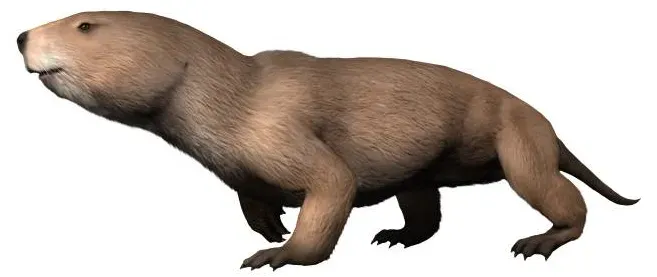
If synapsids are the great hidden chapter of Earth’s history, then the cynodonts are the final, crucial paragraph that ties everything together. Cynodonts, the group of therapsids ancestral to modern mammals, first appeared and gained a worldwide distribution during the Late Permian. They were not one species but an entire lineage, a living bridge stretching from the ancient world of the Permian all the way to the creatures we would recognize today as mammals.
Some synapsids like the predatory gorgonopsians topped the food chain, but another synapsid group called the cynodonts got smaller, moved into the shadows, and managed to endure the terrible extinction at the end of the Permian that extinguished up to 95 per cent of all life. These cynodonts became the immediate ancestors of mammals. During the evolutionary succession from early therapsid to cynodont to eucynodont to mammal, the main lower jaw bone, the dentary, replaced the adjacent bones. The lower jaw gradually became just one large bone, with several of the smaller jaw bones migrating into the inner ear and allowing sophisticated hearing. Every time you hear music or someone whisper your name, you’re using an evolutionary gift that traces back to these ancient, resilient little survivors.
Conclusion
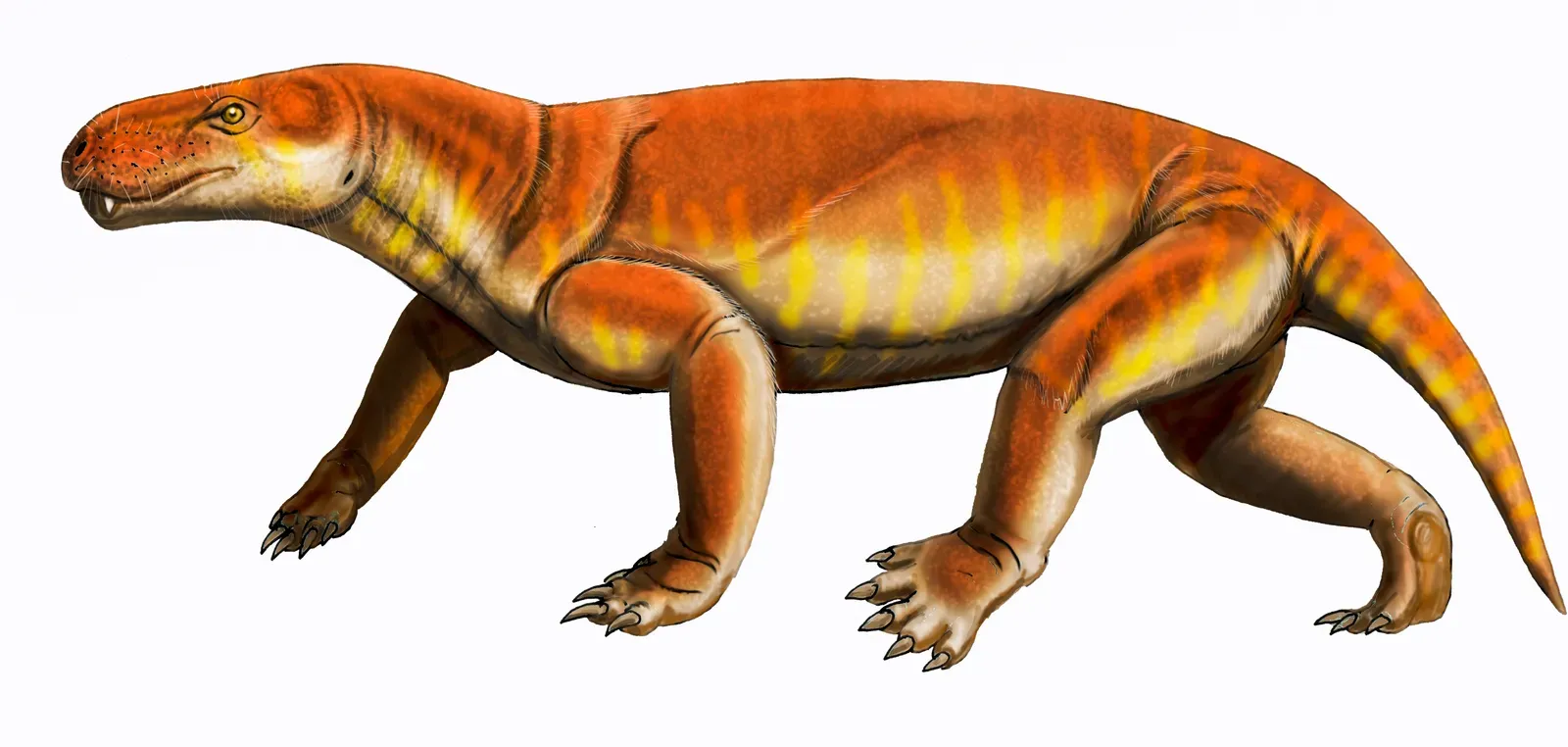
There’s something deeply humbling about the story these eleven creatures tell. Long before T. rex cast its shadow across the Cretaceous, and millions of years before the first dinosaur even drew breath, these remarkable animals had already built complex ecosystems, evolved saber teeth, developed burrowing social communities, and experimented with warm-bloodedness. The synapsids are not just fossils in a museum. They were the pioneers of a completely new way of life, and their development is an impressive demonstration of the complexity and creativity of evolution.
After the extinction of most archosaurs at the end of the Cretaceous period, the surviving synapsids took over the empty ecological niches. Mammals have ruled the world since then, conquering the land, the sea and even the air, but it wouldn’t have been possible without all the different adaptations acquired by early synapsids throughout their evolution. Every mammal alive today, from a blue whale to a mouse to the person reading this article, carries the legacy of these forgotten rulers within its very biology. The next time someone says the “Age of Dinosaurs” was the most exciting chapter in Earth’s story, you’ll know better. What do you think – does the pre-dinosaur world deserve a lot more attention than it gets? Tell us in the comments.