You’d think that with bigger budgets, motion-capture labs, and actual palaeontologists listed in the credits, dinosaur documentaries would have stopped recycling the same embarrassing mistakes by now. They haven’t. The CGI keeps getting sharper, the music keeps getting more dramatic, and the science keeps getting quietly ignored in the same eleven ways it always has.
What’s wild is that many of the corrections aren’t even controversial inside the field – they’re settled by fossils sitting in museum drawers right now. The gap between what researchers know and what viewers actually see on screen has never been more frustrating, or more avoidable. Here’s exactly what palaeontologists wish they could say out loud every time they sit down to watch.
#11 – Treating Every Dinosaur Like a Scaly Lizard
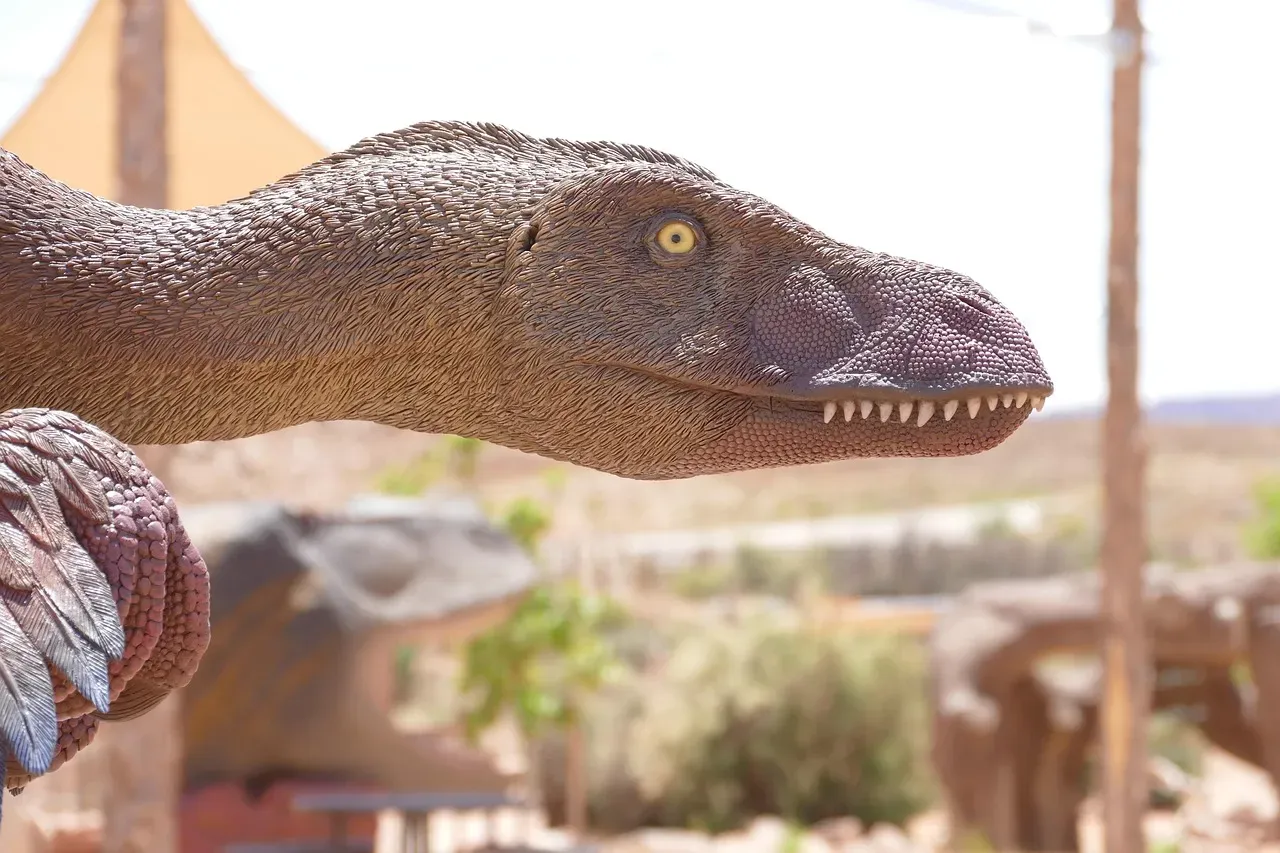
Flip on almost any dinosaur documentary made in the last thirty years and you’ll see it: wall-to-wall reptilian scales, dry and leathery, covering every species from the largest sauropod to the smallest theropod. It looks authoritative. It looks ancient. And for a huge portion of dinosaurs – especially those closest to the bird lineage – it’s almost certainly wrong. Fossil impressions from Liaoning Province in China have been quietly demolishing this assumption since the 1990s, yet the scaly default persists like it owns the place.
The evidence for feathers and proto-feathers isn’t fringe anymore. Scientists found evidence of six quill knobs – locations where feathers are anchored to bone – on the forearm of a Velociraptor fossil. These are the same bony anchor points where the quills of secondary feathers were anchored in modern birds, and quill knobs are found in many living bird species today. Palaeontologists aren’t asking for speculative guesswork here; they’re asking productions to acknowledge what the fossils physically show. Every time a documentary slaps generic scales on a dromaeosaur, it quietly erases one of the most important evolutionary stories in natural history: that birds are living dinosaurs, not distant cousins.
Fast Facts
- Feathered dinosaur fossils have been recovered from Liaoning Province, China since the 1990s
- Six evenly spaced quill knobs were identified on a Velociraptor forearm unearthed in Mongolia in 1998
- The real Velociraptor stood about three feet tall, was roughly five feet long, and weighed about 30 pounds – far smaller than its movie depiction
- Some close relatives of Velociraptor, like Microraptor, had fully-formed wings and were probably capable of true flight
- Scales aren’t wrong for all dinosaurs – large sauropods likely had scaly hides; the error is applying them universally
#10 – Dragging Tails on the Ground Like Lazy Monsters
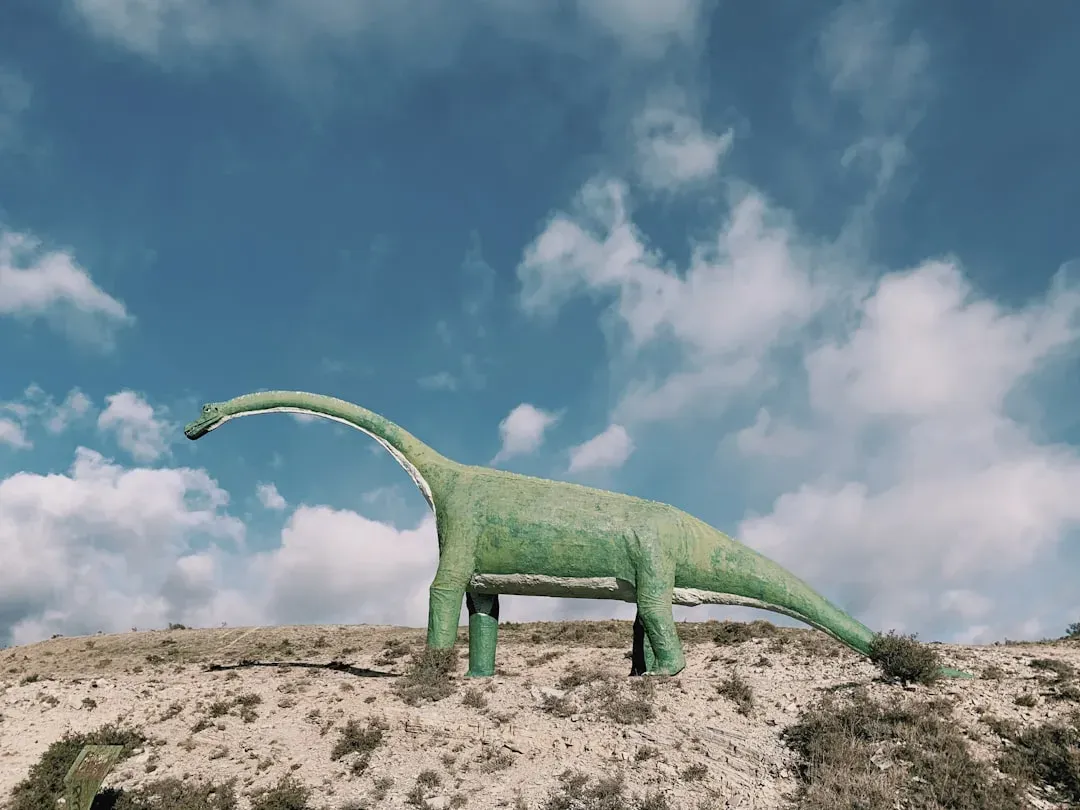
The image is burned into collective memory – a massive sauropod heaving itself forward, its enormous tail carving a trench through the Jurassic mud behind it. It looks powerful. It looks ancient. It also would have snapped vertebrae. Biomechanical modelling has shown repeatedly that the tails of large dinosaurs were held horizontally and aloft, functioning as a dynamic counterbalance to the front of the animal, not as a decorative drag weight. The vertebrae simply weren’t built to sustain that kind of ground contact under the animal’s own mass.
Trackway sites around the world sealed this argument decades ago. Almost no dinosaur trace fossil shows tail drag marks – this was some of the first evidence that dinosaurs held their tails up above the ground. Tail drag troughs are absent from most sauropod trackways, and this evidence, combined with detailed studies of tail anatomy, leads researchers to believe that sauropod tails were carried off the ground. The posture error traces back to early 20th-century museum mounts assembled by people who were working from incomplete skeletons and, frankly, imagining something impressively monstrous. Those mounts got photographed, those photographs shaped the first documentaries, and the myth calcified. Palaeontologists have been correcting it ever since. Productions have been largely ignoring them.
#9 – Making T. rex Arms Seem Completely Useless
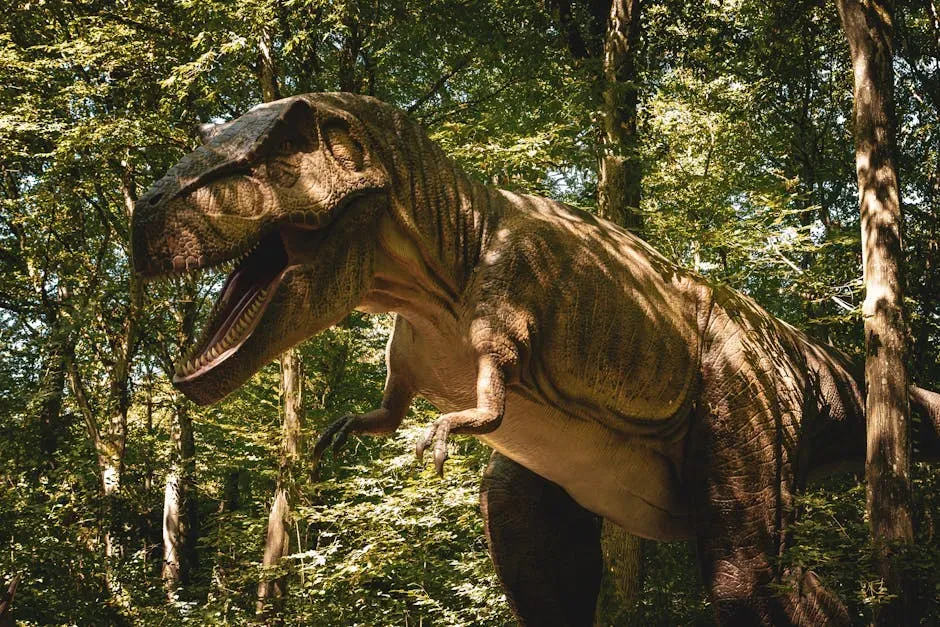
Few documentary moments are as reliable as the comedic zoom on a Tyrannosaurus rex’s forelimbs – those stubby, almost apologetic arms dangling from a body the size of a school bus. It plays well. Audiences laugh, the narrator cracks a gentle joke, and the arms get filed away as evolution’s most famous blunder. Except the fossil record doesn’t actually support the punchline. The muscle attachment scars on those bones indicate genuinely powerful limbs, capable of exerting significant force over a short range. “Tiny” doesn’t mean “decorative.”
Current thinking suggests the arms may have played roles in mating behavior, in stabilizing struggling prey at close range, or in helping the animal push itself up from a resting position – none of which are trivial functions for a twelve-meter apex predator. The “useless arms” narrative persists because it fits the monster-movie framing perfectly: here is a terrifying beast with one hilarious flaw. Real palaeontology is less tidy. T. rex was extraordinarily well-adapted to its ecological role, and those arms were part of the package, even if the jaws were doing the heavy lifting.
#8 – Showing Raptors with Palms Facing Down
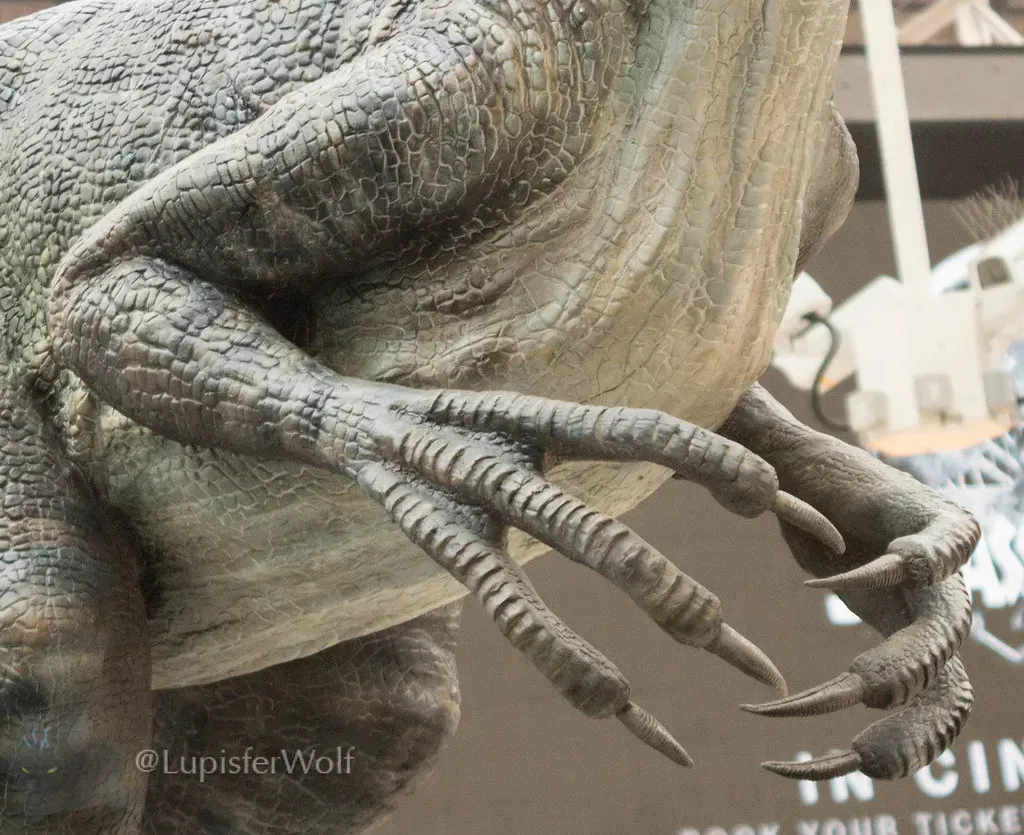
Jurassic Park gave the world many things, and one of them was a generation of dromaeosaurs running around with their hands pronated – palms down, fingers forward, wrists bent in a way that no theropod skeleton on Earth can actually achieve. The joint structure of dromaeosaur wrists locks the hands in a fixed inward-facing position, like a bird of prey mid-strike. The “clapping” hands of cinema are a physical impossibility built entirely for visual drama, and they’ve been clapping their way through documentary after documentary ever since.
Here’s the irony palaeontologists find most maddening: the anatomically correct hand position would actually make those famous sickle claws significantly more dangerous. A slashing motion driven by inward-facing hands with a hooked claw is far more mechanically efficient than whatever the pronated version is trying to accomplish. The accurate version is scarier. It’s also harder to animate in ways that look familiar, so productions don’t bother. Multiple well-preserved specimens confirm the joint limits clearly. The error isn’t ambiguous – it’s just inconvenient.
Quick Compare
- What documentaries show: Palms facing down, wrists bent forward, fingers splayed outward
- What fossils confirm: Hands locked inward-facing, like a bird of prey mid-strike
- What the movie version loses: The full mechanical leverage of the sickle claw – the accurate posture is actually more deadly
- Why it persists: The pronated pose reads as “monster hands” on screen; the correct pose looks avian and unfamiliar to audiences
#7 – Coloring Dinosaurs in Boring Greens and Browns
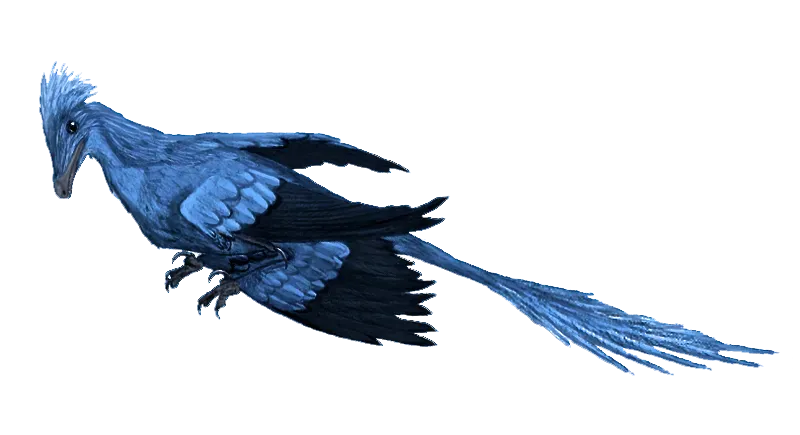
There’s an unspoken visual rule in dinosaur documentaries: when in doubt, make it look like a crocodile that had an unhappy childhood. Dull greens, muddy browns, the occasional stripe for texture. The choice gets defended as scientifically conservative – we can’t know for certain what colors most dinosaurs were, so why speculate? Except the field has moved well past that excuse. Information on feather color of a variety of dinosaurs has recently come to light, since the first color map of an extinct dinosaur showed black and white spangles, red coloration, and gray body color in a species called Anchiornis in 2010.
Microraptor feathers were iridescent blue-black – in appearance, researchers noted it would have looked similar to “grackles or a magpie, or indeed a crow.” A rival research group found that Sinosauropteryx was probably a rusty red color with chestnut-to-reddish-brown stripes running down its tail, while Anchiornis had a dark grey body, black-tipped white feathers on its arms, red freckles on its black face, and a reddish-orange crest. The visual conservatism of documentaries doesn’t just look dull; it actively erases behavioral complexity. An animal with iridescent plumage and display coloring isn’t a lurking monster. It’s a socially sophisticated creature with an inner life more interesting than anything a muddy green skin suggests. The fossil evidence exists. The production courage, apparently, does not.
At a Glance: What Melanosome Science Has Actually Revealed
- Microraptor: Iridescent black-and-blue plumage – the earliest known record of iridescent feather color
- Anchiornis: Mostly black body with white-spangled wings and a red crown – strikingly similar to a modern woodpecker
- Sinosauropteryx: Rusty-red body with candy-cane banded tail in white and reddish-brown
- Key method: Palaeontologists identified microscopic pigment structures called melanosomes preserved inside fossilized feathers and skin
- Bottom line: The Mesozoic was a visually rich, colorful world – not a greyscale swamp
#6 – Giving Dinosaurs Lion-Like Roars
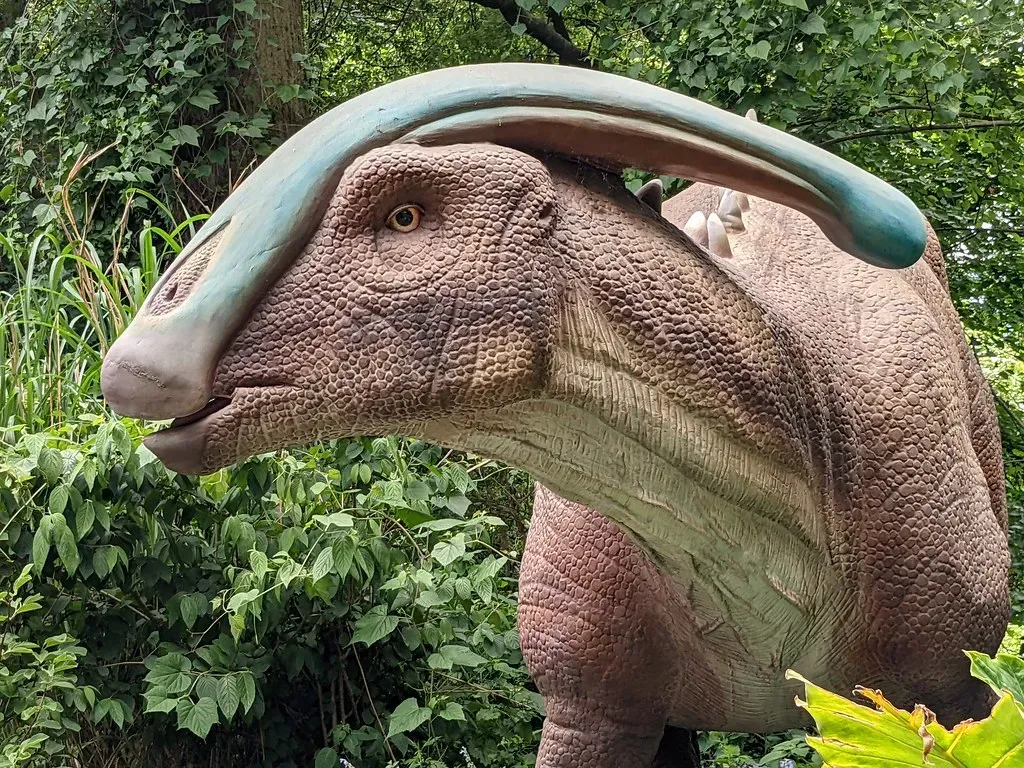
The deep, chest-shaking roar is so fundamental to the dinosaur documentary experience that questioning it feels almost unreasonable. And yet: no dinosaur had the laryngeal anatomy required to produce a mammalian-style roar. Crocodilians – the closest living archosaur relatives of dinosaurs – don’t roar. Birds don’t roar. The fossil record provides no evidence of the soft tissue structures that would make those Hollywood bellows possible. Sound design teams know this, and they reach for the lion recordings anyway because silence or something genuinely unfamiliar feels commercially risky.
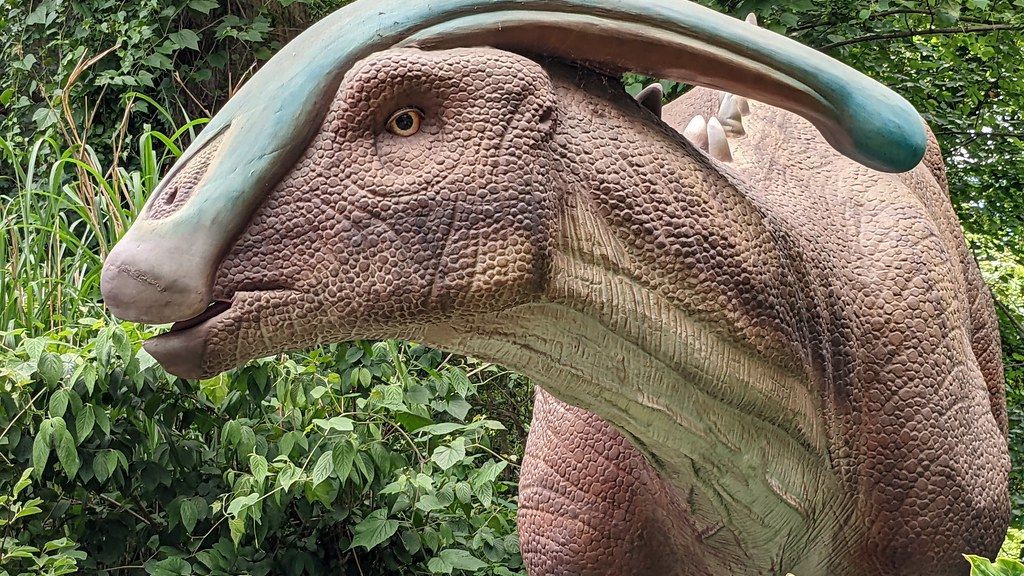
What palaeontologists suspect is considerably stranger and more interesting. Many dinosaurs likely communicated through closed-mouth vocalizations – low, resonant booming sounds produced by inflating throat tissue, similar to modern ostriches and some crocodilians. Others may have relied on hisses, low-frequency vibrations, or visual display rather than sound at all. The Parasaurolophus, with its elaborate hollow crest, almost certainly produced haunting, horn-like calls. Many scientists have believed the crest, containing a labyrinth of air cavities and shaped something like a trombone, might have been used to produce distinctive sounds – and indeed, based on the structure of the crest, the dinosaur apparently emitted a resonating low-frequency rumbling sound that could change in pitch. Each Parasaurolophus probably had a voice distinctive enough to distinguish it not only from other dinosaurs, but from other Parasaurolophuses. The real sounds of the Mesozoic were probably deeply alien, and deeply fascinating. Documentary audiences never get to hear them.
#5 – Labeling Pterosaurs and Marine Reptiles as Dinosaurs
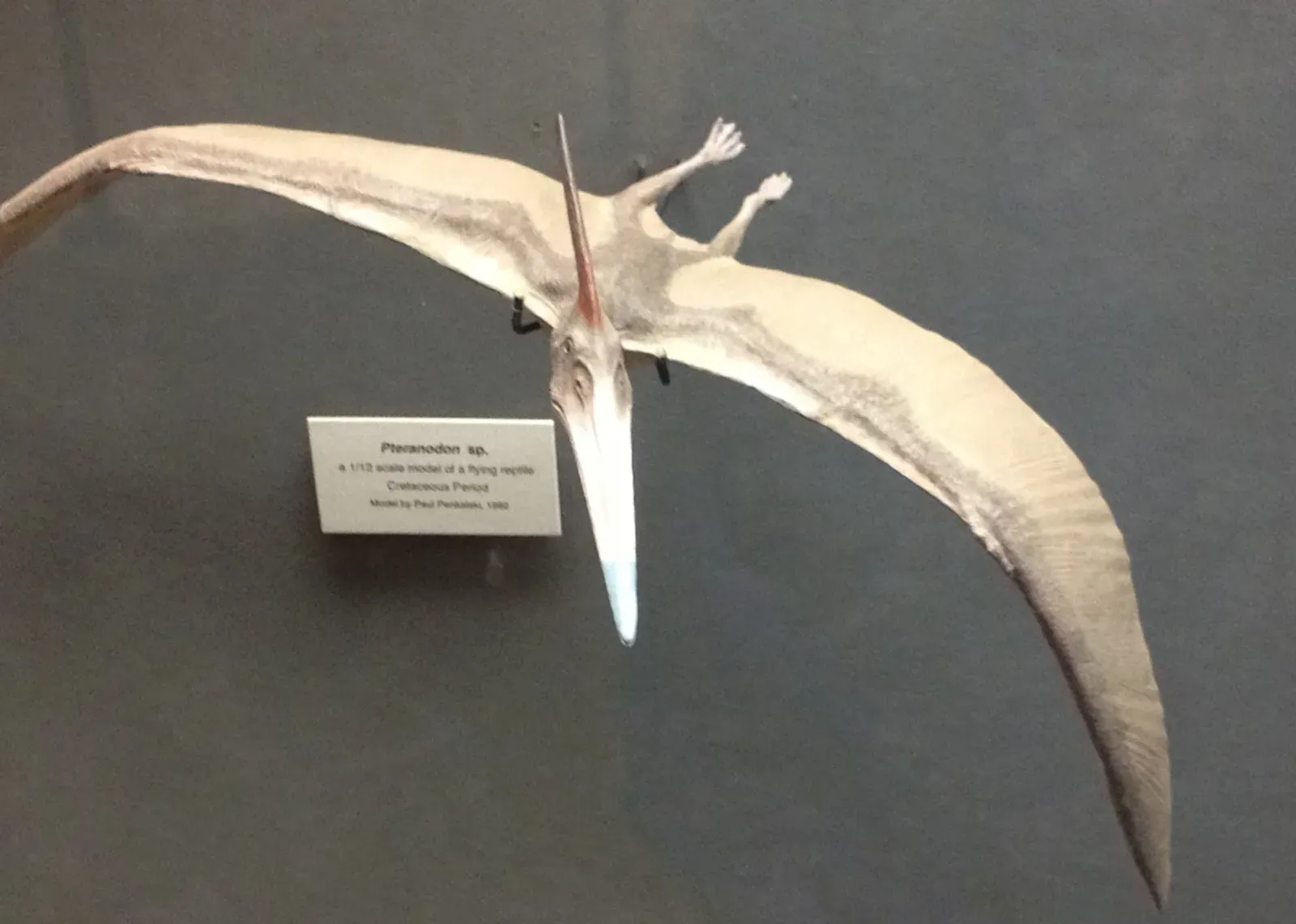
Every few minutes in a certain kind of dinosaur documentary, a Pteranodon swoops overhead or a Mosasaurus crashes through the ocean surface, and the narrator refers to the whole spectacle collectively as “the age of dinosaurs” without ever clarifying that neither of those animals is actually a dinosaur. Pterosaurs were a completely separate reptile lineage. Mosasaurs, plesiosaurs, and ichthyosaurs were marine reptiles from distinct evolutionary branches. Lumping them all together under “dinosaur” is roughly equivalent to calling a bat a bird because both fly.
True dinosaurs are defined by very specific skeletal features – particularly hip structure – that exclude every flying and swimming reptile of the Mesozoic. The conflation isn’t harmless. It trains viewers to think of “prehistoric” as a single undifferentiated blob rather than an era containing multiple separate and equally fascinating evolutionary experiments happening simultaneously. Palaeontologists don’t expect documentaries to turn into taxonomy lectures, but a single accurate line of narration is all it takes. “Pterosaurs ruled the skies – separate from dinosaurs, but equally extraordinary” costs nothing and teaches everything.
Worth Knowing
- Pterosaurs were the first vertebrates to achieve powered flight – a completely independent evolutionary achievement from birds
- Mosasaurs were giant marine lizards, more closely related to modern monitor lizards than to any dinosaur
- Plesiosaurs split from the main reptile line long before dinosaurs evolved – they’re not even archosaurs
- Ichthyosaurs had dolphin-like body plans through convergent evolution, not shared ancestry with any dinosaur lineage
- All four groups coexisted with dinosaurs during the Mesozoic – the era was a menagerie of distinct evolutionary experiments, not one big family
#4 – Portraying All Dinosaurs as Cold-Blooded Slowpokes
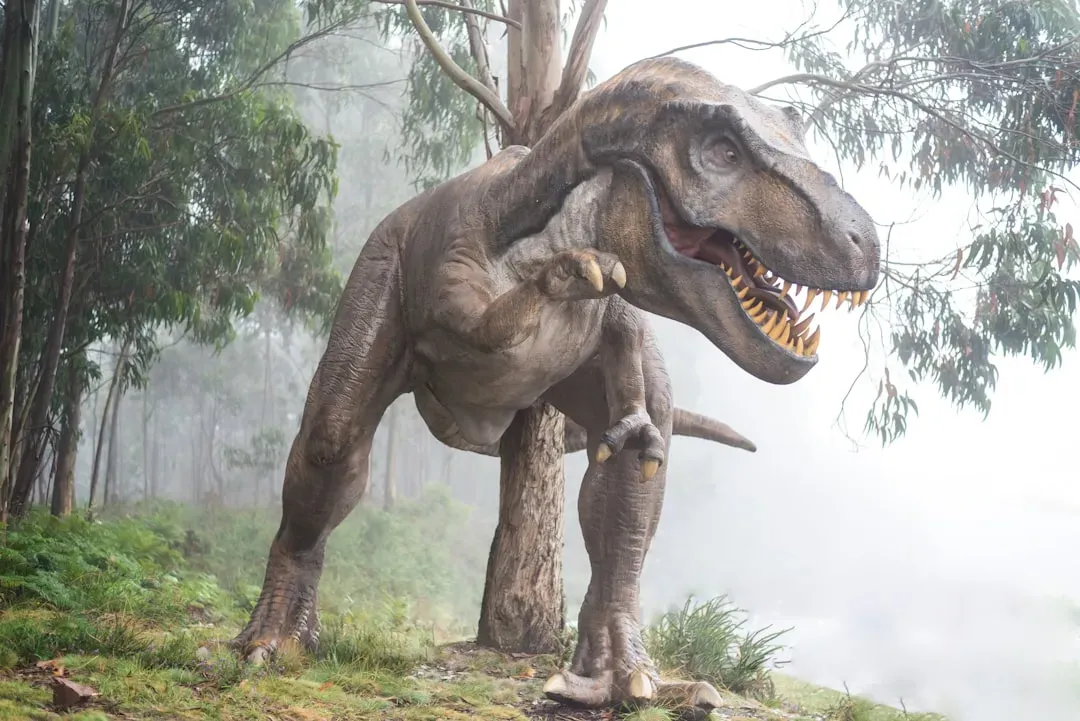
The cold-blooded dinosaur is a creature of habit – slow, lumbering, dependent on external heat, taking long sluggish breaks between bursts of reluctant movement. It’s also a creature largely unsupported by the evidence. Growth rings in dinosaur bones tell a story of rapid development that mirrors warm-blooded animals. Oxygen isotope analysis points to elevated and regulated body temperatures in multiple lineages. The predator-prey dynamics visible in trackway sites suggest active, sustained pursuit – not the ambush-and-rest pattern of modern ectotherms.
The current scientific consensus leans toward classifying most dinosaurs as mesotherms at minimum – somewhere between fully cold-blooded and fully warm-blooded – with some lineages, particularly coelurosaurs, achieving growth rates and metabolic activity comparable to modern mammals. This isn’t a minor revision. It changes everything about how we should picture daily life in Mesozoic ecosystems: the energy, the competition, the pace, the noise. A warm-blooded apex predator in a warm-blooded prey landscape is a different documentary entirely. It’s also a more accurate one, and palaeontologists are still waiting for it.
#3 – Ignoring Feathers on the “Classic” Species
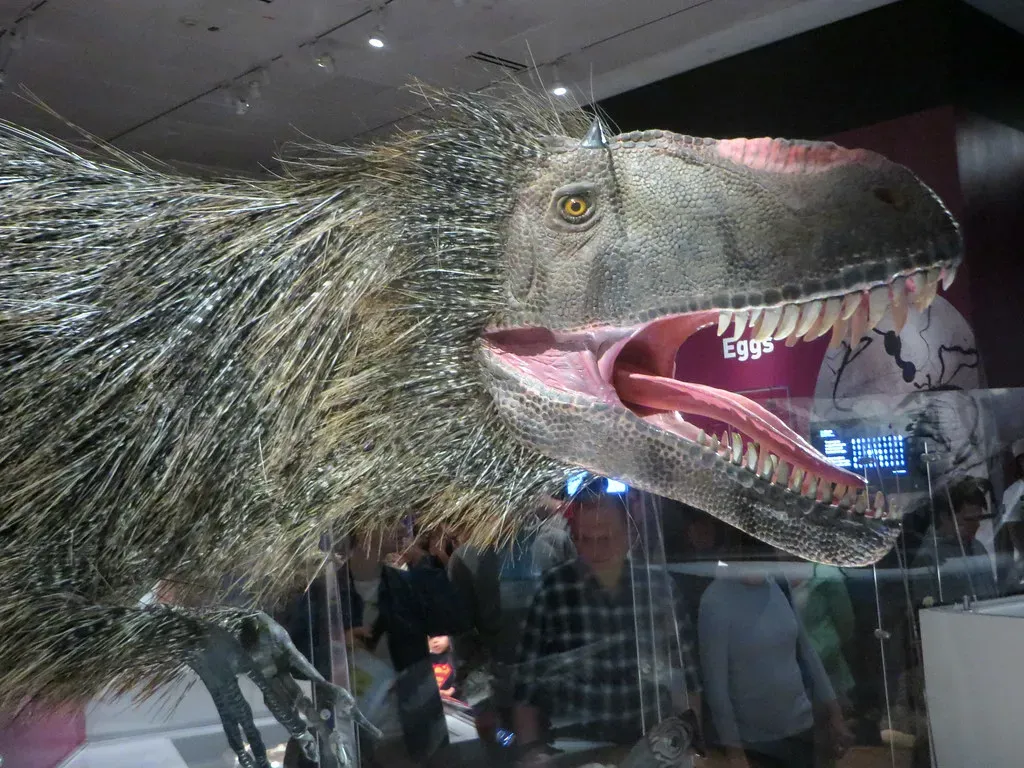
Yutyrannus is known from three specimens and holds the distinction of being the largest known dinosaur with direct evidence of feathers – the feathers were filaments, looking like the fuzzy down of baby chicks, and served to keep the dinosaur warm in cooler periods. The original holotype has a known length of 9 metres and an estimated weight of approximately 1,400 kg. It was also a tyrannosauroid – a direct relative of T. rex – and its existence is not a secret. Yutyrannus huali was named and described in 2012. It has been sitting in the scientific literature for over a decade, clearly labeled, extensively photographed, and widely discussed among researchers. Productions continue to build their large tyrannosaurs in scaly armor anyway, because the feathered version doesn’t match the cultural image that sells tickets and streaming subscriptions.
The honest conversation in palaeontology is whether adult T. rex retained feathers at all, or whether the animal shed much of its covering as it grew into its enormous body mass – the same pattern seen in some large modern mammals that lose hair as insulation becomes less efficient at scale. Juveniles almost certainly had filamentous coverings. Some researchers argue patches may have persisted in adults. Researcher Dave Hone has noted he “wouldn’t dismiss the possibility that T. rex was fluffy either” – a reminder that this debate is alive and ongoing, not settled in the scaly direction documentaries prefer. The documentary industry has decided this debate doesn’t exist. Every feathered fossil that emerges from the ground is a direct challenge to the clean, scaly monster that has been the franchise face of prehistoric life for fifty years. The fossils are winning the argument. The screen hasn’t conceded yet.
Why It Stands Out: The Yutyrannus Evidence
- Three tyrannosauroid fossils – one adult and two juveniles – offer clear proof that giant theropods could be feathered, with simple filaments more like the fuzzy down of a modern baby chick than stiff plumes
- The three 125-million-year-old specimens were collected from a single quarry in Cretaceous-era rocks in northeastern China’s Liaoning Province
- Yutyrannus was the largest known feathered theropod at the time of its description
- Its filamentous feathers likely provided insulation in the cooler Early Cretaceous climate of its range
- Its existence makes a fully scaly T. rex harder – not easier – to defend with a straight scientific face
#2 – Assuming Pack Hunting in Raptors Without Proof
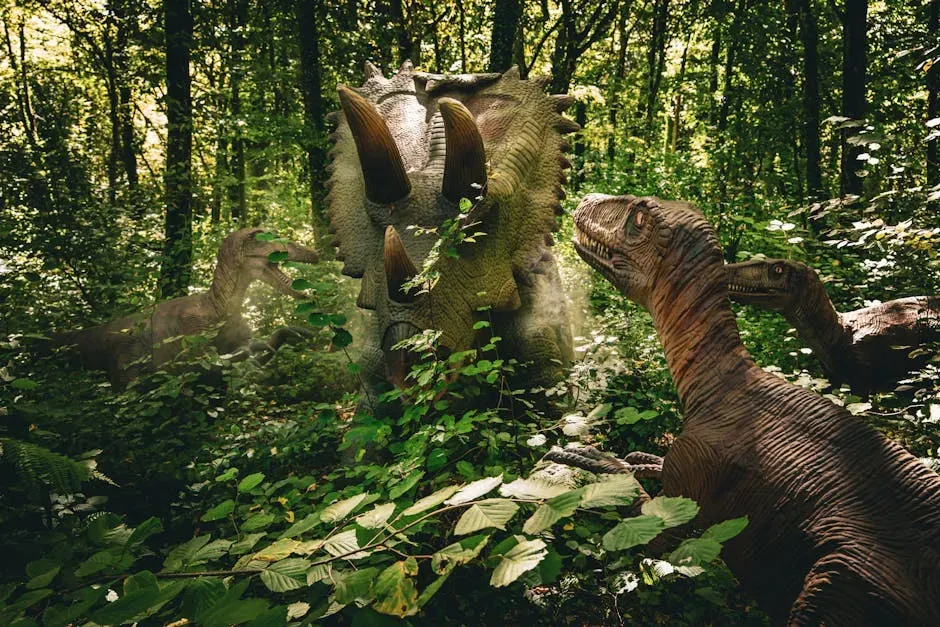
The pack hunt is cinematic gold: a coordinated group of Velociraptors fanning out, signaling each other, executing a strategy with predatory intelligence that makes the audience nervous about their own survival instincts. It’s also a story built almost entirely on inference, modern mammal bias, and a handful of ambiguous trackways. The fossil evidence for coordinated, wolf-style cooperative hunting in dromaeosaurs is genuinely thin. Some sites show multiple individuals near the same prey, but proximity isn’t strategy. Komodo dragons gather at a carcass too – that’s not a pack.
The more defensible interpretation for most dromaeosaurs is ambush predation, likely solitary or in loose, uncoordinated aggregations. Deinonychus and Velociraptor were probably opportunists – fast, aggressive, equipped with excellent sensory systems, but not running complex group tactics requiring communication and role assignment. Modern technologies have revealed sophisticated hunting strategies in Velociraptor facilitated by its keen sense of smell and advanced auditory capabilities – individual advantages that don’t require a pack to be lethal. The pack narrative inflates their intelligence in ways that feel cinematic but lack a fossil foundation. Palaeontologists aren’t saying raptors were stupid – far from it. They’re saying the specific story being told about them is borrowed from wolves and lions and projected backward 75 million years. The real raptors were strange enough without the borrowed drama.
#1 – Oversimplifying the Dinosaur Extinction to Just One Asteroid
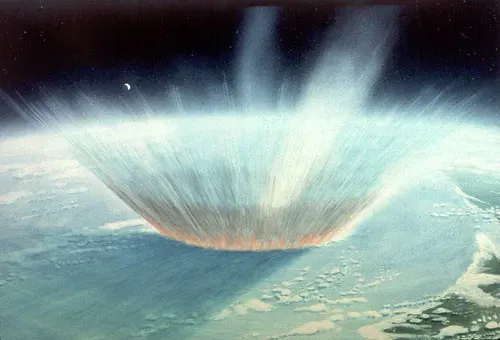
The Chicxulub impact is real, catastrophic, and genuinely world-ending in its consequences. No one is disputing the asteroid. What palaeontologists dispute is the tidy narrative that frames extinction as a single dramatic event – a flash from the sky, a shockwave, an immediate before-and-after. The Deccan Traps, a volcanic province in what is now India, had been erupting with extraordinary intensity for hundreds of thousands of years before the asteroid arrived, pumping carbon dioxide and sulfur into the atmosphere and stressing ecosystems long before the impact winter began. The asteroid landed in a world that was already struggling.
Some dinosaur lineages show evidence of decline well before 66 million years ago. Others appear to have been holding on when the asteroid hit. The survivors – birds – weren’t randomly lucky; they had biological traits that made them more resilient to the specific stresses unfolding across millions of years, not just the weeks after impact. The real extinction story is a slow-building crisis interrupted by a sudden catastrophe, a compound disaster with compounding causes. That story is harder to animate and harder to score with dramatic music. It’s also the truth, and it makes what happened to the non-avian dinosaurs feel even more inevitable and more tragic than a single bad day in the Cretaceous ever could.
At a Glance: The Extinction Was Never Just One Thing
- The asteroid: Chicxulub impactor struck approximately 66 million years ago – real, catastrophic, and world-altering
- The volcanism: The Deccan Traps in modern India were erupting for hundreds of thousands of years before impact, releasing CO₂ and sulfur dioxide into a stressed atmosphere
- The survivors: Birds – a lineage of feathered theropods – carried traits that made them resilient across a multi-million-year crisis, not just a single bad season
- The nuance: Some dinosaur groups were already in decline; others were thriving right up to the impact – it wasn’t a uniform story
- The takeaway: A compound catastrophe unfolding over geological time is harder to dramatize – and far more honest – than a single flash from space
Palaeontology has never been more exciting than it is right now. New species are being named every few weeks. Feather pigments are being read from fossils. Soft tissue is being recovered from bone. The actual science has outrun the documentary format so completely that the genre is now essentially producing historical fiction set in the Mesozoic – beautifully rendered, expensively scored, and built on a foundation of errors that researchers corrected twenty years ago. The frustrating part isn’t that documentaries simplify; simplification is inevitable and forgivable. The frustrating part is that the accurate version is genuinely more astonishing than the recycled one. Dinosaurs with iridescent feathers and strange vocalizations and complex metabolisms, going extinct over millions of years of compounding catastrophe – that’s not a harder sell. That’s a better story. Someone just has to be willing to tell it.