
Paleontology likes to sell itself as tidy: dig up a bone, run some tests, slot the creature neatly into the family tree. That’s the myth. The reality is messier, weirder, and honestly more interesting than any textbook diagram admits.
Some fossils are complete enough to study for a century and still refuse to behave. They’re detailed enough to argue about, strange enough to split entire conferences into camps, and stubborn enough that even top researchers will quietly say, off the record, “we genuinely don’t know what this thing was.” These aren’t obscure footnotes. Several of them are famous. And what the fossil record actually says about them is stranger than the museum placards let on.
12. Hallucigenia: The Fossil Scientists Studied Upside Down
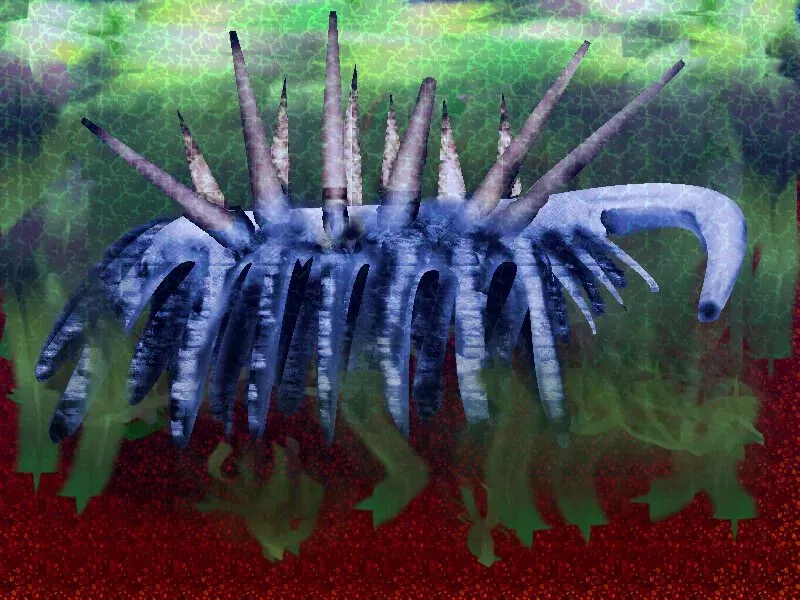
Hallucigenia is the reigning champion of paleontological embarrassment. When it was first described, scientists reconstructed the entire animal upside down, mistaking its rigid spines for walking legs and its actual legs for soft tentacles. It took decades, and several rounds of published corrections, before anyone flipped it right side up.
Even now that it’s technically “solved,” Hallucigenia’s exact branch on the tree of life stays wobbly. Researchers place it among the lobopodians, distant relatives of velvet worms, but its bizarre mix of spiky armor, worm-like body, and unreadable head shows up in no living animal. Some paleontologists argue it sits near the root of all modern arthropods. Others think that’s wishful storytelling, and that Hallucigenia simply died out before its strange body plan could settle into anything familiar.
11. The Tully Monster: An Anatomical Riddle That Refuses to Close
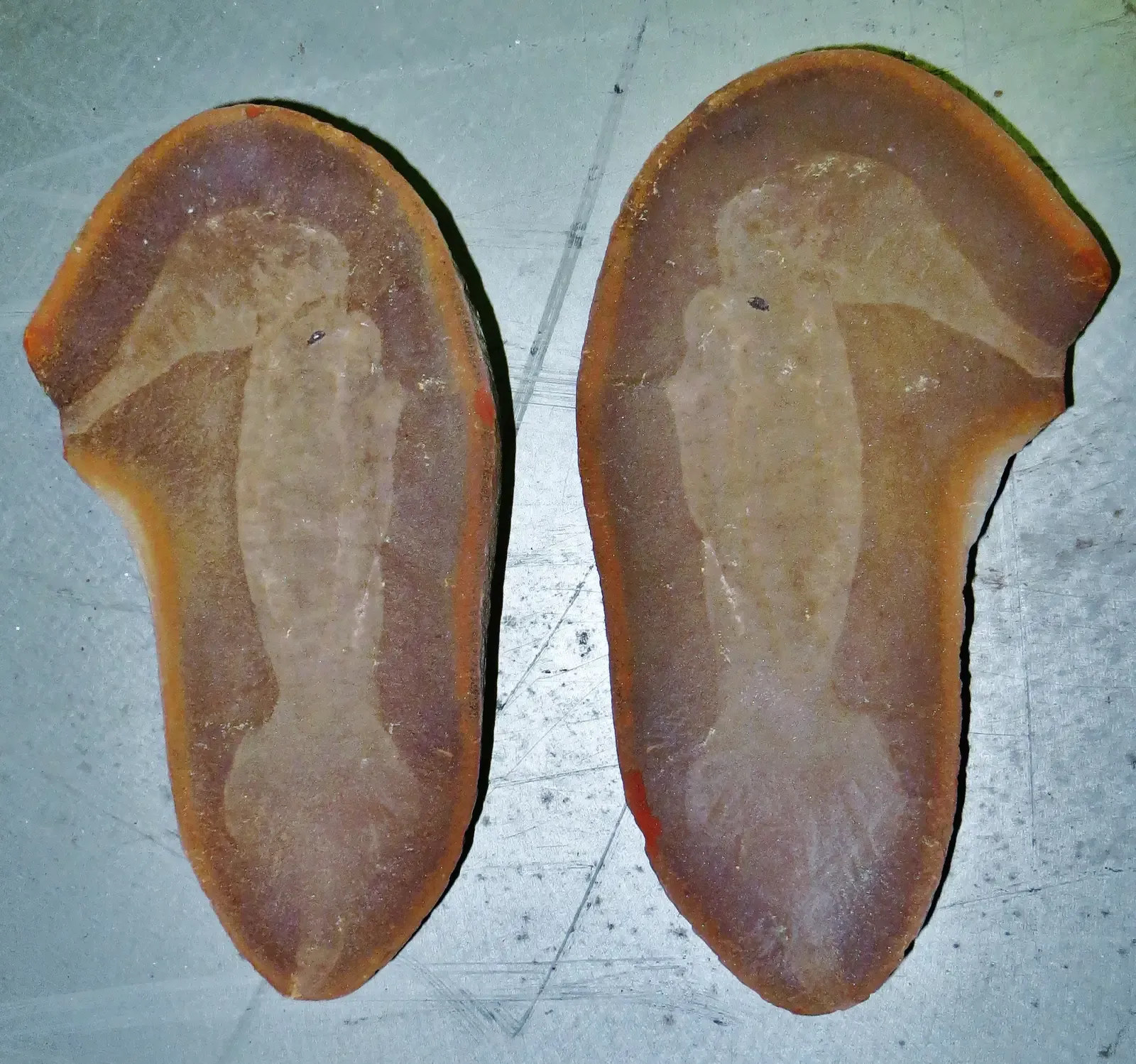
Few fossils start arguments faster than Tullimonstrum gregarium, better known as the Tully Monster. Pulled from the coal fields of Illinois, this soft-bodied oddity has a torpedo-shaped body, a long proboscis tipped with a claw-like mouth, and eyes perched on rigid stalks. It looks like something a committee designed by accident.
One high-profile study claimed it was a vertebrate, distantly related to lampreys. Another tore that conclusion apart, arguing the supposed vertebrate features simply aren’t convincing under closer scrutiny. Each new paper gets crowned “the answer” for a news cycle, then gets quietly picked apart in the next response. The honest state of the science: Tullimonstrum has just enough vertebrate-like traits to tempt one camp, and just enough oddities to keep another camp convinced it’s something else entirely.
10. Opabinia’s Five Eyes: A Body Plan That Never Caught On
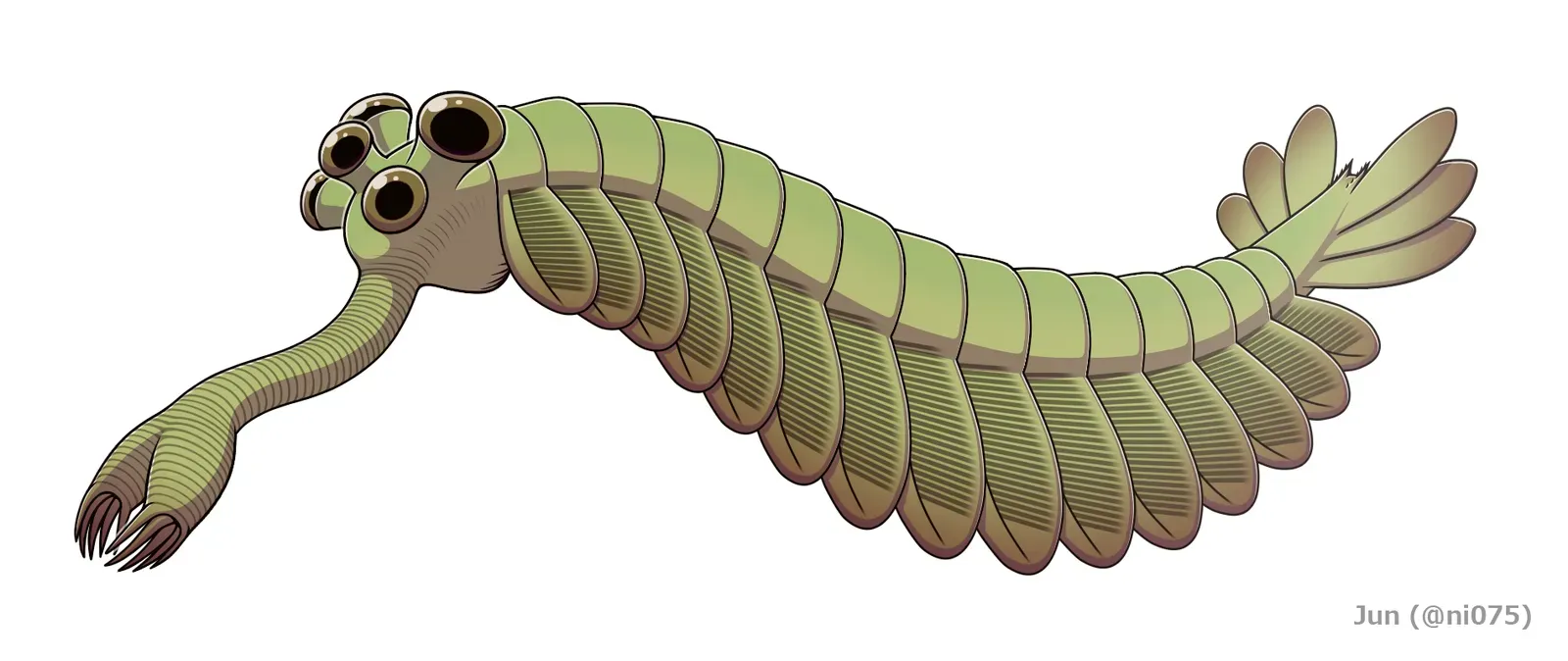
Opabinia reportedly made an entire room of scientists laugh out loud the first time its reconstruction hit the screen. Five eyes on a single head. A flexible, hose-like proboscis ending in grasping claws. A segmented body that resembles nothing else alive today. It looks like a creature designed as a joke, except it actually swam through Cambrian seas.
Officially, Opabinia gets filed as a stem arthropod, an early offshoot near the root of today’s arthropod lineage. Unofficially, plenty of researchers admit it still doesn’t sit comfortably anywhere on the chart. Its five-eyed, grasping design hints at a sensory strategy that never resurfaces in any later lineage, which raises an uncomfortable question: how many failed evolutionary experiments did the Cambrian run before landing on the body plans that actually survived?
9. Anomalocaris: Apex Predator of an Unclear Family Tree
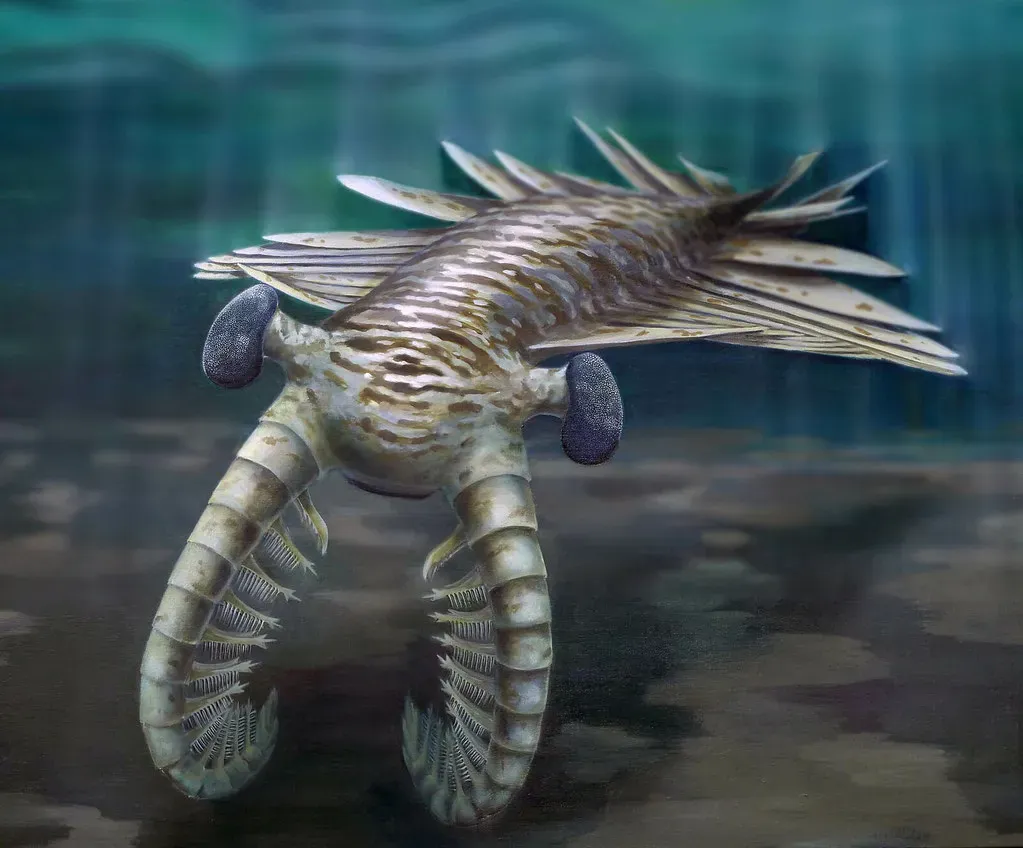
Anomalocaris gets marketed as the ocean’s first true super-predator, a Cambrian nightmare bristling with spiny, rotating appendages and a strange disk-shaped mouth. The documentaries make it sound settled. The actual classification is still surprisingly fuzzy underneath all that CGI drama.
Most researchers agree it belongs to a group called radiodonts, positioned somewhere near the base of arthropods, but scientists keep revising which of its features are primitive and which are specialized. Even its hunting style keeps shifting: early reconstructions painted it as a shell-crushing brute, while newer studies suggest some species targeted soft prey or even sifted the seafloor for food. Every new fossil forces another rethink of how “arthropod-like” these ancient predators actually were.
Fast Facts
- Size: Reached a length of approximately 1 meter (3.3 feet), making it one of the largest animals of the Cambrian.
- Name meaning: “Abnormal shrimp,” a nod to how its scattered fossil pieces were first mistaken for separate shrimp-like creatures.
- Where it’s found: Best known from the Burgess Shale in Canada, with related species turning up in Chengjiang, China.
- Classification: Grouped with the radiodonts, an extinct lineage of stem-arthropods, not a true shrimp or crab.
8. Vetulicolians: Half Chordate, Half Something Nobody Can Name
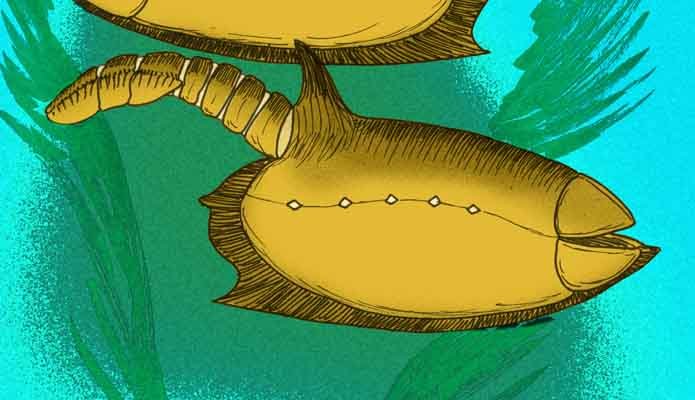
Vetulicolians are the classic case of a fossil that lets you argue whatever you want. These strange, two-part Cambrian animals have a bulbous front section marked with slits, attached to a segmented tail. It looks like two different creatures fused together.
Some researchers argue those front slits function like gill openings, which would place vetulicolians near the base of chordates, the group that eventually includes vertebrates. Others insist the resemblance is superficial and that these animals are closer to arthropods, or belong to a completely separate evolutionary experiment. Even with modern CT scans, the front section is too simplified to map onto known organs, and the tail matches no living template. So vetulicolians keep getting reclassified year after year, a nightmare for students and a humbling reminder for experts that some “ancestors” may never be pinned down.
7. Macrauchenia: The Skeleton That Baffled Darwin’s Own Team
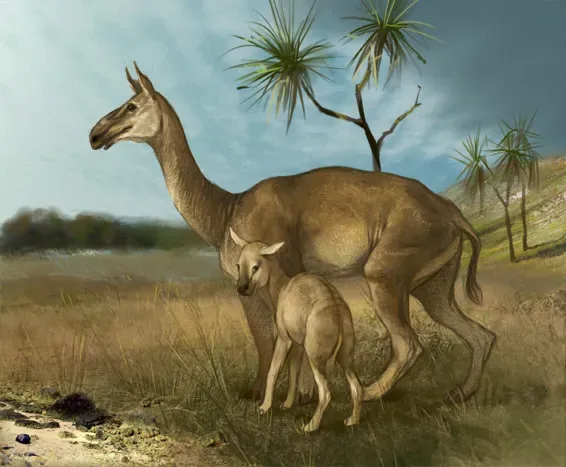
Macrauchenia looks like it was assembled from spare parts: a long neck like a camel, a body built like a hornless rhino, and a short trunk or fleshy snout stitched onto the front. When Charles Darwin’s contemporaries first examined its bones, they were stumped. More than a century of modern tools later, paleontologists are still arguing about where it truly belongs.
Ancient DNA pulled from its fossils links it to perissodactyls, the group that includes horses and tapirs, but its anatomy refuses to play along with a simple “horse cousin” label. Its limb proportions, neck vertebrae, and nasal structure are strangely unique for a supposed side branch of hoofed mammals. Many researchers now suspect South America’s long isolation produced entire mammal lineages, like Litopterna, that simply don’t map onto Old World categories, leaving Macrauchenia as a placeholder for a much bigger unsolved mystery.
6. Thylacosmilus: The Saber-Tooth That Wasn’t Actually a Cat
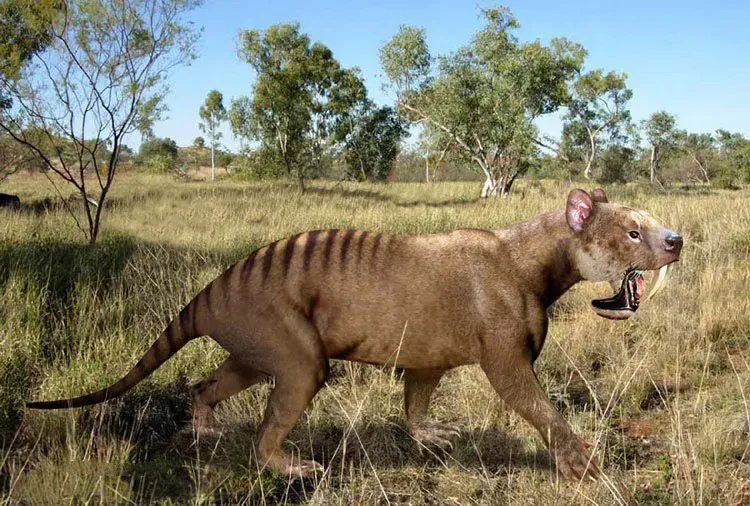
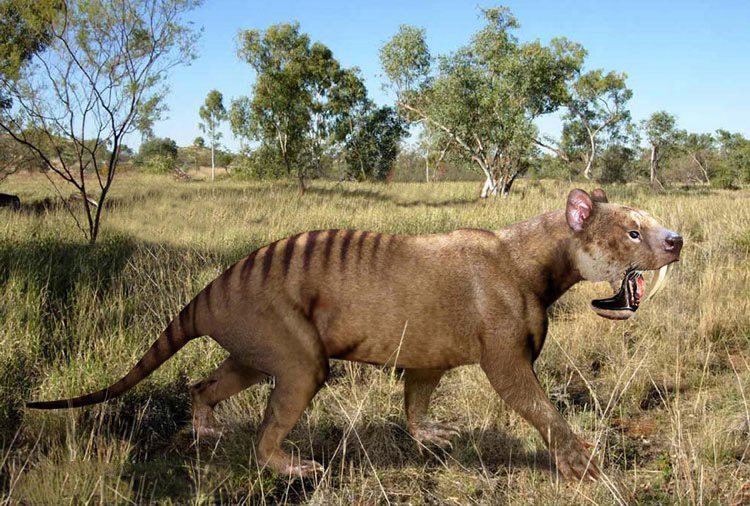
At a glance, Thylacosmilus looks exactly like a saber-toothed cat: massive, downward-curving canines, muscular forelimbs, a predator’s stance. It isn’t a cat at all. It’s a metatherian, part of the broader marsupial group, native to South America and often called an evolutionary impersonator for good reason.
Its skull architecture, tooth replacement pattern, and jaw mechanics are strange enough that experts still can’t agree on how it hunted, or whether it hunted the way saber-tooths typically did. Recent analyses suggest those enormous teeth may not have handled bone-crushing well, and its jaw muscles seem to have worked differently from a placental saber-tooth’s. Some researchers now argue it was more of a specialized soft-tissue feeder than the fearsome big-game killer of popular imagination, an unpopular idea among people who love the “marsupial Smilodon” story, but one that fits the biomechanics far better.
Why It Stands Out
- Its saber teeth grew continuously throughout life, unlike the rooted, finite canines of true saber-toothed cats.
- The lower jaw curved downward into bony sheaths that cradled the canines when the mouth was closed, a feature no placental saber-tooth ever needed.
- It lived thousands of miles from true cats, evolving its saber-tooth look on an isolated South American continent completely independent of Smilodon’s lineage.
- Despite the intimidating teeth, it appears to have had no functional upper incisors, a detail that keeps fueling debate over exactly how it killed or fed.
5. Helicoprion: The Buzz-Saw Jaw Nobody Can Fully Explain
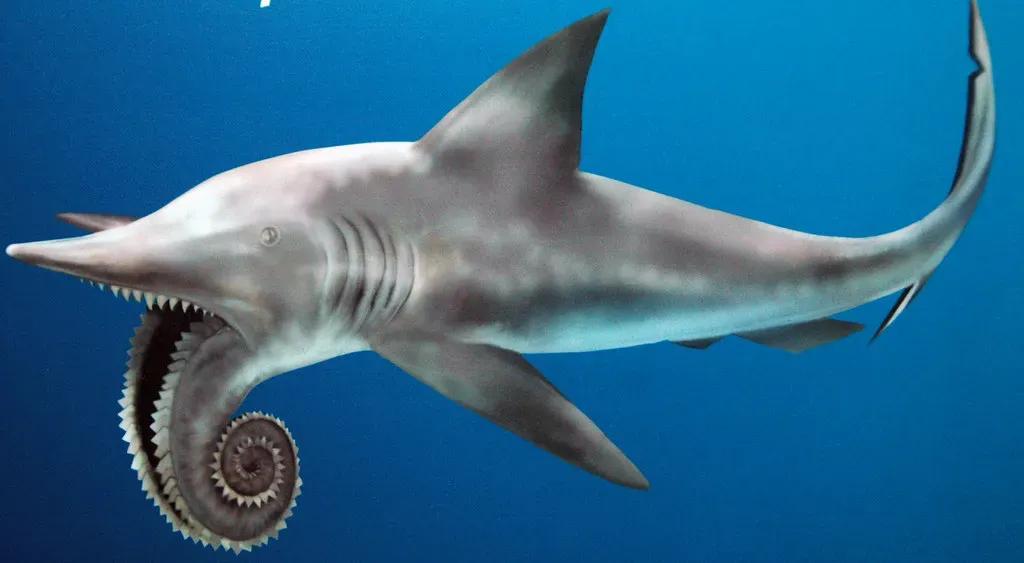
Helicoprion is internet-famous for its bizarre spiral of teeth, but the memes skip the most important detail: scientists still don’t fully agree on how that jaw worked, or exactly where this animal belongs among early fish. For decades, artists placed the tooth spiral everywhere imaginable, on the snout, outside the mouth, dangling like a strange ornament, because the whorl was nearly all the fossil evidence anyone had.
Newer studies place the spiral deep inside the lower jaw of a shark-like fish, but major questions remain unresolved. Was Helicoprion a true shark relative, or part of a stranger offshoot called eugeneodonts that sits awkwardly on the cartilaginous fish family tree? Its jaw mechanics suggest it sliced through soft prey like squid, but without a single well-preserved skull, most of the model stays speculative. It has gone from total mystery to narrowed-down enigma, which is honest scientific progress, and also proof that some fossils will never be fully tamed.
4. Dickinsonia: The Flat Oval Nobody Can Fully Classify
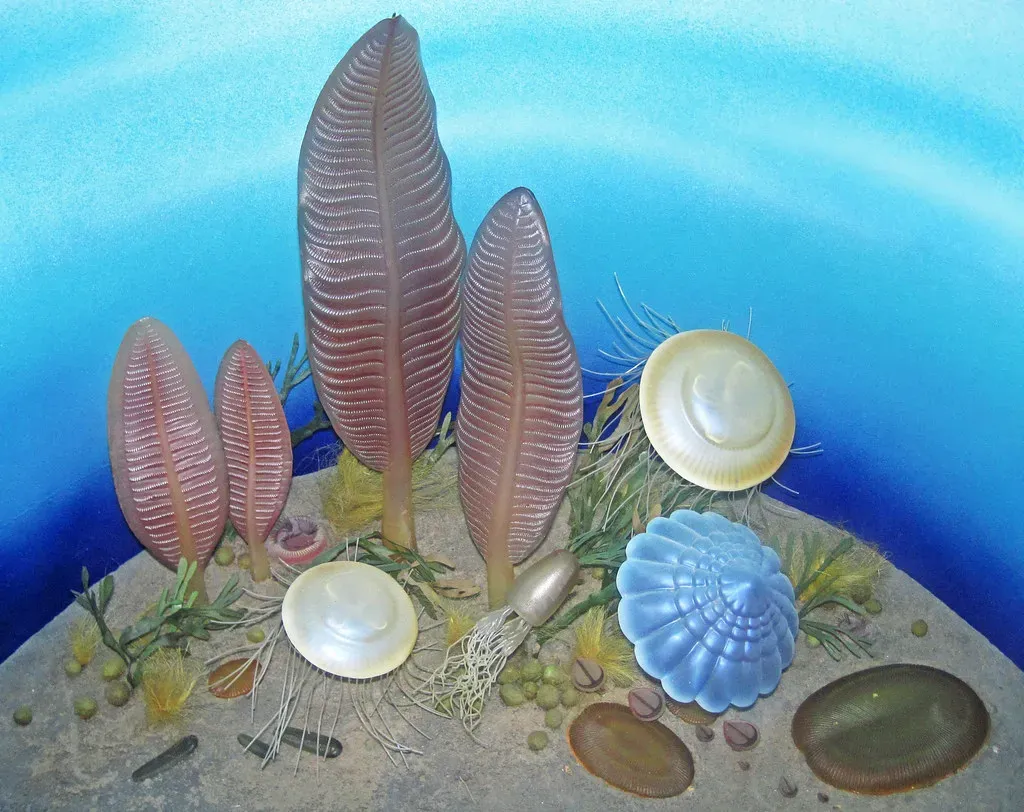
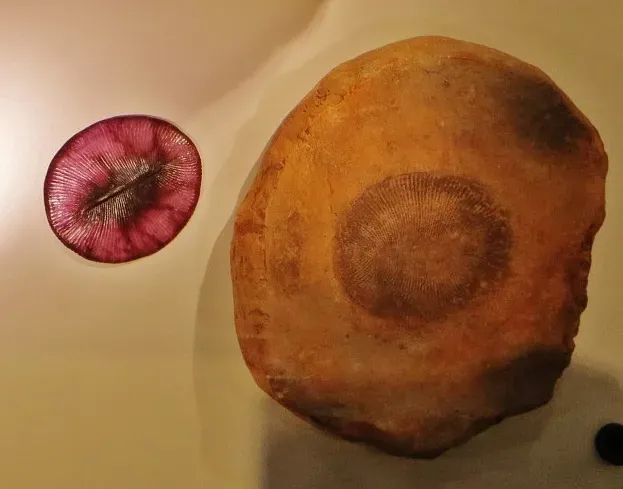
Dickinsonia looks deceptively simple, a flat, ribbed, oval organism from the Ediacaran period, hundreds of millions of years before dinosaurs. For decades, scientists genuinely couldn’t agree whether it was an animal, a fungus, a lichen, or something from a kingdom of life that no longer exists on Earth.
Chemical analysis eventually found cholesterol-like molecules in its fossils, the kind typically associated with animals, and headlines rushed to declare the debate over. Talk to researchers privately, though, and the story gets more cautious. Its body seems to grow by adding and inflating repeated segments in ways that don’t line up neatly with any later animal group, leading some experts to argue it’s a stem lineage so far removed from us that calling it “an animal like us” oversells the connection entirely.
3. Wiwaxia: Mollusk, Worm, or a Category That Doesn’t Exist Anymore
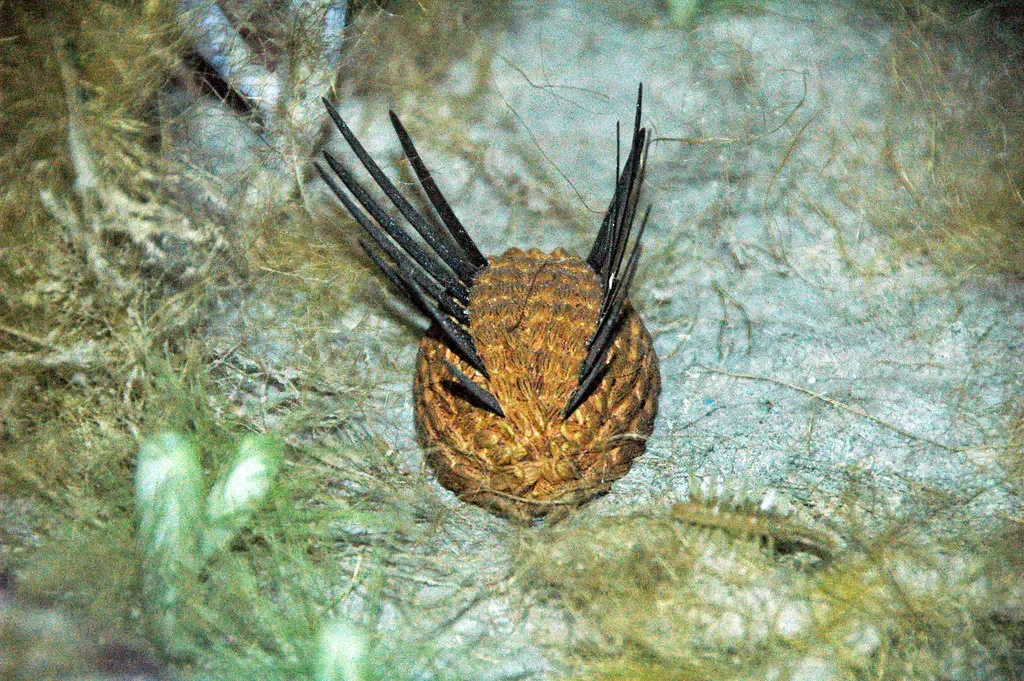
Wiwaxia feels like it should be an easy call, just pick mollusk or worm and move on, but it refuses to cooperate. This small, slug-like Cambrian creature is covered in overlapping scales and long defensive spines, and every new study seems to shift the consensus in a different direction.
Some paleontologists point to clear similarities between its feeding apparatus and modern mollusks. Others argue its bristle-like structures and overall body layout make far more sense as an annelid, a segmented worm relative. The deeper issue is timing: Wiwaxia existed during the exact period when major animal groups were still shaking out their basic body plans, which means expecting it to fit neatly into a modern category might be the real mistake. It may be a stem lineage sitting near the shared ancestry of mollusks and annelids, which is exactly why the caption under its museum photo keeps changing.
2. Odontogriphus: The “Toothed Mystery” That Keeps Switching Sides
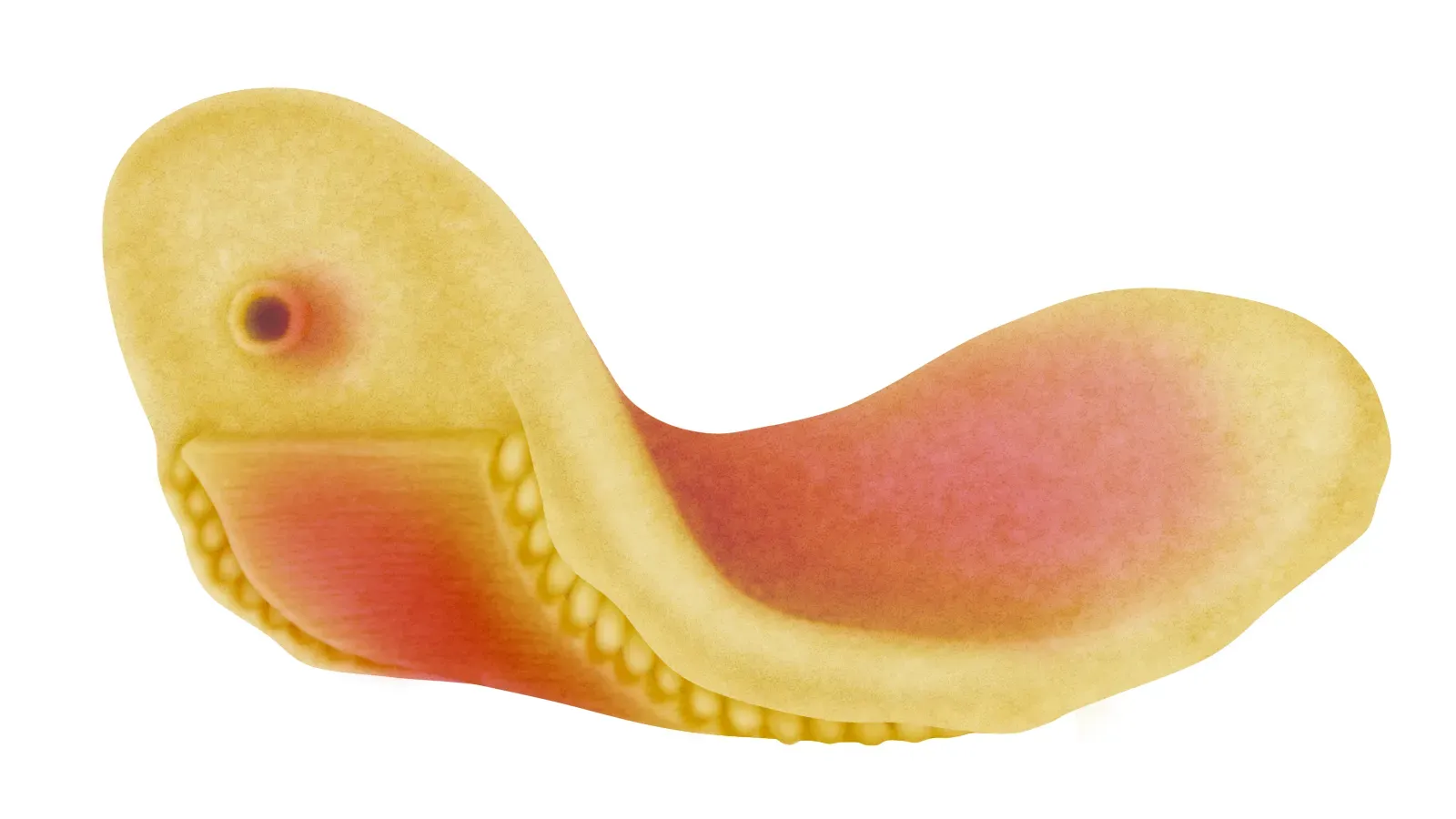
Odontogriphus rarely gets the spotlight next to flashier Cambrian monsters, but it quietly destabilizes more classifications than almost anything on this list. This soft-bodied, slug-like animal carries a ring of tooth-like structures and a broad underside, and depending on which detail researchers prioritize, it’s been labeled a primitive mollusk, a strange cousin of Wiwaxia, or an entirely separate lineage that just happens to share similar feeding hardware.
What frustrates specialists most is the domino effect: every new interpretation of Odontogriphus forces a cascade of revisions across several other fossils. If it truly is mollusk-like, the origin of mollusks may be older and stranger than previously thought. If it isn’t, then the features scientists have been calling “mollusk traits” might actually be general-purpose tools that early animals kept independently reinventing. Either way, Odontogriphus sits at a crossroads where confident labels start to feel more like educated guesses, which is not a comfortable place for a science that likes to think of itself as mature.
Worth Knowing
- It comes from the same Burgess Shale rock layers as Wiwaxia and Hallucigenia, roughly 508 million years old.
- Its feeding structure includes rows of tooth-like elements arranged in a way that echoes a mollusk radula, a key piece of evidence in the ongoing debate.
- Complete specimens are rare enough that most classification arguments still hinge on just a handful of well-preserved fossils.
- Reclassifying Odontogriphus tends to ripple outward, forcing scientists to reconsider where several other soft-bodied Cambrian animals actually belong.
1. The Entire Ediacaran Biota: A Lost World Science Still Can’t Sort Out
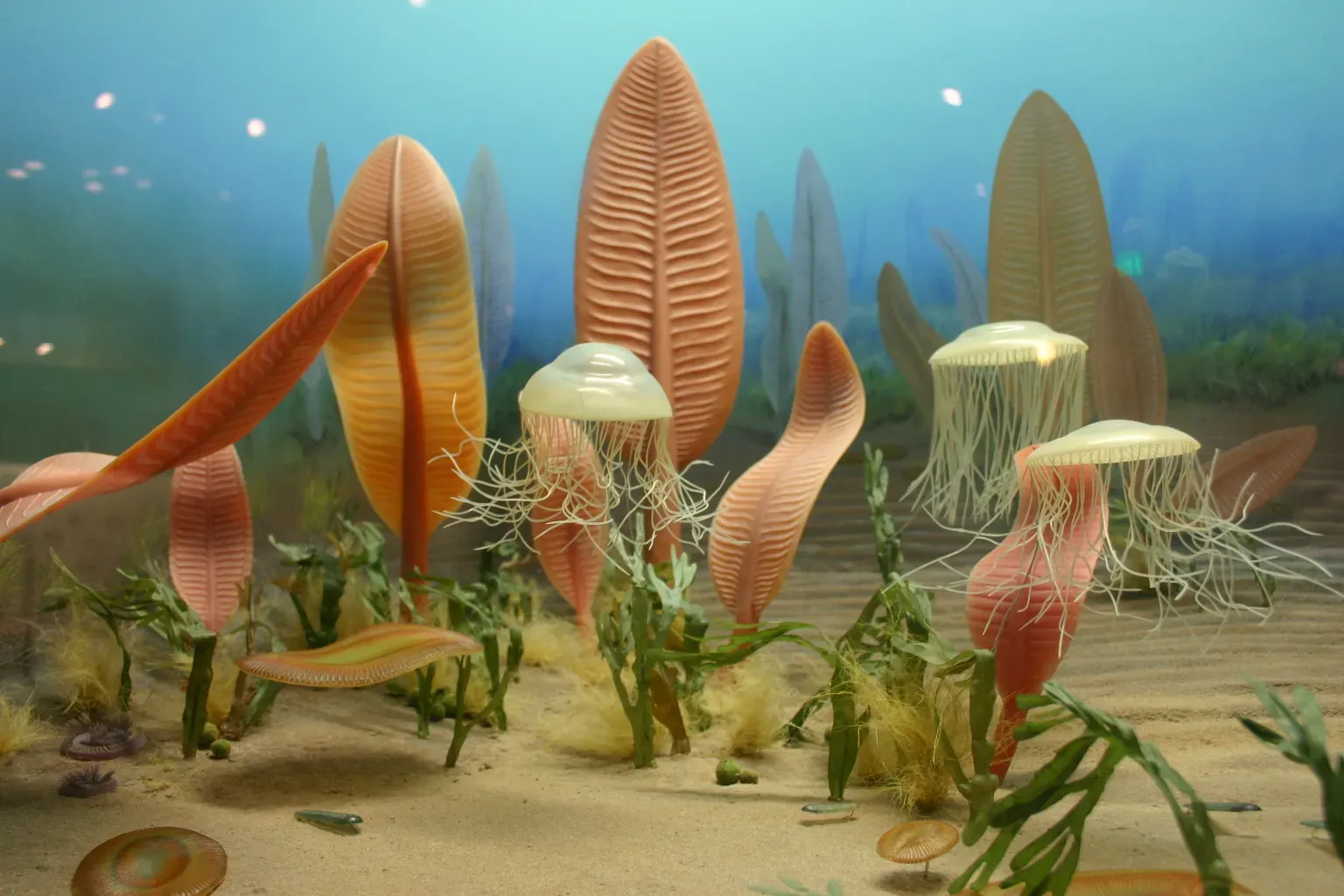
If naming a single “most unplaceable” creature feels impossible, that’s because the real winner isn’t one animal, it’s an entire vanished ecosystem. The Ediacaran biota, from frond-shaped Charnia to quilted, segmented Spriggina, ruled Earth’s seafloors before the Cambrian explosion rewired life as we know it. Despite decades of intense study, experts still argue over whether most of these organisms were early animals, failed experiments in multicellular life, or members of a branch of the tree of life that has no modern survivors at all.
Some Ediacaran fossils show faint hints of animal-like traits. Others behave more like microbial mats that scaled themselves up into strange, complex shapes. Their odd symmetries, complete lack of obvious mouths or guts, and unfamiliar growth patterns mean they can’t simply be filed away as “primitive jellyfish” or “early worms,” no matter how confidently older textbooks tried. Many researchers now suspect huge portions of the Ediacaran biota left no direct descendants whatsoever, which would mean the familiar animal family tree we all learned in school is just one surviving branch of a much stranger, much larger forest that mostly burned down.
At a Glance
- The Ediacaran Period lasted for almost 100 million years from around 635 to 539 million years ago.
- Famous fossils include Dickinsonia, Arborea, Spriggina, Kimberella, Charniodiscus, Rangea, Tribrachidium, Cyclomedusa, Cloudina, and Namacalathus.
- Named for the Ediacara Hills in South Australia, where the fauna was first identified in 1946.
- The late Ediacaran records two major faunal turnovers, one around 550 million years ago and another near the Ediacaran-Cambrian boundary around 540 million years ago.
The Bottom Line
Zoom out far enough and a pattern appears. Our tidy evolutionary trees get built around the fossils that behave, while the genuine misfits get shoved to the margins with vague labels like “enigmatic” or “stem group.” That’s not a small oversight. Hallucigenia, the Tully Monster, Wiwaxia, Dickinsonia, and the entire Ediacaran biota aren’t sideshows, they’re hard proof that a huge stretch of early life on Earth simply doesn’t map onto our modern categories, no matter how many diagrams try to force it.
I’ll say the unpopular part out loud: a lot of the confidence you see in documentaries and museum placards is manufactured for the sake of a clean story. The fossils themselves are far less certain, and honestly, that’s the more exciting version. The record isn’t a finished puzzle waiting for one last piece. It’s a box full of strange, half-matching fragments, and some of them may never click into place at all. So which one do you think deserves a full textbook rewrite, and which one do you suspect is still riding on hype it hasn’t earned?