
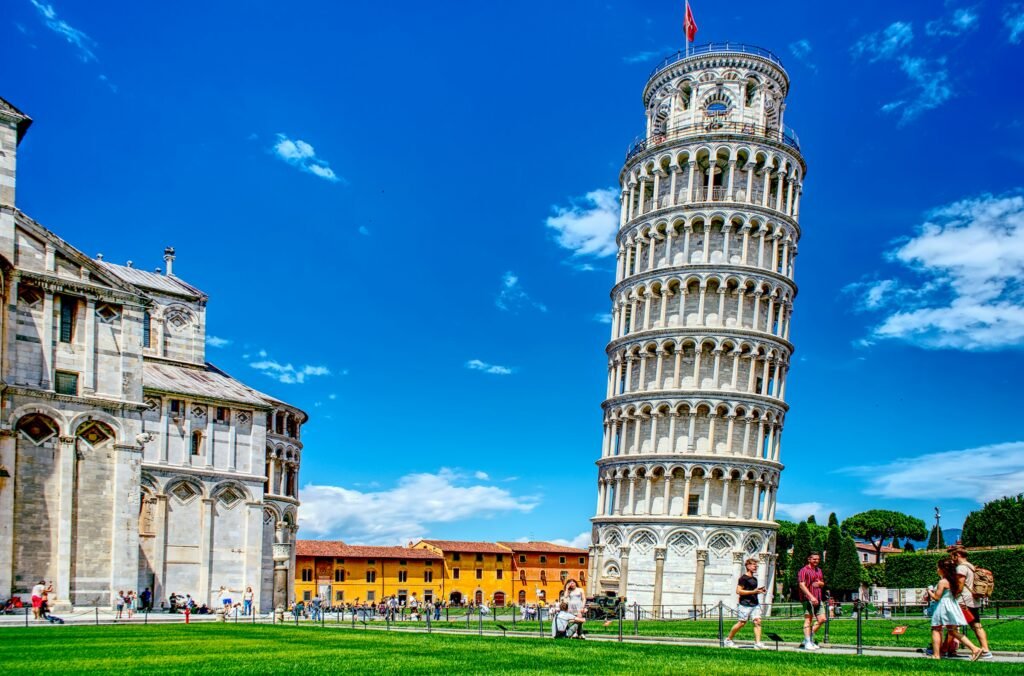
Most people assume that once a building starts leaning, there are only two possible endings: it collapses, or it becomes a tourist gimmick like Pisa. That assumption is wrong, and it’s been wrong for decades.
Structural engineers have been quietly fixing famous leaning landmarks all over the world – nudging foundations, injecting grout, drilling piles into bedrock – almost always without the public noticing. Some buildings were straightened by inches. Others were pulled back from total collapse using techniques so radical they’re now taught in engineering schools. Here are 13 of them, and what actually happened underground while the rest of us were just taking photos.
#1 – The Leaning Tower of Niles, Illinois
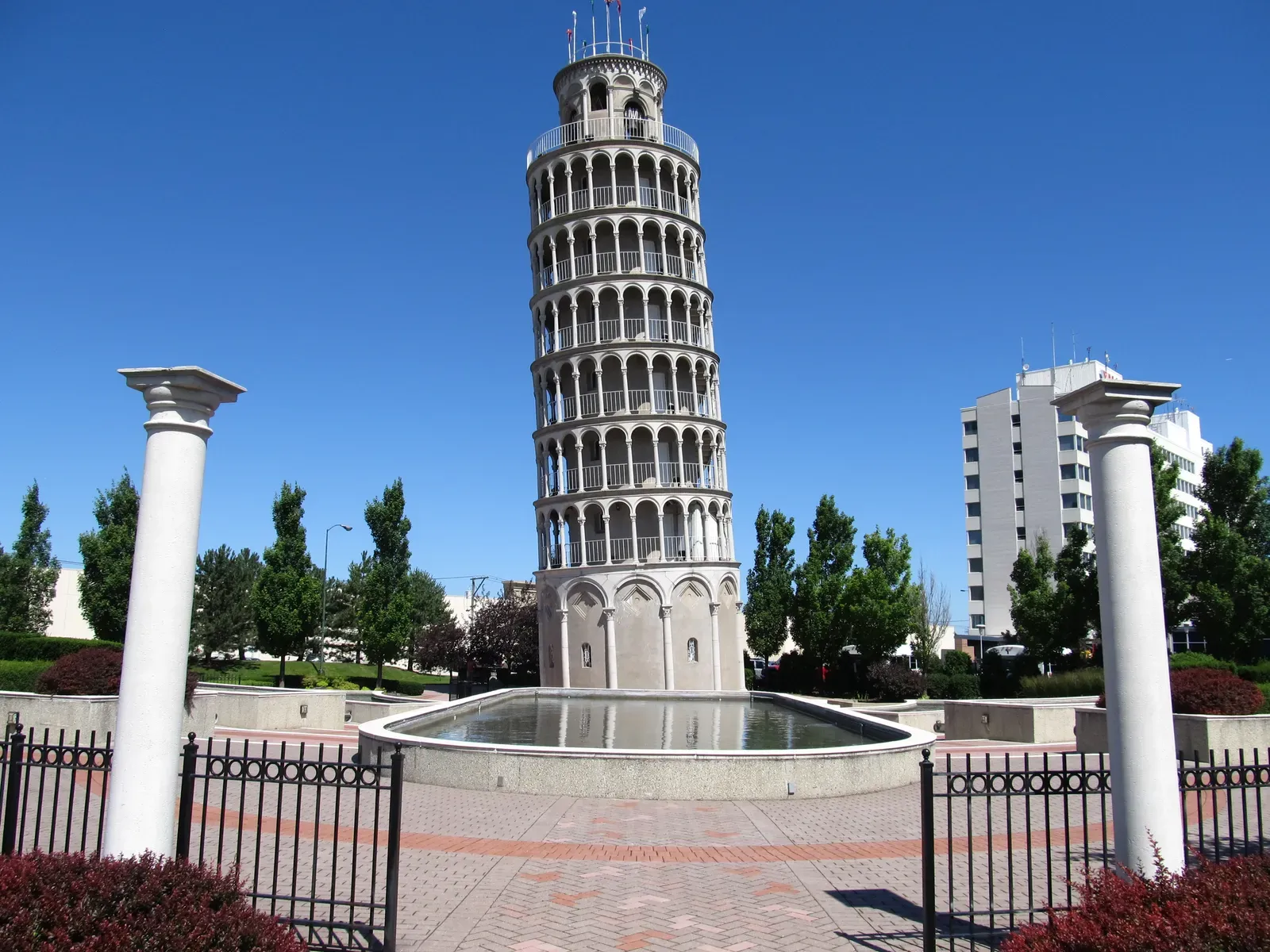
Most Americans have never heard of it, but this half-scale replica of Pisa’s tower sits quietly in a Chicago suburb – and it was never supposed to lean this long without intervention.
Built in the 1930s to disguise a water tank for a nearby pool complex, the tower was deliberately constructed with a tilt to mimic its Italian namesake. Few visitors realize the lean was engineered on purpose, then had to be structurally reinforced decades later when aging brickwork and a shifting foundation turned a cute gimmick into a real safety concern.
Fast Facts
- Height: 94 ft., Diameter: 28 ft., Leaning: 7.4 ft.
- Year Started: 1931, Year Completed: 1934
- A US$1.2 million renovation of the Leaning Tower of Niles was started in 1995 by Mayor Nicholas Blase and the Board of Trustees, and was completed in 1996
- Added to NRHP: 4/22/2019
By the 1990s, local preservation groups stepped in. Engineers repointed the masonry, waterproofed the base, and reinforced the internal structure so the tower’s playful lean wouldn’t become an actual liability.
The fix wasn’t glamorous. No international headlines, no UNESCO oversight – just quiet, unglamorous maintenance that kept a roadside oddity standing safely for another generation.
#2 – The Tower of Nevyansk, Russia
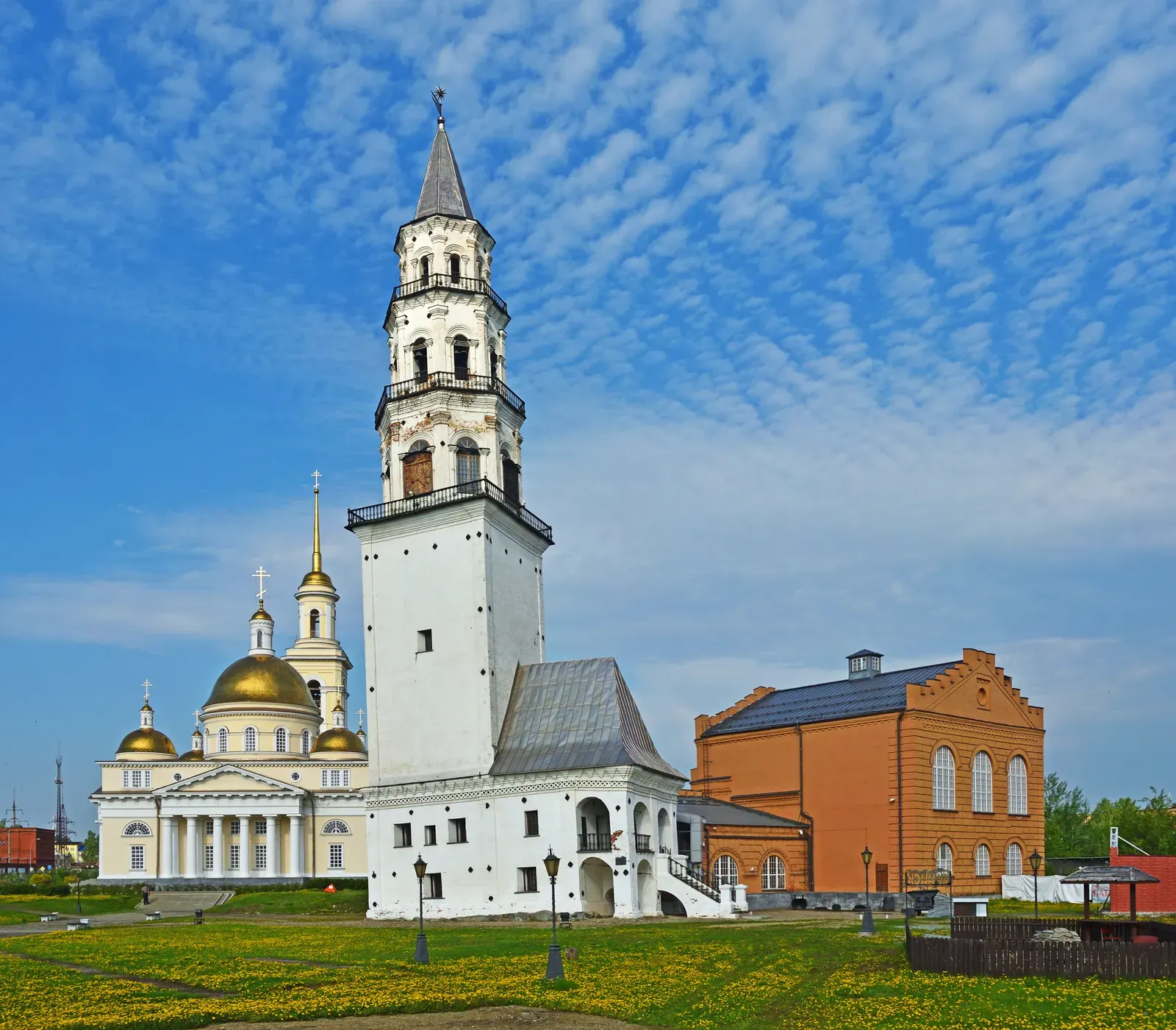
Deep in Russia’s Ural Mountains sits an 18th-century industrial tower that leans dramatically, and almost nobody outside Russia has ever heard the full story.
Built by the powerful Demidov family as part of their ironworks empire, the tower began tilting almost immediately after construction, likely due to unstable ground beneath its foundation. Local legend claims the lean was intentional, built to test construction techniques, though most engineers today believe it was simply a foundation failure that got dressed up as folklore.
Over the following centuries, the structure required repeated reinforcement to keep it from worsening. Soviet-era preservationists and later Russian heritage teams stabilized the base and monitored its movement using techniques not unlike those used at Pisa.
Today it functions as a museum, its lean permanently arrested rather than reversed – a monument to industrial ambition that quietly needed rescuing just to survive long enough to become a tourist attraction.
#3 – St. Mark’s Campanile, Venice
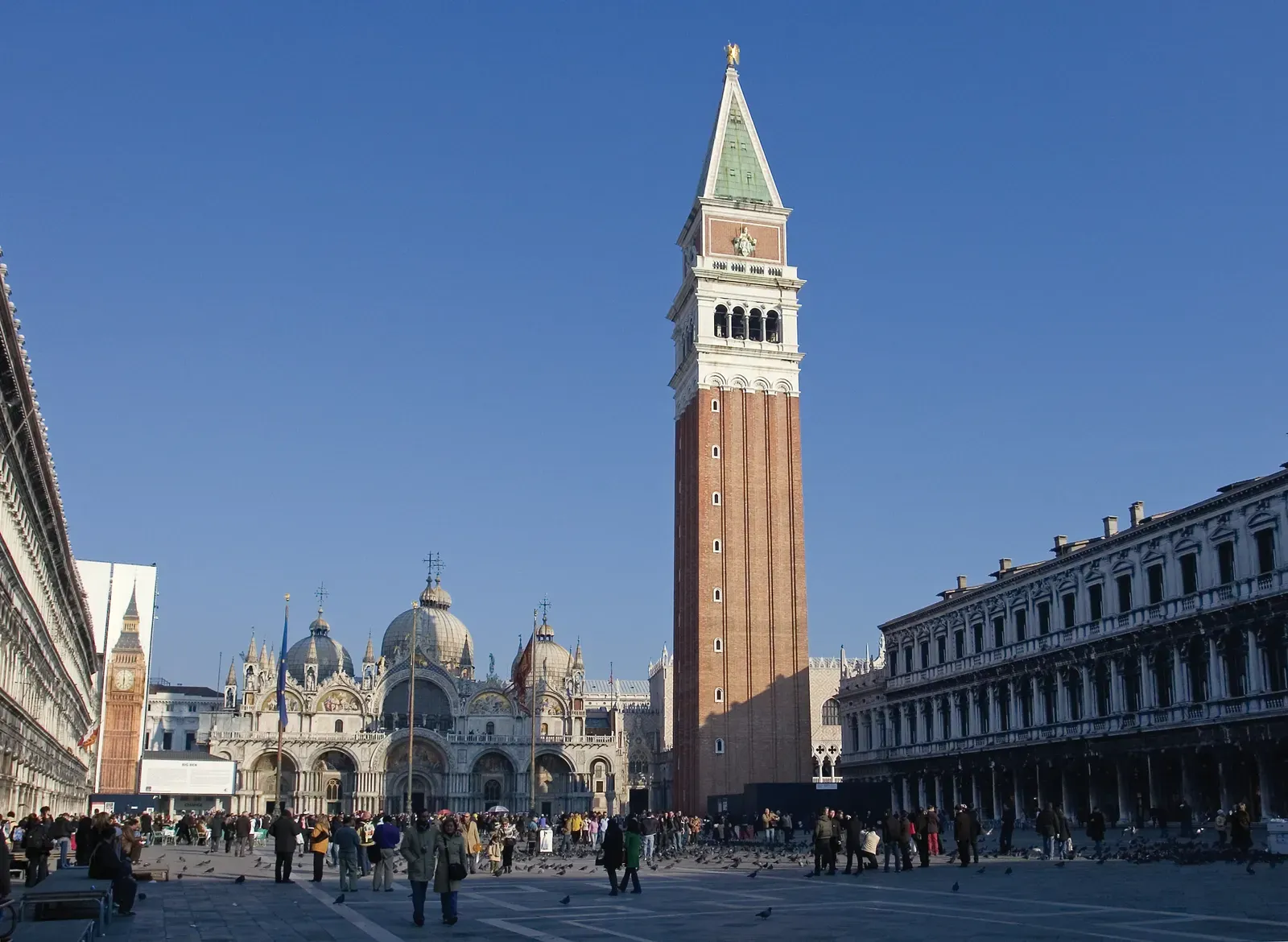
Here’s a secret most tourists in St. Mark’s Square don’t know: the bell tower they’re photographing isn’t the original. The real one collapsed entirely in 1902.
After centuries of gradual lean and stress from repeated lightning strikes and foundation problems, the medieval campanile crumbled to the ground in a matter of seconds, thankfully without killing anyone. The city’s response was radical: rebuild it exactly as it was, brick for brick, but with a hidden reinforced core designed to prevent the same failure from ever happening again.
Com’era, dov’era
Official motto of the 1902 reconstruction – “as it was, where it was”
Engineers used a combination of traditional brick facing and modern internal reinforcement, effectively fixing the structural weaknesses that doomed the original while preserving its outward historic appearance. It reopened in 1912, a full decade after the collapse – proof that sometimes “quietly straightened” really means quietly rebuilt from scratch.
#4 – The St. Moritz Leaning Tower, Switzerland
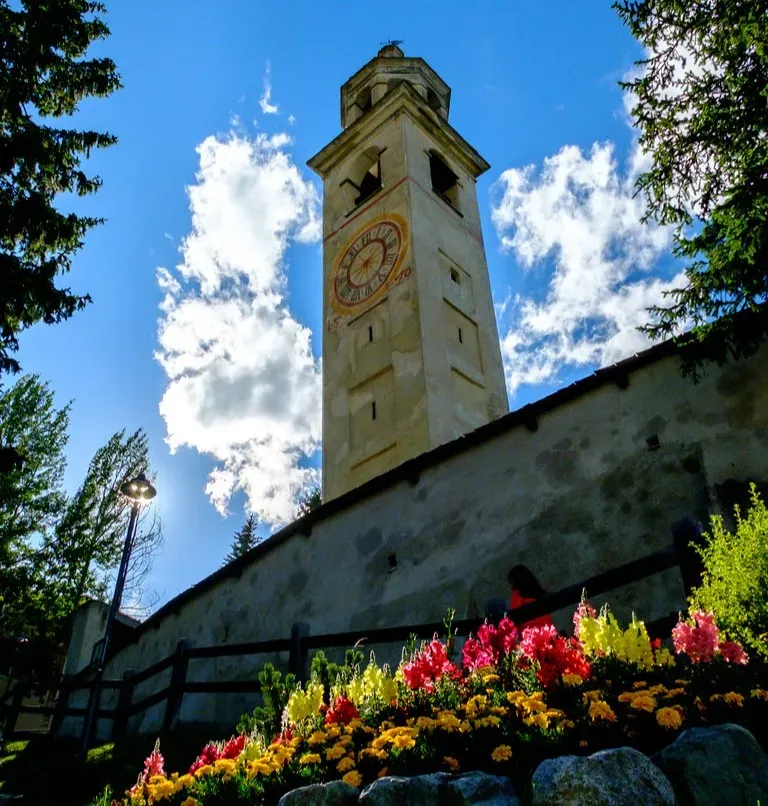
This one has a strange backstory: the tower is famous, but the church it once belonged to doesn’t exist anymore.
Originally part of a 12th-century church complex, the main building was demolished in the 19th century after falling into disrepair, leaving only the bell tower standing – leaning noticeably to one side. Instead of tearing it down along with the rest of the church, local authorities decided the crooked tower alone was worth saving, turning a structural liability into the resort town’s most recognizable landmark.
Since then, engineers have periodically reinforced the tower’s base and monitored its foundation to keep the lean from progressing further.
It’s a rare case where “straightening” mostly meant stopping the clock rather than reversing decades of tilt, freezing the structure exactly as it stands so future generations see the same crooked silhouette.
#5 – Salisbury Cathedral’s Spire, England
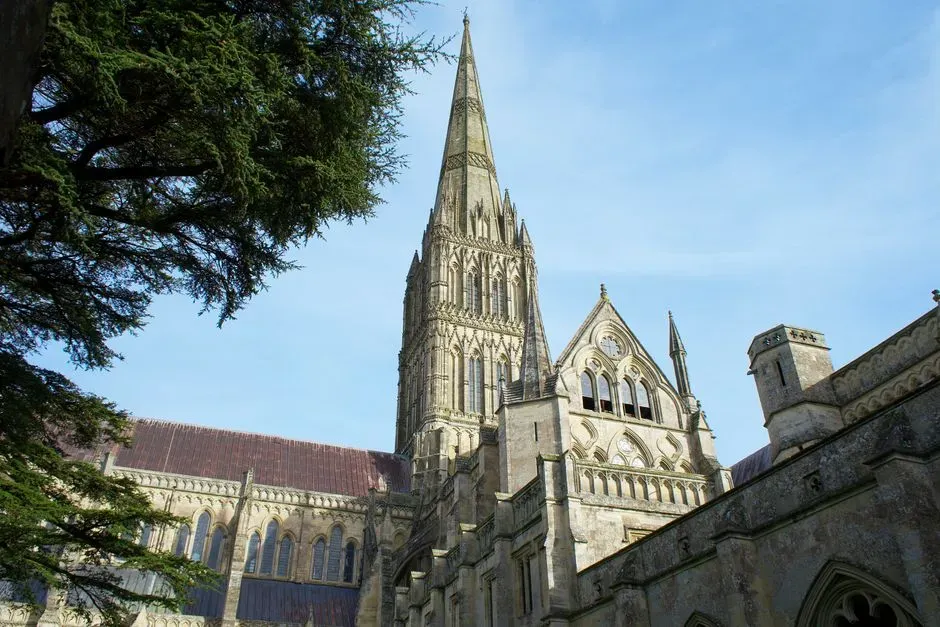
Most visitors staring up at the tallest church spire in Britain have no idea it’s been quietly leaning for centuries under the sheer weight of its own stonework.
The spire, added in the 14th century atop a tower never designed to support that much extra weight, began bowing outward almost immediately. Master builders noticed the strain so early that reinforcement work started within a generation of construction, long before anyone had the science to properly diagnose what was happening.
Iron tie rods and reinforcing bands were added over successive centuries, including significant work following structural surveys in the 17th century, to arrest the outward lean before it could progress into collapse.
The spire still leans slightly today, but its movement has been effectively halted rather than reversed – a centuries-long straightening project executed one iron brace at a time.
#6 – Torre Garisenda, Bologna
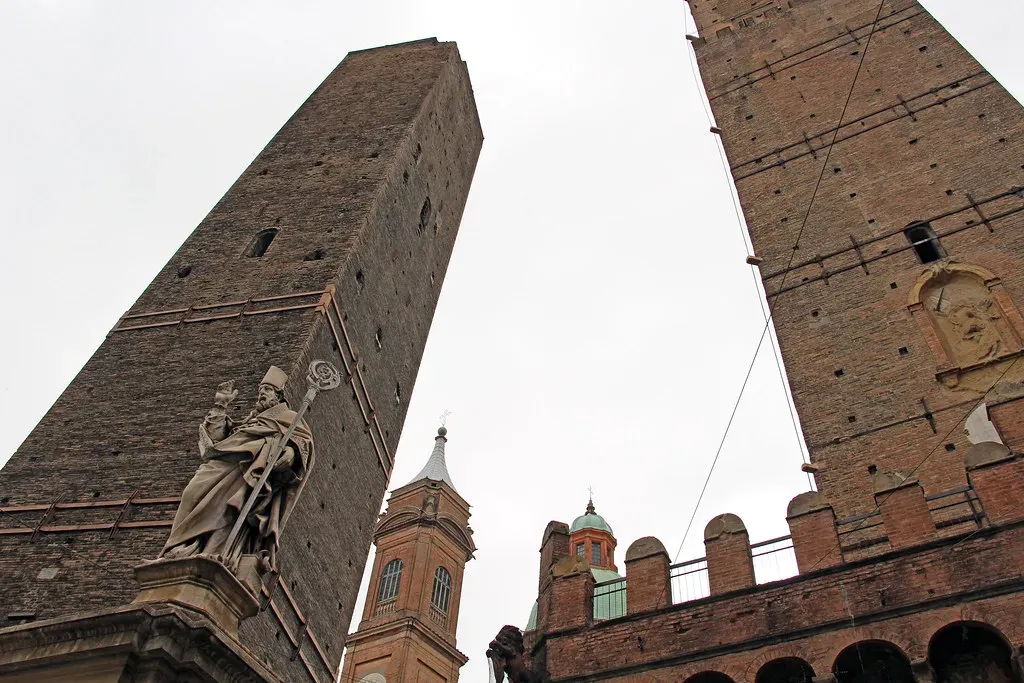
Most people know about Pisa, but far fewer know that Italy has a second leaning tower with an even more dramatic backstory – one so unstable it was partially dismantled on purpose.
Built alongside the taller Asinelli Tower as one of Bologna’s famous “Due Torri,” the Garisenda began leaning so severely during construction that builders eventually shortened it centuries ago rather than risk total collapse. The tower was already leaning badly enough by the 1300s that Dante referenced it in his writing, making it one of literature’s earliest documented “problem buildings.”
In recent years, growing concern about its accelerating tilt led authorities to close the tower to the public while engineers developed reinforcement plans.
Unlike Pisa’s dramatic public restoration, Bologna’s fix has moved quietly and cautiously, with officials prioritizing stabilization over spectacle while the tower stays fenced off from curious tourists.
#7 – Winchester Cathedral, England
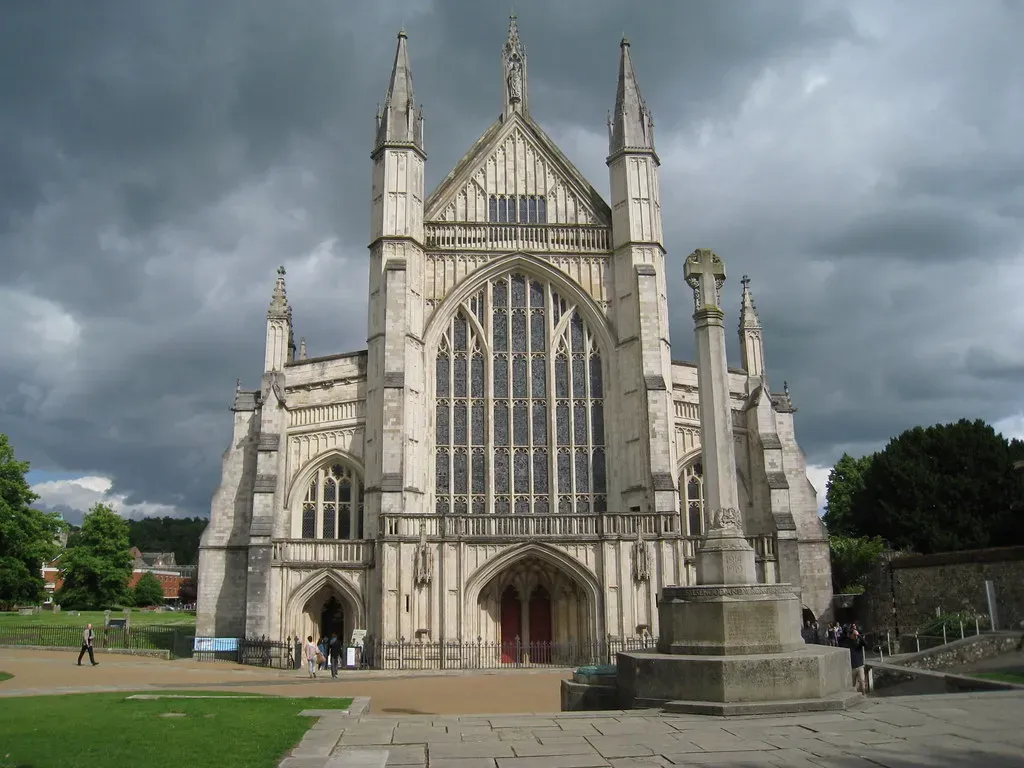
Here’s a story most cathedral visitors never learn: this entire building was saved by one man working alone, underwater, in total darkness.
Constructed on medieval foundations of peat and waterlogged gravel, Winchester Cathedral began sinking so severely by the early 1900s that cracks threatened to bring the entire structure down. The solution wasn’t engineering software or heavy machinery – it was a professional deep-sea diver named William Walker, who spent years submerged beneath the cathedral packing concrete by hand into its failing foundations.
Working essentially blind in murky water, Walker reinforced the base bag by bag until the foundations were solid enough to stop the sinking entirely.
Worth Knowing
- Between 1906 and 1911, working in water up to a depth of six metres (20 feet), he shored up Winchester Cathedral, using more than 25,800 bags of concrete, 114,900 concrete blocks, and 900,000 bricks
- He worked under total darkness because the water was too murky for light to penetrate 20 feet, the depth at which he worked
- His huge, heavy diving suit weighed 200 pounds, which took so much time to put on that he’d just remove his helmet to eat lunch
- George V, whom he had taught to dive, made him a member of the Royal Victorian Order, and there’s even a pub named after him in Winchester
His work quietly prevented what could have been one of England’s great architectural disasters, and today his effort is honored with a statue inside the very building he saved.
#8 – Pisa’s Baptistery, Italy
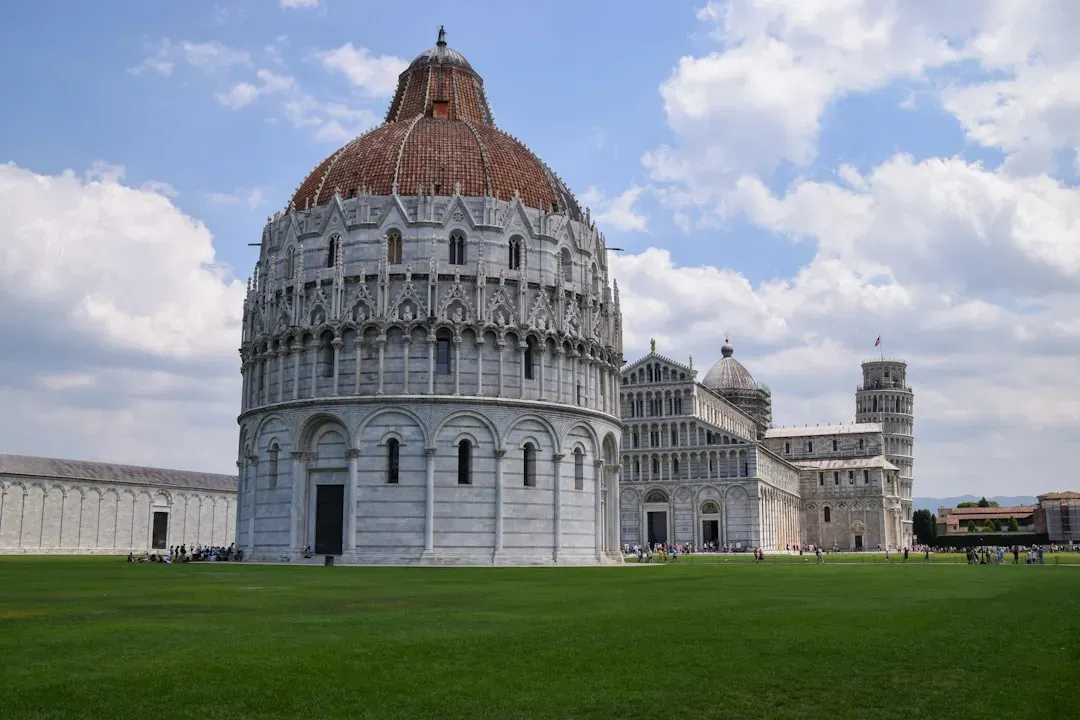
Everyone obsesses over the Leaning Tower a few hundred feet away, but almost nobody talks about the fact that Pisa’s Baptistery leans too – and was quietly fixed at the same time.
Built on the same unstable, waterlogged soil as its more famous neighbor, the Baptistery of San Giovanni developed its own lean over the centuries, just less dramatically than the tower. The same geological conditions that made the Leaning Tower famous nearly did the same thing to the building right next to it, though its heavier, more symmetrical design kept the tilt from becoming a spectacle.
When engineers launched the broader conservation effort across Pisa’s Piazza dei Miracoli, monitoring and stabilization work extended to the Baptistery and cathedral as well, not just the tower everyone photographs.
The lean was arrested quietly, with none of the fanfare of the tower’s restoration – proof that fame, not structural risk, determines which buildings get the spotlight.
#9 – Elizabeth Tower (Big Ben), London
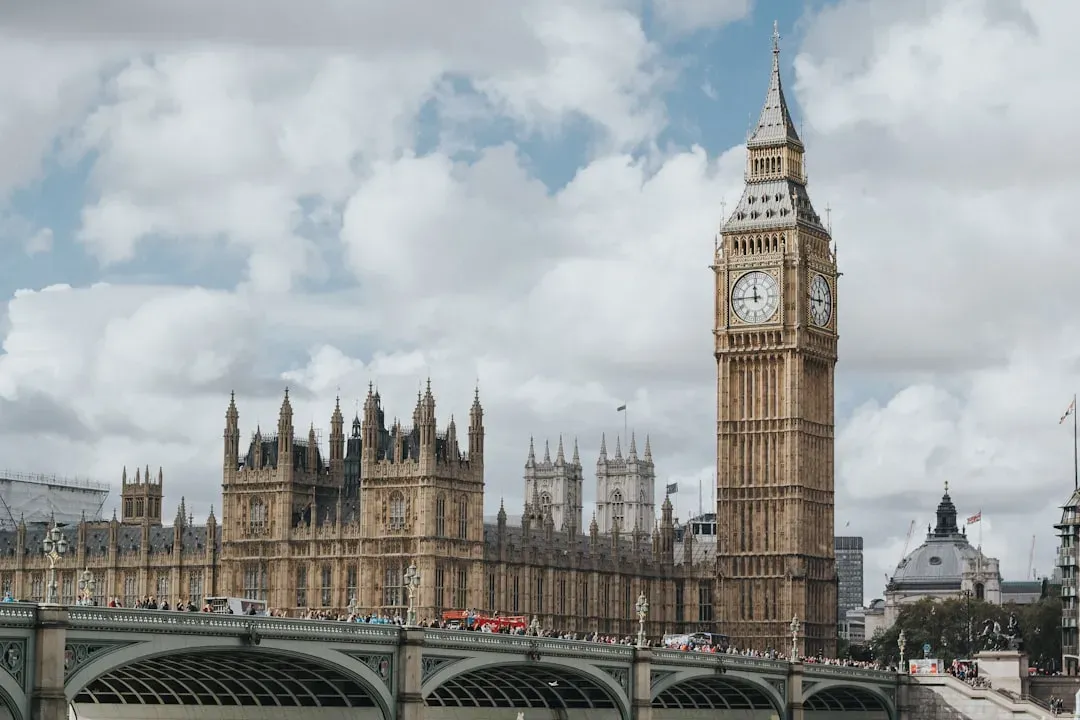
Most tourists assume Big Ben has always stood perfectly straight. It hasn’t – and engineers had to intervene to keep it that way.
During the 1990s construction of the Jubilee Line extension, tunnel boring machines dug directly beneath Westminster, dangerously close to the tower’s foundations. Engineers used a technique called compensation grouting – injecting material underground in real time to counteract the tunneling’s effect – to stop the tower from tilting further while trains literally passed beneath it.
The tower still carries a small permanent lean from historical ground settlement, but the aggressive, proactive engineering during the tunnel project prevented what could have become a far more serious tilt.
It’s one of the earliest large-scale examples of “predictive” straightening – fixing a lean before it fully happens, instead of repairing the damage afterward.
#10 – The Leaning Tower of Suurhusen, Germany
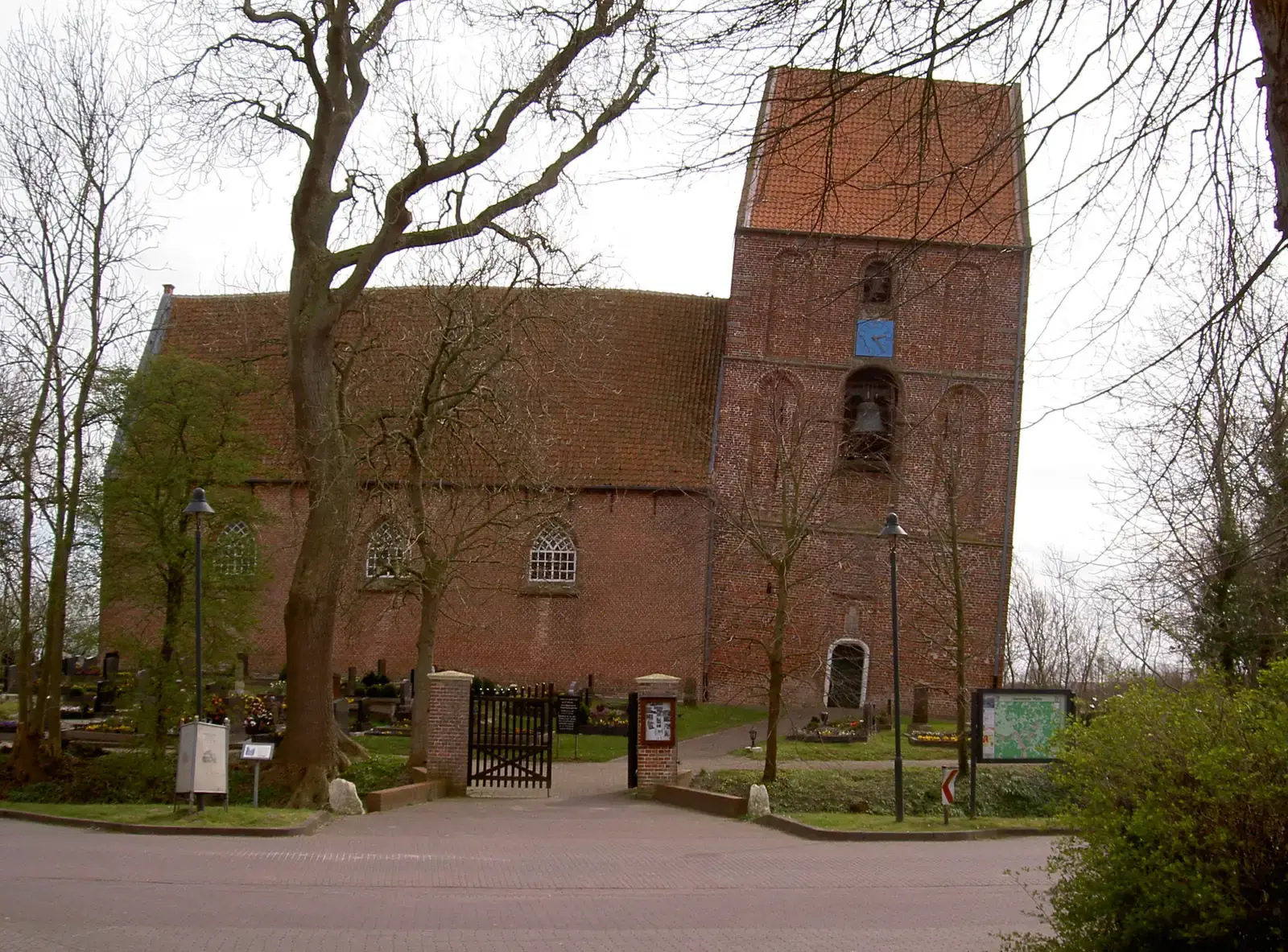
While Pisa gets all the attention, this obscure German church tower actually holds the real record for the world’s most unintentionally tilted structure.
The tower’s foundation was originally built on marshy land over oak tree trunks, which stayed preserved as long as they sat underwater. When the surrounding land was drained in the 19th century, the wood rotted, and the tower began to tilt in earnest.
At its worst, Suurhusen leaned at 5.19 degrees, compared with 3.97 degrees for Pisa after its own stabilization – meaning this tiny village church actually out-leans Italy’s most famous monument. Most people have never heard of it, yet its tower was objectively more dangerous than Pisa’s ever was.
Quick Compare: Who Leans the Most?
- Leaning Tower of Suurhusen: 5.19 degrees at its worst, once the official record holder
- Leaning Tower of Pisa before restoration: used to lean 5.5 degrees in 1990
- Leaning Tower of Pisa today: an incline of about 3.97 degrees
- Capital Gate, Abu Dhabi (built intentionally): 18 degrees westwards, more than four times that of Pisa’s famous tower
Concerned officials closed it to the public in 1975, and after a decade of reinforcement work it reopened in 1985, stabilized enough to hold visitors again. It quietly held the world’s leaning-tower record for years, until an intentionally-tilted skyscraper in Abu Dhabi finally topped it.
#11 – The Metropolitan Cathedral, Mexico City
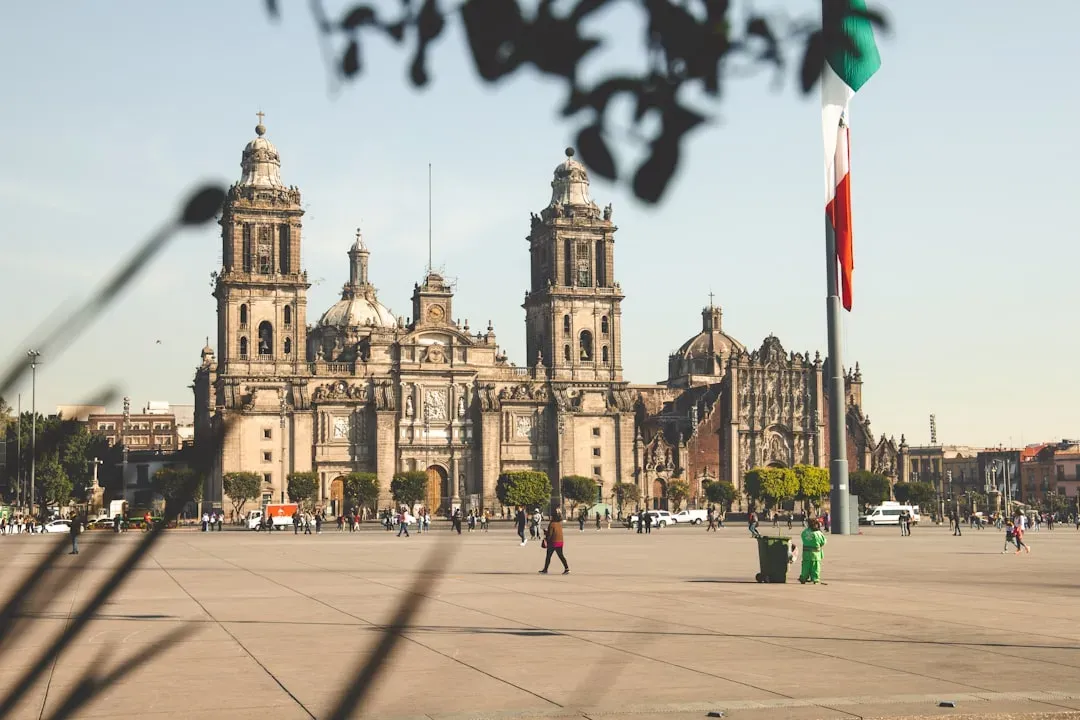
This is arguably the most audacious straightening project on the planet, and almost nobody outside Mexico knows it happened.
Built directly atop the ruins of an Aztec ceremonial complex on the soft lakebed soil beneath modern Mexico City, the cathedral developed fissures and cracks from uneven settlement that became alarming by 1989, triggering the fourth major intervention to save the building in the 20th century alone. Rather than trying to prop up the sinking front end, engineers chose a wildly counterintuitive fix: carefully remove subsoil from beneath the healthier side, then let it settle downward to match the damage already done.
The engineering team essentially made the sturdier side of the cathedral sink on purpose to catch up with the already-damaged side, using a painstaking process that took years to complete safely. Crews dug 32 concrete-lined wells, each about 10 feet in diameter, reaching as far as 75 feet underground beneath the cathedral and the adjacent Sagrario church.
The underexcavation work ran from August 1993 to June 1998, with maximum corrective settlement reaching more than 90 centimeters – nearly a full meter of correction on one of the largest cathedrals in the Americas.
#12 – Millennium Tower, San Francisco
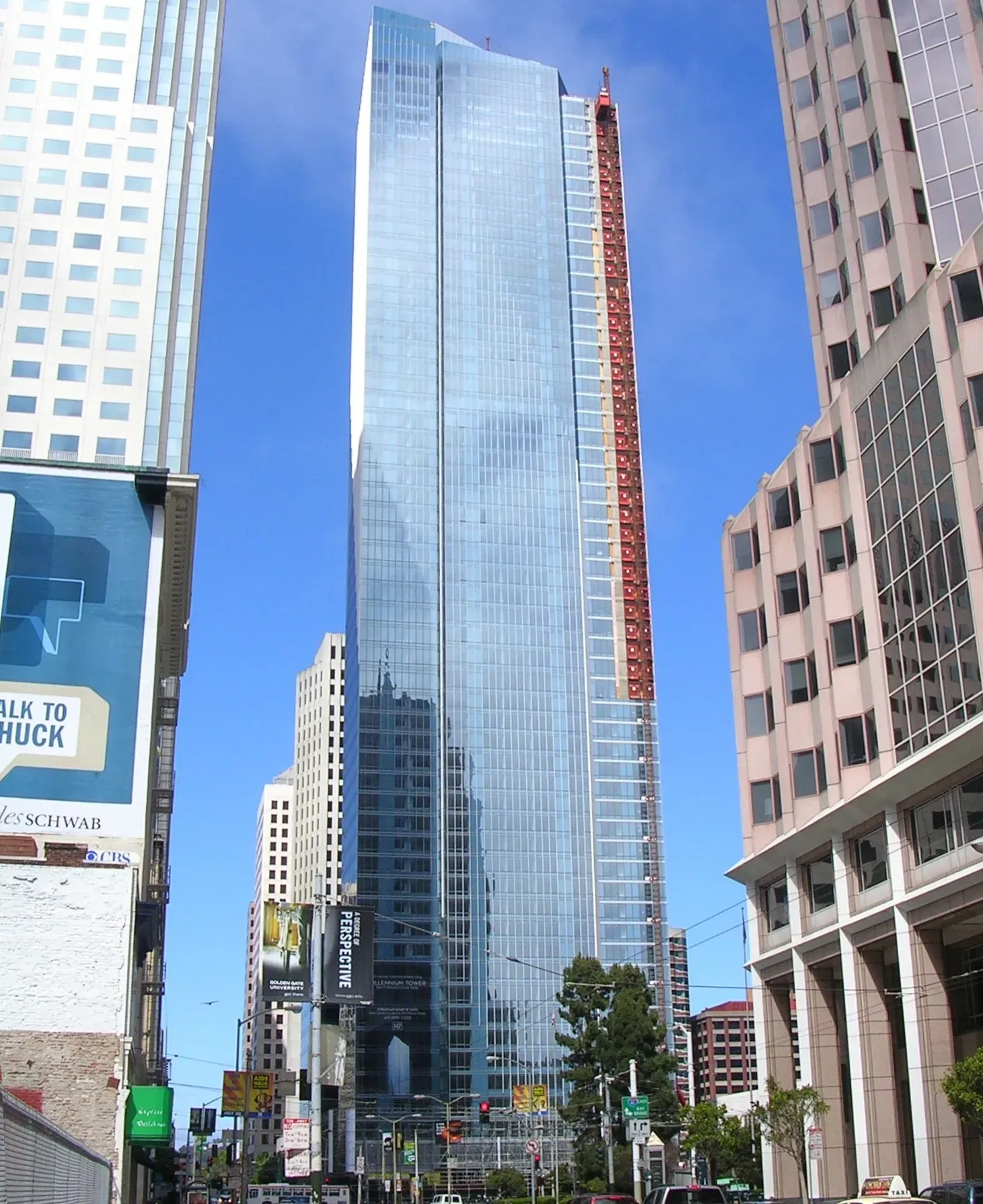
This is the most expensive straightening job on this entire list, and it happened in the middle of a modern American city, largely outside public awareness until it was almost too late.
The 58-story luxury condo tower opened in 2009 and quickly began sinking unevenly into the soft landfill soil beneath San Francisco’s Financial District. By the time engineers went public with a fix, the 645-foot tower was tilting 26 inches to the north and west, alarming residents who had paid millions for units inside a building nobody had told them was moving.
The fix required drilling 18 concrete piles into bedrock deep under the property and shifting a portion of the building’s load onto them – a $100 million undertaking that took years and multiple setbacks to complete.
When the stabilization finally wrapped up in 2023, engineers reported that the building had stopped settling and recovered about two inches of tilt. It’s proof that even in the 2020s, glass-and-steel skyscrapers can quietly need the same rescue treatment as a 900-year-old Italian bell tower.
#13 – The Leaning Tower of Pisa, Italy
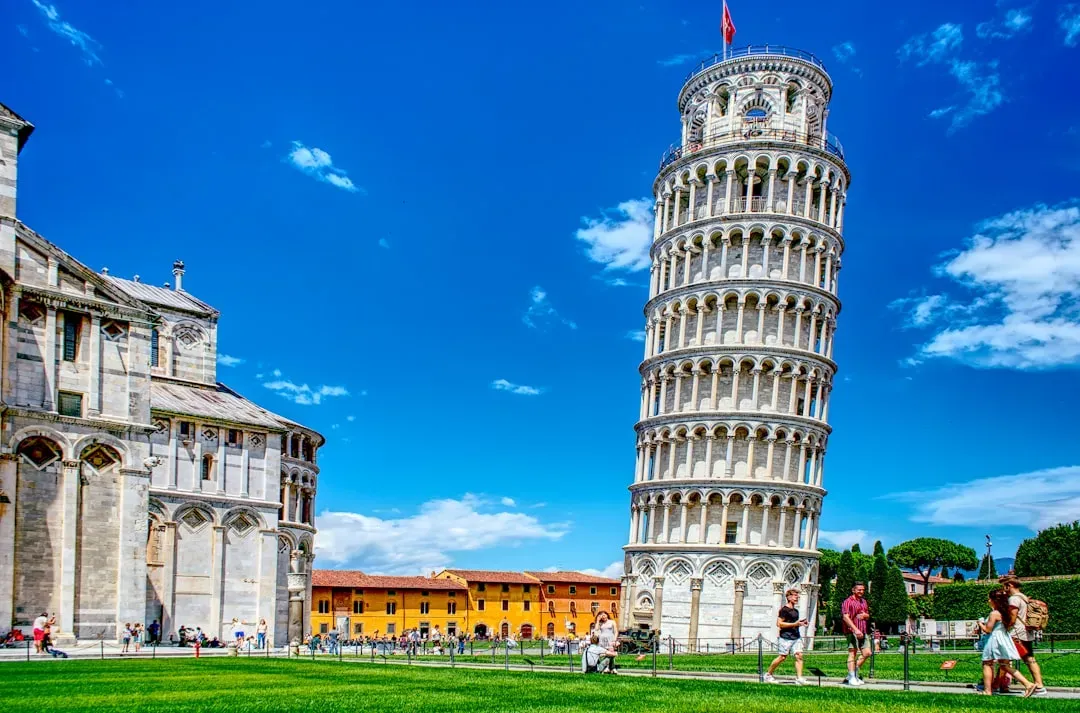
Of course the most famous leaning building on Earth had to be the one that got the most dramatic, most closely watched straightening job in architectural history.
By the late 20th century, engineers realized the tower was in genuine danger of toppling completely. In 1990 it was declared at risk of collapse, with computer models predicting that a tilt beyond 5.44 degrees would bring it down for good. The tower was closed to the public, and a special international commission was formed to save it using a mix of historic caution and cutting-edge geotechnical science.
Most visitors today have no idea the tower they’re photographing was once considered mathematically doomed to fall within their lifetime. Engineers ultimately used a method called underexcavation, carefully removing small amounts of soil from beneath the tower’s north side so gravity would do the straightening work naturally.
At a Glance
- 1990: Tower closed to the public, declared at risk of collapse
- Method used: underexcavation, removing soil from beneath the north side
- 2001: Lean reduced by 17 inches, down to 13.5 feet from perpendicular
- May 2008: Movement officially stopped, total lean reduced by 19 inches
The results were extraordinary. Earth siphoned from underneath the foundations decreased the lean by 17 inches, down to 13.5 feet from perpendicular, and the project finished ahead of catastrophe in 2001. Even stranger, the tower kept improving on its own afterward – it continued to straighten without any further excavation until May 2008, when sensors finally showed the movement had stopped, with the total lean reduced by 19 inches. It remains the gold standard for how to quietly save a leaning icon without erasing the very lean that made it famous in the first place.
The Bottom Line
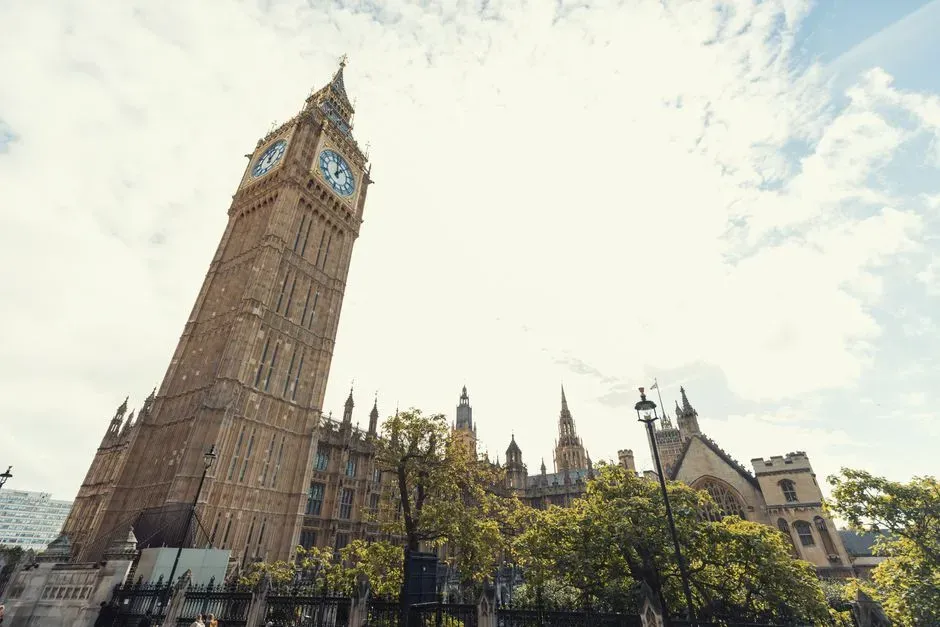
The pattern across every single one of these buildings is the same: quiet, unglamorous engineering saved landmarks that public spectacle alone never could. Nobody throws a parade for underexcavation or perimeter pile installation, but without it, Pisa would be rubble, Mexico City’s cathedral would be split in half, and San Francisco’s Millennium Tower would be an uninhabitable lawsuit magnet.
Frankly, it’s a little wild that some of the world’s most photographed buildings were secretly one bad soil report away from disaster. The real lesson here is uncomfortable but true: a famous lean isn’t charming on its own. It’s usually a five-alarm warning that took decades of quiet, expensive engineering to hide well enough that we could keep calling it charming.
Which of these surprised you the most? Drop your pick in the comments.