Picture an ocean so vast, so alien, so brutally alive that nothing in our modern seas even comes close. No recognizable coastlines. No polar ice caps. No Atlantic, no Pacific as you know them today. Just endless warm water, strange serpentine giants, and a planet in total geological upheaval. That was Earth’s ocean world during the age of dinosaurs, a stretch of time spanning roughly 186 million years that we call the Mesozoic Era.
Most people know the dinosaurs ruled the land. Few stop to think about what was happening in the water. Honestly, it might be the more dramatic story. Let’s dive in.
1. There Was Essentially One Giant Ocean Surrounding One Giant Continent
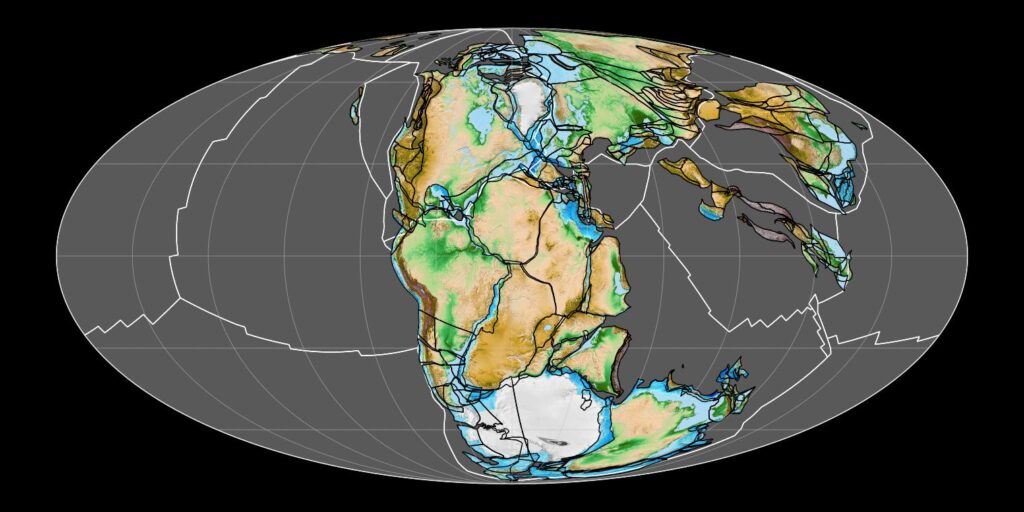
Before you can understand the oceans of the dinosaur age, you need to rewind the entire map. At the beginning of the Mesozoic Era, a single great ocean covered most of the world. Known as the Panthalassa Ocean, this world sea surrounded the supercontinent Pangaea. Think of it as one colossal blue ring circling a single enormous landmass. Strange, right?
Panthalassa, from the Greek meaning “all sea,” was the vast global ocean that surrounded Pangaea during the Late Paleozoic and the early Mesozoic eras. Within the cradle of Pangaea lay a separate body of water known as the Tethys Ocean. So you had one world ocean on the outside and a tropical sea nestled on the inside. It’s hard to wrap your mind around, but that was the entire planetary ocean situation when the first dinosaurs walked the Earth.
2. The Tethys Ocean Was the Beating Heart of Mesozoic Marine Life
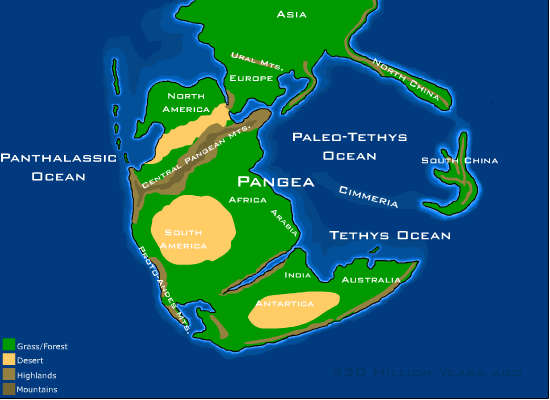
The Tethys Ocean, also called the Tethys Sea or the Neo-Tethys, was a prehistoric ocean during much of the Mesozoic Era and early-mid Cenozoic Era. It sat along the equator, bathed in warmth, and served as one of the most biologically productive bodies of water in Earth’s entire history. You could think of it as the Mediterranean on an almost incomprehensible scale.
The Tethys Sea teemed with life, which thrived in the warm, subtropical waters. There were many ammonites, sea lilies, bivalves, sea cucumbers and corals. They were part of a food pyramid and were preyed upon by marine reptiles with big, scary beaks, such as the ichthyosaurus and the plesiosaurus. A large volume of warm water flowed westward between the continents and connected the major oceans, most likely playing a large role in Earth’s heat transport and climate control. In other words, the Tethys was not just a sea – it was a planetary thermostat.
3. Ocean Temperatures Were Dramatically Warmer Than Today
Here is the thing – if you jumped into a Mesozoic ocean, you would not be reaching for a wetsuit. Earth’s climate during the Mesozoic Era was generally warm, and there was less difference in temperature between equatorial and polar latitudes than there is today. The whole planet was running hotter, and the oceans reflected that completely.
The climate of the Cretaceous is less certain and more widely disputed. Probably, higher levels of carbon dioxide in the atmosphere are thought to have almost eliminated the north-south temperature gradient: temperatures were about the same across the planet, and about 10°C higher than today. Ocean deeps were warmer, perhaps by 8°C, than the present. That means even the deep, dark ocean floor was a warmer place. It is a reminder of just how different this world really was.
4. Sea Levels Were Staggeringly High – Oceans Flooded the Continents
Sea level was higher during most of the Cretaceous than at any other time in Earth history, and it was a major factor influencing the paleogeography of the period. We are not talking about a few extra meters of water lapping at modern coastlines. The oceans were inundating huge interior regions of continents in ways that seem almost unreal to imagine.
The first cause of these sharp sea level rises was warm global temperatures, which prevented large volumes of water from being sequestered on land in the form of ice sheets. The second was related to accelerated seafloor spreading; the attendant enlargement of ocean ridges displaced enormous amounts of ocean water onto the landmasses. Marine transgression was so extensive that in North America, for example, a seaway spread all the way from the Arctic to the Gulf of Mexico in the Cretaceous Period. Where Kansas sits today, there was an ocean. Let that sink in.
5. The Continents Were Literally Being Torn Apart, Reshaping the Oceans
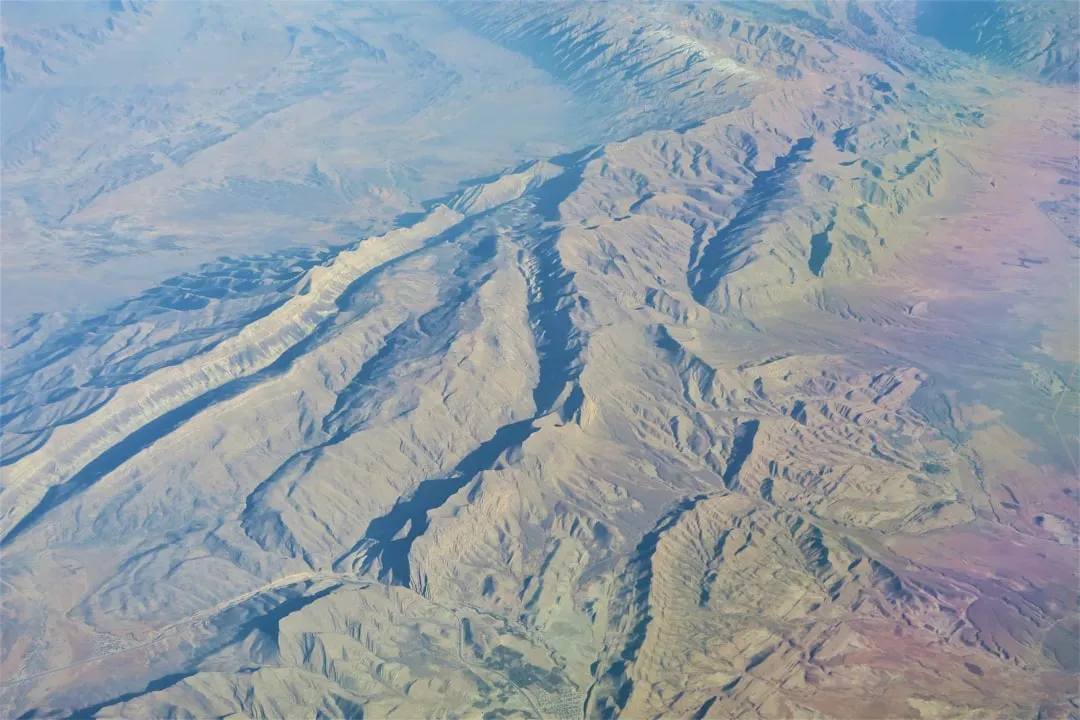
You simply cannot talk about Mesozoic oceans without talking about the breakup of Pangaea. Pangaea broke apart, and the massive Panthalassa Ocean broke into multiple basins. The Tethys Ocean split Asia from the rest of the land and the Atlantic Ocean began to form. This was a planet actively reinventing itself, and the oceans were the direct result of that reinvention.
During the Jurassic Period, shifting continents compressed the Tethys to form an equatorial seaway stretching from today’s Caribbean Islands to what is now the Himalayas. The increase in sea levels opened up the Atlantic seaway, which has grown continually larger until today. Every million years, the map was redrawn. The oceans you see today were assembled piece by piece, right under the feet of the dinosaurs.
6. Reptiles – Not Fish or Mammals – Were the Ocean’s Apex Predators
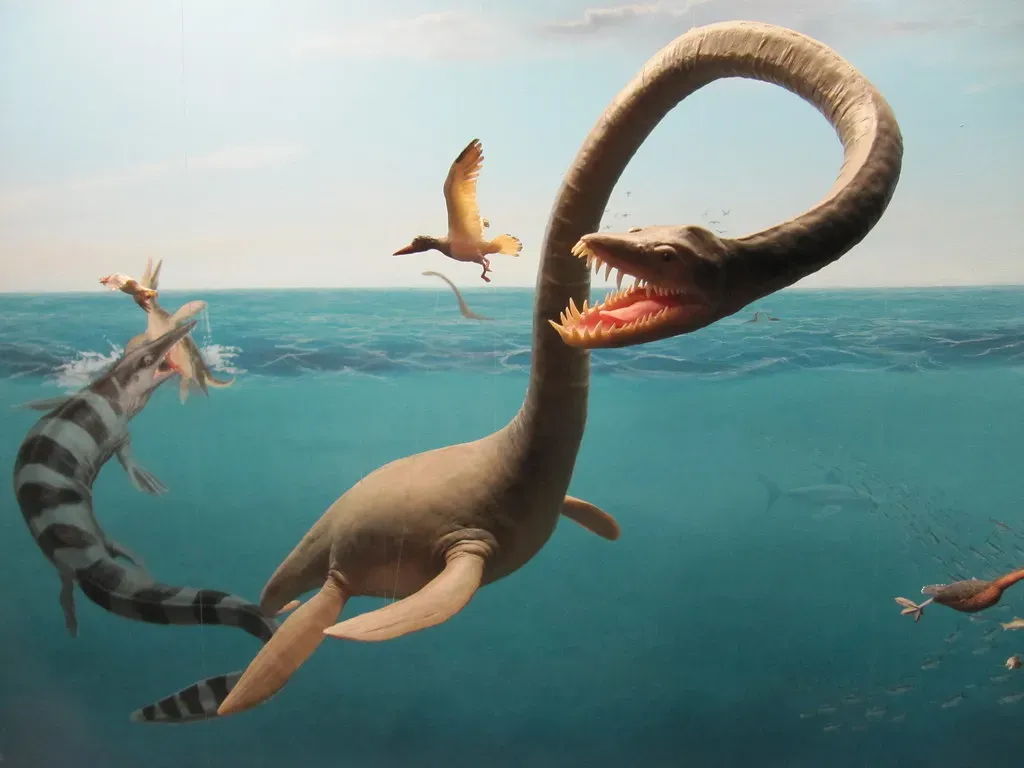
Forget sharks. Forget whales. During the age of dinosaurs, the most terrifying things in the ocean were reptiles. Before large mammals, reptiles ruled the ocean. During the Mesozoic, the time period when dinosaurs roamed on land, many of these large creatures were the top predators in the ocean food chain and fed on fish, cephalopods, bivalves, and even one another. It was a full-on reptile takeover, above and below the waterline.
There were more than a dozen groups of marine reptiles in the Mesozoic, of which four had more than 30 genera, namely sauropterygians (including plesiosaurs), ichthyopterygians, mosasaurs, and sea turtles. Mesozoic marine reptiles explored many different swimming styles and diets. Their diet included fish, cephalopods, other vertebrates, and hard-shelled invertebrates, whereas no herbivore is known at this point. Every ecological role that dolphins, orcas, and great white sharks play today was filled by a reptile back then.
7. Ichthyosaurs Were the Dolphins of the Dinosaur Age
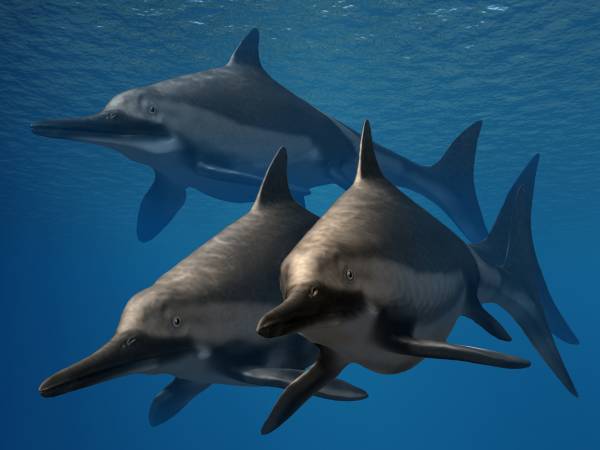
I think ichthyosaurs are one of the most underrated creatures in all of prehistory. Ichthyosaurians thrived during much of the Mesozoic era, first appearing around 250 million years ago. During the Early Triassic epoch, ichthyosaurs evolved from a group of unidentified land reptiles that returned to the sea, in a development similar to how the mammalian land-dwelling ancestors of modern-day dolphins and whales returned to the sea millions of years later, which they gradually came to resemble in a case of convergent evolution. Nature, apparently, has a favorite body plan for fast ocean hunters.
Both ichthyosaurs and plesiosaurs were found to have a body temperature similar to that of today’s whales, between 95 to 102 degrees Fahrenheit (35 to 39 degrees Celsius). So these ancient reptiles were essentially warm-blooded, just like modern marine mammals. Ichthyosaurians were particularly abundant in the Late Triassic and Early Jurassic periods, until they were replaced as the top aquatic predators by another marine reptilian group, the Plesiosauria, in the later Jurassic and Early Cretaceous. Even the top predator slot was hotly contested.
8. Plesiosaurs Had Necks That Defied All Logic
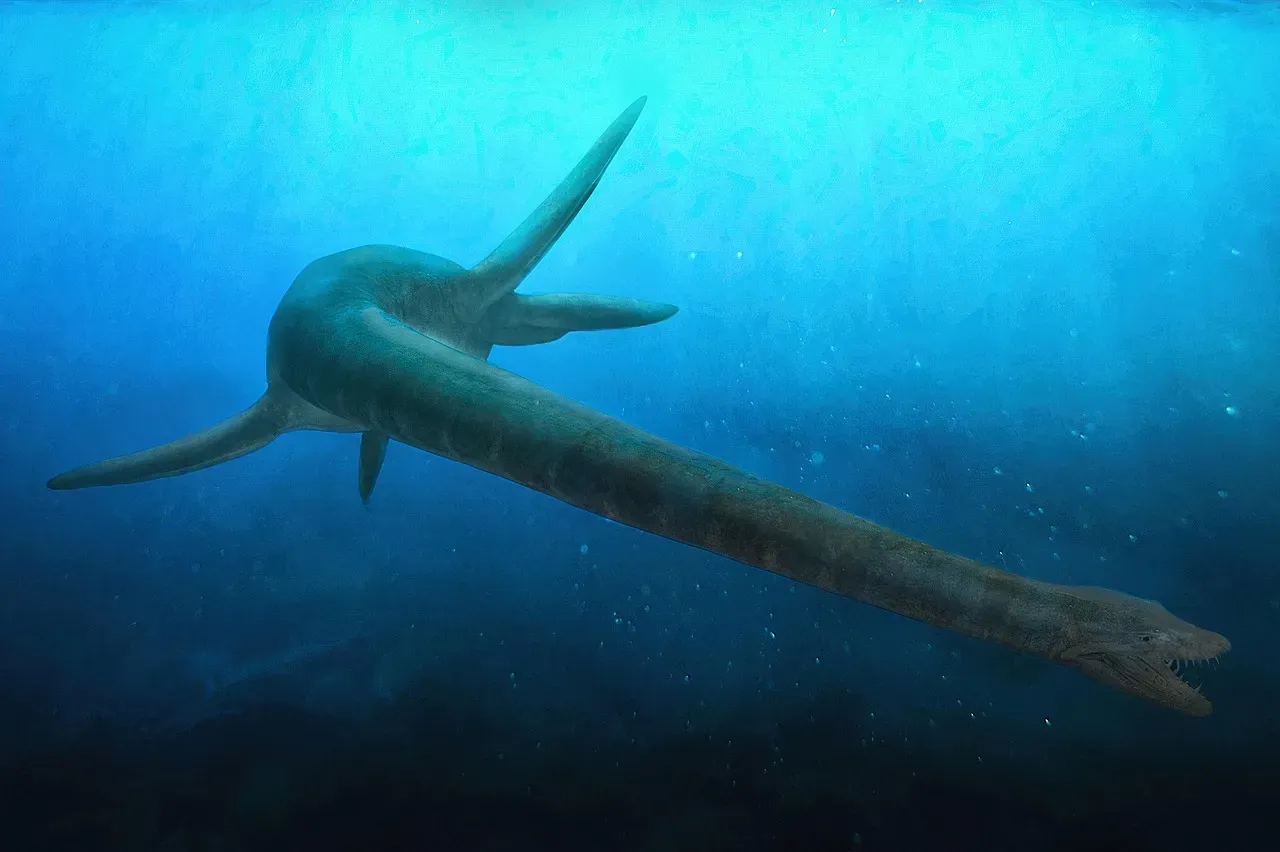
If you ever wondered where the Loch Ness Monster legend got its blueprint, look no further. Plesiosaurs existed in oceans across the world: in European seas and around the Pacific Ocean, including Australia, North America and Asia. Plesiosaurs ranged in length from less than 2 metres to more than 17 metres. Some species had incredibly long necks, almost twice as long as the rest of their body. Picture a creature the length of a city bus, with a neck that stretches out like a garden hose. That was a real animal.
Later in the Early Cretaceous, the Elasmosauridae appeared; these were among the longest plesiosaurs, reaching up to fifteen meters in length due to very long necks containing as many as 76 vertebrae, more than any other known vertebrate. The flipper arrangement is unusual for aquatic animals in that probably all four limbs were used to propel the animal through the water by up-and-down movements. The tail was most likely only used for helping in directional control. They flew through the water on four great wings, like an underwater bird. Remarkable.
9. Mosasaurs Were Late Arrivals Who Took Over Everything
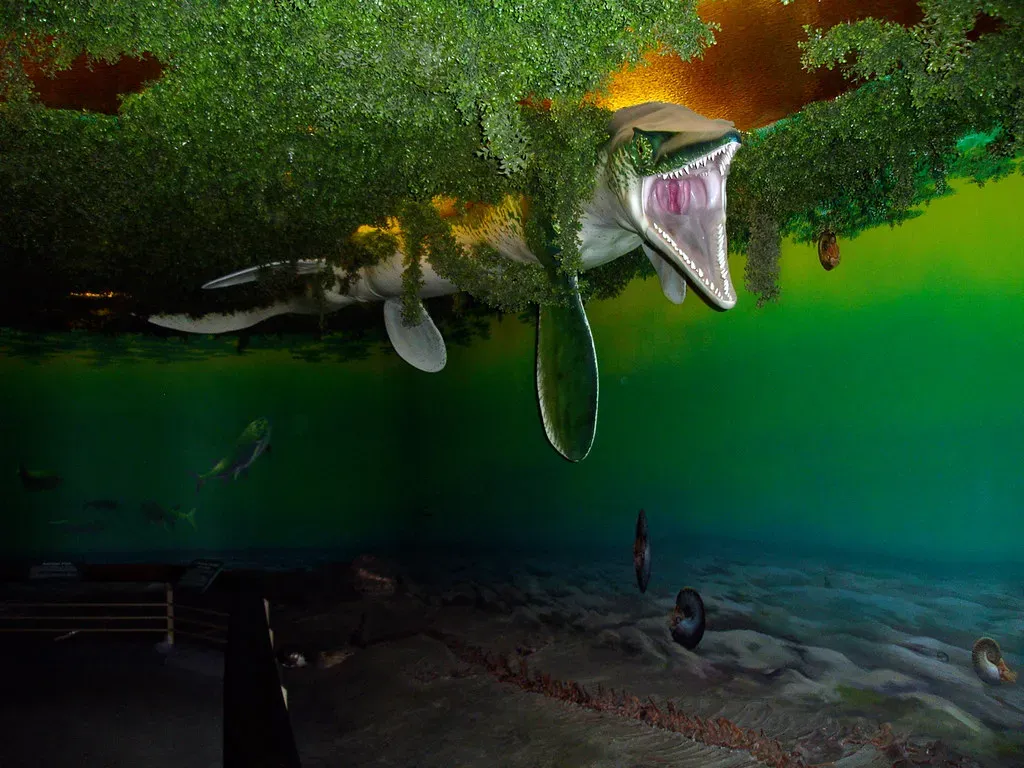
Here is a story about timing. Mosasaurs entered the scene rather late, yet became the most dominant ocean predators of the final chapter of the dinosaur age. Mosasaurs were relative latecomers during the span of the Mesozoic. While ichthyosaurs, plesiosaurs, and turtles reigned supreme since the early Triassic, the first mosasaur didn’t emerge until the late Cretaceous, about 99 million years ago. They showed up late to the party and proceeded to take over the whole venue.
During the last 20 million years of the Cretaceous period, with the extinction of the ichthyosaurs and pliosaurs, mosasaurids became the dominant marine predators. Mosasaurs breathed air, were powerful swimmers, and were well-adapted to living in the warm, shallow inland seas prevalent during the Late Cretaceous period. Mosasaurs were so well adapted to this environment that they most likely gave birth to live young, rather than returning to the shore to lay eggs as sea turtles do. Giving birth in open water while ruling the entire ocean? That is a confident animal.
10. The Ocean’s Reefs Were Built by Giant Clam-Like Creatures, Not Coral
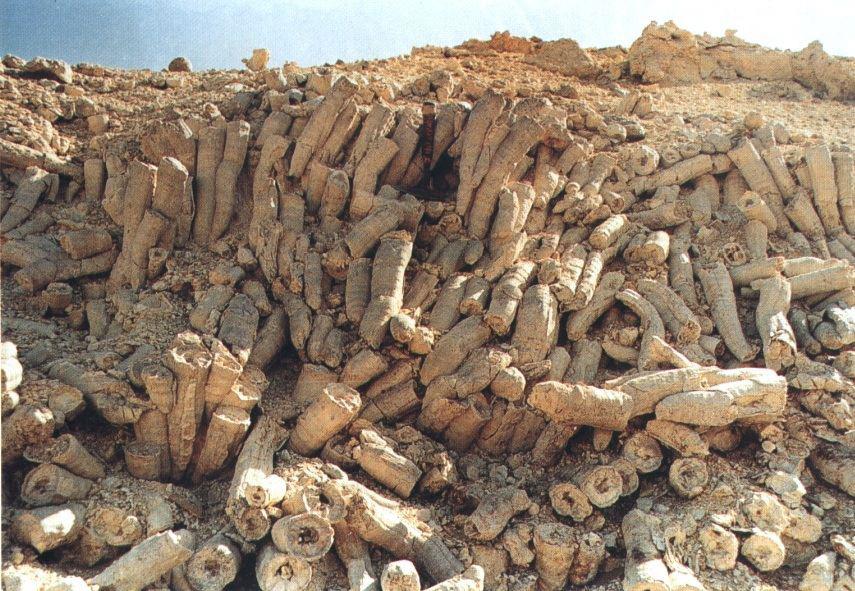
You might picture coral reefs as a timeless feature of the ocean. They are not. About 100 million years ago, during the heyday of the dinosaurs, the majority of reefs were built by mollusks called rudist clams. Like modern clams, rudists were bivalves, with two shells joined at a hinge. The coral reefs we take for granted today simply did not exist in anything like their current form during most of the Mesozoic.
One major group of rudists grew upright, like big ice cream cones standing on end. At the beginning of the Mesozoic Era during the Triassic, the ocean’s reefs were hard hit by the Permian extinction. It took millions of years for new, diverse seafloor ecosystems to evolve. By the time of the Jurassic, the seafloor was again thriving, but the reef’s composition was different than the reefs we think of today. A field of cone-shaped clams stretching for miles along the seafloor – it sounds like science fiction, but it was just a Tuesday in the Cretaceous ocean.
11. Tiny Plankton Were Building the White Cliffs of Dover – and the World’s Oil
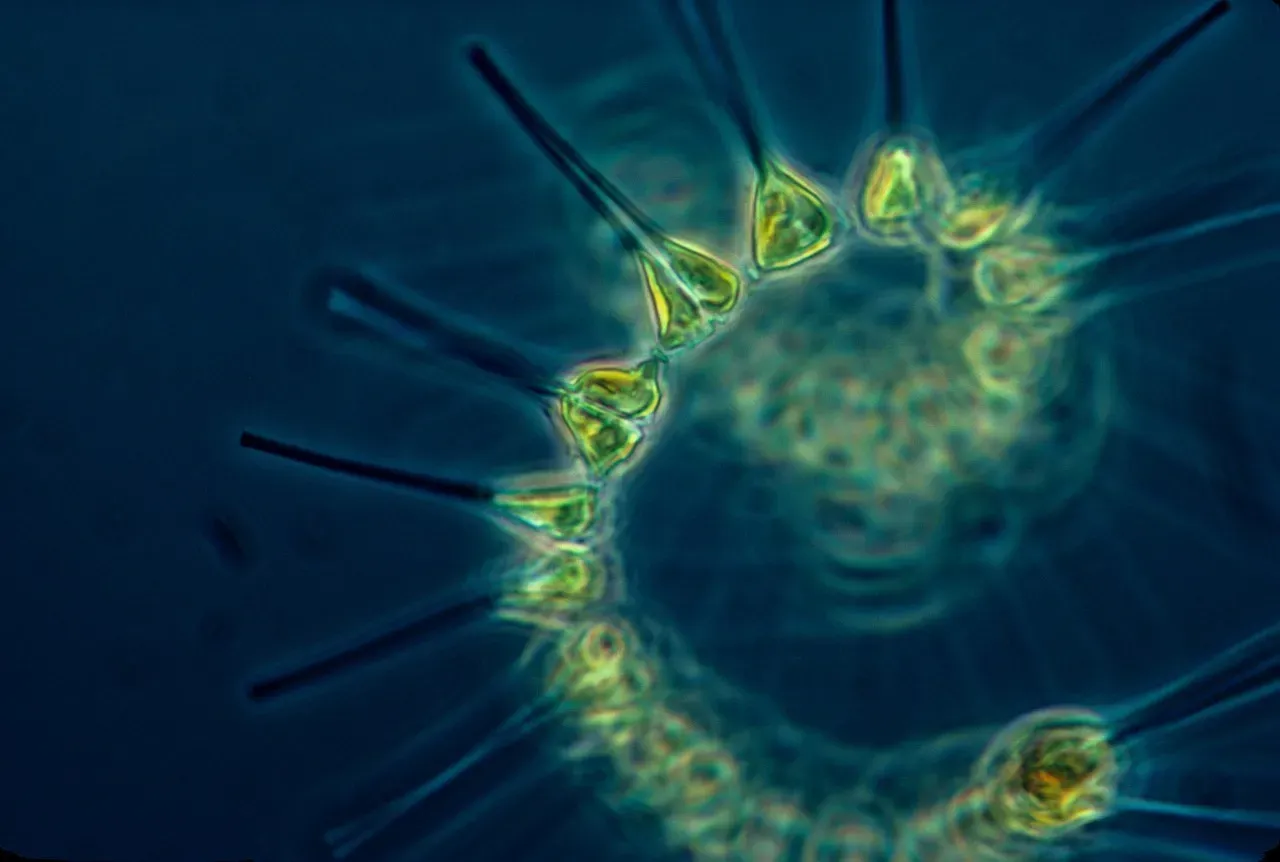
Not everything remarkable in the Mesozoic ocean was the size of a school bus. Some of the most world-altering activity was happening at microscopic scale. During the Mesozoic Era much of the plankton that exist today evolved. Coccolithophorids, microscopic plankton with calcium carbonate skeletons, were especially abundant and diverse during the Cretaceous Period. When coccolithophorids die and accumulate on the seafloor they form limestone and chalk. Tiny shells, falling like snow onto the ocean floor, for millions of years.
Trillions of these skeletons from the Cretaceous make up the famous White Cliffs in Dover, England. Those iconic white cliffs you can see from the coast of France are essentially a graveyard of Mesozoic microorganisms. More than 60 percent of the world’s oil began as microscopic marine plankton in the Jurassic and Cretaceous. The fuel powering much of modern civilization began as ancient ocean life. That is honestly one of the most mind-bending facts in all of Earth science.
12. The Ocean’s Story Ended – for the Dinosaurs – With Catastrophe
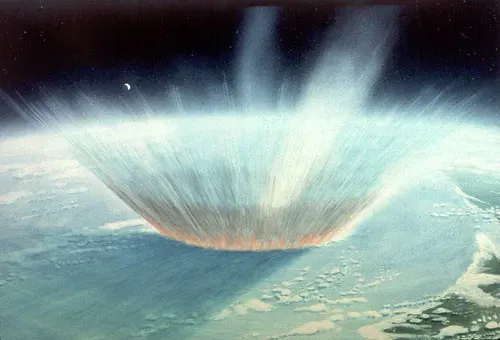
The final chapter of the Mesozoic ocean world was written by a rock from space. A large meteorite crashed into the Gulf 66 million years ago, causing a massive tsunami and a climate disruption that killed up to 80% of the world’s animal and plant species, the last of the dinosaurs being the most noticeable victims. The ocean, which had teemed with life for nearly 200 million years, was shattered almost overnight in geological terms.
In the oceans all the ammonites, reef-building rudist bivalves, and marine reptiles died off, as did 90 percent of the coccolithophores and foraminifera. It was a near-total reset of ocean life. The mammals, once small and rodent-like, took advantage of the dinosaurs’ extinction and evolved in new directions, with some lineages eventually giving rise to the whales, seals, and manatees that live in the ocean today. The ocean we swim in now, with dolphins and blue whales and coral reefs, is the direct heir to that ancient catastrophe. Destruction, it turned out, made room for everything we love about the sea.
Conclusion: A Lost World Beneath the Waves
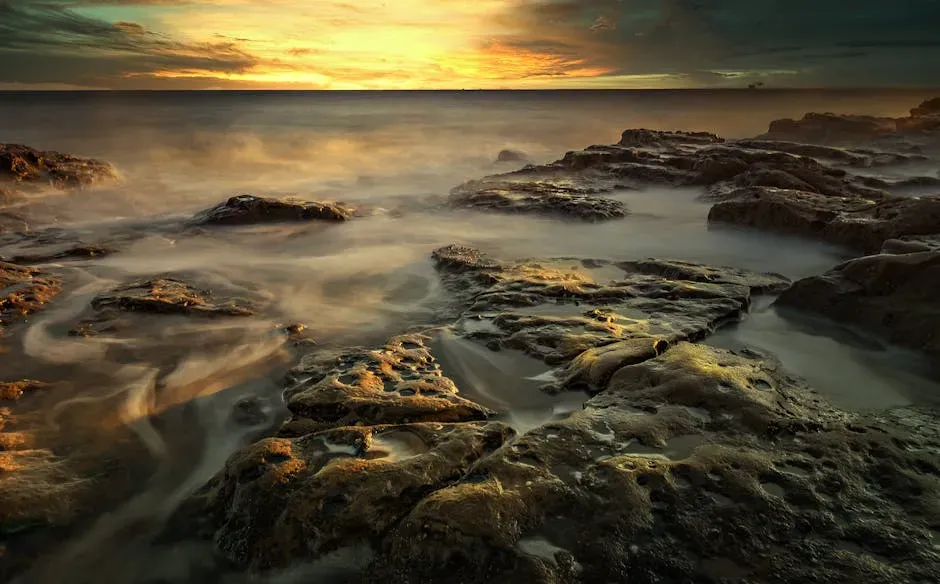
The oceans of the dinosaur age were not a background detail. They were a world unto themselves – warmer, higher, stranger, and more savage than anything alive today. From the vanished Tethys Sea to the chalk-building plankton, from mosasaur teeth to rudist clam reefs, every fact about those ancient waters points to a planet operating under completely different rules.
What strikes me most is how much of our modern world was quietly shaped by those Mesozoic seas. The cliffs we admire, the oil we burn, the whales we protect – all of it traces back to that lost ocean world. The next time you stand at a beach and look out at the water, consider that what you are seeing is just the latest edition of something unimaginably old, and unimaginably strange.
What surprises you most about the world beneath the Mesozoic waves? Share your thoughts in the comments below.