
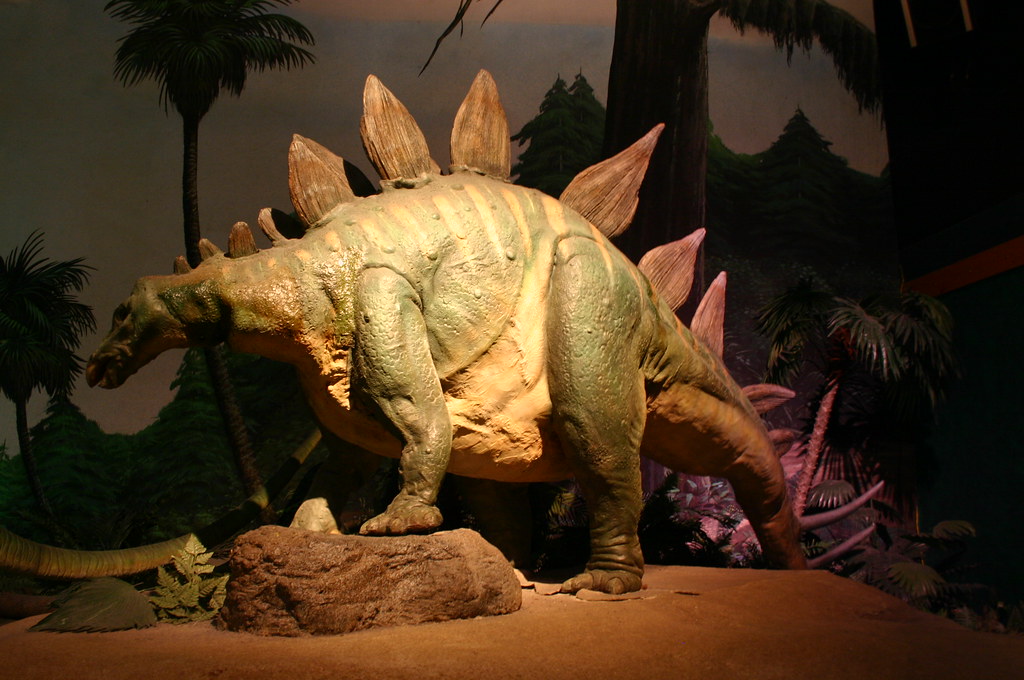
Most people assume they know Stegosaurus. Big plates, spiky tail, done, right? Actually, museums routinely simplify or flat-out skip the messiest, most fought-over details of this dinosaur’s biology, because the real story doesn’t fit on a placard.
Paleontologists have spent over a century arguing about its brain, its plates, its name, and even whether it won fights against predators. The “boring plant-eater” behind the glass has one of the most contested biological profiles in dinosaur science. Here’s what the actual fossil record – and the researchers who’ve spent careers on it – really say.
#12 – Its Name Is Based on a Mistake That Was Never Corrected
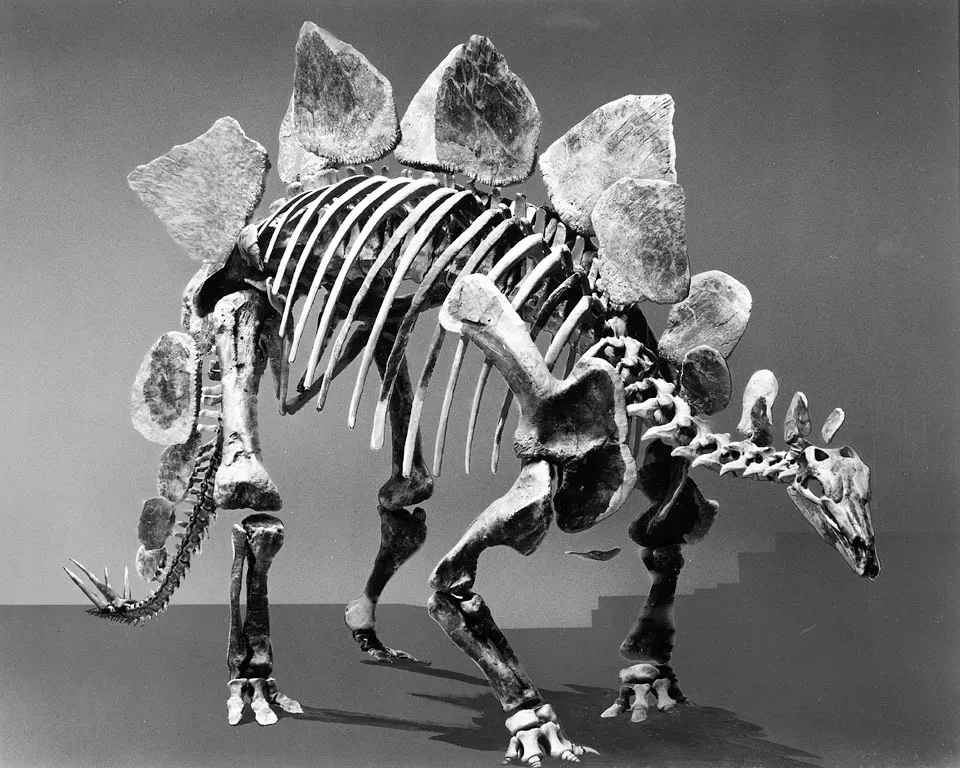
Stegosaurus means “roofed lizard,” and that name is basically a fossilized error. When Othniel Charles Marsh first described the animal in 1877, he wasn’t even sure it was a dinosaur.
Marsh initially believed the remains belonged to an aquatic, turtle-like creature, and figured the plates lay flat across its back like shingles on a roof. He pictured a shelled swimmer, not a spiky land herbivore – and the name stuck even after scientists realized the plates actually stood upright. Museums rarely mention that the animal’s entire identity is built on a guess that was disproven almost immediately.
#11 – It Was Discovered in the Middle of a Vicious Scientific Feud
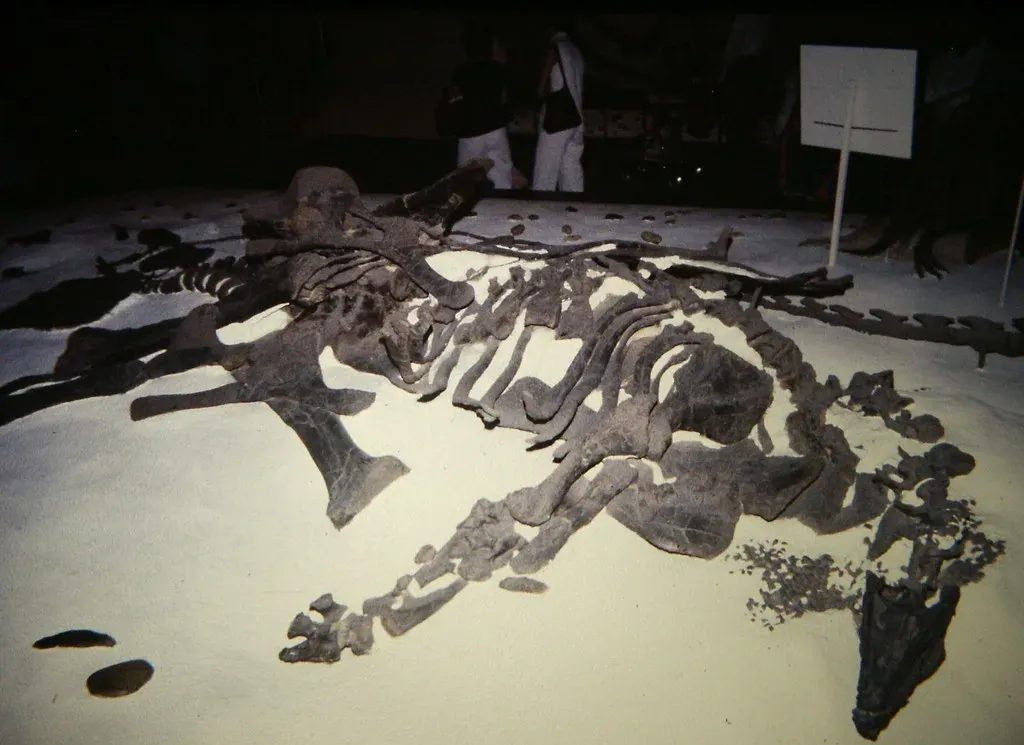
Stegosaurus wasn’t found in a calm, methodical dig. It was a casualty of one of the ugliest rivalries in American science.
The Bone Wars, also called the Great Dinosaur Rush, ran from 1877 to 1892 – a bitter competition between Othniel Charles Marsh and Edward Drinker Cope that reportedly involved bribery, theft, and even the destruction of bones to deny the other man credit. Marsh named Stegosaurus, along with Allosaurus and Diplodocus, in a rushed December 1877 journal entry partly to beat Cope to the punch. The specimen he used was fragmentary and later proved problematic – a direct consequence of racing a rival instead of taking the time to confirm the find.
Fast Facts
- Marsh and Cope collectively contributed to the discovery of over 140 new dinosaur species during their feud, dramatically reshaping how the public saw dinosaurs.
- Cope discovered 56 new dinosaur species, while Marsh discovered 80 new species – Stegosaurus was one of Marsh’s.
- Each of the two paleontologists used underhanded methods to try to outdo the other in the field, resorting to bribery, theft, and the destruction of bones.
- Of the roughly 144 species named during the rush, only 32 are still considered valid by modern paleontologists.
#10 – The “Two Brains” Myth Refuses to Die
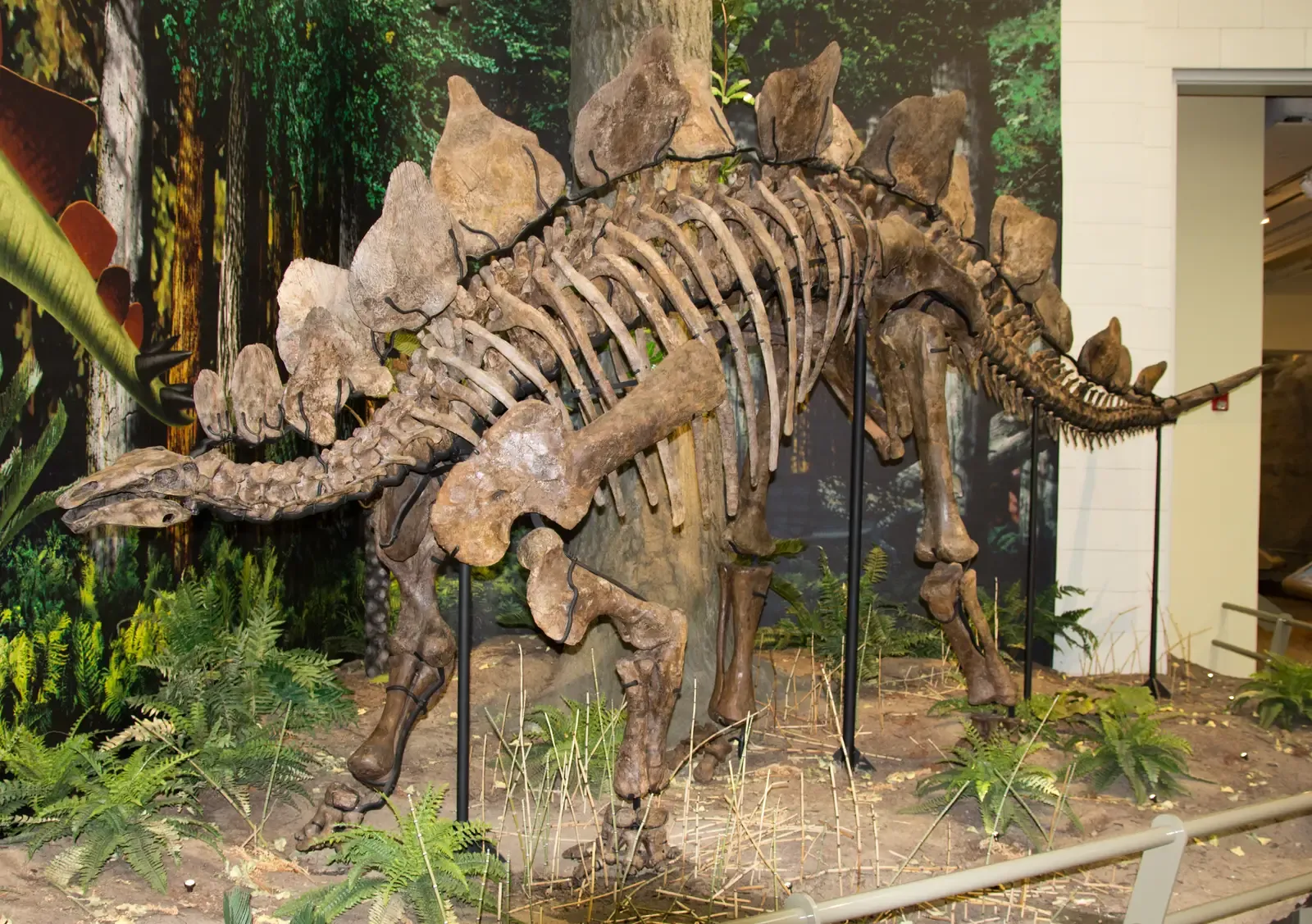
For decades, textbooks and toy packaging claimed Stegosaurus had a second brain in its hips to control its back legs. It’s still one of the most repeated dinosaur myths ever printed.
The spinal cord near the sacrum was genuinely enlarged, even larger than the brain itself, which is where the “two brains” idea came from. That theory has since been rejected. Scientists now think the cavity may have housed a glycogen body, a structure found in birds that likely aided energy storage – not a backup control center for the tail.
#9 – Its Real Brain Was Almost Comically Small
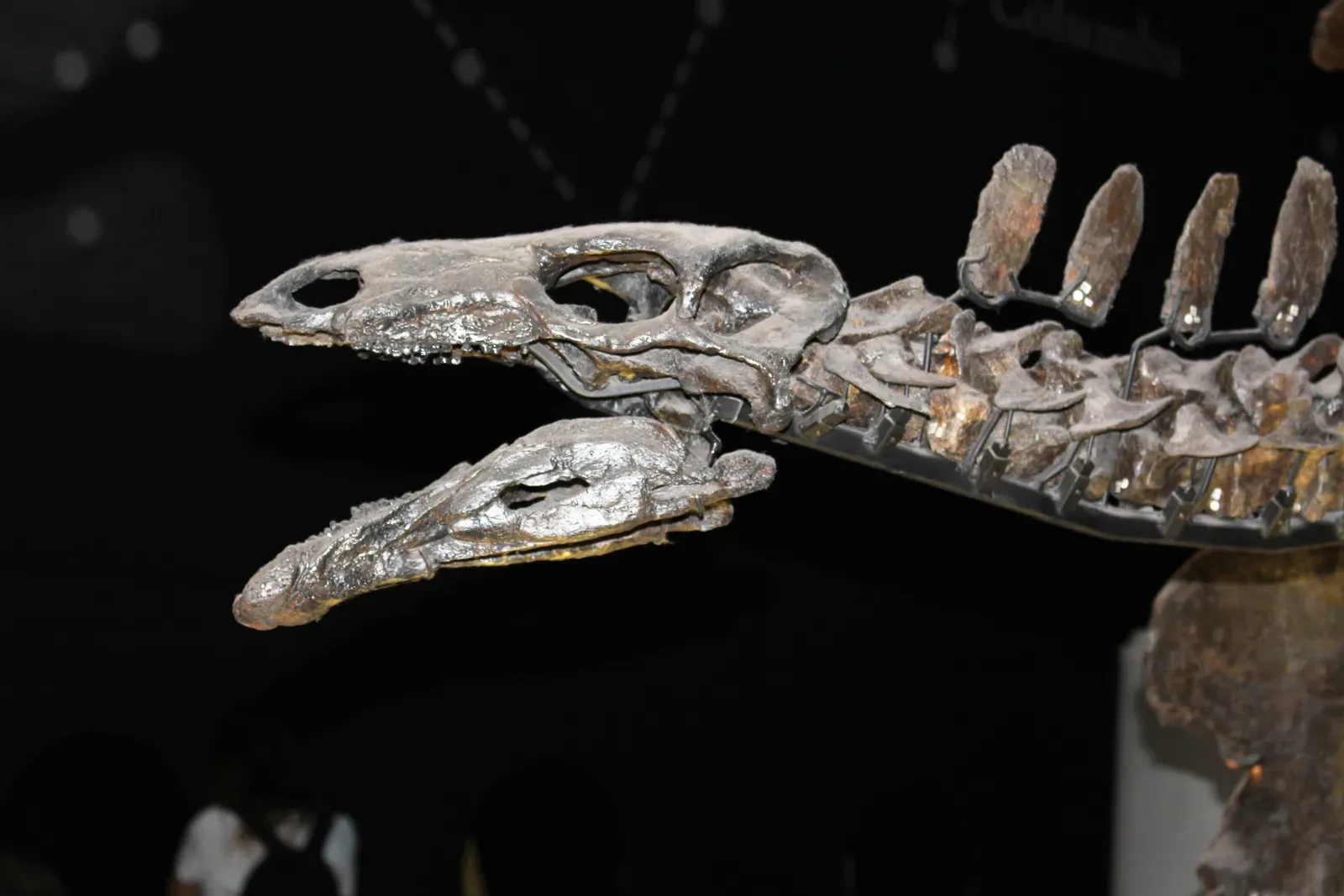
If the two-brain myth is wrong, the actual brain situation is somehow stranger. Armored dinosaur expert Kenneth Carpenter has described the brain as long thought to be walnut-sized, though it more likely had the size and shape of a bent hot dog.
Either comparison lands the same punch: a multi-ton animal ran its entire body on something you could lose in a lunch bag. Stegosaurus registers an encephalization quotient often estimated around 0.2, placing it near the bottom of the scale among dinosaurs. Yet this “dim” animal survived for millions of years, which tells you brain size alone never wrote the whole story.
#8 – Nobody Actually Knows What the Plates Were For
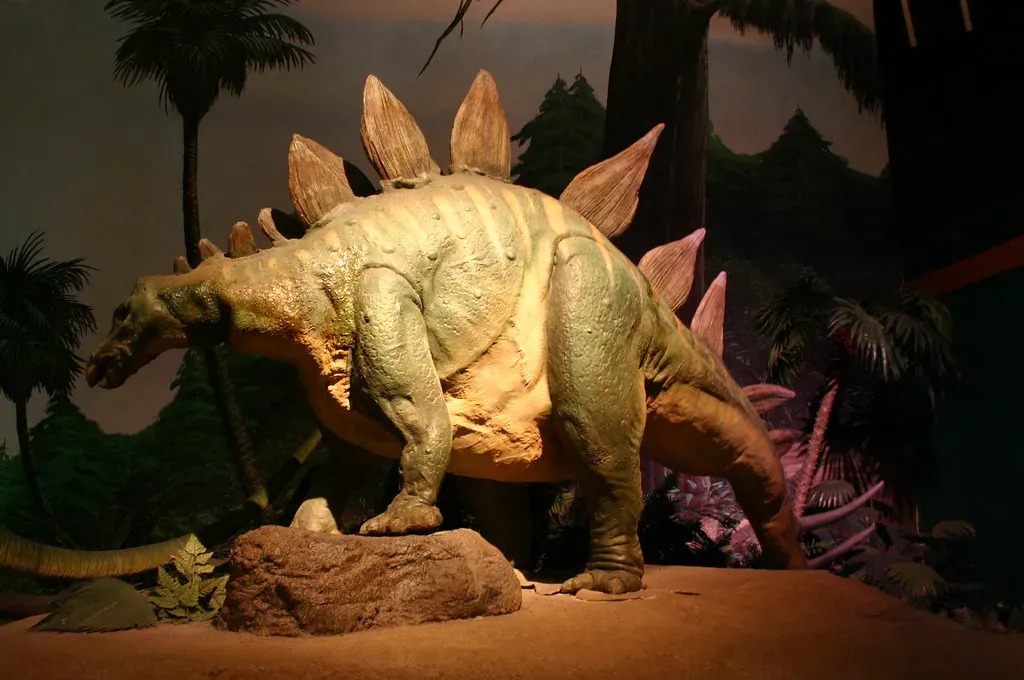
Museums love to display Stegosaurus plates as a settled fact. They are not.
Early scientists assumed the plates were armor, but they’re too thin and positioned along the back rather than the sides, offering limited protection. A more supported theory is thermoregulation – the plates are rich in blood vessels and may have worked like radiators, or even solar panels angled to soak up heat. Carpenter and others now argue display was the primary job: showing off, species recognition, attracting mates. There’s no consensus, and any exhibit that presents one theory as fact is skipping the argument entirely.
Quick Compare
- Armor theory: The original idea, but the plates are too thin and poorly placed to block a predator’s bite.
- Thermoregulation theory: Blood-vessel-rich plates may have worked like radiators or angled solar panels.
- Display theory: Increasingly favored by researchers – plates may have signaled species identity or attracted mates.
#7 – Every Single Plate Was a Different Shape
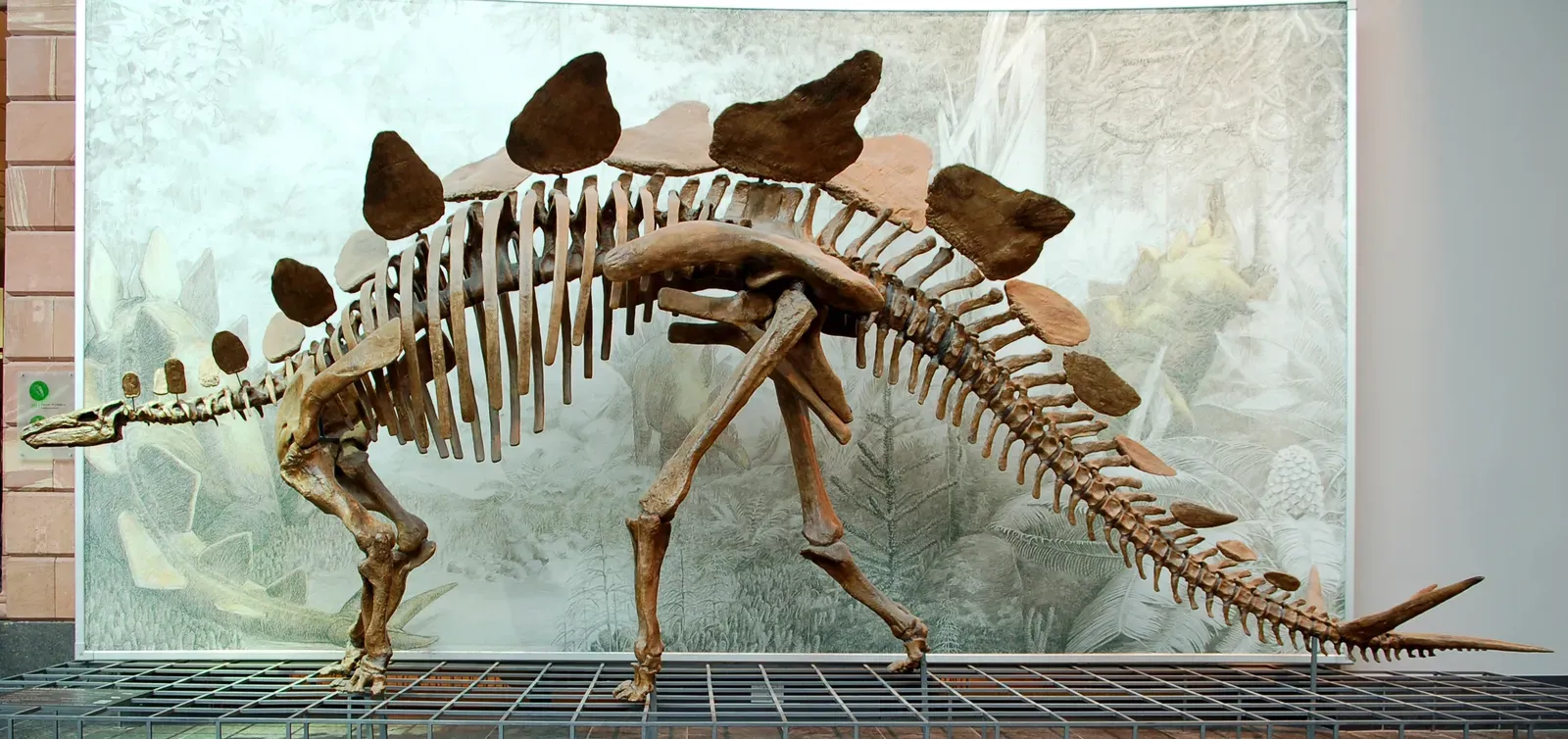
Here’s a detail almost no placard mentions: no two Stegosaurus plates were identical, even on the same animal.
Reexamination of specimens since the 1970s shows the plates alternated along the backbone in a zigzag rather than lining up in matching pairs. Each individual plate had its own distinctive size and shape – none were duplicates. Paleontologists only nailed this down after decades of specimen comparisons, proof that even a dinosaur’s basic anatomy can stay unsettled for a century.
#6 – Its Most Famous Body Part Was Named After a Comic Strip Joke
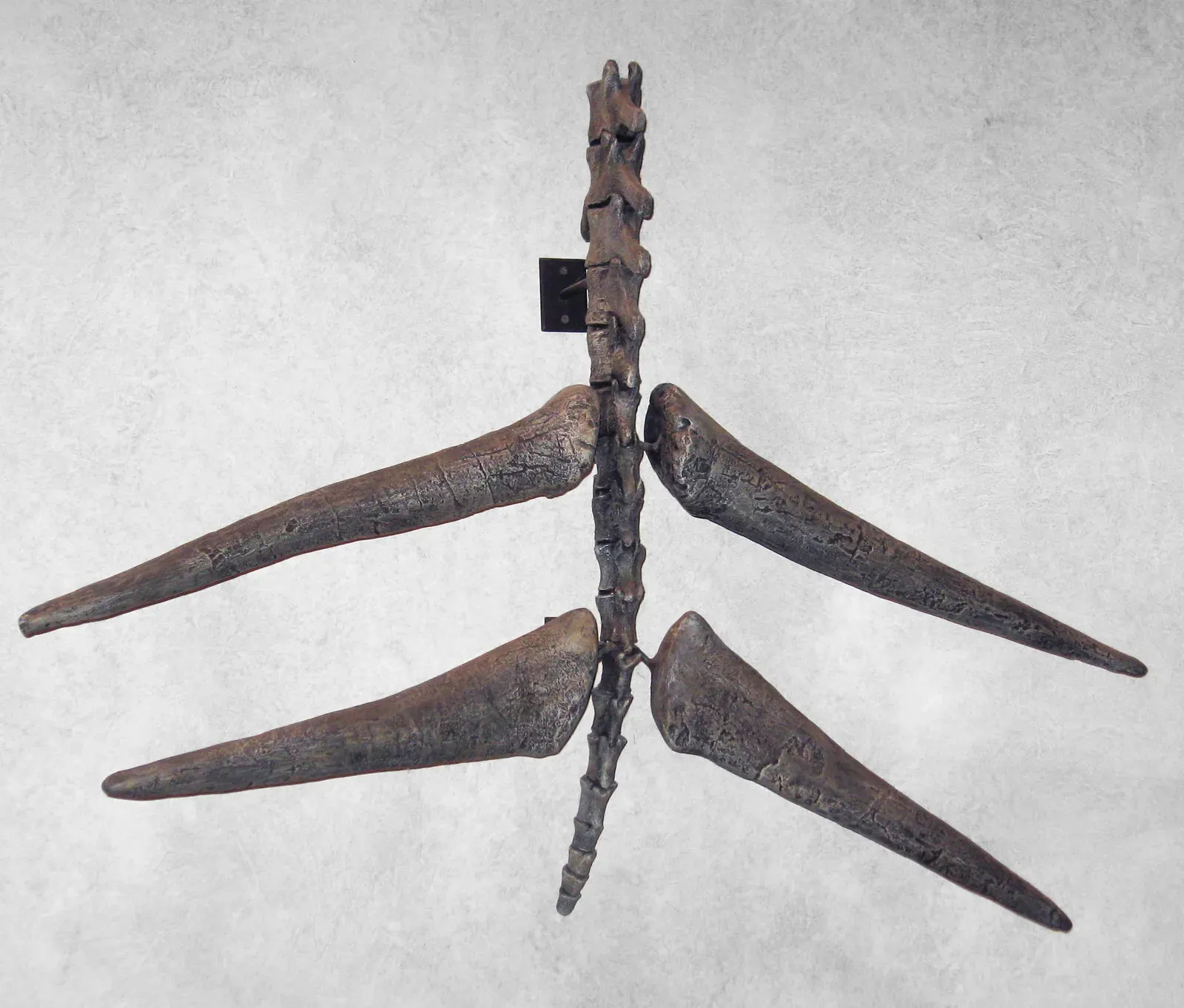
The tail spikes of Stegosaurus have an official-sounding name – “thagomizer” – and its origin story is genuinely bizarre.
Cartoonist Gary Larson invented the term in 1982 as a joke in The Far Side, where a caveman points to a slide of a Stegosaurus tail and names it in honor of “the late Thag Simmons,” a fictional victim who supposedly wandered too close. Paleontologist Kenneth Carpenter later used the term seriously while describing a fossil at the 1993 Society of Vertebrate Paleontology Annual Meeting, and it stuck. A punchline from a newspaper comic strip is now printed in academic dinosaur encyclopedias.
#5 – Fossils Prove It Actually Won Fights Against Predators
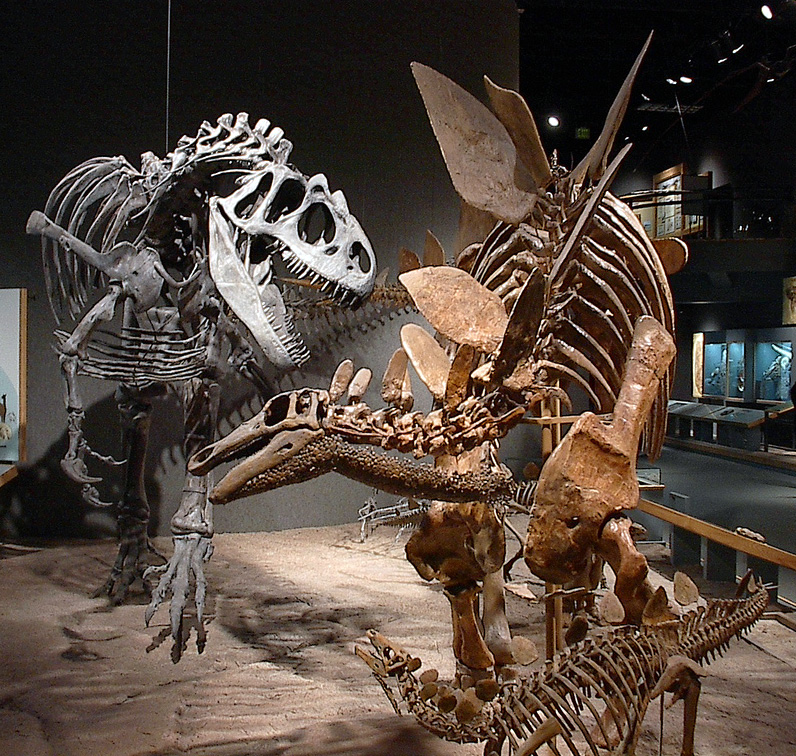
This isn’t speculation. This is a documented, physical crime scene from 150 million years ago.
A tail vertebra from an Allosaurus, catalogued as UMNH 10781, contains a puncture wound whose shape precisely matches the cross-section of a Stegosaurus tail spike, and the bone shows signs of partial healing – meaning the Allosaurus survived and lived on for a while afterward. Even more dramatic, another Allosaurus fossil shows a circular hole in its pelvis flanked by a fist-sized abscess. Paleontologist Robert Bakker proposed the Stegosaurus whipped its barbed tail into the Allosaurus during a fight, and the predator likely limped for weeks while the wound drained.
At a Glance
- Specimen UMNH 10781: an Allosaurus tail vertebra bearing a puncture wound matching a Stegosaurus spike’s cross-section.
- The wound shows partial healing, meaning that Allosaurus lived on for some time after the injury.
- A separate Allosaurus pelvis shows a circular puncture surrounded by a fist-sized abscess.
- Robert Bakker interprets both injuries as direct evidence of tail-spike strikes landed during real combat.
#4 – It Didn’t Chew Its Food – It Swallowed Rocks Instead
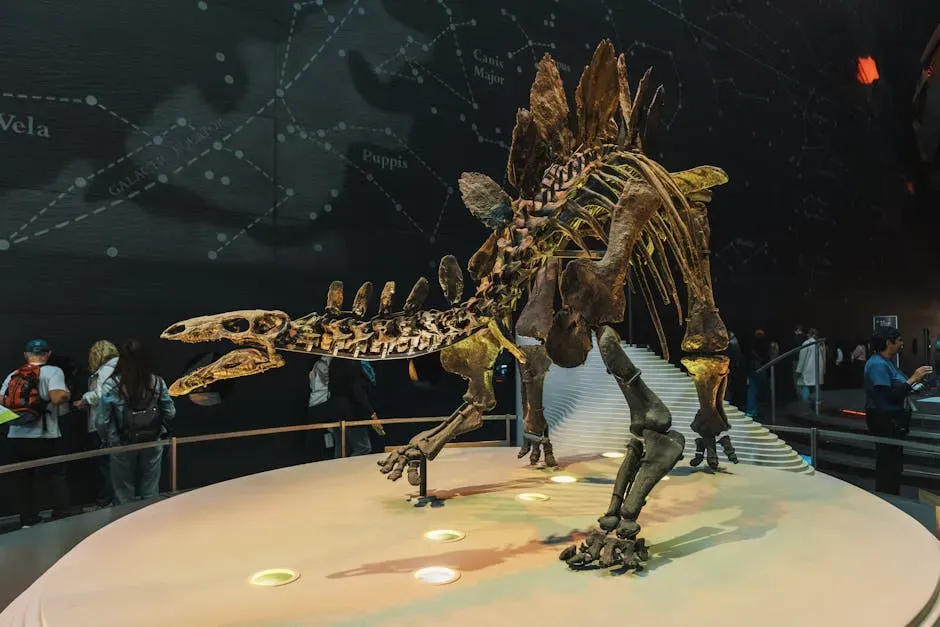
Stegosaurus had a genuinely strange approach to eating that most exhibits gloss over. Its teeth were simple and leaf-shaped, poorly suited for grinding, so it likely swallowed stones called gastroliths to help break down food inside its stomach.
A beak at the front of the jaw let it nip off leaves and stems – in other words, its stomach did the chewing its mouth couldn’t. Whether it could rear up on its back legs to reach taller plants still divides experts; given its short neck and small head, most researchers now think it stuck to low shrubs rather than treetop browsing.
#3 – “Sophie” Is the Most Complete Skeleton on Earth, and Museums Rarely Explain How Rare That Is
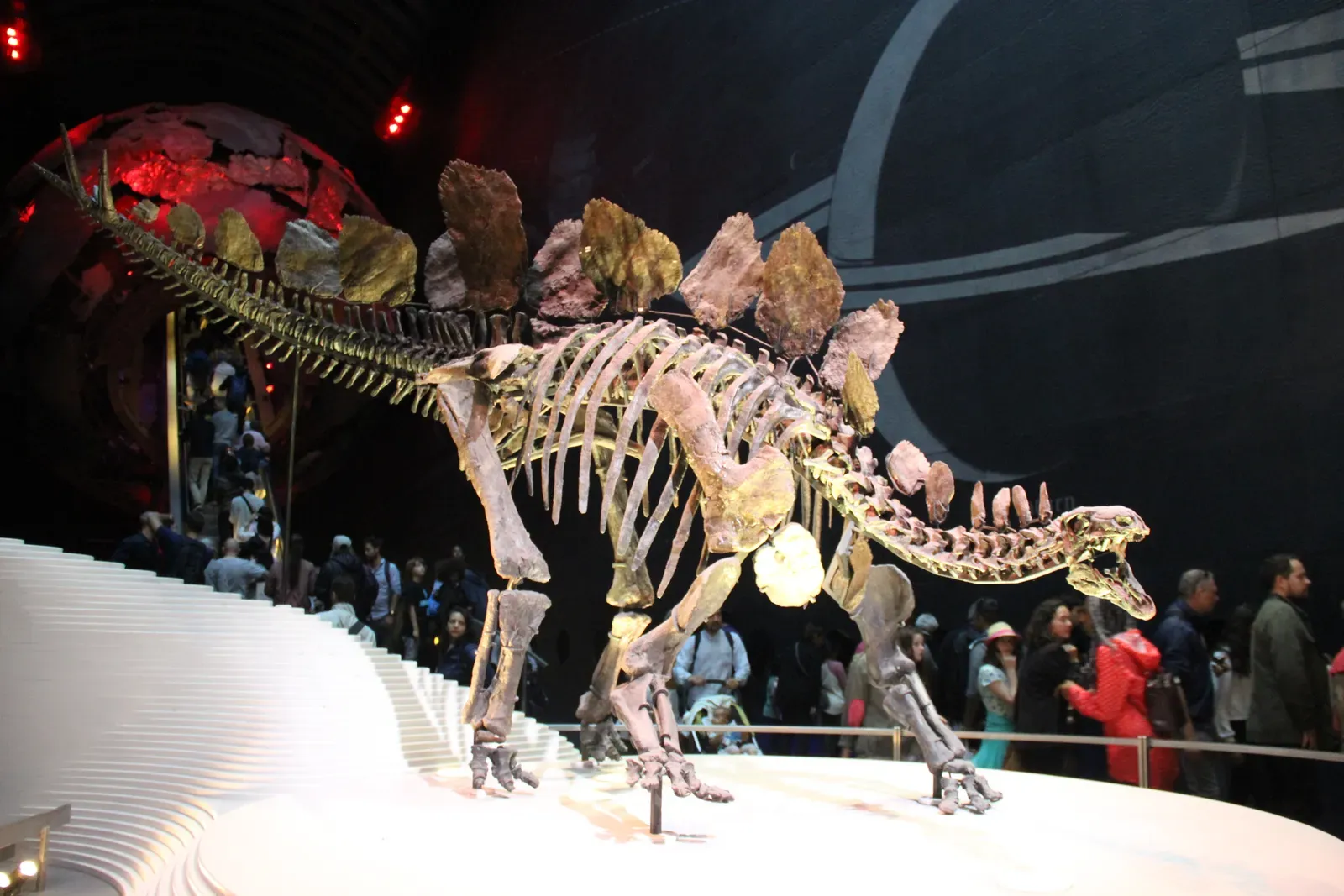
There’s one Stegosaurus skeleton that changed the entire field, and it lives in London. It was discovered in 2003 by professional fossil hunter Bob Simon at Red Canyon Ranch in Wyoming – a special find, since most Stegosaurus skeletons turn up incomplete.
Nicknamed Sophie, it’s over 90% complete, made of 300 bones, 19 plates, and four tail spikes, all from a single animal. London’s Natural History Museum says Sophie was a young adult when she died, weighed around 1.6 tons, and was roughly the size of a small rhinoceros. Most Stegosaurus mounts you’ve seen elsewhere are stitched together from multiple individuals – Sophie is, almost entirely, one animal.
#2 – Baby Stegosaurus Fossils Are Almost Never Found, and That’s a Huge Problem for Science
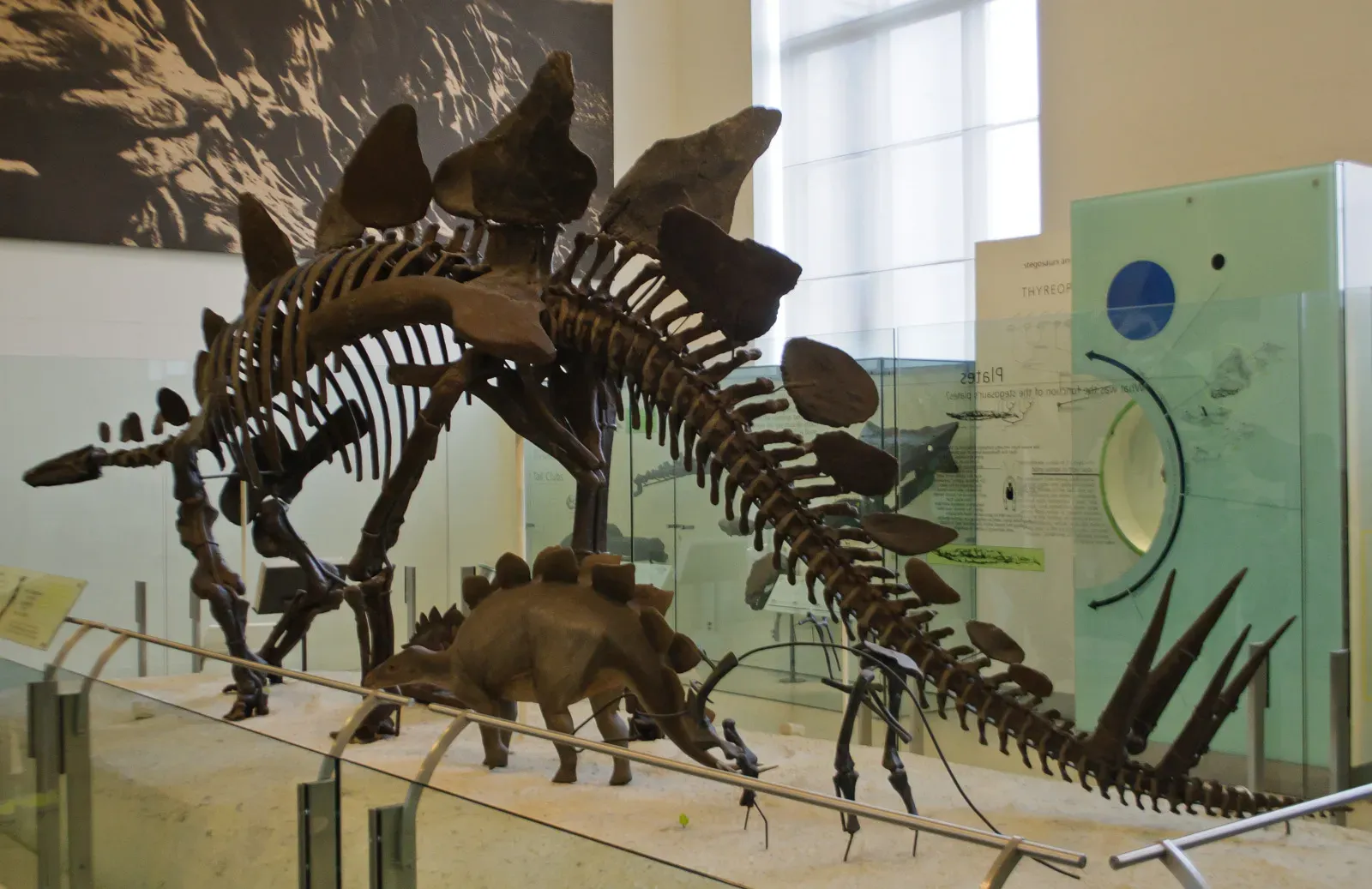
While adult Stegosaurus skeletons get all the museum attention, the juveniles are practically ghosts in the fossil record. What little has been found shows the plates grew and changed shape as the animal aged – young individuals had smaller, thinner plates that may have been arranged differently, and the spikes grew larger over time.
That means the “iconic” adult silhouette in most exhibits doesn’t represent what the species looked like for most of its life. Without more juvenile specimens, scientists are working from an incomplete growth timeline, which means every reconstruction of a young Stegosaurus is still partly guesswork dressed up as fact.
#1 – A Stegosaurus Recently Sold for More Money Than Almost Any Fossil in History
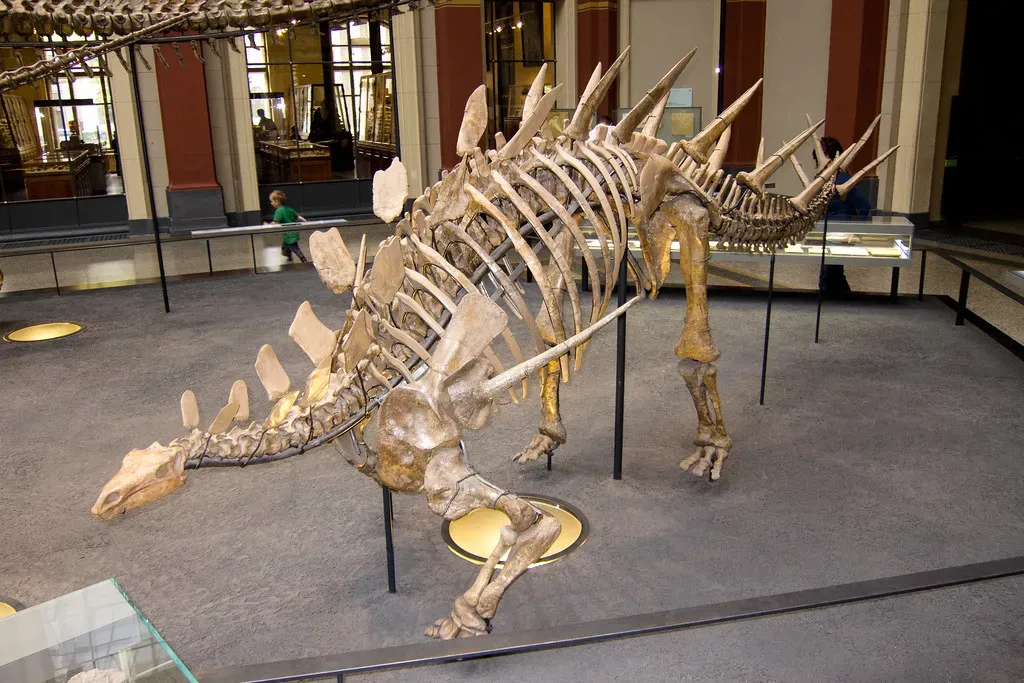
This is the fact that upset a lot of paleontologists, and it rarely makes it onto a museum wall. A skeleton nicknamed “Apex” went to auction and shattered fossil sale records – the previous benchmark was set in 2020, when the T. rex “Stan” sold for $31.8 million, and Apex blew past that number by tens of millions.
According to Sotheby’s, Apex is 30 percent larger than Sophie, the most complete Stegosaurus on public display anywhere in the world. A one-of-a-kind scientific specimen went to a private buyer instead of a public research institution, and that’s a story most museum tours conveniently skip.
Worth Knowing
- Apex sold for $44.6 million at Sotheby’s New York, exceeding its pre-sale low estimate over 11 times.
- The fossil was sought after by seven bidders before the hammer finally fell.
- The winning bidder was later revealed to be billionaire hedge funder Ken Griffin.
- Apex’s record didn’t last forever – a T. rex nicknamed “Gus,” discovered in South Dakota, sold for $50 million in 2026, bumping Apex to second place.
The Bottom Line
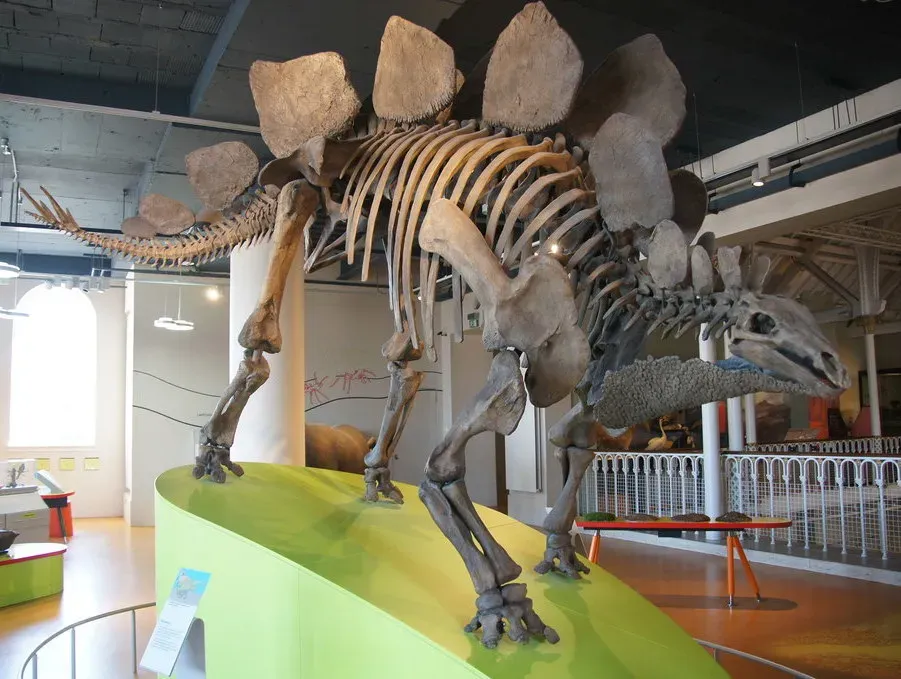
Stegosaurus isn’t the simple, sleepy plant-eater most exhibits present. Its brain was smaller than a hot dog, its plates remain scientifically unresolved, its most famous nickname came from a comic strip joke, and it left physical proof of winning fights against Allosaurus.
Add in a name built on a mistaken turtle theory and a record-breaking auction that pulled a rare specimen away from public science, and you’ve got a dinosaur far messier and more fought-over than any placard admits. Honestly, the fact that museums keep presenting Stegosaurus as “settled science” feels like the real myth here – the debates are still very much alive. Which of these facts surprised you most? Did we miss one worth arguing about? Drop it in the comments.