Here’s something that will quietly ruin every dinosaur toy set you’ve ever owned: most of the creatures packed into those sets weren’t dinosaurs at all. Not even close. The sail-backed monster? Wrong lineage. The giant flying reptile? Different branch of the family tree entirely. The massive ocean predator from the blockbuster movie? It lived millions of years after dinosaurs were already gone. Paleontologists have a precise definition for what counts as a dinosaur – one built on hip structure, ankle bones, and upright posture – and a shocking number of prehistoric fan favorites fail that test completely.
The confusion isn’t really your fault. Decades of movies, toy manufacturers, and even school textbooks lumped anything ancient and terrifying into the “dinosaur” bucket for convenience. But the real story is so much stranger and more interesting than that. Some of these animals predate dinosaurs by 40 million years. Others outlived them by 10 million more. A few are more closely related to modern lizards, turtles, or snakes than to any dinosaur that ever walked the Earth. Buckle up – because number one is the one that shocks people the most.
#12 – Dimetrodon: The “Dinosaur” That’s Actually Your Ancient Cousin
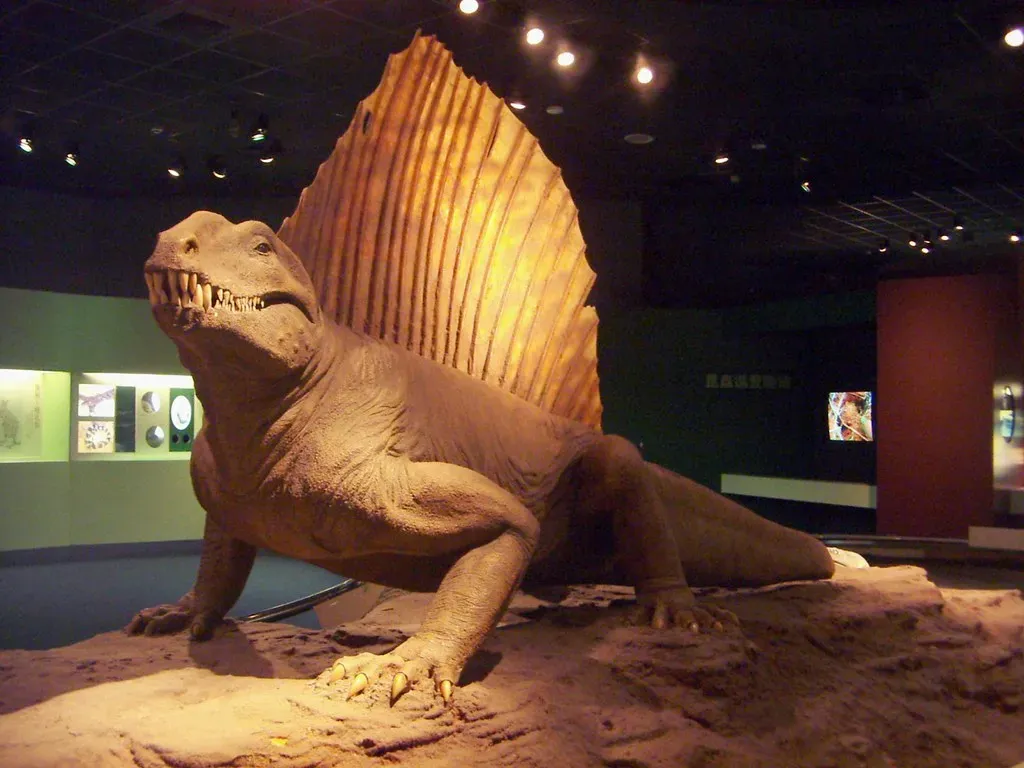
That dramatic sail-backed predator plastered across dinosaur bedsheets everywhere? It disappeared from Earth roughly 40 million years before the first true dinosaur ever evolved. Dimetrodon was a synapsid – and synapsids are the lineage that eventually produced mammals. That includes you. In a very distant, humbling sense, Dimetrodon is more closely related to the person reading this than to any T. rex.
Its skull carried a single opening behind the eye socket, a feature that separates synapsids from the double-openings found in true reptiles and dinosaurs. It thrived in swampy Permian environments across what is now North America and Europe, hunting smaller amphibians with powerful jaws, and that iconic sail most likely helped regulate body temperature rather than intimidate rivals. The chronological gap alone makes the “dinosaur” label impossible – but the anatomy makes it doubly wrong in the most fascinating way possible.
Fast Facts
- Lived: approximately 295–272 million years ago, Early Permian Period
- Size: up to 10–11 feet long, weighing around 550 lbs – roughly the size of a large cat
- Classification: synapsid (pelycosaur), on the mammal evolutionary line – not a reptile, not a dinosaur
- Name meaning: “two measures of teeth” – it had two distinct tooth types, unlike any true reptile
- Predates dinosaurs by: ~40 million years; fossils found in Texas, Oklahoma, Nova Scotia, and Germany
#11 – Pteranodon: The One Pop Culture Can’t Stop Getting Wrong
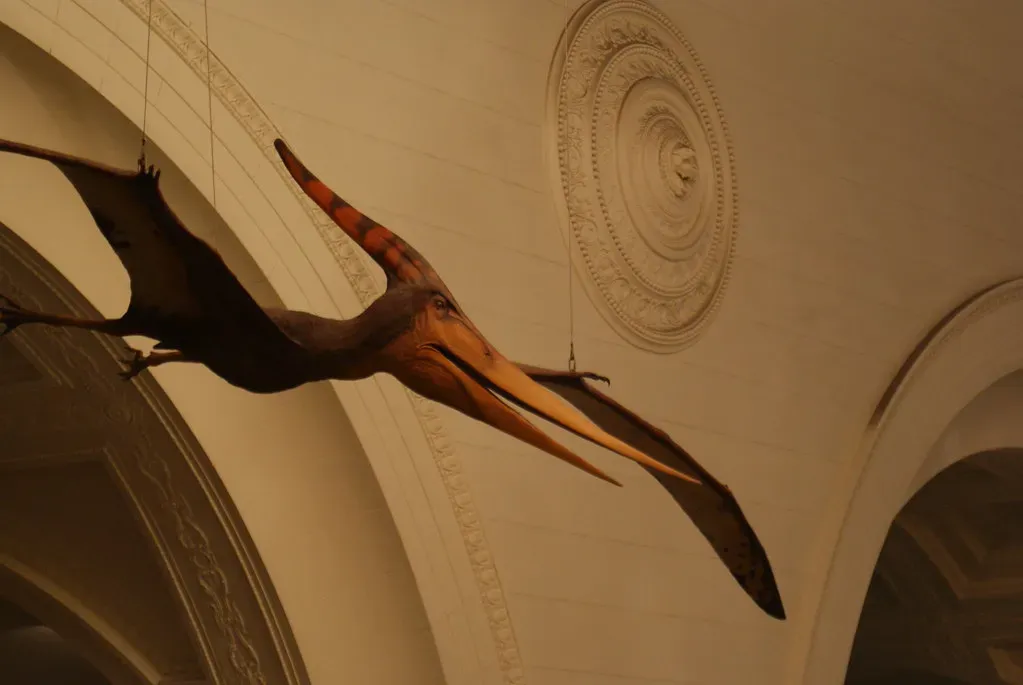
No animal has been mislabeled more confidently or more often than Pteranodon. It appears on the cover of dinosaur books, flies through dinosaur documentaries, and gets sold in every dinosaur toy pack ever made – despite having zero dinosaur ancestry. Pteranodon was a pterosaur, a flying reptile from an entirely separate branch of the archosaur family tree that evolved flight completely independently from birds.
During the Late Cretaceous, these creatures ruled the skies above the Western Interior Seaway with wingspans stretching up to 20 feet and toothless beaks built for scooping fish. Their bones were hollow and paper-thin for weight savings in flight. They launched from cliffs or water surfaces using their powerful forelimbs – a motion more like a pole vault than a bird’s takeoff. They lived alongside dinosaurs, they died alongside dinosaurs, but they were never, in any scientific sense, dinosaurs.
#10 – Quetzalcoatlus: Bigger Than a Giraffe, Still Not a Dinosaur
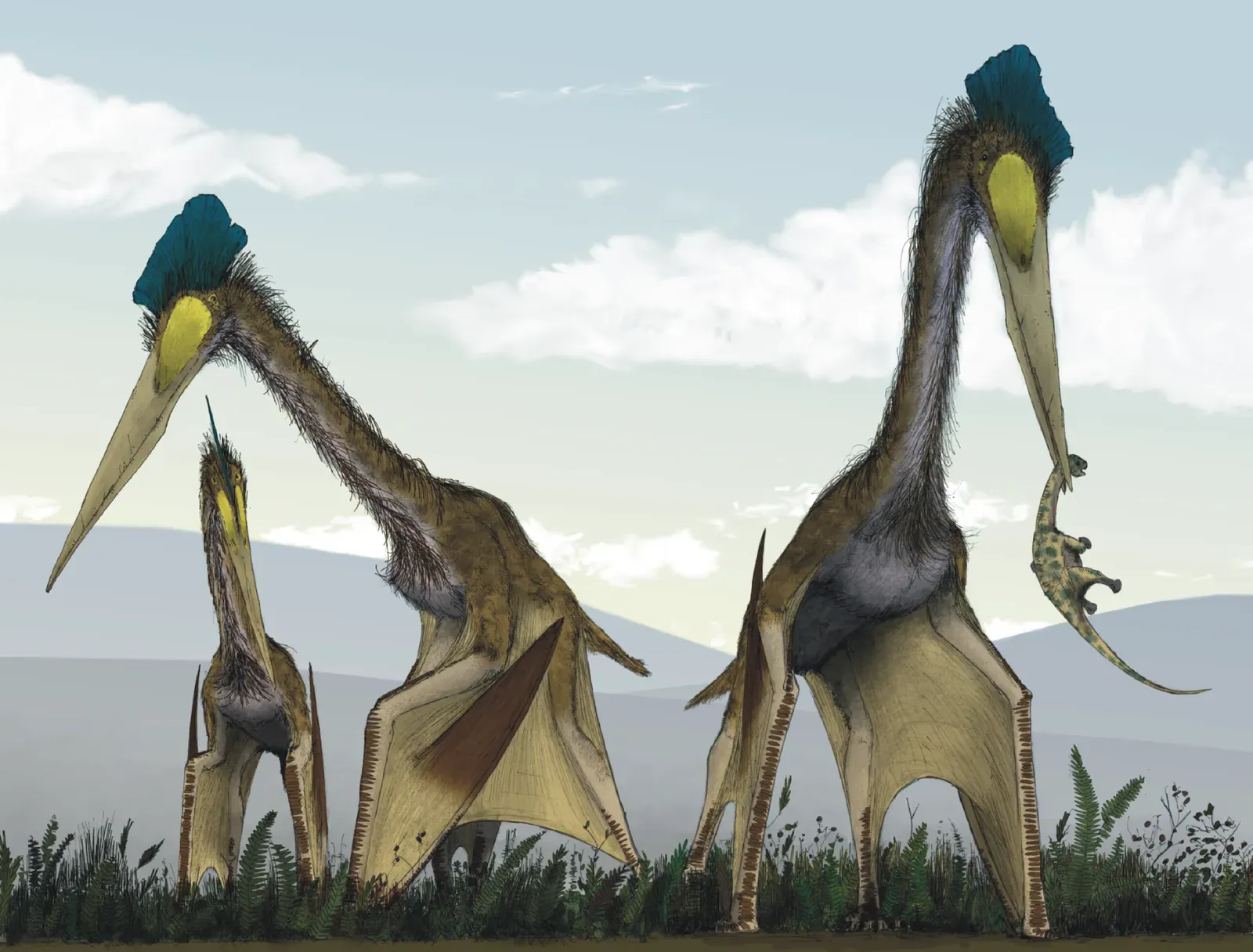
Quetzalcoatlus is so enormous that it feels like it deserves its own category of existence – and scientifically, it kind of does. With a wingspan exceeding 36 feet and a standing height that matched a modern giraffe, this azhdarchid pterosaur from Late Cretaceous Texas is the largest flying animal ever confirmed by fossil evidence. People assume something that big and terrifying must have been a dinosaur. It wasn’t.
When it wasn’t soaring on thermal currents, Quetzalcoatlus likely stalked inland floodplains on all fours, using its long neck – up to 10 feet in length alone – to snatch small prey from the ground. That detail is worth sitting with: this animal was not a dinosaur, and it may have hunted small dinosaurs for lunch. Its anatomy was optimized for soaring efficiency, not the upright, hip-forward mechanics that define the dinosaur body plan.
At a Glance
- Wingspan: up to 36–39 feet – roughly the size of a small aircraft
- Standing height: approximately 16–18 feet tall on the ground, matching a giraffe
- Weight: estimated 75–550 kg depending on the model – lightweight for its size due to hollow bones
- Discovery: first found in 1971 at Big Bend National Park, Texas, by a college student
- Classification: azhdarchid pterosaur – same family as Pteranodon, completely separate from dinosaurs
#9 – Plesiosaurus: Four Paddles, Long Neck, Zero Dinosaur DNA
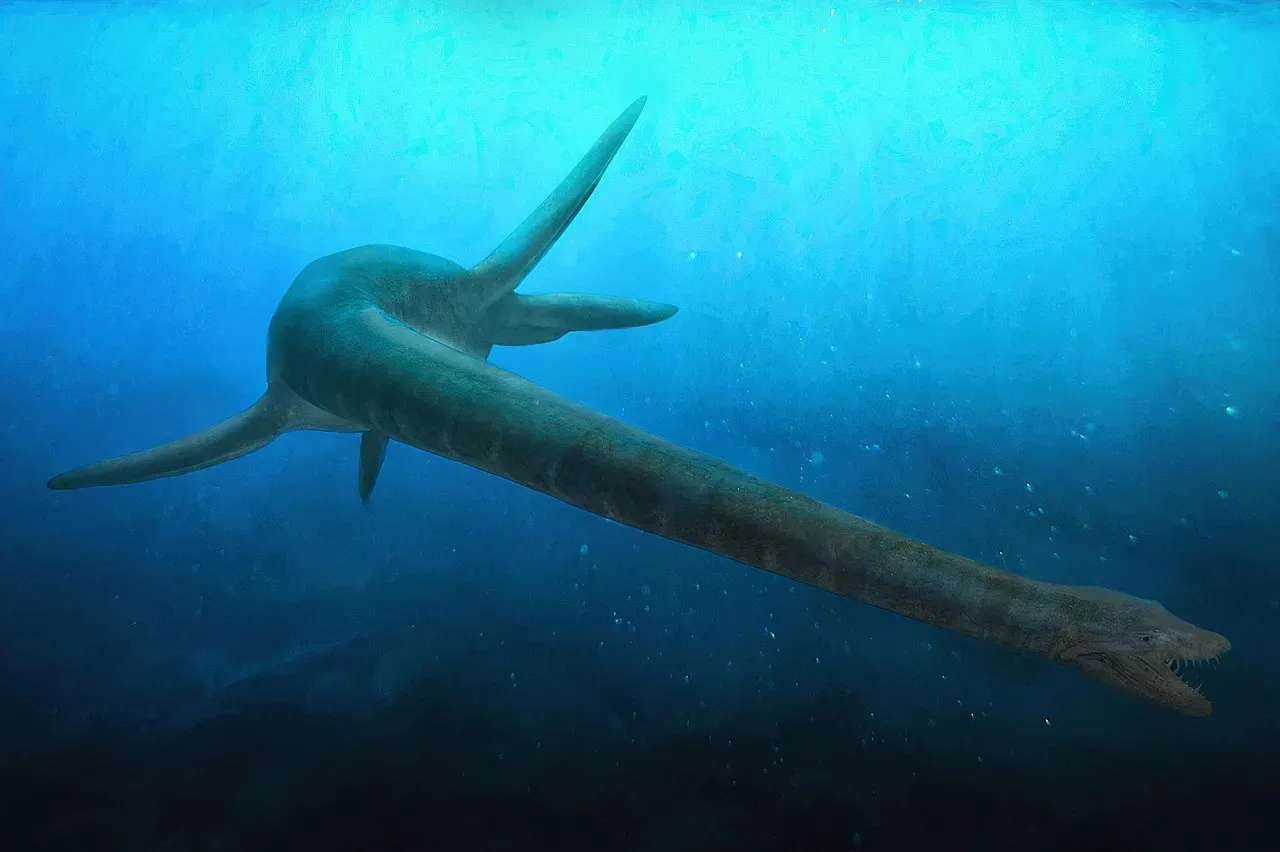
Plesiosaurus is in every toy set. It shows up in every Jurassic-era exhibit. Children confidently call it a dinosaur, and almost no adult corrects them. But this long-necked marine reptile never evolved the upright limbs, specific ankle bones, or hip structure that define the dinosaur group. It belonged to the sauropterygians – a separate reptile lineage that took to the seas and never looked back.
Plesiosaurus propelled itself through Jurassic oceans using four powerful paddle-like limbs in a motion closer to underwater flying than swimming. Fossil stomach contents confirm it ate fish and squid in a fully aquatic world. It never came ashore as an adult. Its body plan was elegant and specialized in ways that had nothing to do with the terrestrial dinosaur lineage evolving alongside it on land – two completely different evolutionary experiments running in parallel.
#8 – Mosasaurus: A Giant Lizard, Not a Sea Dinosaur
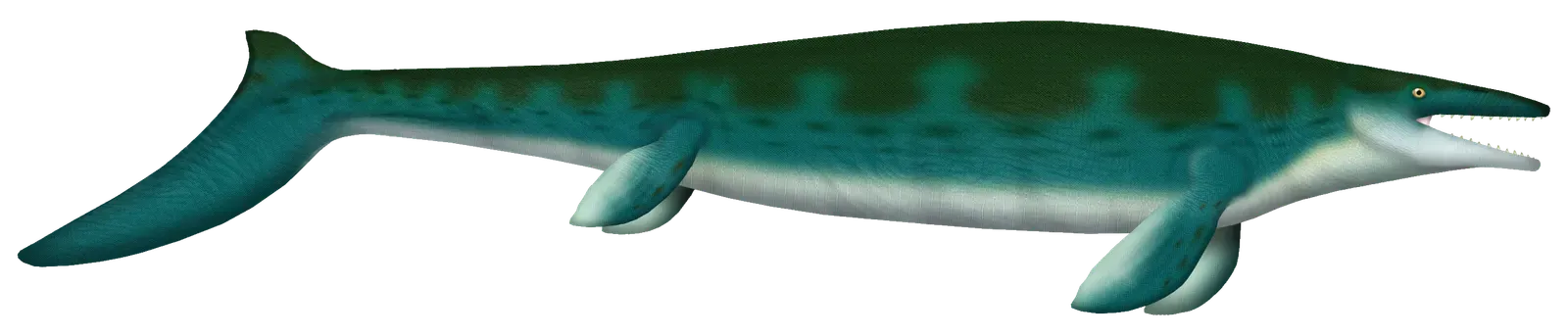
When Mosasaurus erupted from the water in Jurassic World to swallow a shark whole, audiences assumed they were watching a sea dinosaur. That’s exactly what the filmmakers wanted. But Mosasaurus was actually a colossal marine lizard – more closely related to modern monitor lizards and Komodo dragons than to any dinosaur. Its evolutionary roots trace back to terrestrial lizard ancestors whose limbs gradually transformed into flippers over millions of years.
These Cretaceous giants grew over 50 feet long and came equipped with double-hinged jaws that let them swallow enormous prey in sections. They gave birth to live young in open water, never needing land at all. When the end-Cretaceous extinction hit 66 million years ago, mosasaurs vanished alongside non-avian dinosaurs – but dying at the same moment in history doesn’t make them the same kind of animal. They shared an era, not an identity.
#7 – Ichthyosaurus: The Reptile That Reinvented Itself as a Dolphin
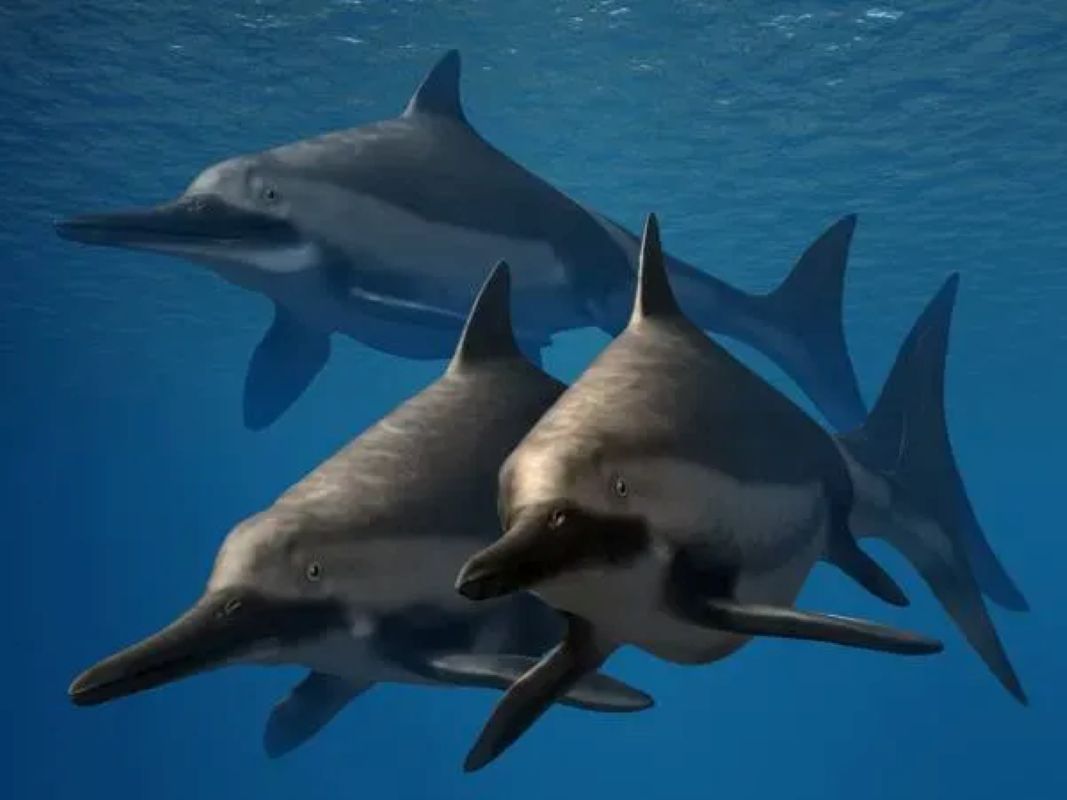
Ichthyosaurus looks so much like a dolphin that people assume it must be either a dinosaur or some ancient whale relative. It was neither. These fast, streamlined marine reptiles descended from land-dwelling ancestors that returned to the sea – independently evolving dorsal fins, vertical tail flukes, and torpedo-shaped bodies through a process called convergent evolution. Nature built the same aquatic design at least twice.
They hunted fish and cephalopods with enormous eyes adapted for low-light, deep-water visibility – some ichthyosaur eye sockets are the largest of any vertebrate ever found. Like mosasaurs, they gave birth to live young in open water, a fact confirmed by fossils that preserve embryos still inside the mother’s body. Their hip anatomy, their skeletal structure, their entire evolutionary story – none of it intersects with the dinosaur lineage in any meaningful way.
Quick Compare: Marine Reptiles vs. True Dinosaurs
- Dinosaurs: fully upright stance, specific hip and ankle structure, land-based body plan
- Mosasaurus: monitor lizard relative, flippers, double-hinged jaw, purely oceanic
- Ichthyosaurus: convergent dolphin shape, largest vertebrate eye sockets known, live birth at sea
- Plesiosaurus: sauropterygian lineage, four paddle limbs, never came ashore as adults
- Shared trait: all three lived alongside dinosaurs – none of them were dinosaurs
#6 – Deinosuchus: The Crocodile That Ate Dinosaurs for Breakfast
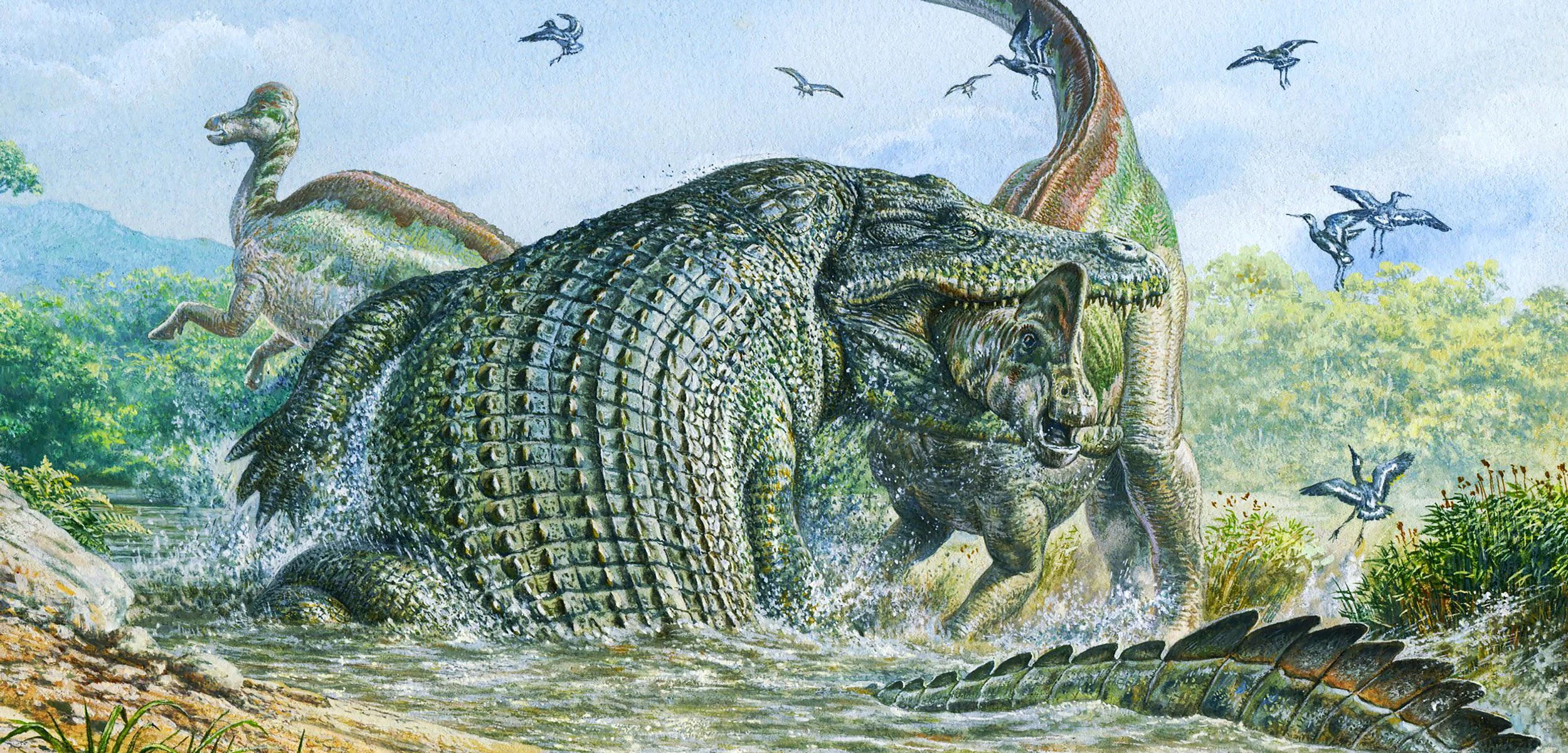
Deinosuchus gets called a “dinosaur crocodile” so often that the nickname has almost stuck permanently. But the truth is more dramatic: Deinosuchus was a crocodyliform – a member of the crocodile lineage – that grew over 30 feet long and routinely ambushed actual dinosaurs at the water’s edge. It didn’t belong to the dinosaur group. It was one of the dinosaur group’s most dangerous predators.
Its bite force was strong enough to crush bone, and fossil evidence suggests it attacked hadrosaurs and possibly even tyrannosaurs at riverbanks across Late Cretaceous North America. Its lineage traces to pseudosuchian archosaurs – the crocodile branch of the archosaur family tree, which split from the dinosaur branch over 250 million years ago. Modern crocodiles are its closest living relatives, and they carry that ancient predatory DNA in nearly unchanged form today.
#5 – Postosuchus: The Apex Predator Dinosaurs Dethroned
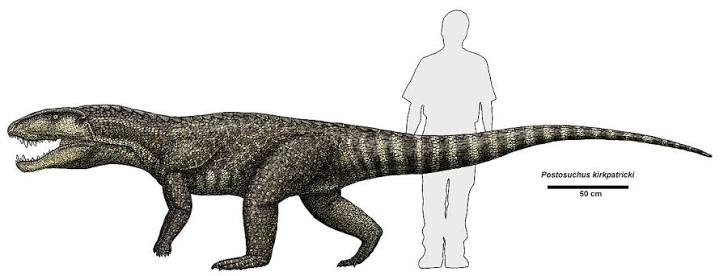
Before dinosaurs dominated the Triassic landscape, Postosuchus ruled it. This powerful pseudosuchian predator had a deep, heavily muscled skull and serrated teeth designed for taking down large prey across what is now the American Southwest. It walked with a semi-erect posture – not quite the fully upright stance that defines dinosaurs – and for a time it was the most dangerous animal on land. Then the dinosaurs rose, and Postosuchus didn’t survive the competition.
That’s the detail that makes Postosuchus genuinely poignant: it was the dominant predator right up until it wasn’t. Early dinosaurs didn’t inherit a vacant world – they had to displace animals like this one. Postosuchus belongs to the crocodile-line archosaurs, not the bird-line that produced dinosaurs, and its extinction marks one of prehistory’s great power shifts. It was never a dinosaur. It was the thing dinosaurs replaced.
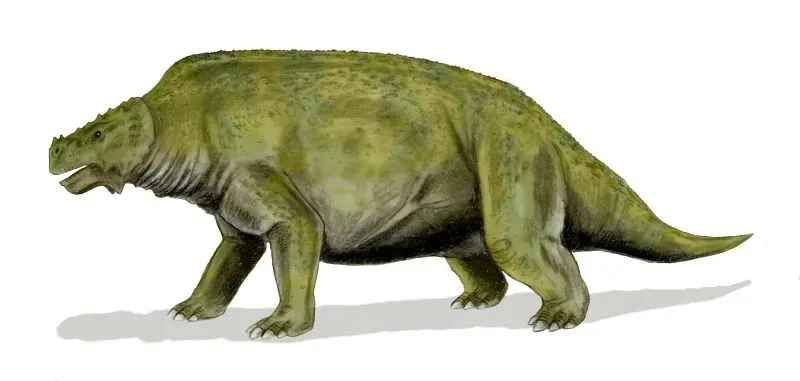
#4 – Scutosaurus: Armored, Ancient, and Closer to a Turtle Than a Dinosaur
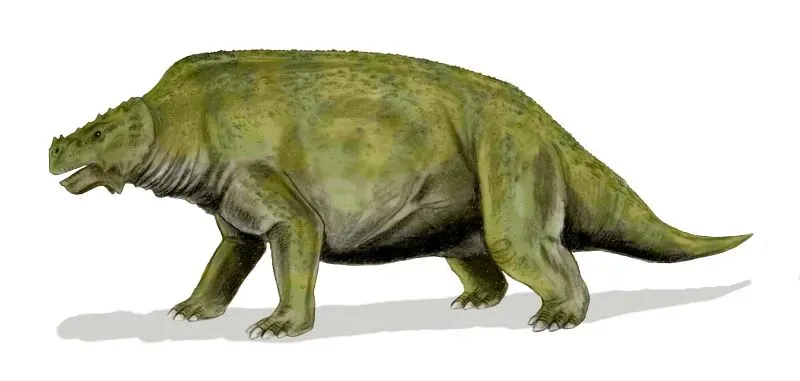
Scutosaurus looks like someone armored a rhinoceros and sent it back to the Permian. Its bony plates, barrel-shaped torso, and heavy build make it look exactly like what a child would draw if asked to sketch a dinosaur. But Scutosaurus was a pareiasaur – a group of animals more closely related to turtles than to any dinosaur – and it went extinct millions of years before dinosaurs even appeared.
It was a committed herbivore in a time when most large land animals were carnivores or omnivores, using its broad gut to digest the tough vegetation of ancient Permian floodplains. Its limbs sprawled outward rather than sitting directly beneath its body, a fundamental difference from the upright dinosaur stance. The armor wasn’t intimidation – it was survival strategy in a world full of predators like Dimetrodon. Scutosaurus existed in a completely different chapter of Earth’s history, one that closed before the dinosaur story even began.
#3 – Tanystropheus: The Animal With a Neck That Defies Explanation
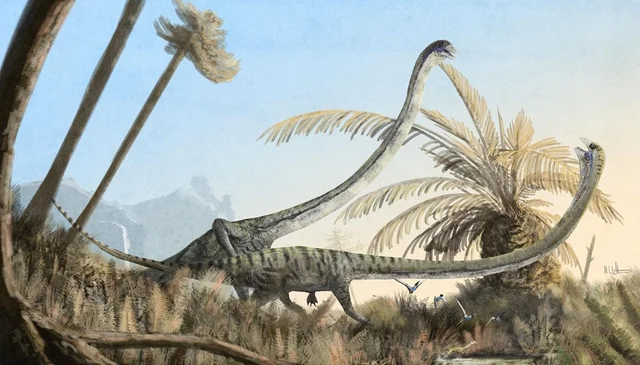
Tanystropheus had a neck longer than its body and tail combined. That single fact tends to shut down conversations, because nothing about it sounds real. This Triassic coastal reptile used that improbable neck to snatch fish from the water while keeping most of its body safely on shore or in the shallows – a hunting strategy so specialized and strange that it took paleontologists years to piece together. It belonged to the protorosaurs, an early reptile group with no direct dinosaur connection.
Fossils recovered from Europe and China show that Tanystropheus actually came in two size classes that may represent different species – or different life stages – with the smaller individuals eating insects and the larger ones hunting fish. Its elongated vertebrae look dinosaurian at a glance but lack every anatomical marker that defines the group. It lived before the dinosaur heyday, exploited a niche no other animal has ever quite replicated, and left no direct descendants. It was simply one of prehistory’s most bizarre experiments in body design.
#2 – Titanoboa: A Post-Dinosaur Monster That Outsizes Your Imagination
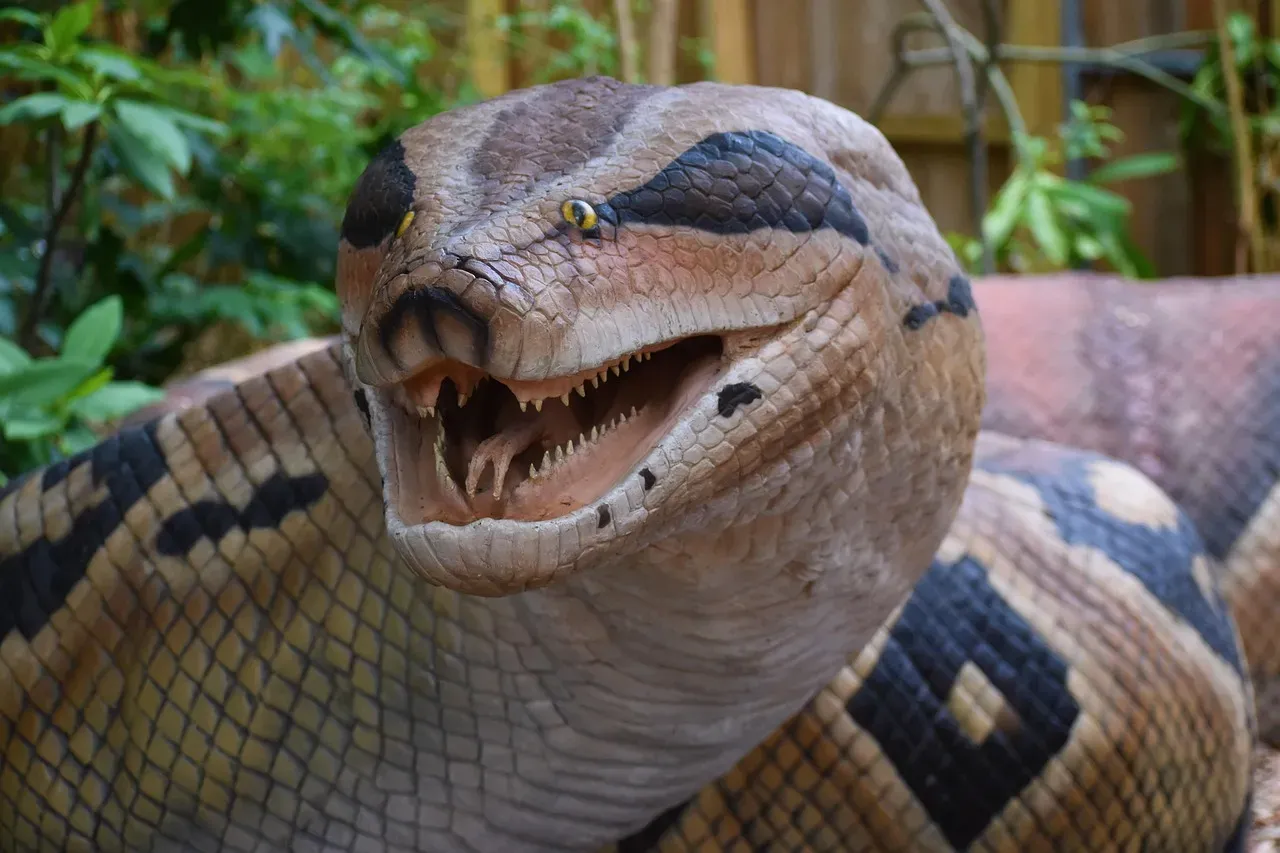
Titanoboa didn’t just outlive the dinosaurs. It appeared roughly 10 million years after the last non-avian dinosaurs were already gone. This massive constrictor emerged in the steaming Paleocene swamps of what is now Colombia, in a world that dinosaurs never lived to see. Calling it a “dinosaur snake” – as some media outlets have done – is wrong on both counts. It wasn’t a dinosaur, and the snakes that existed alongside dinosaurs were much, much smaller.
Titanoboa’s massive vertebrae and reinforced ribs are unmistakably serpentine in structure, and scientists have used them to estimate both its size and the ambient temperatures of its era – its body size implies the tropics were averaging between 86 and 93 degrees Fahrenheit year-round during the Paleocene, significantly hotter than today. It hunted fish and crocodilians in deep water, using a constriction force that likely exceeded anything living today. Titanoboa is a reminder that the post-dinosaur world wasn’t peaceful or small. It was just running a different nightmare.
Worth Knowing
- Length: up to 42–47 feet – longer than a school bus, similar in length to T. rex
- Weight: estimated 1,135 kg (about 2,500 lbs) – comparable to a small car
- Timeline: lived 58–60 million years ago, roughly 6–8 million years after dinosaurs vanished
- Discovery: fossils unearthed in 2009 from the Cerrejón coal mine in northern Colombia
- Climate clue: its enormous size tells scientists the Paleocene tropics were far hotter than today
- Closest relatives: modern boas and anacondas – no dinosaur connection whatsoever
#1 – Megalodon: The Shark That Has Nothing to Do With Dinosaurs Except the Fear Factor
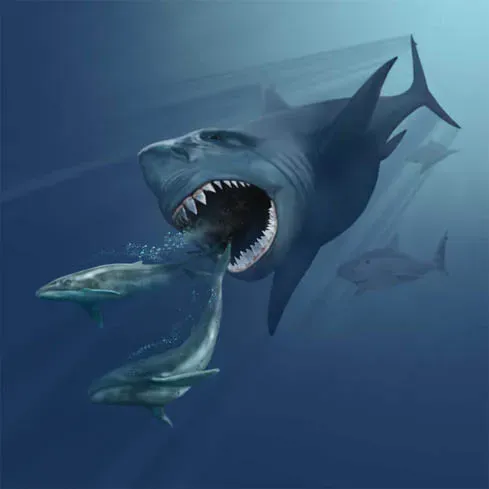
Megalodon is the ultimate prehistoric monster – 50 to 60 feet of pure predatory shark, built to hunt whales. It appears on “dinosaur era” lists, gets paired with T. rex in size comparisons, and anchors an entire genre of creature-feature films. There’s just one problem: Megalodon lived from roughly 23 to 3.6 million years ago. The last non-avian dinosaurs vanished 66 million years ago. That’s a gap of more than 40 million years. Megalodon and dinosaurs never shared the same ocean, the same world, or even remotely the same era.
Its teeth and vertebrae show clear relationships to shark ancestry – not to any Mesozoic reptile group. Megalodon was a Cenozoic predator that evolved in a world already dominated by mammals, hunting the whales and sea lions that had replaced the marine reptiles of the dinosaur age. The fear it inspires is completely earned. The dinosaur label it gets is completely wrong. And that gap – between how terrifying it was and how misunderstood its timeline remains – might be the most revealing thing about how we talk about prehistoric life in general.
Fast Facts
- Lived: approximately 23 to 3.6 million years ago – the Miocene and Pliocene epochs
- Size: up to 50–60 feet long, making it the largest shark and one of the largest fish ever
- Diet: primarily baleen whales and large marine mammals – not a single dinosaur
- Fossils: known mainly from teeth up to 7 inches long; shark skeletons are cartilage and rarely preserve
- Gap from dinosaurs: over 40 million years separate Megalodon’s rise from the last non-avian dinosaurs
- Extinction cause: likely a combination of cooling oceans, declining whale populations, and competition from early killer whales
Here’s what all twelve of these animals reveal when you line them up together: we’ve been telling ourselves a simpler story than the real one. “Dinosaur” became shorthand for anything ancient and frightening, and in doing so, we flattened one of the most complex, strange, and genuinely astonishing evolutionary histories on the planet. The real story isn’t that these animals were mistaken for dinosaurs. The real story is that Earth kept producing apex predators, bizarre body plans, and dominant species across hundreds of millions of years – and dinosaurs were just one chapter, not the whole book. The sail-backed synapsid that’s more closely related to you than to T. rex deserves its own awe. So does the flying giant that hunted dinosaurs for food, or the post-extinction monster snake that inherited the swamp. Once you stop forcing everything into the dinosaur box, the actual history of life on Earth gets dramatically more interesting.