
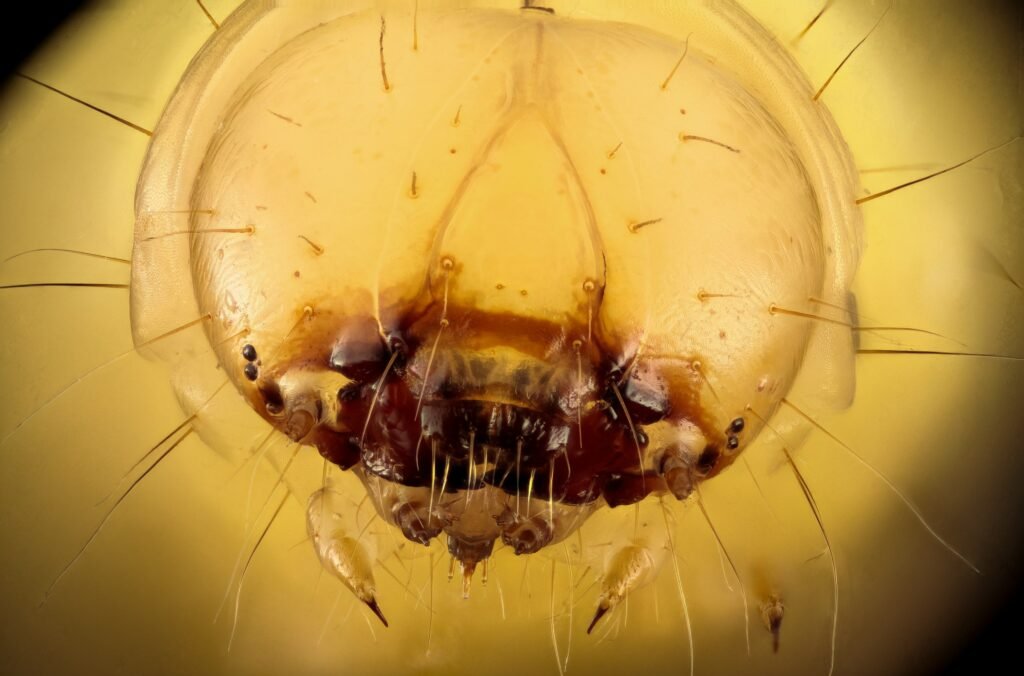
Most people assume every fossil ever dug up eventually gets a tidy label, a Latin name, a neat little box on the tree of life. That assumption falls apart the moment you look closely at certain amber collections sitting quietly in museum drawers right now.
Some of the creatures trapped in that golden resin are so anatomically wrong, by every rule scientists use to classify life, that researchers have simply stopped trying to force them into existing categories. Not “new species.” Not “rare subspecies.” Actual biological question marks. Here are 13 of them, and the deeper you go, the stranger the story gets.
#13 – The “Walking Leaf-Head” From Burmese Amber
At first glance, this thing looks like a badly drawn Pokémon. Paleontologists have privately called it a “morphological nightmare” because nothing about its body lines up cleanly with any known insect group.
Its head is flattened like a leaf, with strange lateral flanges that don’t match any modern or fossil insect on record. The legs are jointed like a walking stick, but the thorax proportions are off, the wing buds suggest flight, and the mouthparts look half-chewing, half-piercing, with antennae segmented in a pattern nobody recognizes. When researchers ran digital measurements against known insect databases, it kept landing in the no-man’s-land between several orders, and taxonomists still can’t agree whether it’s an extreme offshoot or a completely extinct, unnamed lineage.
#12 – The “Eight-Legged, Not-Quite-Spider” Mystery
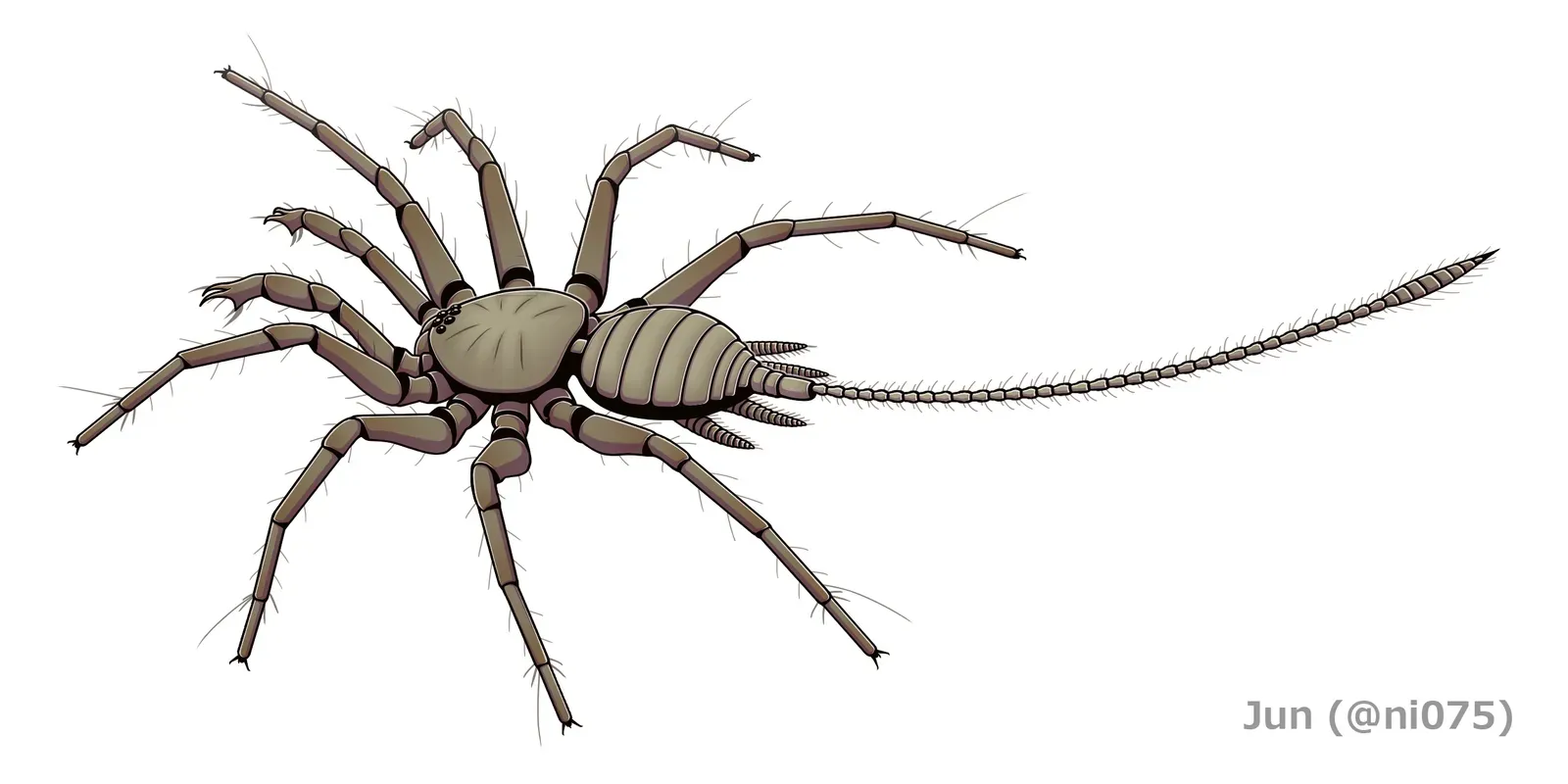
If you assume eight legs automatically means spider, this fossil is here to ruin that assumption. Encased in mid-Cretaceous amber, it has eight limbs, fangs, and a rounded abdomen, exactly what you’d expect walking into the identification.
Then the details start breaking the rules. Its spinneret-like structures sit halfway up the abdomen instead of at the tip, something no modern spider does, and it carries a mysterious extra pair of tiny appendages near the mouth that resemble ancient arachnid prototypes. Some paleontologists quietly suspect it’s a transitional ghost between early arachnids and true spiders. Others say we simply don’t have enough comparative fossils to say anything for certain, which is why the official classification still reads, almost apologetically, “arachnid, uncertain affinity.”
Fast Facts: Burmese Amber
- Formed roughly 99 million years ago during the mid-Cretaceous period
- Mined mainly from Myanmar’s remote Hukawng Valley region
- Famous for extraordinary 3-D preservation of soft tissue, not just hard shell
- Has produced thousands of newly described arthropod species in just the past two decades
#11 – The Insect With a “Forked Neck” and Nowhere to Put It
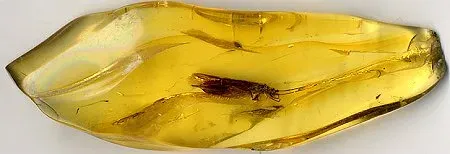
This specimen from Baltic amber has become something of a running joke in entomology circles. From the legs down, it looks like a modest, forgettable insect, maybe a small beetle or planthopper, nothing worth a second glance.
Then you reach the neck. Where a normal insect has a simple joint between head and thorax, this one has a bizarre forked structure, like a wishbone fused into living tissue, with the head resting between two arched supports almost like a gimbal. Nobody knows if it allowed extreme head rotation to spot predators or helped it feed on sap in tight crevices. Every attempt to slot it into an existing family fails, because that forked neck changes the entire mechanics of how its muscles would have worked, leading some researchers to suspect it’s the last known survivor of a tiny, failed evolutionary experiment.
#10 – The “Winged Worm” Larva That Breaks the Rulebook
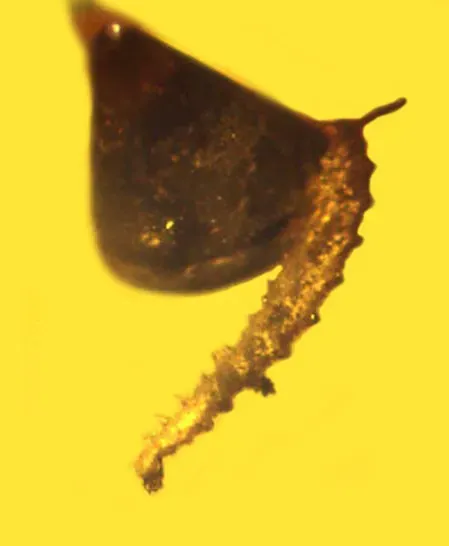
Larvae rarely make headlines, but this one demands attention. Trapped in Cretaceous amber from Myanmar, it looks at first like an ordinary worm with delicate feather-like structures running along its sides.
Under high resolution, those “feathers” turn out to be fully articulated proto-wings, complete with veins and hinge-like bases, attached to a body that is otherwise soft, segmented, and unmistakably larval. No modern insect life cycle mirrors that combination. Some scientists think it belonged to a vanished order that experimented with winged juveniles before evolution abandoned the idea entirely; others suspect we simply haven’t found its adult form yet, and are judging an incomplete story.
#9 – The “Six-Eyed Mite” That Refuses to Sit in Any Family Tree
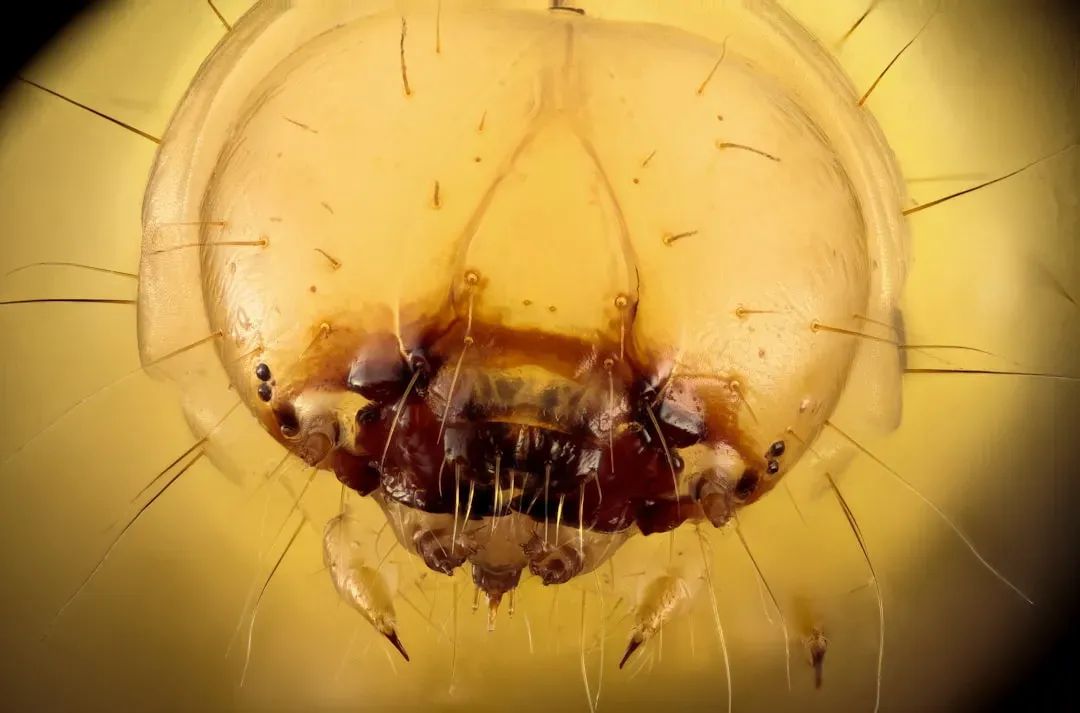
Mites already have a reputation for being weird, but this one from Dominican amber takes it further. At first it looks like an oversized dust mite with chunky legs, nothing remarkable until you reach the eyes under a microscope.
Instead of the usual zero, two, or four eyes, this mite has six tiny but clearly formed eye spots arranged in a triangular pattern that no known living or fossil mite shares. Since eye count and placement are a core classification tool for mites, this single detail breaks the system taxonomists rely on. Add in an unusual hooked claw with extra lobes and body segmentation that matches nothing on record, and researchers are left debating whether it’s a hint of an extinct canopy-dwelling mite radiation or proof that several mite lineages need to be redefined.
#8 – The “Feather-Headed” Fly That Might Not Be a Fly
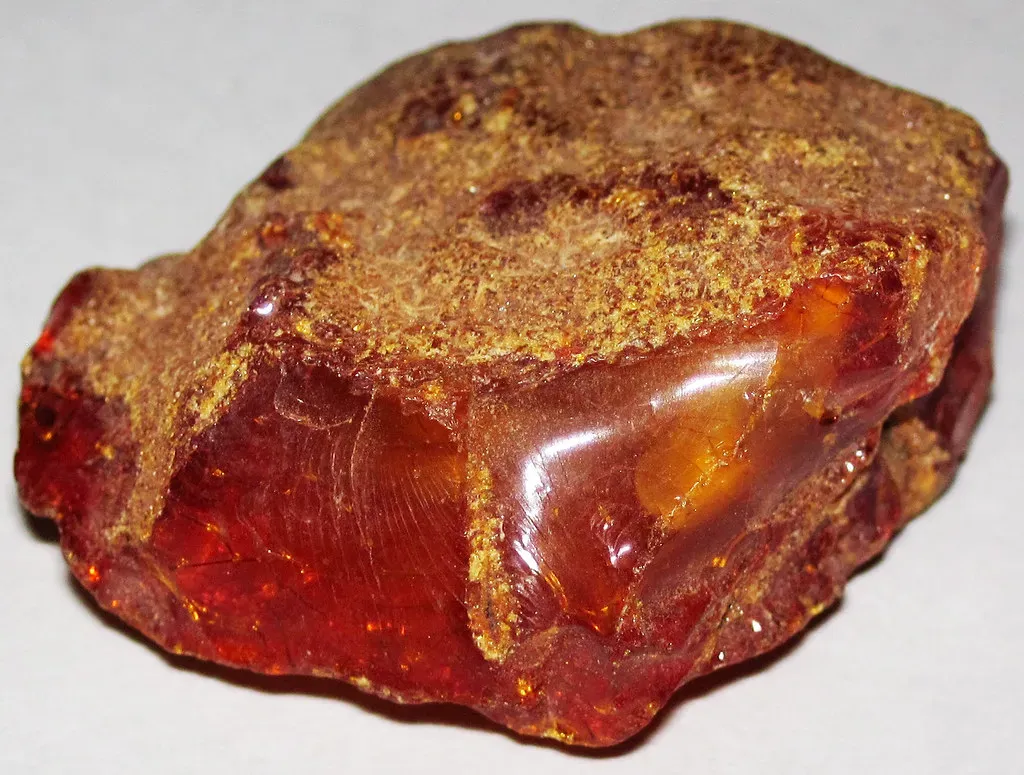
From the thorax backward, this creature preserved in Lebanese amber looks like a small fly: wings present, body slender, nothing unusual. Then you look at the head.
Instead of normal antennae, it carries two enormous feather-like plumes, each branching into dozens of filaments thicker than its own legs, paired with mouthparts too short and blunt for any known fly type. Those oversized plumes likely changed how it flew, possibly working as sensory nets or display organs. But its wing veins and leg joints keep falling outside every fly family boundary tested, leaving experts to cautiously suggest it may belong to a separate, now-lost lineage of small aerial insects that only looked fly-like by coincidence.
Quick Compare: How Old Is Each Amber Deposit?
| Amber Source | Approximate Age | Known For |
|---|---|---|
| Triassic amber (Italy) | ~230 million years | The rarest amber on Earth |
| Lebanese amber | ~125-135 million years | Oldest amber rich in insect inclusions |
| Burmese amber | ~99 million years | Exceptional 3-D soft tissue detail |
| Baltic amber | ~34-49 million years | Largest amber deposit worldwide |
| Dominican amber | ~16-20 million years | Unmatched clarity and transparency |
#7 – The Tiny “Armor-Plated” Creature That Might Be a Crustacean on Land
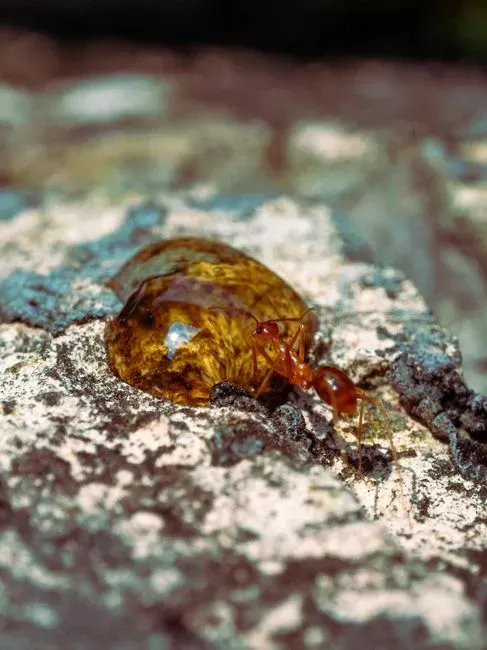
This specimen from Burmese amber looks like something dredged up from the ocean floor, not pulled from a forest. About the size of a grain of sand, its segmented body is covered in overlapping plates like a miniature pill bug, except for jointed appendages under the front segments that don’t match any known land-dwelling crustacean.
The gill-like structures along its underside appear adapted to moist air rather than fully aquatic life, which is exactly what makes this one so unsettling to classify. It shows crustacean-style feeding appendages near the mouth alongside limb articulation closer to soil-dwelling arthropods. Some researchers think it’s evidence of a bizarre, now-extinct line of land crustaceans that briefly colonized ancient forest floors; others suspect it’s simply a known group twisted by time and preservation. Either way, no one currently agrees on what basic category it even belongs in.
#6 – The “Triple-Tailed” Insect That Redefines Back Ends
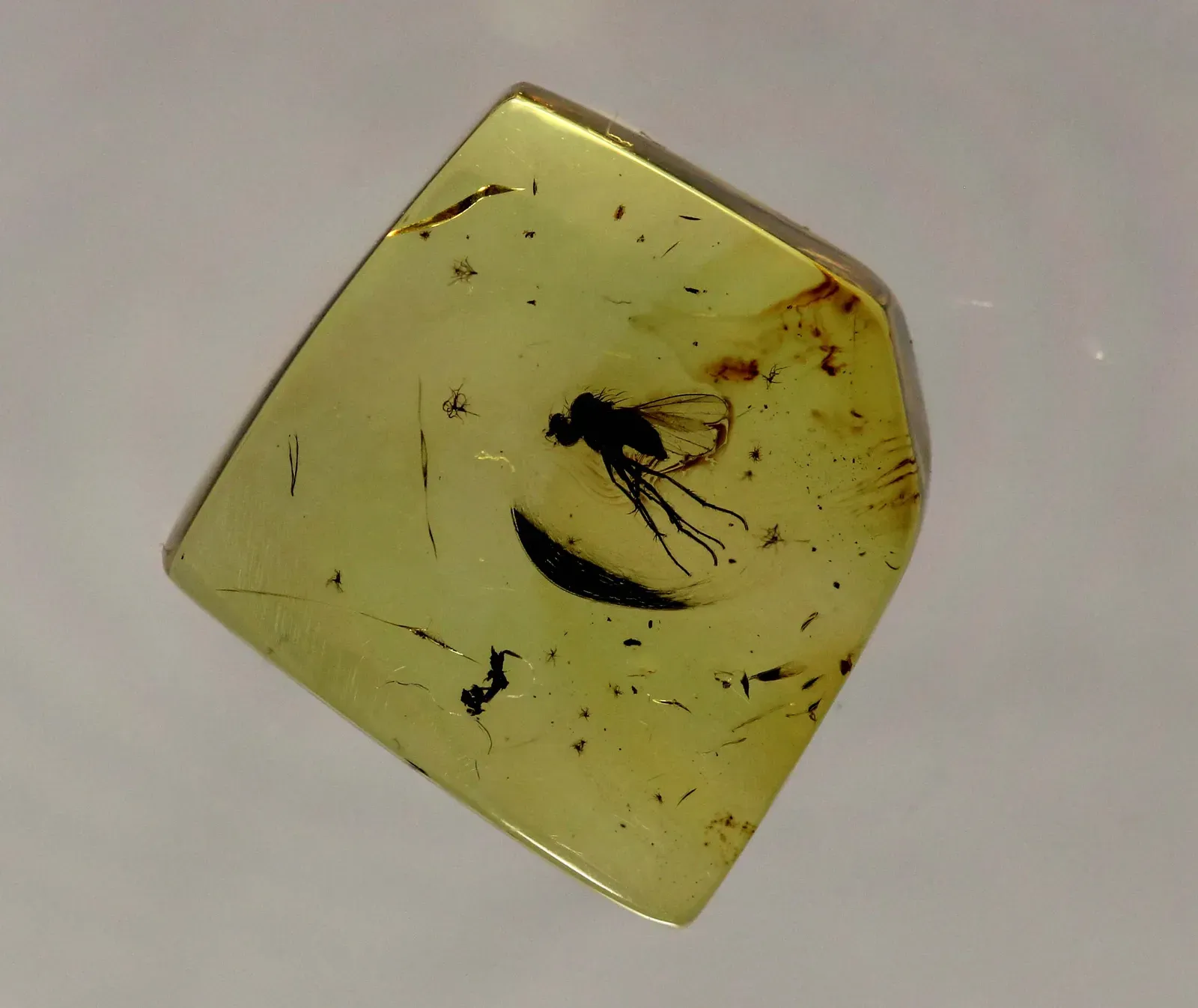
Insect tails are usually simple: a plain tip, a stinger, or a modest pair of cerci. This fossil from Baltic amber said no thanks to all of it.
At the end of its abdomen sit three long, articulated tails, each with its own segments and tiny sensory hairs, and microscopic wear patterns suggest they were actively used, not just decorative. The obvious guess is mayflies or bristletails, since both sport long filaments, but the wing structure, leg placement, and mouthparts refuse to match. Scientists are genuinely stuck between calling it a strange mutant of a known lineage or a member of a vanished group we’ve barely sampled, and until more specimens turn up, they can’t confidently assign it to any order at all.
#5 – The “Pseudoscorpion” With a Completely Wrong Blueprint
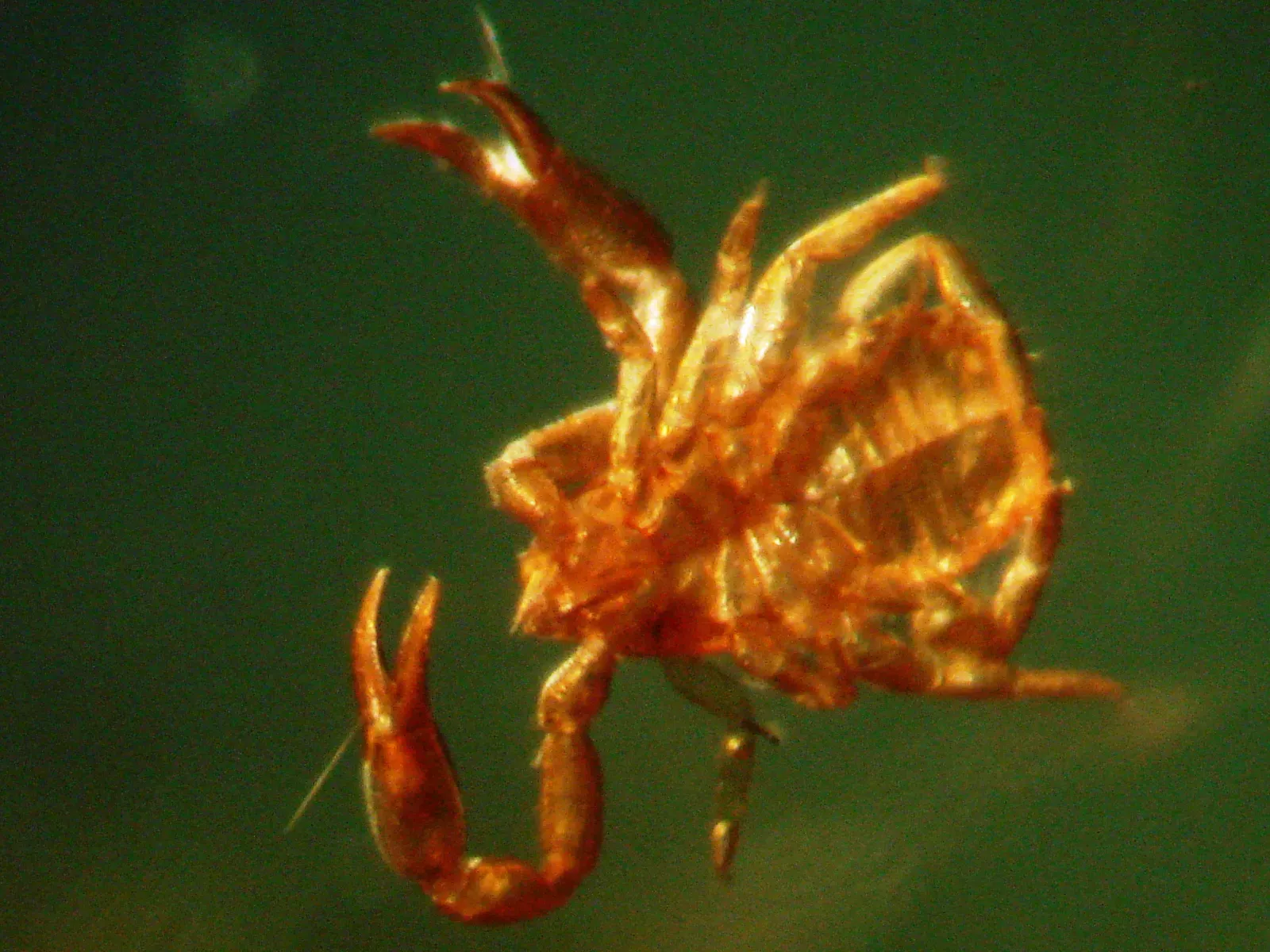
At first glance, this amber fossil reads as an ordinary pseudoscorpion: small clawed front appendages, a flattened body, no tail. Those little book-scorpions are common and well documented in amber, so this should have been an easy identification.
Then the imaging ruined it. The internal muscle attachments and joint placements are fundamentally different from true pseudoscorpions, and even the way the claws connect to the arms follows a different structural pattern entirely. When scientists tried to key it out using the standard decision points, it kept failing at the earliest steps. Some think it’s an independent arachnid lineage that simply converged on similar hunting tools by coincidence; others believe it’s part of a primitive group that later gave rise to several modern lineages. No one agrees enough to put a name on it.
Worth Knowing: Pseudoscorpions in Amber
- Pseudoscorpions rank among the most frequently preserved arachnids in fossil resin
- Some amber specimens catch them mid-phoresy, hitching a ride on a beetle or fly’s leg
- Despite the name, they have no tail and no stinger, relying entirely on venom-tipped claws
- Amber’s clarity can preserve individual claw hairs and tiny pedipalp segments intact
#4 – The “Four-Winged Beetle” Nobody Asked For
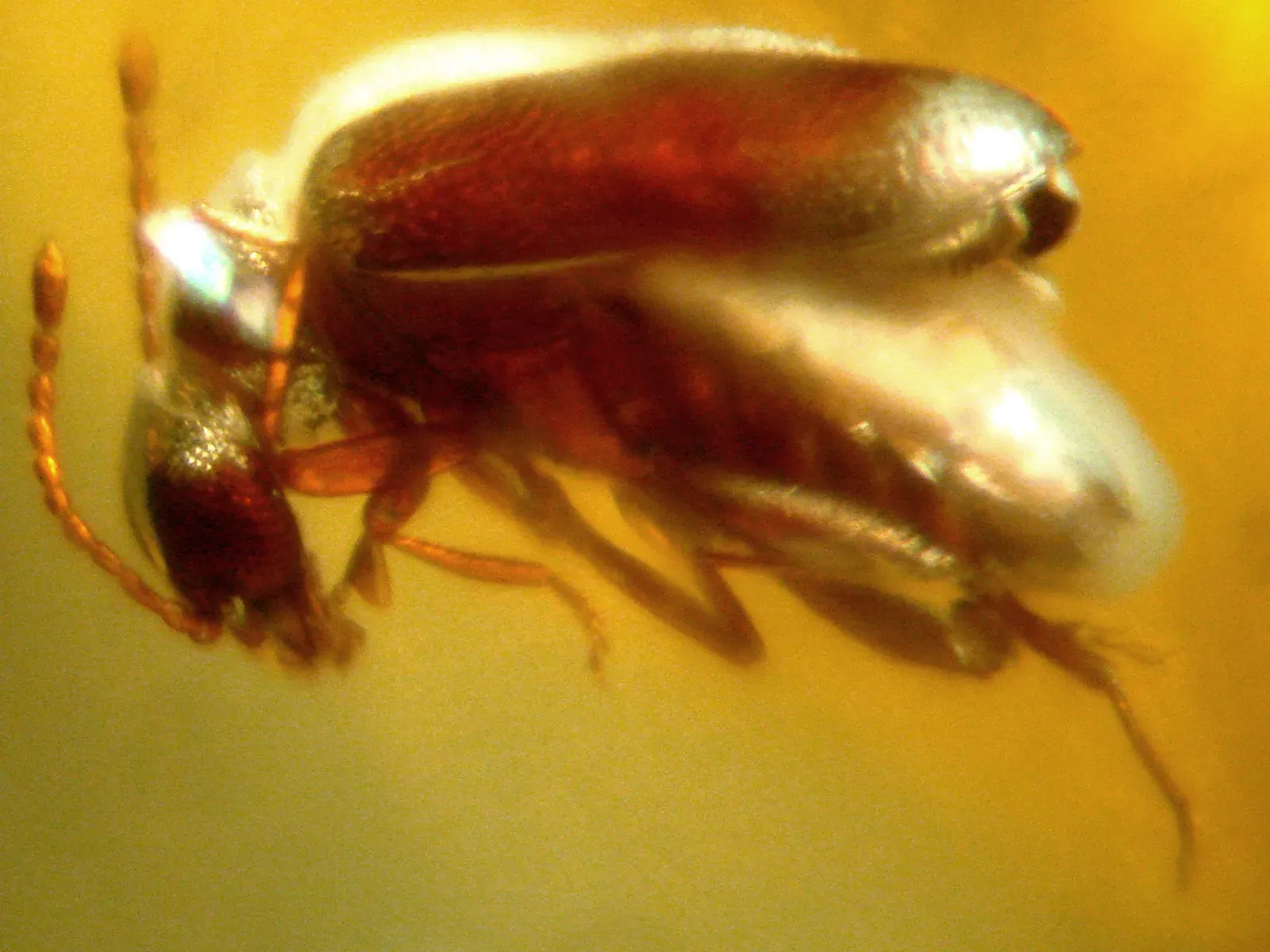
Beetles are defined, in large part, by having hardened forewings called elytra and separate membranous hindwings, two pairs, two clear jobs. This Cretaceous amber specimen breaks that rule in a way that has genuinely frustrated specialists.
Instead of classic elytra, all four wings are partially hardened and partially membranous, with vein patterns that blend beetle traits with something closer to a dragonfly. It looks like a beetle wearing borrowed wings. Some argue it’s a one-off developmental fluke that happened to get trapped in resin at the wrong moment; others point to consistent, deliberate-looking details in the wing articulation suggesting a real, stable lineage. If that second theory holds, it means an entire experimental wing design vanished from the fossil record, leaving this single unnamed witness behind.
#3 – The “Half-Centipede, Half-Spider” Forest Predator
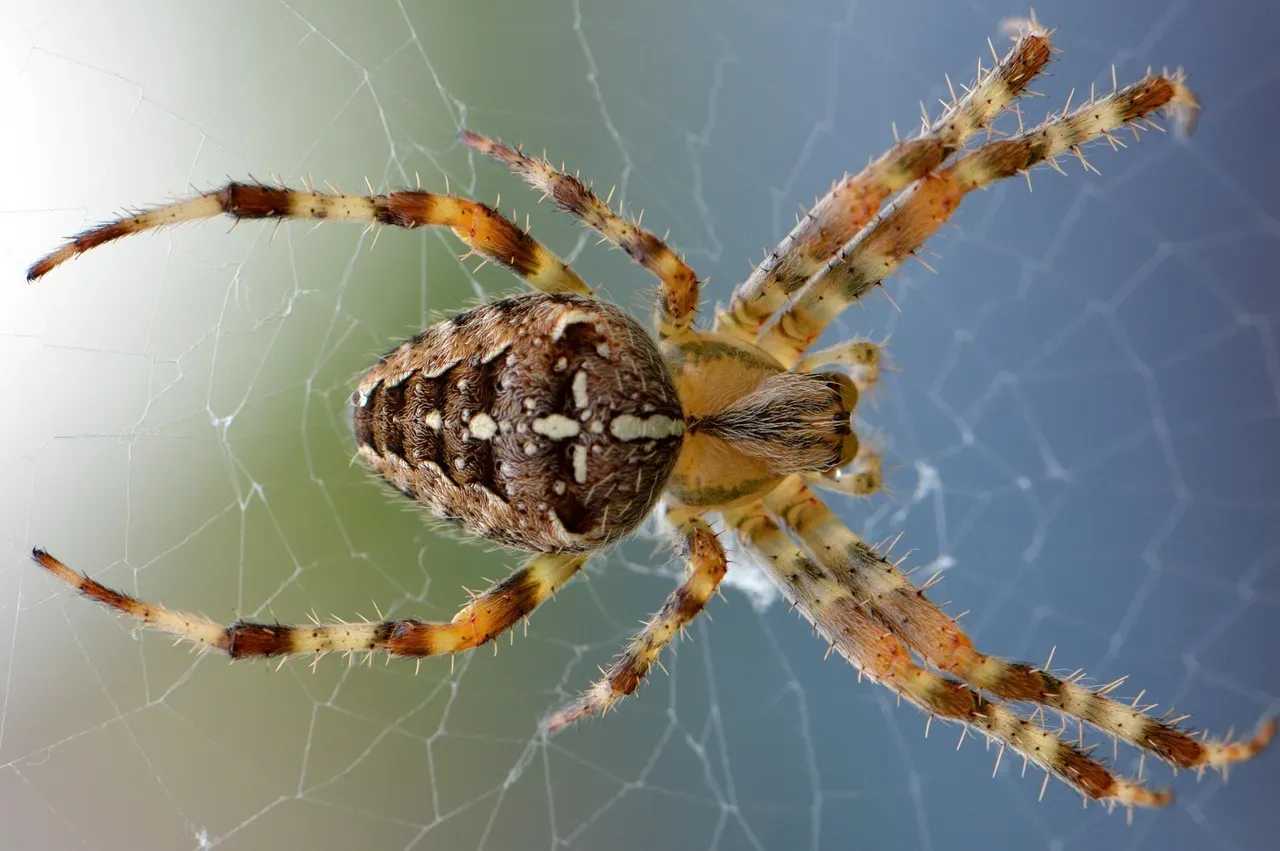
If you want a specimen that looks like it crawled out of a horror game, this is it. Preserved in Burmese amber, it has a long, segmented body like a centipede, but the front end carries eight spider-like limbs ending in hooked claws.
The mouthparts show fang-like structures with channels consistent with venom delivery, while the rear body segments carry limb bases unlike any modern centipede or spider. Classifying it has become almost political among researchers. One camp calls it an extreme offshoot of an ancient arachnid group, another insists it’s closer to myriapods that independently evolved spider-like forelimbs, and without comparable fossils, every position remains pure speculation. For now, it sits under a label that essentially translates to “we genuinely don’t know.”
#2 – The “Glass Spine” Creature With No Clear Front or Back
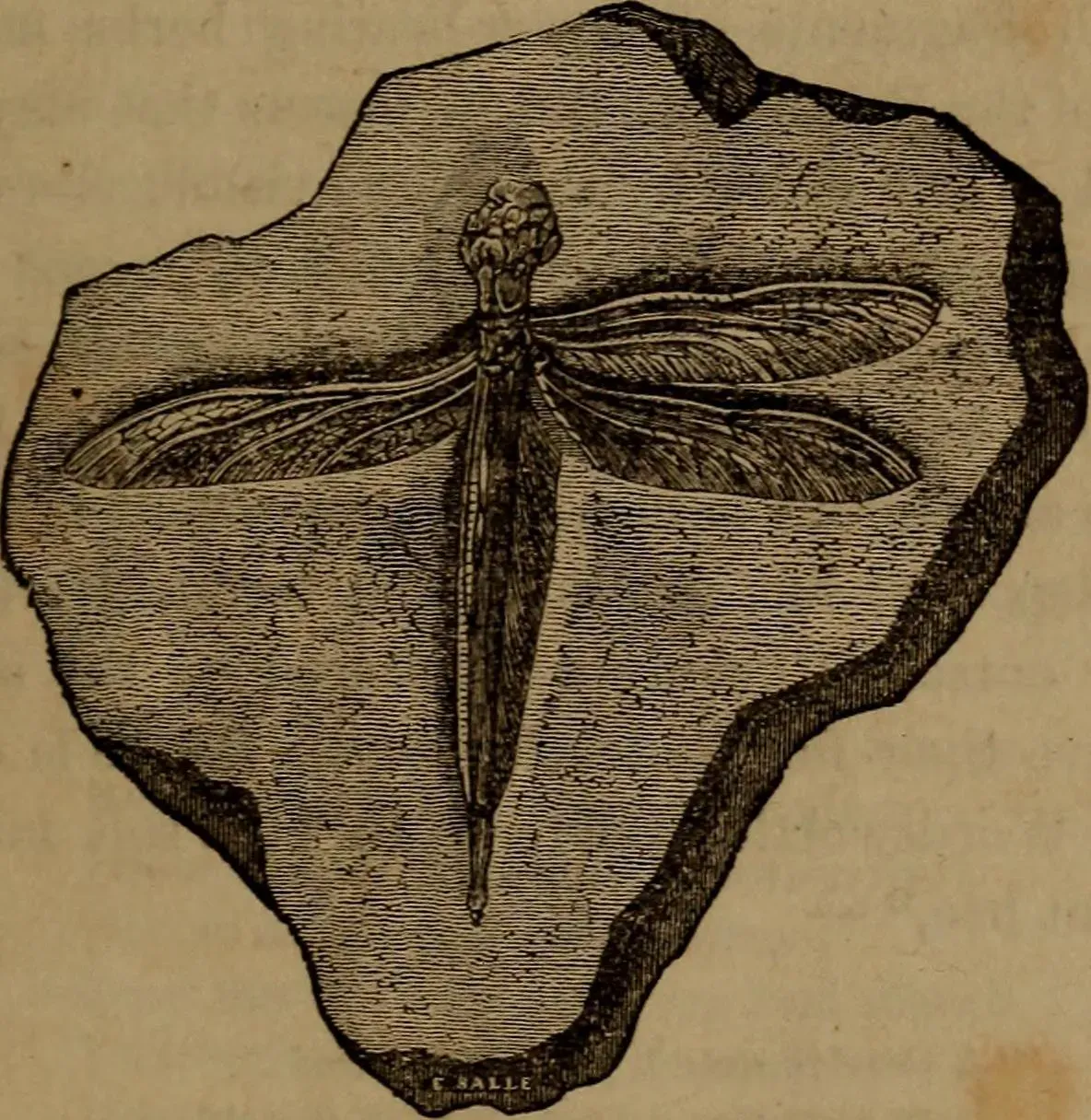
This one is small enough to miss and confusing enough to obsess over. Encased in Triassic amber fragments, the creature is a threadlike body wrapped around a central, translucent rod.
Under imaging, that rod appears to be a crystalline or heavily mineralized internal spine surrounded by soft tissue, a configuration seen in no known arthropod or worm group. To make it worse, structures at both ends of the body look tentacle-like and feeding-capable, so scientists can’t even confidently say which end is the front. Is it an early, failed experiment in internal skeletons among tiny invertebrates? Multiple papers have discussed it and still, no name has stuck.
#1 – The “Totally Alien” Cluster That Might Be More Than One Kind of Life
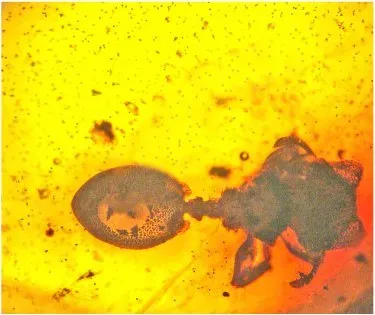
At the very top of the weirdness scale isn’t a single creature at all, it’s a cluster: multiple microscopic bodies embedded together in a shared, jelly-like matrix, trapped in ancient amber like a frozen moment mid-event.
Under heavy magnification, some units show cilia-like hairs, others carry rigid plates, and still others resemble larval sacs, arranged almost like a tiny living city with specialized components that fit no modern analog. Researchers have floated two theories: a complex colonial organism unlike anything alive today, or a multi-species symbiotic cluster fossilized mid-interaction. Neither is comfortable, because both imply a level of biological experimentation in Earth’s deep past we barely suspected existed. No one can even agree whether it’s one organism or many, which makes naming it, in the most literal sense, impossible.
Why It Stands Out
- Unlike single-organism inclusions, it traps an entire cluster of possibly different life forms together
- Cilia-like structures suggest active movement at the exact moment of encasement
- Rigid plate features resemble no modern microorganism group on record
- If confirmed as one organism, it would represent an entirely undocumented body plan
The Bottom Line
Amber was supposed to give us clarity, perfectly preserved snapshots that quietly fill in the gaps of evolution. Instead, these 13 specimens do the opposite.
They prove that deep time was full of anatomical experiments so strange that our modern categories simply can’t hold them. Even with CT scans, 3D modeling, and genetic comparisons to living relatives, experts still stare at some of these fossils and admit they can’t place them anywhere on the tree of life. That’s not a failure of science, it’s a reminder that the past was weirder, possibly far weirder, than any textbook has prepared us for.
Some people will insist every creature must fit somewhere, that we just haven’t looked hard enough yet. I’m not convinced. I think a handful of these deserve entirely new branches, new names, maybe even new rules for how we define life at all. So which one do you think earns an official name first?