
Most people assume America’s oldest infrastructure is a bridge, a rail line, or maybe a lighthouse. But hidden in plain sight, carrying millions of daily commuters, tourists, and truckers, are vehicle tunnels that predate the interstate highway system, the Social Security Act, and in some cases, sliced bread. Nobody driving through them today was even a distant thought when the first blast of dynamite opened these passages.
Engineers built them with mule carts, hand drills, and educated guesswork, not laser-guided boring machines, and yet these same tubes still swallow modern rush-hour traffic every single day without complaint. Some were blasted through solid granite. One was finished by a crew whose chief engineer died the day before the final charge of dynamite went off. Here’s what thirteen of America’s oldest working tunnels can still teach us about engineering nobody ever bothered to double-check.
#1 – Baltimore Harbor Tunnel, Maryland (1957)
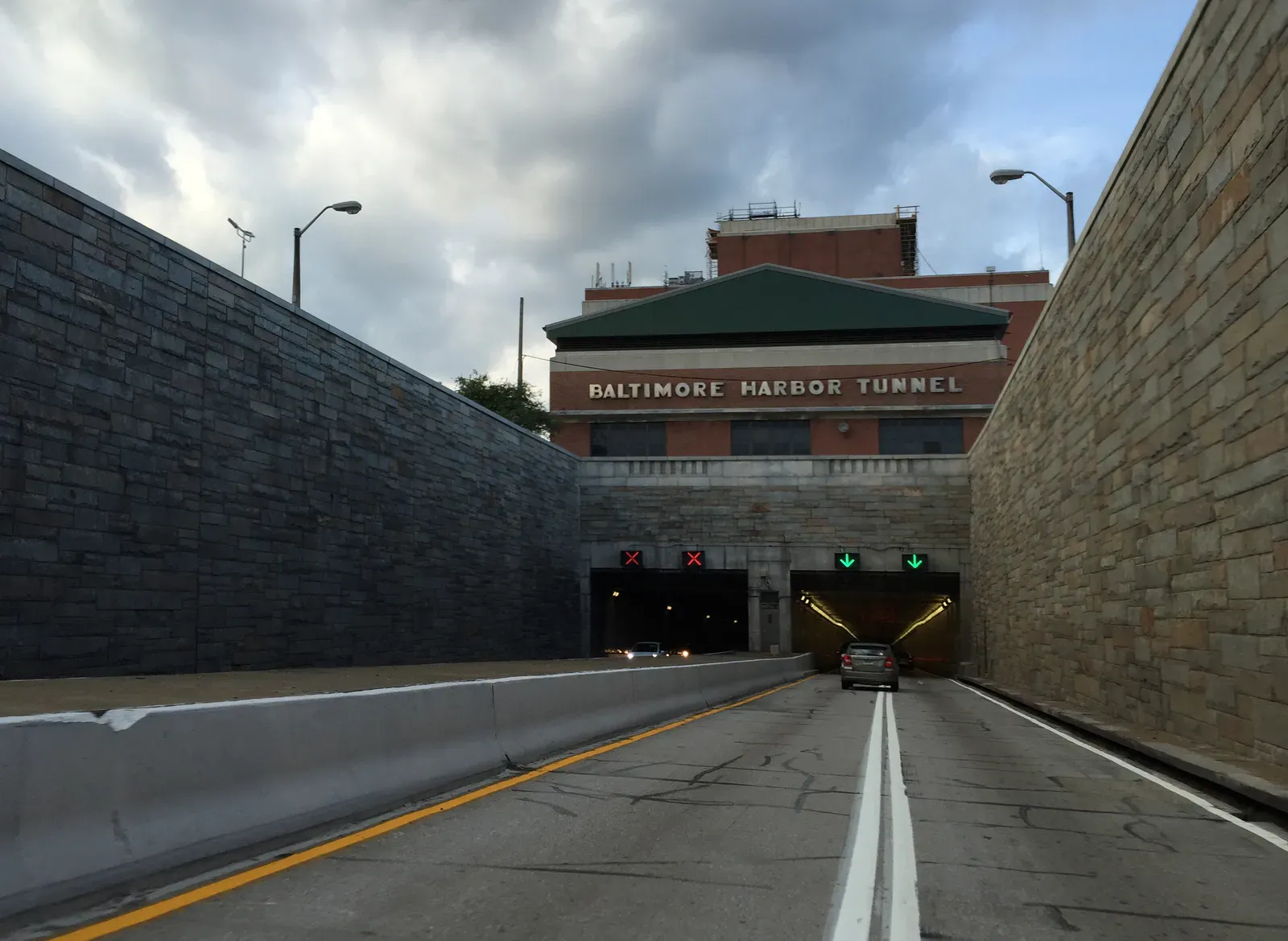
The Baltimore Harbor Tunnel doesn’t get the tourist attention of a Yosemite or a Zion, but it solved a problem that had plagued the East Coast for decades. Before it opened, every car heading from Philadelphia to points south had to crawl through Baltimore’s downtown streets, stoplight by stoplight.
When the tunnel and its approach highways opened to traffic on November 29, 1957, it was treated as a national event. The $150 million project became the fifth-longest underwater vehicular tunnel in the world at the time of its dedication, and its opening instantly wiped out 51 traffic lights from the route through the city.
The construction method was just as unusual as the payoff. Each massive tunnel section was pre-built in nearby shipyards, floated into position, and sunk into a dredged trench on the harbor floor before crews sealed the pieces together underwater. That prefabricated approach was cutting-edge for its era, and it’s still the basic method engineers use to build underwater tunnels today.
Fast Facts
- Opened to traffic November 29, 1957
- Cost roughly $150 million to build
- Eliminated 51 stoplights along the old downtown route
- Ranked as the fifth-longest underwater vehicular tunnel in the world at dedication
- Still carries I-895 beneath the Patapsco River today
Nearly seven decades later, that same submerged steel-and-concrete tube still shuttles I-895 traffic beneath the Patapsco River every single day, carrying drivers who have no idea they’re rolling over a piece of Cold War-era shipbuilding ingenuity.
#2 – Bankhead Tunnel, Mobile, Alabama (1941)
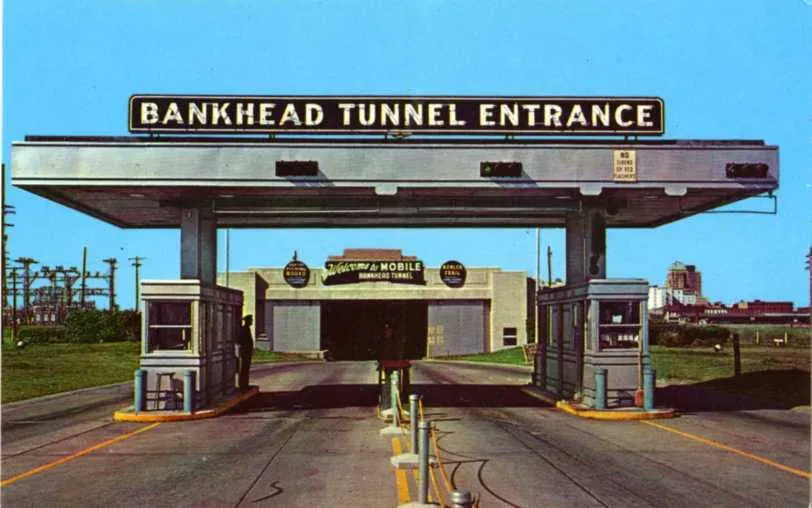
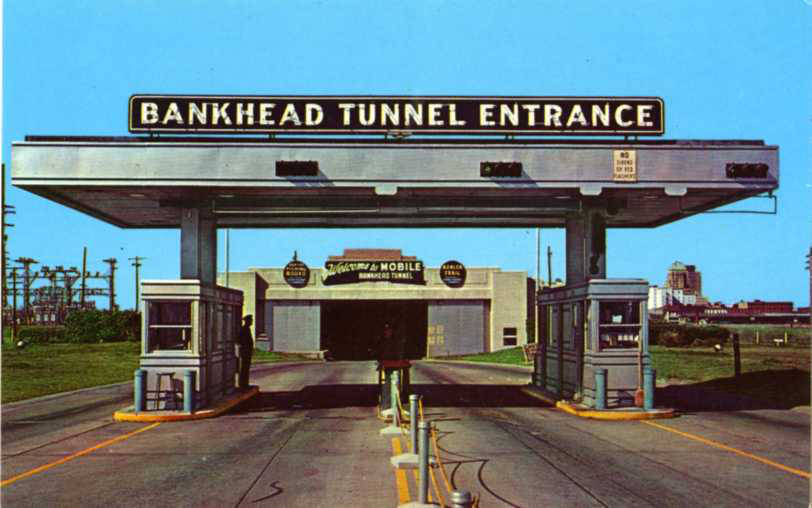
Most road-trippers cruising US 90 through downtown Mobile have no idea they’re diving beneath an actual river inside a tunnel that predates America’s entry into World War II. The Bankhead Tunnel was one of the first underwater vehicular crossings built in the Deep South, carved beneath the Mobile River to connect downtown with the eastern shore communities.
Unlike the glamorous mountain tunnels out West, Bankhead was a purely industrial solution, a way to keep river traffic and car traffic from fighting over the same real estate. The twin tubes were engineered using the same submerged-tube principles pioneered up north, adapted for the humid, corrosive conditions of a Gulf Coast waterway, a detail that made the build genuinely experimental for the region.
Locals still use it as a daily shortcut, mostly unaware they’re driving through a Depression-era engineering artifact. It rarely shows up on national “historic tunnel” lists because it lacks a dramatic mountain backdrop, but its age alone puts it ahead of most bridges built in the same decade. It has quietly outlasted several generations of drivers who never gave it a second thought.
#3 – Pennsylvania Turnpike’s Original Tunnels (1940)
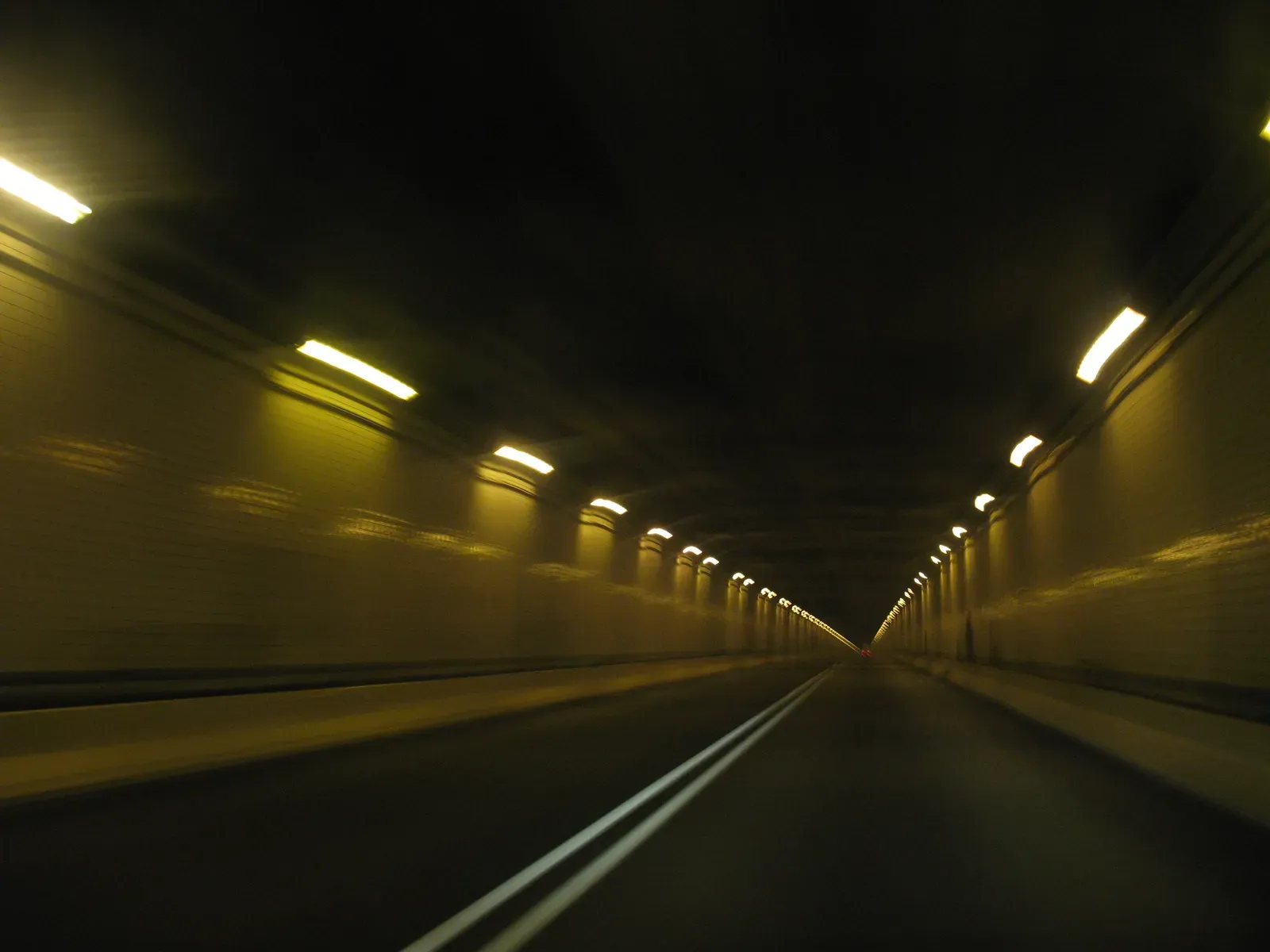
When the Pennsylvania Turnpike opened, it wasn’t just a road, it was a spectacle, and the tunnels were the main event. On October 1, 1940, the Turnpike opened to traffic and ushered in a new era of transportation, spanning 160 miles of four-lane, all-concrete highway with seven tunnels, eleven interchanges, and ten service plazas.
Because of the novelty of its seven tunnels, the road was commonly nicknamed the “Tunnel Highway” in its early days. Even though the toll road grew out of an old railroad-bed idea, it was the tunnels that inspired real awe in motorists of the time. The Allegheny Mountain Tunnel alone is still carrying serious weight: considered an “engineering marvel” when it opened in 1939, it now absorbs 11 million vehicles a year.
Two of the original seven tunnels, Rays Hill and Sideling Hill, were eventually bypassed and abandoned, but several others, including Tuscarora, Kittatinny, and Allegheny Mountain, are still very much active. Traffic engineers eventually had to double the tubes to handle modern volume, but the bones of these passages are pushing 85 years old.
#4 – Lincoln Tunnel, New York/New Jersey (1937)
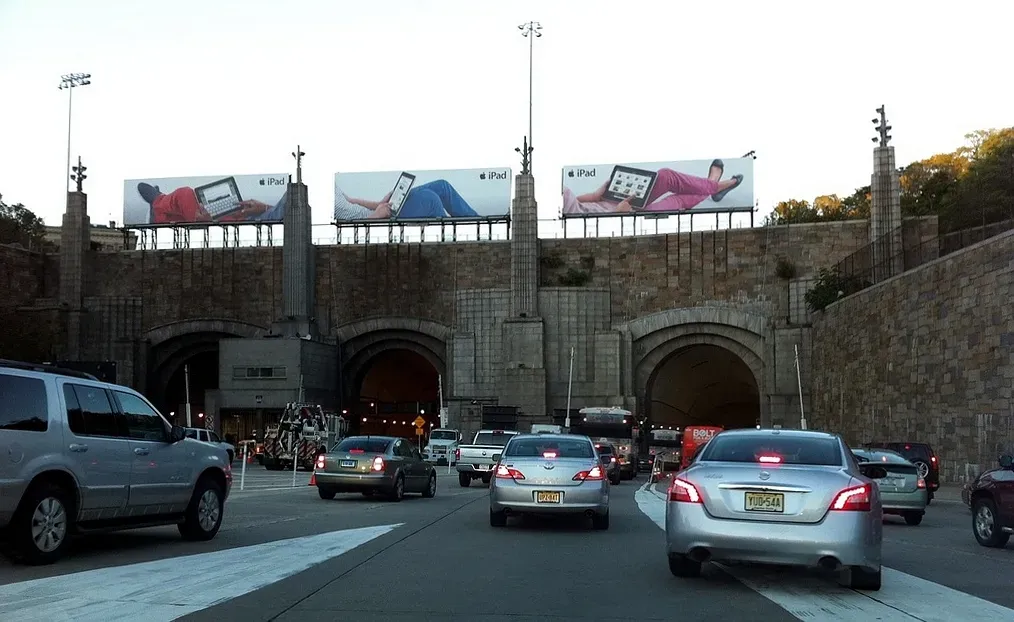
Everybody knows the Lincoln Tunnel as a soul-crushing rush-hour bottleneck, but almost nobody realizes its first tube has been operating since the Great Depression. The Lincoln Tunnel opened in 1937, a full decade after its sibling, the Holland Tunnel, first proved that underwater car tunnels could actually work.
It was built in three separate phases as traffic demand exploded across the mid-20th century, with additional tubes added in 1945 and 1957. That means the very first tube, the one that started it all, is now well over 85 years old and still absorbs a huge share of the roughly 120,000 vehicles that cross daily between Weehawken and Midtown Manhattan.
Most commuters assume tunnel infrastructure gets fully replaced every generation or two. It doesn’t. The tiled walls, the ventilation shafts, and the basic tube structure from the 1930s are still doing the heavy lifting today, just with modern lighting and monitoring bolted on top. Engineers routinely point to the Lincoln Tunnel as proof that mid-century concrete and steel, properly maintained, can outlast almost any prediction about its lifespan.
#5 – Wawona Tunnel, Yosemite National Park, California (1933)
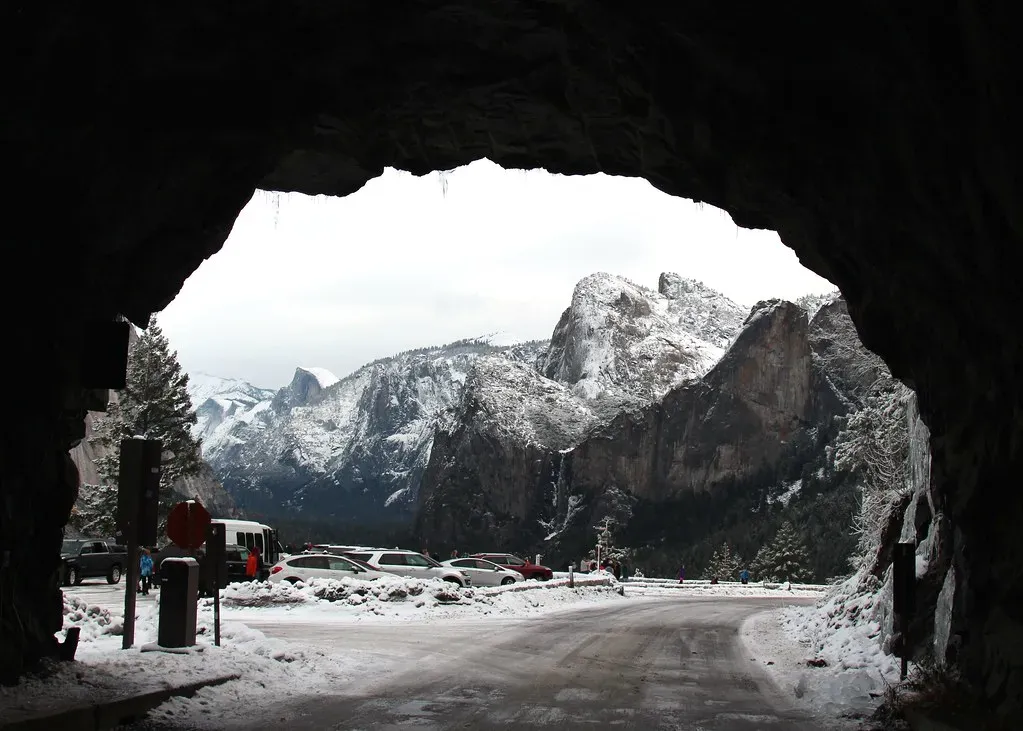
Every visitor to Yosemite Valley who takes the southern entrance drives through a passage blasted directly through solid granite nearly a century ago. Construction began on January 30, 1931, and the tunnel opened to public travel on June 18, 1933, requiring about 230 tons of dynamite to bore through solid rock and create a passage nearly a mile long.
The scale of the project was staggering for its era. The Wawona Tunnel runs four-fifths of a mile, measures 28 feet wide and 19 feet high, and sits beneath as much as 550 feet of solid rock at its deepest point. Perhaps the most remarkable detail is the safety record: not a single worker was killed or seriously injured during the entire nearly two-year construction project, a rarity for granite-blasting work of that era.
The tunnel’s real payoff sits at its eastern mouth. Just beyond the exit sits Tunnel View, built in 1933 and still one of the most photographed vistas on Earth, framing El Capitan, Half Dome, and Bridalveil Fall in a single glance. Drivers pop out of pitch darkness straight into one of the most famous views in America, doing it through infrastructure older than their grandparents.
#6 – Mount Rainier’s Historic Road Tunnels, Washington (Early 1930s)
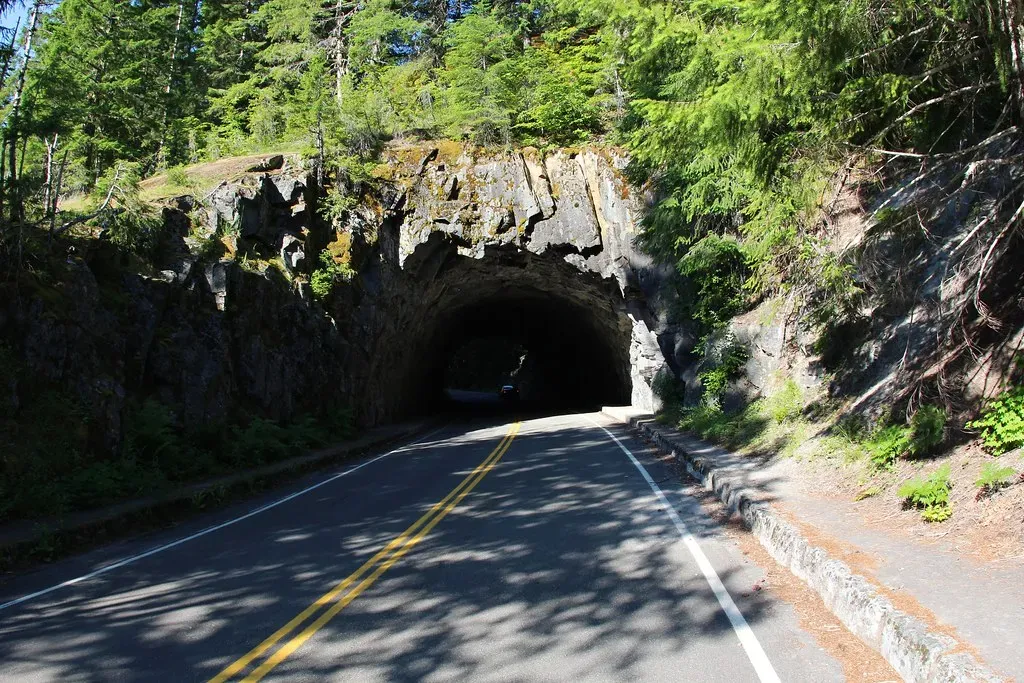
Long before national parks had shuttle buses and paved overlooks, engineers were blasting narrow passages directly into volcanic rock to give early automobile tourists access to Mount Rainier’s high country. These tunnels were built during the National Park Service’s “rustic design” era, when agencies deliberately built roads to blend into the landscape rather than dominate it.
The design philosophy was almost the opposite of a modern highway tunnel: narrow, low-clearance, and built to feel like a natural extension of the rock rather than an engineered structure. That’s part of why these tunnels feel so different to drive through today compared to a modern interstate bore. There are no wide shoulders and no bright sodium lighting, just rough-hewn rock a few feet from your side mirrors.
Worth Knowing
- Built during the National Park Service’s “rustic design” era of the early 1930s
- Designed narrow and low-clearance on purpose, to blend into the mountainside
- No wide shoulders or modern sodium lighting, just raw rock close to the road
- Carved with hand tools and small-scale blasting, not hydraulic boring machines
- Still stable today thanks to Rainier’s unusually solid volcanic rock
Modern drivers navigating the park’s scenic loop roads often don’t realize they’re passing through Depression-era infrastructure built with hand tools and small-scale blasting equipment, not the hydraulic tunnel-boring machines used today. These passages remain functional largely because Rainier’s volcanic rock is remarkably stable, and engineers picked their routes with real care nearly a century ago.
#7 – Zion-Mount Carmel Tunnel, Zion National Park, Utah (1930)
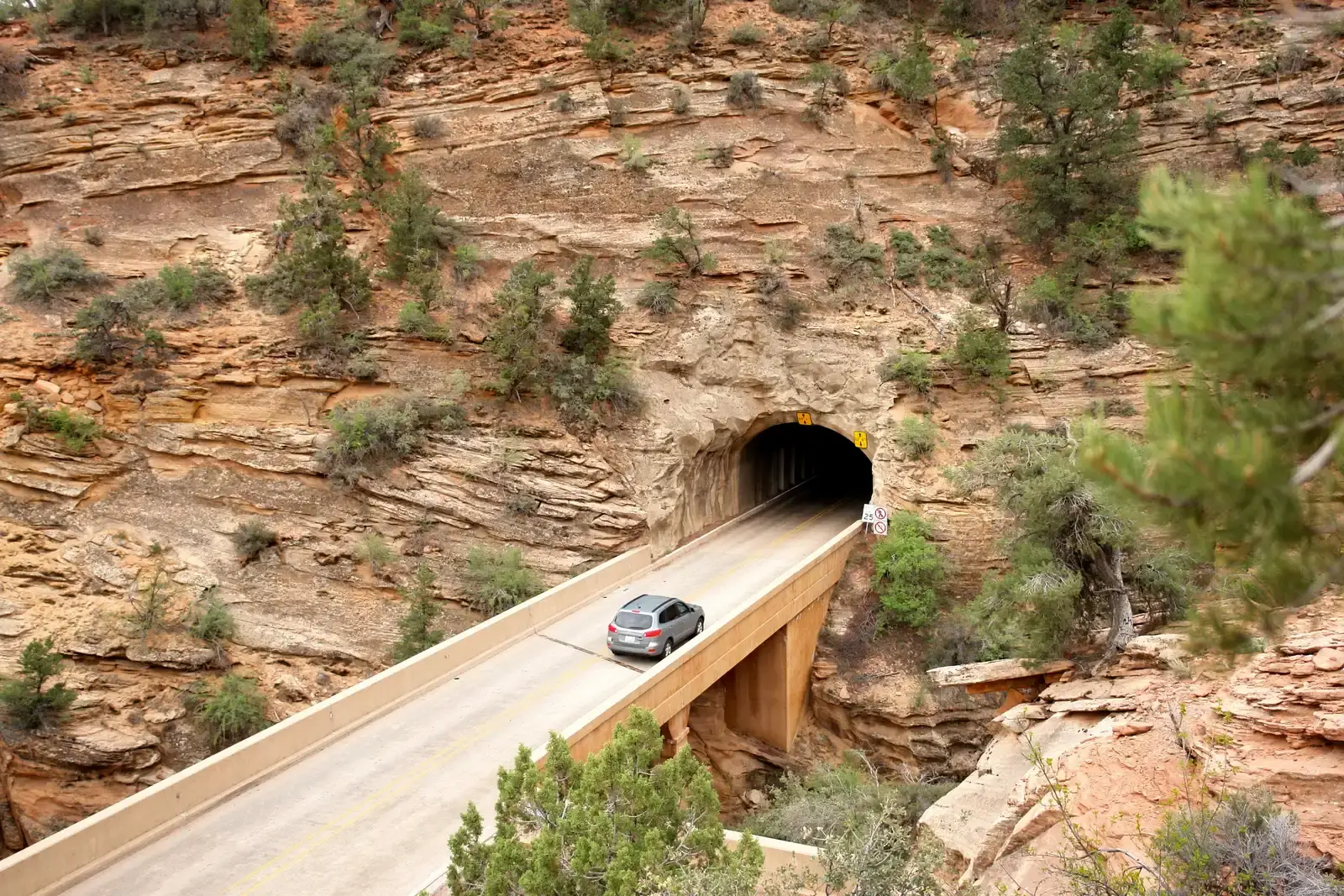
This might be the single most audacious tunnel on this list, because engineers built it before anyone had fully perfected the technology to do it safely. The project created the longest non-urban tunnel in the U.S. at the time and was considered one of the great engineering feats of its day.
It remains Utah’s longest underground highway passage and the nation’s fifth-longest land tunnel, with the 1.1-mile bore dedicated on July 4, 1930. Workers used mining techniques instead of standard tunneling methods, and collapses were common enough that construction crews faced real, documented danger nearly every day. The project took three years to finish at a cost of nearly $2 million, roughly $26 million in today’s dollars.
Six large windows cut directly into the sandstone cliffs offer glimpses of Zion’s scenery as visitors pass through, a design choice that still startles first-time drivers who assume they’ve hit a rockslide when sudden shafts of light hit their windshield. Modern oversized vehicles now require a traffic-control escort to pass through, since the tunnel’s tight 1930 dimensions were never built with RVs in mind.
#8 – Detroit-Windsor Tunnel, Michigan (1930)
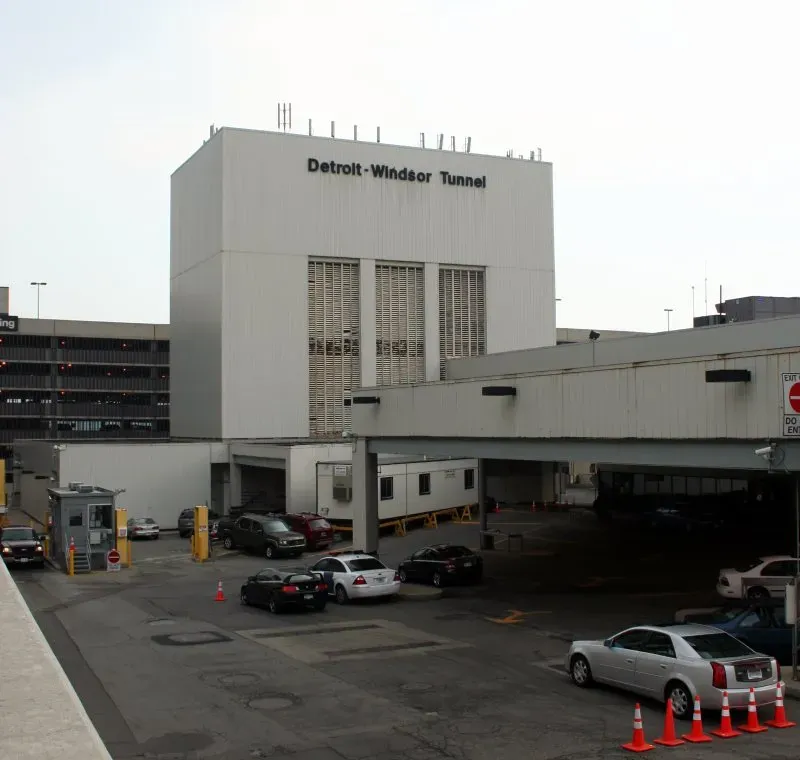
This is the only tunnel on this list that requires a passport, and it’s been an international border crossing since before most people’s grandparents were born. Work began in 1928, and the tunnel opened on November 3, 1930, making it 95 years old.
The volume it still handles is genuinely wild for infrastructure this old. About 12,000 cars pass through every day, adding up to roughly four million vehicles a year squeezing through a nearly century-old underwater passage its original engineers could never have imagined carrying so much traffic.
A major renovation project has kept the tunnel functional, but the core underwater structure, bored beneath the Detroit River using techniques adapted from New York’s Holland Tunnel, remains original. With the Gordie Howe International Bridge now open as an alternative crossing, some assumed the historic tunnel would finally slow down. It hasn’t. Commuters and cross-border shoppers still treat it as the fastest way between the two cities.
#9 – Holland Tunnel, New York/New Jersey (1927)
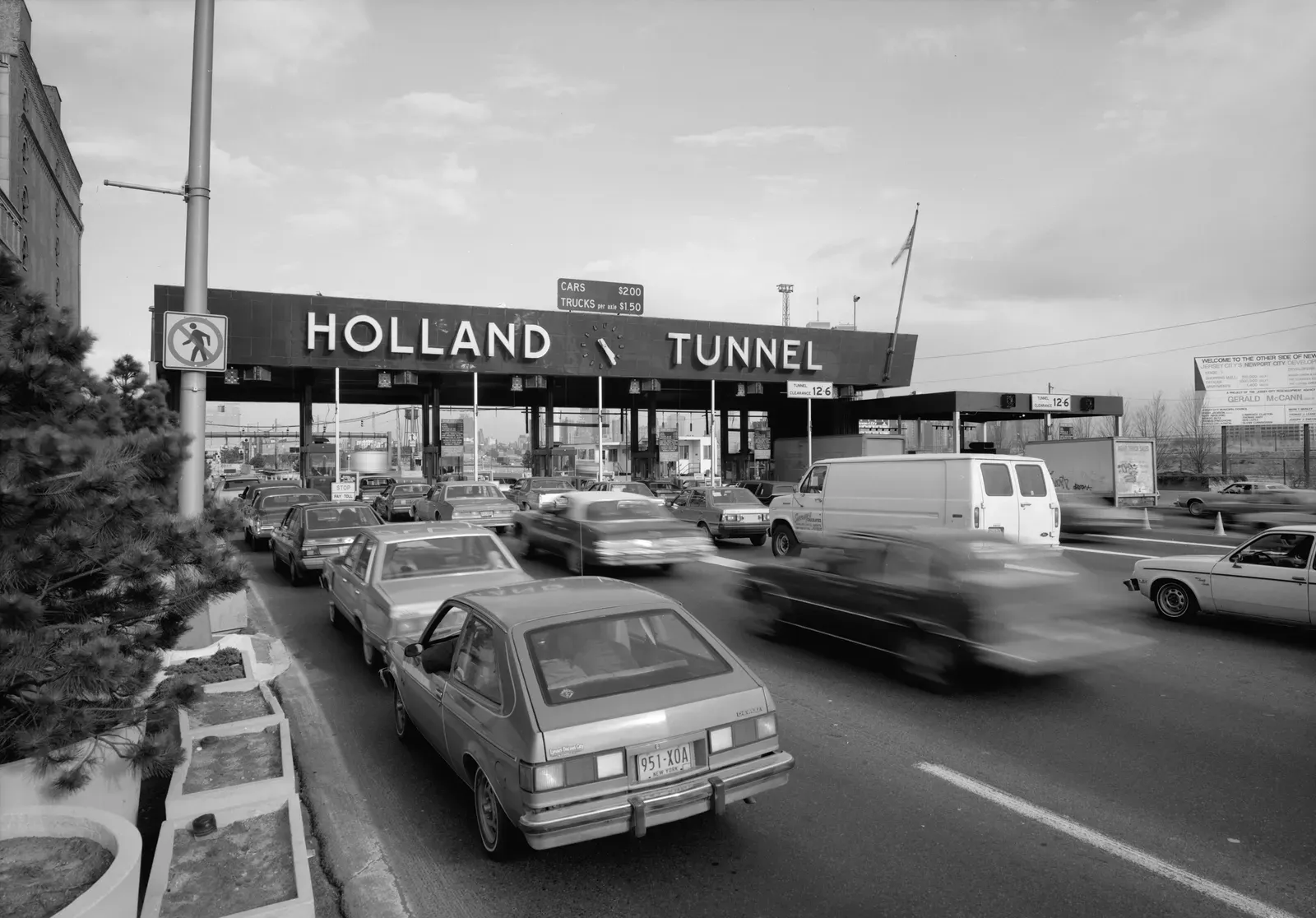
No tunnel on this list carries more historical weight, or a darker origin story, than the Holland Tunnel. It was completed in 1927 and opened for traffic on November 13 of that year, making it the longest underwater vehicular tunnel in the world at the time.
The ventilation challenge nearly killed the project before it could kill a single driver. Fresh air enters through vents at the bottom of the shafts while exhaust rises and exits through vents at the top, with 84 powerful fans, each 8 feet in diameter, replacing the entire air supply every 90 seconds. That ventilation system was considered so revolutionary it earned the tunnel the nickname “the Eighth Wonder of the World.”
At a Glance
- Opened for traffic November 13, 1927
- 84 fans, each 8 feet in diameter, cycle the air every 90 seconds
- Nicknamed “the Eighth Wonder of the World” for its ventilation design
- An estimated 35 million drivers pass through every year
- Chief engineer Clifford Holland died the day before the tubes connected
The human cost was real, too. Chief engineer Clifford Holland died of a heart attack in 1924, just one day before the final charge of dynamite connected the two tubes. Nearly a century later, an estimated 35 million drivers a year still pass through a tunnel named for a man who never got to see it finished.
#10 – Going-to-the-Sun Road Tunnels, Glacier National Park, Montana (1926 & 1933)
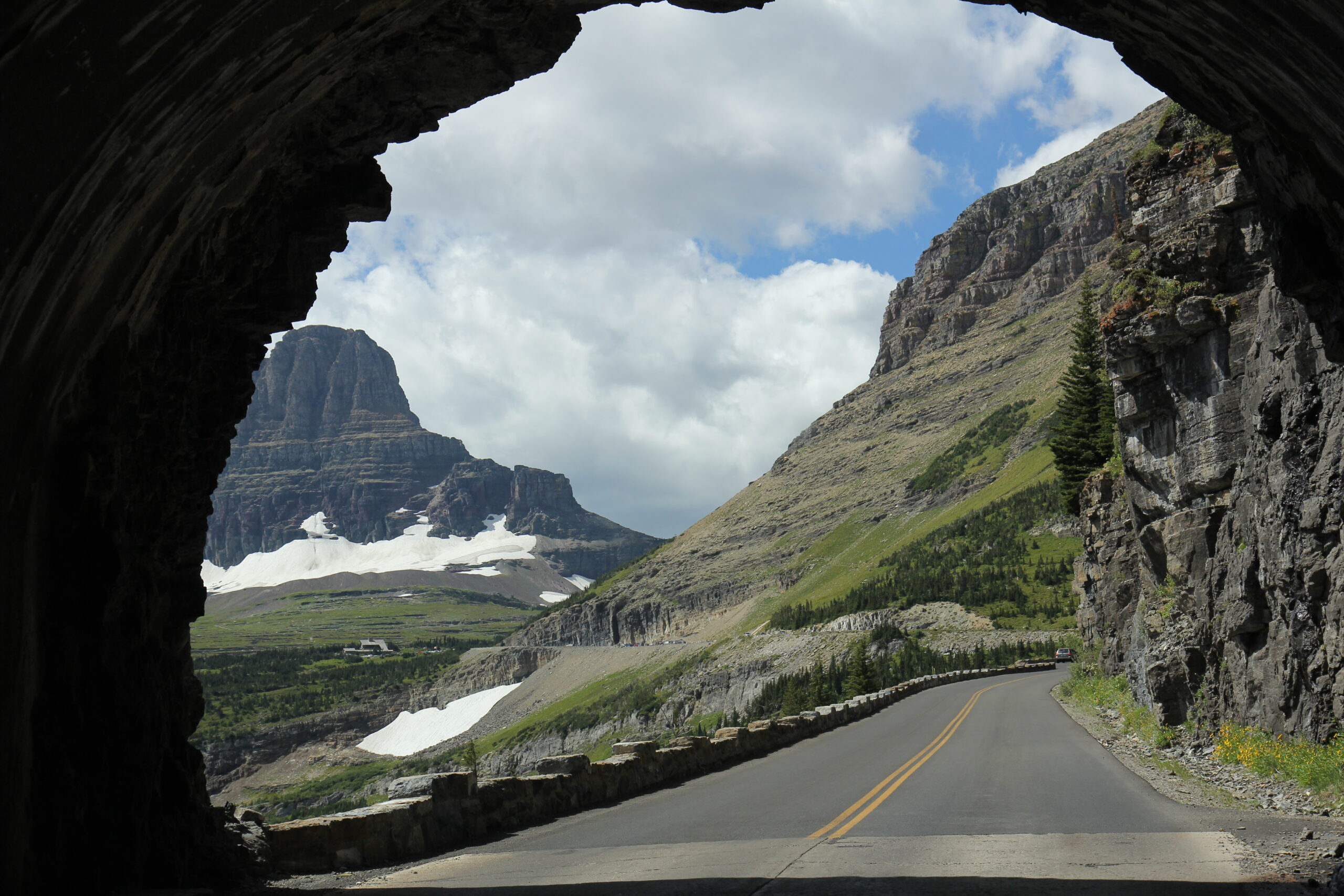
Glacier National Park’s most famous drive slices through two separate tunnels blasted straight into the mountainside, and both predate modern highway safety codes entirely. The East Side Tunnel was completed first, in the mid-1920s, while the West Side Tunnel followed a few years later as the full Going-to-the-Sun Road connected across the Continental Divide in 1933.
These aren’t wide, brightly lit modern bores. They’re narrow, curving passages carved to match the natural contour of the mountain, a deliberate choice that makes the road feel almost handmade compared to a modern interstate. Construction crews worked at extreme elevation, often battling short building seasons dictated by Montana’s brutal alpine winters, which halted progress for months every single year.
Today, size restrictions still apply to vehicles attempting to pass through these original tunnels, a direct consequence of dimensions chosen for 1920s automobiles, not modern trucks and RVs. Rangers close the road seasonally, sometimes as late as June, simply because clearing snow through these century-old passages is its own engineering project every spring.
#11 – Liberty Tunnels, Pittsburgh, Pennsylvania (1924)
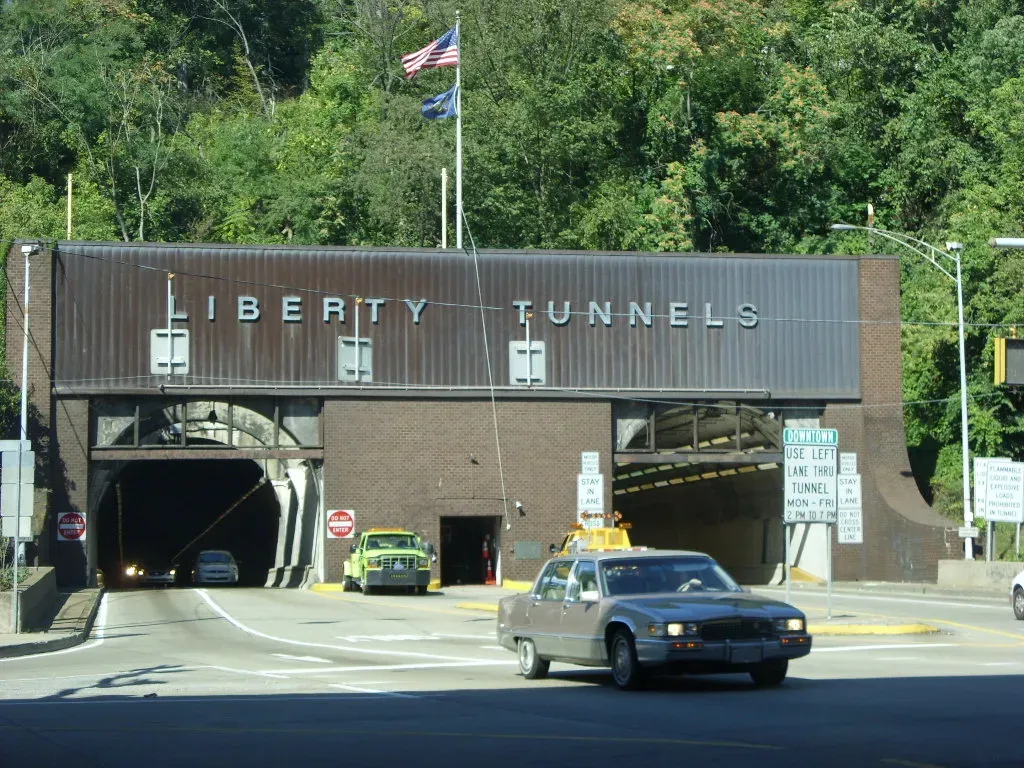
If you want the honest answer to “what’s the oldest vehicle tunnel still used in America,” Pittsburgh has a strong claim, and it comes with a genuinely alarming backstory. Opening in 1924, the Liberty Tunnels are the longest automobile tunnel in the city, connecting the South Hills suburbs to downtown beneath Mount Washington.
The tunnel’s opening year came with a brutal lesson in tunnel safety. During a traffic jam in 1924, car exhaust that accumulated inside the tunnel poisoned motorists and sent twelve people to the hospital, an incident so alarming that engineers building the Holland Tunnel in New York specifically studied it while designing their own ventilation system. In other words, a mistake made in Pittsburgh directly shaped how every major tunnel built afterward handled deadly exhaust buildup.
That’s a bold claim, but it’s one plenty of transportation historians actually make: Liberty Tunnel’s near-disaster arguably saved more lives nationwide than almost any single piece of tunnel infrastructure built since. Drivers gliding through today, radio blasting, have no idea they’re driving through the tunnel that scared American engineers straight.
#12 – Wind River Canyon Tunnels, Wyoming (1920s)
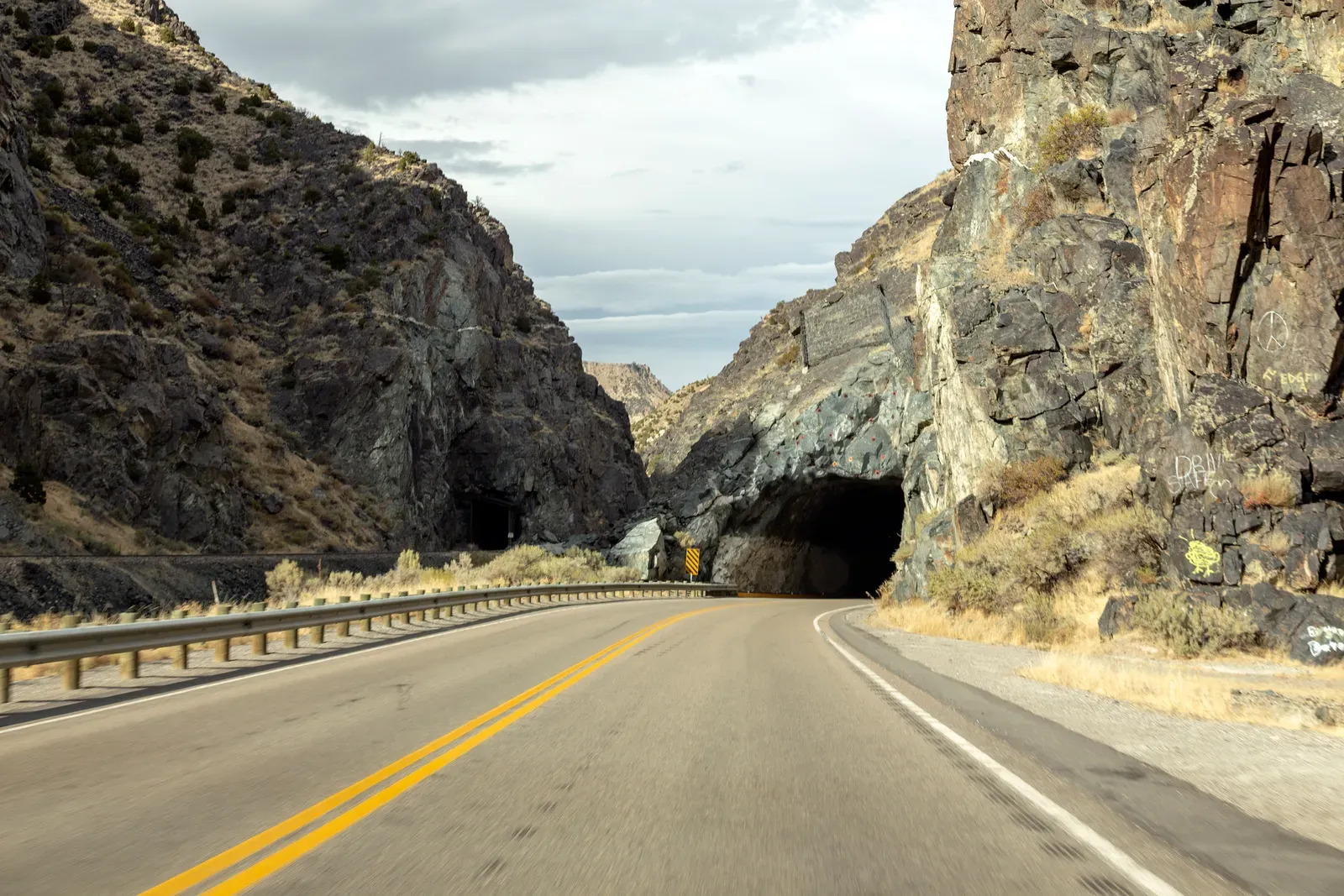
Wyoming’s Wind River Canyon is one of the strangest drives in the American West, and part of that strangeness comes from a string of unlined rock tunnels blasted straight into ancient canyon walls nearly a century ago. Highway crews carved the route through the canyon in the 1920s, running the road directly alongside an active railroad line squeezed into the same narrow gorge.
Unlike nearly every other tunnel on this list, several of these bores were never fully lined with concrete. Drivers pass through raw, exposed rock that geologists say is over 2.5 billion years old, making the surrounding canyon walls some of the oldest exposed rock formations on the continent, even if the tunnels themselves are relative newcomers by comparison.
The road remains a critical link between central and northern Wyoming, and locals treat the tunnels as an unremarkable part of the daily commute. Tourists, on the other hand, tend to slow to a crawl, snapping photos of a canyon that manages to combine some of the oldest rock on Earth with some of the oldest working tunnels in the American highway system.
#13 – Squirrel Hill Tunnel, Pittsburgh, Pennsylvania (1953)
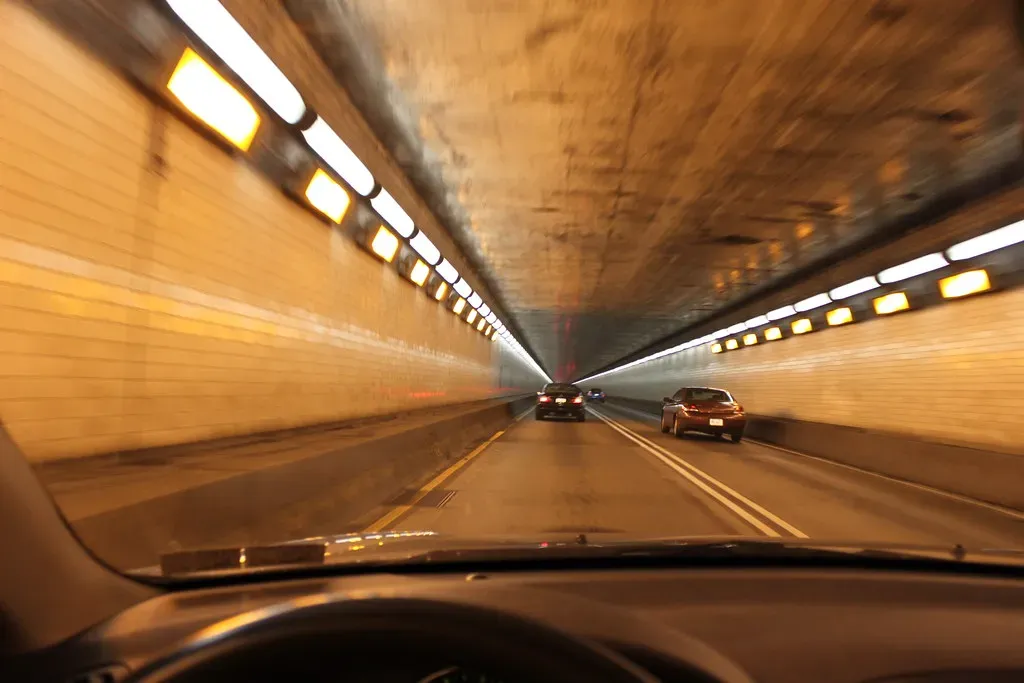
Pittsburgh earns a second spot on this list, and for good reason: the city’s brutal topography forced engineers to punch tunnels through hillsides decades before most American cities even considered it necessary. The Squirrel Hill Tunnel was built as part of the original Penn-Lincoln Parkway project, one of the earliest true expressway corridors in the country.
What makes this tunnel remarkable isn’t just its age, it’s that it was engineered specifically for the postwar explosion of car ownership, essentially predicting a traffic surge before it fully arrived. Planners in the early 1950s were already grappling with a question that still defines American infrastructure: how do you carve modern high-speed roadways through century-old cities without demolishing entire neighborhoods?
Quick Compare
- Liberty Tunnel: opened 1924, site of a 1924 exhaust poisoning incident that hospitalized twelve people
- Squirrel Hill Tunnel: opened 1953, built directly into the Penn-Lincoln Parkway as part of an early expressway system
- Liberty’s ventilation failure directly influenced safer designs, including Squirrel Hill’s
- Both tunnels still funnel daily Pittsburgh traffic through the same hillsides they were blasted into decades apart
The tunnel’s twin bores remain in daily use as part of Interstate 376, one of the busiest corridors in western Pennsylvania. Every rush-hour backup through Squirrel Hill is happening inside a structure now over 70 years old, built for a fraction of the traffic volume it currently absorbs. It’s a reminder that America’s mid-century engineers built with a surprising amount of long-term confidence, confidence that, decades later, still holds up under real pressure.
The Bottom Line
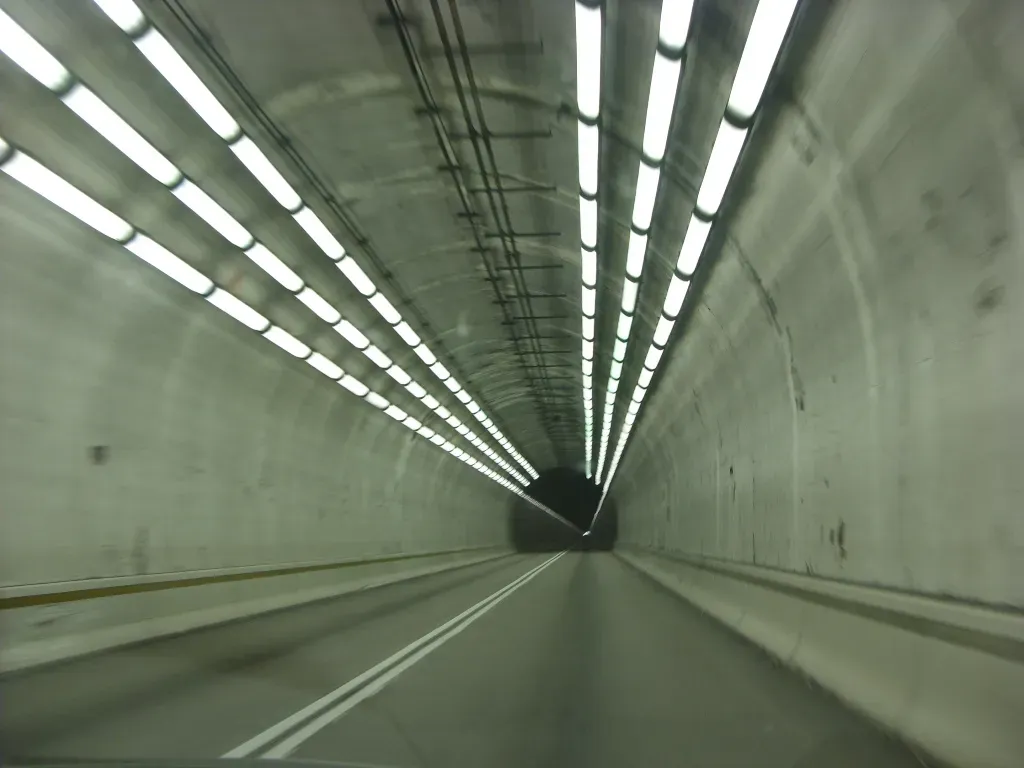
The most surprising takeaway isn’t just that these tunnels are old. It’s how casually America keeps driving through infrastructure built before modern safety codes, before OSHA, and in some cases before women could even legally vote.
The Liberty Tunnel’s near-disaster arguably shaped every ventilation system built after it, and Zion’s 1930 dimensions still dictate which vehicles can pass through today. Most drivers treat these passages as background noise on a commute or a road trip, never realizing they’re rolling through century-old engineering gambles that somehow paid off.
That’s either a testament to old-school craftsmanship, or a quiet warning that we’ve been coasting on nearly a hundred years of borrowed confidence. Either way, the next time you sit in a tunnel traffic jam, remember: the concrete over your head has already outlasted almost everything else built in its era, and it’s still not done proving itself.