Picture the dinosaur poster on your third-grade classroom wall. Scaly gray giants dragging their tails through a steamy swamp. A T. rex roaring with those ridiculous little arms dangling uselessly at its sides. Cold-blooded brutes too stupid to do much besides eat and die. That image felt authoritative because a teacher told you so, a textbook confirmed it, and a museum diorama made it three-dimensional. The problem? Paleontologists have been quietly dismantling almost every piece of that picture for thirty years, and most of us never got the memo.
The corrections aren’t minor tweaks. Some of them flip the original “fact” completely upside down. A few are so counterintuitive that even working scientists were caught off guard. What follows are 13 things that were taught as settled truth in classrooms across the country – and what the fossil record actually shows when you look at it without the baggage of a century’s worth of assumptions.
#13 – Dinosaurs Dragged Their Tails Like Lazy Lizards
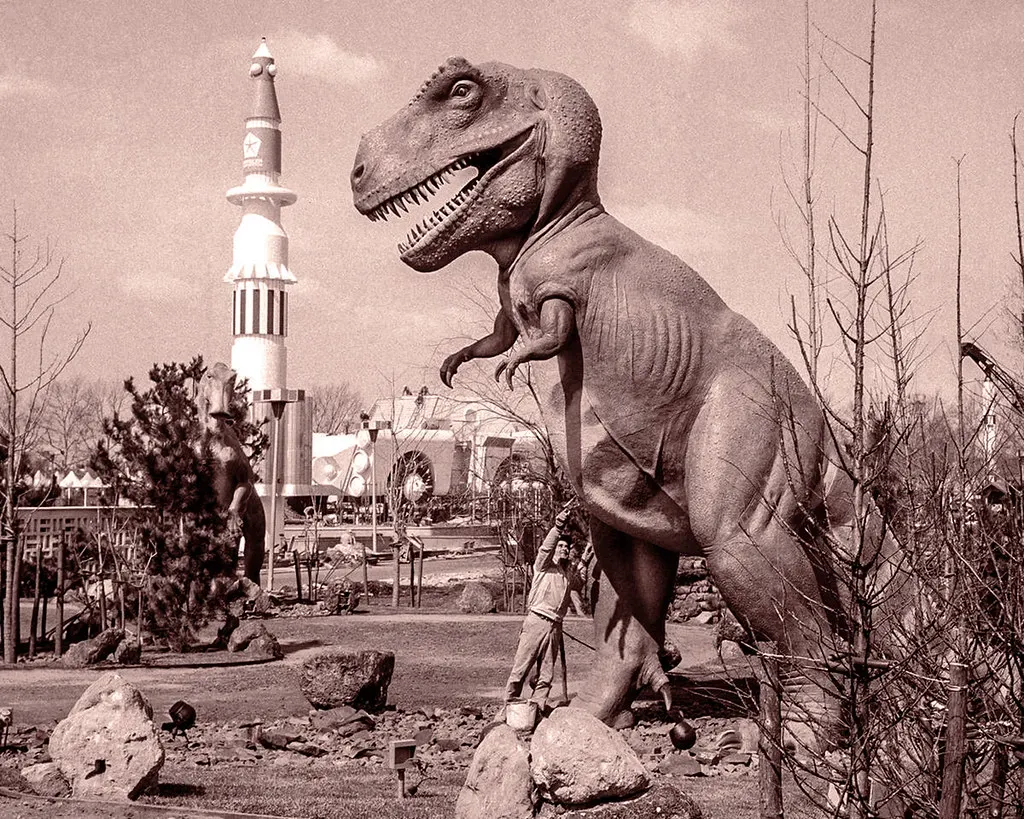
Open any dinosaur book printed before 1990 and you’ll see the same image: a massive tail sagging to the ground, leaving a groove in the mud behind the animal. It looked logical. These things were enormous. Surely the tail needed the earth’s support. Except fossil trackways – actual footprint trails left in ancient sediment – almost never show tail drag marks. Not occasionally absent. Almost never present, across thousands of sites studied worldwide.
Biomechanical computer models finished the argument. The tail wasn’t dead weight; it was a counterbalance, held straight and horizontal to keep the animal’s center of gravity stable over its legs. This applied even to sauropods with 40-foot tails. Once paleontologists accepted the elevated tail, their speed and agility calculations for dozens of species had to be rebuilt from scratch. A single postural correction changed the entire physics of how these animals moved through the world.
Fast Facts
- Tail drag marks are absent from the vast majority of known dinosaur trackway sites worldwide
- Sauropod tails could reach 40+ feet and functioned as dynamic counterweights, not passive appendages
- The elevated-tail posture revision forced complete recalculations of speed, gait, and energy use across dozens of species
- The same horizontal tail posture is confirmed for both small theropods and the largest long-necked sauropods
- Correcting this single postural assumption changed how paleontologists model nearly every large dinosaur that had previously been reconstructed
#12 – All Dinosaurs Were Cold-Blooded Reptiles
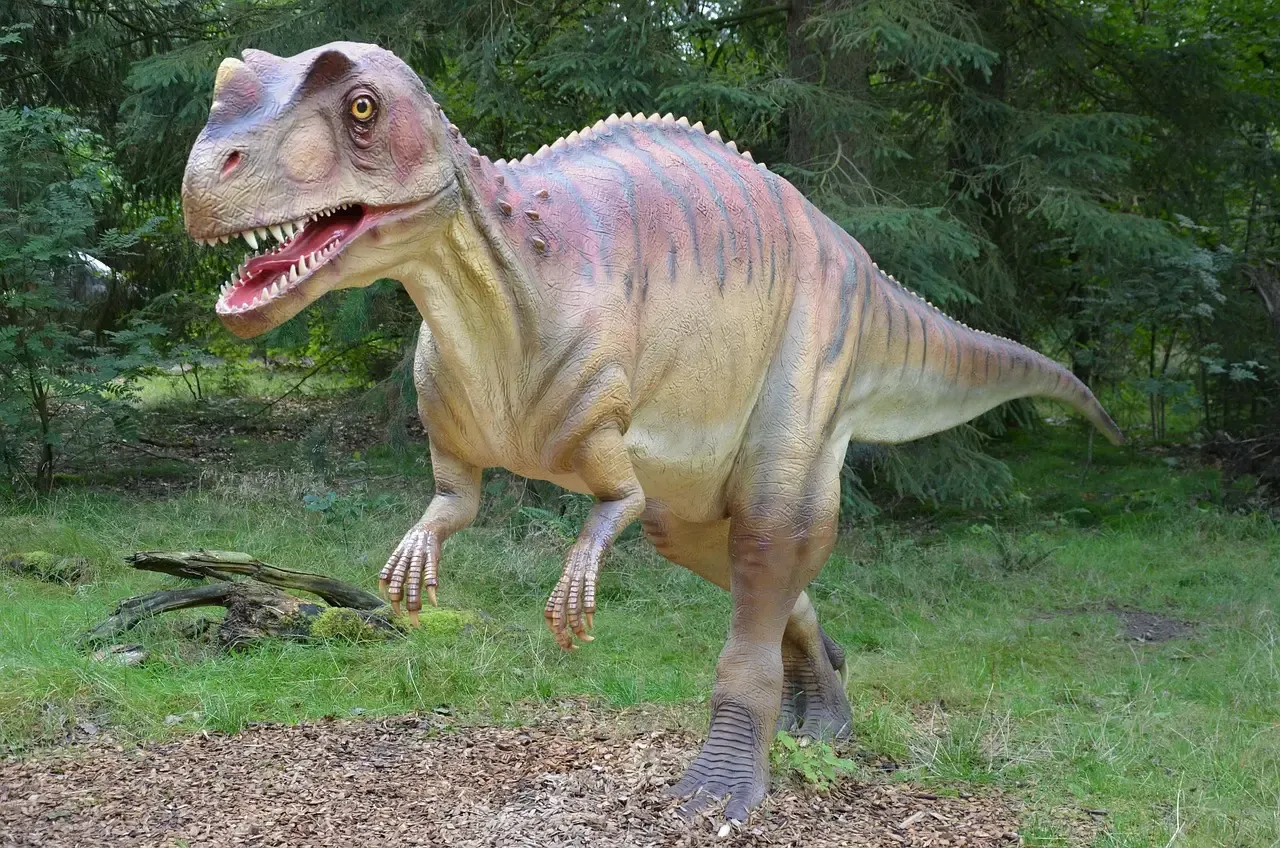
The cold-blooded label made intuitive sense in the mid-20th century. Dinosaurs were reptiles, reptiles were cold-blooded, case closed. Then researchers started cutting into fossil bones and reading them like tree rings. The growth rates recorded in bone histology – the speed at which dinosaur skeletons expanded during life – were far too fast for animals with sluggish ectothermic metabolisms. Oxygen isotope studies added another layer, suggesting many species maintained body temperatures that fluctuated far less than a true cold-blooded animal’s would.
The current picture is complicated and genuinely fascinating. Dinosaurs weren’t uniformly warm-blooded the way mammals are, but many groups – especially theropods and ornithischians – ran metabolisms elevated well beyond any modern lizard. Some smaller species likely maintained body temperatures close to those of modern birds. This single revision reshapes everything downstream: their activity levels, their geographic range, their daily behavior, and how long they could sustain a chase or a fight.
#11 – Brontosaurus Was Just a Mistake and Never Existed
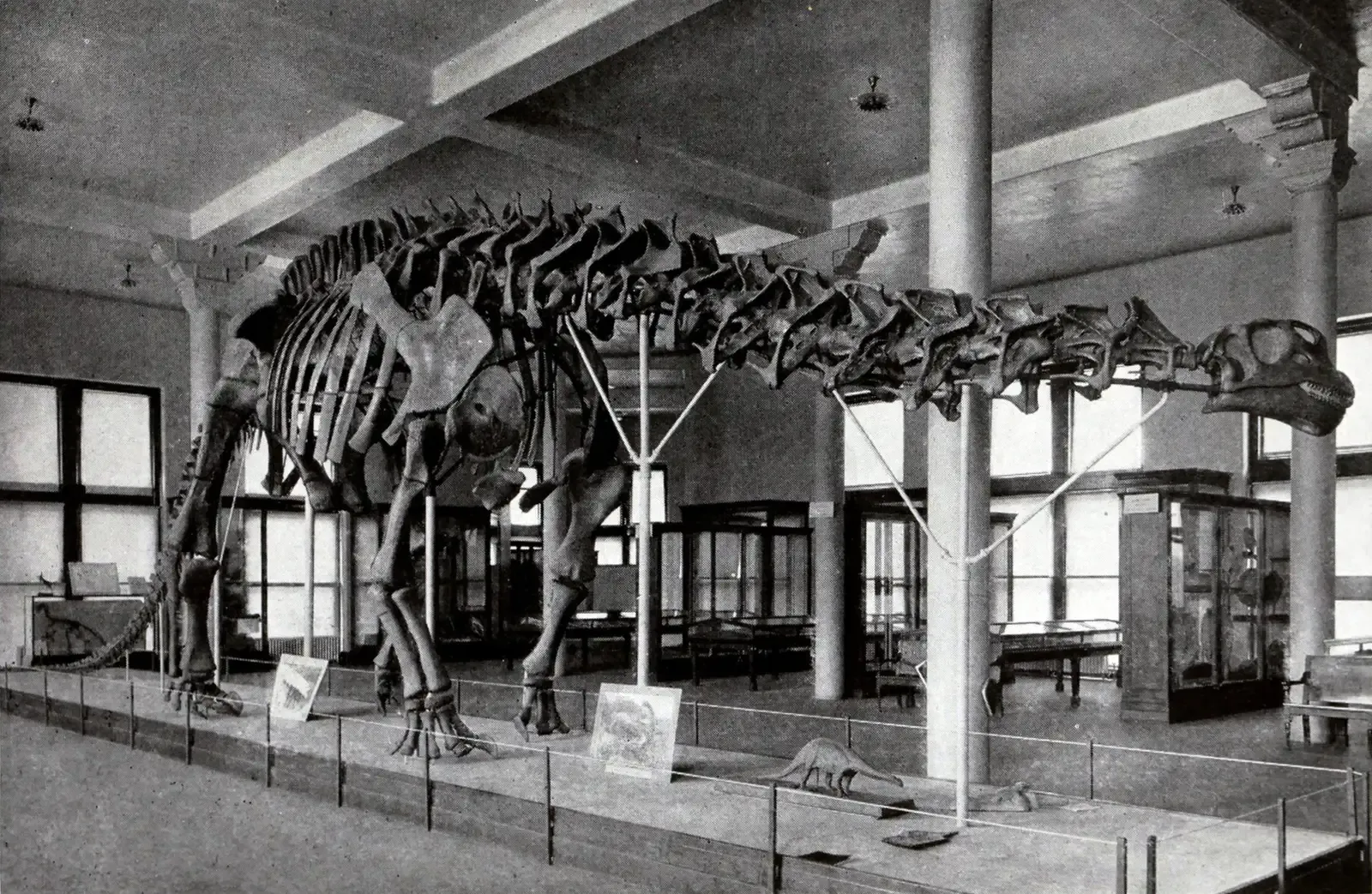
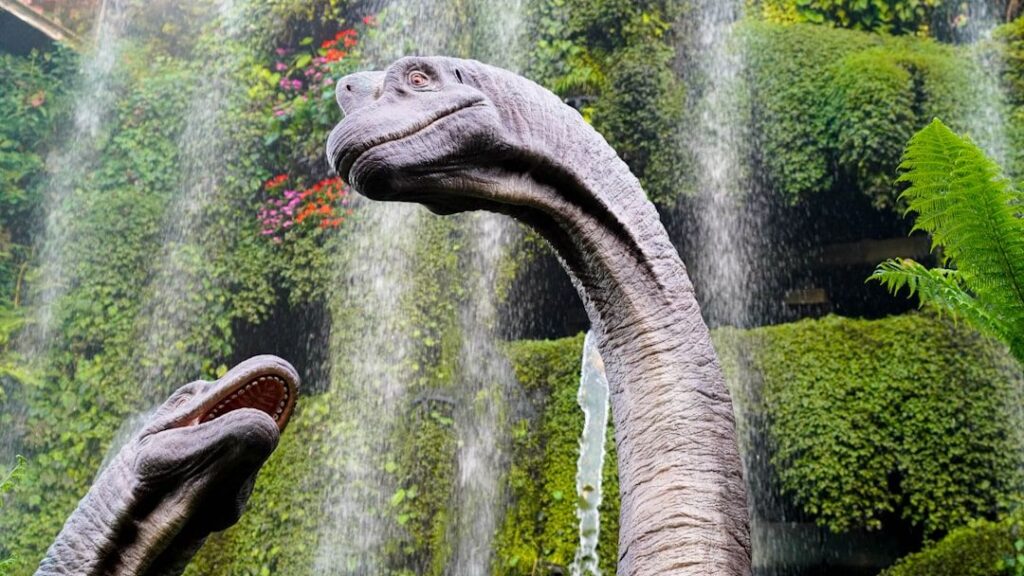
Generations of students were told this one with a note of authority: “Brontosaurus isn’t real. It was a mix-up. The correct name is Apatosaurus.” That correction dated back to a 19th-century fossil classification dispute, and for over a hundred years it stood. Museums quietly relabeled their mounts. Publishers removed the name from new editions. The Brontosaurus was officially a ghost of sloppy science.
Then in 2015, a detailed re-examination of the original specimens – using modern comparative methods across a much larger dataset of sauropod material – found genuine skeletal differences, particularly in the neck vertebrae, that separated Brontosaurus from Apatosaurus as a distinct genus. The reinstatement surprised even many working paleontologists who had grown up with the correction. It’s a sharp reminder that “settled” in science means “settled until someone looks harder,” not settled forever.
#10 – Dinosaurs Were All Scaly and Reptilian
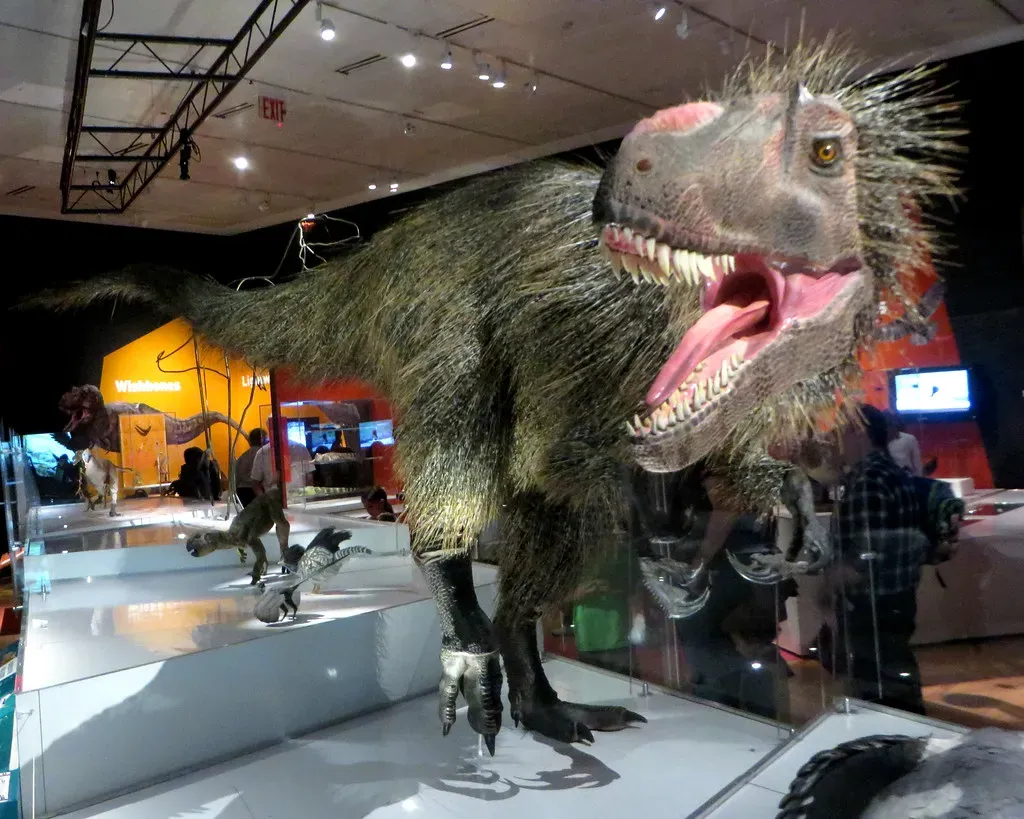
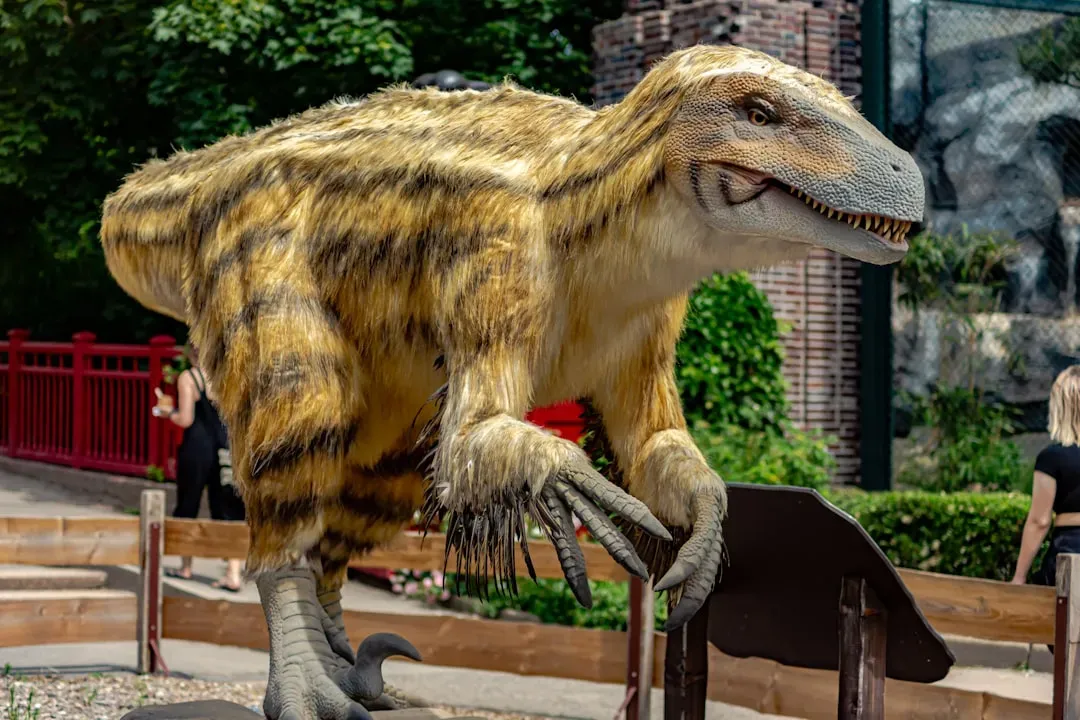
Early 20th-century paleoartists gave dinosaurs the only skin texture they knew: crocodile-like scales, grey or green, maybe a little muddy. That aesthetic calcified into assumption and then into textbook fact. The first serious cracks appeared in the 1990s with Chinese fossil beds that preserved not just bones but soft tissue – and what that soft tissue showed was a layer of filaments, proto-feathers, and in many cases fully developed feathers on animals nobody expected to find them on.
The find that genuinely rattled the field was Yutyrannus huali, a tyrannosaur relative recovered from Early Cretaceous deposits in China covered in long filamentous feathers. Yutyrannus measured roughly 30 feet long and weighed approximately 1.5 tons – making it about 40 times heavier than the previous record-holder for largest feathered dinosaur. Large dinosaurs weren’t supposed to need insulation. The discovery forced a reassessment of the entire family tree. The current view is a patchwork: some large dinosaurs retained scales on parts of their bodies, many smaller theropods were heavily feathered, and the uniform scaly image that dominated classrooms for a century has been abandoned entirely.
At a Glance: Yutyrannus huali
- Size: ~30 ft (9 m) long, weighing approximately 1.5 tons (1,400 kg)
- Feathers: Long filamentous proto-feathers up to 20 cm, resembling the fuzzy down of a baby chick
- Discovery: Three specimens found in Liaoning Province, China, dated to ~125 million years ago
- Record: Currently the largest dinosaur species with direct fossil evidence of feathers – 40 times heavier than the previous record holder
- Significance: Its existence reopened serious debate over whether even adult T. rex may have carried some form of plumage
#9 – Every Last Dinosaur Died Out 66 Million Years Ago
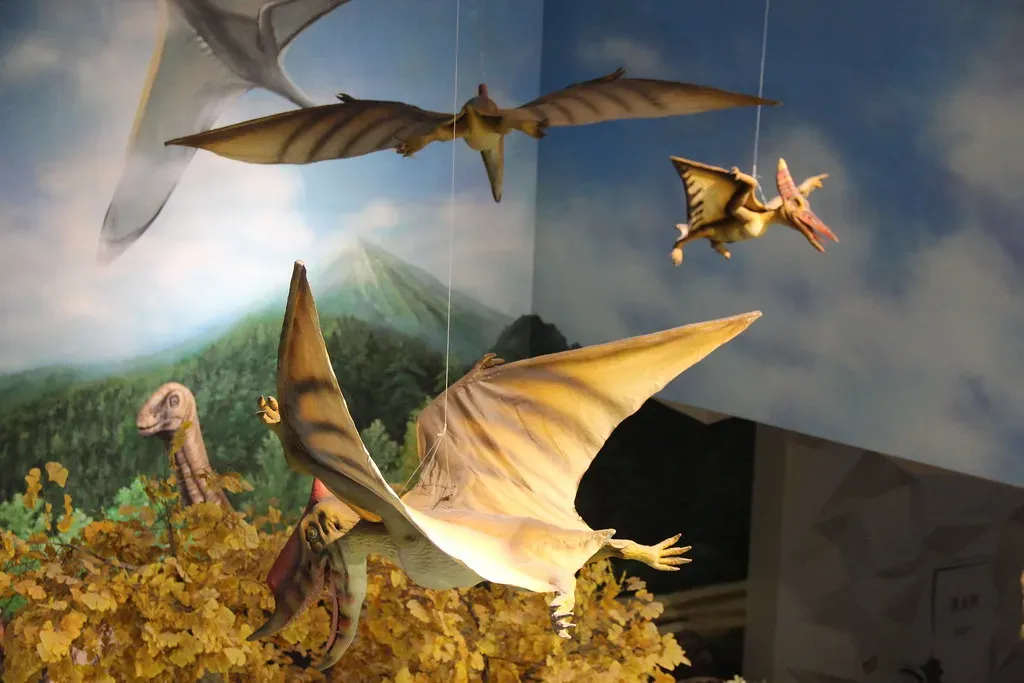
The asteroid impact story is real and the mass extinction at the end of the Cretaceous is real. But the version taught in most classrooms – that every dinosaur on Earth died – leaves out the most important surviving branch. Birds are dinosaurs. Not dinosaur descendants in a loose, poetic sense. Actual theropod dinosaurs, nested inside the same clade as Velociraptor and T. rex, that survived the impact event, diversified, and currently number around 10,000 living species on every continent including Antarctica.
Genetic and fossil evidence place modern birds unambiguously within the theropod lineage. The hollow bones, the wishbone, the scaly feet, the feathers, the egg-laying – none of that is coincidence. When a crow lands on your fence, you are looking at a living dinosaur. The classroom version of total extinction didn’t just simplify the story; it erased an entire surviving branch and left generations of students with a fundamentally incomplete picture of what actually happened 66 million years ago.
#8 – Giant Dinosaurs Lived in Swamps Because They Were Too Heavy for Land
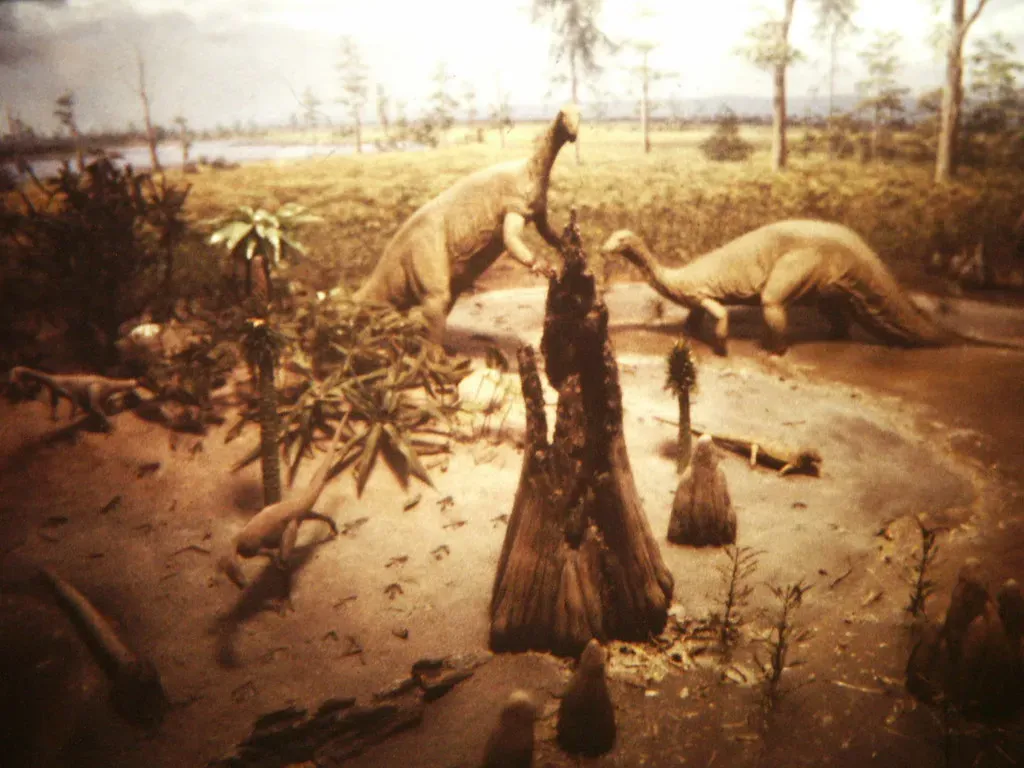
For the first half of the 20th century, the dominant image of a sauropod was a neck and head barely breaking the surface of a murky lake, with the bulk of the animal conveniently hidden underwater where buoyancy could do what legs presumably couldn’t. The logic seemed sound: animals this large couldn’t possibly support themselves on dry land. Museums built dioramas showing Diplodocus half-submerged. The swamp became the default sauropod habitat.
Limb bone structure ended that story decisively. Sauropod leg bones show the dense, columnar architecture of fully terrestrial animals built to carry enormous weight on solid ground – the same design you see in elephants. Track sites confirm it: sauropod footprints appear in terrestrial environments, not lake beds, and the stride patterns match land locomotion, not wading. The swamp myth persisted not because evidence supported it but because no one seriously challenged the assumption until the mid-20th century. Once they did, it collapsed quickly.
#7 – T. rex Had Tiny, Useless Arms
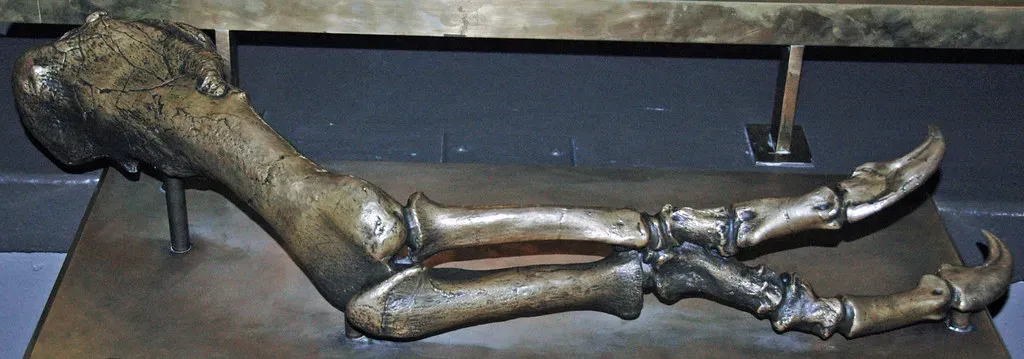
The T. rex arm joke has been a cultural fixture for decades. Two-foot-long limbs on a 40-foot animal do look absurd, and the “useless arms” narrative became so embedded that it showed up in everything from stand-up comedy to children’s cartoons. Paleontologists went along with the gag without much pushback, in part because early studies of the arms were shallow and the limbs genuinely appeared reduced compared to other theropods.
Detailed analysis of muscle attachment scars on T. rex arm bones tells a very different story. A full-body biomechanical model published by researchers at Oklahoma State University estimated the largest forelimb muscle – the pectoralis – could generate a maximum contractile force of roughly 3,860 to 11,000 newtons. Biomechanical estimates suggest each arm could exert a curling force of approximately 180 kilograms. Wear marks on claws in some specimens, substantial muscle attachment sites on the bones, and consistent proportions across all known individuals all argue against vestigial status. Current hypotheses include gripping struggling prey at close range, stabilizing a mate during reproduction, or pushing the animal upright from a resting position. “Useless” was an assumption dressed up as observation. The arms were short – they simply grew more slowly than the rest of the body as the animal matured. Functionless, almost certainly not.
Worth Knowing: T. rex Arm Reality Check
- Each arm was roughly 1 meter (about 3 ft) long – short relative to body size, but not small in absolute terms
- Estimated curling force per arm: ~180 kg (400 lbs), concentrated in a compact, heavily muscled structure
- Claw wear marks on multiple specimens suggest the arms were regularly used, not dormant
- Juvenile T. rex had arm-to-body proportions broadly similar to adults – the arms didn’t shrink; the body outgrew them
- Evolution rarely maintains expensive, well-muscled structures with zero function – the arms almost certainly did something
#6 – T. rex Was a Slow, Plodding Predator
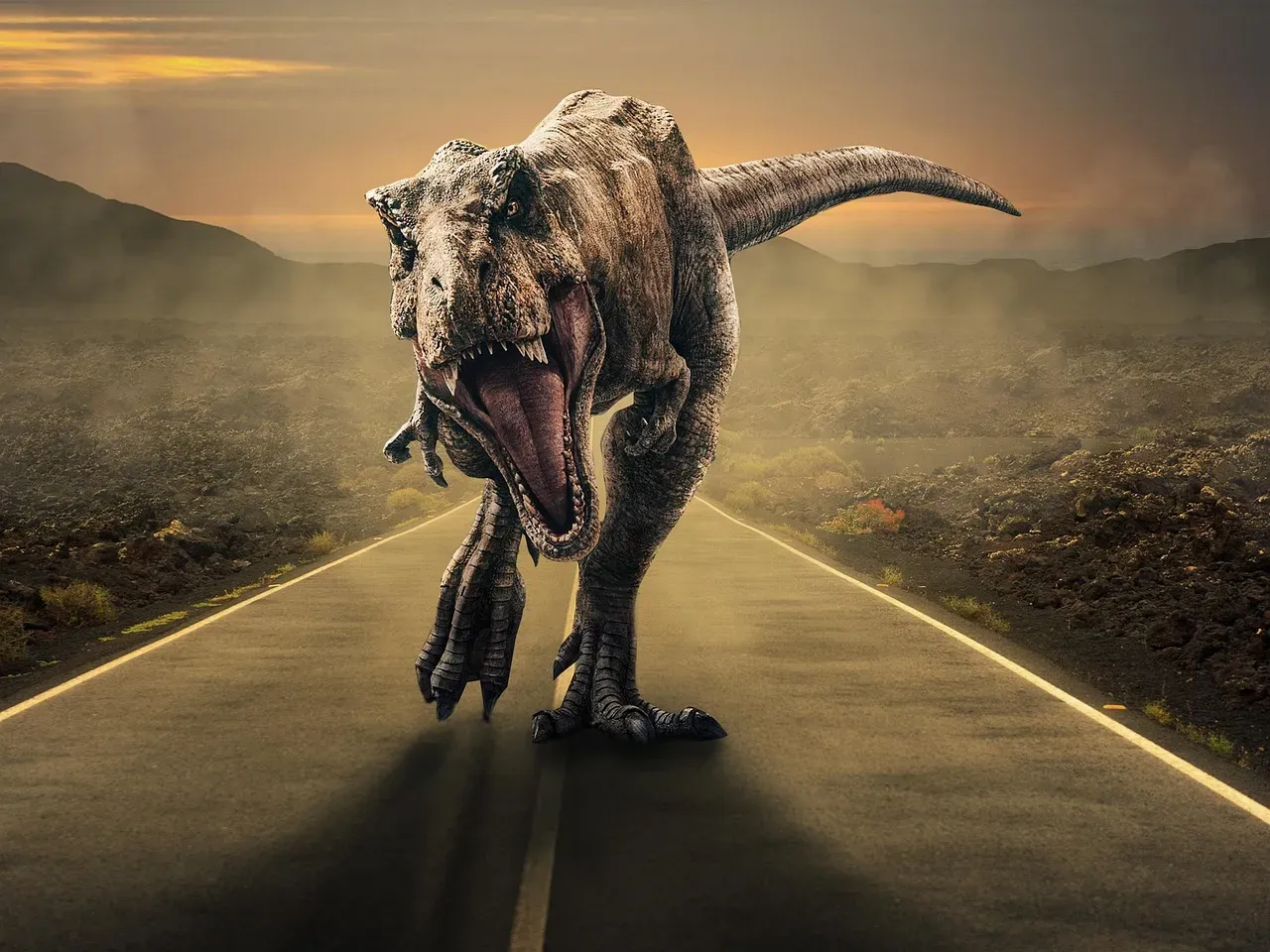
The lumbering T. rex of old textbooks moved like a city bus: massive, unstoppable, but not exactly fast. Early speed estimates were based on scaling formulas borrowed from living reptiles and produced top speeds that barely cleared a brisk human jog. For a while, some researchers even argued T. rex was primarily a scavenger because they couldn’t imagine it catching anything. That argument has since been largely discredited.
Revised biomechanical models using actual fossil footprints and updated leg-proportion data push preferred walking speeds for T. rex into a range that would have made it a serious pursuit predator for most Cretaceous prey animals. Younger, smaller individuals were likely faster and more maneuverable than the massive adults. The lumbering image came from outdated scaling assumptions that treated T. rex like a giant iguana rather than what it actually was: a warm-metabolismed, highly specialized apex predator with 60 million years of evolutionary refinement behind it.
#5 – T. rex Had Terrible Eyesight
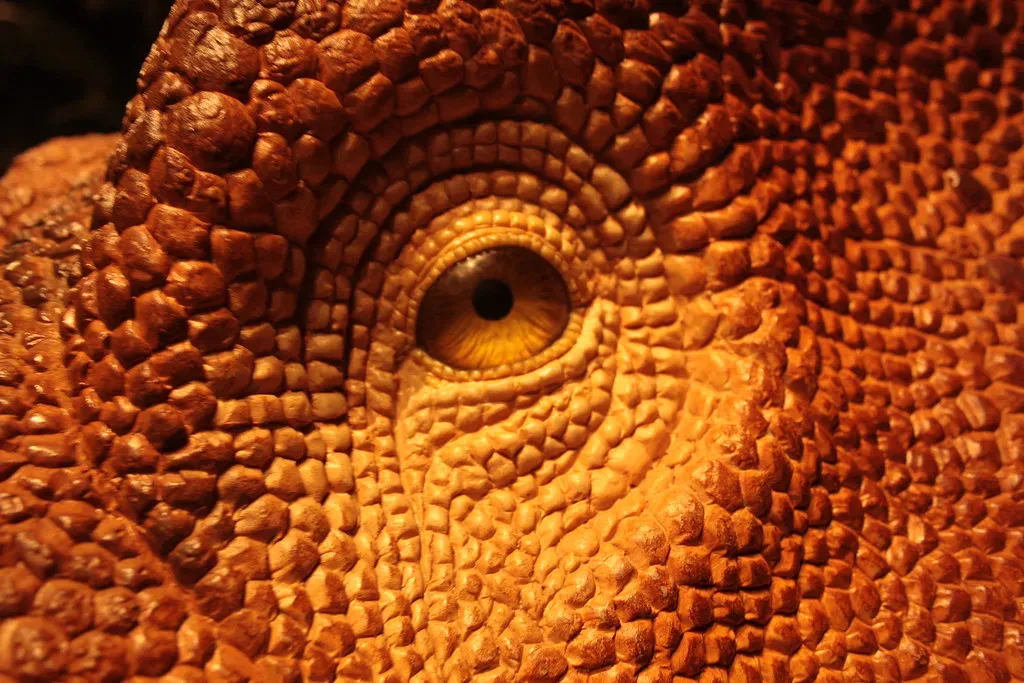
This one spread far enough to become a plot device. The famous scene – “It can’t see you if you don’t move” – became one of the most quoted lines in blockbuster movie history, and it was based on a real scientific claim from early brain reconstructions that suggested limited visual processing capability. It sounded plausible. It fit the “dumb predator relying on smell” image that dominated early T. rex science.
CT scanning of T. rex skulls changed the picture completely. Research by Kent Stevens at the University of Oregon found that T. rex had a binocular range of around 55 degrees – better than that of modern hawks and eagles. Visual acuity estimates suggest T. rex could resolve detail at up to 6 kilometers, compared to the human limit of roughly 1.6 kilometers – potentially 13 times sharper than human vision. T. rex also likely had color vision surpassing our own, in line with its avian relatives. The poor-eyesight claim has been functionally abandoned in the scientific literature for over a decade, though it still circulates in classrooms and popular culture with remarkable persistence.
The eyes of T. rex were larger than those of any other theropod. This animal had exceptional vision, not poor vision.
Dr. Kent Stevens, University of Oregon, on binocular vision research in theropods
Quick Compare: T. rex Vision vs. Modern Animals
- T. rex binocular range: ~55° – wider than hawks and eagles
- T. rex visual acuity: Estimated up to 13× sharper than human vision
- T. rex far-point distance: Up to 6 km vs. the human limit of ~1.6 km
- Eagle visual acuity: ~3.6× that of a human – T. rex likely exceeded this
- Jurassic Park claim: Scientifically unsupported – inspired, not informed, by paleontology
#4 – Dinosaurs Roared Like Movie Monsters
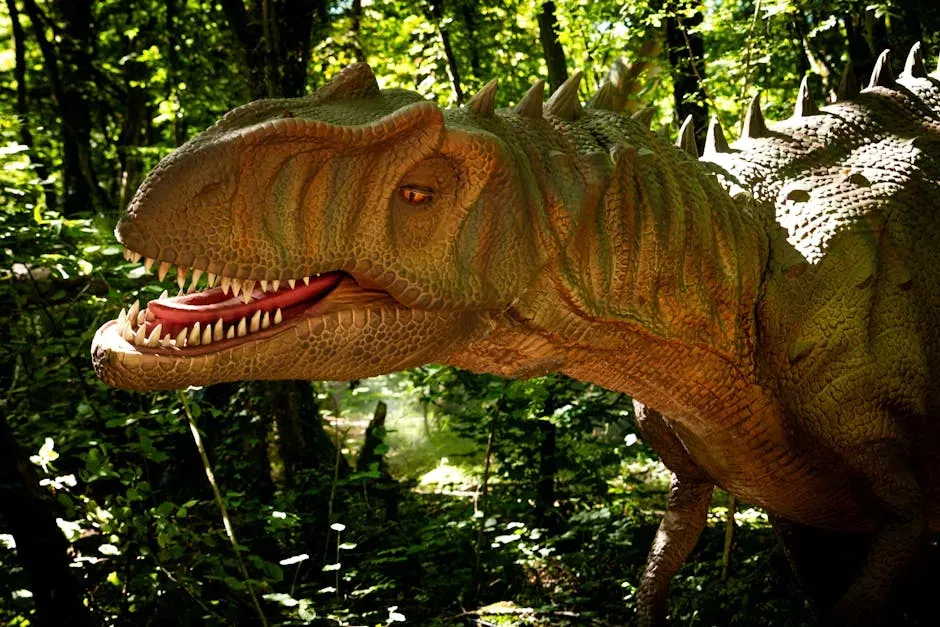
The Hollywood dinosaur roar – that deep, chest-shaking bellow that rattles theater seats – is one of the most successful pieces of sound design in cinema history. It’s also almost certainly wrong. The roar model was never based on fossil evidence because soft tissue vocal structures almost never fossilize. It was based on gut feeling: big scary animal, big scary noise. Sound designers filled the gap with lions, whales, and distorted elephant calls.
The anatomy tells a more interesting story. Birds, which are living dinosaurs, produce an extraordinary range of vocalizations – but very few of them roar in the Hollywood sense. Crocodilians, the closest living relatives of dinosaurs outside birds, produce bellows and infrasound through closed-mouth vibration rather than open-mouthed roaring. Fossil evidence for a larynx capable of producing the classic roar is essentially absent. The leading hypothesis now is that many dinosaurs used closed-mouth vocalizations: deep resonant booms, low hisses, and possibly infrasonic rumbles felt more than heard. Unsettling, arguably. But not the roar you grew up with.
#3 – Dinosaurs Only Lived in Warm, Tropical Climates
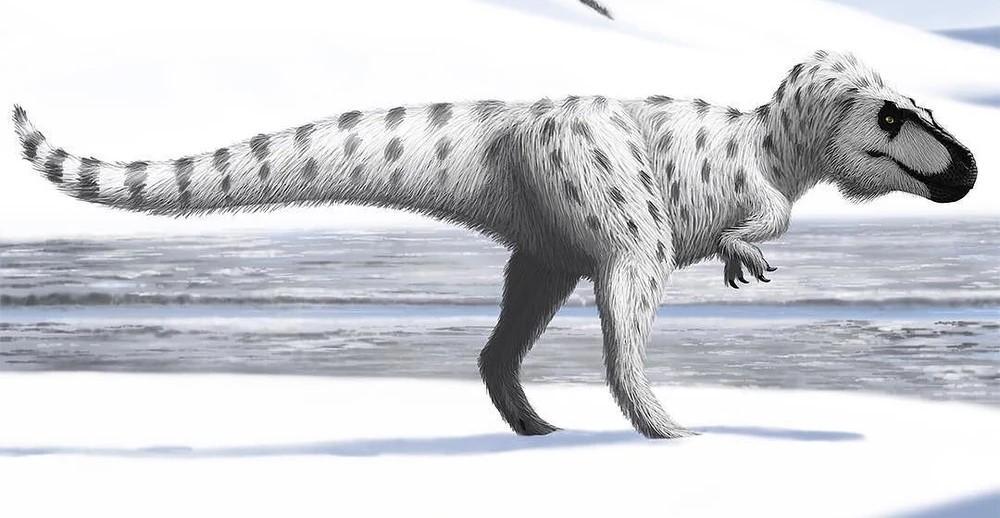
The Jurassic Park version of dinosaur habitat – lush, humid, perpetually warm – matched the assumption that cold-blooded tropical giants couldn’t survive in cooler climates. It also matched the fact that early major fossil sites happened to be in places like the American West, central Asia, and Argentina, regions that were warmer during the Mesozoic. The tropical bias felt justified by both the animals’ perceived physiology and the geography of early discovery.
Then fossils started turning up at polar latitudes. Alaska, Antarctica, Australia – regions that, even accounting for Mesozoic climate differences and continental positions, experienced months of darkness, cold winters, and seasonal temperature swings. Bone histology from these polar dinosaurs shows growth patterns consistent with animals that coped with seasonal stress rather than dying off or migrating entirely. Some species show skeletal adaptations that suggest permanent residence at high latitudes. The tropical-only model collapsed not from theory but from fossils buried in places it predicted they shouldn’t exist.
#2 – Mammals Appeared Only After Dinosaurs Vanished
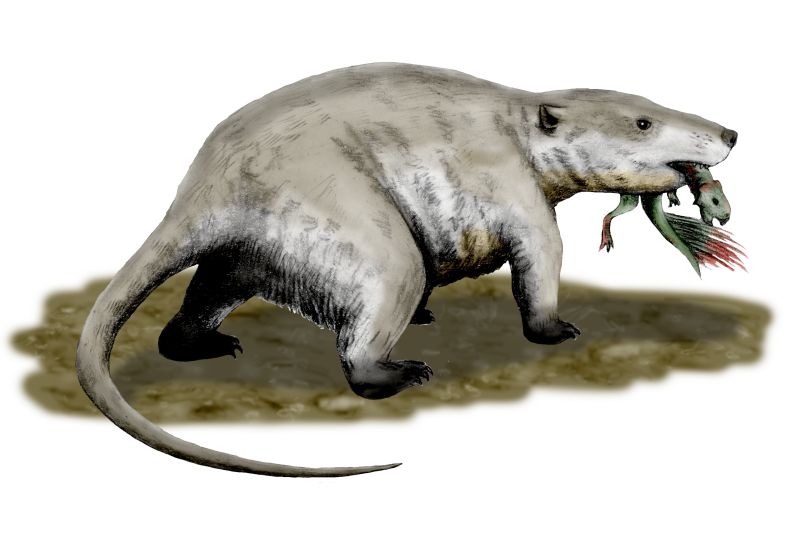
The tidy narrative went like this: dinosaurs ruled, an asteroid hit, dinosaurs died, and mammals finally got their chance. It’s a satisfying story of succession. It’s also missing more than 100 million years of actual history. Mammals did not emerge after the extinction event. They were already there, running around under, over, and occasionally on top of dinosaurs for the entire second half of the Mesozoic Era.
Recent fossil discoveries have made the coexistence story even more dramatic. Repenomamus robustus, an Early Cretaceous mammal roughly the size of a Virginia opossum, has been found with juvenile dinosaur bones preserved in its stomach contents – and a separate, extraordinary fossil published in Scientific Reports captures a Repenomamus actively attacking a Psittacosaurus three times its own body mass, both animals frozen mid-struggle by a volcanic debris flow 125 million years ago. Mesozoic mammals weren’t hiding in the shadows waiting for their moment. They were competing, adapting, and in some cases actively predating on dinosaurs throughout the Mesozoic. The “mammals won after dinosaurs lost” framing erases more than a hundred million years of genuine ecological complexity.
At a Glance: Mesozoic Mammals Were No Pushovers
- Repenomamus robustus weighed ~4–6 kg and has been found with juvenile dinosaur bones in its stomach
- A fossil published in Scientific Reports (2023) shows a Repenomamus attacking a dinosaur 3× its own body mass
- Mammals lived alongside non-avian dinosaurs for over 160 million years – from the Triassic through the end of the Cretaceous
- Mesozoic mammals included gliders, swimmers, burrowers, and at least one confirmed dinosaur predator
- The coexistence wasn’t passive: fossil evidence points to active competition and predation running both ways
#1 – Dinosaurs Were Simple, Low-Intelligence Animals
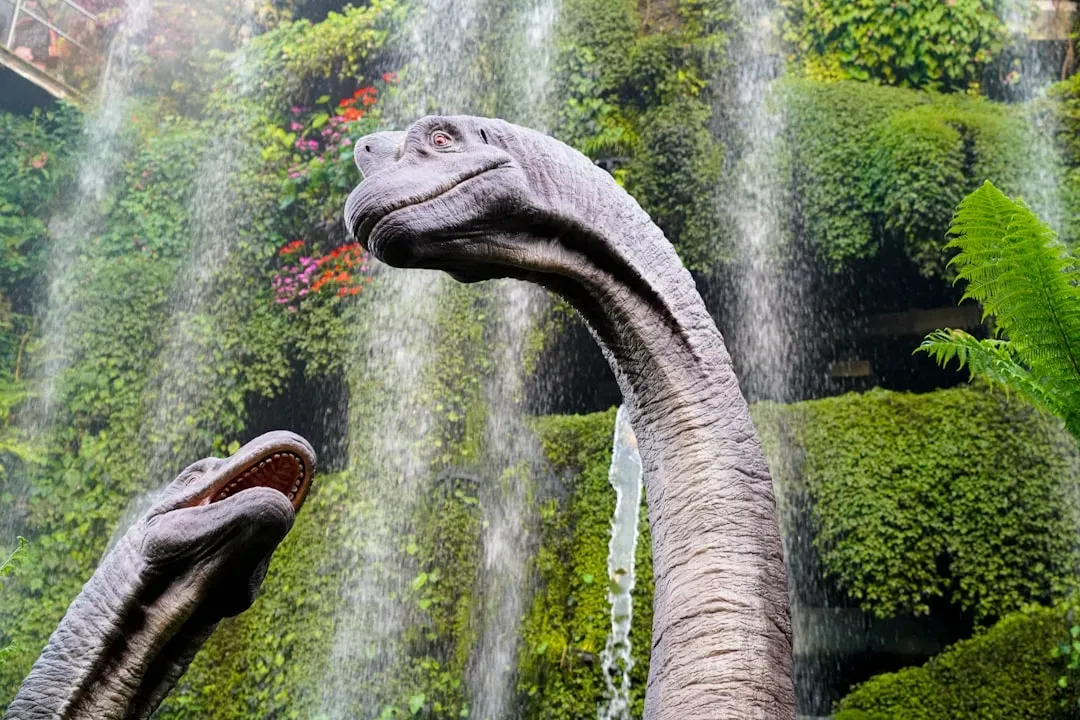
The dumb dinosaur stereotype ran deep. Cold-blooded, slow, and dim-witted, they were nature’s failed experiment – evolutionary placeholders that got lucky for 165 million years before a rock ended their run. Brain-to-body ratio comparisons with living animals were used to argue that most dinosaurs had cognitive lives roughly equivalent to a modern iguana. The image stuck because it made the extinction feel less like a tragedy and more like an overdue correction.
Modern endocast studies – 3D models of brain shape and volume derived from CT scans of fossil skulls – tell a far more nuanced story. Many theropods had brain proportions and structures comparable to modern birds and crocodilians, both of which are capable of genuine problem-solving, social recognition, and learned behavior. Evidence for herding, cooperative behavior, and complex nesting strategies has been documented across multiple dinosaur families. The “dumb lizard” label was never really evidence-based; it was a cultural assumption that science simply hadn’t bothered to rigorously test until relatively recently. When researchers finally did, the assumption didn’t survive contact with the data.
The Honest Takeaway
Thirteen facts. Taught in classrooms, printed in textbooks, immortalized in museum dioramas and Hollywood blockbusters. All of them either significantly revised or quietly dropped as better tools and better fossils came along. The dinosaurs that emerge from the actual evidence are stranger, more alive, and frankly more impressive than the lumbering cold-blooded failures we were handed in grade school. They were feathered and fast-metabolismed, polar-adapted and acoustically complex, cognitively capable and – in the form of roughly 10,000 living bird species – not even fully gone.
The real lesson here isn’t just about dinosaurs. It’s about how long confidently wrong ideas can survive inside institutions once they get a foothold. Every one of these corrections required someone willing to look at old evidence with new tools, or to take seriously a fossil from a place the existing theory said shouldn’t have one. Science didn’t fail by getting these things wrong initially. It succeeded by eventually refusing to leave them unexamined. The question worth sitting with is how many current “settled facts” are waiting for the same treatment.