
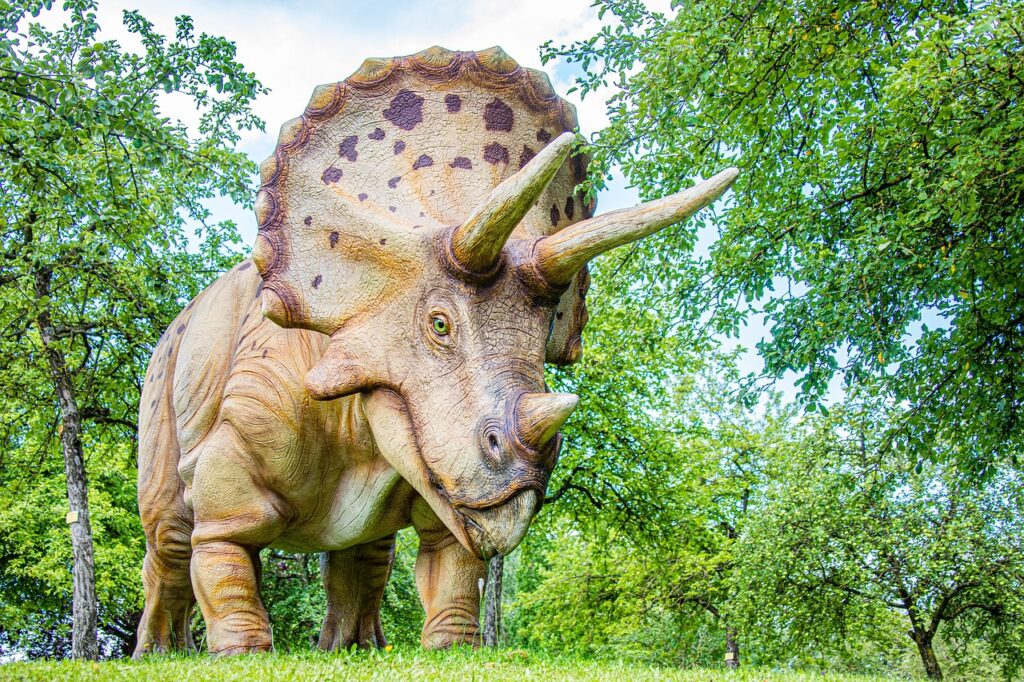
Most people picture Triceratops as a simple three-horned tank that occasionally squared off with a T. rex, full stop. That version of the story is mostly wrong.
Fossil evidence collected over the last 15 years has quietly rewritten almost everything paleontologists thought they knew about this animal – what its horns were actually for, what its famous frill really did, and whether “Triceratops” was even its own separate species to begin with. Some of the biggest names in dinosaur research have publicly disagreed with each other over basic facts, and the argument still isn’t settled. Here’s what the fossil record actually says, starting with a mix-up that almost erased Triceratops from history entirely.
#13 – Its Horns Were Mistaken for a Giant Bison
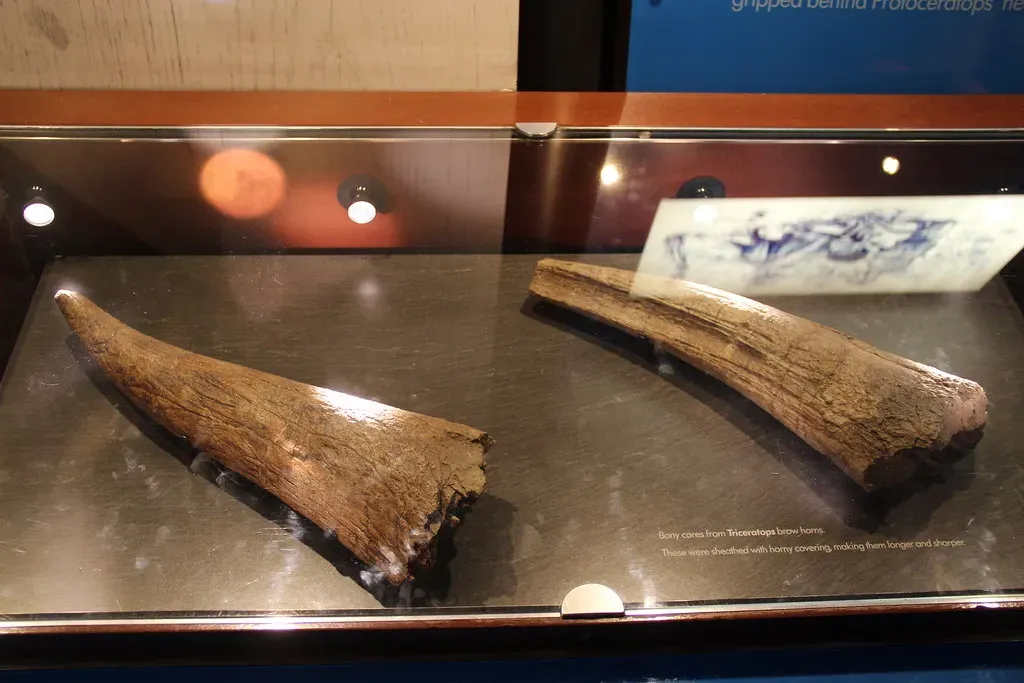
Triceratops almost went down in history as an oversized buffalo instead of a dinosaur. In the spring of 1887, fossil hunter George Lyman Cannon dug up a massive pair of horns in Colorado and shipped them straight to Othniel Charles Marsh, one of the most famous paleontologists in America, for identification.
Marsh took one look and confidently declared them the horns of an ancient, giant species of bison. It took more digging – literally – to fix the mistake. As additional fossils turned up in the same region, Marsh eventually realized those “bison horns” belonged to a dinosaur we now know as Triceratops. He had filed away dinosaur fossils under the wrong genus for months.
#12 – The First Full Skeleton Wasn’t Found Until Years Later
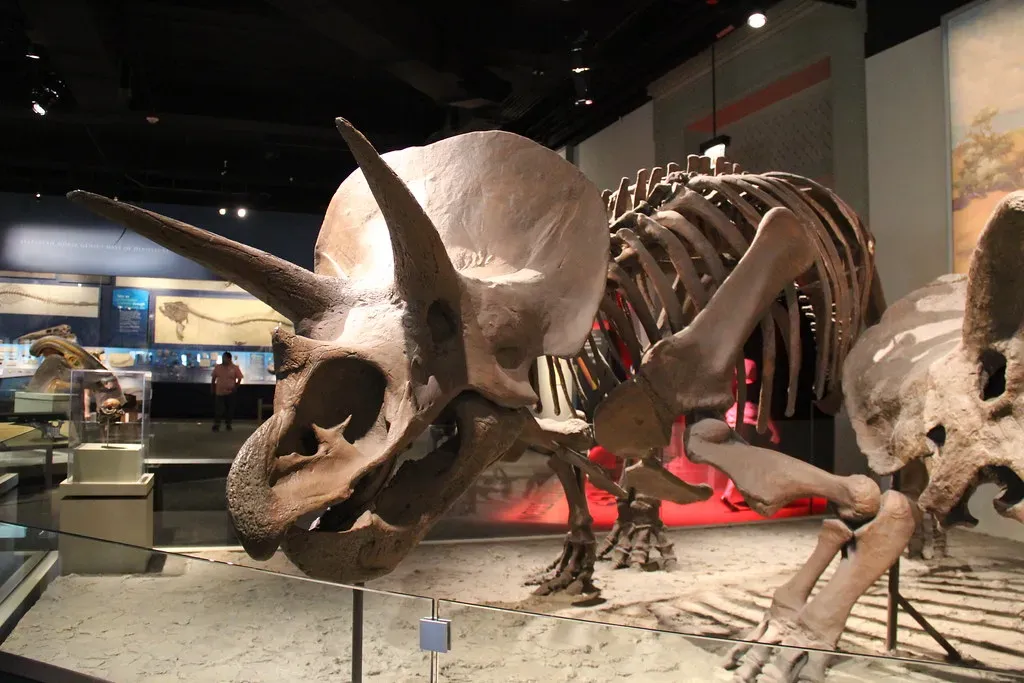
Horns alone weren’t enough to prove what Triceratops actually was. Scientists needed a full skull before anyone could say for certain how those bizarre horns connected to a face, a frill, or a body.
That confirmation didn’t arrive until 1888, when paleontologist John Bell Hatcher unearthed the first complete Triceratops skull. Within a couple of years, Marsh had formally named the genus, and Triceratops became an anchor species of the “Bone Wars” – the brutal 19th-century rivalry between American paleontologists racing to name as many new dinosaurs as possible before their competitors could. Without Hatcher’s skull, Triceratops might have stayed a mystery bison for decades.
#11 – It Had Up to 800 Teeth, and Still Couldn’t Chew
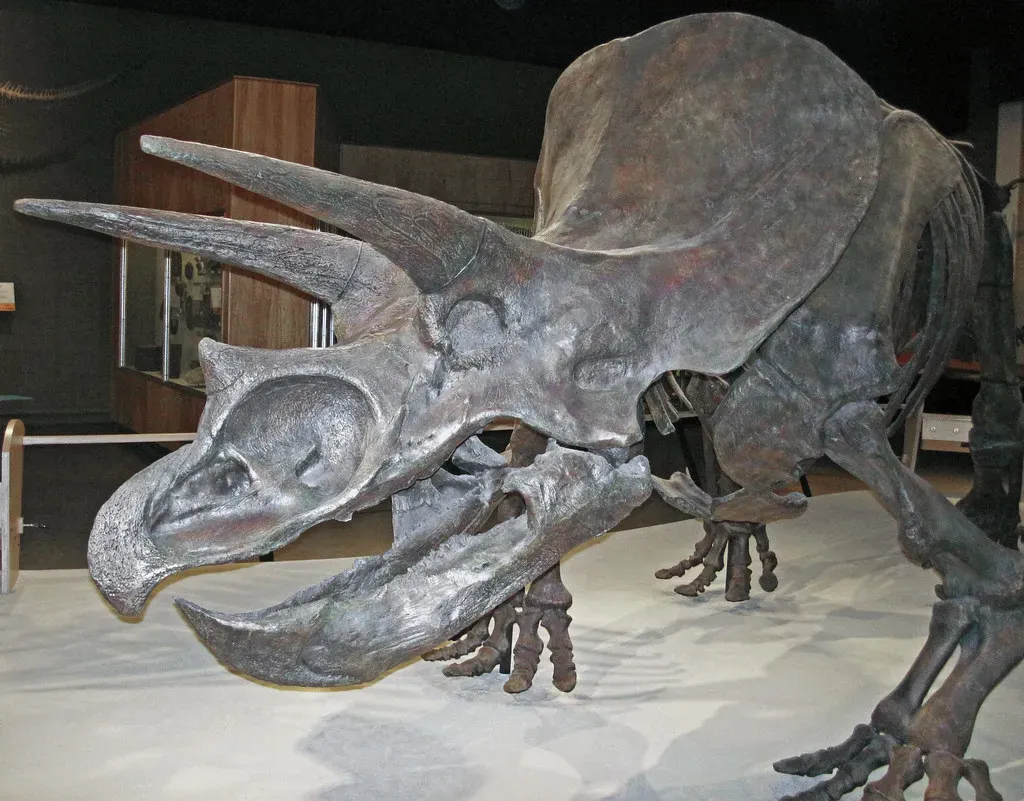
Triceratops had one of the most overbuilt mouths in the entire animal kingdom, and it still couldn’t grind its own food. It packed up to 800 teeth at once, arranged in tightly stacked groups called batteries, with 36 to 40 tooth columns on each side of each jaw and three to five teeth per column. That’s not a typo – it’s a built-in replacement cartridge of teeth, constantly cycling in and out.
Despite that arsenal, Triceratops wasn’t chewing the way most people picture it. Its mouth ended in a sharp, beak-like structure built for grasping and slicing vegetation rather than biting down and grinding. The beak cut tough plants into strips, and the tooth batteries behind it shredded that material further – but true side-to-side chewing simply wasn’t part of the design. Most lifelong dino fans assume those teeth worked like a cow’s. They didn’t.
Fast Facts
- Up to 800 teeth in the mouth at once, constantly cycling
- 36 to 40 tooth columns on each side of every jaw
- 3 to 5 teeth stacked inside each column
- Sharp beak sliced plants; batteries shredded them further
#10 – The Frill Probably Wasn’t Built for Protection at All
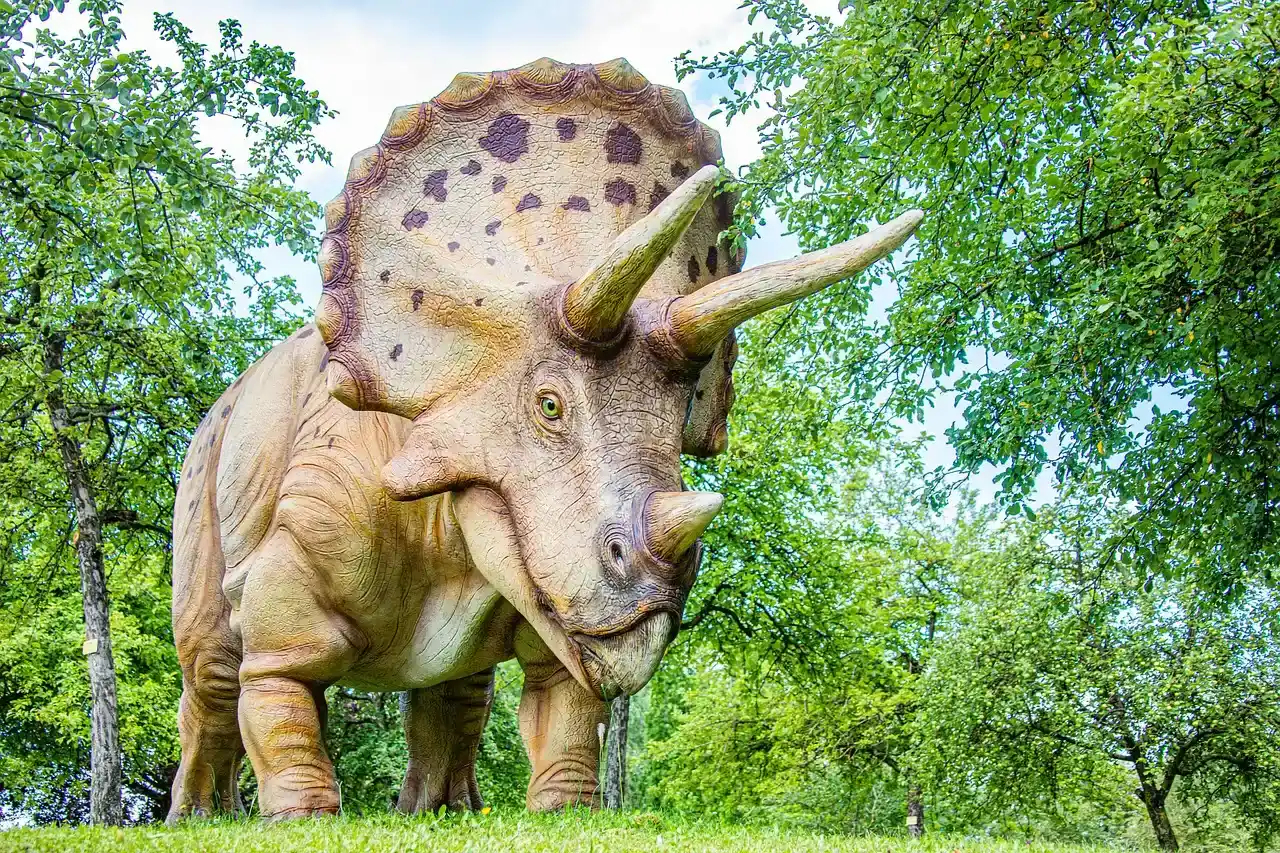
Everyone assumes that giant bony shield on the back of its head was armor. The fossil record tells a very different story. Researchers studying the evolution of ceratopsian skulls concluded that the frill’s original purpose – beyond anchoring jaw muscles – was almost certainly display, not defense. In other words, its first job was showing off, not surviving a fight.
That changed over time as horns grew larger and combat became more common. As brow horns evolved to be bigger and more dangerous, the thick, solid frill of Triceratops likely picked up a second job protecting the neck – an evolutionary bonus feature layered on top of its original purpose. The frill only became “armor” as a byproduct of evolving into a bigger, more elaborate showpiece, which is a tough pill to swallow for anyone who grew up picturing it as a shield first.
#9 – Its Horns Looked Nothing Like the Bare Bone in Museums
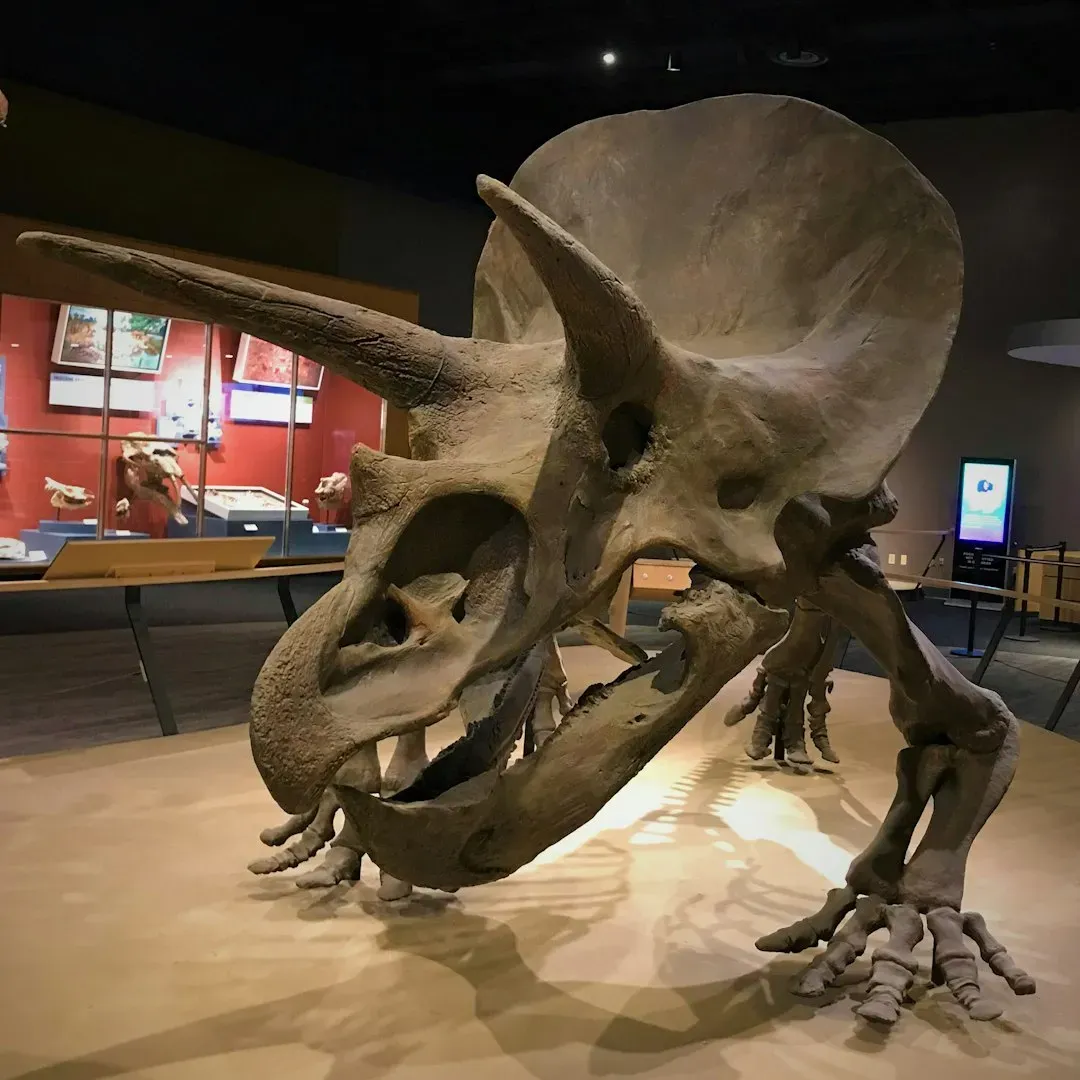
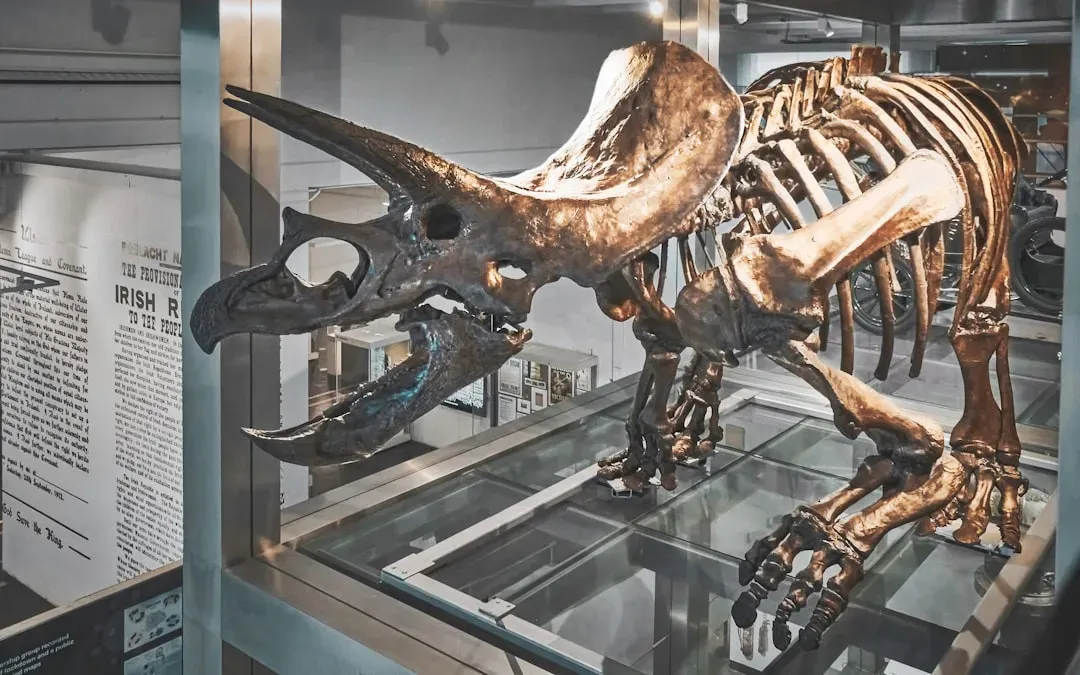
Every Triceratops skeleton you’ve ever seen in a museum is missing a critical piece: the outer layer. The horns visible on fossil skulls are only the bony cores. In life, those cores would have been wrapped in longer keratin sheaths, meaning the real, living horn was noticeably longer, sharper, and shaped differently than the bone we actually dig up.
It gets stranger from there. Based on how keratin grows on modern horned mammals like cattle and rhinos, paleontologists suspect Triceratops horns may have grown long, curved, and dramatically twisted – nothing like the straight bone spikes on display. Every Triceratops skeleton on Earth is technically incomplete, and artists have essentially been guessing at the true horn shape for over a century.
#8 – It Might Have Been the Same Animal as Torosaurus
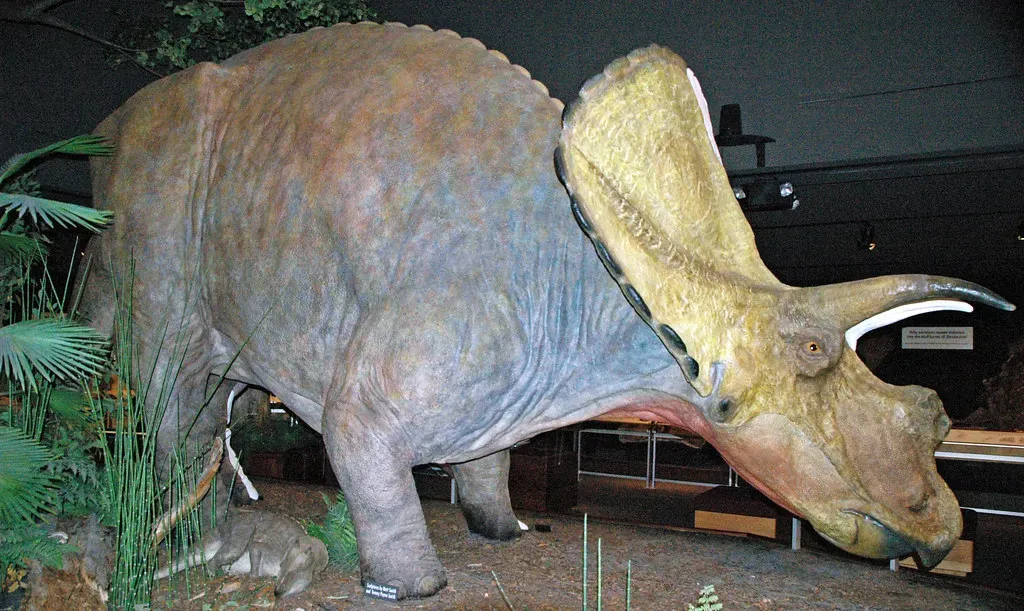
For over 100 years, Torosaurus was treated as its own distinct dinosaur genus. Then two Montana State University paleontologists blew that assumption apart. In 2010, John Scannella and Jack Horner argued that Triceratops and Torosaurus were actually the same dinosaur at different stages of growth – a direct challenge to more than a century of accepted classification, since scientists had always assumed Triceratops’ short frill and Torosaurus’ larger, hole-punctured frill belonged to two separate species.
The evidence came from a staggering specimen count. During a decade-long field study, researchers collected hundreds of skulls, and roughly 40 percent came from Triceratops at wildly different growth stages – some juveniles no bigger than a football, others as large as a small car. If Scannella and Horner are right, “Torosaurus” never existed as its own species at all. It was just Triceratops, all grown up.
Quick Compare
- Triceratops frill: short and solid, no large openings
- Torosaurus frill: longer, with two big holes punched through
- 2010 theory: the difference may just be age, not species
- Field study: hundreds of skulls examined, about 40% classified as Triceratops
#7 – Not Everyone Agrees the “Toroceratops” Theory Is Correct
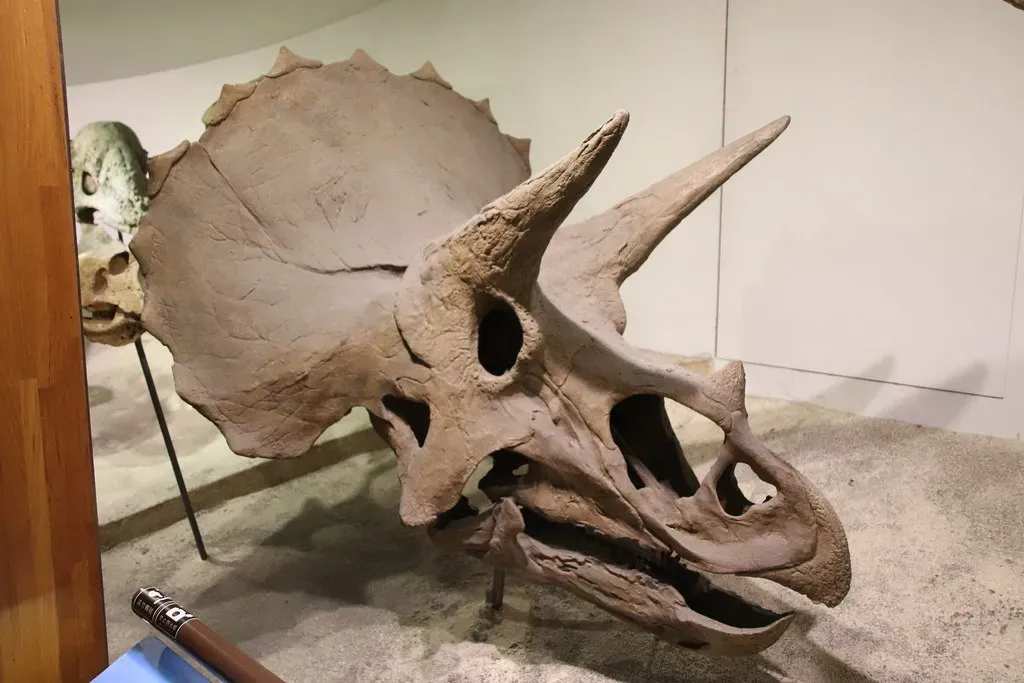
Here’s where things get genuinely messy: not every paleontologist bought the Torosaurus merger, and the fight over it is still ongoing. A follow-up study analyzing growth stages found that skulls assigned to Torosaurus weren’t consistently more mature than those assigned to Triceratops – instead, both groups spanned a wide range of ages. That directly contradicts the “same animal, just older” claim.
The disagreement even spilled into public backlash. Sloppy media coverage sent casual fans into a near panic, mourning the idea that paleontologists were “taking away” one of their favorite dinosaurs – when really, only Torosaurus fans had anything to worry about. Even professional paleontologists can’t agree on how many species of Triceratops actually existed, and that debate shows zero sign of ending soon.
#6 – Other “New Dinosaurs” Might Just Be Triceratops in Disguise
Torosaurus wasn’t the only supposedly separate genus caught up in this identity crisis. Researcher Nicholas Longrich examined several recently named ceratopsian genera and found troubling overlaps. He agreed that Nedoceratops, a three-horned ceratopsid described in 2007, and the more recent Ojoceratops both look suspiciously like fossils already known from Triceratops serratus, a species once lumped in with Triceratops horridus.
Even a genus named as recently as 2010 wasn’t safe from scrutiny. Longrich pointed out that Tatankaceratops showed a strange mix of adult and juvenile traits, meaning it might just as easily be a small or developmentally stunted Triceratops as it could be a true separate species. Multiple “distinct dinosaur species” named in the last few decades may secretly just be misclassified Triceratops fossils.
#5 – Triceratops Almost Certainly Fought Other Triceratops
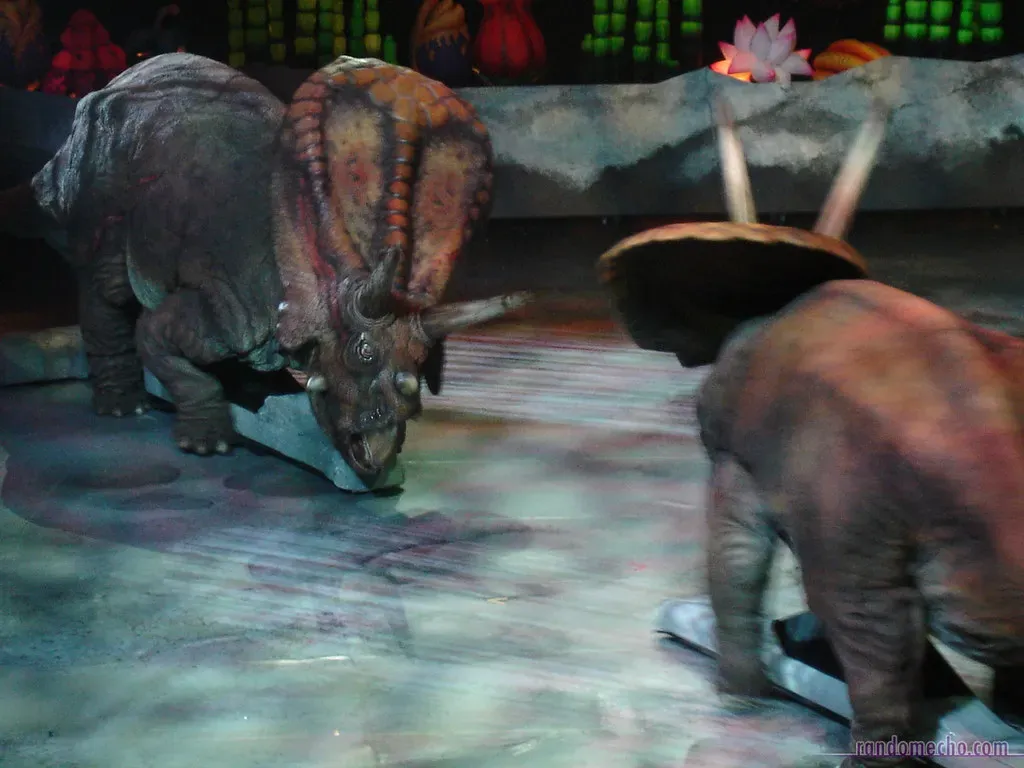
Forget the movies – the real combat evidence points somewhere else entirely. A landmark skull study compared injury patterns across ceratopsian species and found that Triceratops skulls carried roughly 10 times more fractures and lesions than Centrosaurus skulls, with the damage concentrated on the sides of the frill – likely because its broad surface made it an easy target during a fight. That’s not a small statistical blip; it’s a dramatic, consistent pattern.
The comparison was specifically designed to test fighting styles. Triceratops carried two long horns over its eyes and a short one on its snout, while Centrosaurus had the opposite arrangement – meaning if both animals fought members of their own species, they should build up injuries in very different spots. That’s exactly what researchers found. The pattern strongly suggests Triceratops was locking horns with its own kind on a regular basis, not just fending off predators.
At a Glance
- Triceratops: two long brow horns, one short nose horn
- Centrosaurus: one long nose horn, shorter brow horns
- Triceratops skulls showed roughly 10x more fractures than Centrosaurus
- Damage clustered on the sides of the frill, not the face
#4 – Not Everyone Believes the Combat Evidence
Here’s a controversial opinion worth sitting with: at least one major paleontologist thinks the “Triceratops duels” story is overhyped. Jack Horner of the Museum of the Rockies isn’t sold on the horns-as-weapons theory, questioning why serious combat injuries weren’t even more common if head-butting was really a routine part of Triceratops life.
They seem to make the case that since there is trauma, it has to be due to combat, whereas, I would say if it’s trauma caused by combat, why isn’t it more prevalent and more traumatic?
Jack Horner
Even the study’s own lead author, Andrew Farke, admits the horns probably weren’t single-purpose weapons. He’s described them as “kind of like a Swiss army knife,” adding that Triceratops “could use them however they wanted.” This isn’t settled science – it’s an active argument between experts who’ve studied the exact same skulls and walked away with different conclusions.
#3 – There’s No Real Proof It Ever Fought a T. rex
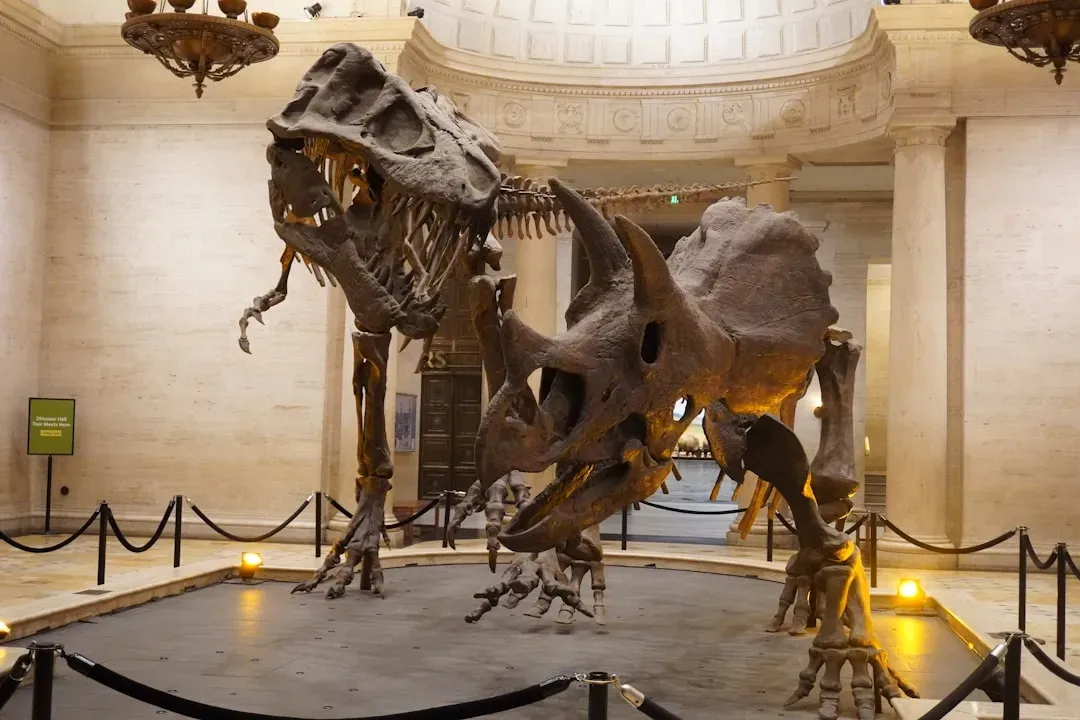
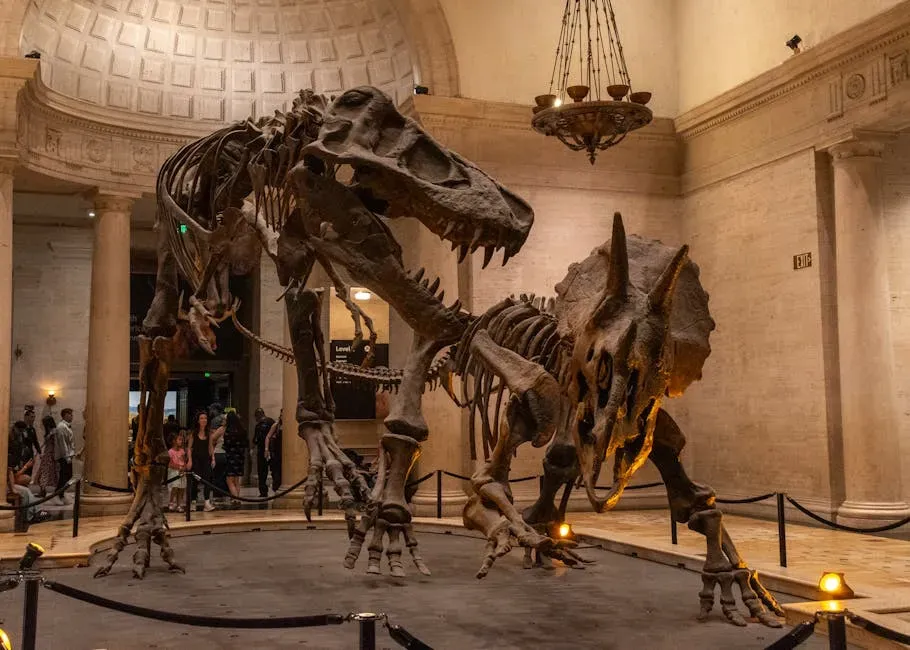
This is the single biggest myth lifelong dinosaur fans still believe, and it isn’t backed by hard evidence. Despite decades of movies, toys, and museum dioramas showing the two locked in combat, the fossil record stays remarkably quiet on any actual Triceratops-versus-T. rex battle. It’s an understandable piece of pop culture – it just isn’t science.
That doesn’t mean the two animals never crossed paths. Fossil evidence shows T. rex definitely fed on Triceratops, and some Triceratops fossils even show healed bite wounds from close encounters. But a predator scavenging or attacking a carcass isn’t the same thing as an “epic battle.” Most of that dramatic imagery comes straight from Hollywood, not the ground.
#2 – Its Skull Alone Could Be a Third of Its Entire Body Length
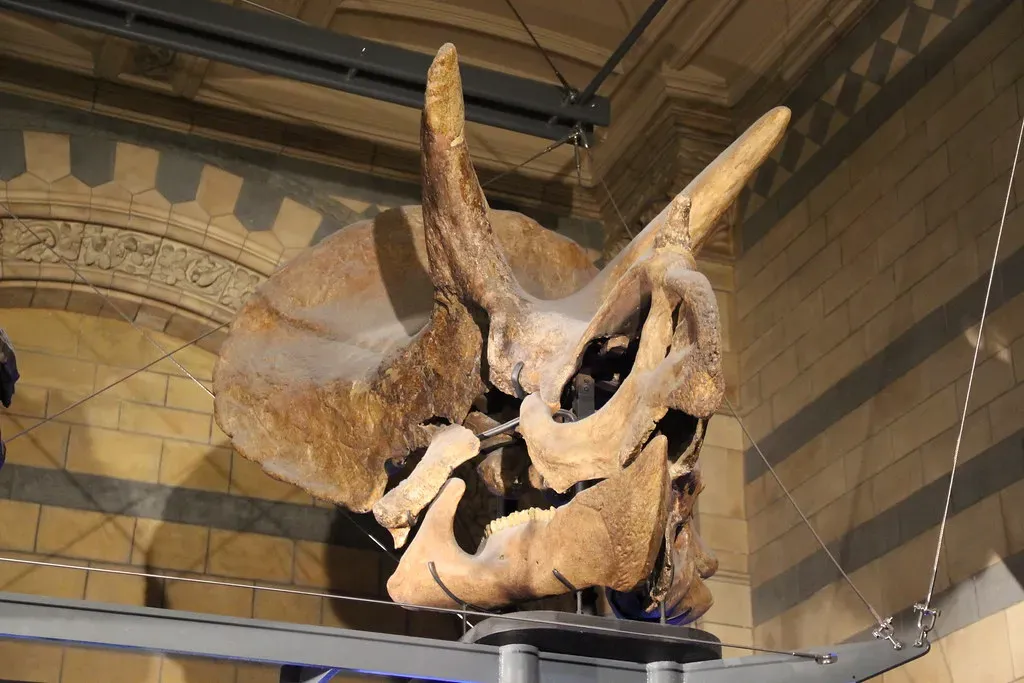
Triceratops didn’t just have a big head – it had one of the most oversized skulls of any land animal that has ever existed. Picture an animal stretching up to 30 feet long and weighing between six and twelve tons, with a head so massive it made up nearly a third of its total body length. That’s a car-sized skull sitting on the front end of the entire creature.
Carrying that much weight up front demanded serious skeletal engineering. Triceratops’ neck vertebrae fused into a single, reinforced structure called the syncervical, backed up by powerful neck muscles built purely for lift. Without that fused, reinforced neck, Triceratops physically couldn’t have held its own head off the ground.
Worth Knowing
- Body length: up to 30 feet, nose to tail
- Body weight: 6 to 12 tons
- Skull: nearly one-third of total body length
- Fused neck vertebrae (syncervical) supported the massive head
#1 – It Was Among the Very Last Dinosaurs to Ever Exist
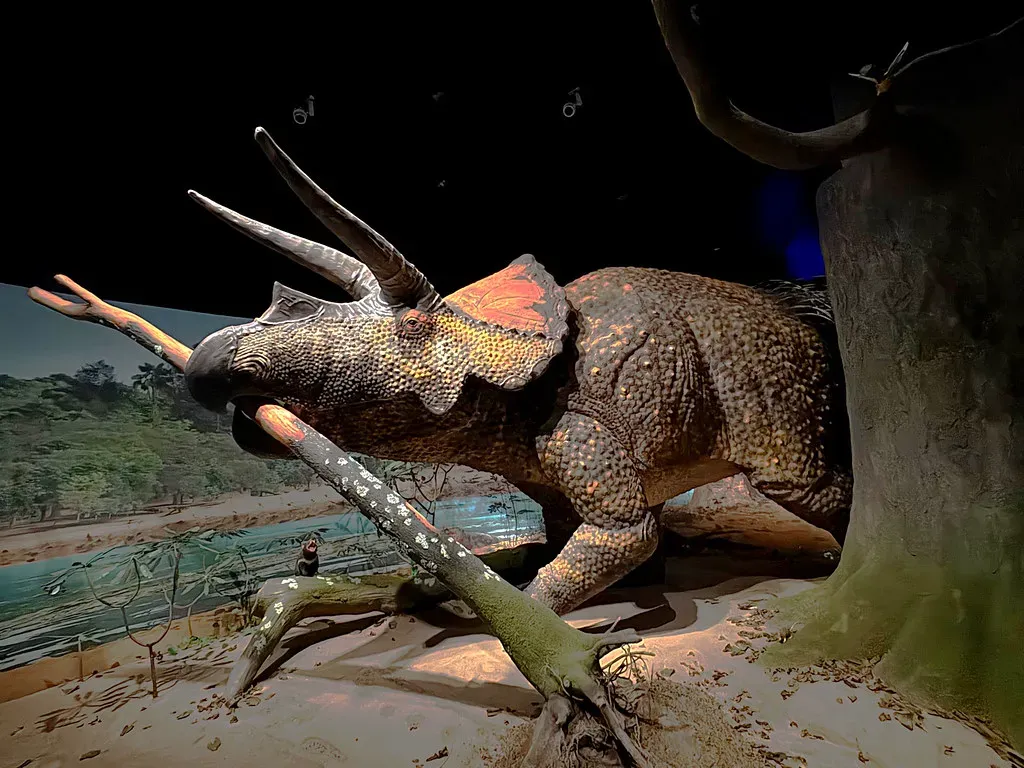
Here’s the fact that changes how you should picture Triceratops entirely: it wasn’t some ancient, early dinosaur. It was one of the very last dinosaurs standing before everything ended. Triceratops – Latin for “three-horned face” – was among the last non-avian dinosaurs to evolve before the asteroid impact 66 million years ago wiped out the rest of its world.
It’s also one of the most abundant dinosaurs ever unearthed, found throughout the fossil-rich Hell Creek Formation in northeastern Montana, where the rock layers preserve the final millennia of the dinosaurs’ reign. This wasn’t a random species that happened to survive to the end – it was thriving right up until the moment the asteroid hit, which makes its fossils scientifically priceless for understanding exactly what the world looked like in the dinosaurs’ final days. Triceratops is essentially a snapshot of the exact moment the age of dinosaurs ended, not a relic from deep in the Jurassic like many casual fans assume.
The Bottom Line
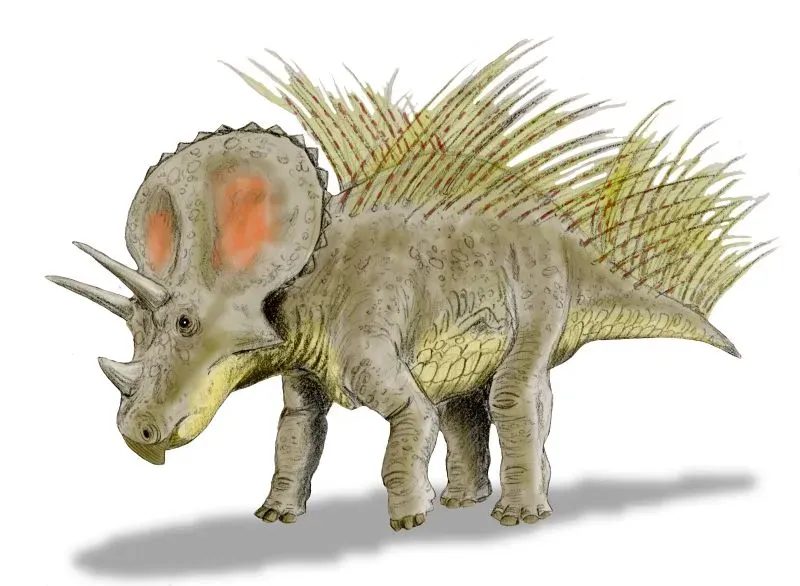
The Triceratops we grew up picturing – a simple horned tank that occasionally jousted with T. rex – barely resembles what the fossil record actually shows. Its horns were probably weapons against its own species just as often as against predators. Its frill likely started as a display feature, not armor. And there’s a real chance “Torosaurus” never existed at all, just an older version of the same animal wearing a bigger frill.
Even top paleontologists can’t fully agree on these points, which tells you exactly how much is still unresolved. If you ask me, the Toroceratops debate is the single most underrated mystery in paleontology today – bigger, honestly, than anything involving T. rex. What’s the Triceratops fact you never knew until today? Drop it in the comments.