
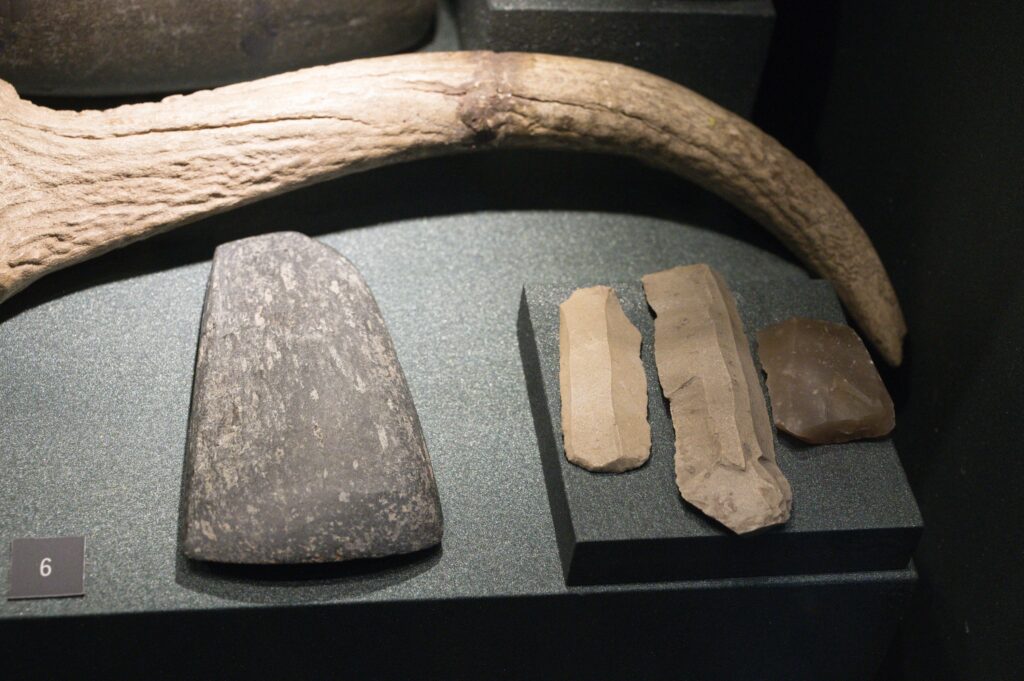
Most people picture ancient burials as dirt and bones – a hasty hole in the ground, nothing more. But archaeologists digging through graves more than 30,000 years old keep uncovering something that doesn’t fit that picture at all: thousands of hand-carved beads, ivory spears buried with children, and rituals so elaborate they took hundreds of hours to prepare. Early humans weren’t just disposing of their dead. They were sending them somewhere – and packing accordingly.
From glittering mammoth-ivory bracelets to a single, unexplained human foot buried apart from its own body, the objects found in these graves reveal a level of emotional and spiritual complexity most of us never learned about in school. One entry on this list is so strange that even the archaeologists who found it aren’t fully sure what it means. Here’s what 13 real burials actually tell us about how our ancestors said goodbye.
#1 – Red Ochre, The Blood-Colored Pigment That Wouldn’t Wash Away
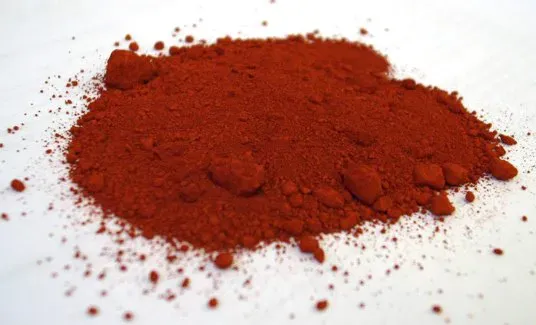
Long before makeup or paint existed, early humans were covering their dead in a deep red mineral pigment – and they did it on nearly every continent they lived on.
At Sunghir in Russia, archaeologists found bodies stained almost entirely in this pigment. The color wasn’t accidental or occasional – it shows up again and again across thousands of miles and tens of thousands of years, suggesting it carried deep symbolic weight tied to blood, life, or protection in the afterlife.
The same pattern appears at the Red Lady of Paviland site in Wales, one of the oldest ceremonial burials in Western Europe. There, a body was laid in a shallow grave behind a mammoth’s skull, its bones apparently rubbed with red ochre before burial. Most people assume this pigment was purely decorative, but researchers believe it may have functioned as a hide preservative, a healing agent, or a ritual marker meant to mimic blood itself. That’s nothing compared to what turned up buried right alongside the ochre in these same graves.
#2 – Perforated Seashells, Hundreds of Miles From Any Ocean
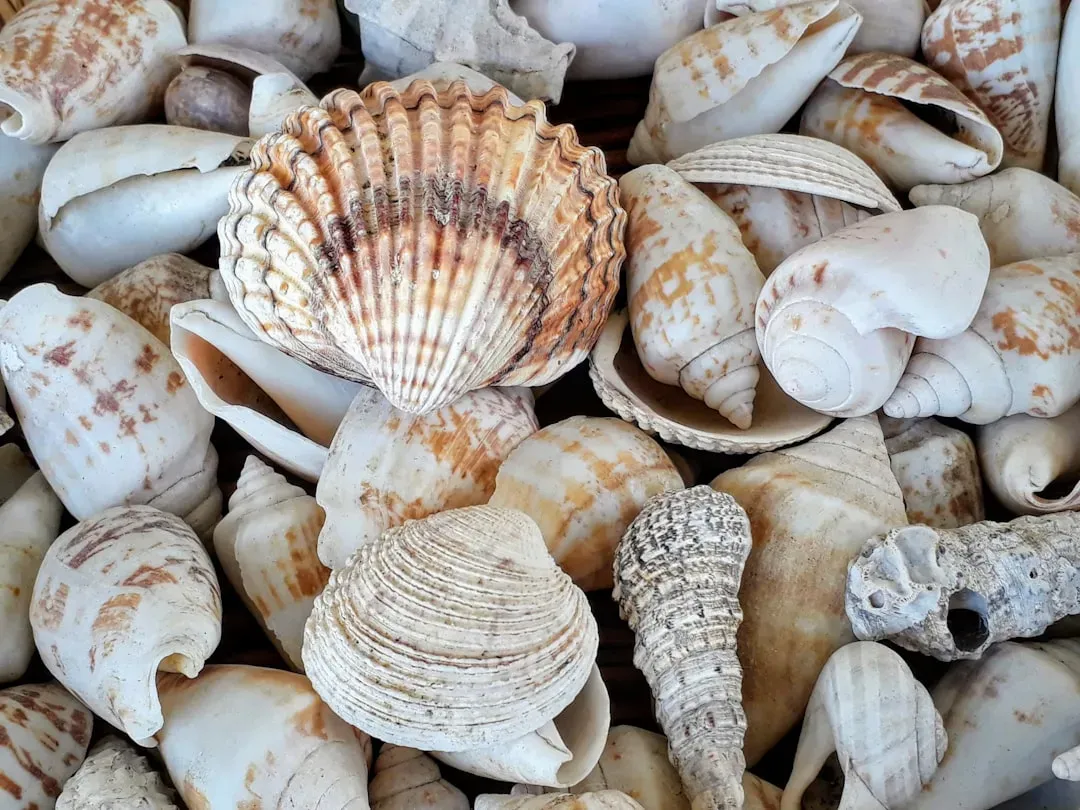
Seashells sound like an odd thing to bury someone with – unless you understand how far some of these communities traveled to get them.
At the Paviland cave site, researchers uncovered jewelry made from shells clearly shaped by human hands. Along with over 4,000 worked flints, necklace bones, and mammoth-ivory bracelets, they found perforated seashell necklaces nearly identical to 75,000-year-old shells discovered at the Blombos site in South Africa. That’s not a coincidence – it points to a shared symbolic tradition stretching across continents and tens of thousands of years.
Experts at Oxford’s Natural History Museum have examined these shells closely. A common periwinkle shell was found with a man-made perforation, likely worn as a bead or sewn onto clothing. The shells weren’t decoration for the living – they were sent into the ground with the dead, which tells us something about how these communities viewed personal identity beyond death. But the next item makes seashells look almost modest by comparison.
Fast Facts
- The Paviland shell necklace closely resembles beads found at Blombos Cave in South Africa – over 75,000 years old and thousands of miles away.
- Excavators also recovered more than 4,000 worked flints alongside the shell jewelry at Paviland.
- A single common periwinkle shell shows a deliberate, human-made perforation – evidence it was strung as a bead.
- Researchers see the shells as grave goods rather than everyday adornment – objects sent into the earth with the dead.
#3 – Mammoth Ivory Bracelets and Armbands
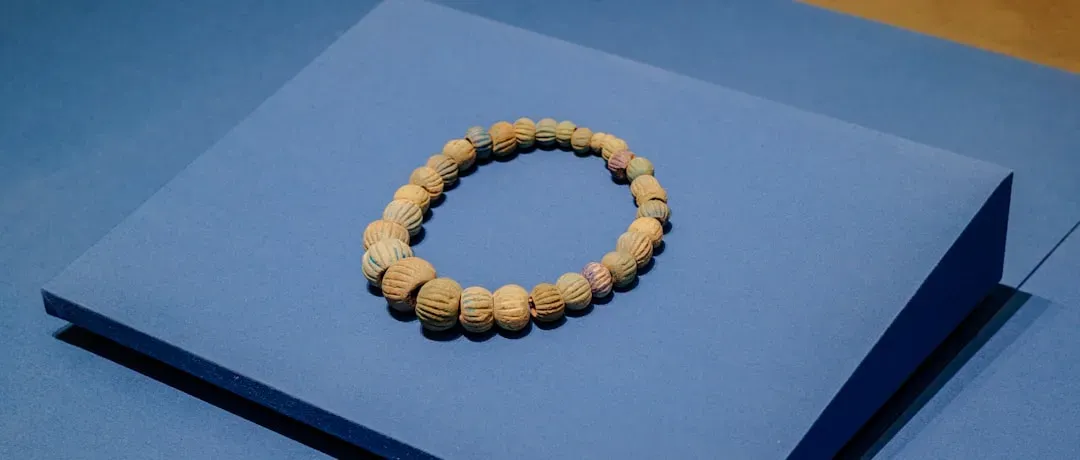
Some early humans were buried wearing jewelry so labor-intensive it would have taken skilled artisans days to finish a single armband.
At Sunghir, researchers uncovered multiple sets of ivory arm ornaments on different bodies. One skeleton wore at least 8 ivory bands, another at least 13. This wasn’t a one-off gesture – the consistency across multiple graves suggests a shared cultural standard for how the dead should be adorned before burial.
At Paviland, similar ivory items turned up decades earlier: rods and bracelets small enough that they may have hung from clothing rather than sat on a wrist. Some researchers even believe these ivory rods weren’t jewelry at all, but ritual objects – possibly the earliest known “magic wands” in the archaeological record. Turns out, that’s not even the strangest theory tied to these graves.
#4 – Hundreds of Fox Canine Teeth Sewn Into Belts
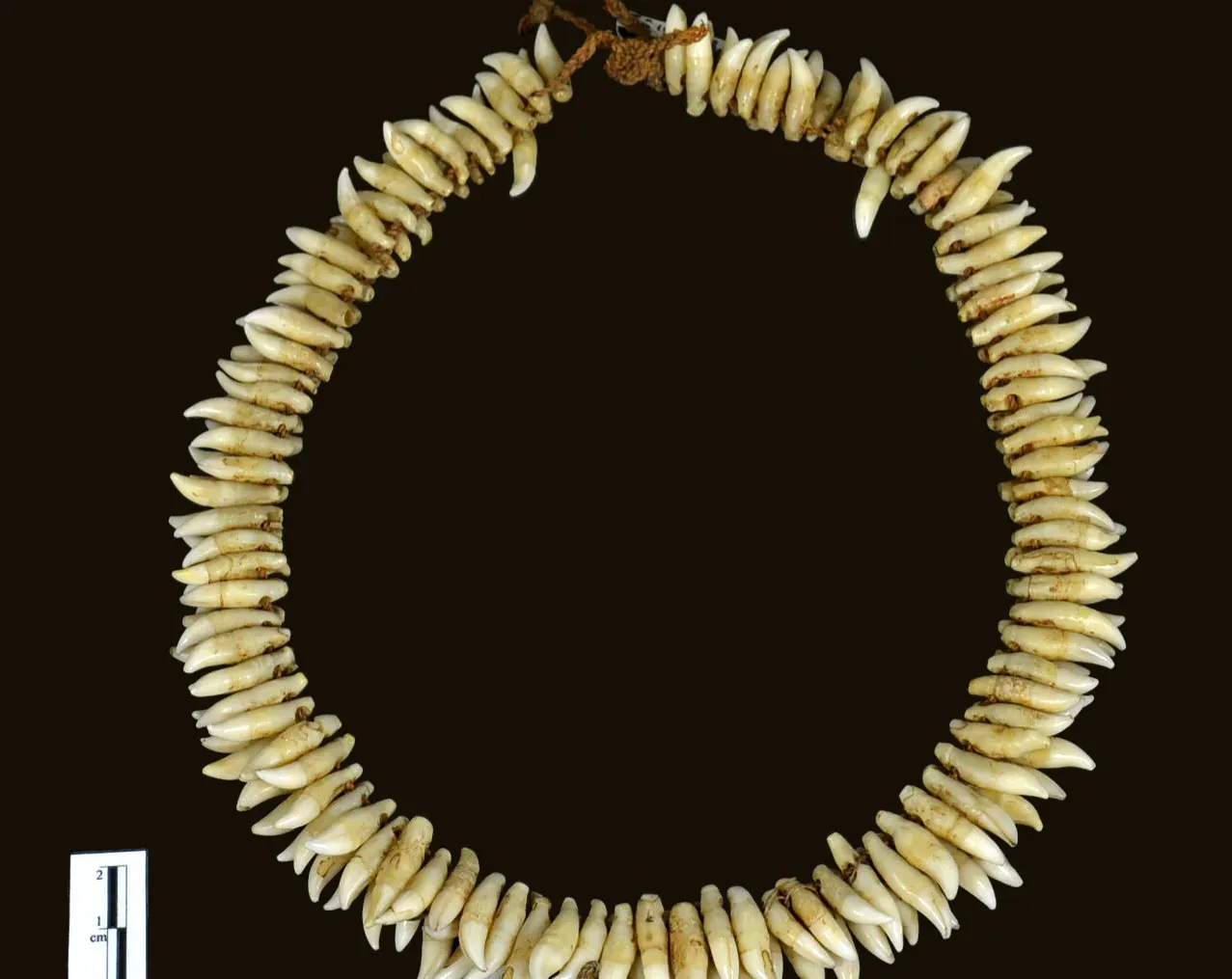
Picture a belt made entirely of predator teeth, sewn on one by one, worn into the afterlife.
At Sunghir, one juvenile skeleton was found wearing an almost unbelievable number of these teeth – more than 40 fox canines on the skull alone, plus a belt strung with over 250 of them. That’s not a handful of decorative teeth. That’s a garment requiring the hunting and processing of dozens of foxes, an enormous investment of time for a community that was likely still hunting daily just to survive.
Similar animal-tooth traditions show up in the Levant, among both early Homo sapiens and Neanderthals, who both included goat horns, deer antlers, and jawbones as grave goods. Most people assume Neanderthals were incapable of this kind of symbolic behavior, but the evidence increasingly suggests otherwise. That number – 250 teeth on one belt – becomes even more staggering once you learn who was wearing it.
#5 – Ivory Spears Buried With Children, Not Warriors
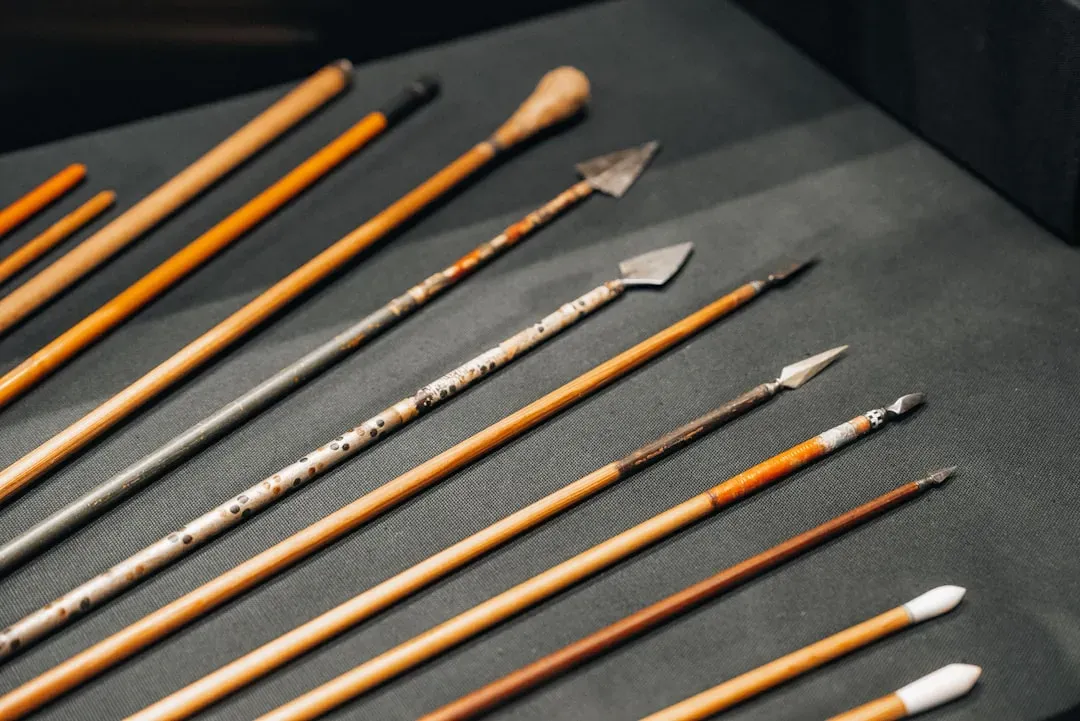
You’d expect elaborate weapons to be buried with hunters or warriors. Instead, some of the most impressive spears ever found in the archaeological record were buried with kids.
At Sunghir, two children – a boy around 12-14 and a girl around 9-10 – were laid head to head in a single grave, surrounded by extraordinary items. Carefully manufactured mammoth ivory spears, ivory disks, and pierced antlers were found beside their skeletons. These weren’t cheap toys. They were fully functional hunting weapons that would have taken real skill and time to produce.
Researchers believe the choice to bury children with such valuable items wasn’t random – it suggests the spears were symbolic rather than useful. This is one of the most controversial findings in Paleolithic archaeology – it implies these children held inherited status they hadn’t earned through their own actions, upending the idea that prehistoric societies were purely meritocratic. But the animal parts buried in some graves are even harder to explain.
#6 – Antlers, Horns, and Animal Skulls Placed With the Dead
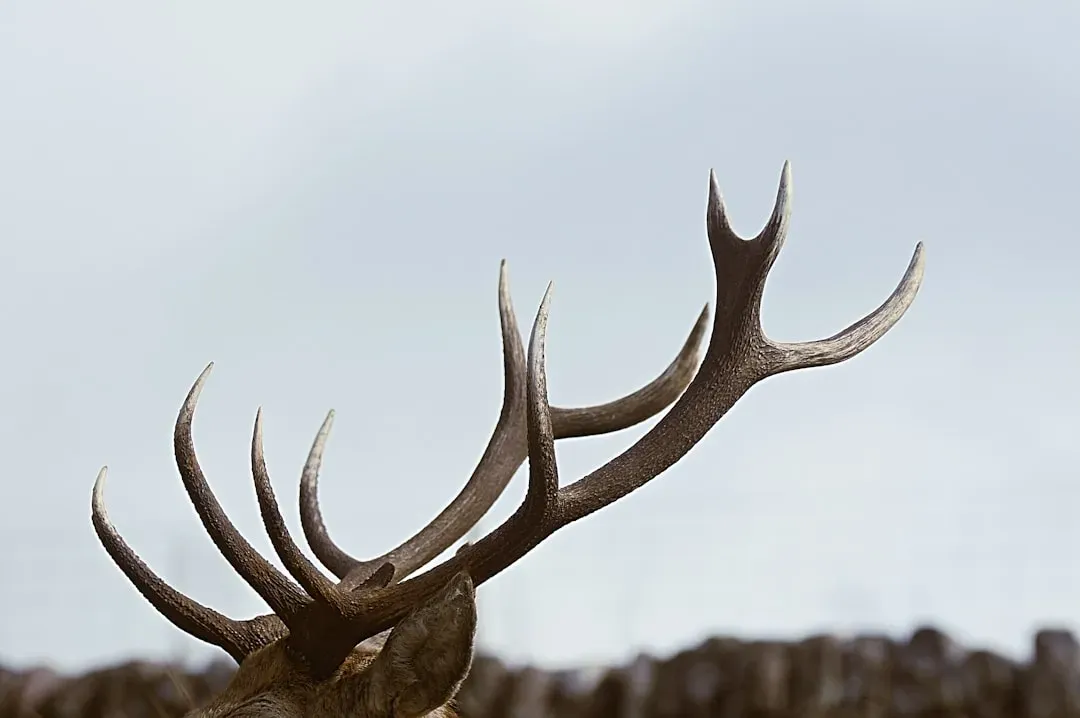
Long before domesticated pets or livestock existed, early humans were burying their dead with the skulls and horns of wild animals – and doing it deliberately.
Recent research comparing Neanderthal and early Homo sapiens burial sites in the Levant found this practice was shared by both groups, regardless of age or gender. This overlap matters. It suggests the symbolic use of animal parts in burial predates the split most people assume existed between “smart” modern humans and “primitive” Neanderthals.
At Paviland, the burial itself was staged around one particularly massive animal part – the skeleton was positioned directly behind a mammoth’s skull. Placing a body behind the skull of an extinct giant wasn’t practical – it was theatrical, and it hints at a level of ritual staging most people don’t associate with the Ice Age. That kind of staging becomes even more elaborate with the next item.
Quick Compare
- Neanderthals: Included goat horns, deer antlers, and jawbones in Levant burials.
- Early Homo sapiens: Practiced nearly identical animal-part burials in the same region.
- Shared pattern: Both groups used animal remains regardless of the deceased’s age or gender.
- Paviland burial: Positioned the body directly behind a mammoth’s skull – a staged, symbolic placement.
#7 – Thousands of Beads Sewn Directly Onto Clothing
Some early humans weren’t just wearing a few beads – they were wrapped in thousands of them, and researchers believe this was standard, everyday attire, not a special funeral costume.
At Sunghir, the sheer volume is almost hard to believe. One grave contains about 3,000 mammoth ivory beads alongside pierced fox canines and ivory armbands, and the grave of two younger individuals is even more elaborate. Producing a single ivory bead required cutting, shaping, and drilling by hand – meaning thousands of beads represented thousands of hours of collective labor.
What’s more surprising is that the beads were likely sewn onto everyday clothing that has since decayed, meaning these people dressed this way in life, not just in death. These weren’t funeral costumes – they were daily fashion, and that challenges the idea that Ice Age humans dressed purely for survival. Still, nothing divides archaeologists quite like the next item on this list.
#8 – Flowers Laid Across the Body (A Theory Still Fiercely Debated)
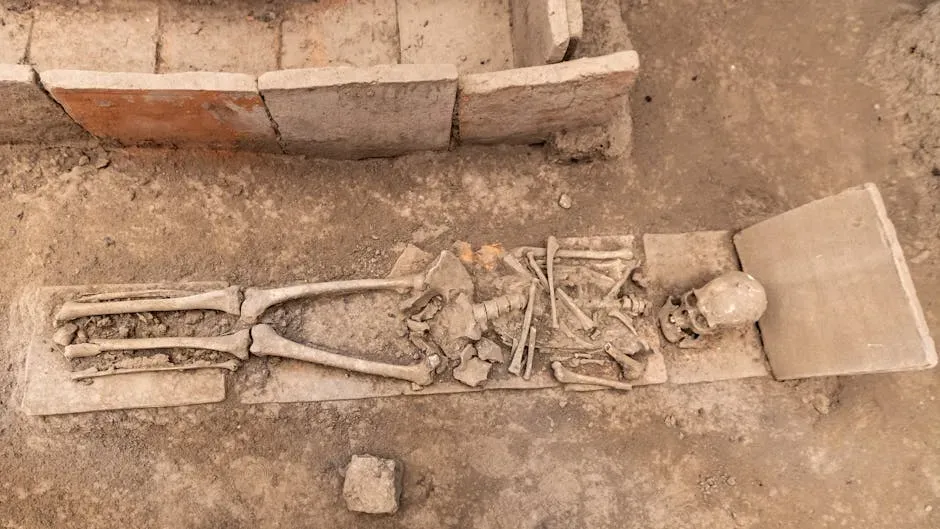
For decades, textbooks taught that Neanderthals buried their dead with flowers. New evidence has thrown that entire idea into chaos.
The original claim came from Shanidar Cave in Iraq, where researchers found clumps of pollen from flowering plants clustered in the soil beneath an adult male Neanderthal. For nearly seventy years, this was held up as proof that Neanderthals mourned their dead with the same tenderness modern humans do.
Then a 2023 study poked a serious hole in the theory. A team reexamined the pollen evidence and concluded that burrowing bees were a far more likely explanation than a funeral ritual. Most people still believe the “flower burial” is settled fact – it isn’t. Even the researchers who debunked it admit there may be more to the story, since woody tissue samples from the site could still reveal something new. What’s buried in the next grave is far less ambiguous – and far stranger.
#9 – A Complete Set of Wild Animal Remains (Possible Shaman’s Burial)
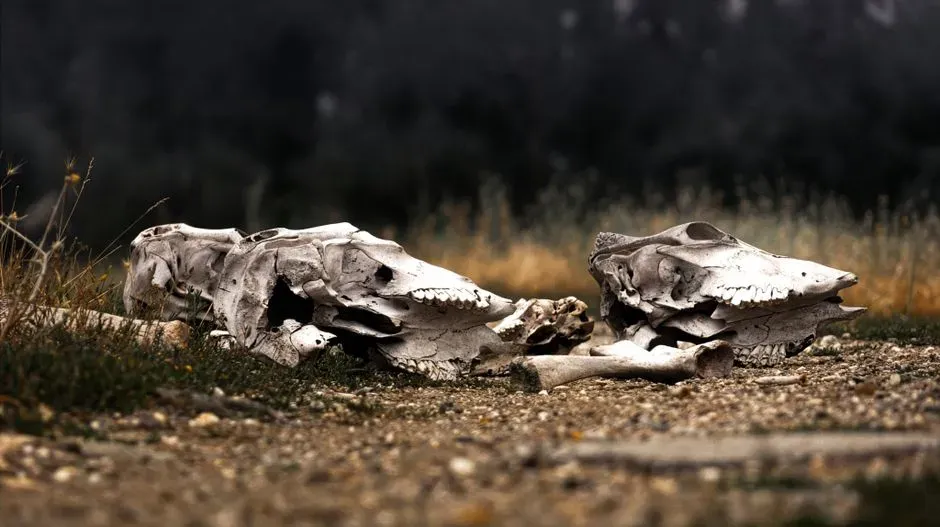
One of the strangest graves ever excavated wasn’t filled with jewelry or weapons – it was filled with an entire menagerie.
Archaeologists studying this burial found a bizarre combination of animal parts deliberately arranged around the body: 50 complete tortoise shells, plus select body parts from a wild boar, an eagle, a cow, a leopard, and two martens. This isn’t a random assortment. Each species would have required a completely different hunting or scavenging strategy, meaning the collection was gathered deliberately, likely over years.
Researchers who studied how the grave was constructed and sealed believe it wasn’t an ordinary burial at all – it may be one of the earliest known shaman’s graves. A leopard paw and an eagle talon aren’t survival tools – they’re symbolic power objects, likely representing the specific spiritual authority of whoever was laid to rest here. And there’s one more detail from this same grave that deserves its own explanation entirely.
At a Glance
- 50 complete tortoise shells arranged around the body
- Select body parts from a wild boar and a cow
- An eagle talon and a leopard paw
- Remains from two separate martens
#10 – A Human Foot Buried Separately From the Body
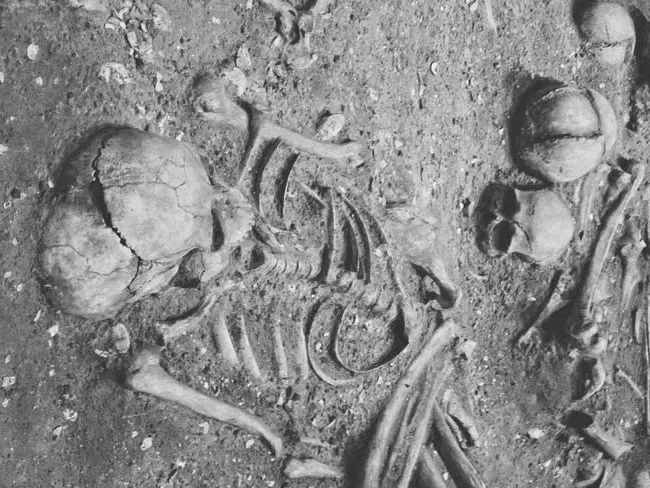
Nestled among the tortoise shells and predator remains in that same shaman’s grave was something no one expected: a human foot that didn’t belong to the main skeleton.
This detail is easy to skim past, but it’s one of the most puzzling finds in Paleolithic burial archaeology. A stray foot alongside animal remains suggests either a secondary burial ritual, a symbolic offering from another individual entirely, or a practice we simply don’t have modern language for yet.
Most articles about this burial skip right past the human foot – but it may be the single most important clue to understanding what “grave goods” even meant to these communities. If body parts themselves could function as ritual offerings, our entire modern definition of a “burial gift” might be too narrow. Compared to something this eerie, ordinary stone tools might sound boring – except they weren’t.
#11 – Everyday Stone Tools, Buried for Practical Use in the Afterlife
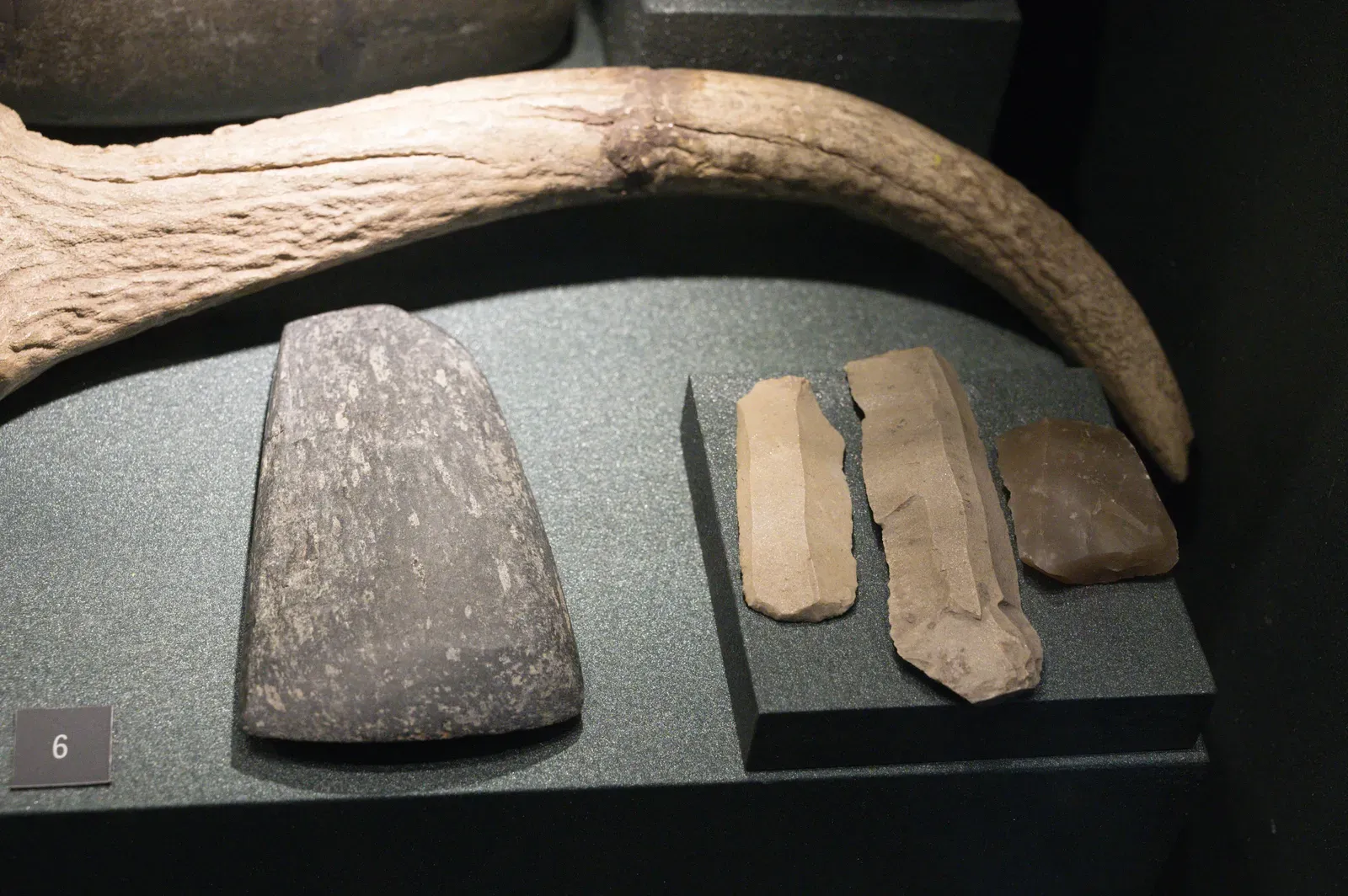
Not every grave good was symbolic or rare. Some of the objects buried with early humans were simply the tools they used every single day.
Grave goods, by definition, cover exactly this kind of practical item – usually personal possessions or supplies meant to smooth the deceased’s journey into an afterlife, most commonly pottery and stone tools. This points to a straightforward, almost logical belief system: if you needed a knife or scraper in life, you’d need one in the next world too.
At Sunghir and other sites across Eurasia, this practical logic shows up constantly beside the extravagant burials. Some bodies were buried with beads and ivory, while others were buried so hastily that scavengers scattered the bones soon after. The contrast between elaborate ivory burials and hasty, practical ones is jarring – it means status, not just belief, dictated how someone was sent into the afterlife. That inequality becomes even clearer once food and pottery enter the picture.
#12 – Pottery, Combs, and Food for the Journey Ahead
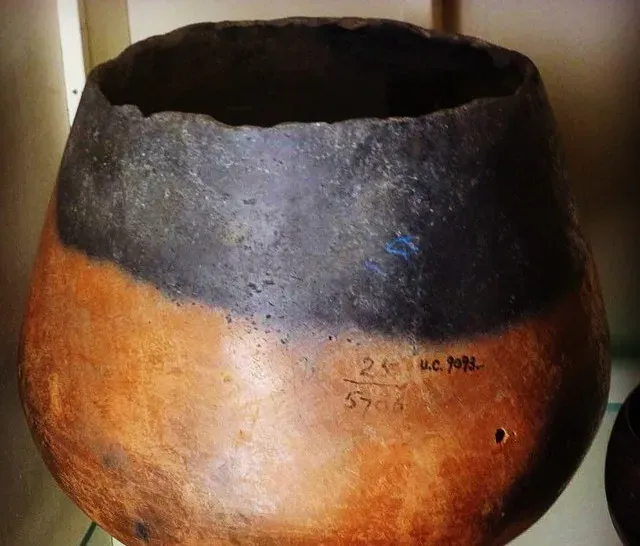
As humans settled into permanent villages, grave goods stopped being occasional and started becoming standard practice – complete with dishes and personal grooming tools.
This shift shows up clearly in the archaeological record from ancient Egypt’s earliest prehistoric culture. Egyptians of the Badarian culture were buried with pots, shells, combs, stone vessels, animal figurines, and slate palettes – a major leap from a single ivory bead. By this point, entire toolkits were being buried for the deceased’s daily use.
The logic behind these burials was refreshingly literal: if grave goods were meant to be useful in the afterlife, then favorite foods and everyday objects were simply supplied. Combs and stone vessels sound almost domestic compared to leopard paws and ivory spears, but that’s exactly the point – burial customs had shifted from purely symbolic to genuinely functional, treating the afterlife like an extension of daily life rather than a separate spiritual realm. Which brings us to the most unexpected finding of all.
#13 – Nothing At All
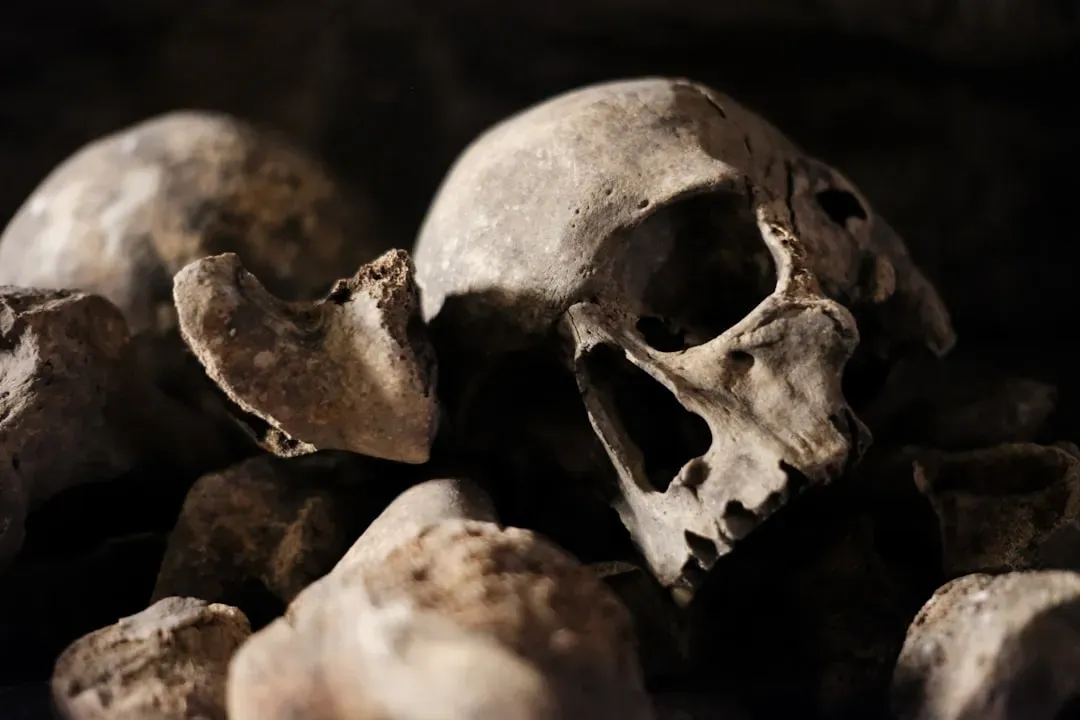
After all the ivory, ochre, and animal remains, here’s the twist almost nobody expects: most early humans were buried with absolutely nothing.
A landmark study examining dozens of Upper Paleolithic burials found that the famous, bead-covered graves are the exception, not the rule. A handful of ornate burials in Russia, Italy, and the Czech Republic, dating back nearly 30,000 years, are anomalies rather than a representative sample of early Homo sapiens burial practices. Most burials were plain, containing little more than items of daily life.
Just how rare are the spectacular ones? “The problem is that these burials are so rare – there’s just over three per thousand years for all of Eurasia – that it’s difficult to draw clear conclusions about what they meant to their societies.” Most people picture every Ice Age burial as an ivory-covered spectacle – the data says otherwise. For every child buried with mammoth-ivory spears, thousands of ordinary people went into the ground with nothing but the earth around them.
Worth Knowing
- Elaborate, bead-covered burials are found only at a handful of sites – Russia, Italy, and the Czech Republic.
- These graves date back nearly 30,000 years but represent a tiny fraction of all Upper Paleolithic burials studied.
- Researchers estimate just over three lavish burials occur per thousand years across all of Eurasia.
- Most burials from the same era contain little more than everyday items – or nothing at all.
The Bottom Line
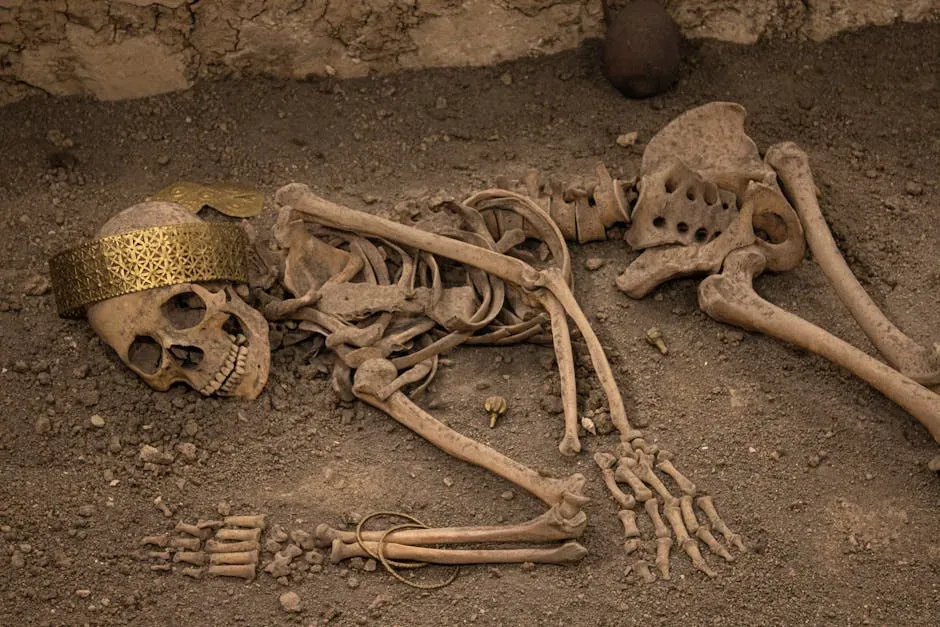
The real story isn’t that early humans buried treasure – it’s that almost none of them did. Sunghir, Paviland, and the shaman’s grave are extraordinary precisely because they’re statistical outliers, not the norm. Most early humans were laid to rest with nothing but dirt and maybe a stone tool, which honestly says more about status and inequality in prehistoric society than any ivory bead ever could.
If you ask us, the plain graves are the real story archaeologists have been underselling for decades – not the glittering exceptions we keep putting in museum displays. Which of these 13 items surprised you the most: the human foot, the flower burial debate, or the fact that most graves had nothing at all? Drop your take in the comments.