
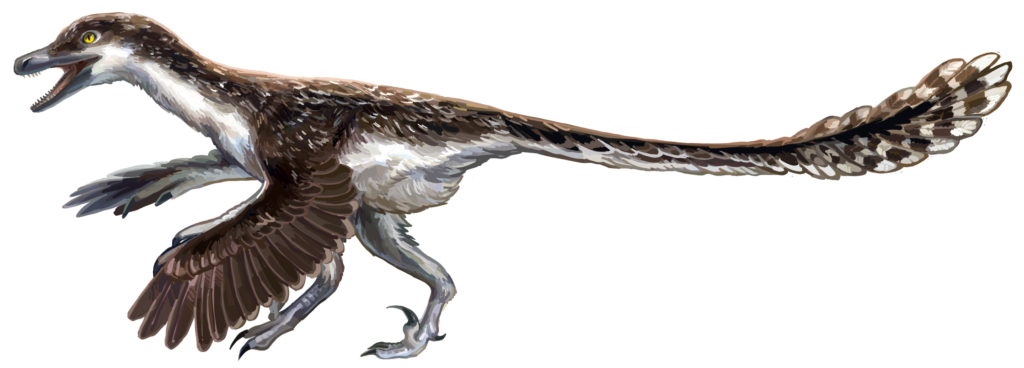
Most people picture Velociraptor as a six-foot, scaly, hyper-intelligent killing machine that hunted in coordinated squads and could gut a grown man in seconds. That image is almost entirely fiction. The real animal was smaller than a coyote, wrapped in feathers, and spent more time scavenging carcasses than starring in dramatic chases.
Paleontologists have spent over a century quietly correcting the record on this dinosaur, and the corrections keep getting stranger than the myth. From its actual size to where it lived to what its famous claw was really used for, nearly everything the public “knows” about Velociraptor traces back to a 1990s movie script, not a fossil bed. Here’s what the science actually says – and it gets weirder with every entry.
#13 – The Name Doesn’t Mean What Hollywood Implies
The word “Velociraptor” sounds like a title built for a blockbuster, but its origin is far more academic than dramatic. The genus name comes straight from Latin: velox, meaning “swift,” and raptor, meaning “robber” or “plunderer.” Put together, it simply means “swift thief,” a nod to the animal’s speed and carnivorous diet rather than anything cinematic.
What really surprises people is that the animal almost got a completely different name entirely. Earlier the same year it was formally described, paleontologist Henry Fairfield Osborn had informally mentioned the creature in a popular press article under the name “Ovoraptor djadochtari.” That name never stuck, but had it caught on, “Ovoraptor Park” would sound a lot less terrifying at the box office.
#12 – It Never Set One Claw in North America
If you think Velociraptor stalked prehistoric Colorado or Montana, you’re thinking of the wrong dinosaur entirely. Every confirmed fossil comes from Mongolia and northern China, a region that during the Late Cretaceous formed part of central and eastern Asia. This wasn’t a lush jungle island either – it was a harsh, semi-arid landscape of sand dunes, sparse vegetation, and occasional seasonal ponds.
Most fans assume the raptor’s home turf was America simply because that’s where the movies were set. In reality, related dromaeosaurids did eventually turn up on other continents, but the true Velociraptor genus never left Asia – its entire fossil record, from the Gobi Desert to Inner Mongolia, stayed confined to one corner of the ancient world.
#11 – There Are Actually Two Separate Species
Casual fans usually assume “Velociraptor” refers to one single, uniform animal. Scientists disagree. The genus currently splits into two distinct, formally named species discovered decades apart: the type species V. mongoliensis, and a second species, V. osmolskae, named in 2008 from skull material found in Inner Mongolia, China.
That second species wasn’t even recognized during most of the twentieth century of raptor fandom. Paleontologist Pascal Godefroit and colleagues named it in honor of Polish researcher Halszka Osmólska, and the two species even appear to have lived in slightly different environments at slightly different times, based on the rock formations where their fossils turned up. There wasn’t just one “movie-star” raptor – there were at least two, possibly more waiting in unstudied rock.
Quick Compare
- V. mongoliensis – the original type species, named in 1924 from a skull and claw found at the Flaming Cliffs.
- V. osmolskae – named in 2008 from skull material found in Inner Mongolia, China.
- Both species come from slightly different rock formations, hinting at separate time periods or habitats.
- Only one species starred in the fossil-hunting spotlight for most of the 20th century – the other waited nearly 85 years to get a name.
#10 – Its Discovery Happened Almost by Accident
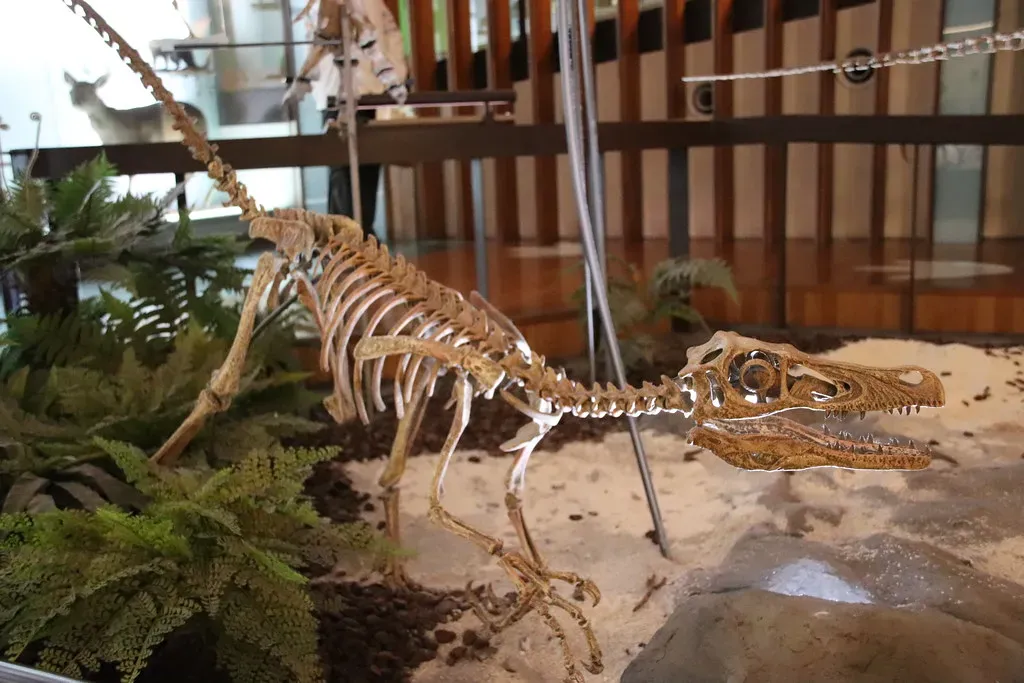
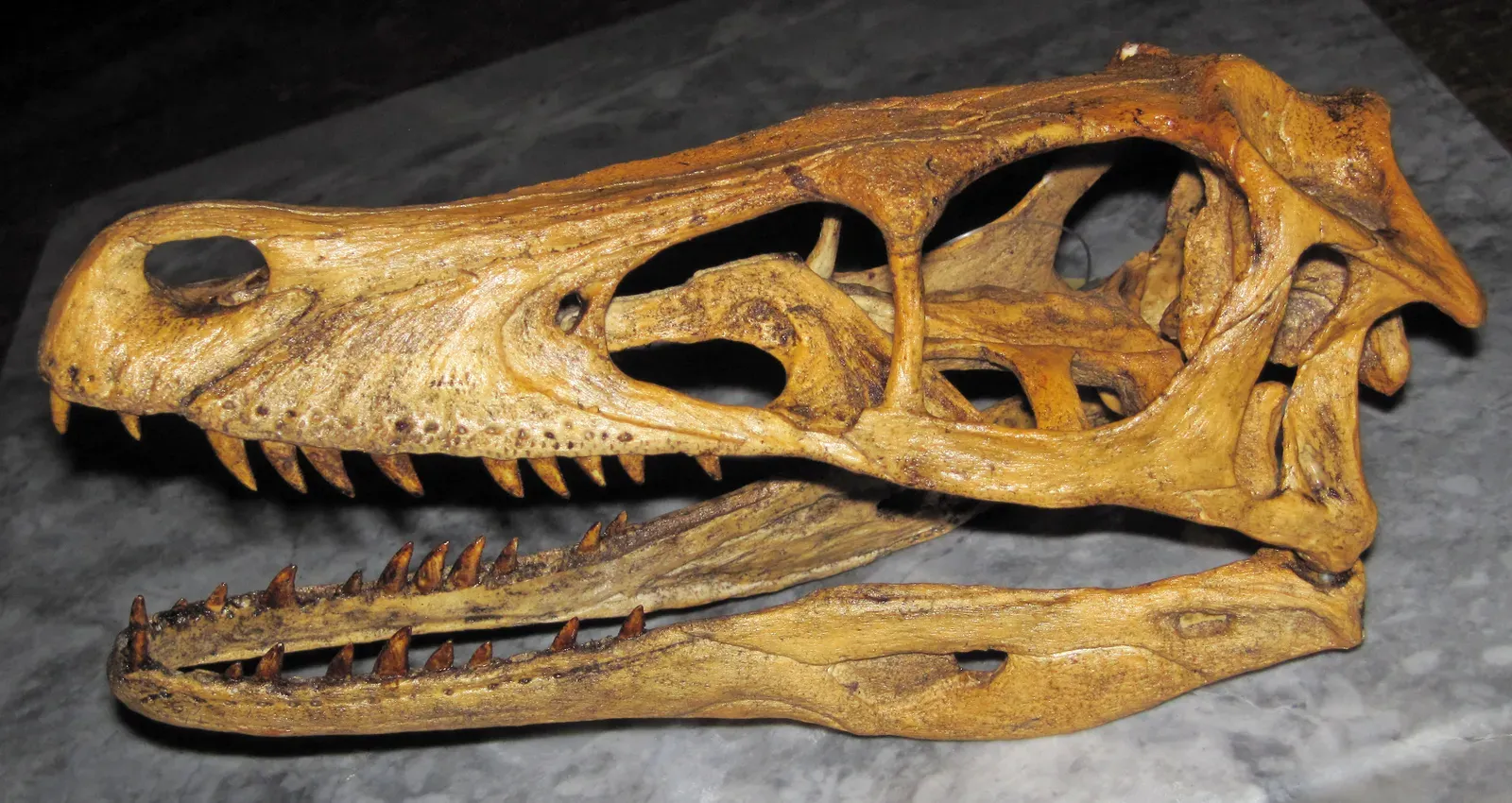
The very first Velociraptor fossil wasn’t the product of a targeted dig – it was a lucky find buried among other bones. During an American Museum of Natural History expedition to the Flaming Cliffs of the Djadochta Formation on August 11, 1923, fossil hunter Peter Kaisen discovered a crushed but complete skull, paired with one of the animal’s raptorial second-toe claws.
Few people realize the “swift thief” wasn’t even the star of that 1923 expedition – the dig was targeting other, more famous finds nearby. Osborn formally described and named the animal the following year based solely on that skull and claw. It took another 84 years before scientists confirmed the animal had feathers, which shows just how much a single crushed skull can eventually rewrite.
#9 – It Was Roughly the Size of a Large Turkey
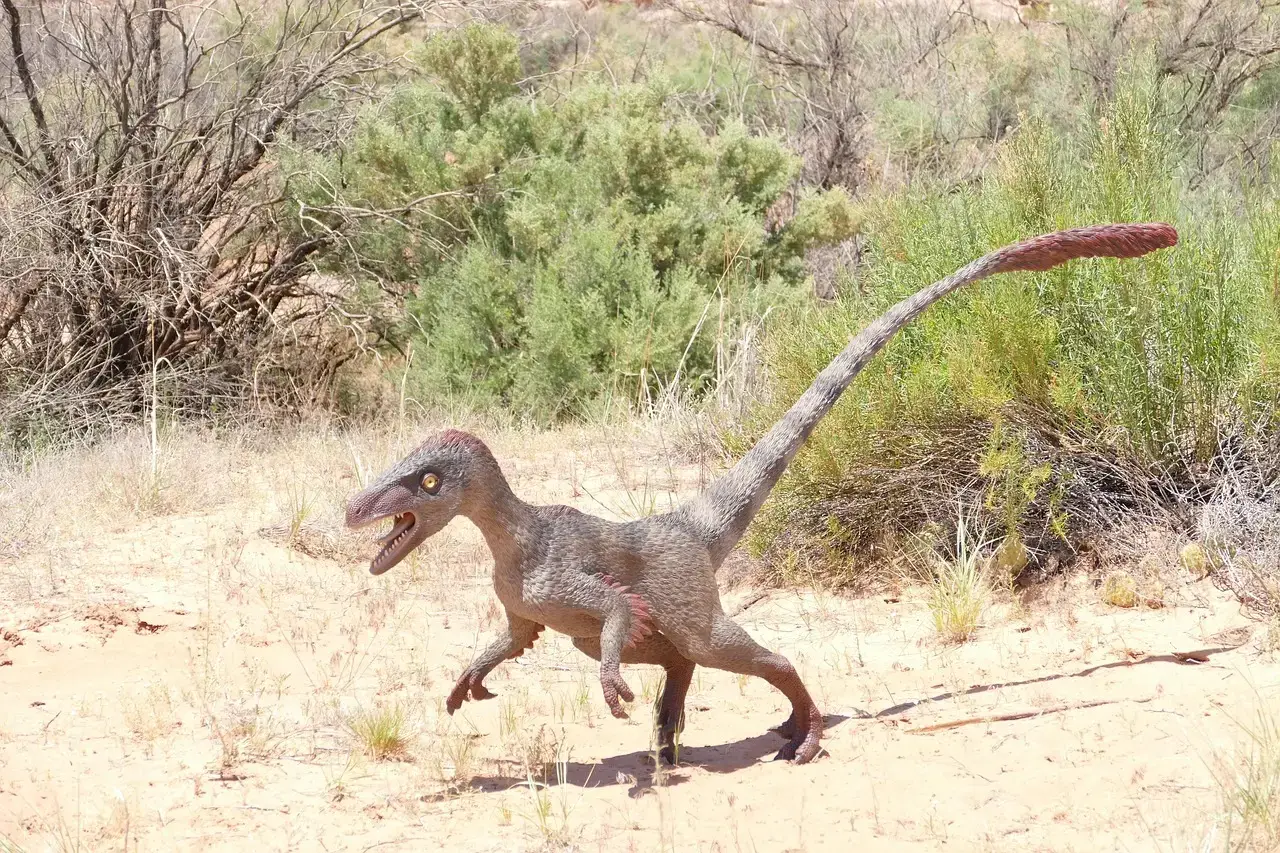
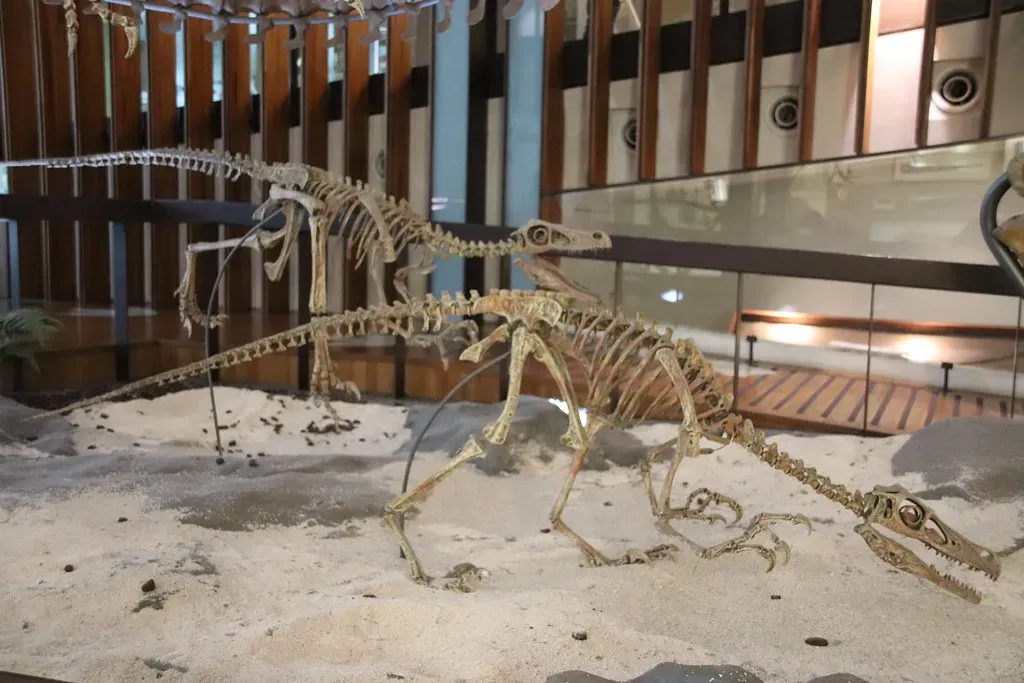
This is the single most repeated correction in dinosaur science, and it still hasn’t fully sunk in for casual fans. The real animal barely reached knee height on an adult human – nothing like its towering movie counterpart. Adults measured around 2 meters long, stood about half a meter tall at the hip, and weighed somewhere between 7 and 20 kilograms depending on the estimate.
Some estimates push the numbers slightly higher, but never anywhere near “human-sized.” A fully grown Velociraptor weighed about as much as a medium dog, not a linebacker. It could still do damage with speed and a nasty claw, but it wasn’t lunging at eye level with anyone.
Fast Facts
- Length: roughly 2 meters nose to tail, including a long stiffened tail.
- Hip height: about half a meter – knee-level on an average adult.
- Weight: 7 to 20 kilograms, depending on the estimate.
- Rough real-world comparison: a medium dog or a large turkey, not a linebacker.
#8 – It Was Covered in Feathers, Not Scales
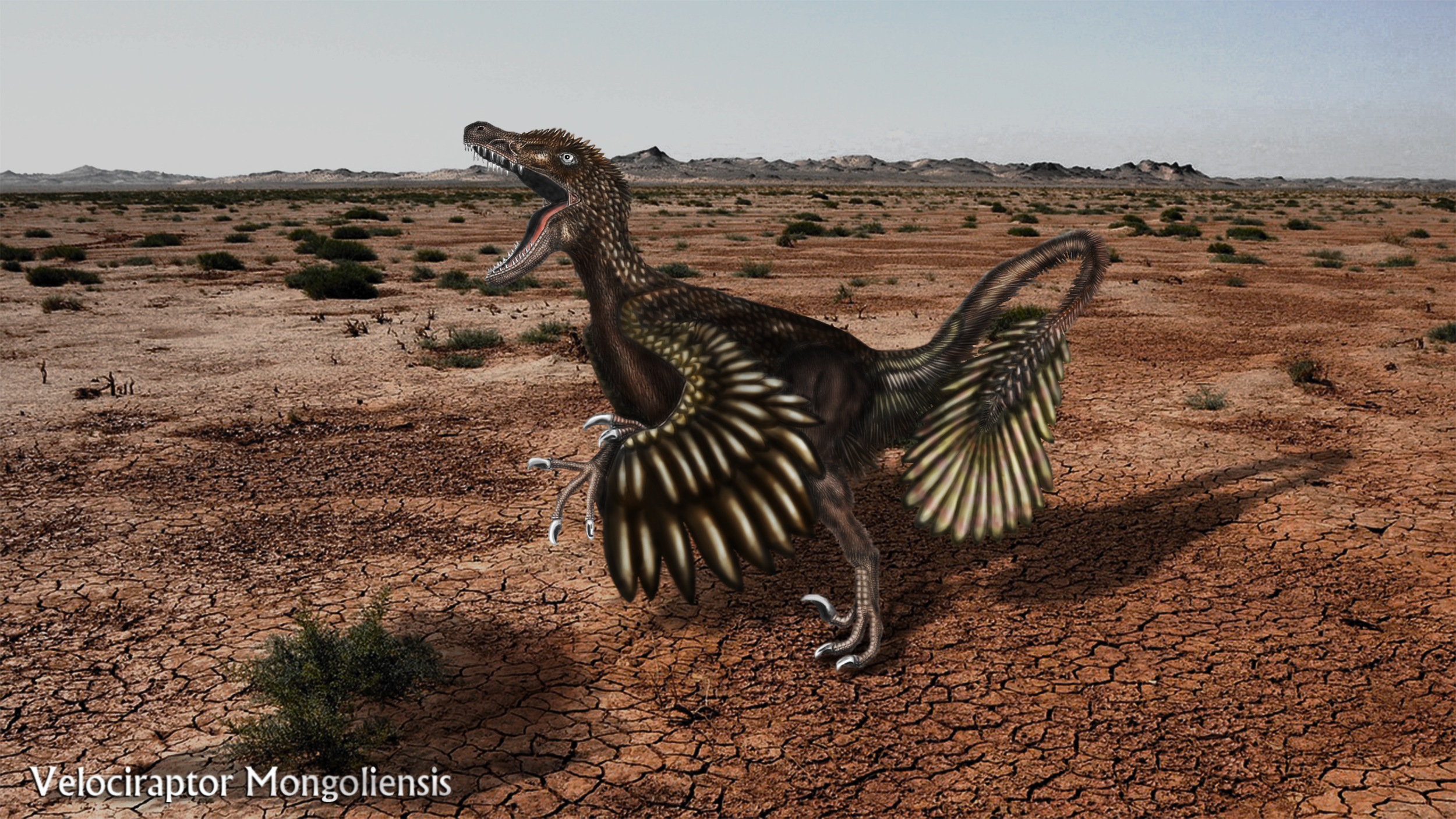
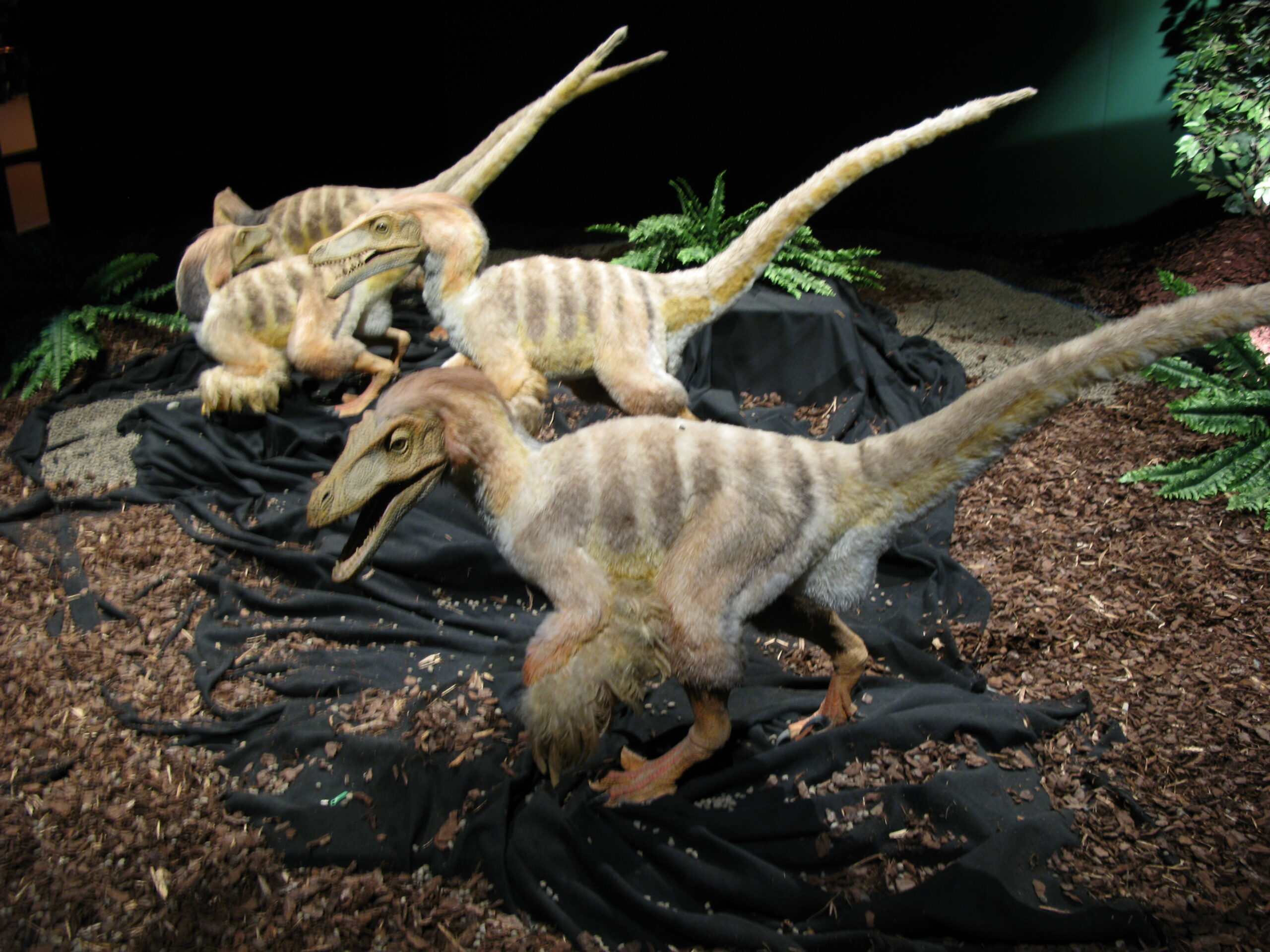
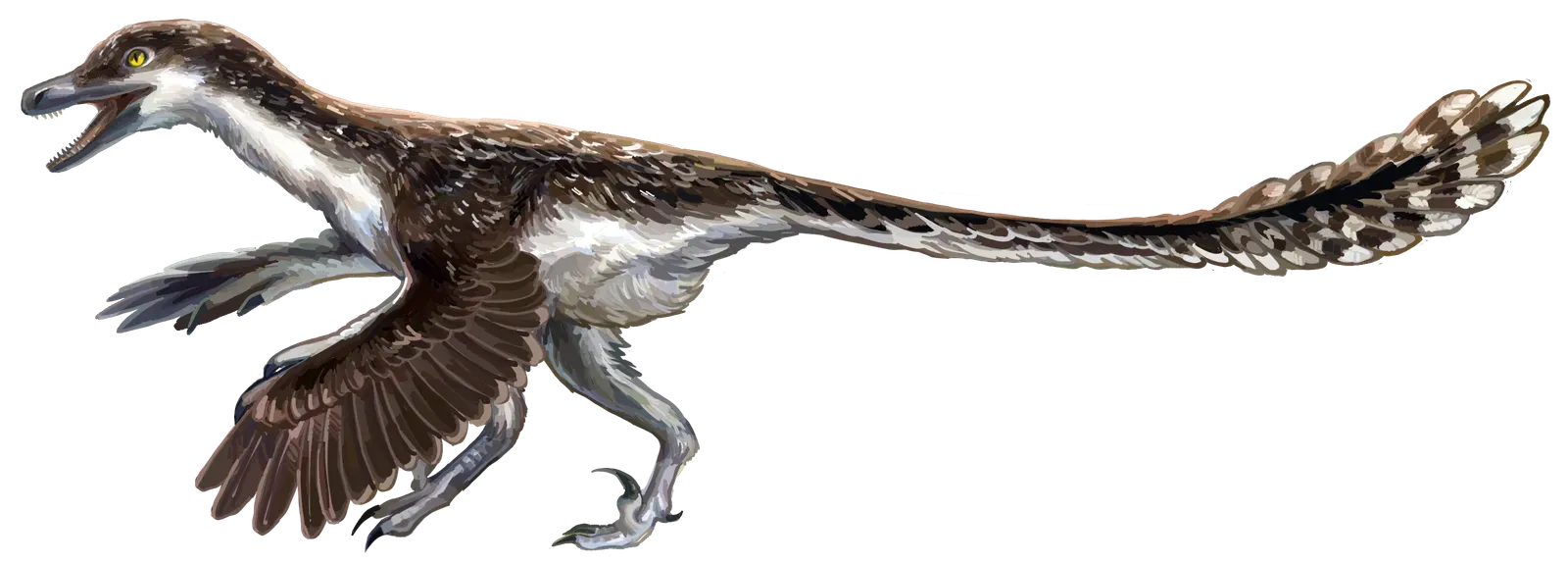
This correction genuinely shocks people who grew up on the original films, and the fossil proof is surprisingly direct. A 2007 Velociraptor specimen showed “quill knobs” on its arm bones – the same anchor points where long feathers attach in modern birds. Paleontologist Steve Brusatte has described the real Velociraptor as feathered across its entire body, with wing-like arrangements of quill feathers along the arms and hands.
That doesn’t mean it could take flight, though. Despite its wing-like arms, Velociraptor lacked the muscle and skeletal structure needed to get an animal of its size off the ground. The feathers weren’t decorative leftovers from an ancestor – they were fully functional plumage on a flightless predator. Picture a fierce, toothy, ground-bound bird of prey, and you’re much closer to the truth than any movie poster.
#7 – The Movie Version Was Basically a Different Animal
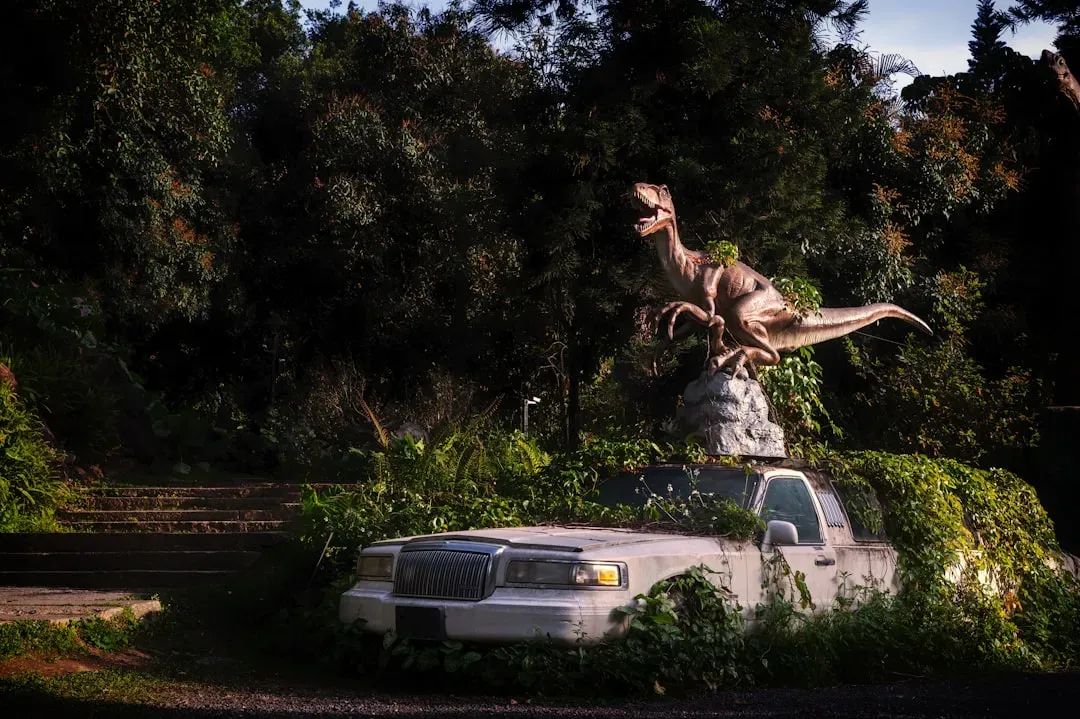
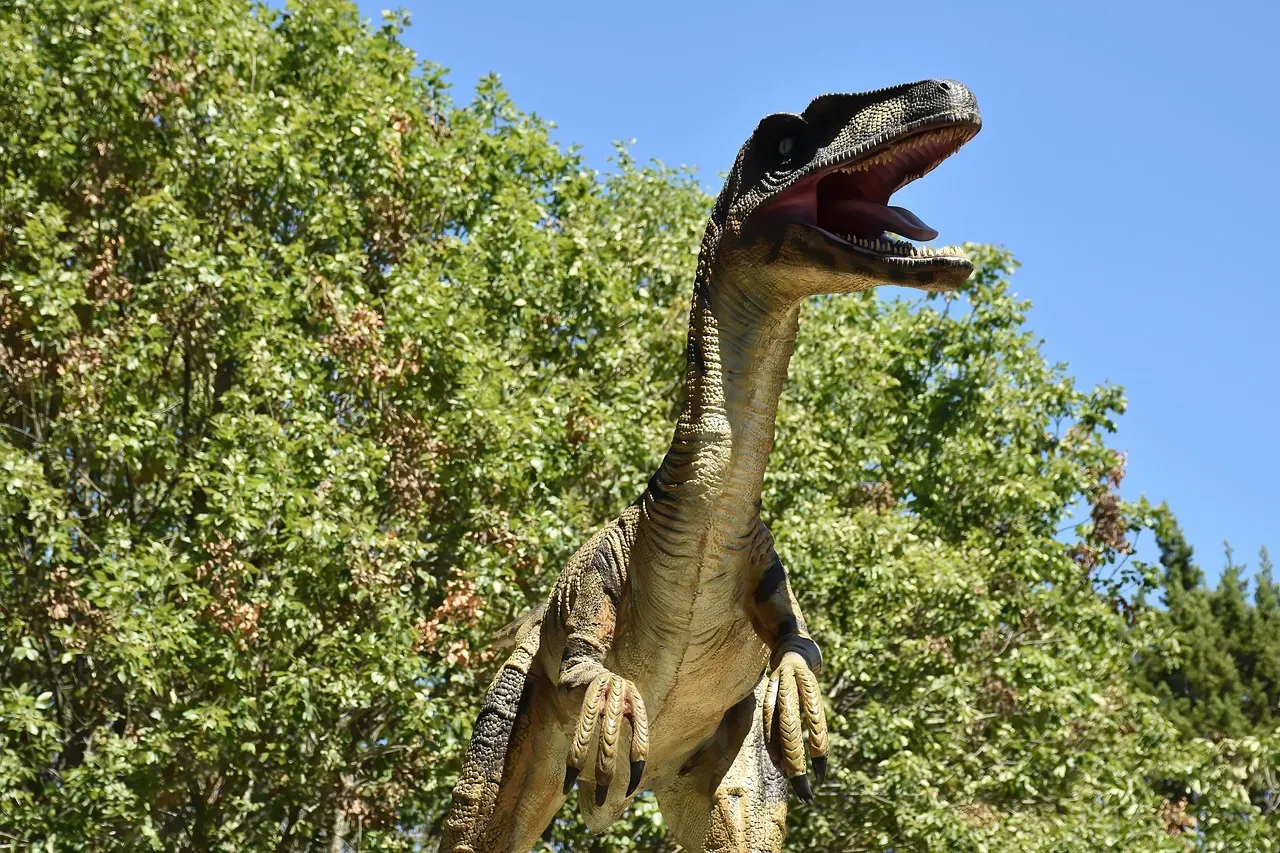
Here’s the twist that explains almost every other myth on this list: the “Velociraptor” from the films isn’t really modeled on Velociraptor at all. The filmmakers borrowed the name but the anatomy of a much larger, distantly related cousin. The movie raptors more closely resemble larger dromaeosaurs like Deinonychus or Utahraptor, with changes made for dramatic effect rather than scientific accuracy.
Even the size discrepancy traces directly back to that substitution. Michael Crichton reportedly chose the more dramatic name on purpose, even though the physical description in his novel fit a completely different dinosaur better. That single decision has confused two generations of dinosaur fans, and it’s arguably the root cause of every myth on this list.
#6 – There’s Barely Any Evidence It Hunted in Packs
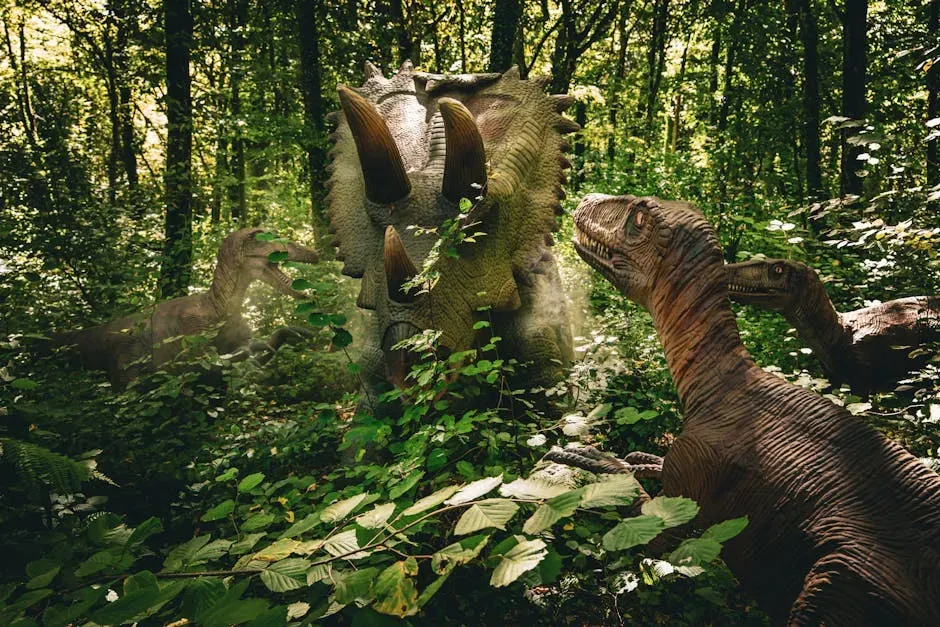
The coordinated, whistling raptor squad from the films makes for great cinema. It’s also almost entirely unsupported by fossil evidence. The pack-hunting idea actually traces back to a completely different dinosaur – the discovery of multiple Deinonychus individuals clustered around a single Tenontosaurus, a much larger herbivore.
Notice that the evidence cited isn’t even from Velociraptor itself; there is no fossil record suggesting Velociraptor hunted in groups at all. Some researchers now argue that even the Deinonychus “pack” evidence is weak, possibly reflecting scavengers gathering separately rather than coordinated hunters. If Velociraptor hunted in numbers at all, it likely wasn’t the disciplined ambush squad from the movies – it was probably a solitary, opportunistic predator most of the time.
Worth Knowing
- The pack-hunting myth actually comes from Deinonychus fossils, not Velociraptor.
- No confirmed fossil site shows multiple Velociraptor individuals hunting together.
- Even the original Deinonychus “pack” evidence is now questioned by some researchers.
- Most current thinking favors a solitary, opportunistic hunting style over coordinated squads.
#5 – That Sickle Claw Wasn’t Built for Slashing
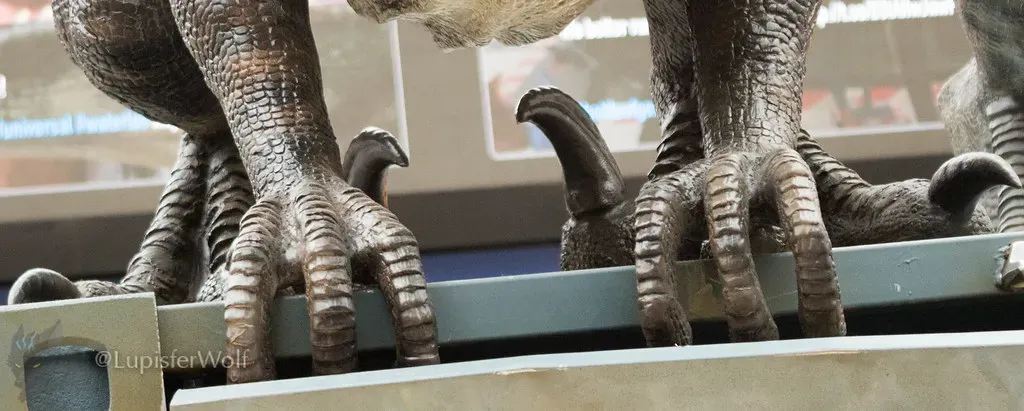
The most iconic feature of Velociraptor gets misused constantly in pop culture, and recent biomechanical studies have quietly corrected the record. Rather than a slashing weapon that disemboweled prey in one swipe, the claw likely worked more like a grappling hook – built to clutch and pin rather than carve. Ossified tendons in the tail helped the animal balance while gripping prey with one foot raised.
Some researchers now compare the claw’s likely use to how modern hawks pin down and grip smaller prey, not how a knife slashes flesh. It’s a much less cinematic image, but arguably a more terrifying one if you were the animal being pinned in place, unable to move, while the real damage came from teeth instead.
#4 – It Probably Scavenged More Than It Hunted
Nobody wants their favorite “apex predator” to be a scavenger, but the bite-mark evidence is difficult to argue with. Researchers found fossil fragments of Velociraptor teeth scattered alongside the bones of a sub-adult Protoceratops, with scratch marks indicating feeding behavior rather than a fresh kill.
The location of those bite marks is the real giveaway – they were concentrated on the jaw bones, not the meatier parts of the body. A predator chasing down live prey doesn’t gnaw desperately on jawbone scraps – it goes for the meaty parts first. This detail alone suggests Velociraptor, like most real-world predators, wasn’t picky about how its meals arrived.
#3 – Some Scientists Think It Hunted After Dark
This one sounds like pure speculation, but it’s actually based on measurable eye-socket anatomy, not guesswork. Researchers examined the bony ring inside Velociraptor’s eye socket – called a sclerotic ring – and found it closely resembled the rings seen in nocturnal modern animals. The original study behind this claim, published in Science in 2011 by researchers Schmitz and Motani, made waves across paleontology circles.
Not everyone accepts this conclusion, and newer analysis has questioned whether the eye-ring method reliably predicts activity patterns at all. Later re-evaluation found the correlation between scleral ring size and daily behavior inconclusive for Velociraptor specifically, meaning the “night hunter” label is still an open debate rather than settled fact.
#2 – The Famous “Fighting Dinosaurs” Fossil Caught It Mid-Combat
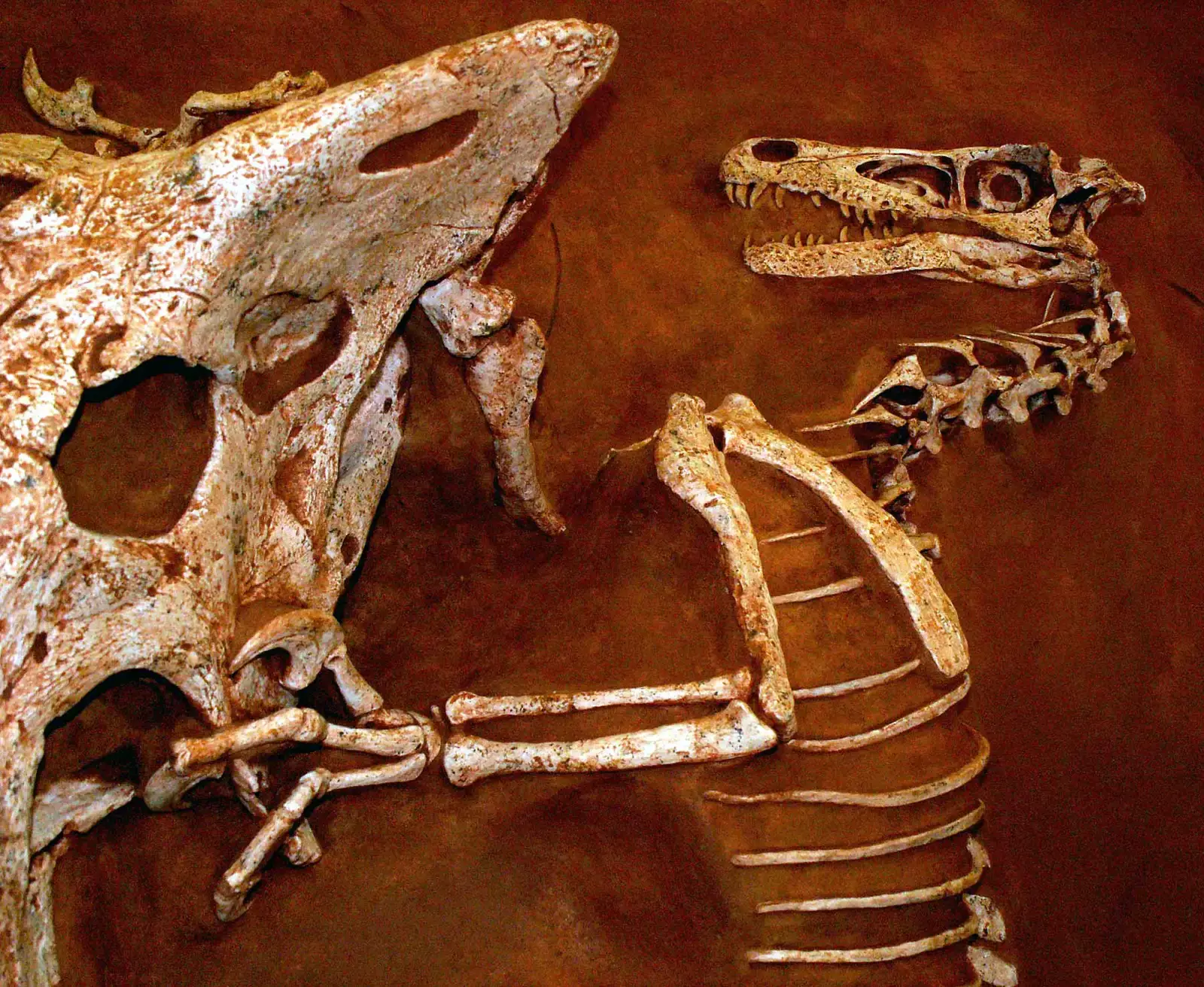
If Velociraptor has one single fossil that made it internationally famous before Hollywood ever got involved, this is it. The specimen shows an actual physical confrontation frozen in stone, not an artist’s imagination – the Velociraptor’s right hand trapped in the jaws of a Protoceratops, its left hand scratching at the herbivore’s skull, feet positioned toward the prey’s throat and belly.
Researchers who studied the surrounding sediment concluded the pair was buried alive together, likely by a collapsing sand dune or sudden sandstorm. This is genuinely one of the only fossils on Earth that captures active combat behavior between two dinosaur species in real time, rather than just their bones lying separately. Whatever provoked the fight, both animals died mid-struggle, locked together for 75 million years until a Mongolian-Polish expedition unearthed them in 1971.
#1 – Its Closest Living Relatives Are the Birds Outside Your Window

This is the fact that ties every previous myth together, and it’s the one most people struggle to accept. The connection between Velociraptor and modern birds isn’t a loose metaphor – it’s a direct evolutionary lineage supported by shared anatomy. Velociraptor belonged to the dromaeosaurid family, one of the branches of dinosaurs most closely related to today’s birds.
Even the skeletal engineering overlaps in surprisingly specific ways. It had a wishbone – a fused collarbone just like modern birds – though the shape wasn’t built to support flapping flight. A dinosaur most people picture as a reptilian monster actually shares more skeletal architecture with a pigeon than with a crocodile. That’s arguably the single biggest myth of all: Velociraptor wasn’t a lizard in a fast-forward body. It was a flightless, feathered relative of the birds now nesting in your backyard.
Why It Stands Out
- Classified within the dromaeosaurid family – one of the closest dinosaur branches to modern birds.
- Possessed a wishbone, the same fused collarbone structure found in living birds today.
- Quill knobs on the arm bones confirm real, structurally anchored feathers, not just fuzz.
- Shares more skeletal architecture with a pigeon than with any modern reptile.
The Bottom Line
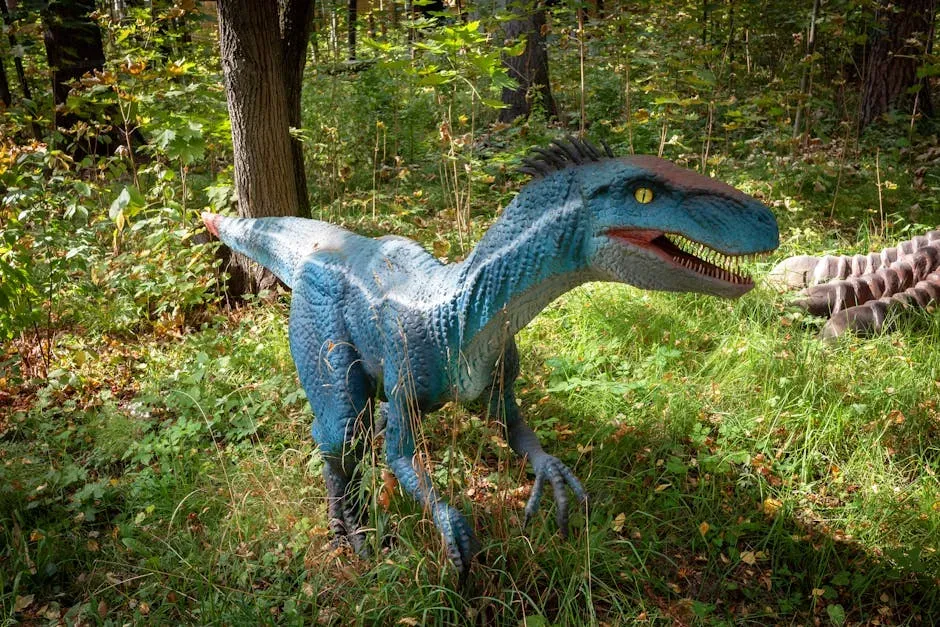
The gap between the “Velociraptor” everyone thinks they know and the one that actually existed is almost embarrassing at this point. It was turkey-sized, not human-sized, feathered instead of scaly, probably solitary instead of pack-hunting, and arguably more scavenger than apex predator. Even its claw, its name, and its home continent get misremembered constantly.
Here’s the opinion worth sitting with: the real animal is more interesting than the movie version, not less. A genuinely bird-like predator surviving in a brutal desert, gripping prey instead of slashing it, scavenging carcasses under a merciless sun – that’s a stranger and more believable story than anything a screenwriter invented. Hollywood didn’t make Velociraptor scarier. It just made it less true. Which myth on this list surprised you the most? Drop it in the comments.