
Most people assume mass extinction is something that happened to dinosaurs millions of years ago, safely tucked away in fossil records and museum dioramas. That’s not true. At least 14 species have vanished so recently that people alive today watched it happen in real time, through zoo enclosures, field notebooks, and even home video cameras.
Some of these animals died out within the last two decades. One extinction was even confirmed with actual footage of the last known individual on Earth, alone, with no mate left to answer its call. Here’s what conservation scientists and wildlife historians actually know about the animals we lost right under our noses, and why almost every single loss could have been stopped.
#1 – The Golden Toad Vanished in a Single Season
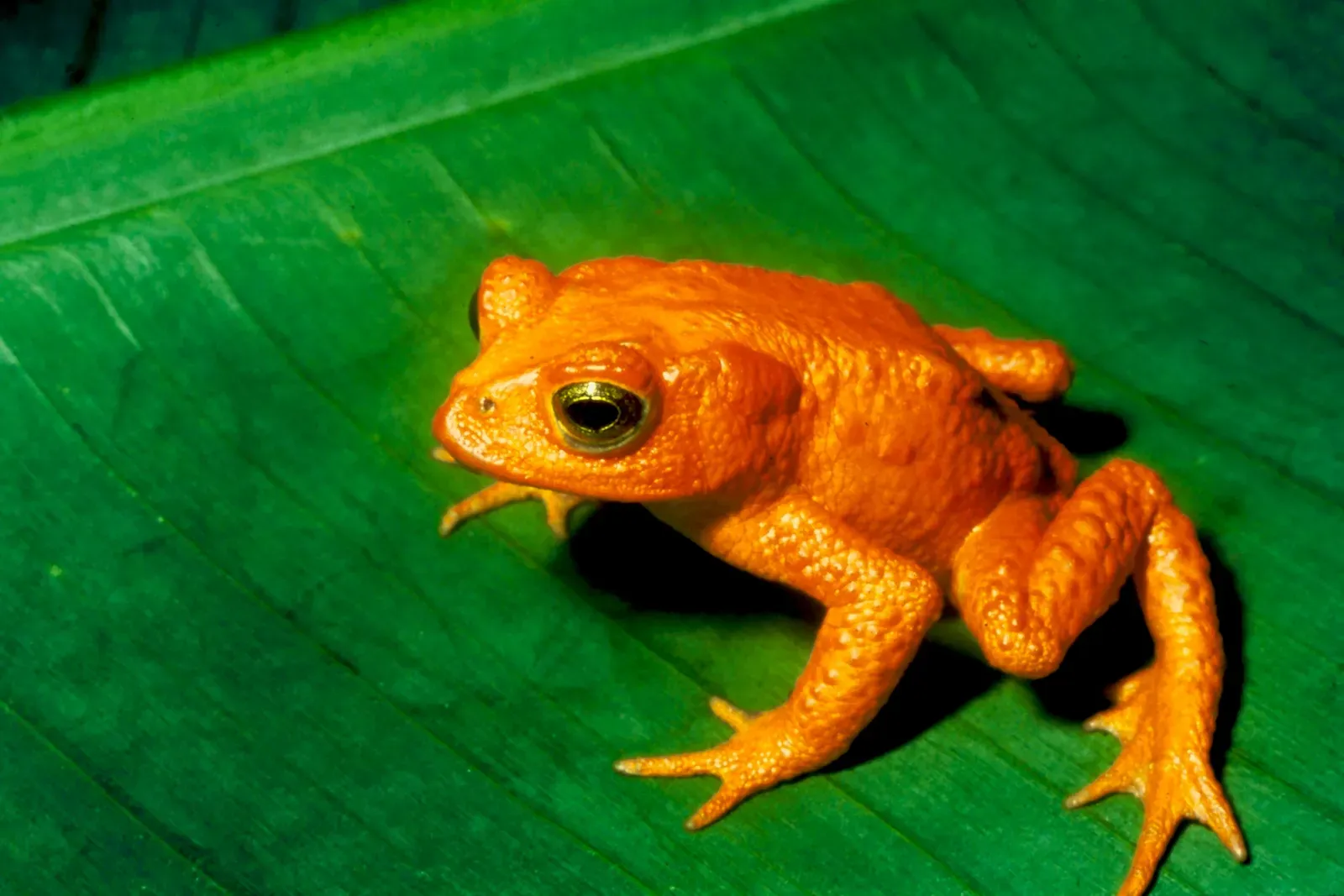
The golden toad of Costa Rica’s Monteverde cloud forest was so vividly orange that early observers assumed the photographs were retouched. This wasn’t an animal that faded away over generations. It disappeared almost overnight.
Herpetologists studying the Monteverde Cloud Forest Reserve had documented thousands of golden toads breeding in temporary pools during the 1987 rainy season. Just two years later, in 1989, researchers found exactly one. After that single sighting, the species was never confirmed again despite intensive searches in following years.
Scientists now believe a combination of a severe El Niño drought and the deadly amphibian fungus chytridiomycosis delivered a one-two punch the species couldn’t survive. The golden toad is often cited as one of the first documented casualties of modern climate-linked amphibian collapse. That’s nothing compared to what happened to a tiny Hawaiian bird that scientists tried desperately to save with a captive breeding program that came just a few years too late.
#2 – The Po’ouli Had Exactly Three Known Survivors
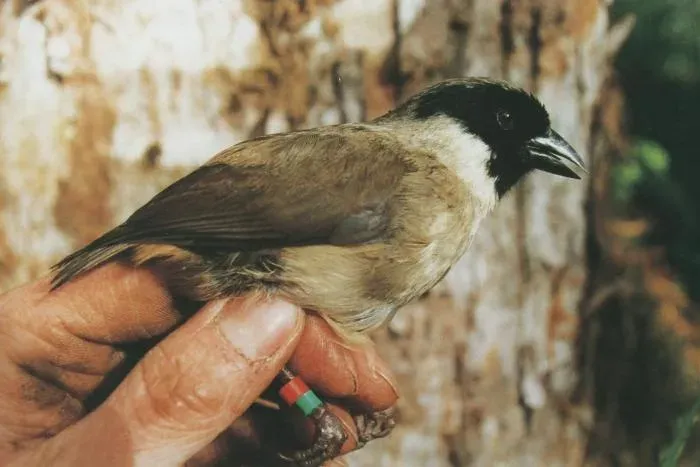
By the time scientists discovered the po’ouli, a small honeycreeper found only on the slopes of Maui’s Haleakalā volcano, in 1973, its population was already collapsing. This wasn’t a species biologists watched decline from abundance. It was already a ghost when humans first wrote it down.
By the early 2000s, exactly three known individuals remained in the wild, and none of them lived near each other. Conservationists made a last-ditch attempt in 2002, physically relocating one bird to pair it with another. The plan failed.
The last known po’ouli was captured in 2004 for an emergency captive breeding attempt and died in captivity that same year. No po’ouli has been confirmed since, making it one of the fastest bird extinctions ever documented from initial discovery to disappearance. But that’s nothing compared to what happened to a tiny rat-like mammal that earned an entirely new label in extinction history.
#3 – The Bramble Cay Melomys Was Climate Change’s First Confirmed Mammal Casualty
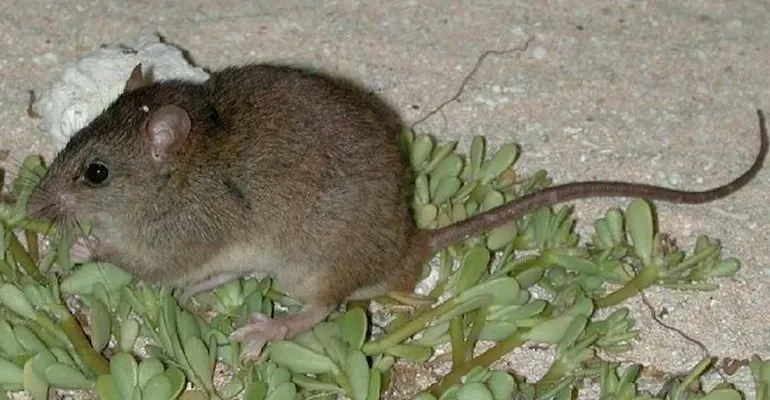
Most extinction stories involve hunting, disease, or habitat loss from development. The Bramble Cay melomys, a small rodent found only on a tiny sand cay in Australia’s Torres Strait, became something different: a case study cited by scientists as among the first mammal extinctions attributed to human-caused climate change.
The melomys lived on a low-lying island barely three meters above sea level at its highest point. Rising sea levels and increasingly frequent storm surges repeatedly flooded the tiny island, destroying the vegetation the rodents depended on for food and shelter.
Surveys conducted between 2011 and 2014 failed to find a single individual. Australian officials formally declared the species extinct, and researchers have pointed to it as a preview of what island-dwelling species worldwide may face. That’s nothing compared to a fish extinction that took scientists years to even notice.
Fast Facts
- A steady population decline was documented between 1998 and 2009
- The last confirmed sighting came from a fisherman in 2009
- Key leafy vegetation on the cay dropped by roughly 97 percent between 2004 and 2014
- Queensland declared the species likely extinct in 2016; Australia made it official nationwide in 2019
#4 – The Smooth Handfish Disappeared Without Anyone Noticing for Decades
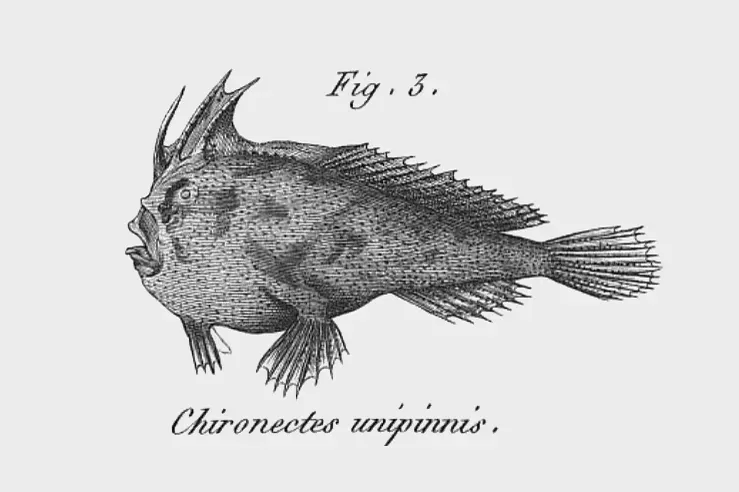
Handfish are strange, slow-moving bottom dwellers that “walk” across the seafloor using fins shaped like hands instead of swimming freely. The smooth handfish, once found off the coast of Tasmania, might be the strangest extinction story on this entire list because almost nobody was watching closely enough to catch it happening.
The species was first collected by European naturalists in the late 1700s and was considered common enough that it wasn’t a research priority for generations. Then trawling, habitat degradation, and pollution quietly wiped it out while marine biologists were focused elsewhere.
No smooth handfish had been documented since the 1800s when researchers finally raised the alarm. The species was formally declared extinct, becoming one of the first modern marine fish extinctions confirmed by conservation authorities. Most people have never even heard of a handfish, yet it may represent one of the most overlooked extinctions of the past century. That’s nothing compared to a big cat whose disappearance from an entire island nation barely made international headlines.
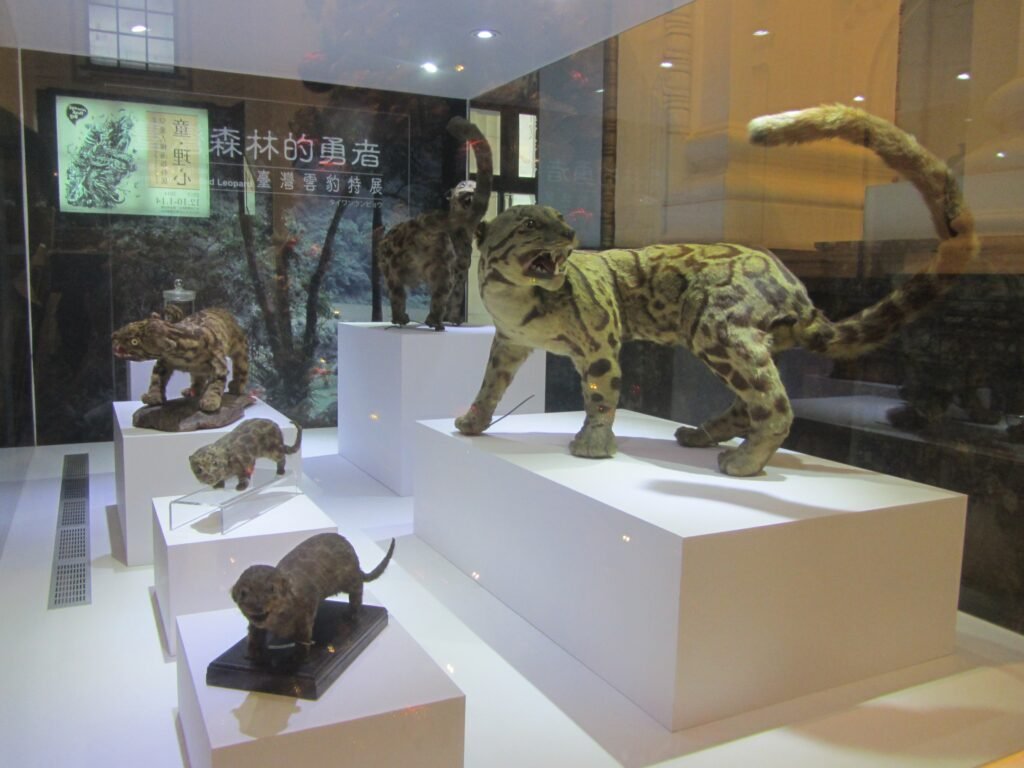
#5 – The Formosan Clouded Leopard Ruled Taiwan’s Forests Until It Didn’t
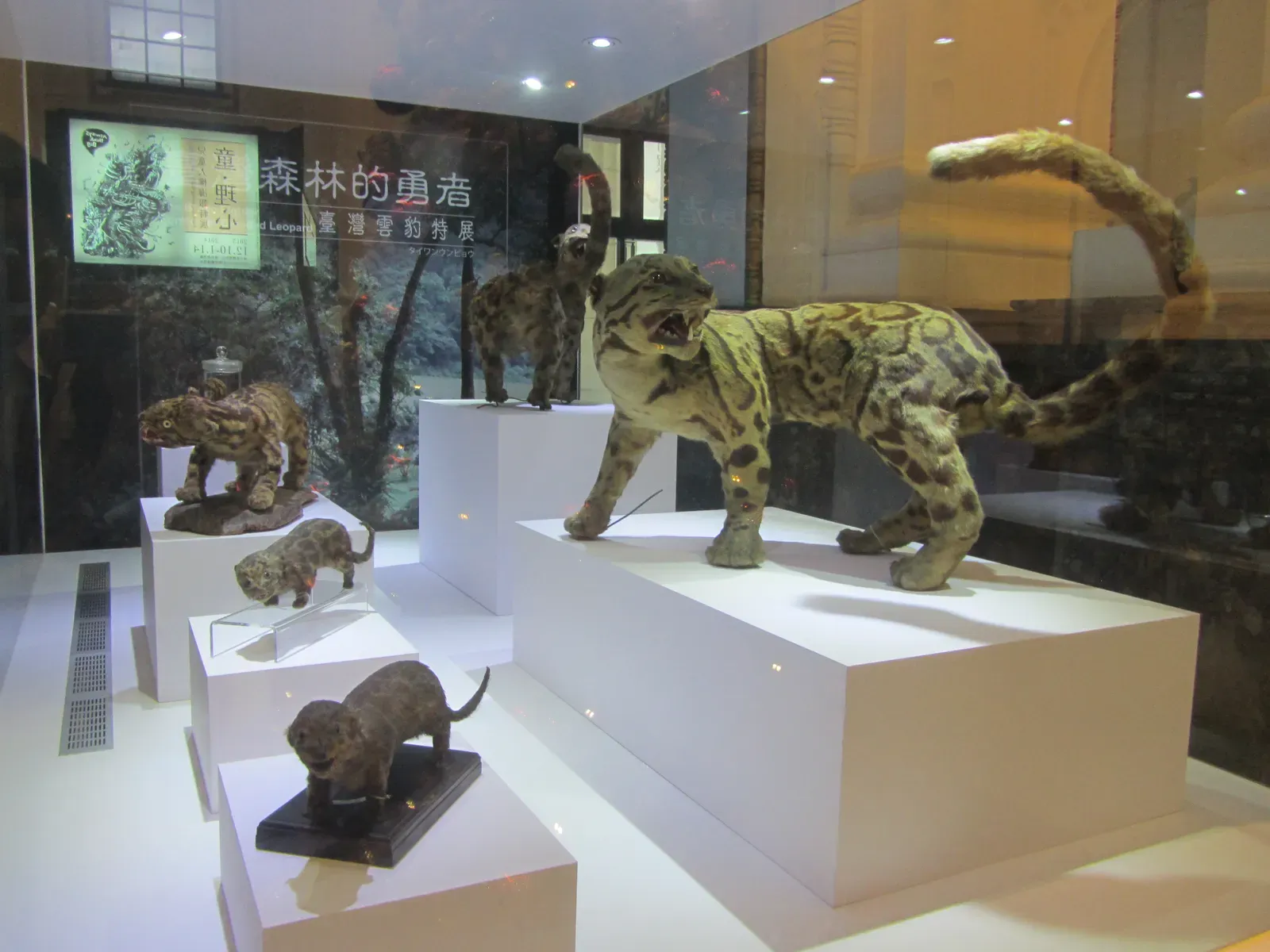
Taiwan’s indigenous communities told stories about the clouded leopard for centuries, and colonial-era hunters actively sought its distinctively patterned pelt. This wasn’t some obscure creature nobody cared about. It was a cultural icon that simply ran out of forest.
Rapid logging throughout the 20th century fragmented the leopard’s habitat into isolated pockets too small to support breeding populations. Camera trap surveys conducted across more than 13,000 trap-nights in known leopard territory over multiple years turned up nothing.
Researchers officially declared the Formosan clouded leopard extinct after exhaustive fieldwork failed to produce a single confirmed sighting in decades. The subspecies had not been reliably documented since the 1980s, meaning it likely disappeared while most of the world had no idea it was even endangered. That’s nothing compared to a tiny bat whose final months were tracked almost hour by hour.
#6 – The Christmas Island Pipistrelle’s Death Was Basically Livestreamed
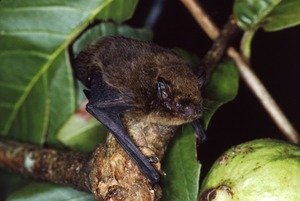
Few extinctions have been documented in as much painful, real-time detail as the Christmas Island pipistrelle, a small insect-eating bat native to the Australian territory of Christmas Island.
Researchers watched the bat’s population crash through the 2000s and repeatedly petitioned the Australian government for emergency captive breeding funding to save the last individuals. That funding was delayed for years while the population kept shrinking.
By 2009, acoustic monitoring equipment could detect only a single surviving bat, calling alone in the forest. The last individual bat was detected in August 2009 with no further sightings despite intensive efforts to locate it. Scientists have since called the pipistrelle’s loss one of Australia’s most preventable extinctions, since the decline was tracked for years before anyone approved funds to intervene. That’s nothing compared to a Hawaiian songbird whose final call was captured on tape before it went silent forever.
Worth Knowing
- 1984: the bat was still common across the island’s forests
- 1994 to 2006: the population crashed by more than 80 percent
- June 2009: researchers estimated as few as 20 bats remained
- August 26, 2009: the last echolocation call was ever recorded
- 2021: the species was formally added to Australia’s official extinct species list
#7 – The Kauai ‘O’o’s Extinction Ended With a Recorded Duet
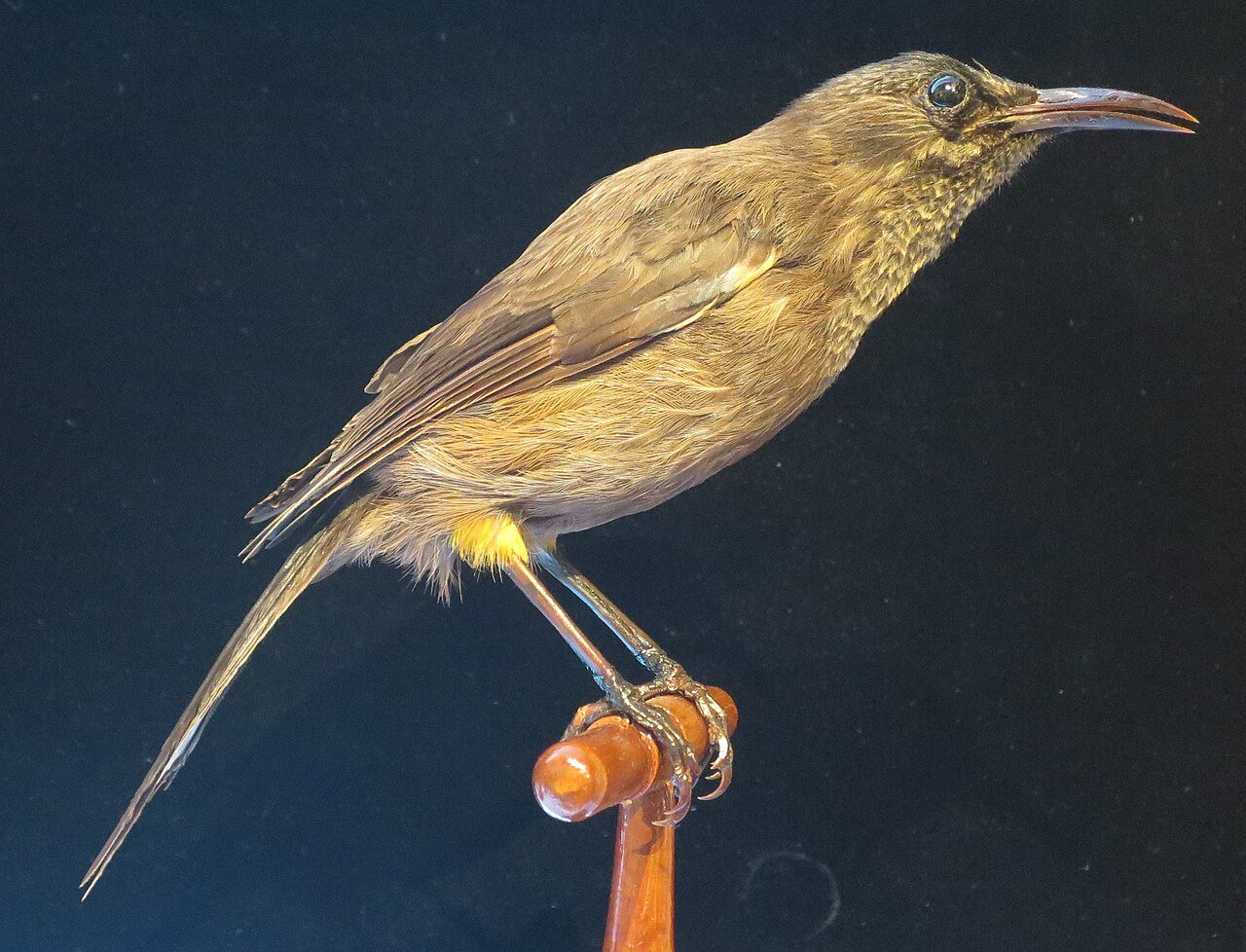
Few extinction stories carry the emotional weight of the Kaua’i ‘ō’ō, a Hawaiian forest bird whose species-defining behavior was singing duets with a mate. As the population collapsed through the 1970s and 1980s, ornithologists documented something heartbreaking.
The last known individual, a male, was recorded in the wild calling out the species’ traditional duet song, waiting for a mate that would never answer. No female had been seen in years by that point.
Researchers continued monitoring the bird’s known territory into the late 1980s but never located another ‘ō’ō again. The species was eventually declared extinct, with introduced diseases carried by mosquitoes and habitat destruction from invasive species both playing major roles. The recording of that final, unanswered call remains one of the most widely referenced audio artifacts in modern extinction science. That’s nothing compared to a seal species that survived Caribbean pirates for centuries before humans finally finished the job.
#8 – The Caribbean Monk Seal Was Hunted Since Columbus’s Voyages
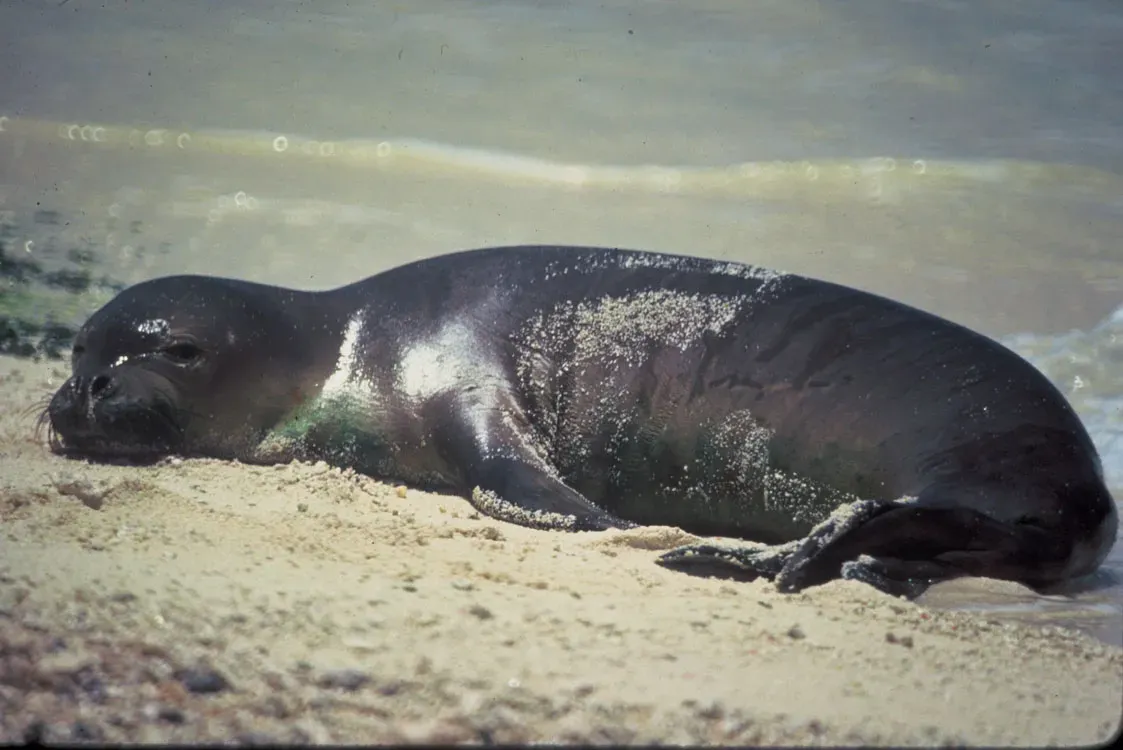
The Caribbean monk seal has the dubious distinction of being tracked by written human records for over 500 years before its extinction was made official. This tragedy can be traced all the way back to 1494, when Christopher Columbus sailed the Caribbean and recorded encounters with the animals, which sailors quickly began hunting for their oil-rich blubber.
The seals had almost no natural fear of humans, resting openly on beaches where they hauled out to breed. That trusting behavior made them catastrophically easy targets for centuries of oil hunters, fishermen, and later, collectors for zoos and aquariums.
The last confirmed sighting of the seal was in 1952 in the Caribbean Sea at Seranilla Bank, between Jamaica and the Yucatan Peninsula. After decades of fruitless searching, in 2008 the US National Marine Fisheries Service, after a thorough study and review, concluded that the species is definitely extinct. It remains the only seal species ever confirmed to have gone extinct specifically because of human hunting. That’s nothing compared to a mountain goat that scientists actually managed to bring back to life for about ten minutes.
#9 – The Pyrenean Ibex Was Cloned Back From Extinction, Briefly
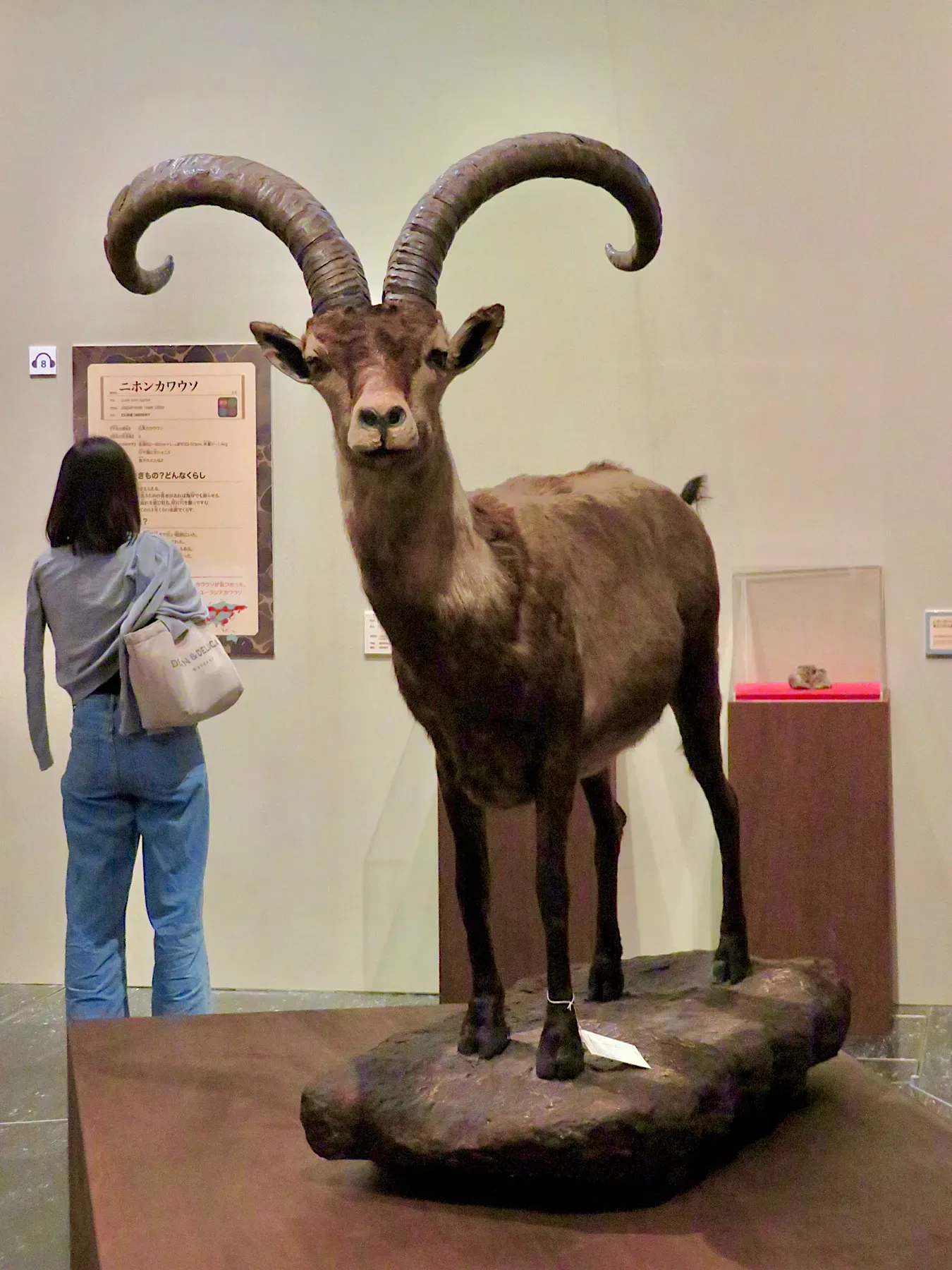
The Pyrenean ibex, also called the bucardo, holds one of the strangest records in extinction history: it’s the only species ever declared extinct twice. The first ending came in the year 2000, when the very last wild bucardo, a female named Celia, was killed instantly by a falling tree.
Before she died, researchers had quietly preserved tissue samples from Celia, betting on a cloning technology that had never been proven at this scale. It seemed like a long shot buried in a lab freezer, not a real second chance.
In 2003, that gamble paid off just long enough to matter. Scientists successfully cloned Celia, producing a baby ibex that took its first breaths and lived only a few minutes before dying from a lung defect. That short-lived clone remains one of the most cited case studies in de-extinction research today, proof that bringing a species back is a far messier miracle than science fiction makes it look. That’s nothing compared to a rhino subspecies whose disappearance ended a bloodline stretching back millions of years.
#10 – The Western Black Rhino’s Horn Was Its Death Sentence
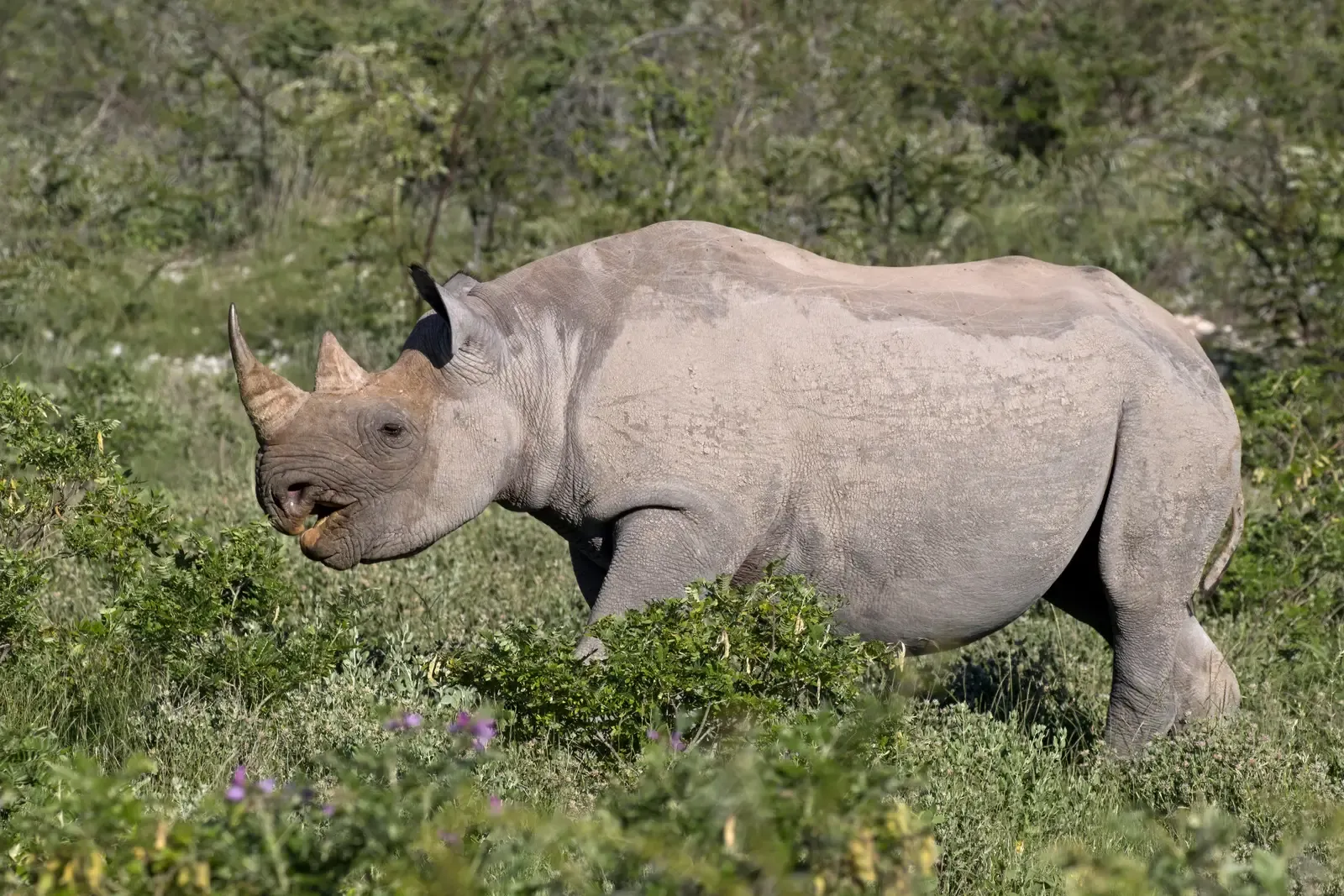
The western black rhinoceros once ranged across a wide swath of central and western Africa, and it survived ice ages, droughts, and predators that wiped out countless other megafauna. What it couldn’t survive was the modern market for rhino horn.
It was already the rarest of the four black rhino subspecies by the time conservationists started sounding alarms in the late 20th century. Poaching for horn, driven by demand in traditional medicine markets and status symbol trades, decimated the last remaining populations faster than any conservation program could respond.
The International Union for Conservation of Nature added the subspecies to its critically endangered list in 2008, hoping the label might trigger emergency protection. It didn’t work. By 2011, the IUCN made it official: the western black rhino was extinct. Fewer than ten generations of humans separate today’s readers from the last living western black rhino. That’s nothing compared to a macaw whose extinction was overshadowed by a Hollywood movie about the very same bird.
#11 – Spix’s Macaw Went Extinct in the Wild the Same Year Its Movie Franchise Was Conceived
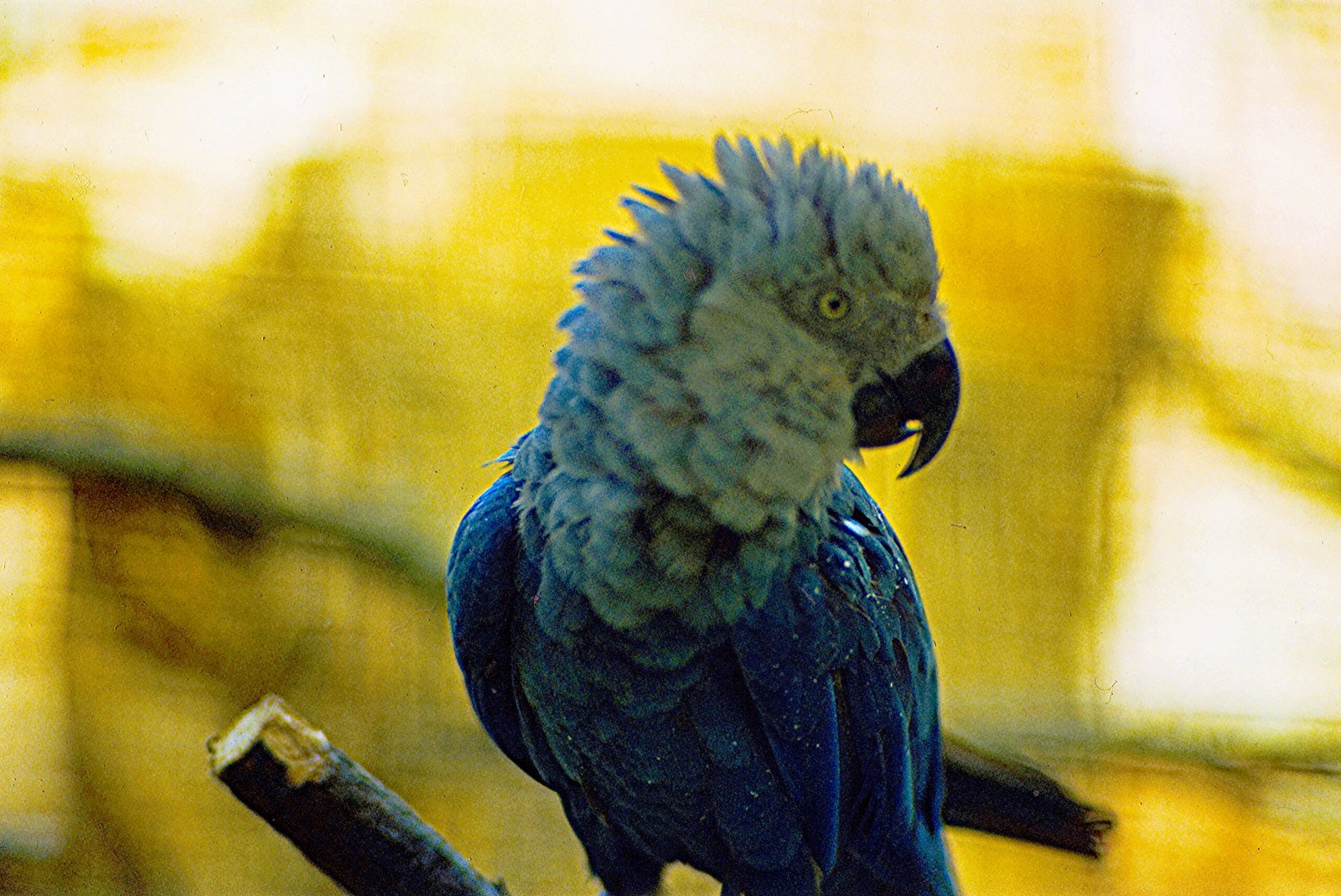
Few animals have as strange a cultural footprint as the Spix’s macaw, a brilliant blue Brazilian parrot that most people recognize from an animated film without realizing the bird itself had already vanished from the wild.
Famously known as the inspiration for the animated movie Rio, the Spix’s Macaw was declared extinct in the wild in 2000. Native to Brazil, its vibrant blue feathers and captivating presence couldn’t save it from deforestation and the illegal pet trade.
The species’ downfall wasn’t subtle. Illegal collectors paid enormous sums for the birds on the black market, while the gallery forest habitat it depended on in northeastern Brazil was cleared for cattle grazing. Conservation efforts continue in captivity, with hopes of reintroducing the bird to its natural habitat, and small numbers have since been released back into protected areas. Most viewers of the film had no idea the wild version of that bird was already gone by the time cameras started rolling. That’s nothing compared to what happened in China’s largest river, where an entire family of animals disappeared from the planet.
#12 – The Baiji Was the First Dolphin Family Wiped Off the Planet by Humans
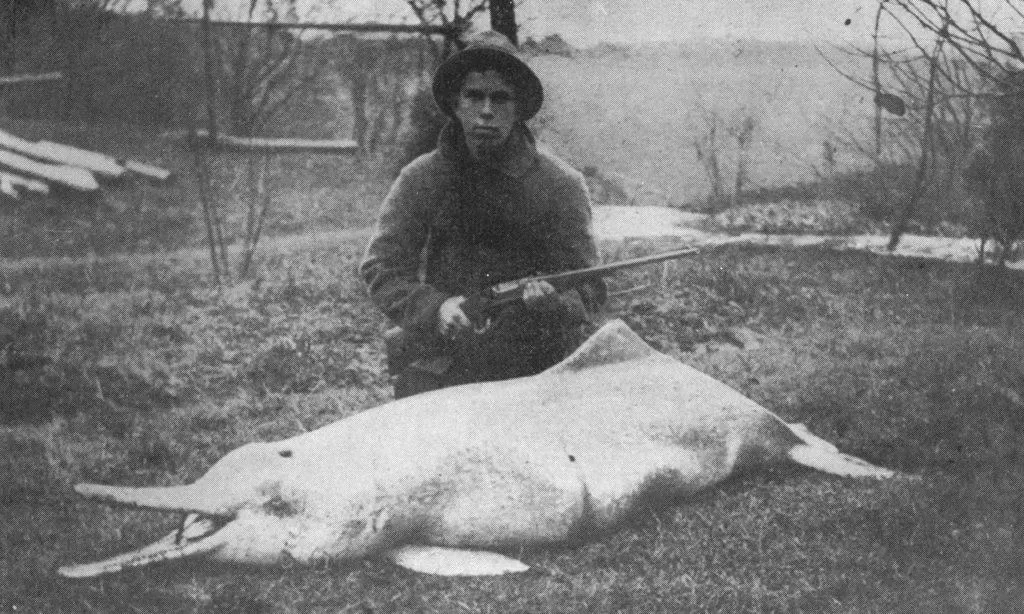
For 20 million years, the baiji, also known as the Yangtze River dolphin, navigated the murky waters of China’s longest river using sonar so refined it inspired decades of scientific study. It took less than 50 years of human industry to erase all of that evolutionary history.
Industrial development turned the Yangtze into one of the busiest waterways on Earth. The dolphin’s demise is blamed on overfishing, entanglement in commercial fishing nets, ship strikes, water pollution, and the disruptive effects of building the Three Gorges Dam.
In 2006, a six-week survey using both visual spotting and underwater acoustic monitoring combed the dolphin’s entire historical range along the main Yangtze channel. Researchers found no evidence the species survived. It marked not just a species loss but the first documented global extinction of a large vertebrate in over 50 years, and the disappearance of an entire mammal family in one stroke. This wasn’t just a species loss. An entire branch of the mammal family tree went dark. That’s nothing compared to the marsupial predator whose extinction is now tangled up in one of the most debated cold cases in zoology.
#13 – The Thylacine Died 59 Days After Finally Getting Legal Protection
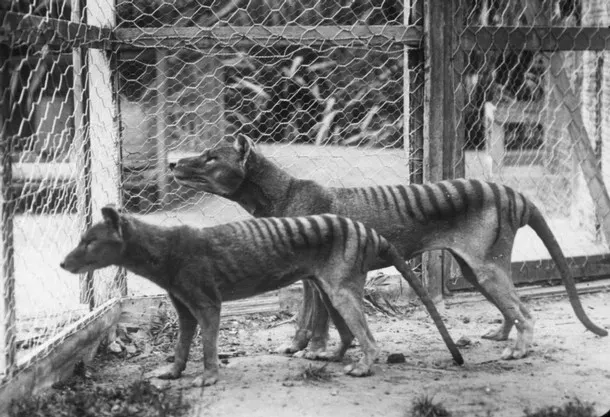
The thylacine, better known as the Tasmanian tiger, is arguably the most photographed and filmed extinct animal in history, which makes its ending feel even more infuriating. Government policy actively hunted the species toward oblivion for a century before anyone tried to save it.
It is estimated there were about 5,000 thylacines in Tasmania at the time of European settlement. However, trapping and hunting, combined with factors such as habitat destruction and introduced disease, led to the rapid extinction of the species. A government-imposed bounty was placed on the thylacine, fetching £1 per animal.
By the time officials realized their mistake, it was already too late. The species was granted protected status just 59 days before the death of the last known thylacine, which died in Hobart’s Beaumaris Zoo, possibly from exposure and neglect, on 7 September 1936. Adding a strange twist, recent research revealed a female Tasmanian tiger that died in 1936, not a male named Benjamin, was actually the last surviving member of this extinct species. The female’s remains had been hidden in museum storage. The real last thylacine sat undiscovered in a museum drawer for nearly ninety years. But even this strange saga is nothing compared to the extinction that started it all: a bird so numerous it once darkened the sky for days.
At a Glance
- 1888: Tasmania set a bounty of £1 per adult thylacine and 10 shillings per pup
- 1888-1909: more than 2,200 bounties were paid out before the scheme ended
- 1936: legal protection finally arrived, just 59 days before the last known thylacine died
- 2014-2020: a survey spanning over 315,000 camera-nights across Tasmania turned up zero evidence of survivors
#14 – Billions of Passenger Pigeons Became Zero in a Single Human Lifetime
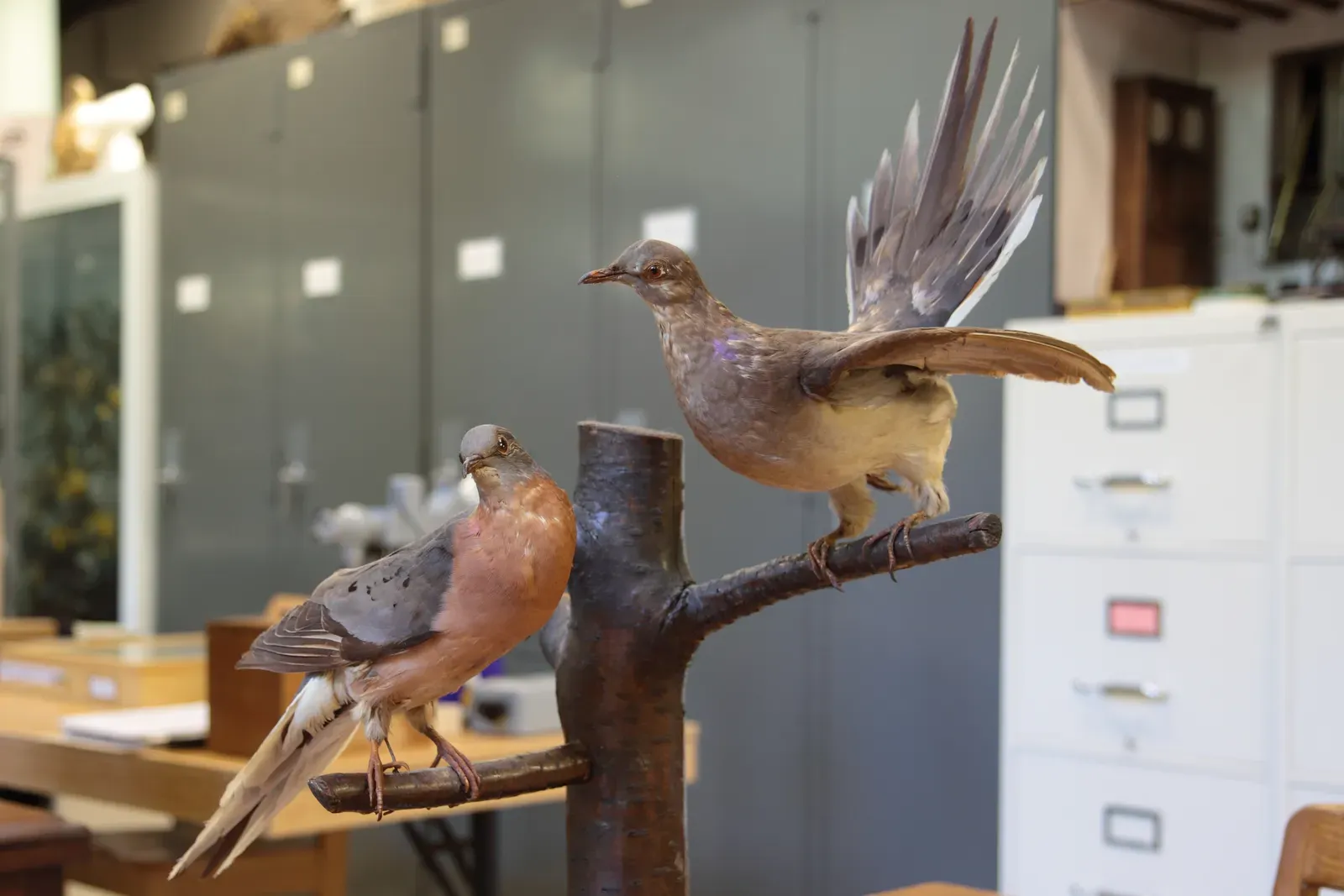
No extinction on this list better captures how quickly abundance can collapse into nothing. The passenger pigeon may have been the most numerous bird species ever to exist, with historical flocks estimated in the billions, dense enough to blot out the sun for hours as they passed overhead.
One single nesting colony in Wisconsin covered 850 square miles of sandy oak barrens. Naturalist A.W. Schorger later estimated it held roughly 136 million breeding adults, in one colony, in one season. Then the collapse began. By the mid-1890s, wild flock sizes had dropped to dozens of birds instead of hundreds of millions.
Commercial hunters used shockingly brutal methods to speed the collapse along. They shot the pigeons and trapped them with nets, torched their roosts, and asphyxiated them with burning sulfur. They attacked flocks with rakes, pitchforks, and thrown potatoes, and poisoned them with whiskey-soaked corn, anything that turned a living bird into a nickel at market.
The last known wild pigeon was killed in Ohio in 1900. After that, a single captive flock survived at the Cincinnati Zoo. Breeding attempts failed one after another, and by 1910, a lone female named Martha was all that remained. On September 1, 1914, Martha died at the Cincinnati Zoo & Botanical Garden, the last known member of her species.
There will always be pigeons in books and in museums, but these are effigies and images, dead to all hardships and to all delights.
Aldo Leopold
A species that once numbered in the billions was reduced to a single caged bird whose death was witnessed by keepers who could do nothing to stop it. Her mounted body still sits on display at the Smithsonian today, a permanent reminder of how fast “too many to count” can become “none left at all.”
The Bottom Line
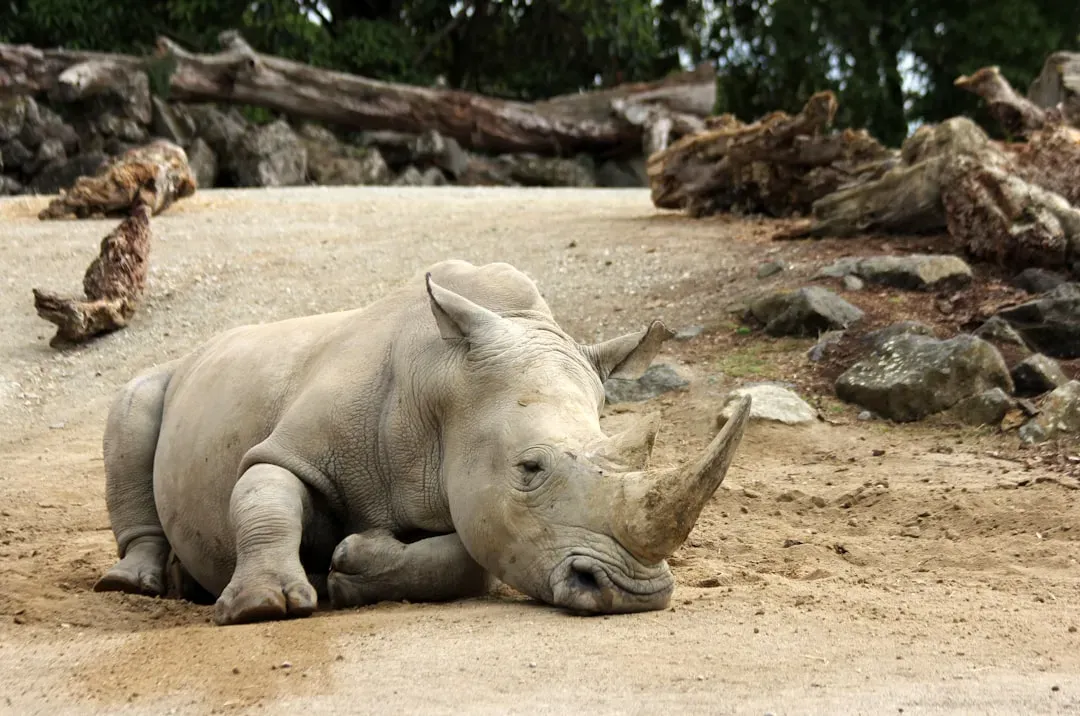
These 14 extinctions share an uncomfortable pattern: nearly every single one was preventable, and nearly every single one was recognized too late by the people with the power to act. The passenger pigeon went from billions to zero within a single human lifetime, and the thylacine got legal protection a mere 59 days before its last known member died. That’s not bad luck. That’s bureaucratic failure, plain and simple.
The most controversial opinion here is that modern conservation still hasn’t learned the lesson: species like the vaquita and the northern white rhino are following the exact same script right now, and most of us won’t notice until it’s too late, again. Which of these extinctions surprised you the most? Did we miss one that still haunts you? Drop it in the comments.