
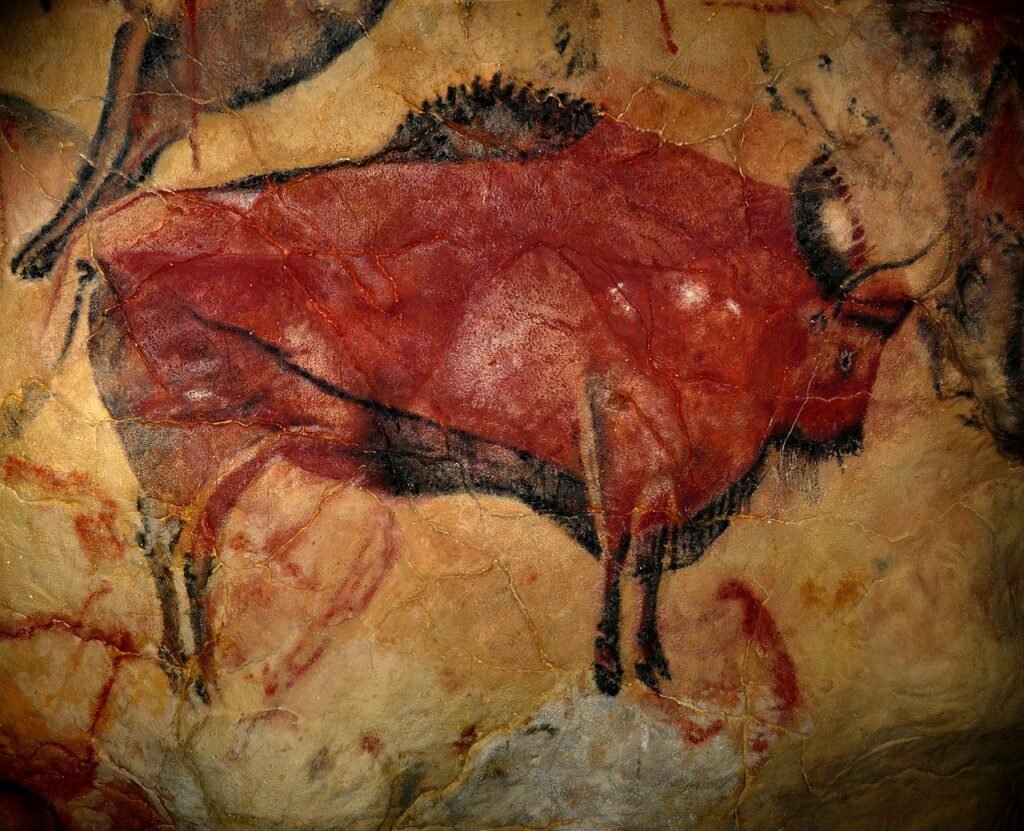
Most people assume prehistoric art is just crude stick figures and blobby bison, scratched out by people who barely understood the animals around them. That assumption is embarrassingly wrong. Cave walls across Europe, Asia, Africa, and the Americas quietly preserve portraits of creatures that were already circling extinction – or gone completely – by the time later generations of artists picked up their tools.
Some of these images predate written language by tens of thousands of years, yet the anatomical details are so precise that modern paleontologists use them to double-check fossil reconstructions. This isn’t a tour of the famous bison and horses you’ve seen in textbooks. It’s a countdown of paintings that capture animals whose bodies, behaviors, and even genetics vanished before recorded history began – and by the time you reach #1, you’ll understand why a few archaeologists genuinely dread talking about it.
#14 – The Woolly Mammoths of Rouffignac, France
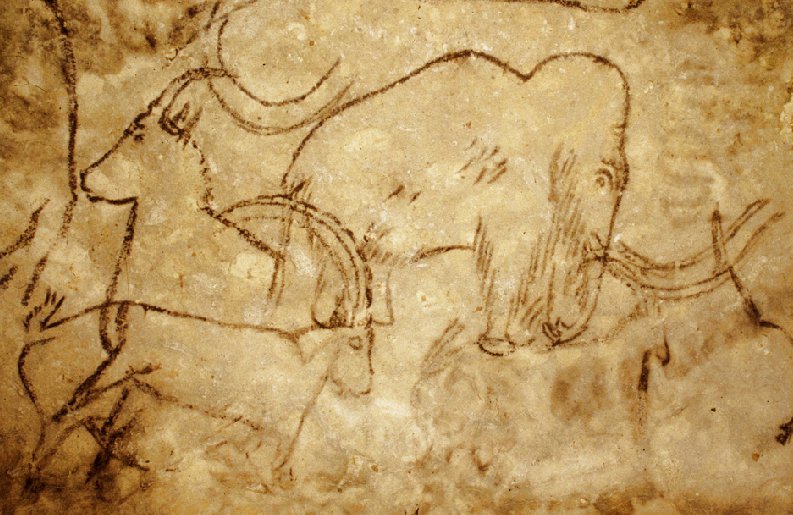
These aren’t cartoon mammoths; they’re anatomical dossiers carved in stone. Inside Rouffignac Cave in southwestern France, prehistoric artists left more than 150 images of woolly mammoths, making them one of the most frequently depicted animals anywhere in Ice Age art.
The engravings and black-line drawings show domed heads, sloping backs, trunk curves, and even the exact angle of the tusks. What’s wild is how closely Ice Age people captured details we only confirmed centuries later from frozen carcasses pulled out of Siberian permafrost – the bulky shoulder hump, the heavy fur line across the flank, the sag of the belly.
- Many panels show mammoths in groups, suggesting social herds.
- Some tusks are exaggerated, possibly to emphasize power or danger.
By the time mainland mammoths finally disappeared for good, these artists had already been dead for thousands of years. Their art kept the species strangely, stubbornly alive.
#13 – The Giant Woolly Rhinoceros in Chauvet Cave
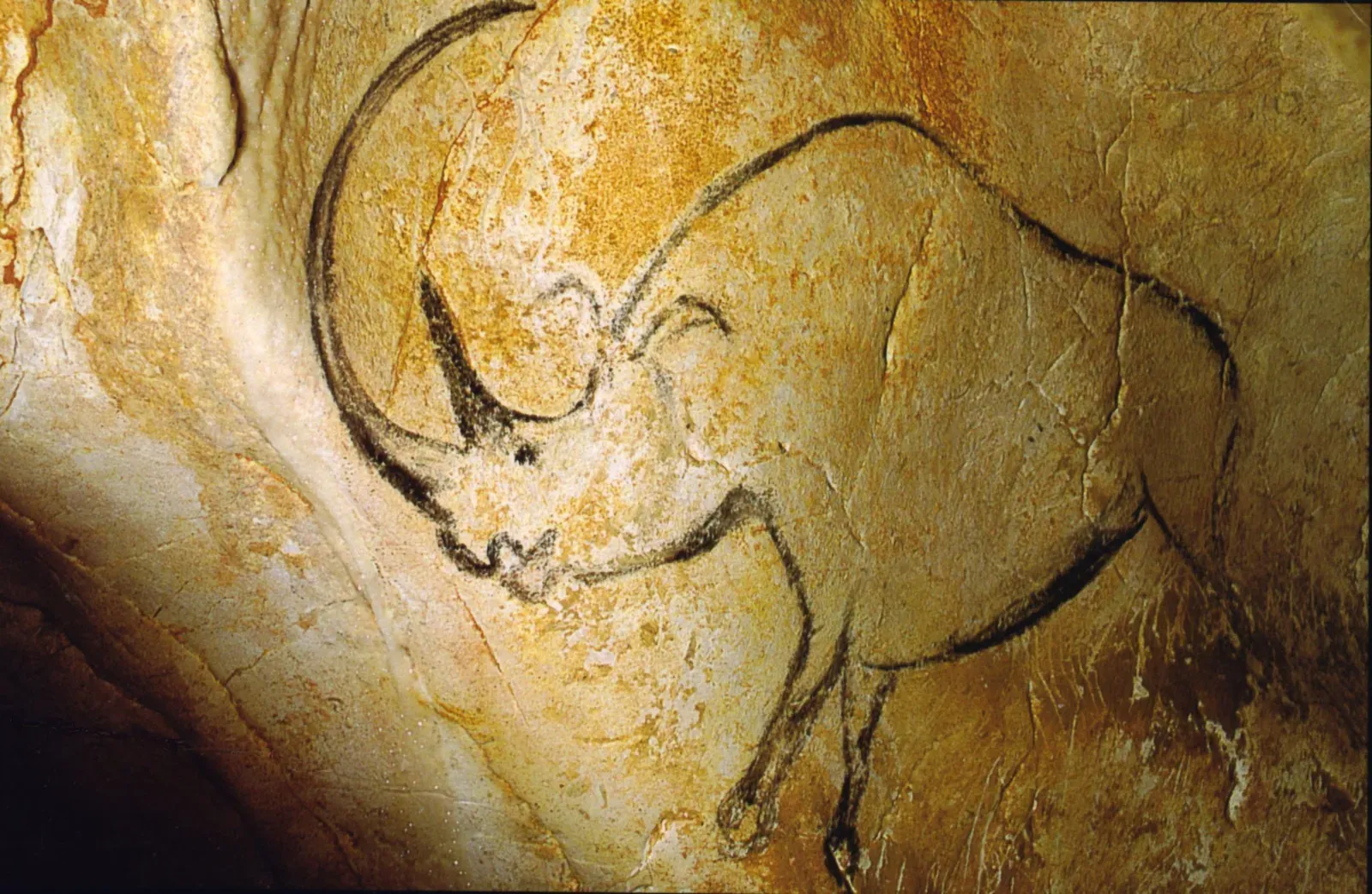
If you think rhinos look intimidating now, the Chauvet painters would like a word. Deep inside Chauvet Cave in southern France, Ice Age artists captured the now-extinct woolly rhinoceros (Coelodonta antiquitatis) – a shaggy, tank-like beast with a massive front horn.
The paintings show the distinctive hump over the shoulders and an elongated skull, details that match fossil reconstructions almost too perfectly. Some rhinos are shown mid-charge, heads tilted, horns leading the way, and one panel even seems to show multiple rhinos in a row with slightly offset horns and feet – a primitive animation effect, like an Ice Age flipbook of a charging beast.
Fast Facts
- Front horn could grow more than three feet long.
- Adults weighed well over a ton, built low and stocky for the cold.
- Went extinct roughly 10,000 years ago as its steppe habitat shrank.
- Frozen carcasses in Siberian permafrost confirm the exact coat and horn shape painters used.
That sense of motion suggests hunters who knew exactly how this animal moved and attacked. The last woolly rhinos died out more than 10,000 years ago, but their painted ghosts still look like they’re about to trample you.
#12 – Steppe Bison: The Overbuilt Bovines of Altamira
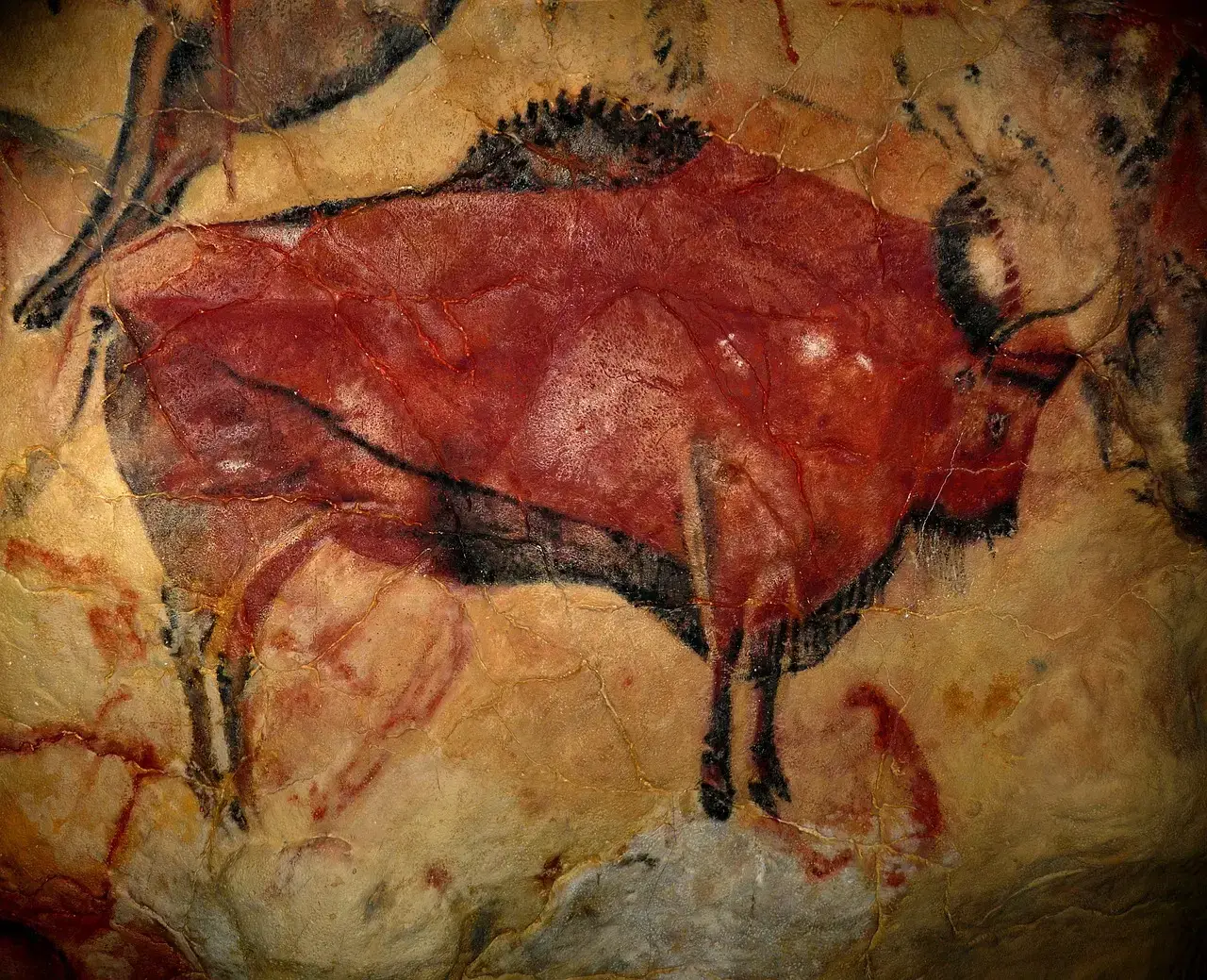
These bulls weren’t farm animals; they were prehistoric super-bovines. The famous ceiling of Altamira Cave in Spain is dominated by huge red and black bison, long assumed to be ancestors of today’s European bison.
Many experts now argue the images better match steppe bison (Bison priscus), a stockier, more heavily muscled species that roamed Ice Age Eurasia and is now completely extinct. The artists emphasized massive shoulder humps, thick necks, and exaggerated rumps, making the animals look almost overbuilt – exactly how paleontologists reconstruct steppe bison from skeletons and frozen carcasses.
These bison were painted over natural rock bulges, cleverly using the stone’s own curves to suggest 3D volume, so the animals seem to swell out of the ceiling under flickering torchlight. The anatomical precision – the horn curve, the beard line – goes far beyond what you’d expect from art dismissed for centuries as “primitive.”
#11 – The Ice Age Lions That Didn’t Have Manes
![#11 - The Ice Age Lions That Didn't Have Manes ([1], Public domain)](https://nvmwebsites-budwg5g9avh3epea.z03.azurefd.net/dinoworld/da1c4f7cecf9a17604638abe3ea90f89.webp)
Prehistoric artists may have settled a zoological debate 30,000 years before scientists got around to it. In caves like Chauvet and Lascaux, big cats appear frequently, but they don’t match modern African lions.
They align instead with Panthera spelaea, the Eurasian cave lion, a now-extinct giant that once ruled Ice Age Europe. The paintings show powerful cats with large heads and muscular bodies, and crucially: no manes on the males, just slightly thicker neck fur at most.
That single detail fueled real arguments among paleontologists, who long wondered whether male cave lions looked like modern African males. The cave art leaned hard in one direction, and when fossil DNA finally confirmed cave lions were a genetically distinct species, the ancient paintings suddenly looked prophetic.
#10 – The Great Aurochs of Lascaux: Cattle Before Cattle
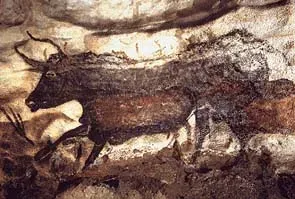
Think modern bulls are impressive? Prehistoric painters saw something far bigger. The monumental black bulls in Lascaux Cave aren’t domestic cattle – they’re aurochs (Bos primigenius), the wild ancestors of every cow alive today, which went fully extinct in the 1600s.
In the section known as the “Great Hall of the Bulls,” some aurochs stretch over 15 feet along the wall. The artists emphasized enormous horn spans and barrel chests, making them look closer to bison-sized tanks than anything you’d find in a modern pasture – and that matches historical descriptions and skeletal remains showing aurochs dwarfed today’s cattle.
We have invented nothing.
Pablo Picasso, after visiting Lascaux
By the time the last known aurochs died in a Polish forest in 1627, these Lascaux bulls had already been staring out from the dark for nearly 17,000 years – proof that prehistoric people were classifying species long before taxonomy existed.
#9 – The Irish Elk With Impossible Antlers
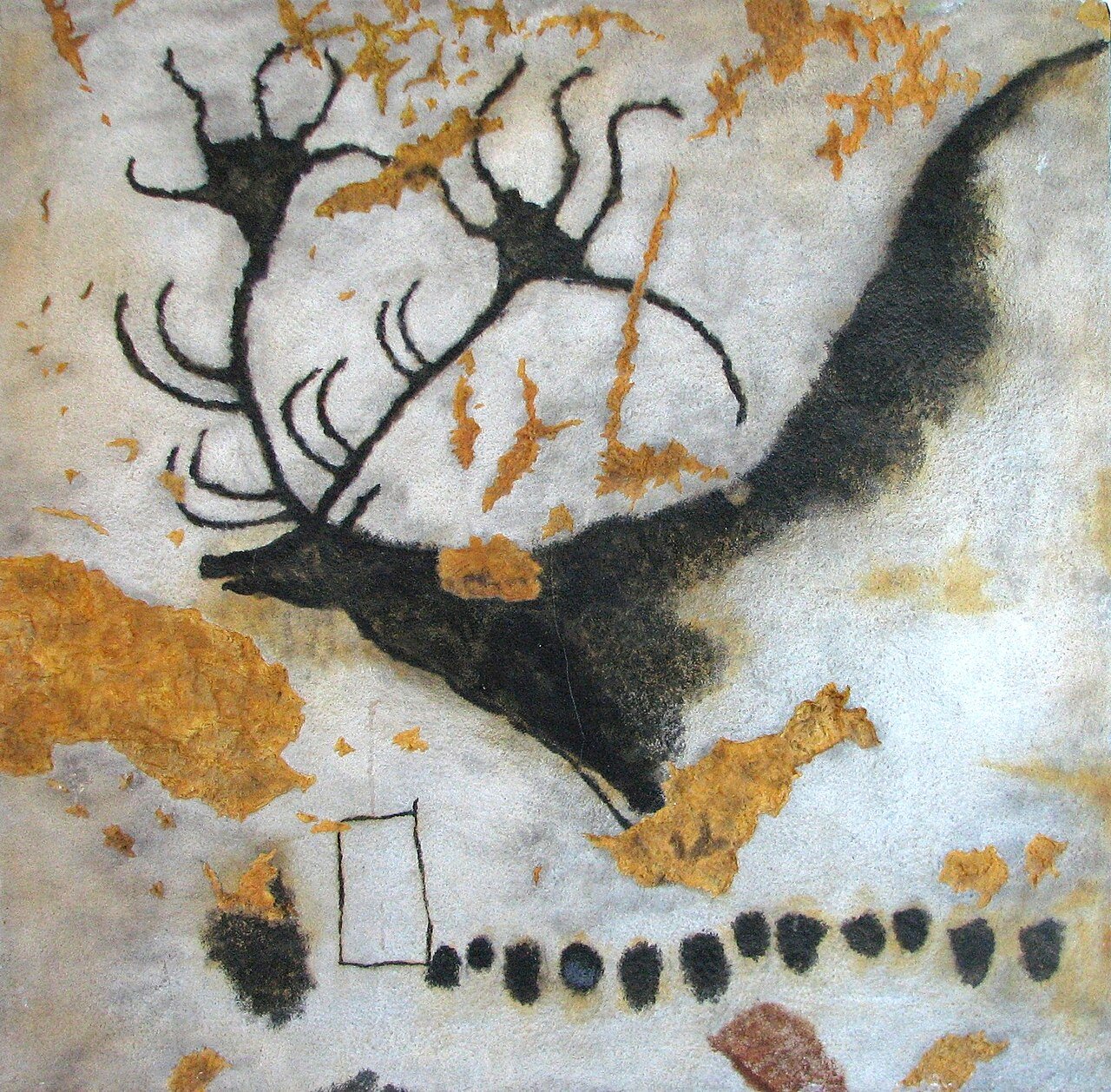
Those “deer” with dinner-table antlers weren’t exaggerations – they were documentaries. Across Ice Age Europe, from France to Russia, rock art shows enormous deer with ridiculously wide, palm-shaped antlers, and for years some researchers assumed the artists were simply stylizing.
Then fossils of Megaloceros giganteus – the Irish elk – turned up with antlers spanning up to 12 feet, and suddenly the paintings made perfect sense. In some caves, artists even colored the antlers differently from the body, drawing all attention to the rack, almost like a prehistoric obsession with trophy heads.
At a Glance
- Antler span: up to 12 feet across, the largest of any known deer.
- Stood roughly 6.5 to 7 feet tall at the shoulder.
- Weighed close to 1,500 pounds at full size.
- A holdout population is believed to have survived in western Siberia until about 7,700 years ago.
The Irish elk vanished at the end of the Ice Age, likely done in by shifting habitats and possibly those very antlers becoming a liability. The art makes one thing clear: people weren’t just watching big deer, they were watching a walking, breathing set of antlers.
#8 – The Mysterious “Megafauna Horses” of Pech-Merle
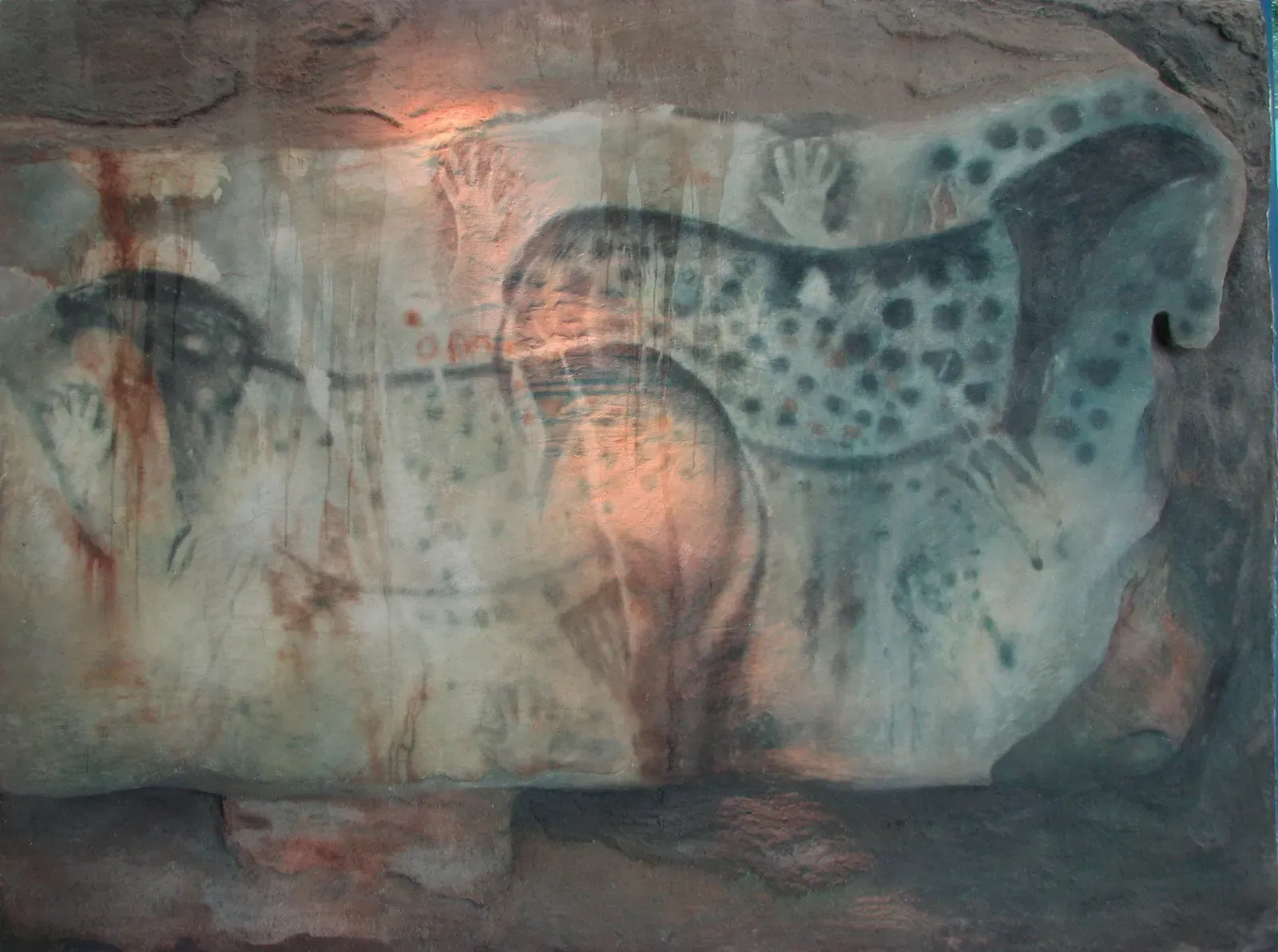
These aren’t just weird-looking horses – they might be snapshots of a population that no longer exists anywhere on Earth. In Pech-Merle cave in France, famous for its spotted horses, some equine figures show short, thick necks, robust bodies, and oddly large heads.
Some researchers suspect these images capture distinct Ice Age horse populations or subspecies that vanished before domestication ever began. DNA from ancient horse bones confirms multiple lineages existed across Pleistocene Europe, and some Pech-Merle horses even show heavy spotting patterns that genetic studies later proved were real, not artistic invention.
That means at least some depicted horse types are genuinely extinct genetic lineages, not just a different art style. Debates continue about exactly which populations they represent, but the walls quietly preserve animals whose genes never made it into a single modern breed.
#7 – The Saiga Antelope With Alien Noses
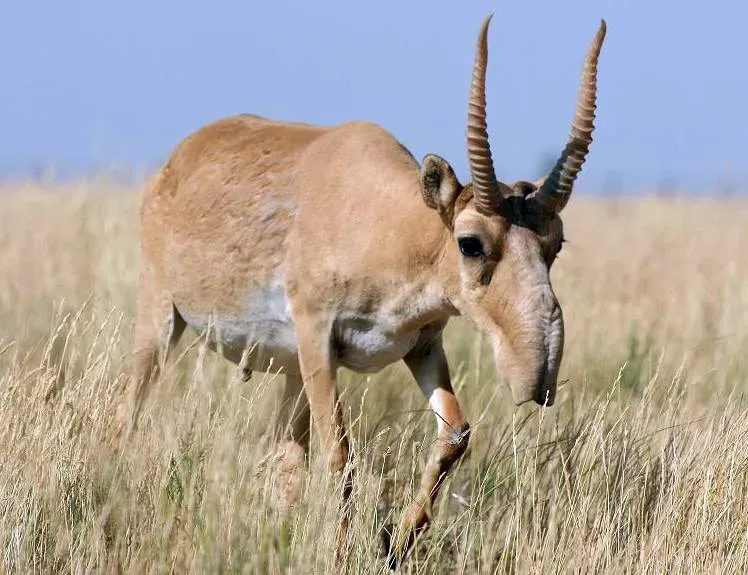
Yes, that weird nose is real – and its story is genuinely tragic. In Central Asian rock art and a handful of Eastern European sites, archaeologists have identified saiga antelope (Saiga tatarica), an odd animal with a huge, bulbous, drooping nose.
To modern eyes, some of these carvings look almost like parodies, but they match the real saiga’s bizarre nasal structure – a built-in air filter and heater for cold, dusty steppes – with surprising accuracy. Here’s the twist: saiga technically still exist, but the massive Pleistocene populations these artists saw are gone, replaced by a tiny, critically endangered remnant hammered by disease and hunting.
Worth Knowing
- During the Ice Age, saiga ranged from the British Isles all the way to Alaska.
- Populations crashed by more than 90% after the collapse of the Soviet Union.
- The species is currently listed as Critically Endangered.
- Its oversized nose warms and filters air across brutal temperature swings.
In other words, the saiga in the rock art belong to an ecological world that has fully collapsed. These paintings aren’t really about one species anymore – they’re about an entire lost steppe community humans will never see again.
#6 – The Giant Ibex and Wild Goats of the Zagros
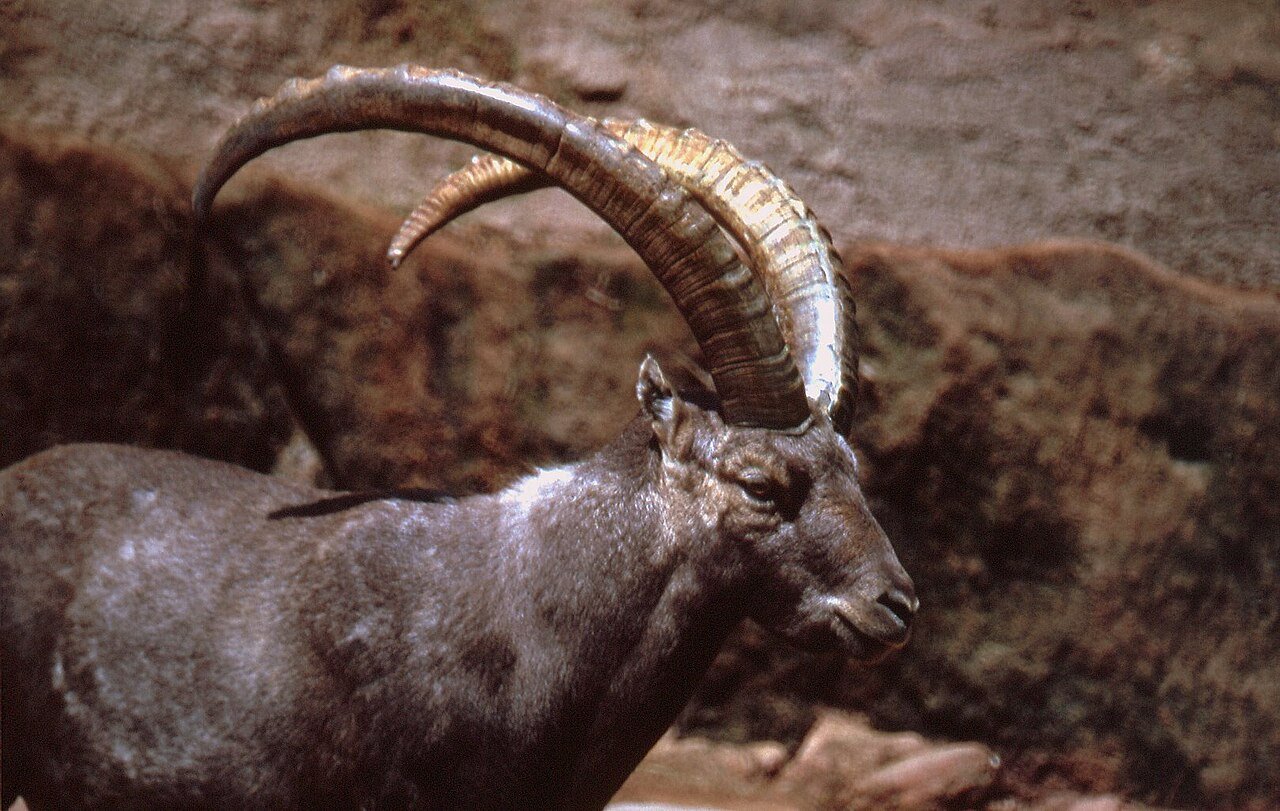
These goats were less “farm animal” and more “cliff-tank.” In rock shelters across the Zagros and Iranian Plateau, prehistoric artists repeatedly painted large wild goats and ibex with sweeping, backward-curving horns far bigger than anything grazing there today.
Some scholars argue certain figures best fit now-extinct local lineages or oversized Ice Age populations of wild caprids. The horns are often stretched into dramatic arcs, but the base shape and body proportions line up with fossil remains of large-bodied wild goats from the Late Pleistocene.
- Many scenes show goats in dangerous cliff-edge poses, emphasizing agility.
- Horns sometimes dominate the entire composition, dwarfing the body.
Modern wild goats in the same mountains are noticeably smaller and less robust, likely worn down by millennia of hunting and habitat pressure. The exact species labels are still debated, but the art is clearly capturing a bigger, wilder goat world that’s simply gone.
#5 – Lascaux’s Spotted Hyenas: Predators Without a Future
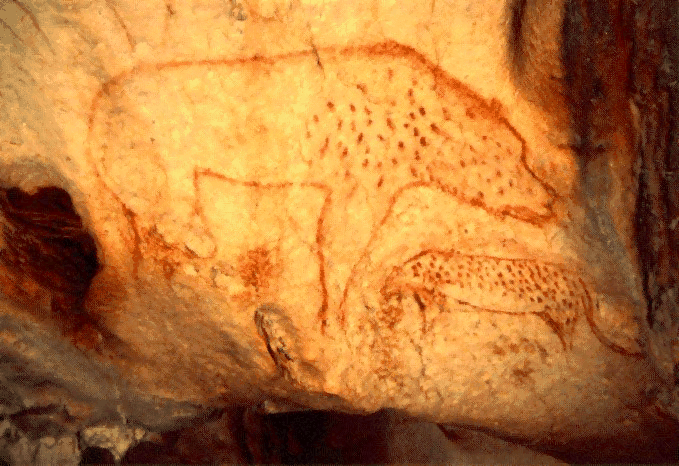
These weren’t scavenging side characters; they were apex threats. In several European caves, including Lascaux and Chauvet, mysterious dog-like figures with sloping backs, large heads, and short hind legs show up again and again.
Many experts interpret them as cave hyenas (Crocuta crocuta spelaea), a now-extinct subspecies or sister species of the modern spotted hyena. The artists nailed the lowered hindquarters, the powerful neck, the blunt muzzle, and some even hint at a dappled coat using early dabbing techniques.
What’s easy to miss is how often these hyena-like shapes appear near prey animals – bison, horses, deer – as if the artists were mapping the same predator-prey tension nature documentaries obsess over today. As Europe warmed and megafauna declined, cave hyenas vanished too, leaving only the African lineage behind, though in the flicker of torchlight the painted predators still circle herds that no longer exist.
#4 – The Straight-Tusked Elephant Echoes
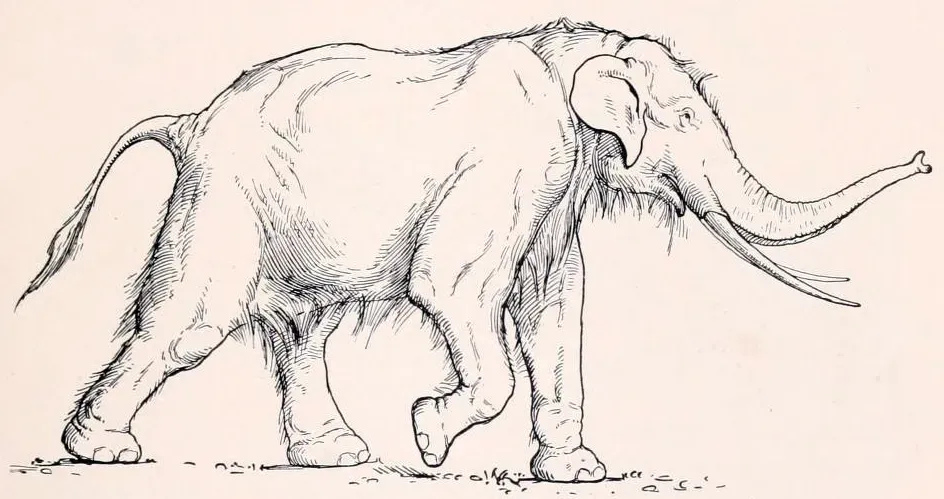
They’re rarely recognized, but they might be ghosts of a completely different elephant. Most people assume every prehistoric elephant image is a mammoth, but some scholars argue that a minority of especially old European depictions may actually show straight-tusked elephants (Palaeoloxodon antiquus) – a huge, warm-climate species that vanished before the Last Glacial Maximum.
A few ambiguous engravings and portable art pieces show elephants without the trademark mammoth hump or wool line, sporting longer, more horizontal tusks instead. The timeline barely overlaps: early humans in Europe would have encountered straight-tusked elephants before they disappeared somewhere between 100,000 and 30,000 years ago, depending on the region.
If even a handful of these images really are Palaeoloxodon, they’re recording an animal most Ice Age artists never actually knew. The evidence is thin and hotly debated, with some specialists calling it over-interpretation – but that tension is exactly why every ambiguous elephant outline gets re-examined so obsessively.
#3 – The “Paleo-Buffalo” of North America
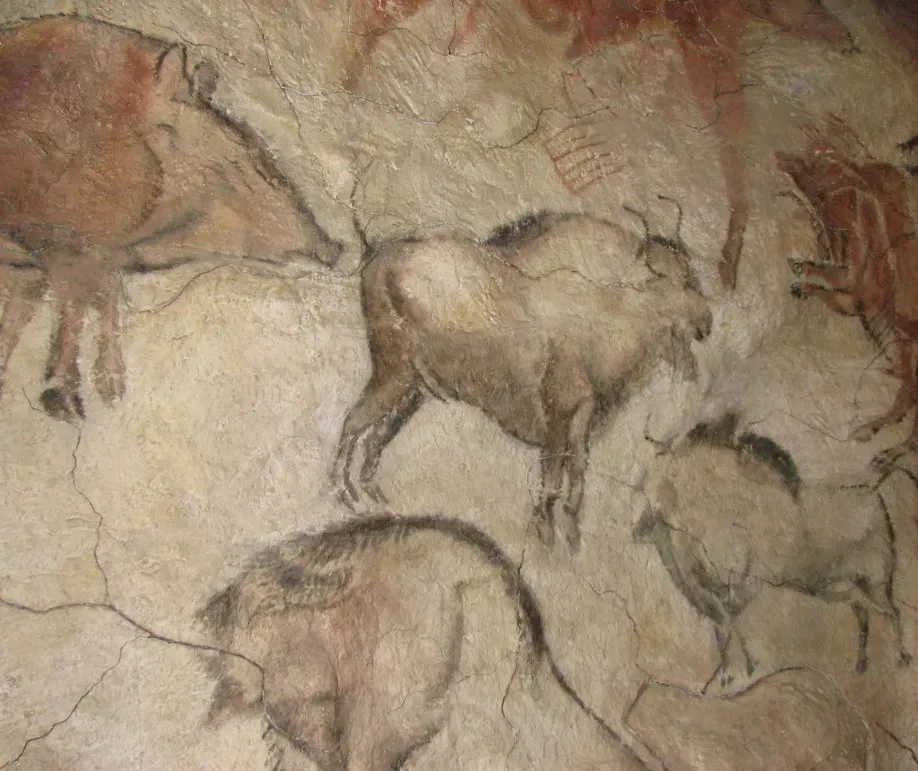
These bison may not match any living herd on Earth. In North American rock art, especially across the Plains, there are ancient images of huge bovids that look like bison – but off, somehow, in the details.
Some show especially long horns, massive shoulder humps, and body proportions that better fit Bison occidentalis or Bison antiquus, extinct ancestors of today’s American bison. Their horns often flare outward dramatically before curving, and their bodies run longer and leaner than the bison grazing prairies today.
Quick Compare
- Bison antiquus (extinct): longer, wider-flaring horns and a leaner, longer-bodied build.
- Bison bison (living today): shorter horns, stockier frame, smaller overall size.
- Estimated weight dropped significantly as the smaller modern species took over after the Ice Age.
Paleoecological data confirm these larger bison species dominated North America before being replaced by the smaller Bison bison after the last Ice Age. That means many of the “buffalo” in early Indigenous art likely depict animals already gone by the time European colonizers ever set foot on the continent – the rock faces quietly documenting an extinction and replacement event in slow motion.
#2 – The Giant Ground Sloth Shadows
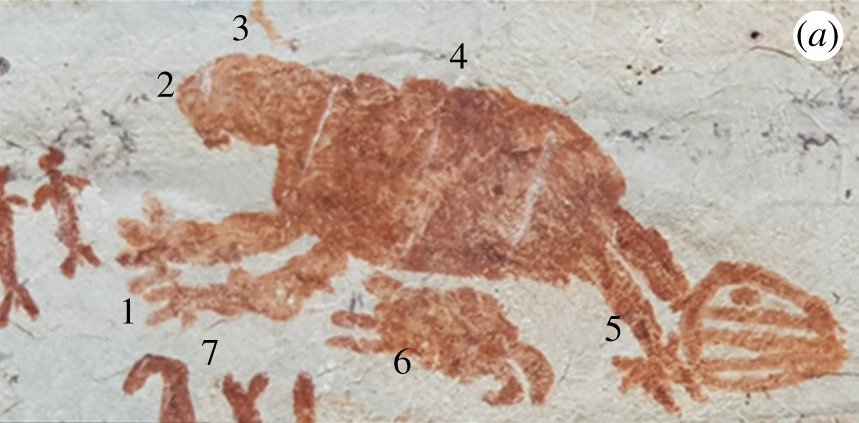
Imagine painting something so strange your distant descendants would assume it was fake. In parts of South and possibly Central America, certain rock art figures show large, bulky, long-clawed creatures that some researchers cautiously interpret as giant ground sloths, like Megatherium or Eremotherium.
These animals vanished roughly 10,000 to 12,000 years ago, but their size and strange proportions – huge hindquarters, long forelimbs, a small head – seem to match some of these puzzling figures better than any living animal. A few depictions even hint at long, curved claws, something no local megafauna possesses today.
Not everyone is convinced; some argue they’re stylized bears or purely mythic beings. But the timing lines up suspiciously well with human arrival and sloth extinction, and if even one of these is a genuine ground-sloth portrait, it means people watched and recorded one of the strangest mammals to ever walk the Americas – a fantasy monster to us, just part of the neighborhood to them.
#1 – The “Monster” That Looks Too Much Like a Mammoth
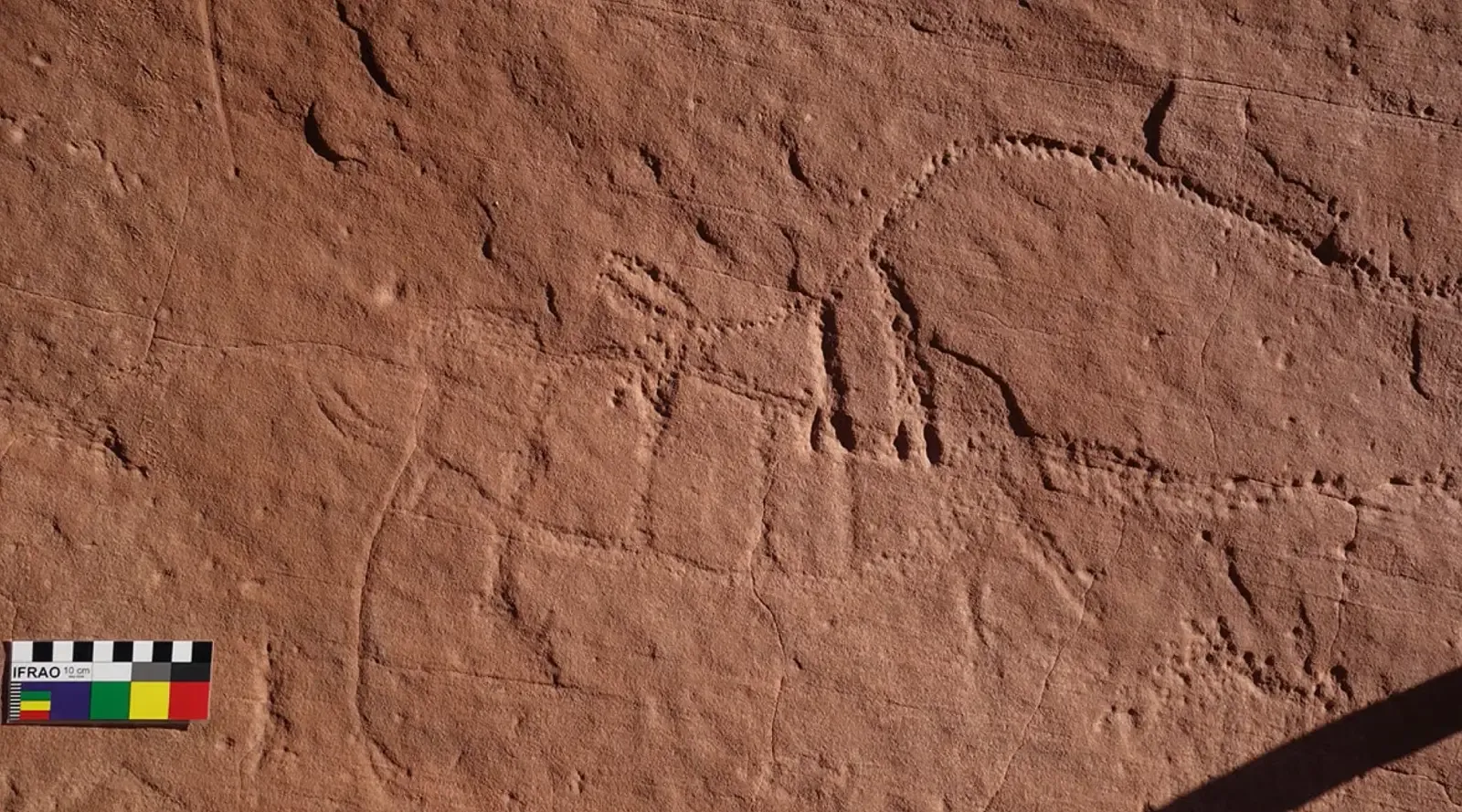
When myth starts looking exactly like a fossil, scientists get nervous. Scattered across multiple continents are prehistoric and early historic artworks – petroglyphs, engravings, carvings – showing huge, trunked, tusked beasts that look uncannily like mammoths or mastodons, even in regions where those animals were supposedly extinct long before the art was made.
Some North American images appear thousands of years younger than the last “firm” mammoth dates, yet still show clear trunks, curved tusks, and domed heads. There are three possibilities, and none of them are comfortable:
- The dating is off, and mammoths survived longer than we think.
- Artists preserved impossibly long-lived cultural memories.
- Or some are pure myth that accidentally matches fossil anatomy.
Many archaeologists genuinely hate this topic because it fuels fringe theories, but they’ll quietly admit a few figures are disturbingly specific. When art, bone, and myth all line up this closely, the line between eyewitness report and legend gets blurry fast – and that’s exactly where prehistoric animal art gets unsettling.
The Bottom Line
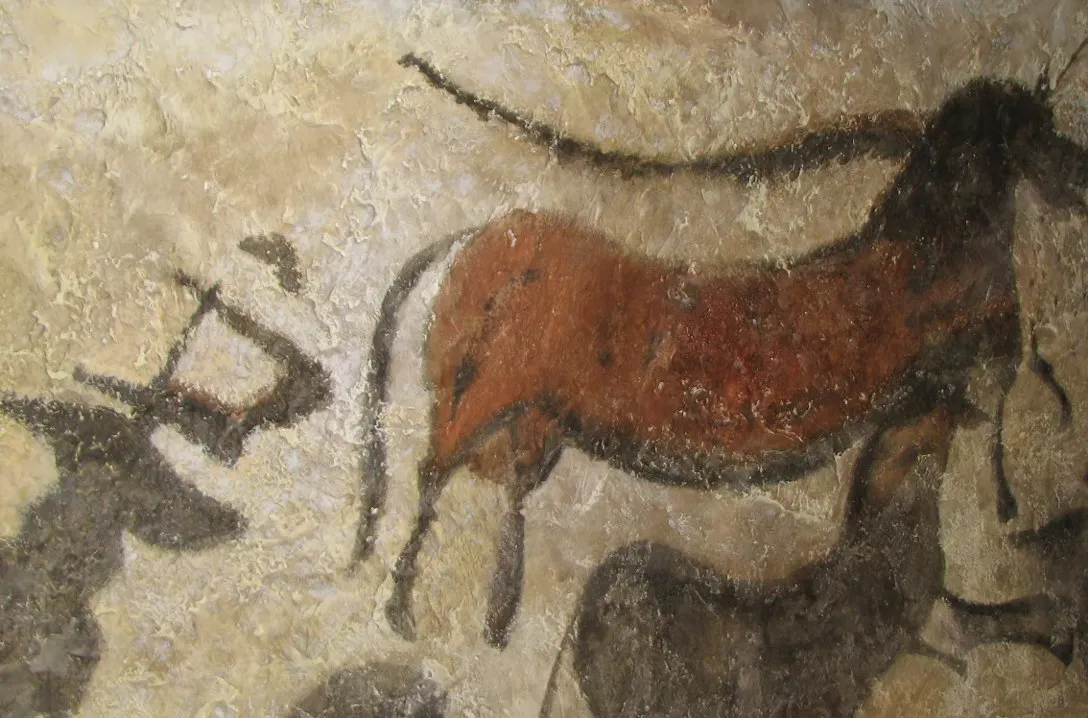
Prehistoric painters weren’t doodling; they were documenting a wildlife crisis in slow motion. Mammoths, woolly rhinos, giant deer, cave lions, extinct bison, and ghostly elephants all passed across the human field of view – and straight onto stone – before vanishing from the actual landscape.
The most unsettling part isn’t that so many species are gone. It’s how coldly precise the best artists were, matching details modern science only confirmed decades later with fossils and DNA that didn’t exist yet as a concept.
We like to imagine ourselves as the first generation watching mass extinction unfold in real time. The caves say otherwise. Ice Age people stood in the dark, painting animals that were already doomed, trying to fix them in place as the climate and the world shifted underneath them – and honestly, that’s a more haunting form of art criticism than anything a museum plaque has ever offered.
Which image hit you hardest – and do you think any of these artists suspected their models were living on borrowed time?