Here’s the thing nobody wants to admit: Jurassic Park didn’t just bend the science a little – it shattered it, rebuilt the pieces into something scarier, and then convinced an entire generation that what they saw was basically true. Thirty-plus years later, the film’s version of dinosaurs is still more alive in the public imagination than anything the fossil record actually supports. That’s not a small problem. That’s a cultural takeover.
Palaeontologists have been politely, then not-so-politely, correcting the record ever since 1993. Some of these mistakes were forgivable at the time. Others ignored evidence that was already sitting in museum drawers. A few are so fundamental that they reframe everything you thought you knew about these animals. The list below goes deeper than “the raptors were too big” – because the real story is stranger, more fascinating, and honestly more cinematic than what Spielberg put on screen.
#1 – Widespread Dinosaur Plumage Ignored Entirely
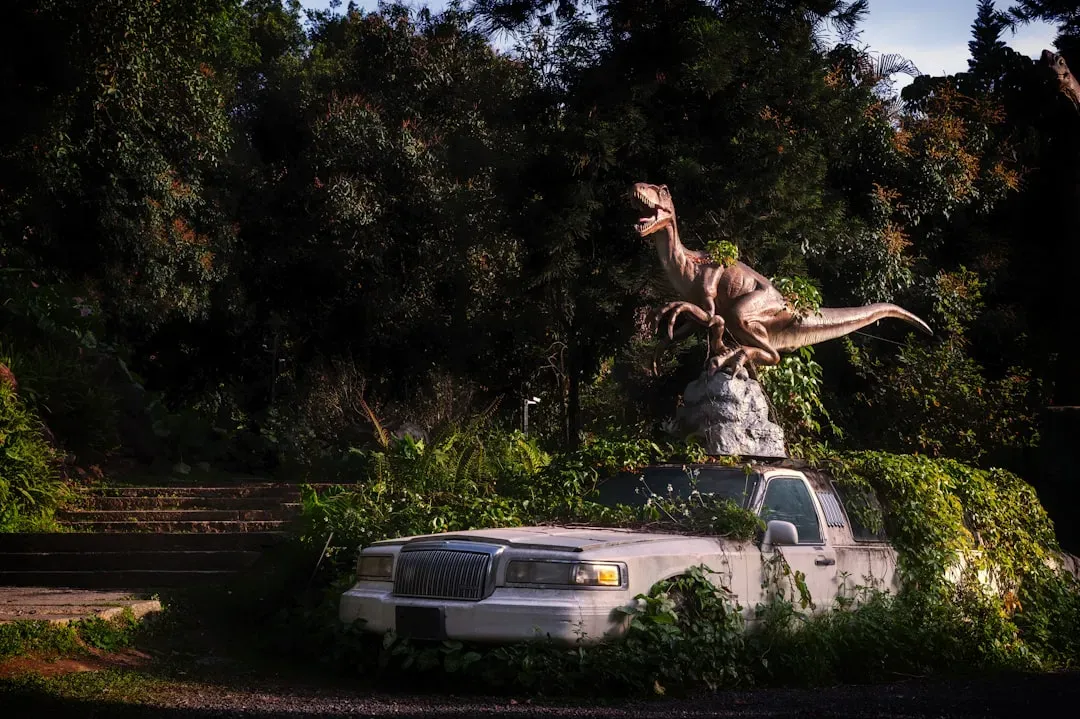
This is the one that makes palaeontologists visibly tense at dinner parties. The total absence of feathers across nearly every species in Jurassic Park isn’t just an oversight – it’s the single decision that did the most damage to public understanding of what dinosaurs actually were. By the early 1990s, the evidence was already pointing toward feathered theropods. After the explosion of feathered fossil discoveries from China’s Liaoning Province through the mid-to-late 1990s, the gap between movie dinosaur and real dinosaur became a canyon. Multiple lineages show proto-feathers, full vaned plumage, or filamentous fuzz used for insulation, display, and in some cases flight. The movie locked the entire franchise into an outdated scaly aesthetic that has proven almost impossible to dislodge.
The most unsettling part? Even large tyrannosaurs likely carried some feathering as juveniles, which changes everything about how we understand their metabolism and growth. These weren’t cold-blooded lizards in disguise – they were warm-blooded, possibly brightly colored, feathered animals that looked far more like terrifying giant birds than any reptile. Researchers argue this single error has shaped more misconceptions than every other mistake on this list combined. It’s the one that palaeontologists keep returning to, because it didn’t just misrepresent one species. It misrepresented an entire branch of life.
Fast Facts
- 1996: Sinosauropteryx was formally described – the first non-avian dinosaur confirmed to have feather-like structures, just three years after the film’s release.
- Liaoning Province, China has yielded a continuous stream of feathered dinosaur fossils spanning the Middle Jurassic to Early Cretaceous, rewriting the textbooks.
- Dilong, the earliest known feathered tyrannosaur, carried filamentous proto-feathers up to 2 cm long – evidence that the T. rex lineage had feathered roots.
- Yutyrannus, a 1,400 kg feathered tyrannosaur described in 2012, shows that even large members of the lineage could be covered in filamentous plumage.
- A 2007 Velociraptor specimen carried “quill knobs” on its arm bones – direct skeletal proof of large, attached feathers on a raptor.
#2 – Cloning from Fragmented DNA Is Fundamentally Impossible
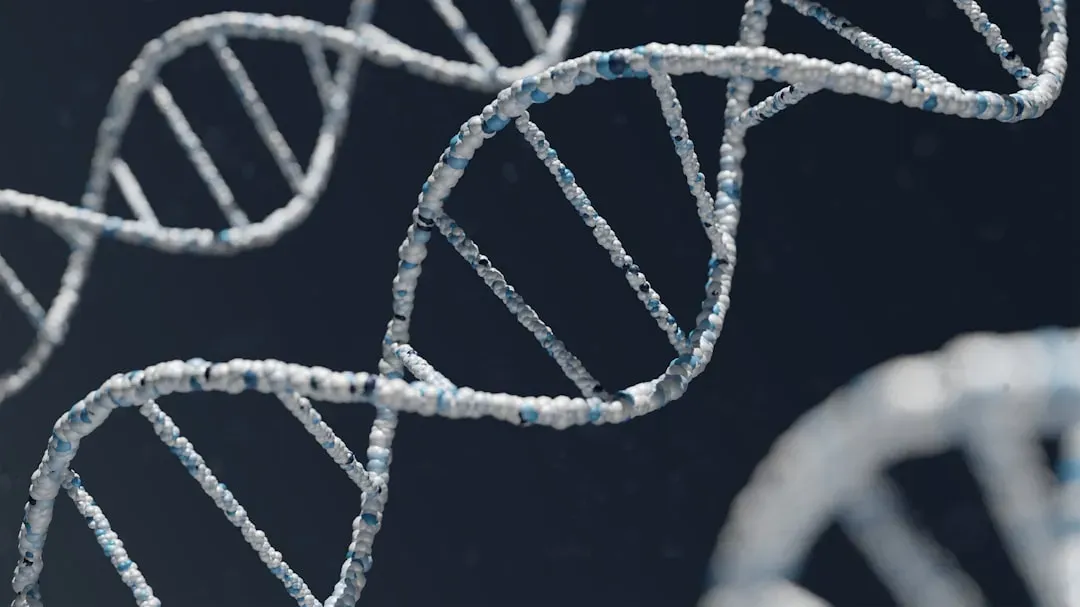
Even if you could somehow extract DNA from an amber-preserved mosquito – which you can’t, but we’ll get to that – the film completely glosses over what comes next. A genome isn’t just a sequence of letters you plug into a machine. It’s a three-dimensional, environmentally sensitive blueprint that requires the right cellular machinery, the right epigenetic markers, and a viable egg from a closely related species just to begin expressing correctly. The movie waves all of this away with frog DNA and a cheerful Jeff Goldblum warning that nobody listens to. In reality, the developmental environment alone – temperature gradients, hormone cycles, embryonic signaling – represents a puzzle that modern science cannot solve even for recently extinct species, let alone animals that vanished 66 million years ago.
No dinosaur DNA has ever been recovered intact enough for meaningful sequencing, let alone cloning. The fragments of organic material occasionally reported from dinosaur bones are collagen proteins at best – ancient, degraded, and nowhere near a genome. Palaeontologists emphasize that this isn’t a technology gap that future science will close. It’s a chemical reality. DNA has a half-life of roughly 500 years under near-perfect conditions. At 66 million years, there is nothing left to read. The premise of the entire franchise rests on a biological impossibility, and the film presents it with such confident detail that audiences walked out believing de-extinction was basically a funding problem.
#3 – Tyrannosaurus Rex Vocalizations Were Pure Invention
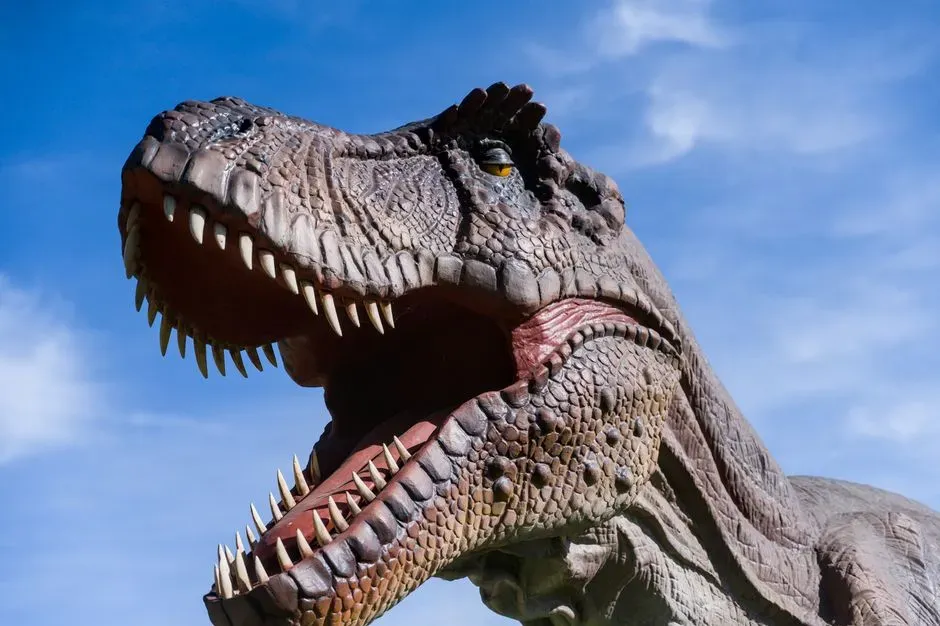
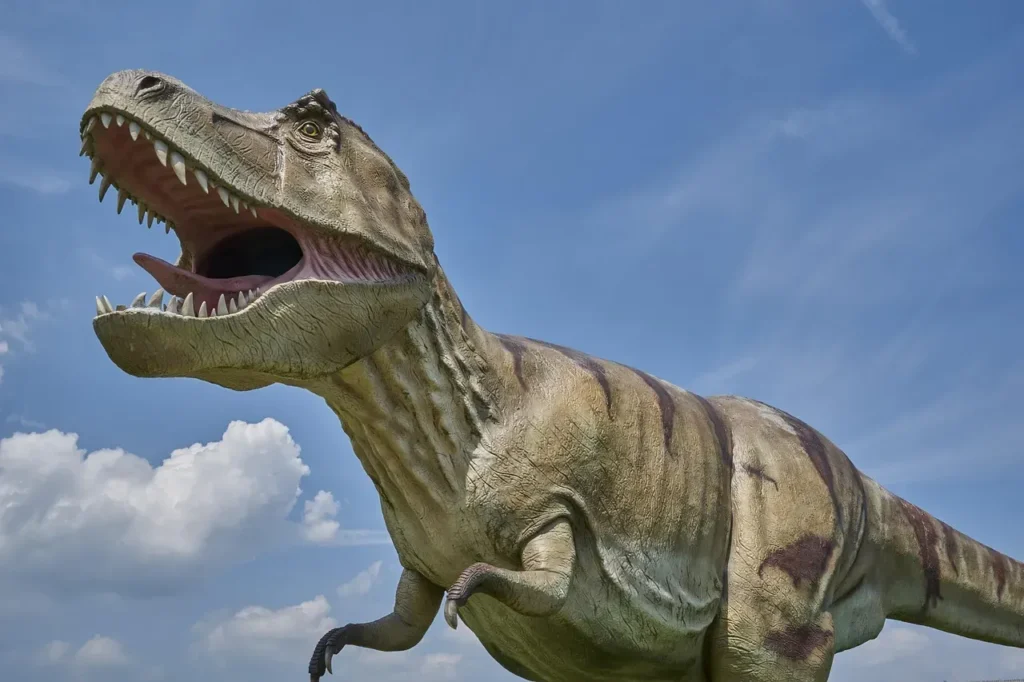
The roar. You can hear it right now just reading this. That bone-shaking, theater-filling sound that made every T. rex scene feel like a religious experience. It is also completely made up, and not even made up from dinosaur sounds – the iconic Jurassic Park T. rex roar was assembled from recordings of a baby elephant, an alligator, and a tiger. That’s not a criticism of the sound design, which was genuinely brilliant. It’s a reminder that soft tissues responsible for sound production don’t fossilize, which means we have no direct evidence for what any non-avian dinosaur actually sounded like.
What palaeontologists suspect is far weirder and, in its own way, more terrifying. Modern comparisons with crocodilians and birds – the closest living relatives of non-avian dinosaurs – point toward closed-mouth vocalizations: low-frequency booms, infrasonic rumbles, and resonant hisses that you might feel more than hear. Recent studies on related tyrannosauroids suggest communication happened at frequencies that could travel long distances through vegetation and bone. No roaring. No Hollywood crescendo. Just a deep, subsonic pressure wave rolling through the jungle. Experts argue the movie’s thunderous vocalizations created an image of a constantly screaming animal that contradicts everything comparative anatomy suggests about large theropod behavior.
#4 – Pteranodon Anatomy Was Mangled from the Start

Pteranodons appear in the film with bat-like leathery wings, grasping feet built for carrying prey, and an overall menace that made the aviary scene genuinely frightening. The problem is that almost every anatomical detail is wrong. Real Pteranodon had toothless beaks – the name literally means “toothless wing” – but the movie gives them sharp, fish-catching teeth. Their wings were supported not by multiple fingers like a bat, but by a single enormously elongated fourth finger attached to a membrane that ran down the body. Their shoulder structure was designed for soaring, not the aggressive flapping and diving shown on screen.
Then there’s the question of takeoff. Pteranodon almost certainly could not launch itself from flat ground the way the film implies. Evidence from wing loading, muscle attachment points, and comparisons with modern soaring birds suggests they needed cliffs, strong updrafts, or a pole-vaulting launch using their forelimbs to get airborne. Many species were also considerably smaller than the movie’s creatures, though the largest azhdarchid pterosaurs – not shown in the original film – had wingspans approaching small aircraft. Palaeontologists note that the film essentially gave audiences a brand new fantasy creature and labeled it with a real animal’s name, setting back accurate pterosaur reconstruction in popular culture for decades.
Worth Knowing
- “Pteranodon” literally means “toothless wing” – the film’s toothed version is a different animal in all but name.
- The wing membrane was supported by a single elongated fourth finger, not multiple digits like a bat.
- The largest azhdarchid pterosaurs had wingspans of up to 10–11 meters – comparable to a small prop plane – and weren’t even featured in the original film.
- Pterosaurs likely launched using a quad-launch technique, pole-vaulting off their powerful forelimbs, not leaping from flat ground.
- No fossil evidence supports grasping, prey-carrying feet in Pteranodon – their feet were likely better suited for perching or walking.
#5 – Triceratops Behavior Was Misread as Pure Aggression
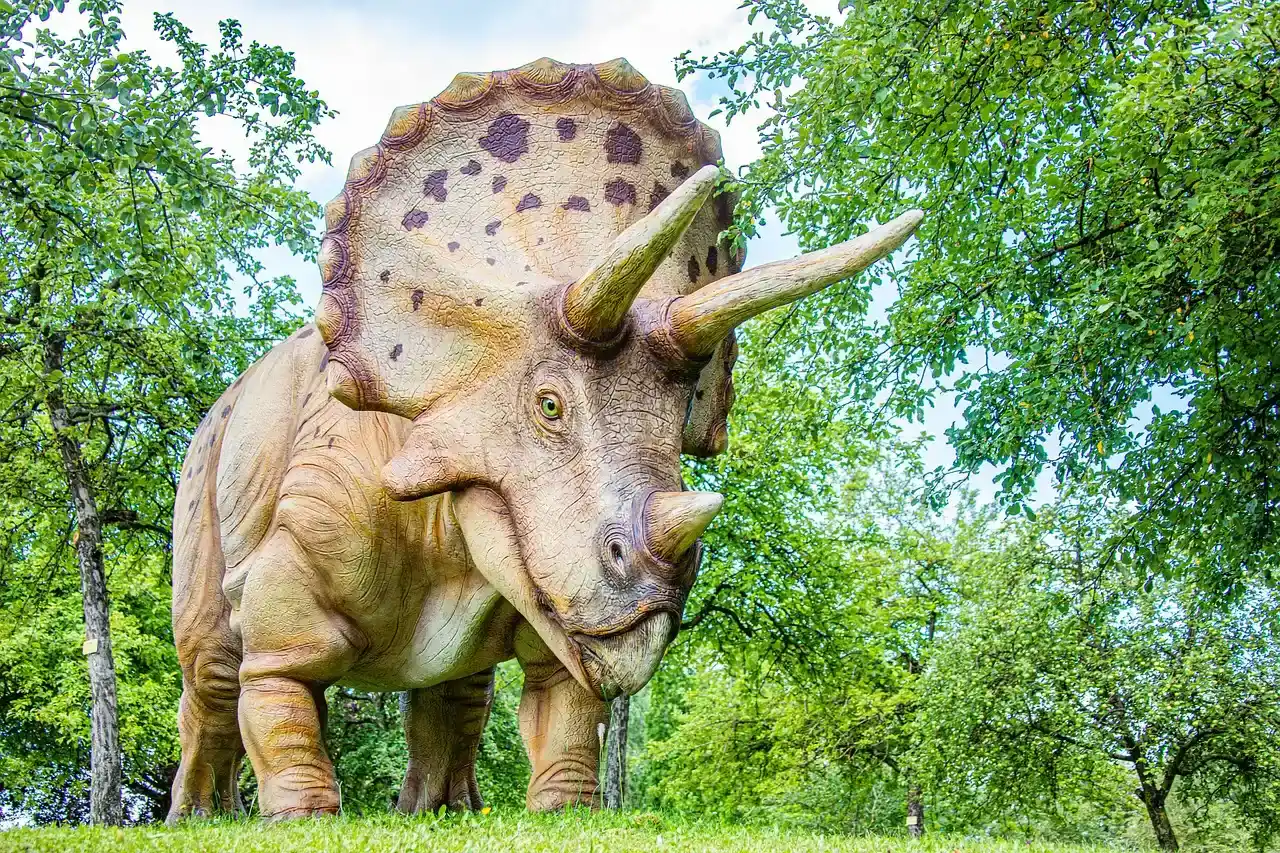
Triceratops gets a gentler treatment in Jurassic Park than most species – the famous sick Triceratops scene is actually one of the more emotionally resonant moments in the film. But the broader franchise portrayal of ceratopsians as aggressive, charge-first animals misrepresents what the fossil evidence actually suggests. Horn and frill wear patterns on Triceratops skulls point toward ritualized display behavior – sizing each other up, locking horns in controlled sparring – rather than the explosive, predator-charging aggression the movies favor. The frill in particular shows blood vessel channels consistent with flushing coloration for communication, not thick armor plating built to absorb impact.
The healing injuries found on Triceratops horns tell a genuinely interesting story: these animals did fight, but mostly with each other, in ways that look more like deer or elk than charging rhinos. Intraspecies competition over mates and territory, not desperate defense against tyrannosaurs. Some palaeontologists argue Triceratops may have been more socially complex than the film suggests, using elaborate visual signaling long before any physical contact. The rampage-ready version in the movies is dramatic, but it flattens an animal that was probably far more behaviorally nuanced – and honestly more interesting – than a living battering ram.
#6 – Stegosaurus Couldn’t Actually Fight the Way It’s Shown
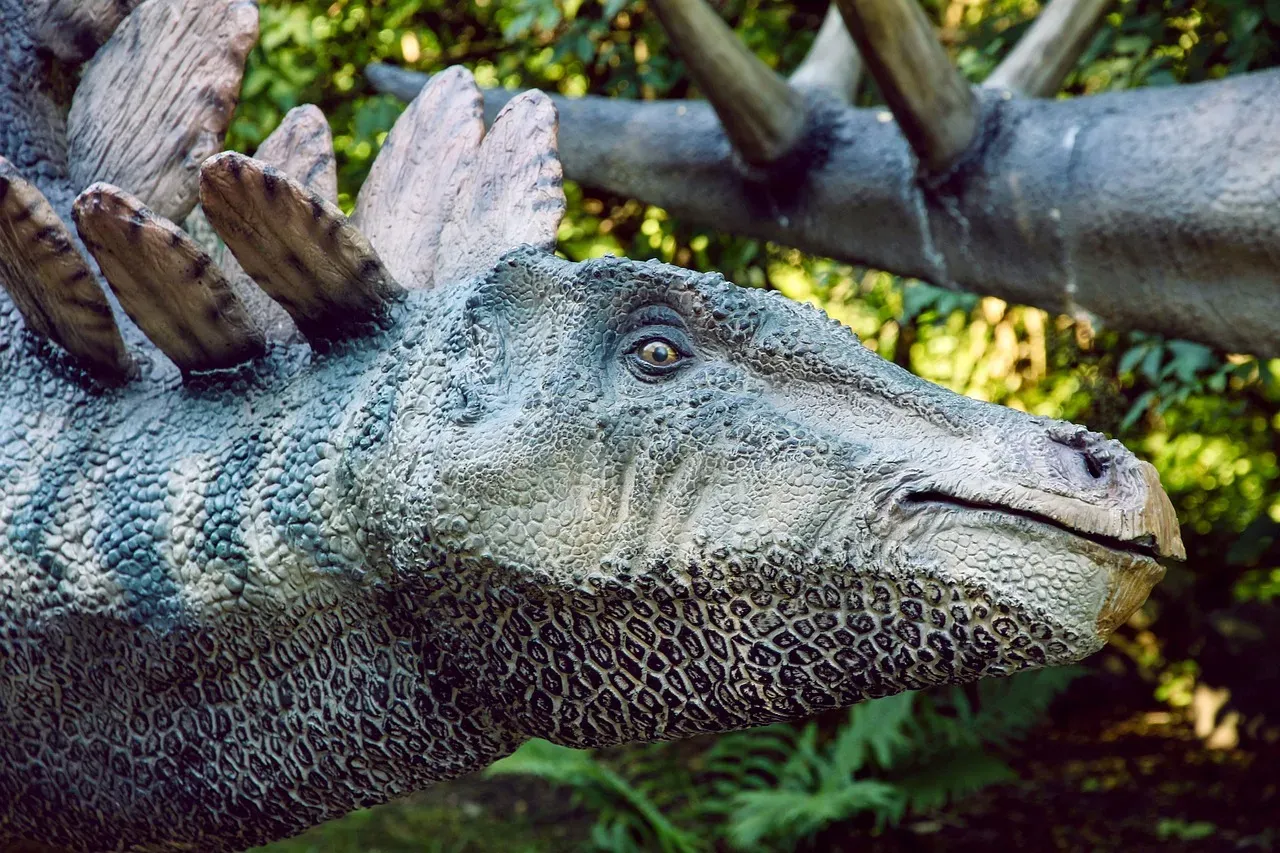
The four-spiked tail of Stegosaurus – called the thagomizer, a name coined in a Far Side cartoon and then adopted by actual palaeontologists – is genuinely one of the most evocative natural weapons in prehistoric life. But the sweeping, overhead tail strikes shown in various Jurassic franchise entries run into a biomechanical wall. Analysis of Stegosaurus tail vertebrae and the muscle attachment points along the spine suggests the tail was powerful in horizontal sweeping motions at low angles, not in the dramatic upward arcs the movies favor. The range of motion simply wasn’t there for the overhead defensive strikes that make for such satisfying cinema.
More disruptive to the movie’s version is the ongoing debate about what the plates on Stegosaurus’s back were actually for. The standard “armor” interpretation has largely given way to evidence for thermoregulation and display. The plates are thin, vascularized, and positioned in a way that makes them poor physical shields but excellent heat exchange surfaces and visual signals. Some researchers propose they flushed with color during mating displays or threat posturing. The real Stegosaurus was slower, less combative, and more visually spectacular in a quieter way than any movie version has captured – an animal that communicated danger through appearance long before it resorted to a tail sweep.
#7 – Brachiosaurus Posture and Habitat Were Outdated by Decades
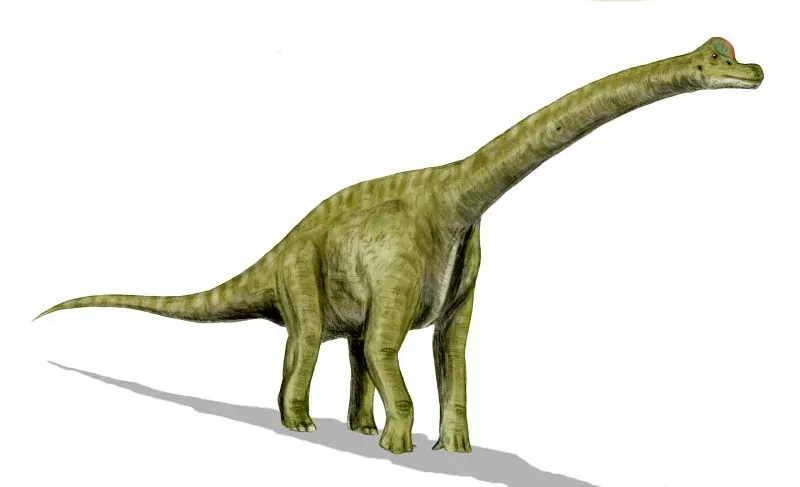
The Brachiosaurus reveal remains one of cinema’s great awe moments – John Williams’s score swelling as a creature the size of a building tilts its neck toward the canopy and feeds. It’s magnificent. It’s also built on reconstructions that palaeontologists had been moving away from for years. Biomechanical modeling of sauropod neck vertebrae and the cardiovascular demands of pumping blood to a fully vertical head suggests most large sauropods held their necks in a more horizontal or gently elevated position during normal activity. A fully upright neck on Brachiosaurus would have required a heart generating pressures that strain credibility for any known biological system.
The swamp-dwelling image – sauropods half-submerged, using water to support their bulk – was already being debunked when the film was made. Fossil trackways show sauropods moving confidently on dry floodplains, not wallowing in marshes. Bone stress analysis confirms their legs were built for terrestrial locomotion, not buoyancy-assisted wading. And those iconic nostril placements high on the skull? Once interpreted as snorkeling adaptations, now understood as simple skull architecture with the actual fleshy nostrils positioned much further forward, near the tip of the snout. Every detail the movie used to make Brachiosaurus feel alien and ancient has since been redrawn into something more grounded and, in its own way, just as extraordinary.
At a Glance: What the Film Got Wrong About Brachiosaurus
- Neck posture: Biomechanical models favor a more horizontal or gently elevated neck, not the dramatic near-vertical crane angle shown on screen.
- Habitat: Fossil trackways confirm sauropods were confident terrestrial walkers – the swamp-dweller image was already outdated by 1993.
- Nostrils: The high skull placement was structural, not functional – fleshy nostrils were almost certainly near the tip of the snout.
- Heart demands: A fully vertical neck would require blood pressure beyond what any known biological heart could realistically sustain.
#8 – Mixing Jurassic and Cretaceous Species on One Island
The park’s roster reads like a greatest hits album of prehistoric life – T. rex, Triceratops, Brachiosaurus, Stegosaurus, Velociraptor, all sharing the same jungle. The problem is that these animals are separated by tens of millions of years of evolutionary time. Stegosaurus went extinct approximately 80 million years before Tyrannosaurus rex appeared. Brachiosaurus was already ancient history by the time Velociraptor was alive. Placing them together isn’t just a loose timeline – it’s the equivalent of putting a woolly mammoth in the same enclosure as an early hominid ancestor and calling it a nature documentary.
The irony that makes palaeontologists particularly exasperated is this: the film’s own title is wrong. Most of its iconic species – T. rex, Triceratops, Velociraptor – lived during the Cretaceous period, not the Jurassic. The actual Jurassic period is better represented by the sauropods and Stegosaurus. The film essentially stole the more evocative geological name and applied it to the wrong creatures. This compression erases not just chronological accuracy but the genuine drama of deep time – the fact that more years separate T. rex from Stegosaurus than separate T. rex from us. That’s a story worth telling. The movie chose not to tell it.
Quick Compare: Who Actually Lived When
- Stegosaurus – Late Jurassic (~155 million years ago). Gone roughly 80 million years before T. rex existed.
- Brachiosaurus – Late Jurassic (~154–153 million years ago). Long extinct by the Cretaceous.
- Velociraptor – Late Cretaceous (~75–71 million years ago). A Cretaceous animal in a film called Jurassic Park.
- Tyrannosaurus rex – Late Cretaceous (~68–66 million years ago). Closer in time to us than to Stegosaurus.
- Triceratops – Late Cretaceous (~68–66 million years ago). A Cretaceous contemporary of T. rex, not a Jurassic animal.
#9 – Extracting Dinosaur DNA from Amber Mosquitoes Is Chemically Impossible
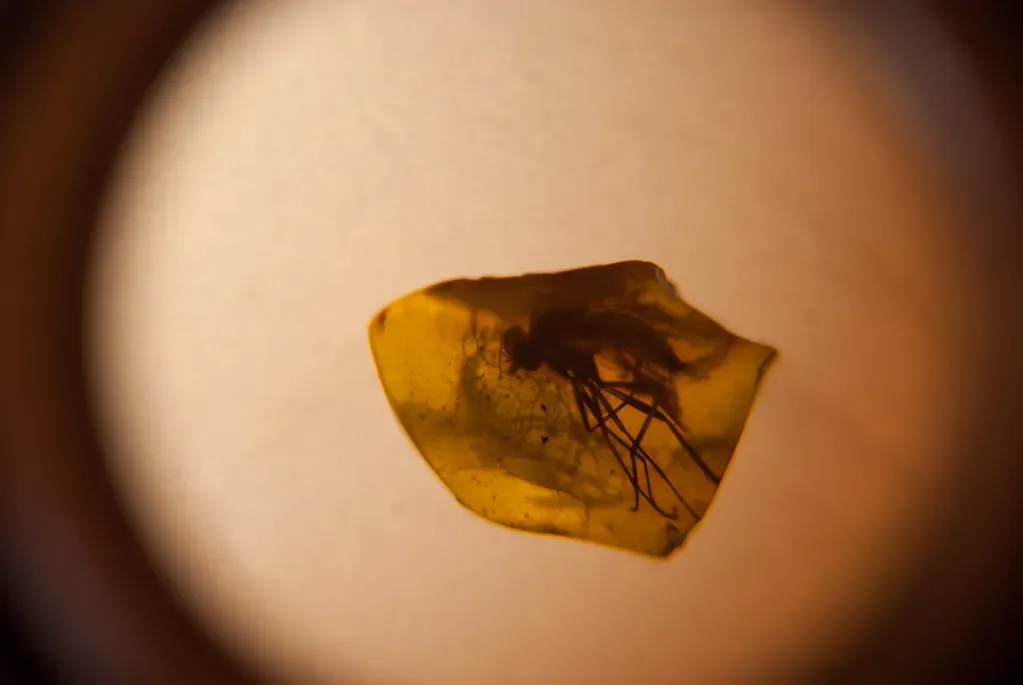
The amber DNA premise is so elegantly simple that it feels like it should work. An ancient mosquito, preserved in tree resin for millions of years, carrying a blood meal from a dinosaur – crack it open, sequence the DNA, build the animal. Scientists have spent decades explaining exactly why this doesn’t hold up. DNA begins degrading the moment an organism dies. Amber preserves external morphology with extraordinary fidelity but does not halt the chemical processes destroying organic molecules inside. Half-life estimates for DNA under optimal cold, dark, dry conditions sit around 500 years. At 66 million years, the mathematical reality is that no readable genetic information survives.
No mosquito fossil preserved in amber has ever yielded dinosaur DNA, or any ancient vertebrate DNA, despite multiple high-profile attempts. The best results from ancient DNA research involve specimens tens of thousands of years old – woolly mammoths, cave bears, Neanderthals – preserved in permafrost, not amber. Even in those cases, the recovered genomes require massive computational reconstruction from tiny fragments. The gap between “ancient DNA from permafrost” and “dinosaur DNA from amber” is not a matter of better technology. It is a matter of chemistry that cannot be reversed. Palaeontologists note with some weariness that the premise continues to shape public expectations for de-extinction programs that have no scientific basis in the Jurassic Park model.
#10 – Raptor Pack Hunting Was Presented as Established Fact
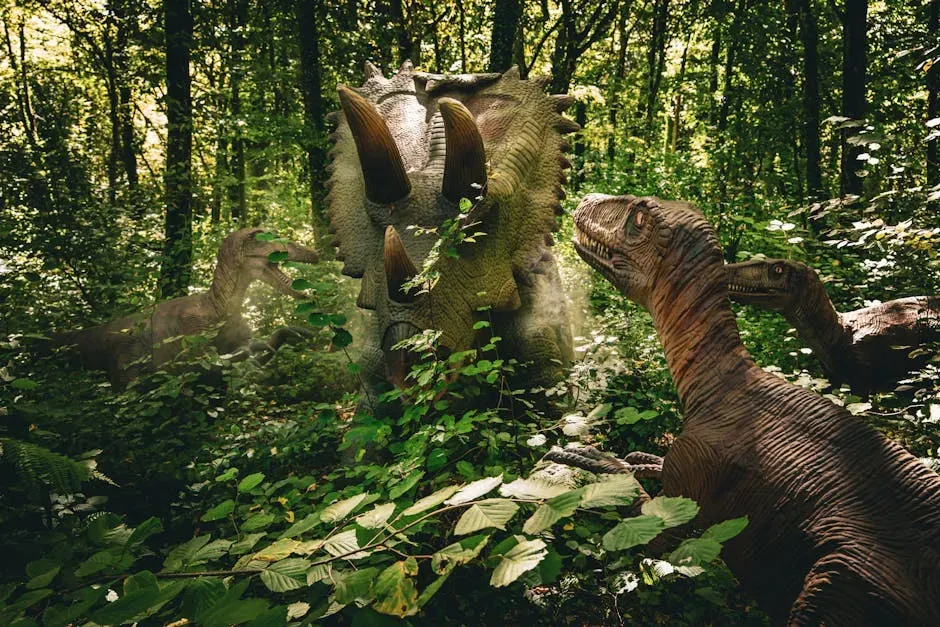
The kitchen scene. The “clever girl” moment. The flanking maneuver in the long grass. Jurassic Park’s Velociraptors hunt with wolf-pack intelligence and military precision, coordinating attacks, setting traps, communicating strategies. It is terrifying cinema. It is also a significant extrapolation from evidence that, even generously interpreted, suggests nothing more than occasional group proximity. Trackways show some dromaeosaurids moved together, but moving together and coordinating sophisticated attacks are completely different behaviors. The leap from fossil footprints to the chess-match predation shown on screen is enormous, and most palaeontologists were skeptical of it even in 1993.
The Deinonychus fossil sites that originally inspired the pack hunting hypothesis – bone beds containing multiple individuals with large prey – have since been reinterpreted by several researchers as possible scavenging aggregations or even cases of the prey fighting back and killing its attackers. Age mixing in these assemblages doesn’t match what you’d expect from coordinated family groups. Current thinking favors a more opportunistic, loosely social predator, possibly ambush-focused rather than pursuit-focused, and far less strategically sophisticated than a Hollywood screenplay requires. The movie didn’t just exaggerate the raptors’ size. It invented their social intelligence wholesale and presented it as science.
#11 – T. rex Vision Was Based on a Frog Experiment, Not Dinosaur Evidence
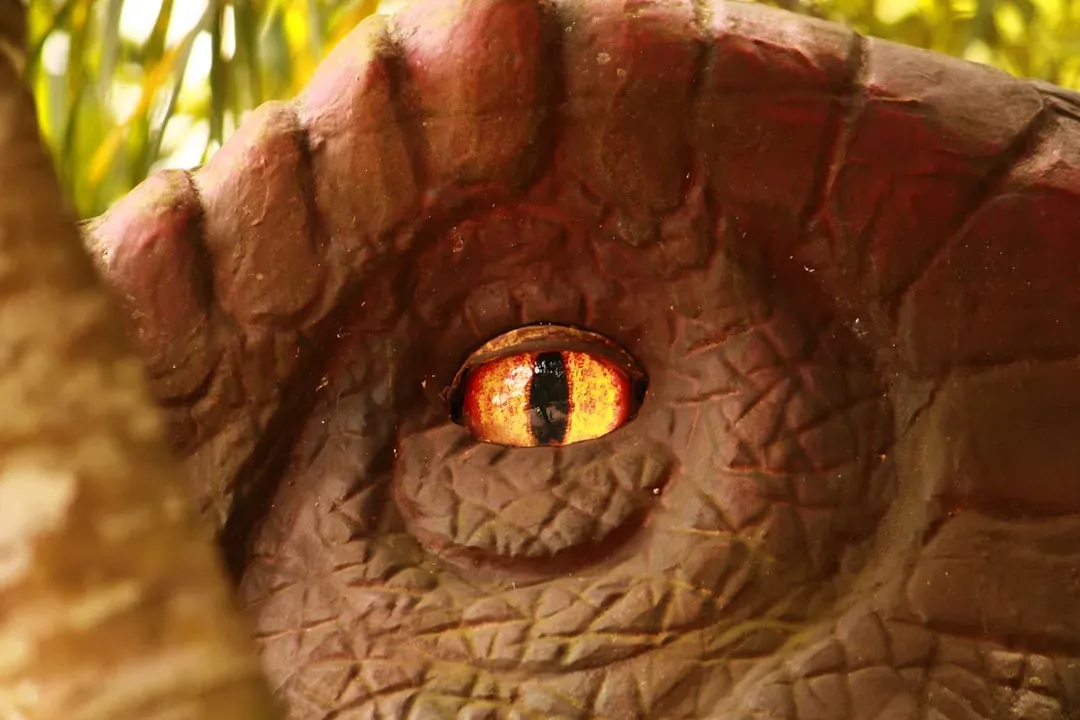
“Don’t move. It can’t see us if we don’t move.” It’s one of the most quoted lines in the film, and it is based on nothing. No fossil evidence, no bone cast analysis, no comparative anatomy study supports the idea that Tyrannosaurus rex had poor static vision and could only detect movement. The line appears to originate from a misapplication of frog visual processing data – frogs have a specific retinal response to moving prey – to an animal with completely different eye structure, brain organization, and predatory ecology. It’s a scientific non-sequitur that somehow became one of the most enduring “facts” about the most famous dinosaur in history.
What tyrannosaur skull anatomy actually shows is the opposite. The forward-facing eye sockets of T. rex indicate binocular vision – overlapping visual fields that provide excellent depth perception, exactly what an apex predator needs for accurate distance judgment. Brain cast analysis reveals large optic lobes consistent with acute visual processing. Some researchers have estimated T. rex visual acuity may have exceeded that of modern eagles, which is already extraordinary. The vision was almost certainly color-capable, given its bird-like neural architecture. Far from a motion-only sensor, T. rex likely had some of the sharpest eyes of any land predator that has ever lived. The movie’s most famous survival tip would get you killed.
At a Glance: T. rex Vision – Movie vs. Reality
- The film claims: T. rex could only detect movement and would miss a stationary target.
- The science says: T. rex had forward-facing eyes delivering a binocular field of approximately 55° – wider than that of a modern hawk.
- Visual acuity: Research estimates T. rex visual clarity may have been up to 13 times sharper than a human’s.
- Far-point vision: Objects may have remained distinct at distances of up to 6 kilometers.
- Bottom line: Standing perfectly still in front of a T. rex would not save you. Not even slightly.
#12 – The Complete Absence of Feathers Across All Species
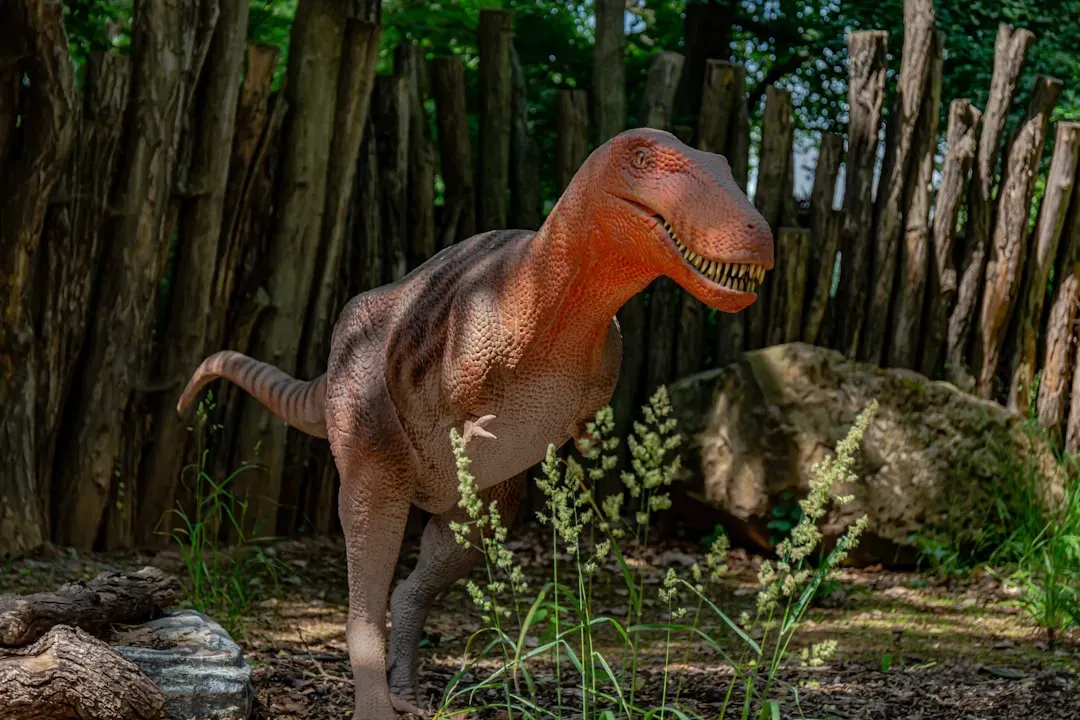
To understand how significant this omission is, you have to understand the timeline. By 1993, the scientific conversation around feathered dinosaurs was already building momentum. John Ostrom’s work in the 1960s and 70s had established the bird-dinosaur connection firmly enough that many researchers were already expecting feathered fossils to emerge. When Sinosauropteryx was described in 1996 – just three years after the film’s release – with unmistakable filamentous proto-feathers along its body, it confirmed what the science had been pointing toward. The film wasn’t made in total ignorance. It was made with an aesthetic choice that prioritized the scaly, reptilian image of dinosaurs over the emerging biological reality.
The downstream consequences have been profound. The Jurassic Park aesthetic became the global default for how non-specialists picture dinosaurs, and it has proven extraordinarily resistant to correction. Later entries in the franchise addressed this with in-universe explanations about frog DNA suppressing feather expression – a clever workaround that still leaves audiences with scaly dinosaurs. The irony is that feathered dromaeosaurids, accurately reconstructed with their actual turkey-sized bodies and vivid plumage, might have been more unsettling than the movie’s versions. A flock of feathered, crested, brilliantly colored Velociraptors moving with bird-like intelligence through a jungle is a genuinely different kind of horror – one that the fossil record actually supports.
#13 – Velociraptor Was the Size of a Large Turkey
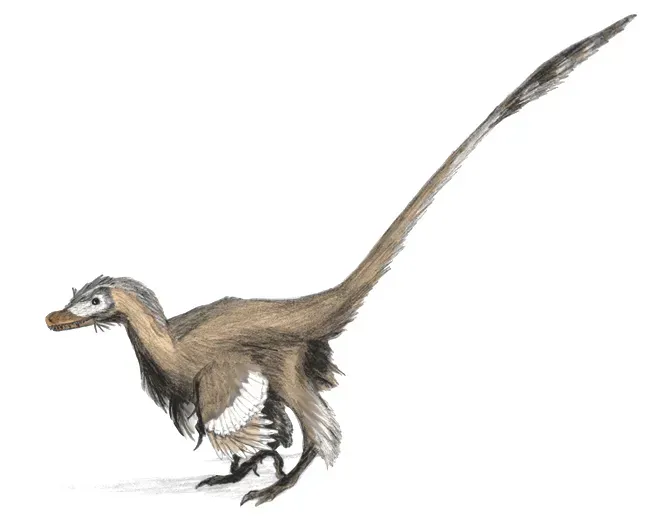
The film’s Velociraptors stand at roughly human chest height, move with terrifying speed across open ground, and open doors with their forelimbs. Real Velociraptor mongoliensis, known from multiple specimens found in Mongolia, stood about two feet tall at the hip and weighed somewhere around 15 to 45 pounds. That’s a large turkey. An aggressive, feathered, sickle-clawed turkey, but a turkey nonetheless. The production team reportedly based the creatures more closely on Deinonychus antirrhopus, a significantly larger North American dromaeosaurid, but kept the name Velociraptor because Michael Crichton had used it in the novel and it simply sounded better.
What gets lost in the size inflation is the actual character of Velociraptor as an animal. It was fast, agile, and equipped with a killing claw that was almost certainly used to pin and puncture small prey – birds, lizards, small mammals – rather than to disembowel large animals with dramatic slashing strokes. Its forearms couldn’t pronate the way the film shows, meaning it couldn’t grip a door handle in the depicted manner even at human size. It likely used its claw to grip struggling prey and then bit repeatedly, like a modern hawk or Komodo dragon. The real animal was a lean, feathered, bird-like predator whose actual hunting method is arguably more disturbing than what the film imagined – and nobody seems to know what it looked like, because the accurate version never made it to the screen.
Fast Facts: Real Velociraptor vs. Movie Velociraptor
- Hip height: ~0.5 to 0.6 meters (roughly knee-height on an adult human). The film’s version stood at chest height.
- Weight: 15–45 lbs. The movie’s raptor weighed more than ten times that.
- Feathers: Confirmed via quill knobs on a 2007 specimen. The film showed scales throughout.
- The sickle claw: Almost certainly used to pin and restrain prey, not to slash – lab testing showed it couldn’t tear open an abdominal wall.
- The real model: Filmmakers quietly based the movie raptors on Deinonychus, a much larger North American cousin – but kept the more dramatic name.
- Pack hunting: No concrete fossil evidence. Every Velociraptor specimen found in Mongolia was discovered alone.
#14 – Dilophosaurus Was Not a Venomous, Frilled Spitter
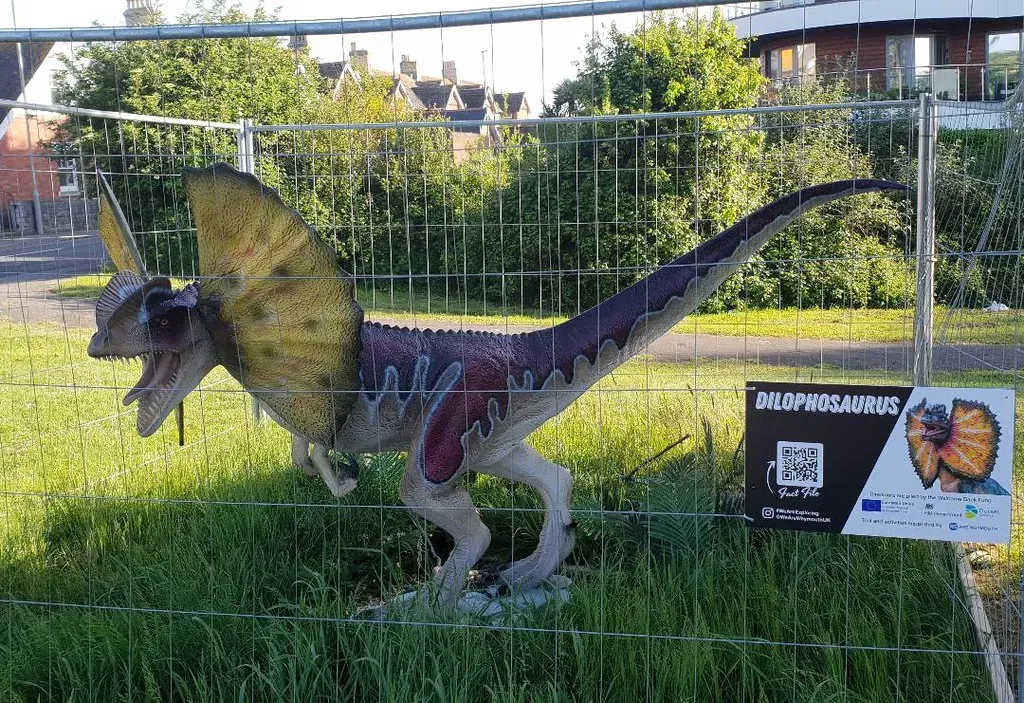
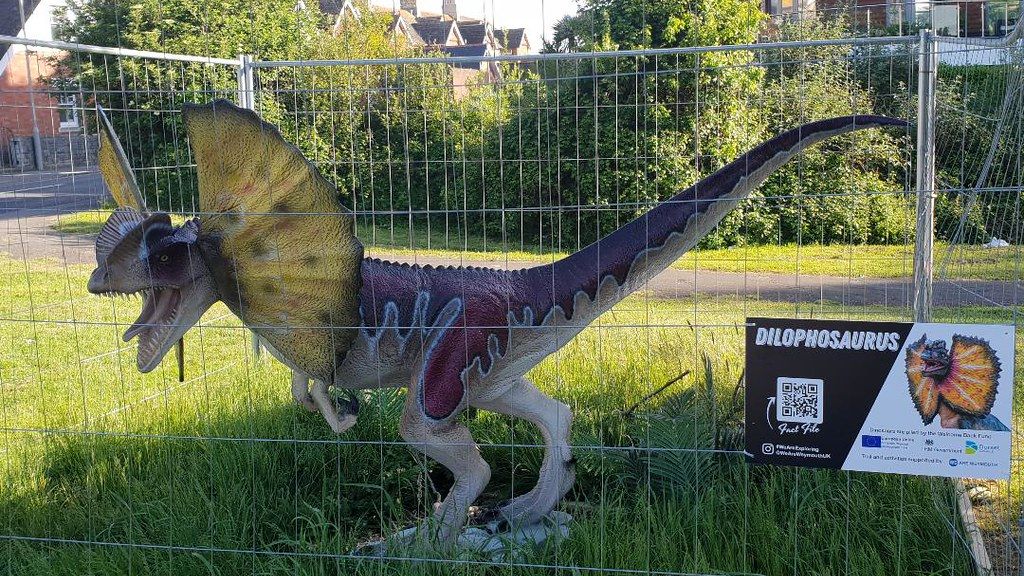
The Dilophosaurus scene is one of Jurassic Park’s most iconic moments: the small, seemingly harmless dinosaur that unfurls a cobra-like frill, spits blinding venom, and takes down Dennis Nedry in the rain. Every single element of that attack is invented. No fossil evidence exists for venom glands in Dilophosaurus. No skeletal structures support a retractable neck frill. No skin impressions or soft tissue fossils suggest any cobra-like display anatomy. The spitting mechanism has no biological parallel in any theropod lineage. The entire sequence is pure creative fabrication dressed up in a real animal’s name.
The actual Dilophosaurus wetherilli was also considerably larger than the film suggests – adults likely reached around 20 feet in length, making it one of the biggest predators of its Early Jurassic environment. The movie deliberately shrunk it for the sake of the surprise reveal, turning a large and genuinely impressive predator into something that reads as small and non-threatening right up until it isn’t. Palaeontologists point to this scene as a particularly sharp example of how the franchise borrowed real names and then attached entirely fictional biologies to them – a pattern that runs through almost every animal on this list. The real Dilophosaurus didn’t need venom or a frill to be dangerous. It was already one of the most formidable animals of its era, and almost nobody knows that, because the movie replaced it with something else entirely.
Jurassic Park is a masterpiece of filmmaking. It is not a documentary. The gap between those two things has been widening for thirty years, quietly documented in papers, conference talks, and museum exhibits that most people never see, while the film’s version of dinosaurs plays on endlessly in reruns, sequels, and the imagination of every child who grew up believing that T. rex couldn’t see you if you stood still. The science has moved on in extraordinary ways – toward feathered, warm-blooded, socially complex animals that are stranger and more beautiful than anything Spielberg put on screen. And here’s the uncomfortable truth the franchise will never admit: the real dinosaurs are more terrifying. A 68-million-year-old apex predator with vision sharper than an eagle, feathers like a giant bird of prey, and a roar you’d feel in your ribcage before you ever heard it – that’s not a creature Hollywood invented. That’s what actually walked this planet. The palaeontologists have been trying to show us that version for thirty years. Maybe it’s finally time we let them.