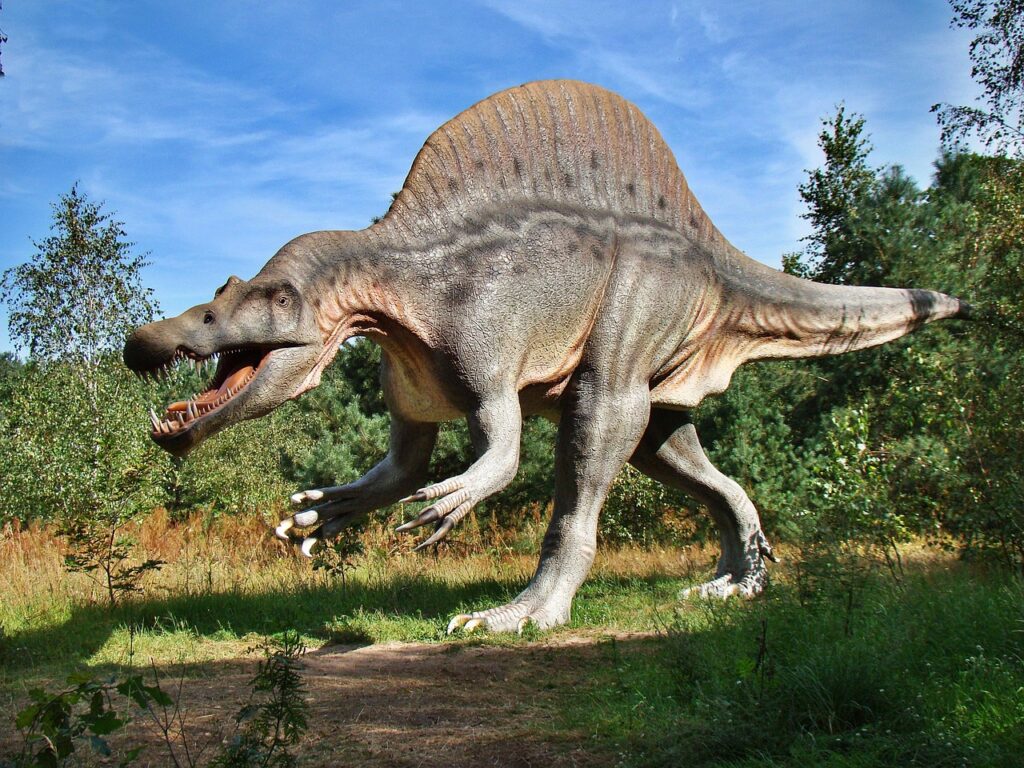
Most people picture Spinosaurus as a bigger, meaner T. rex with a sail bolted on for drama. That image is almost entirely wrong. The real animal was a river-haunting, fish-snatching oddball whose exact hunting style paleontologists are still arguing about in academic journals right now, in 2024 and 2025 papers that keep flipping the story.
If you’d actually waded into a Cretaceous swamp 95 million years ago and locked eyes with this thing, what happened next wouldn’t look anything like the movies – and the real sequence of events is stranger, and in some ways more unsettling, than anything a screenwriter could invent. Here’s what the fossil evidence actually says, one uncomfortable detail at a time.
#14 – It Would Probably Smell and Feel You Before It Ever Saw You
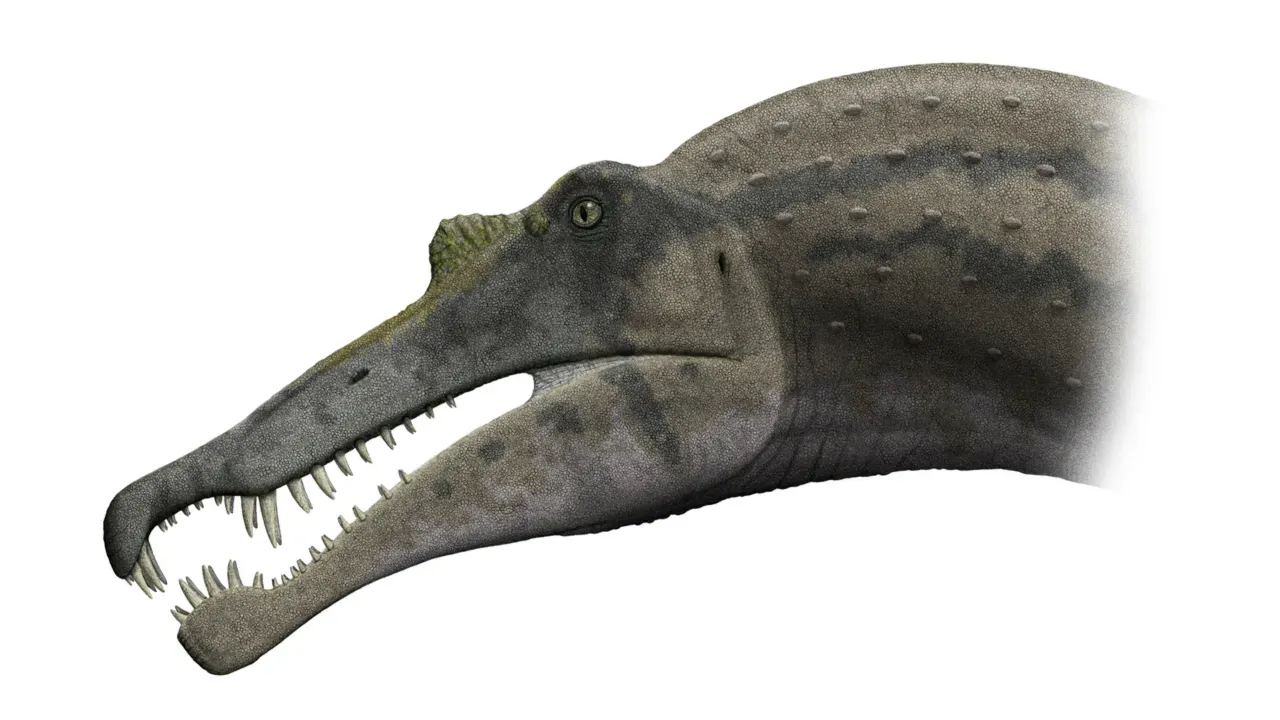
A Spinosaurus encounter wouldn’t start with a roar or a shadow falling over you. It would start with sensory systems built specifically for detecting things moving through water, long before you were ever in visual range.
Spinosaurus had small nostrils positioned unusually far back on its skull, and researchers believe this placement allowed it to breathe when part of its head was submerged. The real surprise is on its snout tip: neurovascular openings, similar to the ones on crocodile and alligator snouts, contain pressure receptors that sense movement in water, and it’s likely these openings worked the same way in Spinosaurus. That means a splashing human wading through shallow water could register as a target before you ever noticed a snout breaking the surface – and that’s just the opening move.
#13 – You’d Find It Wading, Not Stalking Open Ground
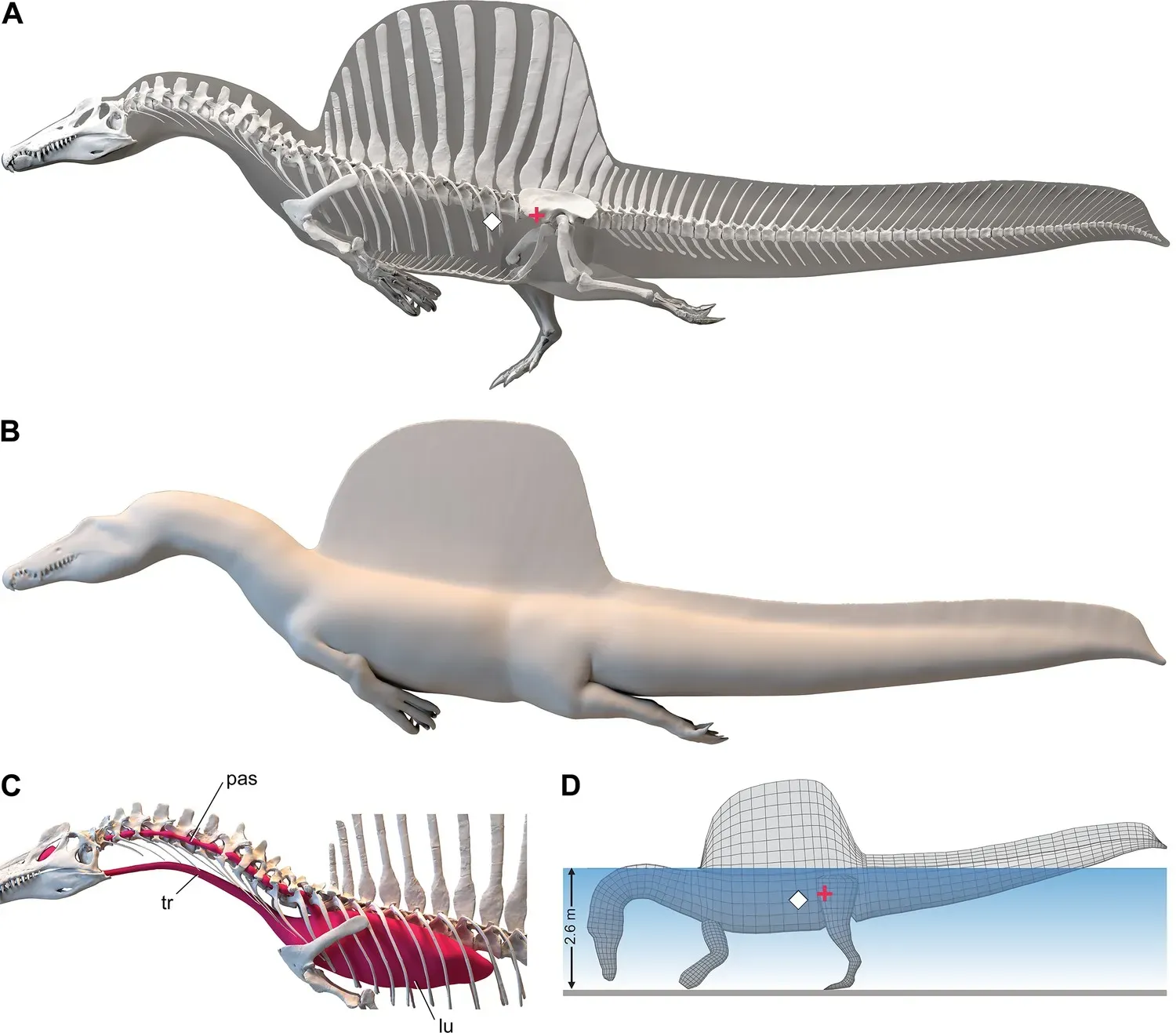
Forget the dry savanna chase scenes. If you met a Spinosaurus, it almost certainly wouldn’t be on solid, open terrain at all.
Its listed habitat is straightforward: rivers and banks, with a diet centered on fish and other aquatic animals. Researchers describe it as a semiaquatic, bipedal ambush piscivore that stuck to the margins of coastal and inland waterways. It was practically glued to water’s edge its entire life, which means the only realistic place you’d ever cross paths with one is standing in or near a river, lagoon, or floodplain – exactly the terrain that gave it every advantage and gave you almost none.
#12 – The Sail Would Be the First Thing That Actually Stopped You Cold
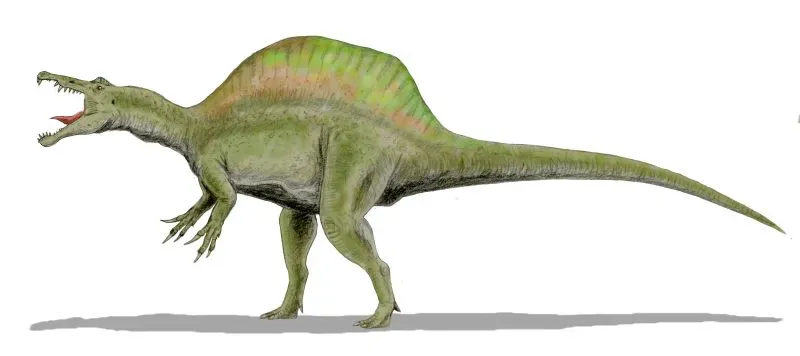
Before you processed the teeth or the size, your eyes would go straight to the sail rising off its back like a bizarre dorsal fin bolted onto a lizard.
Scientists still don’t agree on why it existed. The sail’s function has been debated for decades, with four main hypotheses in play: thermoregulation, visual display, muscle attachment, and hydrodynamics. That means the structure staring back at you could have been a heat-regulating radiator, a mating billboard, a swimming stabilizer, or some mix of all three depending on the day. Nobody alive has ever conclusively proven a single one of these theories – one of the most famous dinosaurs on Earth still carries a headline feature that remains a genuine scientific mystery.
Fast Facts
- Thermoregulation: The sail may have worked like a natural radiator, helping shed excess body heat in a hot Cretaceous climate.
- Visual display: A tall, striking sail could have signaled fitness to potential mates or warned off rivals.
- Muscle attachment: Some researchers argue it simply anchored powerful back muscles rather than serving any display purpose.
- Hydrodynamics: A smaller group of studies suggests it may have helped stabilize the animal while swimming.
#11 – It Might Not Even Register You As Food
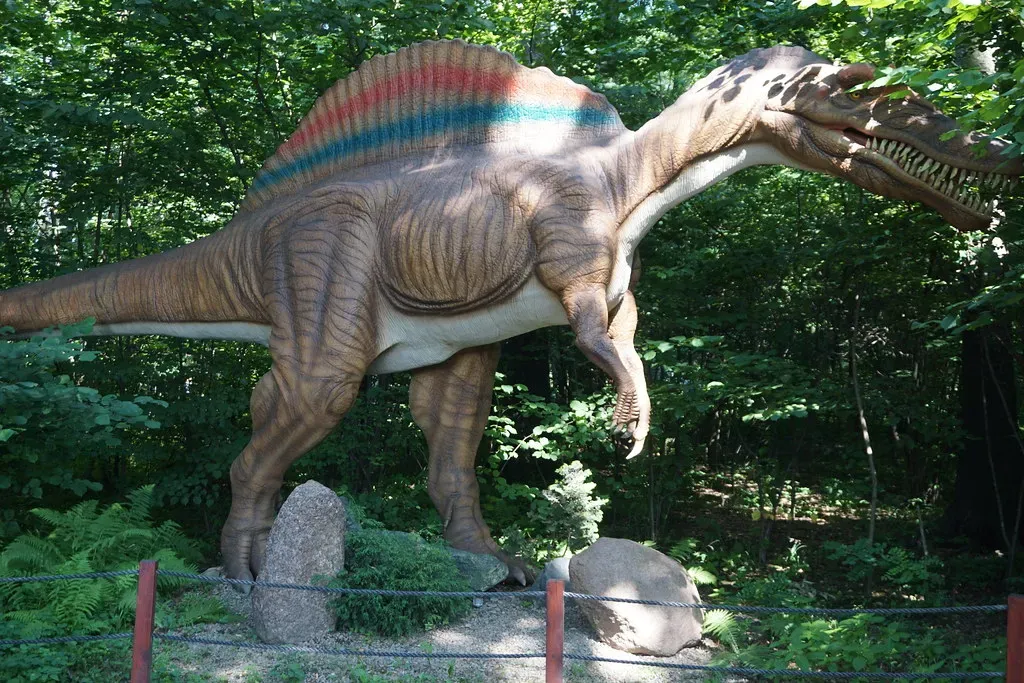
Here’s the uncomfortable twist: meeting a Spinosaurus doesn’t guarantee it cares about you at all.
Its whole anatomy was fine-tuned for fish – a long, narrow skull and straight, conical teeth built for grabbing slippery aquatic prey, not for taking down large land animals. A 2024 study did complicate this slightly, finding that Spinosaurus and its relatives weren’t strict fish-eaters and were capable of preying on smaller terrestrial vertebrates too. So you weren’t automatically safe just because you weren’t a fish, but you also weren’t its default menu item. A human-sized creature standing upright on a riverbank simply wasn’t its typical target profile.
#10 – Its Bite Would Be Nothing Like the Crushing Snap You Picture
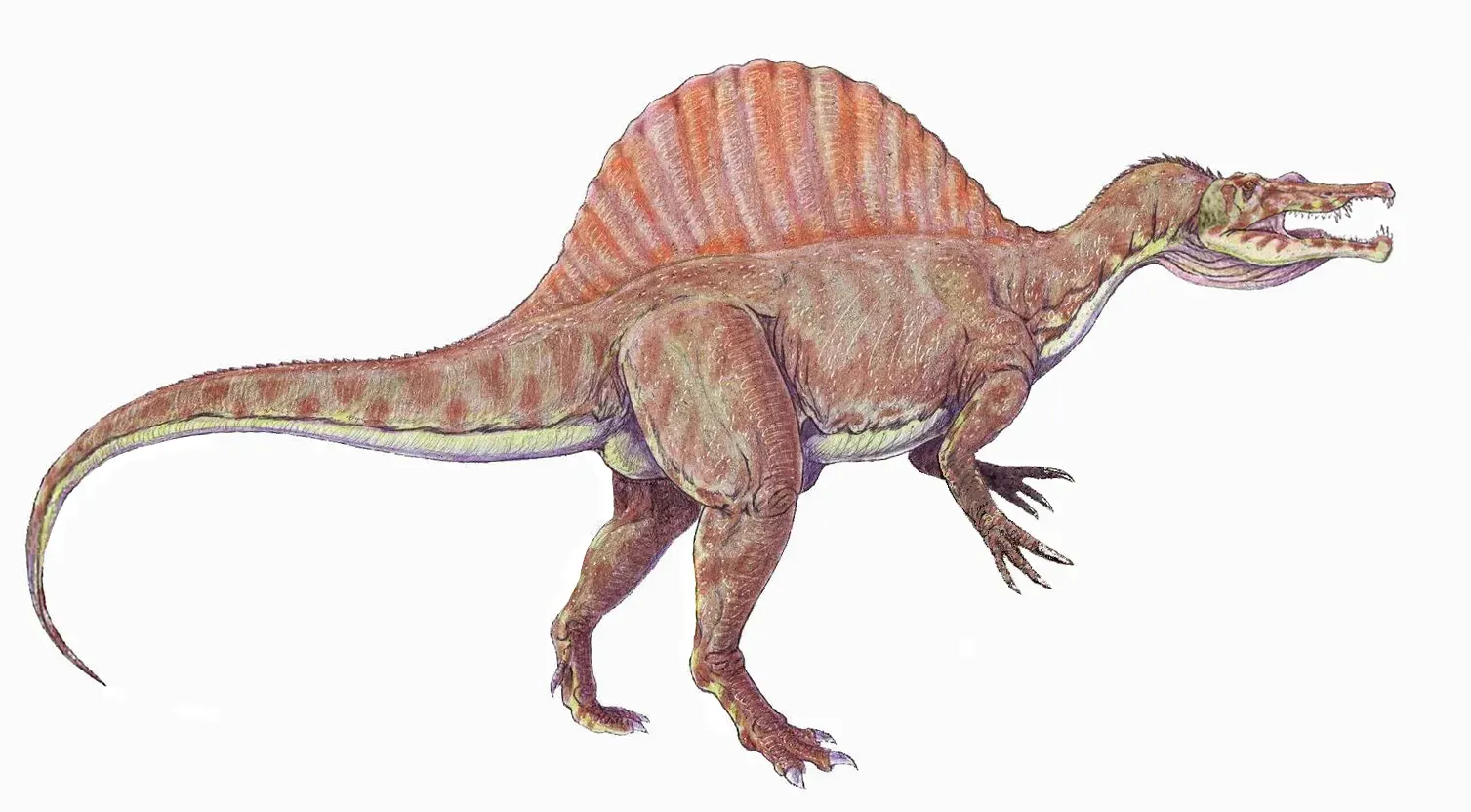
This is where the “T. rex with a sail” myth completely falls apart. Spinosaurus’s jaws weren’t built to crush bone.
A 2024 analysis found Spinosaurus had a relatively weak bite force compared to other theropods, with teeth poor for tearing apart prey and jaws better suited for quickly striking, puncturing, and interlocking to secure a meal for swallowing. That’s a spear-and-swallow strategy, not a bone-crushing one. Other estimates disagree sharply, with some sources claiming a bite force equivalent to 6 tons – enough to rip a car in half. Even the experts studying the same skull can’t agree on whether that bite was devastating or surprisingly gentle, which tells you how incomplete our picture of this animal still is.
#9 – You Could Probably Outrun It On Dry Land
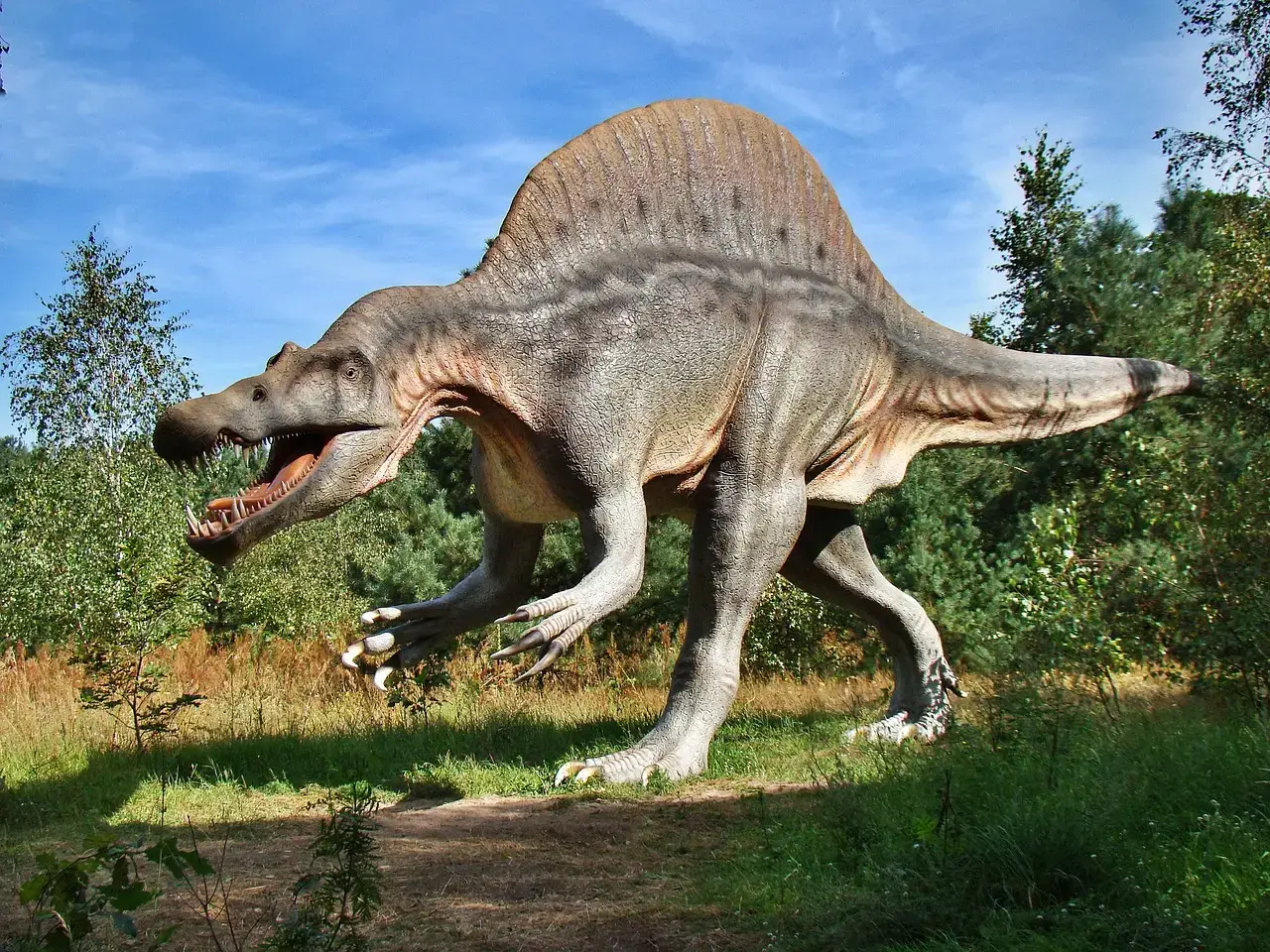
This is the detail that would have actually saved most people: Spinosaurus was not built for a foot chase across solid ground.
Researchers studying its skeleton concluded it needed extra bone strength just to support its weight on relatively short hind limbs – a wading adaptation, not a sprinting one. Combine short back legs with a body designed to stay low and stable in water, and you get an animal that was probably slow and clumsy once it left the shoreline. A creature nearly 50 feet long may have genuinely struggled to catch a sprinting adult human on flat, dry terrain. That single anatomical detail flips the entire “unstoppable monster” narrative on its head.
#8 – Your Only Real Escape Plan Would Be Getting Out of the Water
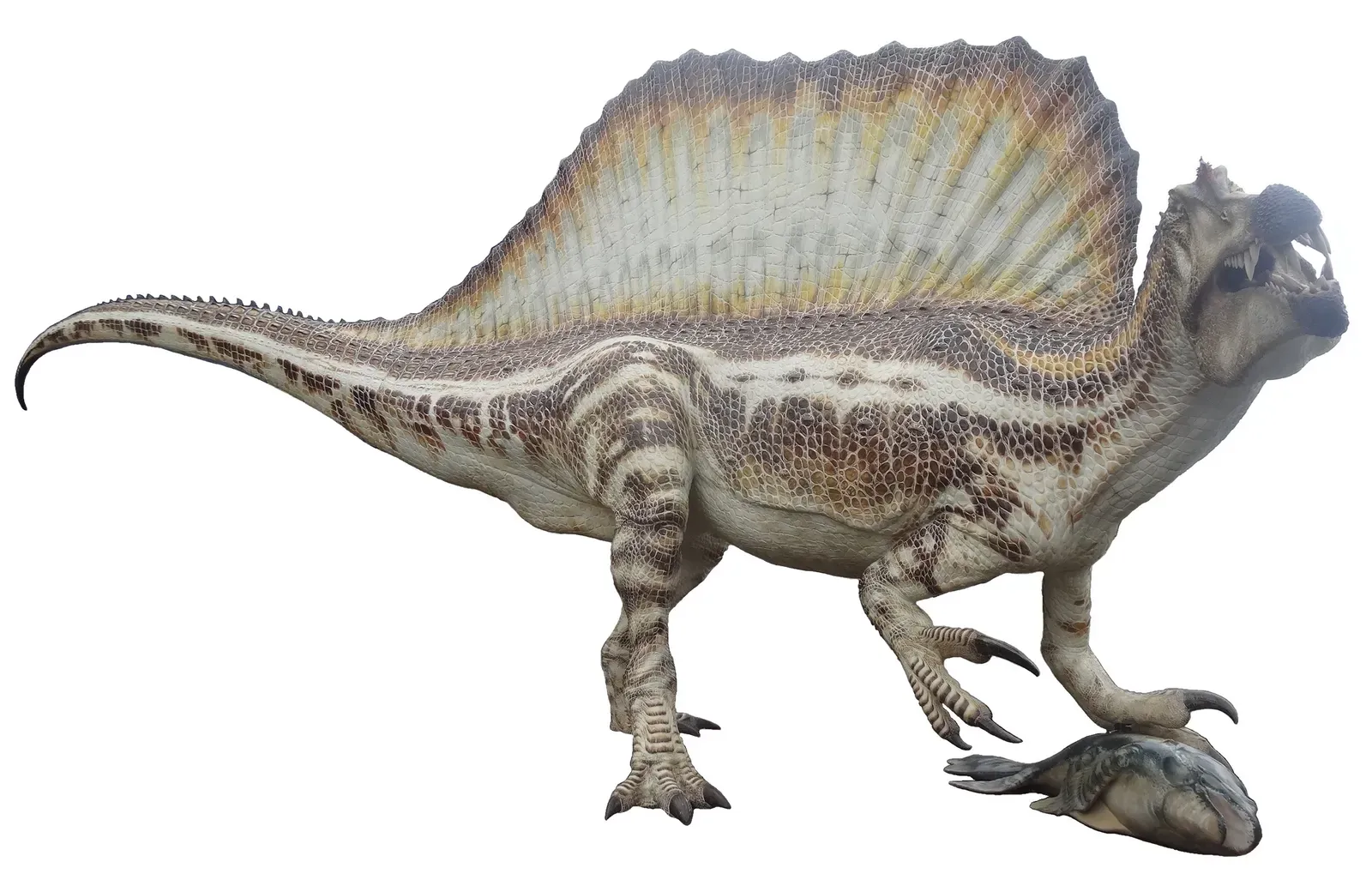
If Spinosaurus’s short legs made it slow on land, the opposite was true the moment you were in its territory: the water.
Paul Sereno’s team modeled it as an animal able to wade into waterways more than six feet deep without floating, ambushing fish of any size with its claws and jaws while keeping its toes anchored in the mud. That’s an animal with home-field advantage in exactly the environment where you’d be slowest and most vulnerable. Staying anchored to the riverbed while still reaching prey in deep water is a hunting trick almost no other dinosaur ever pulled off. The moment you hit dry land, though, the entire equation reversed in your favor.
#7 – Whether It Could Even Chase You Into Deep Water Is Still Disputed
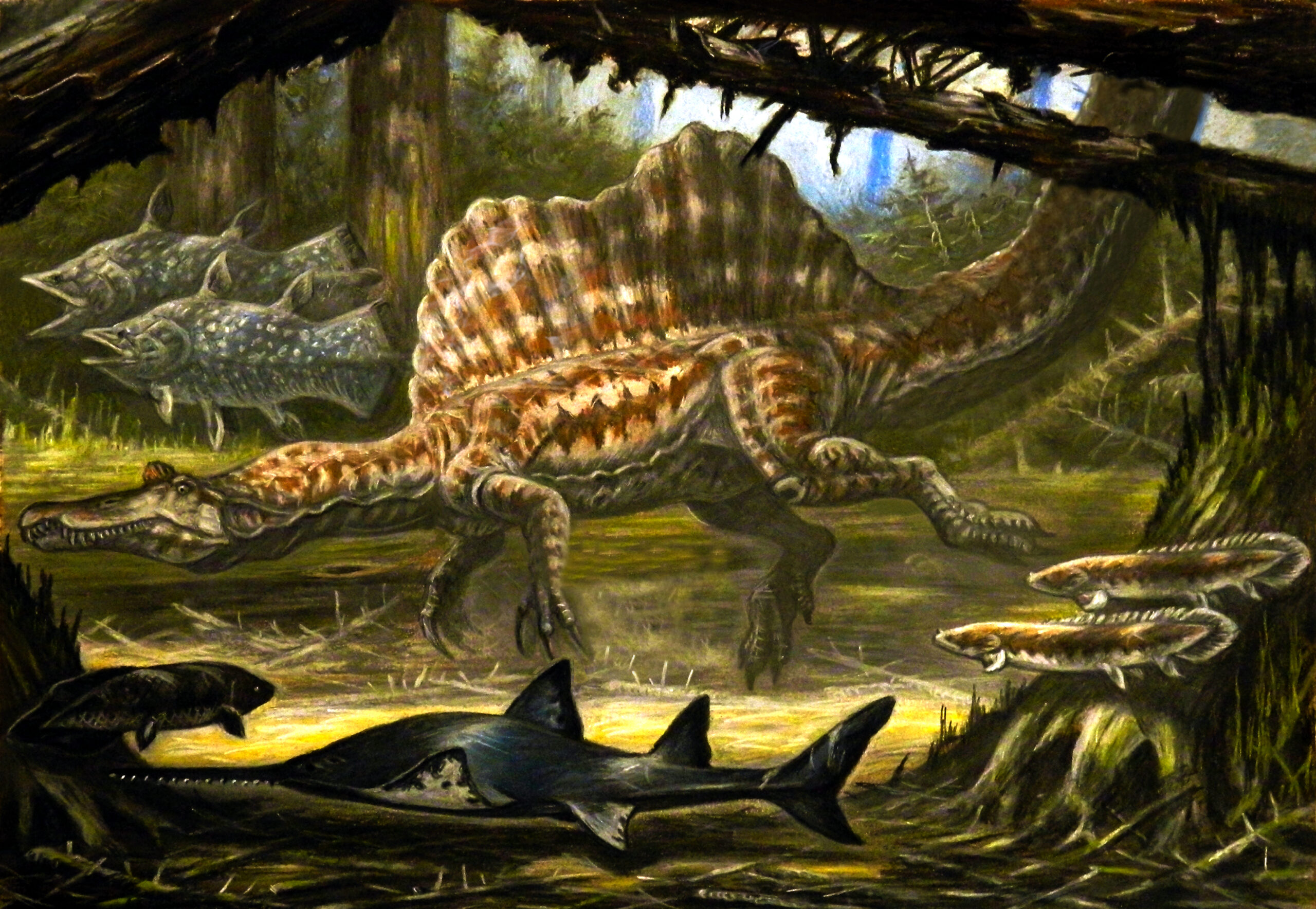
You might assume a swamp monster this famous could obviously dive and pursue you underwater. Recent science says: maybe not.
A 2024 paper directly challenged earlier diving claims, with researchers now saying it’s uncertain whether Spinosaurus could fully submerge and pursue prey at all. One camp nicknamed it a “heron from hell” rather than a deep-diving hunter, arguing it waded and struck rather than chased prey underwater. The idea of Spinosaurus torpedoing after you like a crocodile may be almost entirely Hollywood invention. If this newer research holds up, your realistic worst-case scenario in deep water might just be it standing at the edge, unable to follow.
Spinosaurus prowled its world “as a hellish heron-like beast, commanding the waterways.”
Paul Sereno, paleontologist
#6 – Its Teeth Were Built to Grip, Not to Rip You Apart
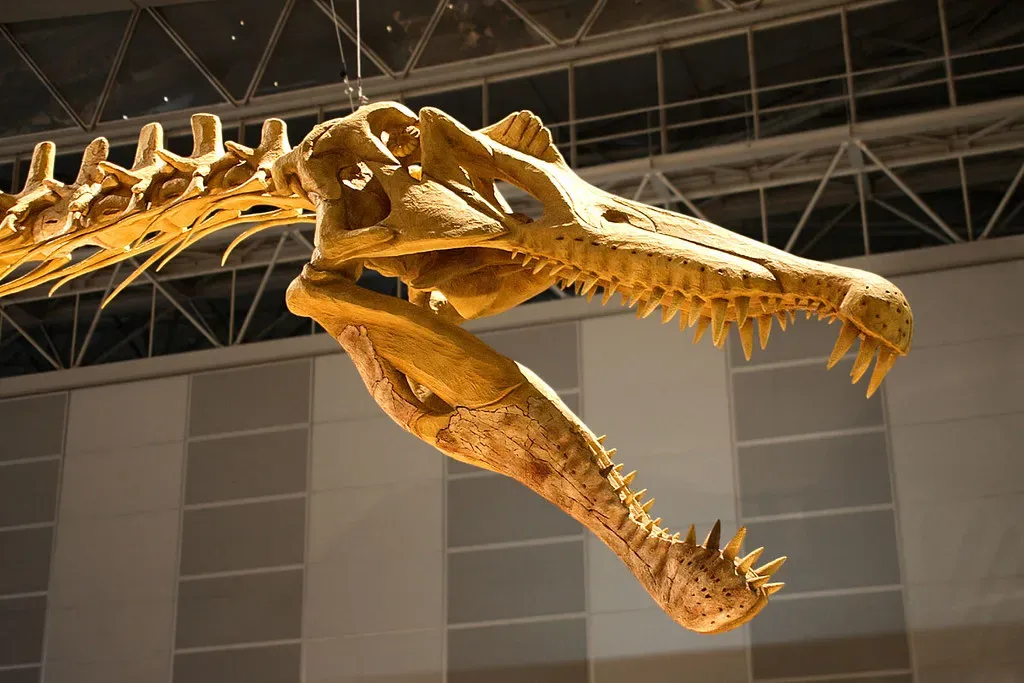
Even if it did strike, what came next probably wouldn’t look like the violent thrashing you’d expect from a movie predator.
Its jaws contained 64 conical teeth, a shape suited to holding onto slick, struggling prey rather than sawing through flesh like a serrated blade. That’s a fundamentally different weapon system than a T. rex’s bone-crushing bite. Conical, interlocking teeth are a fish-catching design, borrowed almost identically from modern crocodilians, which is exactly why paleontologists keep comparing Spinosaurus’s mouth to a crocodile’s rather than another dinosaur’s. A grip-and-hold bite is terrifying, but it’s a different kind of terrifying than a shredding one.
#5 – A Second, Fatal Bite Was Never Guaranteed
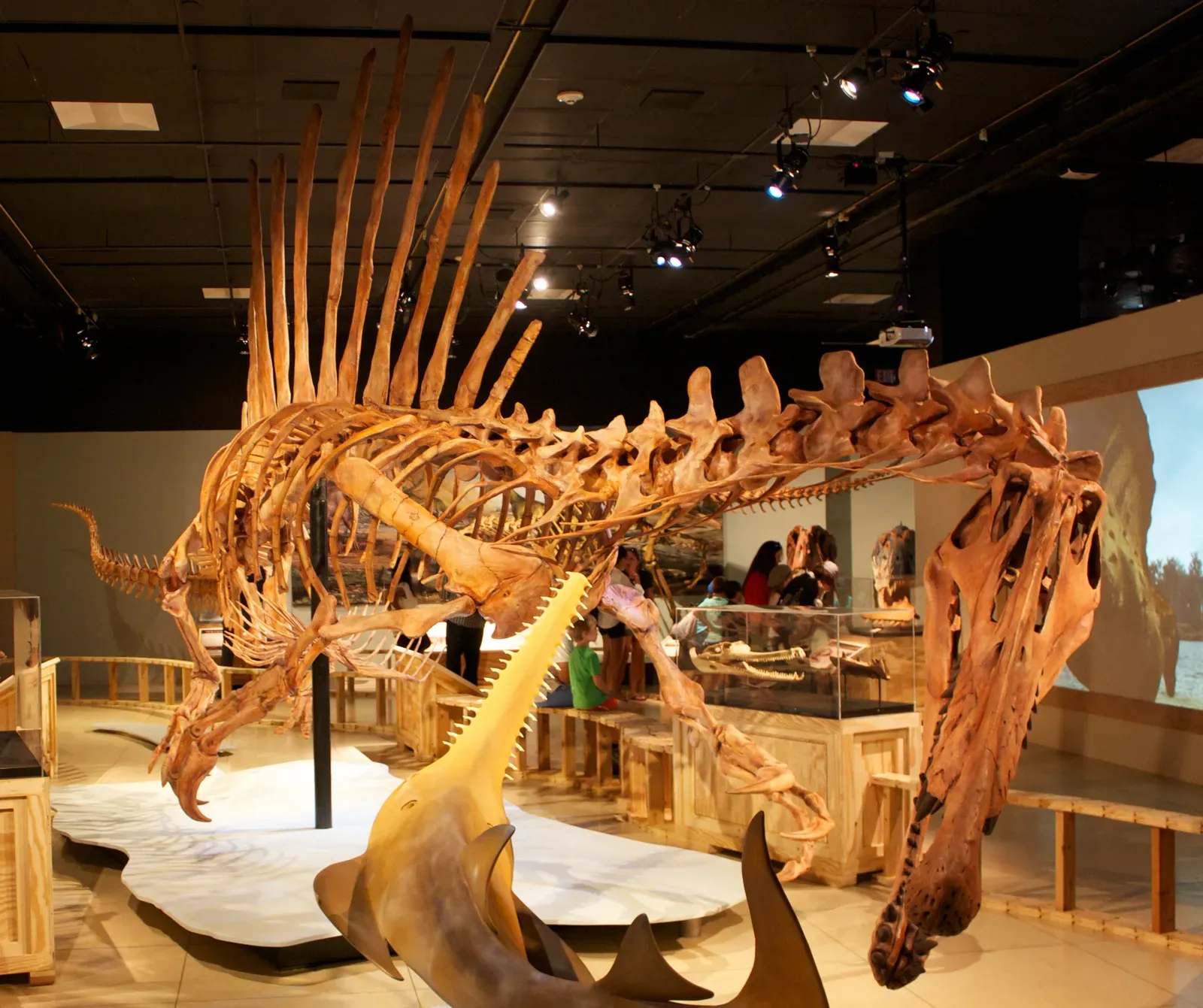
Here’s a genuinely controversial claim among paleontologists: Spinosaurus might not have finished what it started nearly as often as people assume.
Because its bite force was relatively weak compared to other theropods, a single strike wasn’t necessarily lethal on its own the way a T. rex bite could be. Many researchers now argue this animal relied on speed and surprise in water, not overwhelming crushing power, to subdue prey. A weak-bite predator that primarily grips and swallows is a completely different threat profile than the apex-crusher reputation Spinosaurus has in pop culture. Some experts even suggest a determined, struggling target had a real shot at breaking free from that first strike.
#4 – You’d Be Facing an Animal Scientists Still Can’t Fully Agree On
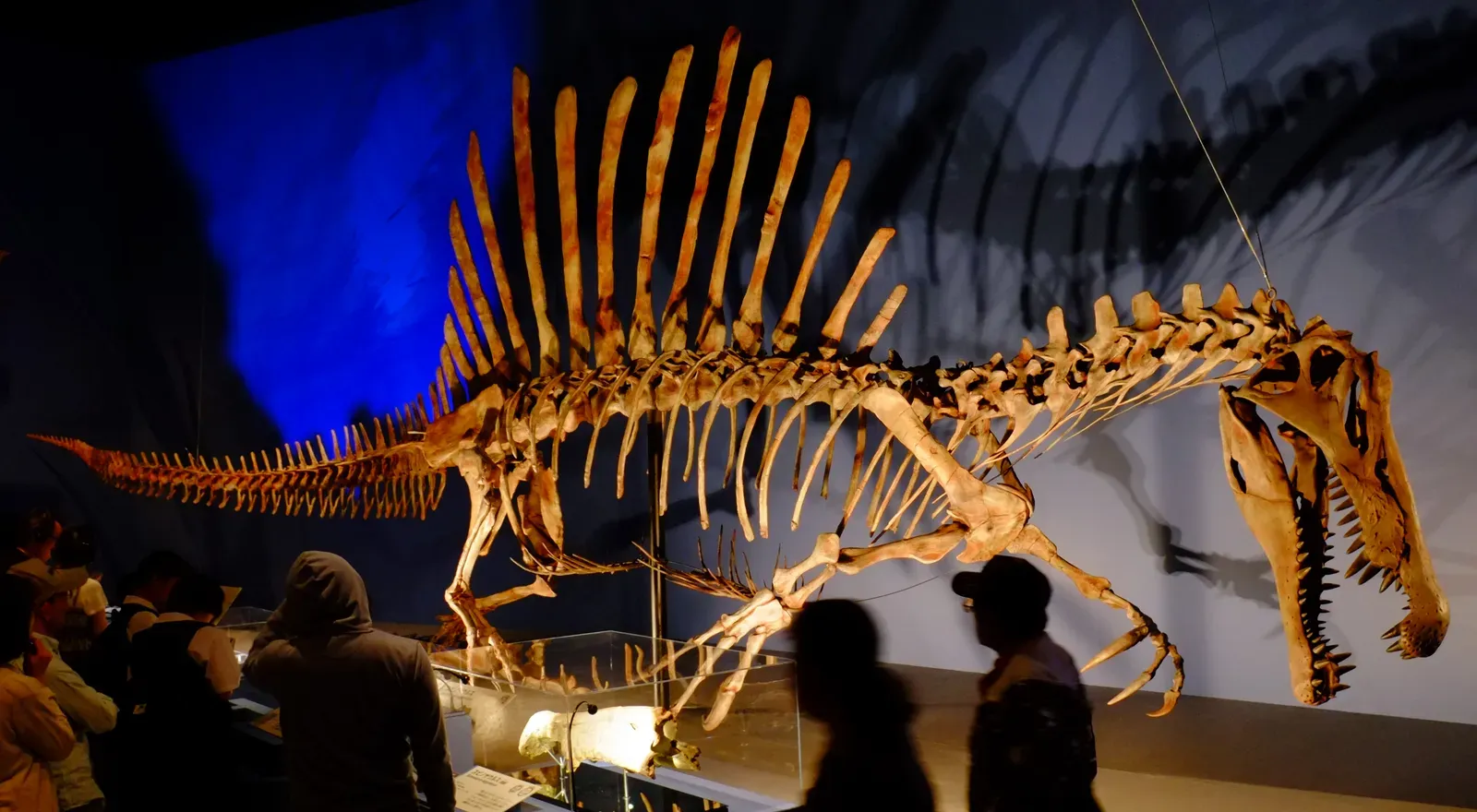
This is the part that should genuinely unsettle you: even professional paleontologists don’t agree on what kind of predator you’d actually be dealing with.
One major 2020 and 2022 research camp argued Spinosaurus had dense bone walls similar to penguins, suggesting it spent most of its time in water using heavier bones as ballast to submerge itself regularly. A rival 2021 study led by Hone and Holtz instead suggested a more terrestrial, generalist wading lifestyle, similar to modern herons, skuas, petrels, and storks. Two respected research teams looked at the same bones and reached almost opposite conclusions about how aquatic this animal even was. Your hypothetical encounter could have unfolded completely differently depending on which theory turns out to be correct.
Worth Knowing
- The 2020 and 2022 studies measured bone density and concluded Spinosaurus had heavy, ballast-like bones similar to a penguin’s.
- The 2021 Hone and Holtz review argued instead for a wading lifestyle closer to modern herons, storks, and skuas.
- A 2024 follow-up paper challenged the bone-density method itself, questioning whether the earlier statistics actually proved deep diving.
- As of now, no single camp has produced evidence strong enough to end the debate for good.
#3 – Meeting a Spinosaurus Would Have Been a Coin Flip Compared to Meeting a T. Rex
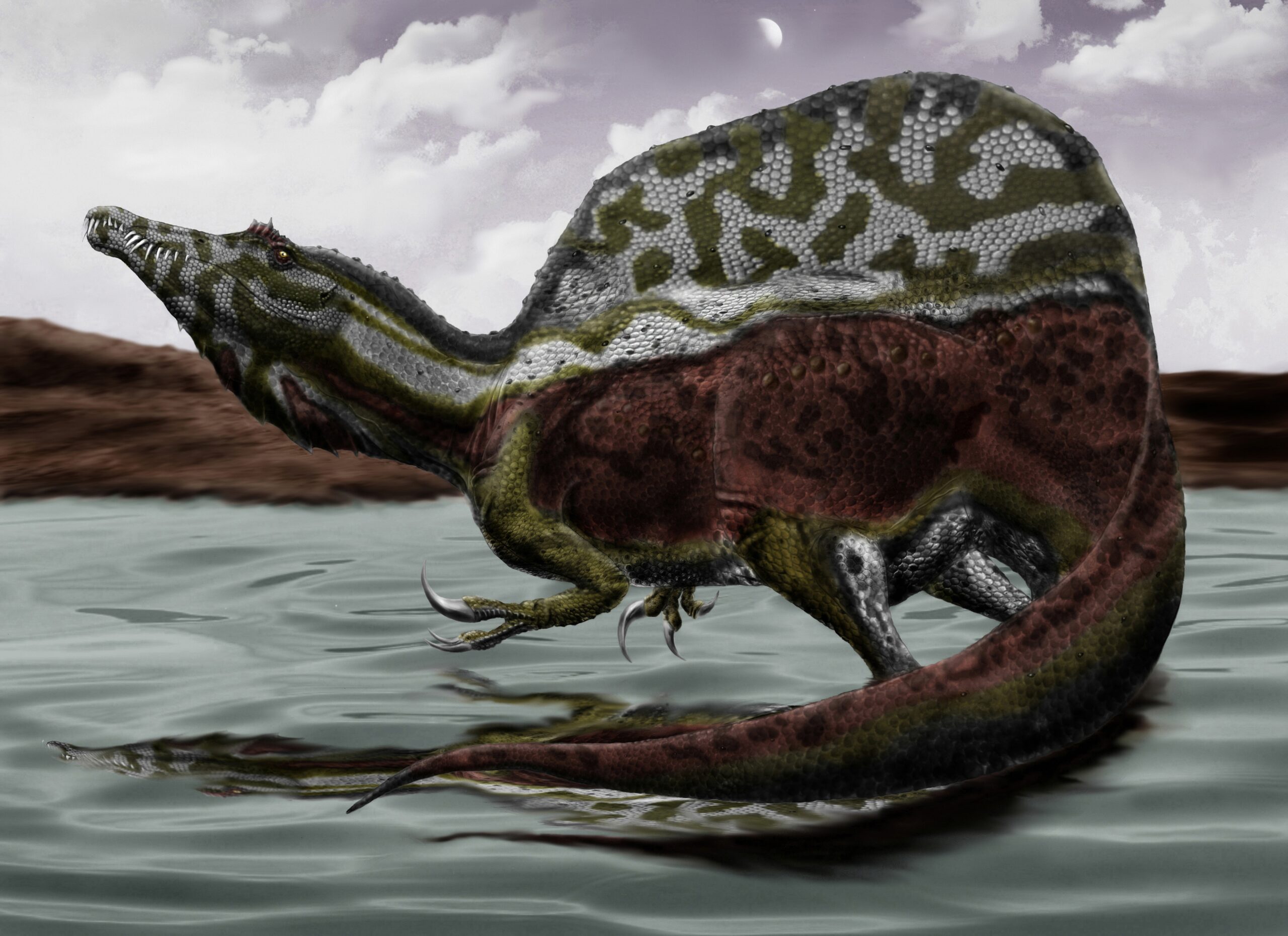
Since everyone eventually asks: how would this stack up against dinosaur royalty? The comparison is closer, and stranger, than you’d think.
Spinosaurus is generally considered longer and heavier than Tyrannosaurus, likely the largest known carnivorous dinosaur, with a body length of 14-18 meters. But length isn’t everything. Analysts note that while Spinosaurus outweighed T. rex, there’s no denying the raw strength of T. rex’s bite, and while T. rex was purely a land predator, Spinosaurus may have had a sneak-attack advantage by hiding underwater. Size alone would not have made Spinosaurus the scarier encounter – location would have. Meet it on land, and the advantage tilts hard toward a T. rex-style ambush predator instead.
Quick Compare
| Spinosaurus | T. Rex | |
|---|---|---|
| Length | 14-18 meters | ~12-13 meters |
| Primary habitat | Rivers & waterways | Dry, open land |
| Bite style | Weaker, grip-and-hold | Powerful, bone-crushing |
| Home-field advantage | In the water | On open ground |
#2 – Your Best-Case Scenario Might Just Be Getting Completely Ignored
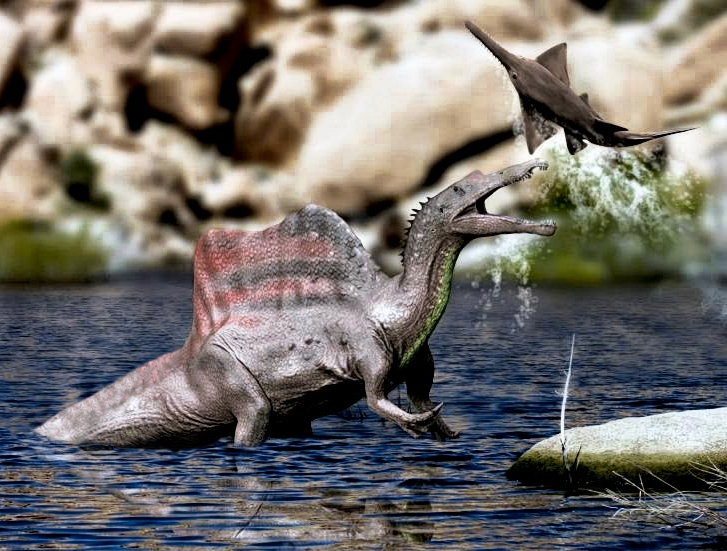
Here’s the controversial opinion many casual dinosaur fans don’t want to hear: most human-Spinosaurus encounters would probably have ended in nothing happening at all.
Given that it was a semiaquatic, bipedal ambush piscivore locked onto fish-sized, slippery, aquatic targets, a person standing on a riverbank simply doesn’t match its preferred prey profile or hunting trigger. Ambush predators typically react to specific movement and size cues, not just any large object nearby. The most statistically likely outcome of a real encounter is that it would have simply kept fishing and left you alone, which is a far less cinematic ending than anyone wants, but it’s the outcome the ecology actually supports.
#1 – Your Actual Worst-Case Scenario Was Drowning, Not Being Eaten
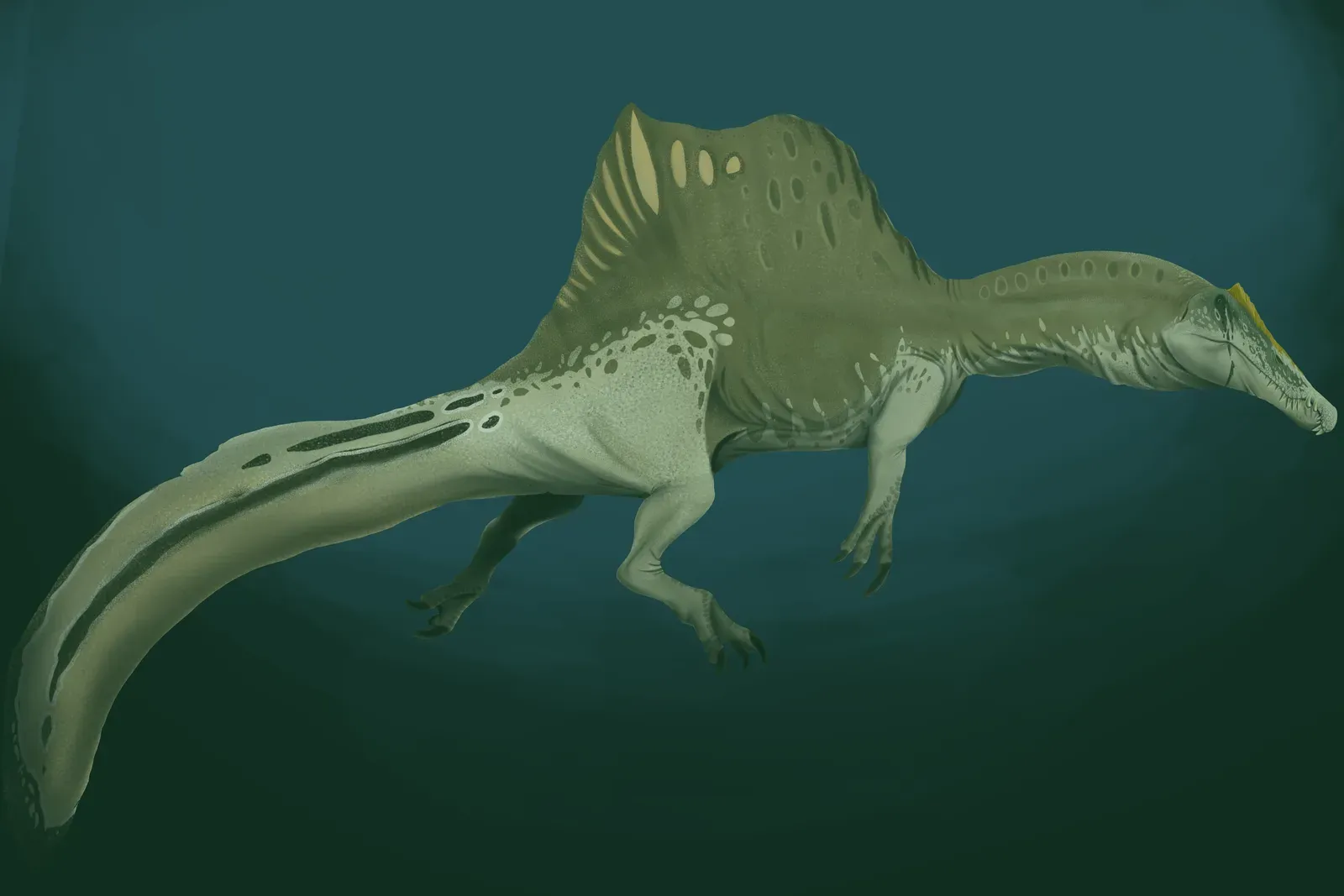
If things did go wrong, the ending probably wouldn’t look like a T. rex-style mauling. It would look like something far quieter, and honestly, more disturbing.
Given its ambush strategy in waterways more than six feet deep and a bite built for gripping rather than tearing, the realistic danger wasn’t dismemberment – it was being seized, held under, and drowned, the way crocodiles subdue large prey today. Its jaws were designed to interlock and hold, not shred, meaning a grip-and-submerge tactic makes far more biological sense than a violent, bloody thrashing fight. The single most dangerous moment in any hypothetical encounter wasn’t the bite itself – it was simply being pulled beneath the surface. That quiet, drowning-style ending is a far more chilling final scene than anything a movie screenwriter ever invented.
The Bottom Line
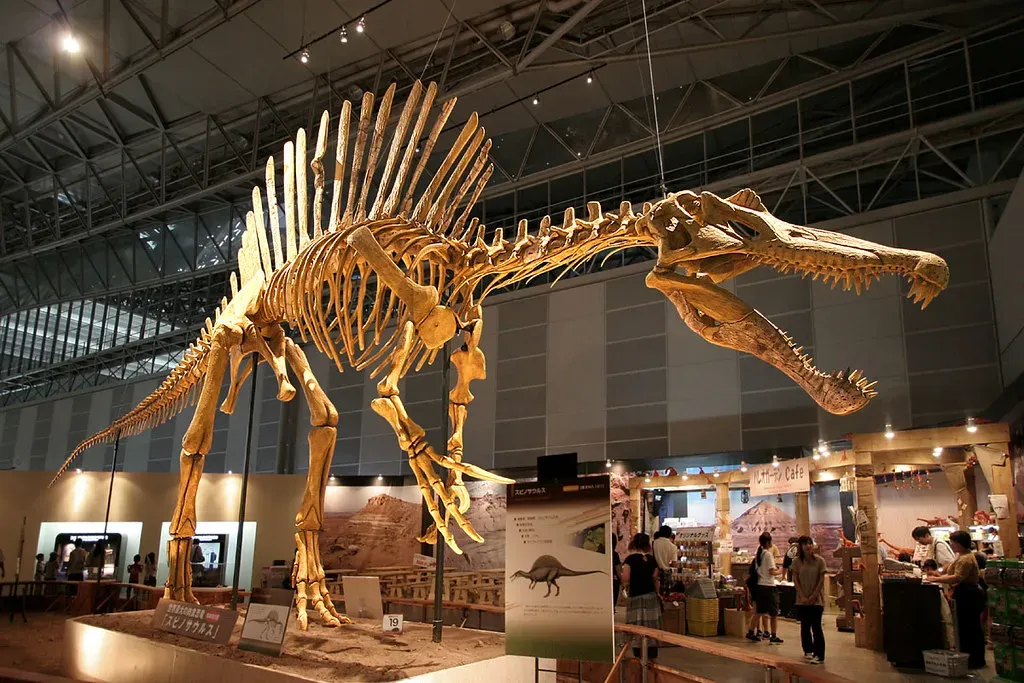
Strip away the movie mythology, and Spinosaurus stops being an unstoppable land monster and becomes something far weirder: a giant, sail-backed river ambush predator that was probably slow on land, weak-jawed compared to its reputation, and mostly indifferent to anything that wasn’t fish-shaped.
Its actual danger lived almost entirely in the water, not on the shore. Frankly, we think the real Spinosaurus is more fascinating – and more legitimately unsettling – than the exaggerated killer pop culture sold us. Which theory do you buy: heron-like wader or genuine river monster? Drop your take in the comments.