
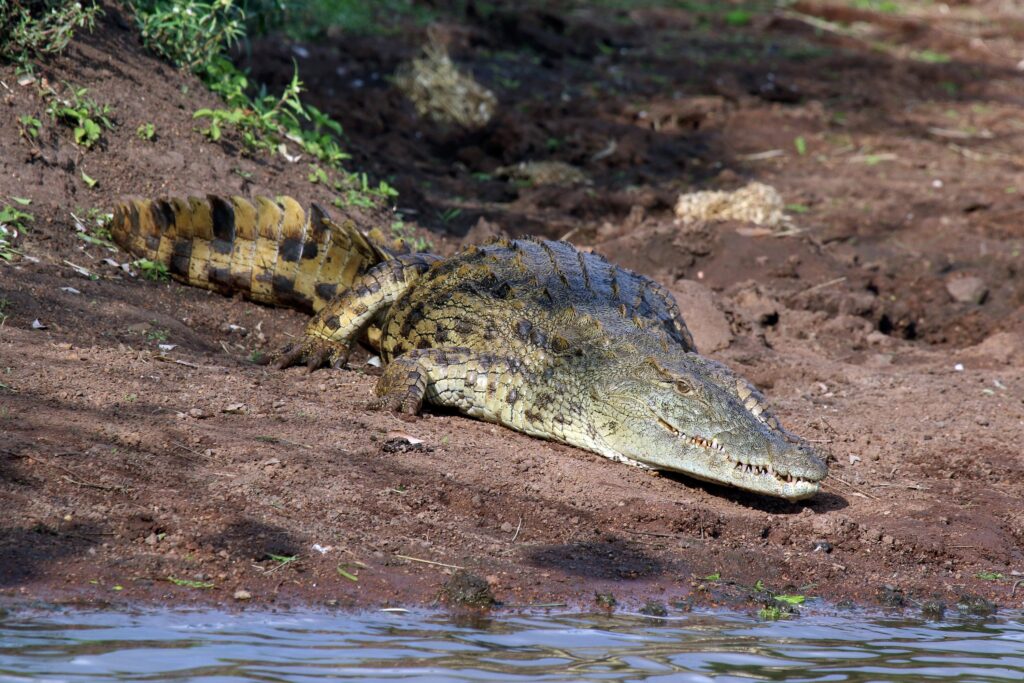
Most people assume the Nile crocodile is basically a leftover dinosaur that time forgot – a “primitive” animal too stubborn or too dumb to evolve. That myth is almost insulting once you know the real story. Paleontologists have known for decades that this isn’t an animal that failed to change. It’s an animal that got the blueprint right the first time.
What’s actually happening is stranger and more impressive than any “living fossil” headline suggests. A handful of very specific design features turned out to be so brutally effective that natural selection never found a reason to replace them. The same jaws, the same skin, the same underwater tricks have been recycled across 200 million years while entire dynasties of animals rose and disappeared around them. Here are the 14 things about the Nile crocodile that science says never needed fixing – and a few of them will change how you look at this animal completely.
#1 – The Armored Skin That Doubles as a Radiator
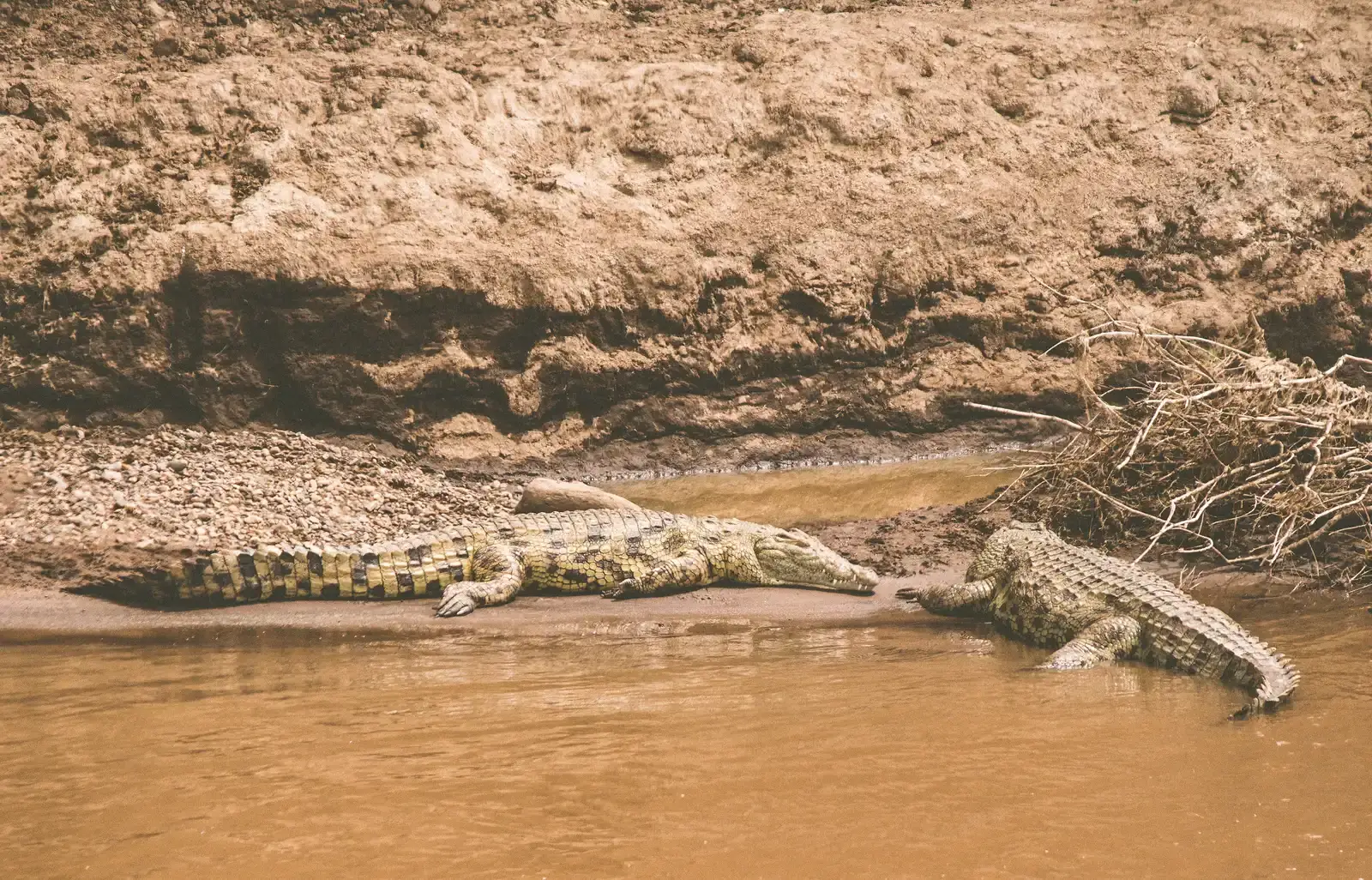
Nile crocodiles wear body armor that would make a medieval knight jealous, and it hasn’t been redesigned in geological ages. Their tough, keratinized skin features bony plates called osteoderms, creating an armored exterior, with thick, overlapping scales protecting them throughout sub-Saharan Africa’s rivers and Madagascar’s wetlands.
What most people don’t realize is that this armor isn’t purely defensive. Osteoderms provide protection and also function in heat exchange by absorbing and releasing warmth. The plates act as a built-in solar panel, letting the crocodile bask efficiently and manage its body temperature without wasting energy.
The bony scutes running down the back and tail form rows so consistent that fossil crocodylomorphs from the Jurassic show the same pattern. It’s a dual-purpose design – armor and thermostat in one – that modern engineers still study.
The armor is impressive. The face is where things get genuinely strange.
#2 – A Face Built for Total Submersion
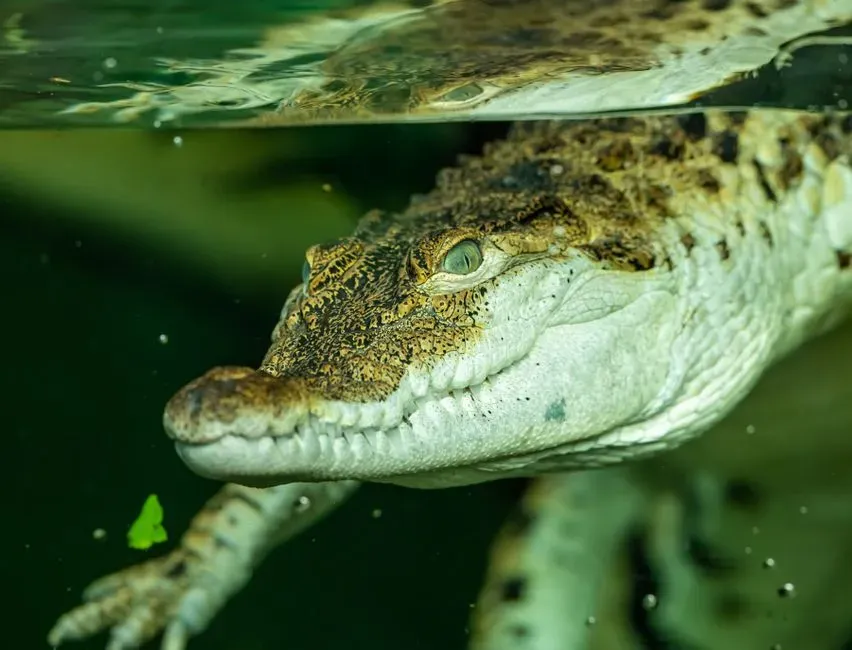
The Nile crocodile’s head is arguably the most efficient ambush tool in the animal kingdom, and it’s barely changed since the Mesozoic. The eyes, ears, and nostrils sit on the same plane on top of the head, allowing the crocodile to stay completely submerged while still seeing, smelling, and hearing everything around it.
This isn’t a minor tweak – it’s the entire hunting strategy. A crocodile can float motionless with 95% of its body hidden, looking to prey like nothing more than a floating log, while it tracks every movement on the surface.
Their nostrils physically seal shut underwater, and a third eyelid protects the eyes during a dive. Combine that with vertically slit pupils that widen at night for excellent night vision, and you get a predator engineered for 24-hour stealth.
None of that stealth matters without what happens next.
#3 – A Bite Force That Breaks the Charts
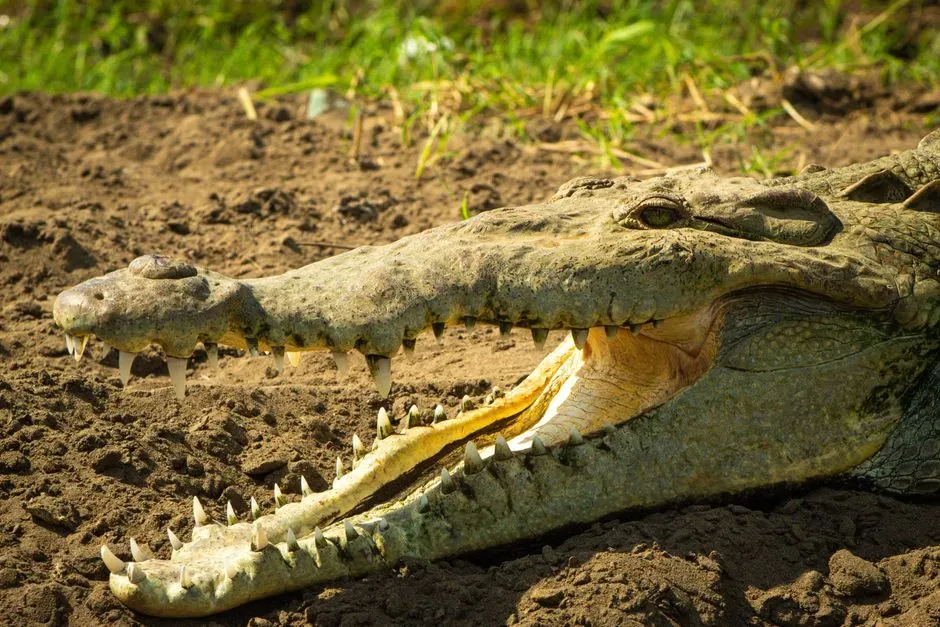
Ask anyone what makes a crocodile terrifying and they’ll say the jaws – and they’re right, but not for the reason most think. Nile crocodiles have one of the strongest bite forces in the animal kingdom, roughly 30 times that of a human, clocking in around 5,000 pounds per square inch.
Turns out the real secret isn’t muscle mass – it’s mechanical engineering. That force comes from a special ratchet system in the jaw and a modified mandible joint, both of which store huge amounts of energy while the mouth is open and release it in an instant when the bite is triggered.
Here’s the twist most people never hear about: the muscles that open the jaw are shockingly weak. A grown adult can hold a Nile crocodile’s mouth shut with bare hands. It’s a one-way weapon – devastating to close, almost harmless to open.
Quick Compare
- Human bite: about 162 psi
- African lion: roughly 650 psi
- Great white shark (estimated): around 4,000 psi
- Nile crocodile: up to roughly 5,000 psi
But teeth that can’t actually chew? That’s where it gets weird.
#4 – Teeth That Were Never Built to Chew
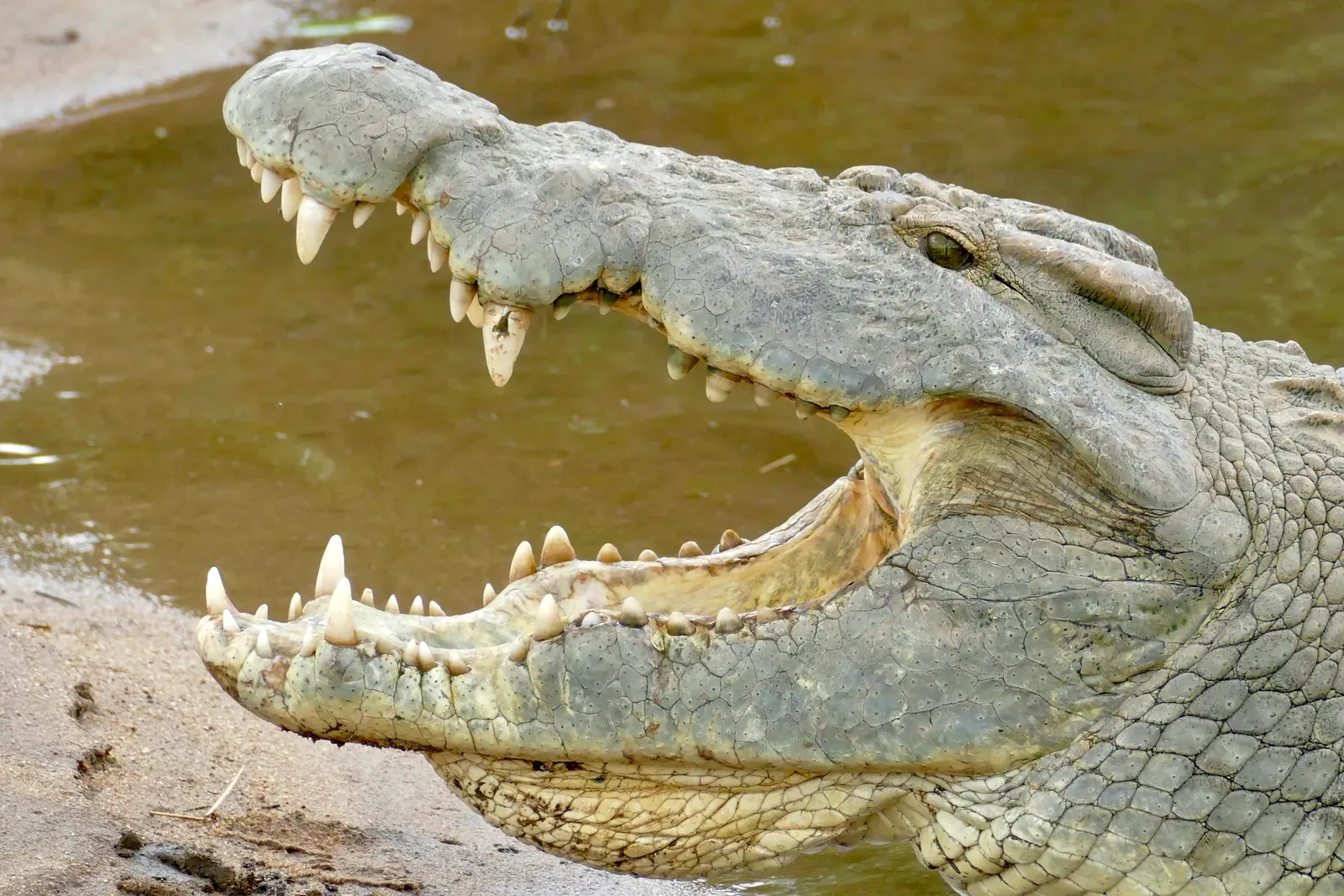
The Nile crocodile’s mouth holds a weapon system so old it predates flowering plants, and it still hasn’t changed its job description. There are between 64 and 68 basic, cone-shaped teeth rigidly fixed into the jaw, built to withstand force from every direction, and they get replaced throughout the crocodile’s life.
Most people assume those teeth slice and chew like a shark’s. They don’t. Because the teeth are unspecialized, crocodiles can’t chew or bite off chunks of meat – so for larger meals, they tear away flesh and swallow it whole, hooves, horns, and bones included.
Bone, hoof, horn – swallowed whole. Researchers studying the dentition even found it’s more sophisticated than it looks: it’s heterodont rather than homodont, with front teeth acting like incisors, middle teeth like canines, and rear teeth like molars, despite every single tooth sharing the same basic cone shape.
Once the jaws close on something, the real spectacle begins.
#5 – The Death Roll Nobody Has Improved On
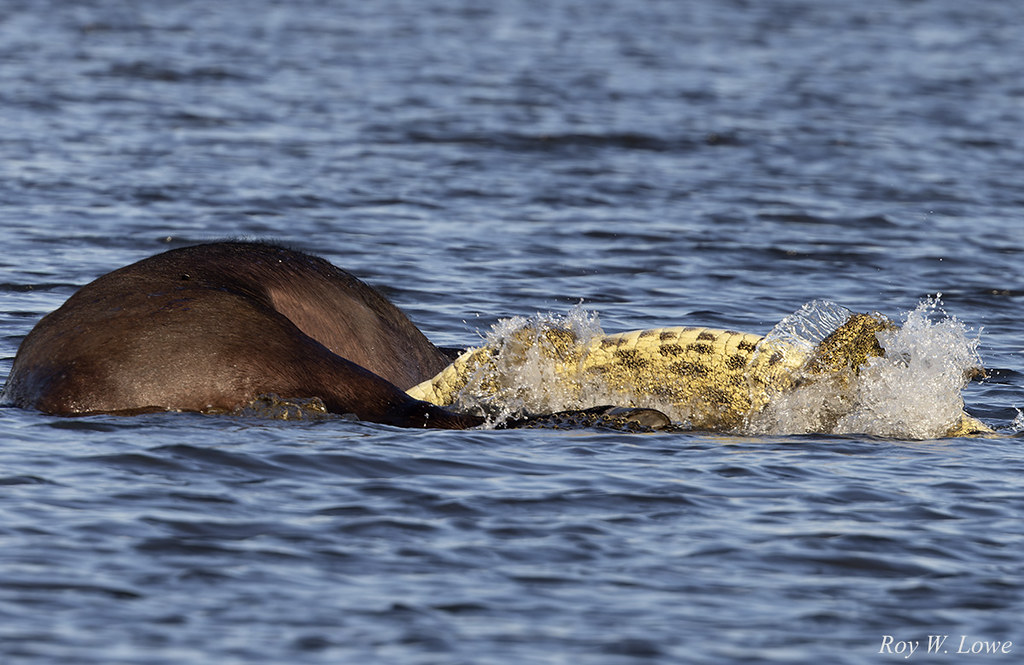
The single most iconic crocodile hunting move hasn’t been refined because it simply doesn’t need to be. Once a crocodile drags prey into the water, its teeth stay locked in place while it goes into a “death roll” – spinning underwater using its powerful tail until the prey drowns.
Here’s the controversial part: many wildlife guides argue this move is overhyped in documentaries, treated like a rare spectacle when in reality it’s just standard operating procedure – the crocodile equivalent of chewing.
The roll works because of raw torque, not intelligence. The animal locks its jaw, engages its tail, and lets physics finish the job. No upgrade has ever been necessary because no prey animal on Earth has evolved a defense against it.
The muscle behind that roll needs fuel most reptiles simply don’t have.
#6 – A Bird-Like Heart in a Reptile’s Body
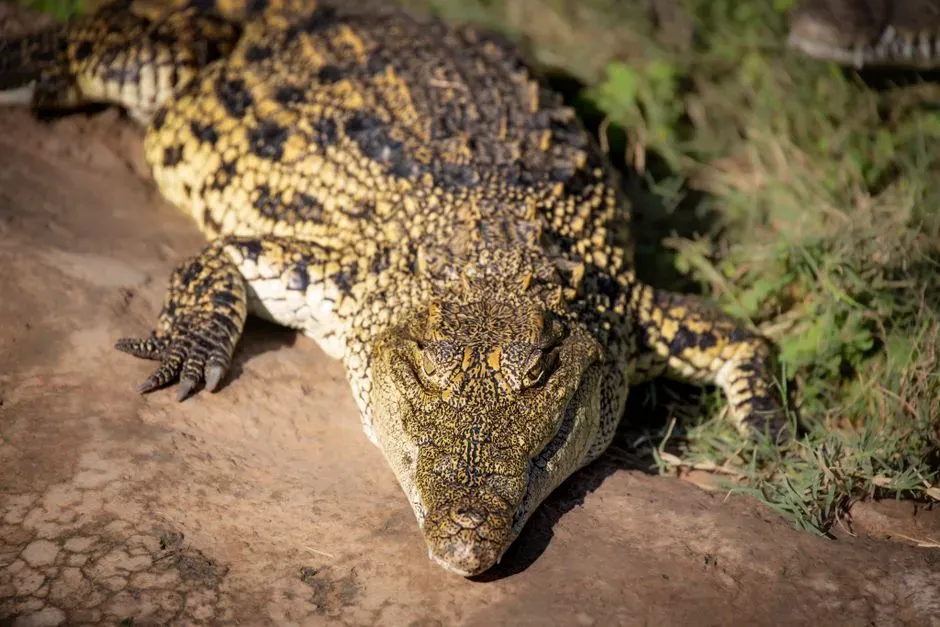
This one surprises almost everyone who hears it for the first time. Nile crocodiles have a special four-chambered heart, similar to a bird’s, that pushes far more oxygen into their blood than a typical reptile heart ever could.
Most reptiles get by with a three-chambered heart. The Nile crocodile secretly upgraded millions of years before birds even existed as a separate lineage – and never swapped it out since.
That efficient oxygen delivery is exactly what fuels the animal’s legendary underwater patience. Crocodiles usually dive for only a few minutes at a time, but if they feel threatened they can stay under for up to 30 minutes, and if they hold perfectly still, they can go as long as two hours without air.
Fast Facts
- Typical dive: just a few minutes at a time
- When threatened: up to 30 minutes submerged
- Staying perfectly still: as long as two hours without a breath
- Heart type: four-chambered, closer to a bird’s than a typical reptile’s
That oxygen boost only matters if the crocodile can actually find its target in the dark.
#7 – Pressure Sensors Hidden in Plain Sight
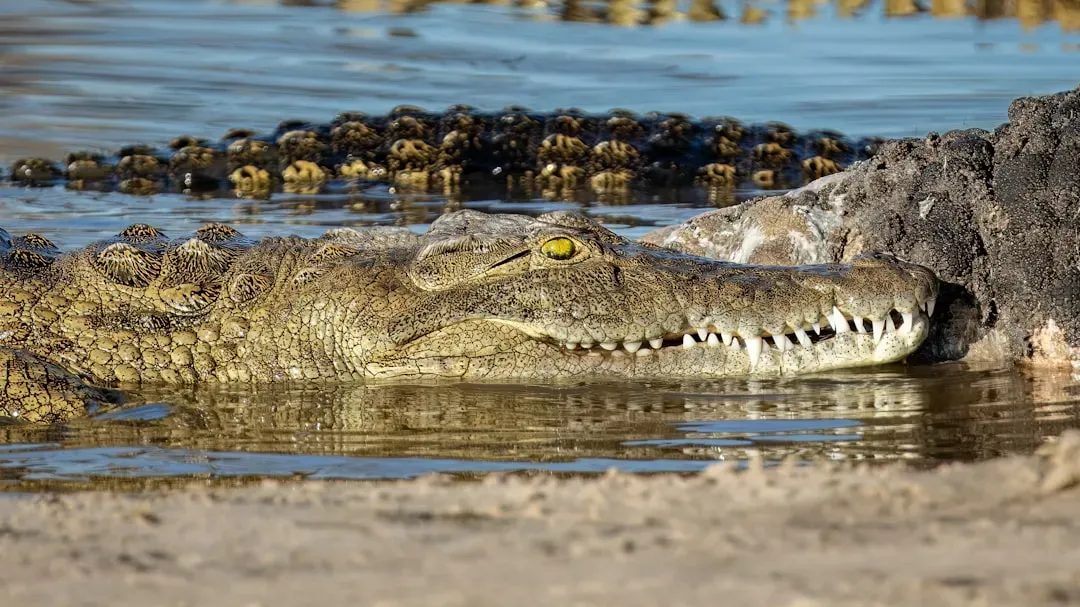
Nile crocodiles carry a sensory system so subtle that most people never notice it, even staring straight at a crocodile’s face. Integumentary Sensory Organs, or ISOs, are tiny pressure-sensitive domes on the jaws that pick up the faintest water movements – perfect for hunting in murky rivers and pitch-black nights.
This is the real reason crocodiles can strike accurately in muddy, zero-visibility water. They’re not guessing. They’re reading ripples the way a bat reads echoes.
Every single bump on a crocodile’s jaw is a sensor, and this network has stayed functionally identical since crocodylomorphs first started ambushing prey near ancient rivers. It’s arguably the most underrated tool in the animal’s entire arsenal – more important than the teeth, more important than the bite.
All that sensing and hunting power means nothing if the animal has to eat constantly. It doesn’t.
#8 – A Metabolism That Barely Needs Fuel
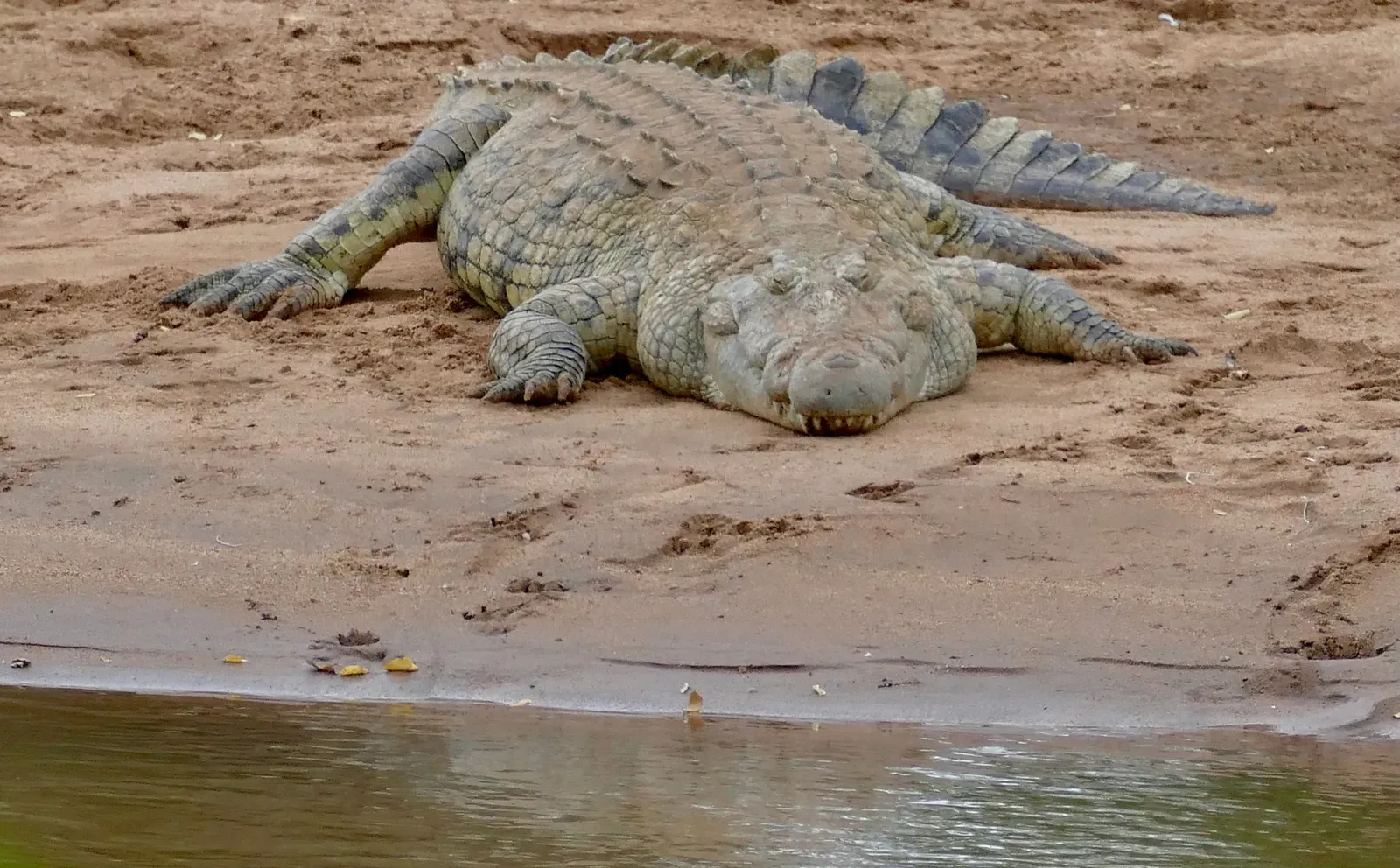
Most predators need to eat constantly just to stay alive. The Nile crocodile quietly does the opposite, and it’s been running this trick for a very long time. Its whole biology – from that ratchet-jaw bite to its patient ambush style – is built around getting maximum value from minimum food.
Being cold-blooded is usually treated like a weakness, something reptiles settle for. Increasingly, biologists argue it’s the opposite. Because a crocodile’s body temperature simply matches its surroundings, it burns a fraction of the energy a warm-blooded animal would just staying warm – which means it can go far longer between meals.
One study on Nile crocodiles found they average only about 50 full meals a year – a fasting efficiency almost no warm-blooded predator on Earth can match.
Eating rarely is one trick. Eating without drowning is another.
#9 – A Throat Built to Eat Underwater
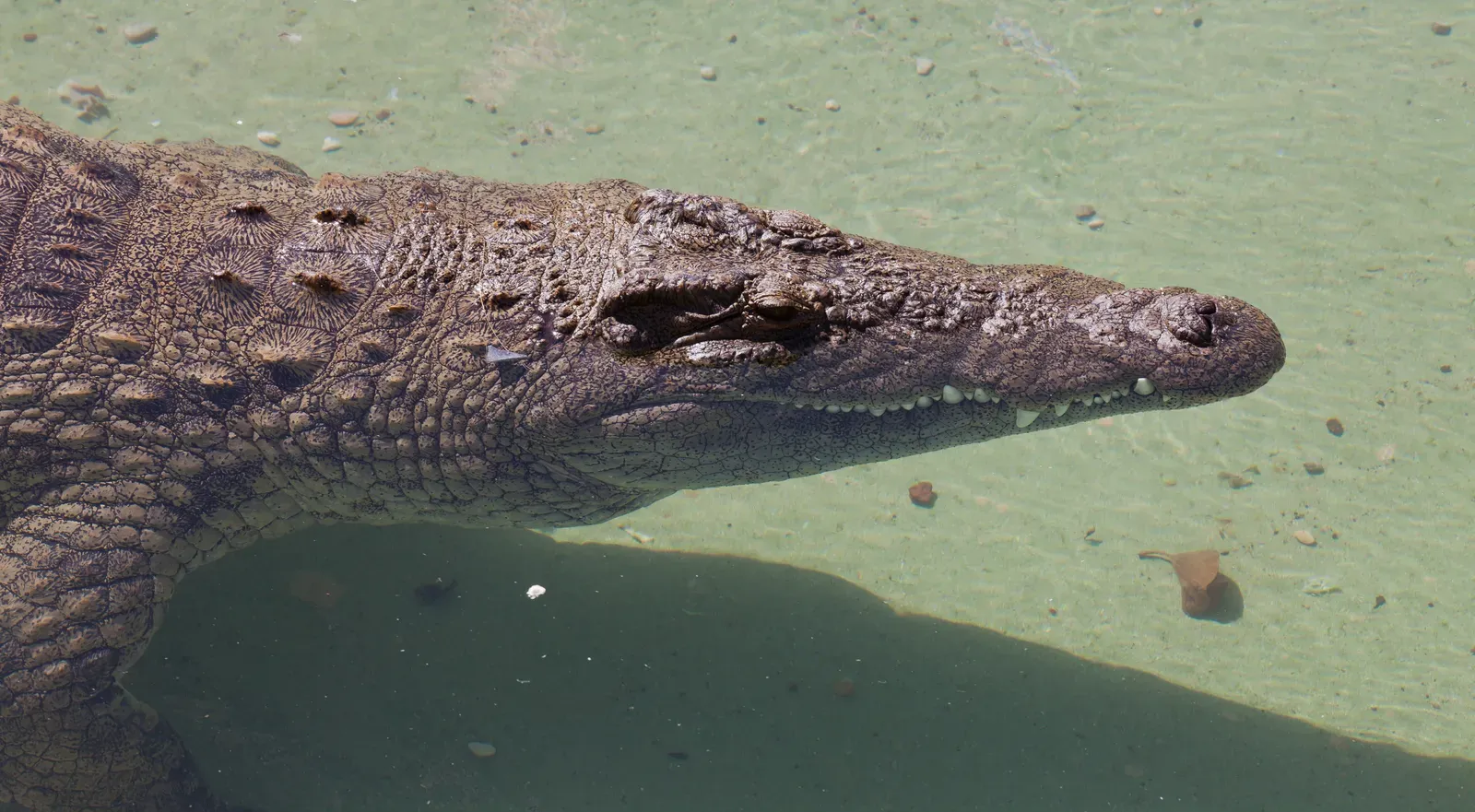
Here’s a detail almost nobody talks about: the Nile crocodile can open its mouth underwater without drowning itself, thanks to plumbing that’s stayed unchanged for millions of years. A special throat pouch called the palatal valve lets it eat without flooding its own airway.
This structure, paired with a rigid secondary palate, keeps water and prey from ending up in the lungs at the same time. Together they allow the crocodile to keep breathing while its mouth is open underwater during a kill.
Without this one anatomical trick, the crocodile’s entire ambush strategy would fall apart. It’s a small piece of plumbing doing an enormous amount of evolutionary heavy lifting, and it’s been quietly working the same way since the age of the dinosaurs.
None of this ambush machinery moves an inch without one more part.
#10 – A Tail That Never Needed Redesigning
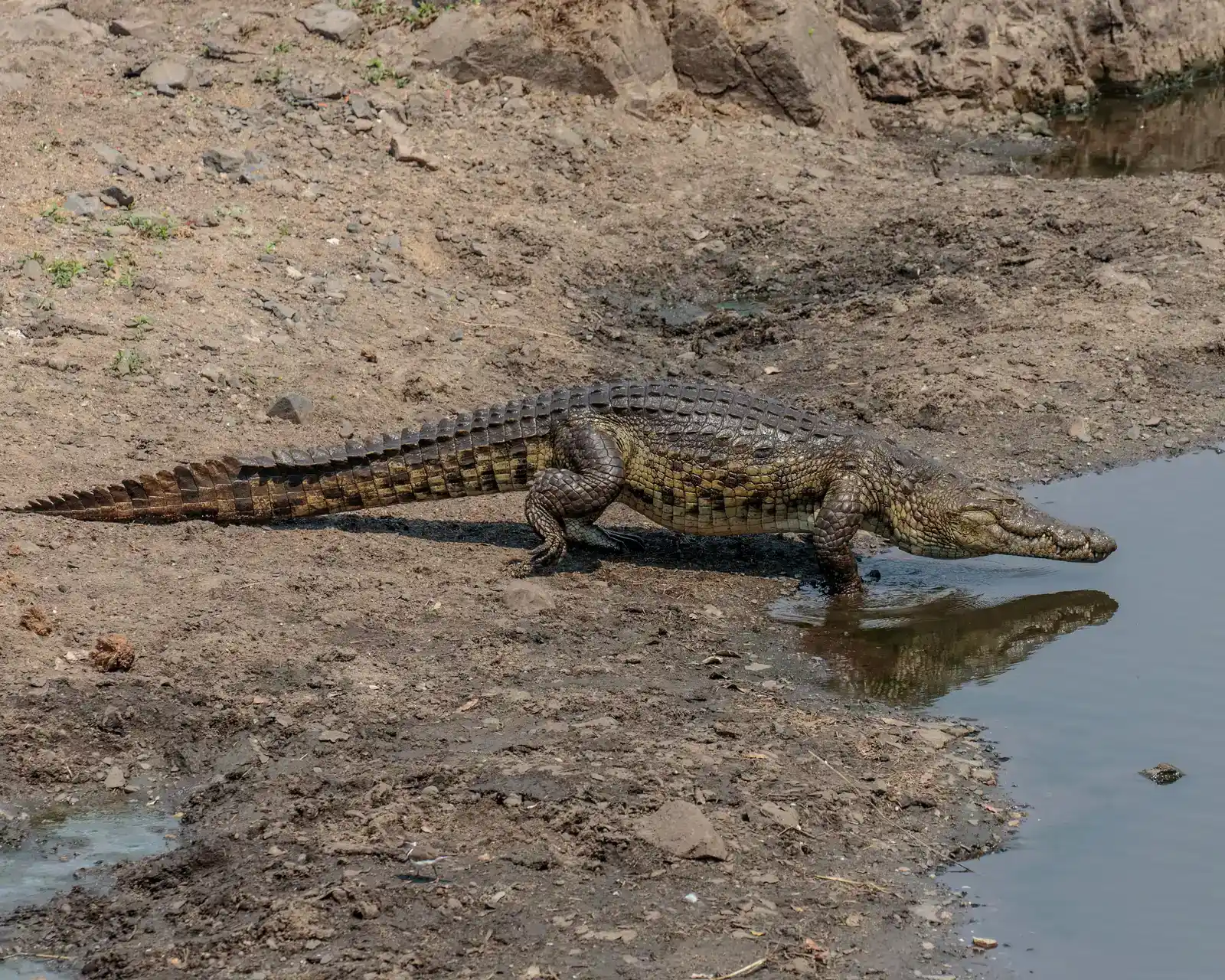
The Nile crocodile’s tail isn’t just for show – it’s the engine room, and it’s stayed essentially the same shape for a staggering length of time. Often half the animal’s total body length, that muscular tail propels it through water at speeds up to 35 km/h.
Compare that to the animal’s clumsy, almost comical movement on land, and you start to understand why the tail matters so much. On land, the crocodile is slow and vulnerable. In water, that same tail turns it into one of the fastest ambush predators alive.
Half the animal’s entire body length is dedicated purely to propulsion. No other structure on the crocodile’s body does more work per square inch, and no redesign has ever managed to improve on it.
Every crocodile alive today started life needing one tiny, disposable tool.
#11 – An Egg Tooth That Hasn’t Changed Since Hatching Began
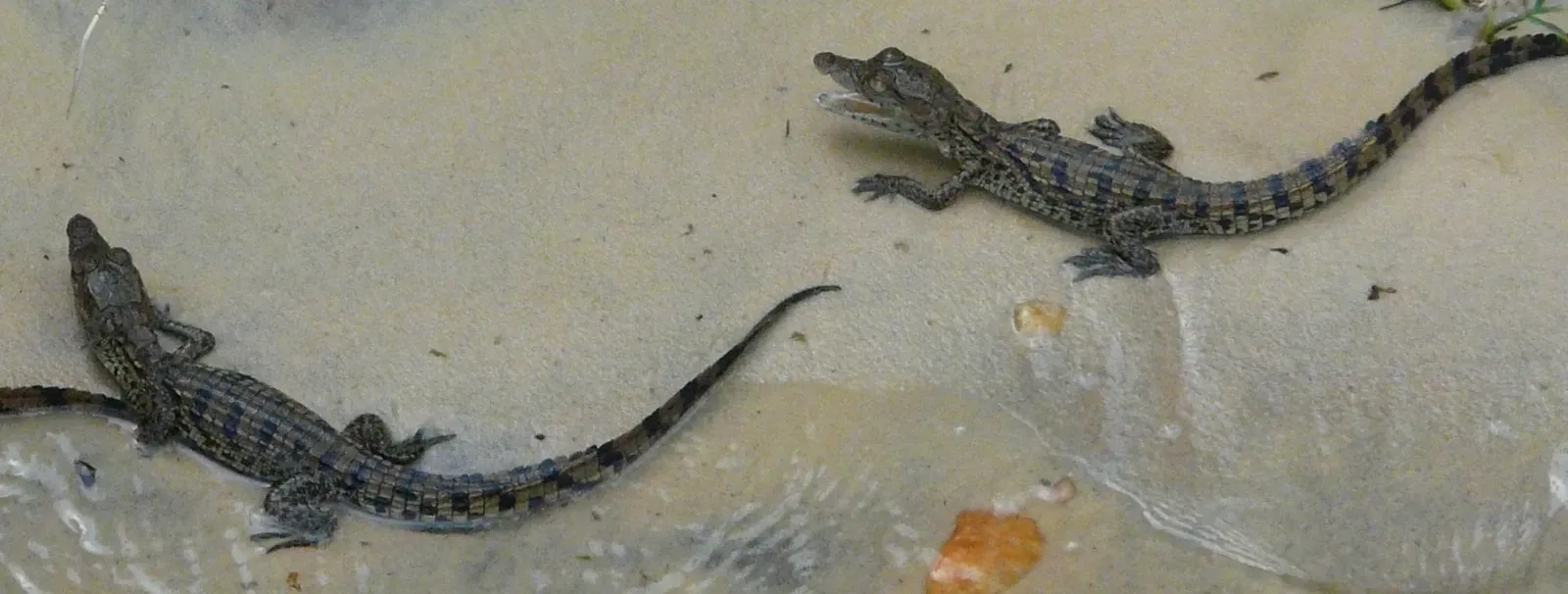
Even before a Nile crocodile takes its first breath, it’s using a tool older than most mountain ranges. Hatchlings develop a hardened bump of skin on top of the snout called an egg tooth, which they use to break through the shell at birth – then quickly lose it forever.
Most people never think about how a baby crocodile actually gets out of a hard shell buried in sand. This tiny, temporary structure is the answer, and it disappears almost immediately after use.
It’s a single-use tool, deployed once, then discarded forever – and it has worked exactly the same way for every hatchling in the species’ long history. Simplicity, in this case, beat complexity every single time.
Worth Knowing
- Incubation typically lasts 84 to 90 days, with the mother rarely leaving the nest
- Hatchlings measure around 30 centimeters (about 12 inches) at birth
- Mothers can carry more than a dozen hatchlings at once, cushioned safely inside their mouth
- Maternal protection can continue for up to two years after hatching
And once they grow up, they might not be as solitary as everyone assumes.
#12 – Cooperative Hunting That Looks More Like Strategy Than Instinct
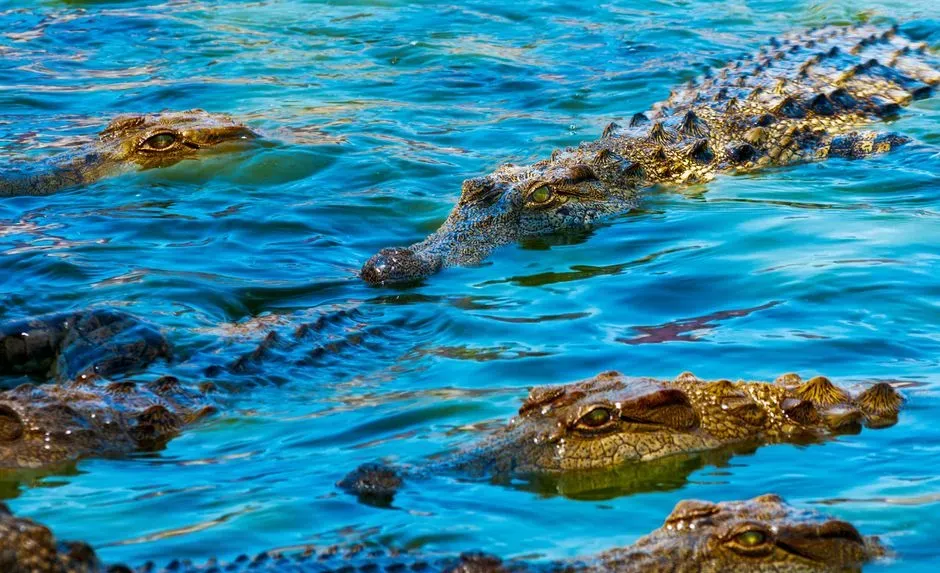
Contrary to the “mindless killing machine” stereotype, Nile crocodiles cooperate more than most people assume. Sophisticated parental care and coordinated feeding are part of what makes this animal one of evolution’s most successful designs, not just its raw violence.
This is where the controversial opinion comes in: many wildlife documentaries still portray crocodiles as solitary brutes, but field researchers increasingly describe coordinated group ambushes at river crossings, where multiple crocodiles position themselves to block escape routes together.
That kind of behavioral coordination doesn’t fit the “primitive reptile” narrative at all. It suggests a level of social organization that’s been quietly present the entire time, just overshadowed by the animal’s reputation for solo violence.
All twelve of these traits share one explanation, and it’s the strangest one on this list.
#13 – The Slow-Evolution Trick That Kept the Whole Lineage Alive
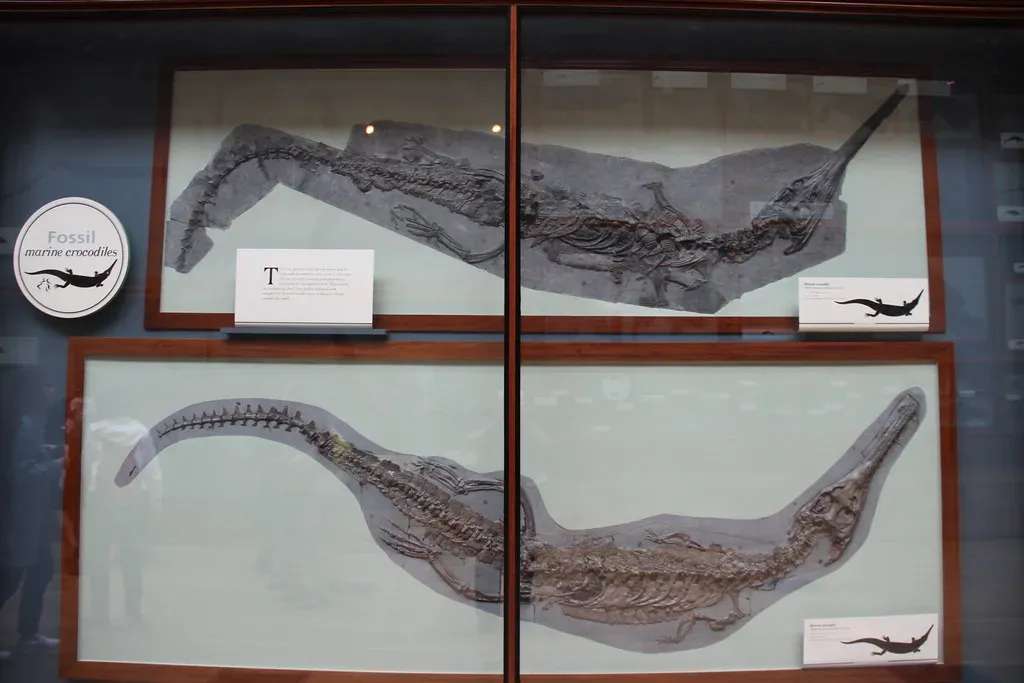
This is the mechanism behind everything on this list, and it’s genuinely one of the strangest findings in modern paleontology. Researchers built an evolutionary mathematical model comparing modern crocodile body sizes with fossils of prehistoric species, and the results showed that most ancient crocodile lineages were evolving at a notably slow rate, with only a few outliers changing quickly.
Here’s the part that surprises most people: slow evolution wasn’t a weakness. The lineages that evolved slowly were the ones still around today; the ones that changed fast, chasing some new advantage, mostly went extinct instead.
Being “boring,” evolutionarily speaking, turned out to be a survival superpower. Scientists call this pattern punctuated equilibrium – long stretches of near-total stability, broken only by short bursts of forced change when the climate truly demanded it. When crocodilian evolution does speed up, it’s usually because the environment left no other option.
That explanation gets tested by the worst disaster in Earth’s history.
#14 – Surviving the Exact Disaster That Wiped Out the Dinosaurs
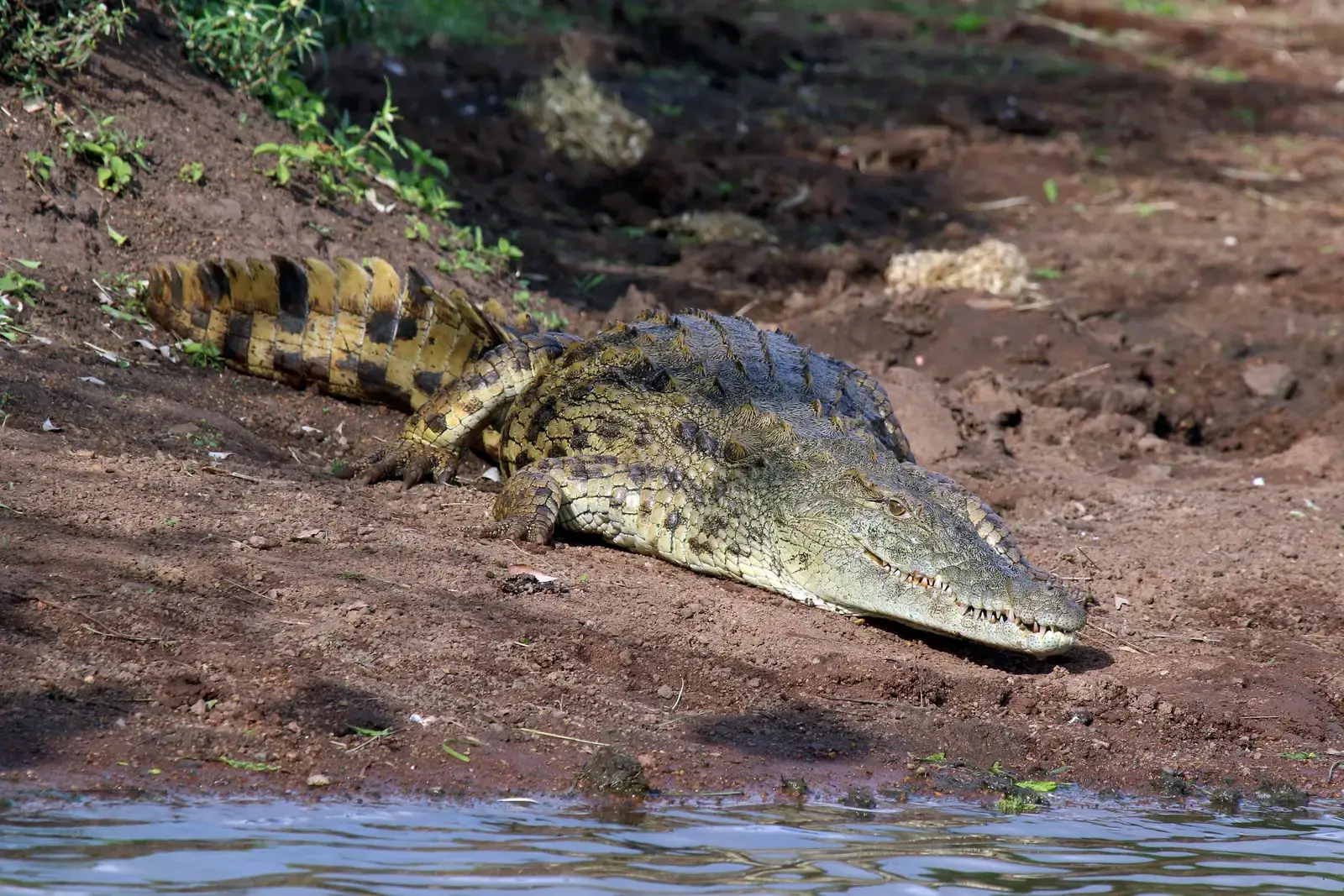
This is the fact that changes how most people think about the entire species. The Nile crocodile’s ancestors survived the asteroid impact that ended the age of the dinosaurs 66 million years ago, along with the brutal climate swings that followed it.
Most people assume “surviving the dinosaurs” means the crocodile got lucky once and coasted. Experts argue the opposite: it’s proof the design was already close to perfect before the disaster even hit. Sometimes evolution doesn’t favor a new design, because the existing one already works remarkably well.
One line sums up why this animal has outlasted almost everything else on the planet: the Nile crocodile has remained essentially unchanged for 200 million years – while dinosaurs rose and fell, while continents drifted, while mammals diversified and humans evolved, the crocodile refined and retained a body plan so effective that evolution found nothing to improve. That’s not a leftover from the past. That’s a design that was already finished.
The Bottom Line
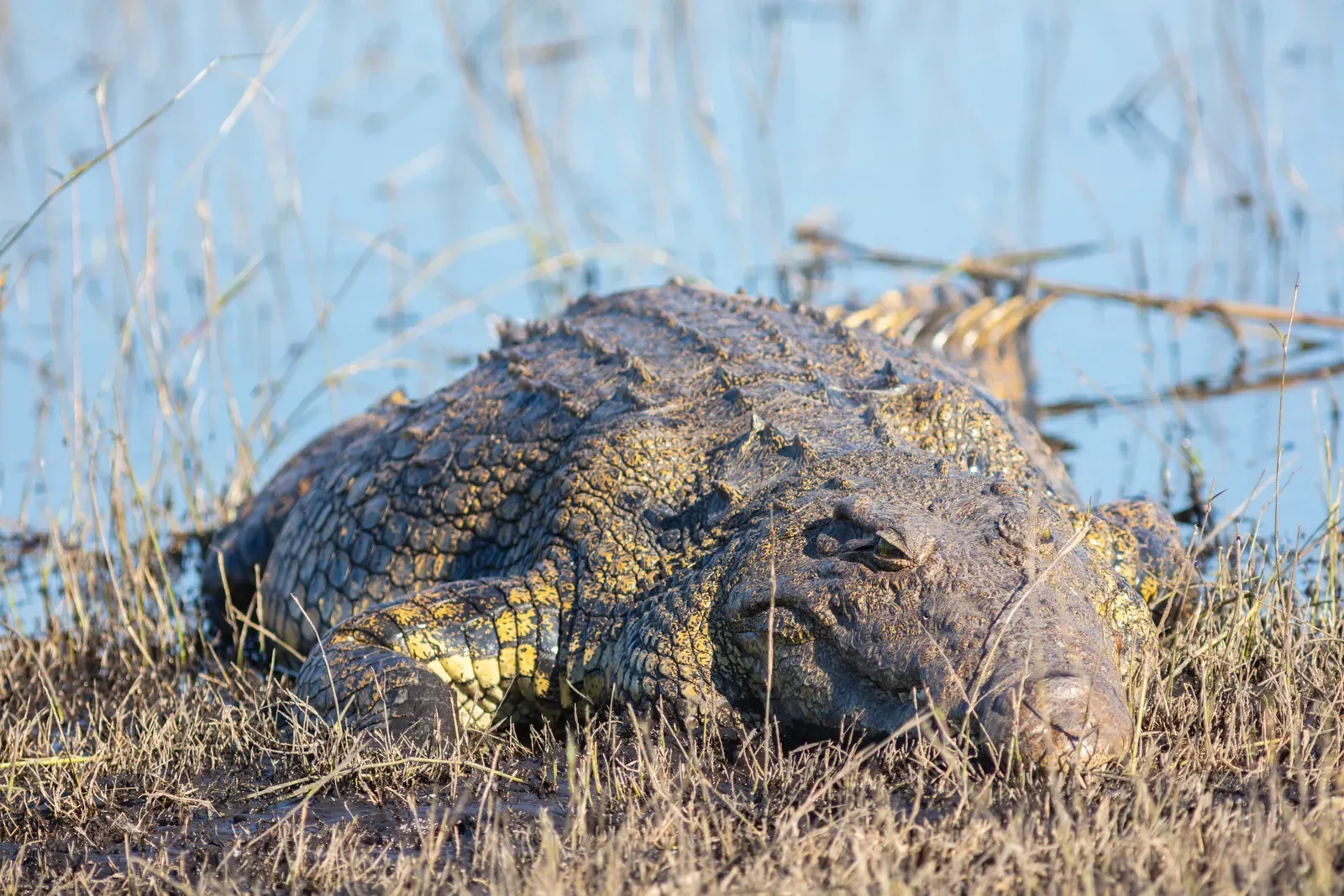
The Nile crocodile isn’t a fossil that forgot to evolve – it’s proof that some designs get finished early and never need a rewrite. From the bird-like heart to the jaw’s one-way ratchet system, from pressure sensors hidden in plain sight to a metabolism that laughs at scarcity, every feature on this list survived because nothing better ever showed up.
The species didn’t get lucky for 200 million years – it got efficient. That’s a harder truth than the “living fossil” myth, but it’s the one backed by the actual science.
Do you think evolution ever truly “finishes” a design, or is the Nile crocodile just waiting for its next forced upgrade? Drop your take in the comments.