
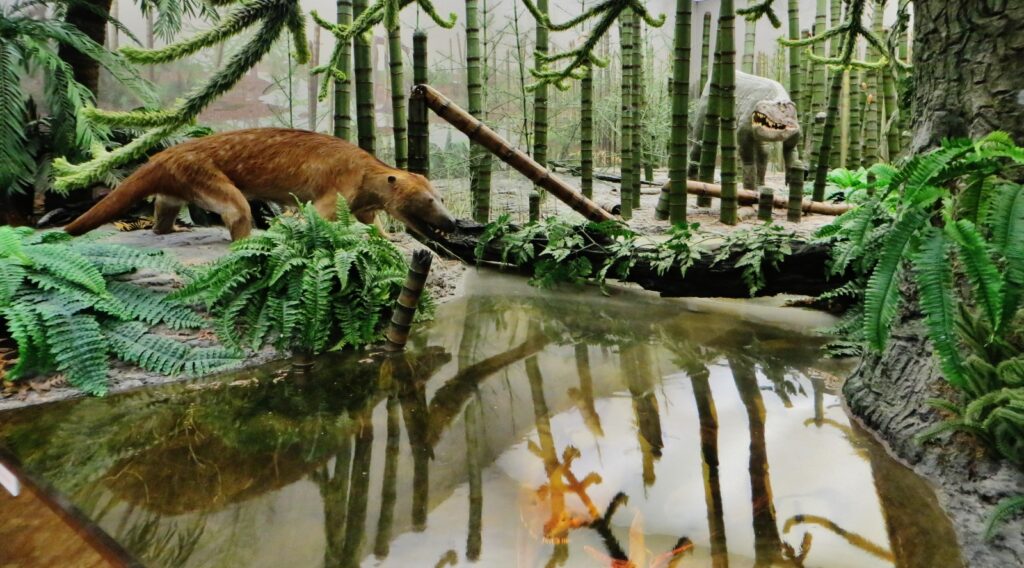
Most people picture 200 million years ago as a blurry, distant dinosaur cartoon – a green Earth with a few lizards wandering around. That picture is almost entirely wrong, and the real version is stranger than fiction: a furnace-hot world locked into one single shape, breathing air that would leave you gasping within minutes, built on ground you wouldn’t recognize as home for even a single mile.
Continents you’ve never seen fused together into one impossible megashape, oceans swallowed nearly the entire globe, and the creatures we assume were “in charge” back then were nowhere close to running the show. Here’s what the fossil record and hard geologic data actually reveal – starting with the landmass that swallowed the world whole.
#14 – One Supercontinent Called Pangea Ruled the Globe
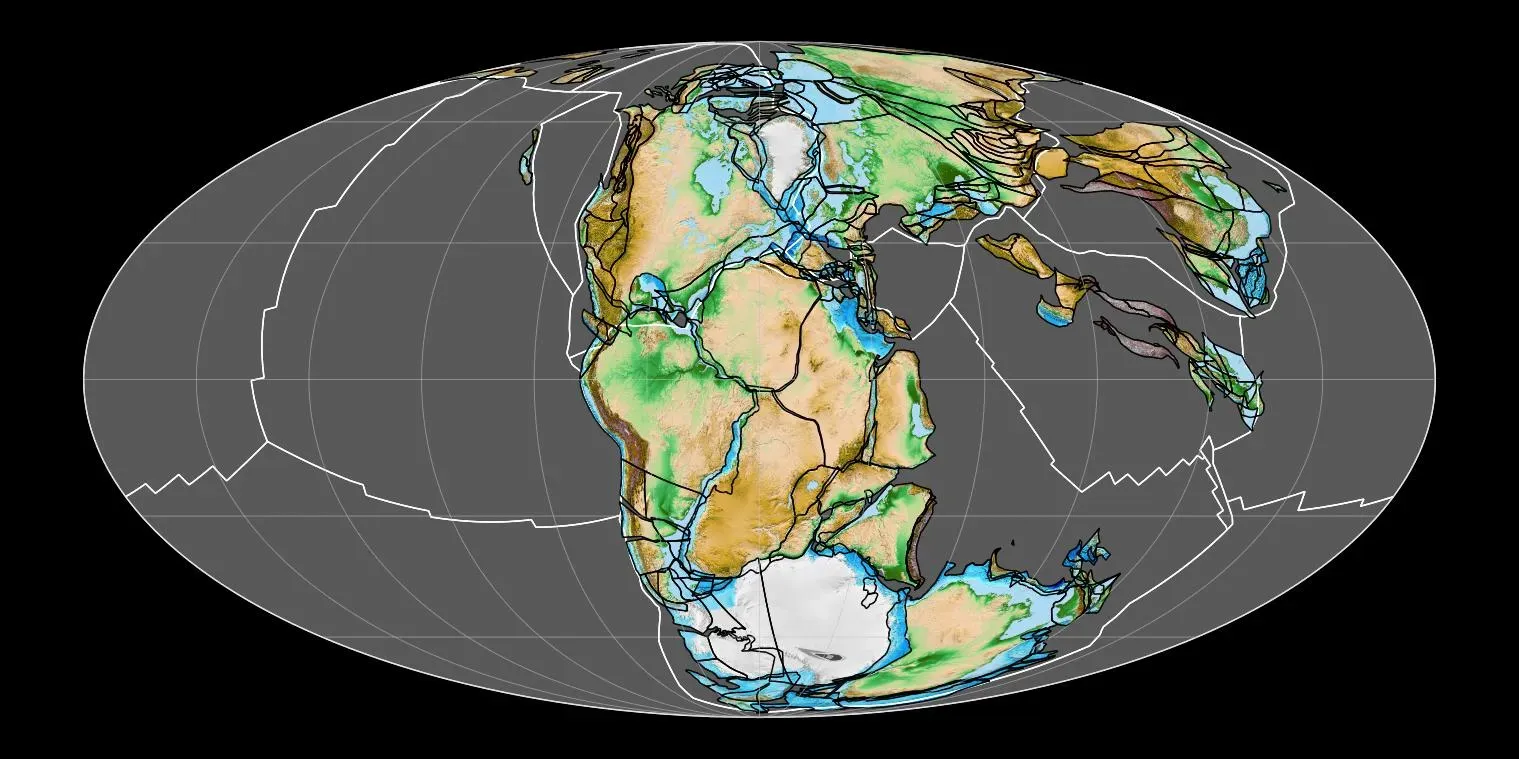
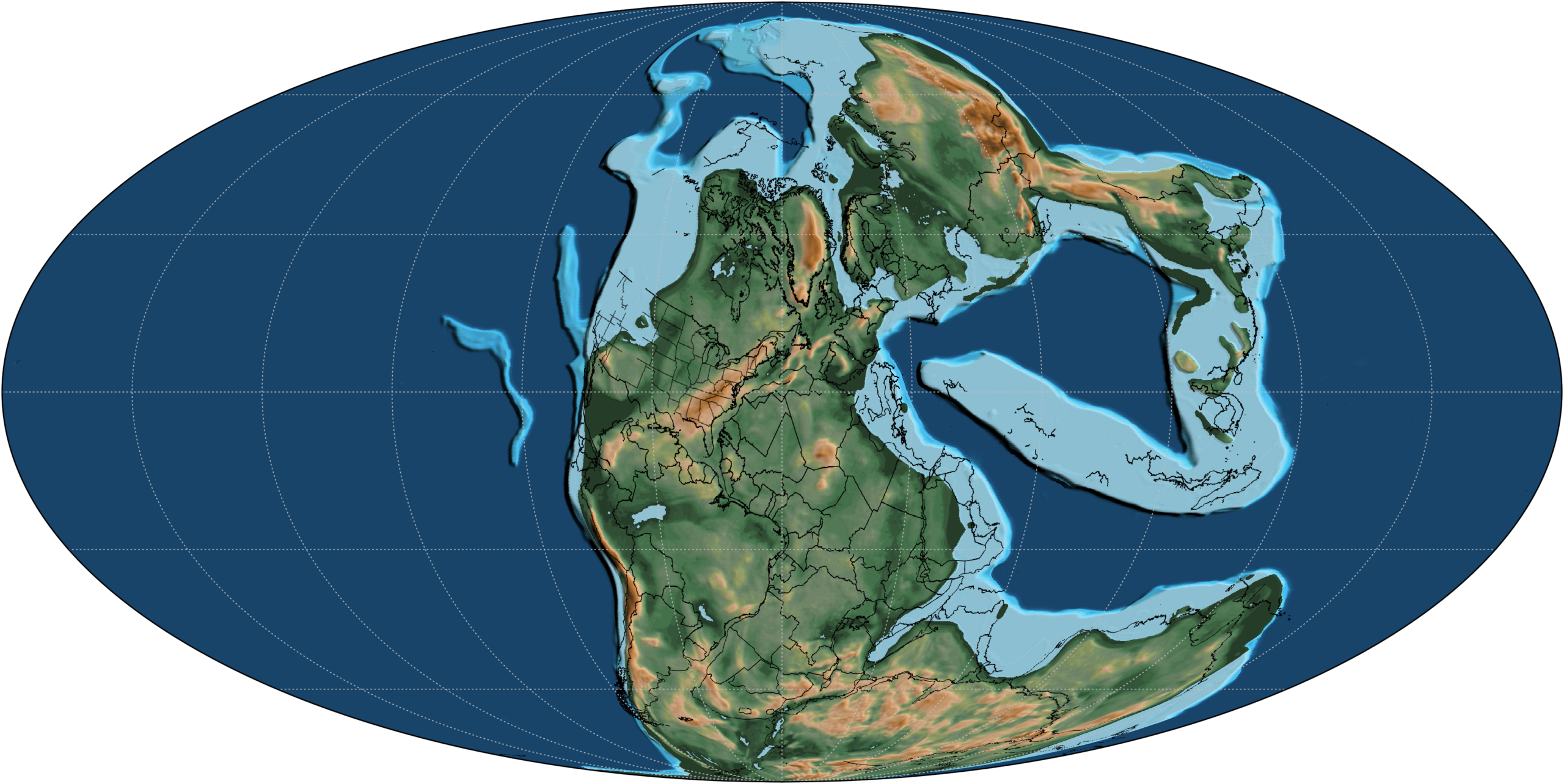
There was no United States, no Africa, no Asia – just one gigantic, C-shaped landmass called Pangea stretching from pole to pole.
Pangea was a supercontinent that existed during the late Paleozoic and early Mesozoic eras, assembling roughly 335 million years ago before beginning to break apart about 200 million years ago, at the end of the Triassic and beginning of the Jurassic. Here’s what really breaks the brain: you could theoretically have walked from what is now New York to what is now Morocco without ever crossing open water. Unlike the present-day distribution of continents, Pangea was centered on the equator and surrounded by the superocean Panthalassa. This wasn’t a stable arrangement, either – Pangea held together for roughly 100 million years before it started tearing apart. Every map you’ve ever memorized in geography class simply did not exist yet.
Fast Facts
- Assembled roughly 335 million years ago; started splitting apart around 200 million years ago
- Centered near the equator, unlike today’s spread-out continents
- Stretched in a C-shape from near the north pole to near the south pole
- Held together for about 100 million years before fracturing
#13 – A Single Superocean Called Panthalassa Covered Most of the Planet
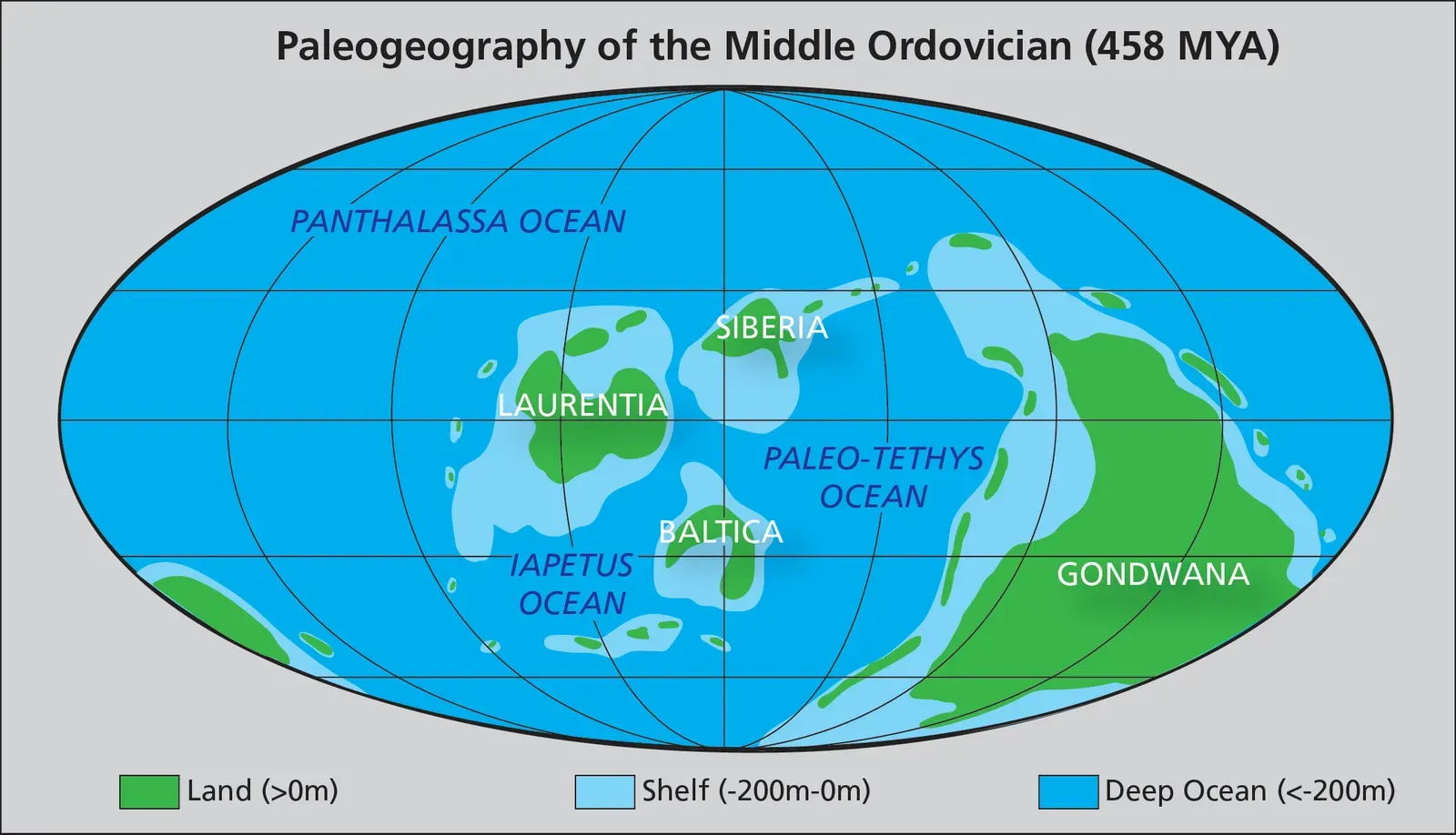
If Pangea was one landmass, the ocean surrounding it was even more extreme – a single, planet-spanning body of water with almost no equivalent today.
The giant ocean called Panthalassa surrounded Pangea. There was no Pacific, no Atlantic, no Indian Ocean as separate basins – just one continuous superocean wrapping around a single supercontinent. What’s easy to miss: this ocean was so vast it essentially functioned as the planet’s entire hydrosphere, with only one narrow wedge of water, the Tethys Sea, cutting into Pangea’s eastern side. That wedge was essentially the zipper along which Pangea eventually began to split apart. Coastlines as we know them didn’t exist – just one endless shoreline circling one endless landmass, shaping ocean currents and rainfall patterns for the entire planet.
#12 – Days Were Nearly an Hour Shorter, and Years Had More of Them
Here’s a detail that rarely makes it into dinosaur documentaries: the clock itself ran differently 200 million years ago.
For the reptiles of the Triassic 200 million years ago, a day was just under 23 hours long – a direct result of the Moon’s slow drift away from Earth over geologic time. Every single day back then was measurably shorter than the ones we live through now. By the time stegosauruses were roaming the early Jurassic, the day had crept to roughly 23 hours, and each year packed in about 385 of them. A full trip around the Sun still took the same amount of time – the planet just squeezed in more, shorter days to get there. It sounds like trivia, but it reflects something huge: the Earth-Moon relationship itself was different, and it’s still quietly changing today.
#11 – Both Poles Were Completely Ice-Free
Forget the North Pole and South Pole as frozen wastelands – 200 million years ago, they weren’t frozen at all.
Coastal areas were pummeled by seasonal monsoons, but ocean-circulation patterns kept the vast, isolated interior warm and dry – and even the poles stayed ice-free. This might be the single most surprising fact in the entire list: there were no polar ice caps anywhere on the planet, no permanent snowpack, no glaciers locking away frozen water at either end of the Earth. That wasn’t a minor climate quirk – it fundamentally reshaped sea levels, ocean currents, and where life could survive. Without polar ice reflecting sunlight back into space, the entire planet ran hotter and more humid than the one we know, and some paleoclimatologists argue this ice-free baseline is closer to Earth’s true “normal” than the icy poles we consider standard today.
#10 – The Air Held Up to Five Times More Carbon Dioxide
Breathing the air of 200-million-year-old Earth would have felt like standing next to a running car engine.
The Earth was a very different place some 200 million years ago when the first dinosaurs began to emerge during the Triassic Period, with the climate hot and dry and atmospheric carbon dioxide sitting around 2,000 parts per million – far higher than today’s level. Some estimates push even higher: fossil records show zero evidence of polar ice sheets in the Late Triassic and earliest Jurassic, likely because carbon dioxide levels may have reached as high as 6,000 parts per million. Sit with that number for a second: somewhere between four and fifteen times today’s CO2 concentration, and not a temporary spike – the baseline atmosphere that early dinosaurs, ancient reptiles, and the first mammal ancestors evolved to breathe every single day.
At a Glance
- Triassic CO2 estimate: roughly 2,000 ppm, with some models reaching 6,000 ppm
- Today’s atmospheric CO2: roughly 420 ppm
- That’s an estimated 4 to 15 times higher than modern levels
- No polar ice sheets existed anywhere under this atmosphere
#9 – Pangea’s Interior Was a Brutal Desert Locked Behind Mountains
If you were dropped into the middle of Pangea 200 million years ago, you wouldn’t find lush jungles – you’d find a scorching, wind-blasted desert with almost no relief.
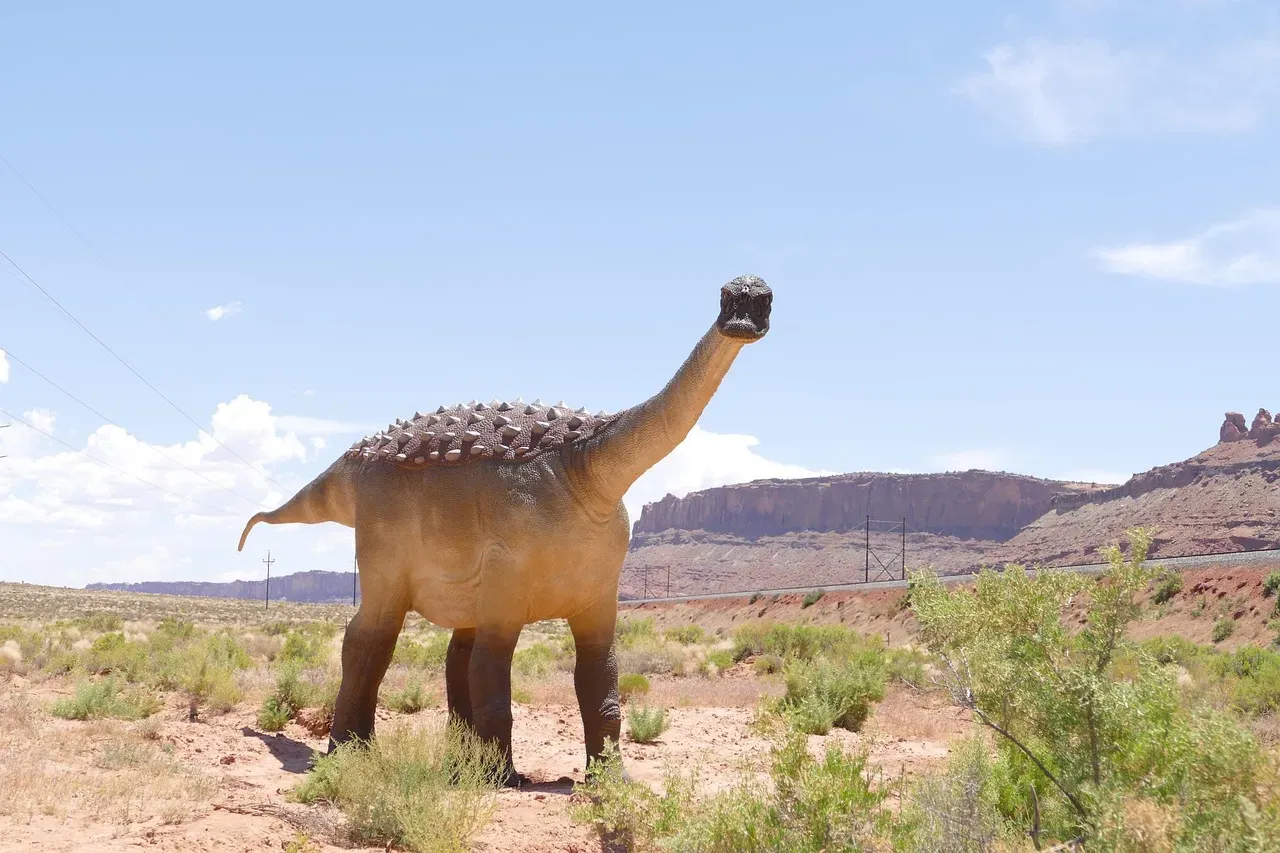
Climate was generally very dry across much of Pangea, with brutal summers and cold winters gripping the continental interior, while a violent seasonal monsoon climate ruled closer to the coasts. The problem was pure geography: with one landmass this enormous, moisture from the surrounding Panthalassa Ocean simply couldn’t push thousands of miles inland. Here’s the twist most people miss: this wasn’t uniform desert misery – coastal regions drowned in seasonal monsoon flooding while the interior baked in permanent drought, sometimes just a few hundred miles apart. Some researchers now argue this megamonsoon system, more than any single extinction event, was the biggest force deciding which species survived and which didn’t.
#8 – Not a Single Flower Existed Anywhere on Earth
Picture the most vibrant garden you’ve ever seen, then subtract every flower from it – that’s roughly what plant life looked like across the entire planet 200 million years ago.
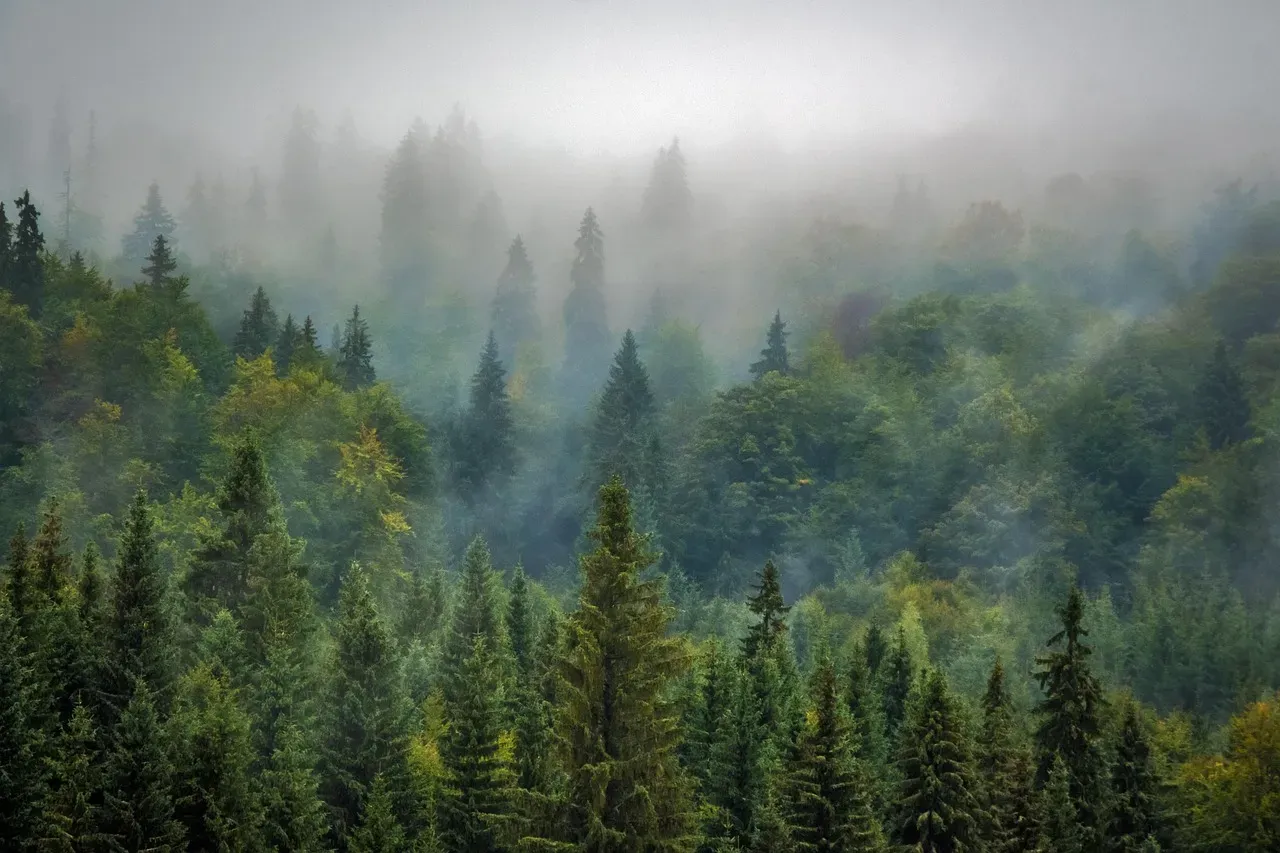
Flowering plants, or angiosperms, hadn’t evolved yet – they wouldn’t appear for tens of millions more years. Instead, the entire land surface of Pangea was covered in ferns, cycads, conifers, and other gymnosperms that reproduced through spores and cones rather than blossoms and fruit. The most surprising part: there were no bright colors competing for pollinators, because the insects and mechanisms we associate with pollination today hadn’t developed alongside anything worth pollinating. Imagine an endless expanse of green and brown conifer forest and fern understory, monotonous by modern standards, without a single rose, sunflower, or apple blossom anywhere on the horizon – an entire planet, fully alive and thriving, yet visually duller than a single modern city park.
#7 – Dinosaurs Were Small, Rare, and Definitely Not in Charge
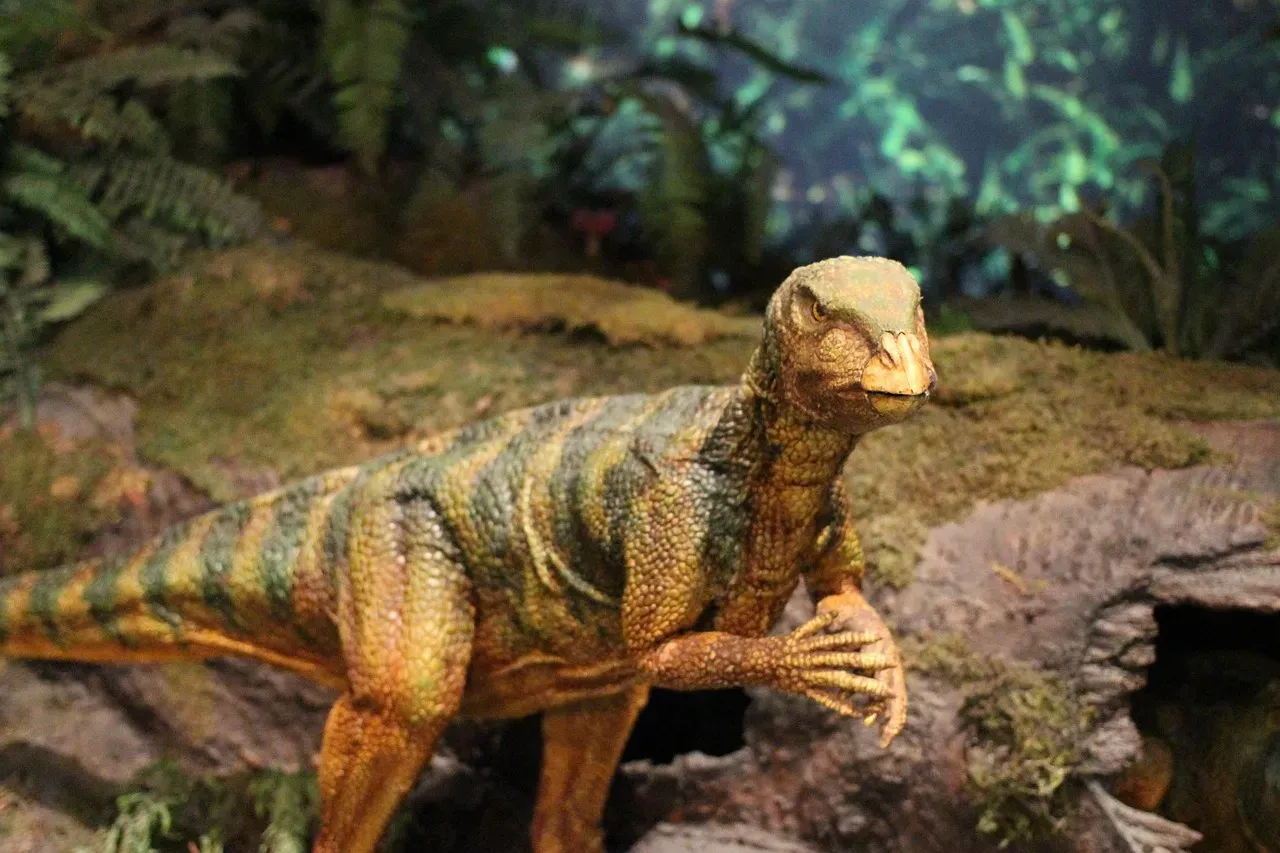
Here’s the mistake almost every dinosaur movie makes: assuming 200 million years ago was already the age of giant dinosaurs. It wasn’t.
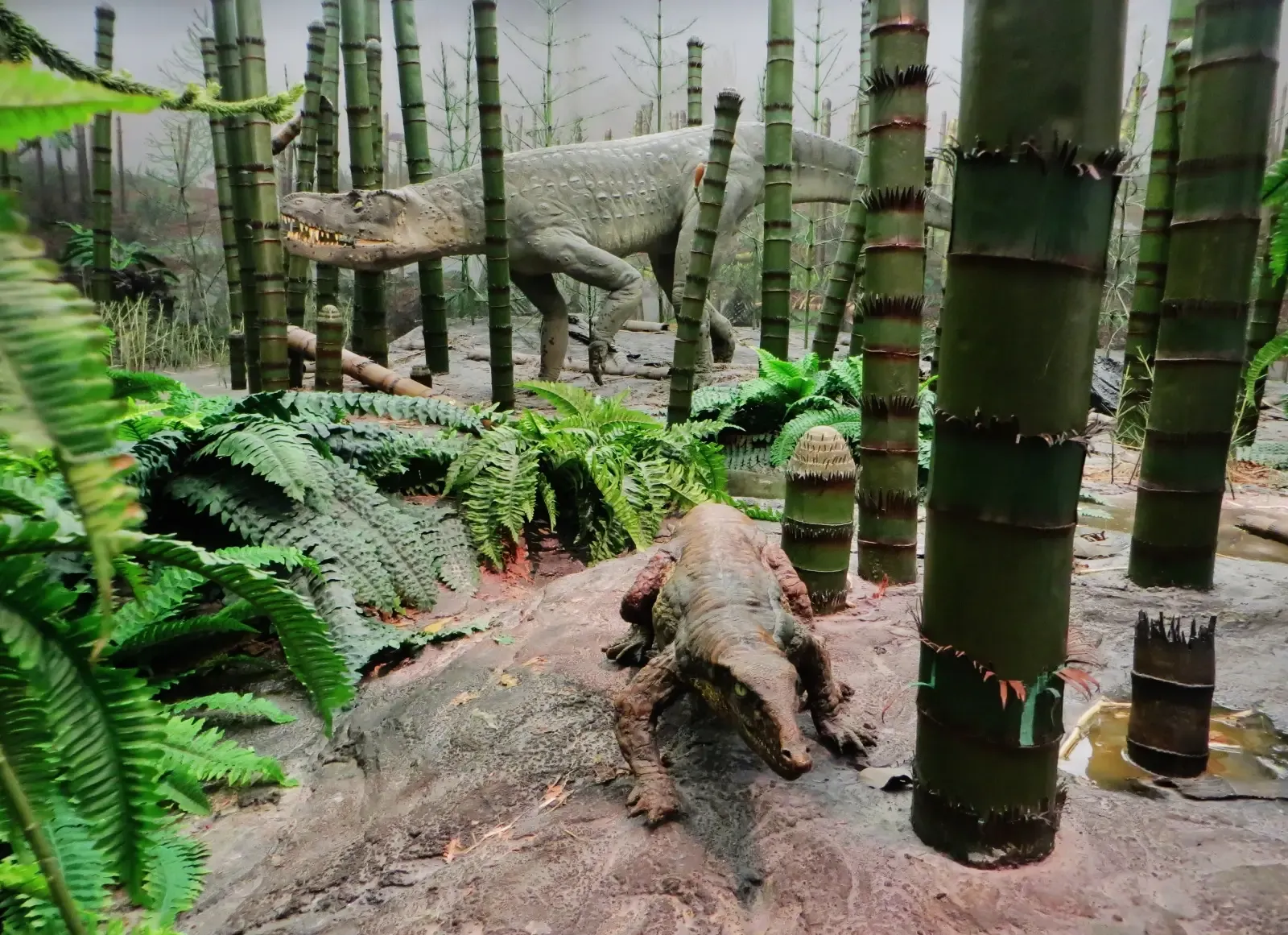
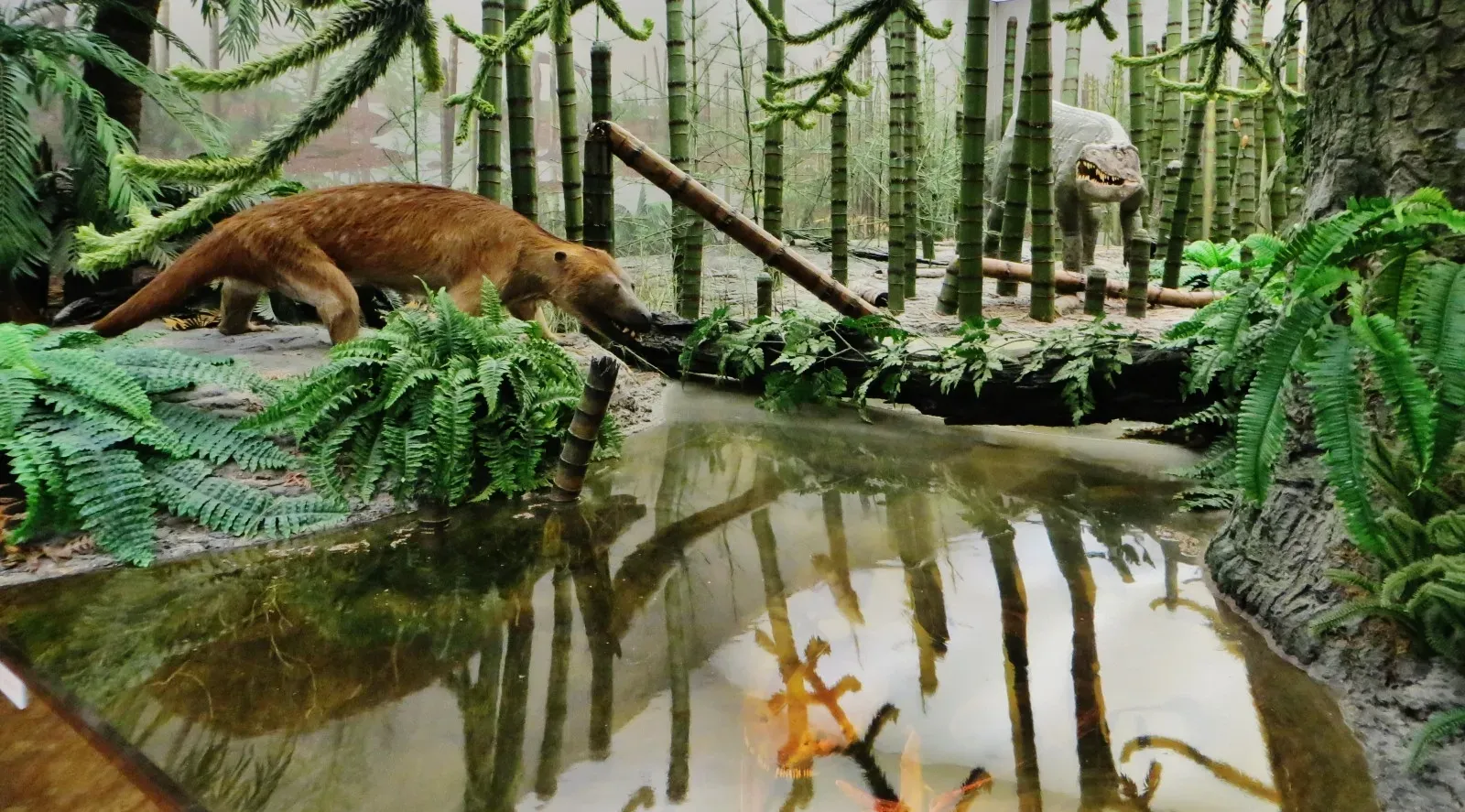
Life that survived the earlier mass extinction repopulated the planet, diversified into freshly exposed ecological niches, and gave rise to new creatures – including rodent-size mammals and the first dinosaurs. Turns out, at this point in history, dinosaurs were bit players in a world still dominated by other reptile groups. Many early dinosaurs were small, lightly built, and nowhere near the apex predators pop culture imagines. The true giants and true dominance were still tens of millions of years away – this era belonged to a broader cast of archosaurs and early reptile lineages fighting over the same ecological turf. It’s a genuinely controversial point among casual dinosaur fans, but paleontologists are pretty blunt about it: the “age of dinosaurs” most people picture didn’t really kick into gear until well after this point.
#6 – Our Mammal Ancestors Were the Size of Mice
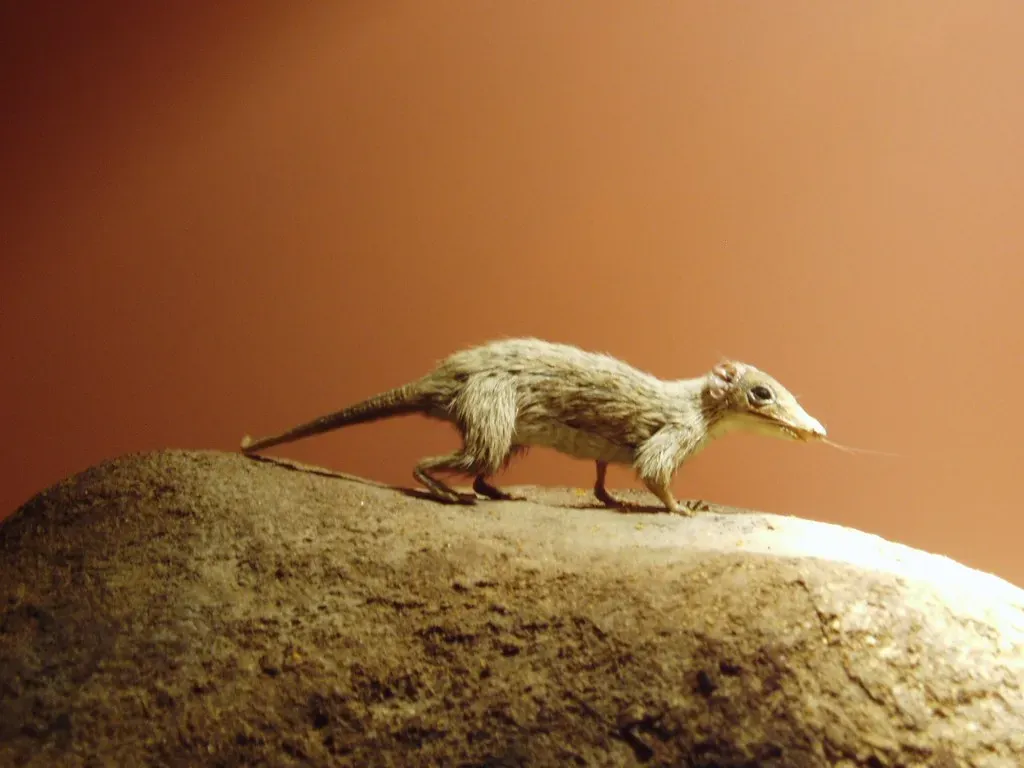
While reptiles got the spotlight, your actual ancestors were living an entirely different kind of life – small, secretive, and almost certainly nocturnal.
Among the creatures that repopulated the planet after the earlier mass extinction were rodent-size mammals – tiny, warm-blooded animals scurrying beneath the feet of far larger reptiles. Here’s the humbling part: these creatures were likely forced into the shadows, evolutionarily speaking, only becoming active after dark to avoid the reptiles that dominated daylight hours. Many researchers believe this nocturnal squeeze actually shaped mammalian biology permanently – driving the development of better hearing, sharper smell, and other sensory adaptations that still define mammals today, including humans. Two hundred million years ago, our entire lineage’s survival strategy was essentially: stay small, stay hidden, come out at night.
Worth Knowing
- Early mammals were roughly rodent-sized, some no bigger than a mouse
- Most were likely nocturnal, active mainly after dark to dodge reptile predators
- That nighttime lifestyle may have driven sharper hearing and smell
- These same sensory traits still define mammals, including humans, today
#5 – The Oceans Were Ruled by Coiled Shells and Reptiles, Not Whales
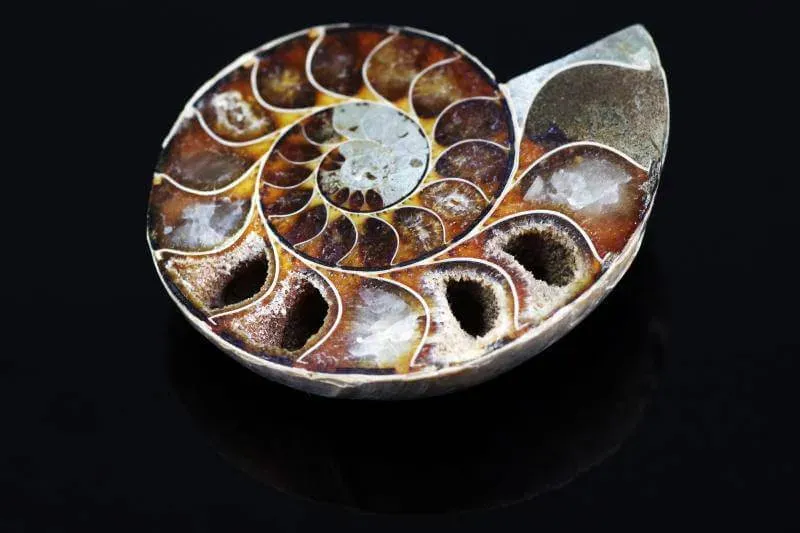
Dive into the Panthalassa Ocean 200 million years ago and you wouldn’t recognize a single large animal swimming past you.
The oceans teemed with coiled-shelled ammonites, mollusks, and sea urchins that survived the earlier extinction and were quickly diversifying, and the first corals had already appeared alongside other early reef-building organisms. Here’s the detail that surprises most people: there were no whales, no dolphins, no modern sharks as we’d recognize them – marine reptiles and coiled-shell invertebrates ran the show instead. Around this same window, entirely new marine reptile groups were beginning to spread through the water column. Plesiosaurs first appeared in the latest Triassic, about 203 million years ago, before becoming especially common during the Jurassic. The ocean floor and open water were essentially an invertebrate-and-reptile world, a completely different cast of characters from the mammal-dominated seas we associate with the ocean today.
#4 – Colossal Volcanic Eruptions Were Tearing the Supercontinent Apart
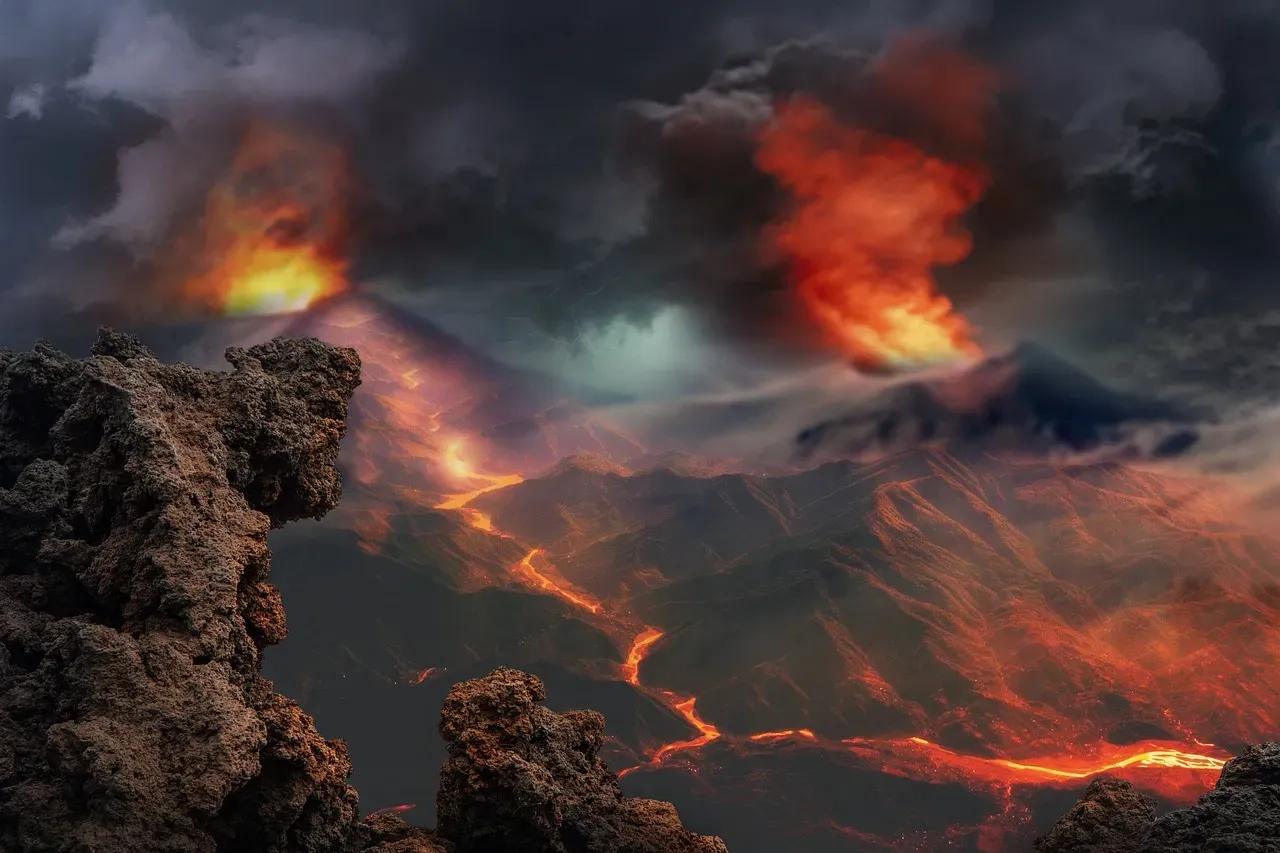
Beneath the calm-looking surface of Pangea, something violent was already underway – a slow-motion catastrophe measured in lava, not lightning.
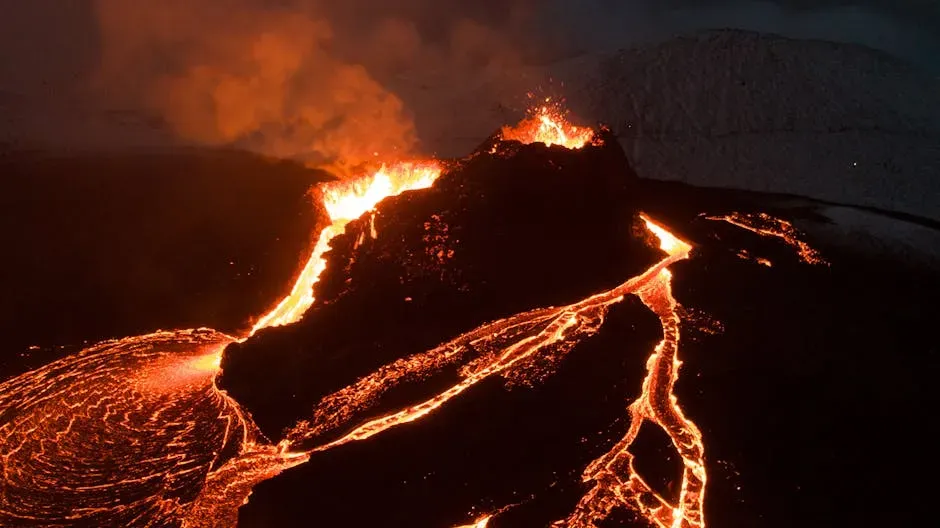
Massive volcanic activity along what is now the Central Atlantic Magmatic Province signaled the beginning of the end for the supercontinent. Volcanoes formed as segments of Pangea broke apart and drifted away from one another, and these changes triggered eruptions that pumped enormous amounts of greenhouse gases, mainly carbon dioxide, into the atmosphere. The most shocking part of this story: this wasn’t one eruption or even a handful – it was one of the largest volcanic provinces in Earth’s entire history, spreading lava across an area now spanning multiple continents. Global warming followed, heating the oceans and offsetting the delicate balance of life. This single volcanic event essentially set the timer running on everything that happened next.
#3 – A Mass Extinction Was Quietly Wiping Out 3 in Every 4 Species
While the volcanoes roared, something even more devastating was unfolding across the planet – one of the deadliest extinction events life on Earth has ever experienced.
The Triassic-Jurassic extinction event occurred approximately 201 million years ago and ranks among the most deadly in the planet’s history, with an estimated 80 percent of all known species at the time going extinct. That statistic alone should stop you cold: four out of every five species alive at the time simply vanished from the fossil record. Marine life was hit especially hard, though the majority of land-based species suffered too. It’s genuinely controversial among scientists exactly why it happened so fast – many consider the Triassic-Jurassic extinction one of the most mysterious on record, and experts still can’t agree on a single cause. But the consequence is undisputed: this catastrophe cleared the ecological deck for everything that came next.
Quick Compare
- End-Permian extinction (about 252 million years ago): an estimated 90-96 percent of species lost
- Triassic-Jurassic extinction (about 201 million years ago): an estimated 80 percent of species lost
- Both events cleared the way for entirely new dominant animal groups to rise
#2 – There Was No Atlantic Ocean, No Mediterranean, No Familiar Coastline
Try to picture your own country’s coastline 200 million years ago and you’ll fail – because it simply didn’t exist in any recognizable form.
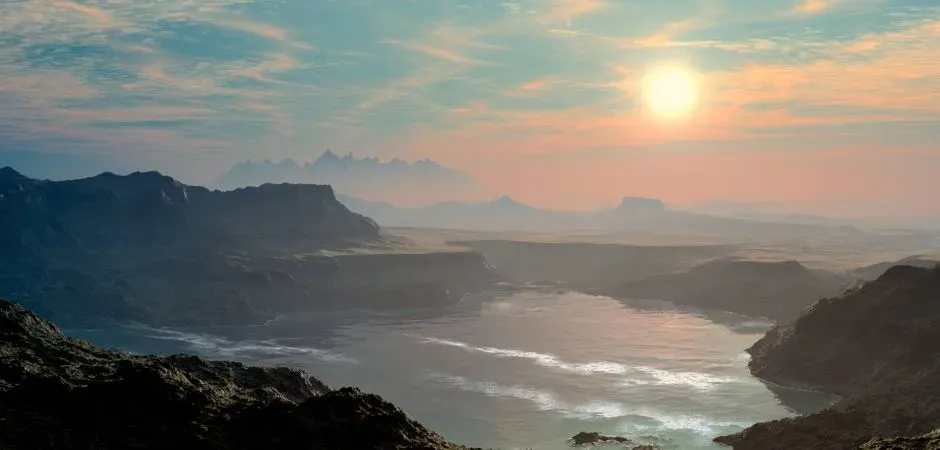
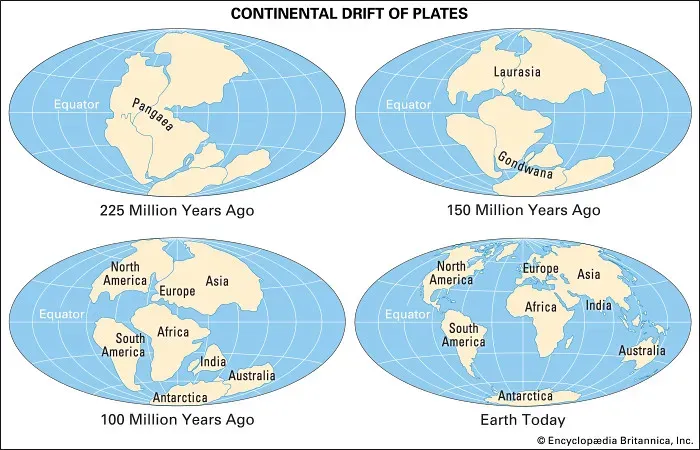
By the end of the Triassic, roughly 199 million years ago, tectonic forces had slowly begun splitting the supercontinent in two: Laurasia in the north and Gondwana in the south. There was no Gulf of Mexico, no English Channel, no Red Sea – just one enormous rift beginning to crack open down the middle of a single landmass. Most people don’t realize the ocean basins we treat as permanent geographic features are, geologically speaking, incredibly young. The supercontinent kept breaking apart through the Early Jurassic, eventually forming the modern continents and the Atlantic and Indian oceans. Every coastal city, every beach vacation spot, every port that built modern civilization sits on ocean floor that hadn’t even opened up yet.
#1 – This Exact Moment Was the Birth of the World Map We Know Today
Everything on this list – the deserts, the extinction, the volcanoes, the shifting oceans – was building toward one single, world-altering event: the actual moment Pangea began tearing itself apart for good.
Pangea began to break apart about 200 million years ago, at the end of the Triassic and beginning of the Jurassic, setting the stage for the seven continents we know today. The single most staggering fact in this entire list: the rift lines that started forming 200 million years ago are the direct ancestors of the coastlines on your phone’s map app right now. South America’s bulge still fits against Africa’s coast because they were once welded together along this exact fracture zone. The supercontinent first split into two major landmasses – Laurasia in the north and Gondwana in the south – separated by the widening Tethys Sea. Every continental drift, every future earthquake zone, every ocean basin alive today traces its origin back to this single geological turning point. It’s not an exaggeration to call this the moment the modern world, quite literally, began.
The Bottom Line
The Earth 200 million years ago wasn’t a distant cousin of today’s planet – it was almost a different world entirely. One supercontinent, one superocean, no ice, no flowers, and an atmosphere thick enough with carbon dioxide to reshape global climate for tens of millions of years.
The mass extinction that closed out the Triassic wiped out the majority of species alive, yet it also cleared the runway for the reptiles, mammals, and eventually the giant dinosaurs that would go on to dominate the planet. If you ask us, the most underrated fact here isn’t the extinction or the volcanoes – it’s that the coastlines you scroll past on a map today are literally the leftover scars of that one ancient breakup. Which of these facts genuinely surprised you the most? Drop it in the comments.