Southern Tanzania — Paleontologists examining a fossilized lower jaw from the Ruhuhu Valley stumbled upon a hidden affliction that reshaped understanding of ancient diseases. The specimen, collected in 2007 and dating back 255 million years to the Late Permian Period, contained traces of a compound odontoma, a benign tumor composed of tiny tooth-like structures. This finding predates all previous examples by more than 254 million years and marks the first such case in a non-mammalian creature.
A Surprising Discovery in Thin Slices
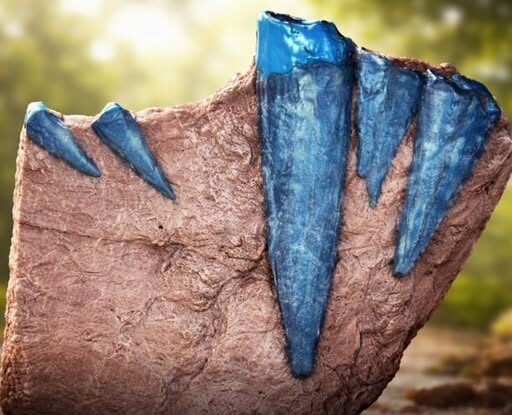
A Surprising Discovery in Thin Slices (Image Credits: Facebook)
Researchers initially sliced into the jaw to study tooth attachment mechanisms, a feature that distinguishes mammals from reptiles. Undergraduate student Larry Mose prepared thin sections, each no thicker than a sheet of notebook paper, and mounted them for microscopic examination. Almost immediately, irregular clusters of small, round objects appeared embedded next to the root of the canine tooth.
Lead author Megan Whitney, a graduate student at the University of Washington, recalled the moment of realization. “At first we didn’t know what to make of it,” she noted. “But after some investigation we realized this gorgonopsian had what looks like a textbook compound odontoma.” Higher magnification revealed up to eight toothlets per cluster, each with distinct layers of dentin, enamel, and pulp cavities. No external signs marred the jaw’s surface, underscoring how pathologies often evade superficial inspection.
Gorgonopsians: Saber-Toothed Hunters of the Permian
Gorgonopsians roamed Earth between 270 and 252 million years ago as dominant carnivores in Africa and Russia. These synapsids, more closely related to mammals than to dinosaurs, measured from 2 to 10 feet long and earned the nickname “saber-tooths of the Permian” for their enlarged canines. As apex predators in a pre-dinosaur world, they filled ecological roles similar to later big cats.
Synapsids like gorgonopsians represent the mammalian lineage, with features such as differentiated teeth for slicing and piercing prey. Mammals remain their sole surviving descendants. Whitney emphasized their importance: “Most synapsids are extinct, and we — that is, mammals — are their only living descendants. To understand when and how our mammalian features evolved, we have to study fossils of synapsids like the gorgonopsians.”
- Body length: 2 to 10 feet, comparable to bobcats or polar bears.
- Diet: Carnivorous, with specialized teeth for predation.
- Habitat: Late Permian landscapes in what is now southern Tanzania.
- Extinction: Around 252 million years ago, before the first true mammals.
Deciphering the Compound Odontoma
The World Health Organization describes a compound odontoma as a malformation featuring orderly dental tissues forming multiple tooth-like structures, each with enamel, dentin, cementum, and pulp. These benign growths account for about 20 percent of odontogenic tumors in modern cases, though they do not metastasize. In humans, they develop in gums or soft tissues, often causing pain, swelling, and tooth misalignment that requires surgical removal.
Prior fossil records included woolly mammoths from 115,000 to 10,000 years ago and red deer from 12,200 to 11,400 years ago, all within the last million years. Older tumors appeared in Carboniferous fish around 300 million years old, but none matched this odontoma type. Senior author Christian Sidor, a University of Washington professor and Burke Museum curator, stated, “We think this is by far the oldest known instance of a compound odontoma. It would indicate that this is an ancient type of tumor.”
| Era | Age (Years Ago) | Specimen |
|---|---|---|
| Late Permian | 255 million | Gorgonopsian jaw |
| Ice Age | ~115,000 | Woolly mammoth |
| Post-Glacial | ~12,000 | Red deer |
Implications for Evolutionary Pathology
This odontoma arose from developmental anomalies in epithelial and ectomesenchymal tissues during tooth formation. Its presence in a pre-mammalian synapsid challenges assumptions that such tumors linked exclusively to advanced mammalian traits. National Science Foundation program director Judy Skog observed, “These researchers have found an example in the ancestors of mammals that lived 255 million years ago. The discovery suggests that the suspected cause of an odontoma isn’t tied solely to traits in modern species, as had been thought.”
Sidor highlighted the broader value: “This discovery demonstrates how the fossil record can tell us a lot about our present-day lives — even the diseases or pathologies that are part of our mammalian heritage.” The finding appeared in a 2016 JAMA Oncology letter, bridging paleontology and medicine.
Key Takeaways
- The tumor predates mammals, showing odontomas evolved deep in synapsid history.
- No visible external damage, detected only through destructive thin-sectioning.
- Highlights fossils’ role in tracing disease origins over hundreds of millions of years.
This Permian predator likely endured discomfort from its hidden growth, a reminder that ailments transcend time. As researchers continue probing ancient bones, such revelations connect our health challenges to distant ancestors. What surprises might the next fossil slice uncover? Share your thoughts in the comments.