Paleontologists at the University of Toronto Mississauga analyzed fossilized bones from early Permian Texas and identified dozens of tooth scars on juvenile Diadectes skeletons. These marks provided the oldest direct evidence of large terrestrial predators attacking herbivores. The discovery highlighted complex trophic interactions that shaped ancient ecosystems long before dinosaurs roamed the Earth. Researchers documented patterns suggesting both live predation and scavenging behaviors.
Fossils Bear Scars of Ancient Violence
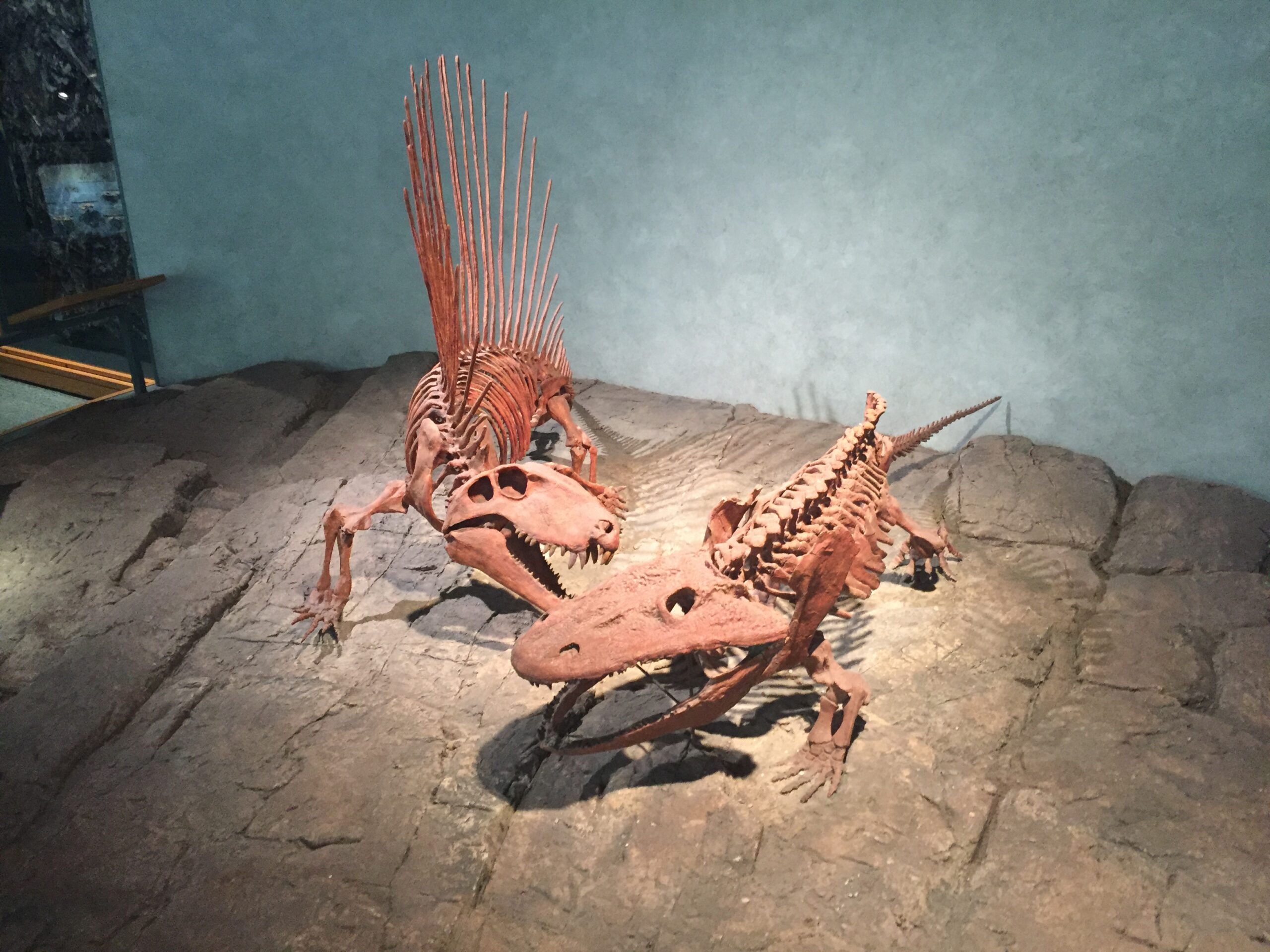
Fossils Bear Scars of Ancient Violence (Image Credits: Upload.wikimedia.org)
Three disarticulated juvenile skeletons of the herbivore Diadectes turned up at the Mud Hill locality in Texas, each marked by numerous tooth impressions. Lead author Jordan M. Young, an MSc student, along with Tea Maho and Professor Robert Reisz, meticulously prepared and examined the bones. Punctures, pits, scores, and furrows covered appendicular elements like limbs, pointing to deliberate feeding.
The marks clustered around muscle-rich areas and cartilage-heavy joints, indicating predators stripped flesh efficiently. This evidence predated previous records of such interactions by millions of years. Professor Reisz noted that predator-prey hierarchies formed earlier than expected in the Paleozoic Era. The find filled a critical gap in understanding early terrestrial food webs.
Diadectes: Pioneering Plant-Eater of the Permian
Diadectes ranked among the earliest large, fully terrestrial herbivores, reaching lengths of up to three meters.[5] These heavily built tetrapods featured robust limbs, strong jaws, and teeth suited for grinding vegetation. They thrived in the Late Carboniferous through Early Permian, inhabiting floodplains and swampy terrains of what became North America.
The juveniles in question measured smaller, making them vulnerable targets. Fossil sites like Texas Red Beds preserved their remains alongside potential predators. Diadectes represented a shift toward larger plant-eaters, supporting diverse ecosystems.
Suspect Predators: Dimetrodon and Its Rivals
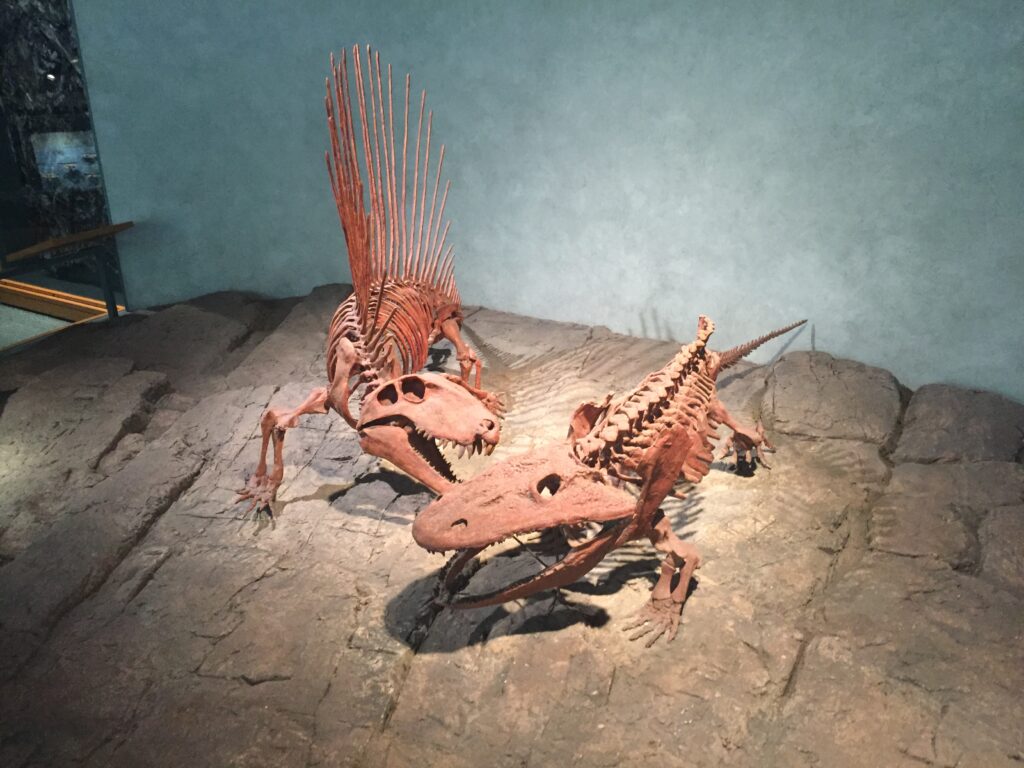
Dimetrodon, the iconic sail-backed synapsid, emerged as a prime suspect due to matching tooth morphology. Growing to three meters with serrated, dual-type teeth – sharp canines and shearing blades – it dominated as an apex carnivore. Its robust skull enabled powerful bites capable of the observed damage.
Other candidates included Varanops, a lizard-like varanopid synapsid, and possibly the amphibian Acheloma. Young attributed the marks to these large predators from nearby sites. The variety suggested multiple feeders accessed the carcasses.
- Dimetrodon: Sail-finned sphenacodontid, up to 300 kg, versatile teeth for ripping flesh.
- Varanops: Agile varanopid, monitor-sized, precise puncturing bites.
- Acheloma: Trematopid amphibian, potential scavenger on joints.
Decoding the Feeding Frenzy
Tooth mark analysis revealed targeted attacks on high-yield tissues. Predators defleshed muscles and scavenged cartilage-rich zones, maximizing nutrition.[3] Spacing and depth matched known dental patterns from the fauna. Some scars indicated live struggles, others post-mortem feeding.
This behavior mirrored modern large carnivores, where packs or multiples exploit kills. The study employed morphometric comparisons to link marks to specific taxa. Such precision offered rare taphonomic insights into Permian dynamics.
Reshaping Views of Permian Life
The evidence pushed back the timeline for established food chains among large vertebrates. Complex hierarchies existed by the early Permian, aiding amniote evolution. Texas sites like Mud Hill captured a snapshot of this world, with herbivores sustaining top predators.
Previous gaps stemmed from poor preservation of soft tissues and rare direct traces. This breakthrough underscored the sophistication of Paleozoic terrestrials. It invited further scrutiny of similar fossils worldwide.
Key Takeaways
- Oldest direct proof of large predator-herbivore interactions dates to 280 million years ago.
- Multiple predators, including Dimetrodon, targeted juvenile Diadectes in Texas.
- Marks show defleshing and joint scavenging, revealing early feeding strategies.
This landmark study affirmed that fierce competition defined land life from its outset. Predator-prey arms races drove diversification long ago. What insights might future digs uncover? Share your thoughts in the comments.