
Walk into any financial advisor’s office and you’ll probably see charts, spreadsheets, maybe a framed certification or two. What you won’t see is the quiet, surprising influence of biology: lessons borrowed from cockroaches, sharks, ancient trees, and whole ecosystems that have survived mass extinctions and brutal change. It sounds dramatic, but some of the smartest strategies in modern wealth management are basically upgraded versions of what nature has been doing for millions of years.
I remember the first time an advisor told me, half-joking, that the best investors behave more like hardy lichens on a rock than like flashy cheetahs on the savannah. At first I laughed. Then I realized how many “advanced” financial principles are just echoes of deep survival patterns: diversify, adapt, conserve, and outlast. Once you see the connection, it’s hard to unsee it – and it can completely change how you think about money, risk, and what it means to truly be financially resilient.
Lesson 1: Diversification Is Nature’s Ultimate Risk Management Tool

Imagine a rainforest: thousands of species layered from the soil to the canopy, all sharing space, but none depending on a single fragile thread to survive. If one plant gets wiped out by a disease, others fill the gap. If a particular insect disappears, birds shift diets. That dense web of variety is the reason rainforests can weather storms, fires, and shocks better than a single-species plantation. In nature, putting all your eggs in one basket is basically asking to be erased by the next lightning strike.
Financial advisors quietly borrow this same rule when they talk about diversification. Instead of filling your financial “forest” with just one towering tree – say, one hot tech stock or the company you work for – they try to spread your exposure across assets, sectors, and even countries. Stocks, bonds, real estate, cash equivalents, sometimes alternatives like commodities or private markets: the goal is not to guess one perfect winner, but to build a resilient ecosystem where something is usually doing well even when something else is suffering.
Think of a monoculture cornfield versus a mixed wild meadow. The cornfield might look efficient and impressive, but one new pest or weather pattern can destroy nearly everything in a season. A mixed meadow may never maximize output in a single year, but it rarely collapses entirely. That is the logic behind the classic guidance to own a globally diversified portfolio of low-cost funds rather than chasing whatever is currently fashionable. It is less glamorous, but much closer to how complex systems actually stay alive.
Many advisors now use evidence-based asset allocation frameworks that are basically risk-balanced ecosystems on a spreadsheet. They map out how different asset classes historically behaved during crises, how correlated they tend to be, and how to blend them so that one shock – rising interest rates, a recession, geopolitical drama – does not decimate everything at once. It is not about eliminating risk, which is impossible, but about making sure no single disaster can wipe out your financial habitat.
Lesson 2: Adaptability Beats Prediction When the Environment Keeps Changing

For most of Earth’s history, the big winners were not the biggest or even the smartest – they were the most adaptable. Species that survived ice ages, asteroid impacts, and shifting continents did not do it by predicting the exact day disaster would arrive. They did it by staying flexible enough to change behavior, diet, or territory when the world refused to cooperate with their old patterns. In real life, survival has always been less about perfect foresight and more about rapid adjustment.
Financial advisors live in a similarly unpredictable ecosystem. Every few years, some version of the same fantasy resurfaces: a magical model, algorithm, or macro forecast that will finally allow us to see around every corner. Reality keeps punching that fantasy in the face. Markets react to wars, elections, pandemics, regulatory changes, and social shifts in ways nobody perfectly calls in advance. The advisors who last tend to be less obsessed with predicting every twist and more focused on building plans that can flex, bend, and update as conditions change.
This is why many modern advisors emphasize process over prophecy. Instead of promising that a certain stock or sector will soar, they build rules for how to respond when the environment shifts: rebalancing portfolios when allocations drift, gradually reducing risk as clients approach big goals, or pausing spending and revisiting plans during downturns. It is less like betting on the weather next June and more like owning a wardrobe that can handle any season when it actually arrives.
On a personal level, adaptability shows up in how your financial life can absorb shocks: job loss, illness, a major move, or suddenly needing to care for a family member. Advisors who borrow from nature’s playbook push clients to build emergency funds, manage debt conservatively, and avoid fragile lifestyles that only work if everything goes right. The idea is to give you the ability to pivot without your whole life collapsing – exactly what resilient species do when their food source, habitat, or climate abruptly shifts.
Lesson 3: Slow, Steady Compounding Mimics Nature’s Quiet Growth Strategies

When people think of powerful forces in nature, they often picture dramatic events: volcanic eruptions, raging storms, crashing waves. But some of the most unstoppable transformations on Earth happen quietly, almost invisibly, over long stretches of time. A tiny root slowly breaks a boulder. A coral reef grows millimeter by millimeter into a massive living structure. Ancient trees add thin rings each year and eventually tower over entire landscapes. Small, consistent growth compounds into something astonishing.
Compounding is the financial version of that slow, quiet power. A relatively modest habit – investing a set amount every month into a diversified portfolio – can grow into something surprisingly large over a decade or two because your returns begin to earn returns of their own. Advisors lean heavily on this principle, not because it sounds exciting, but because the math is relentless. The real magic is not a single huge return; it is a long series of steady contributions allowed to keep working undisturbed.
There is a reason financial planners obsess over time horizons and start dates. In the same way that a tree planted today has an entirely different potential than one planted ten years from now, money invested earlier has an exponentially larger chance to benefit from compounding. The difference between starting in your twenties versus your forties is less about discipline and more about biology-like time scales. You simply cannot compress twenty years of steady growth into ten at the same level of risk.
This is why patient, boring strategies often beat dramatic, adrenaline-fueled ones. Day trading and constant speculation are like trying to force a forest to mature in a single season by yanking on every sapling. Long-term investing is more like tending the soil, planting consistently, pruning occasionally, and then letting time do most of the heavy lifting. Advisors who internalize this lesson spend more time coaching behavior – staying invested, ignoring noise, avoiding panic – than hunting for the next supposed miracle asset.
Why Financial Advisors Are Quietly Turning Into Amateur Ecologists
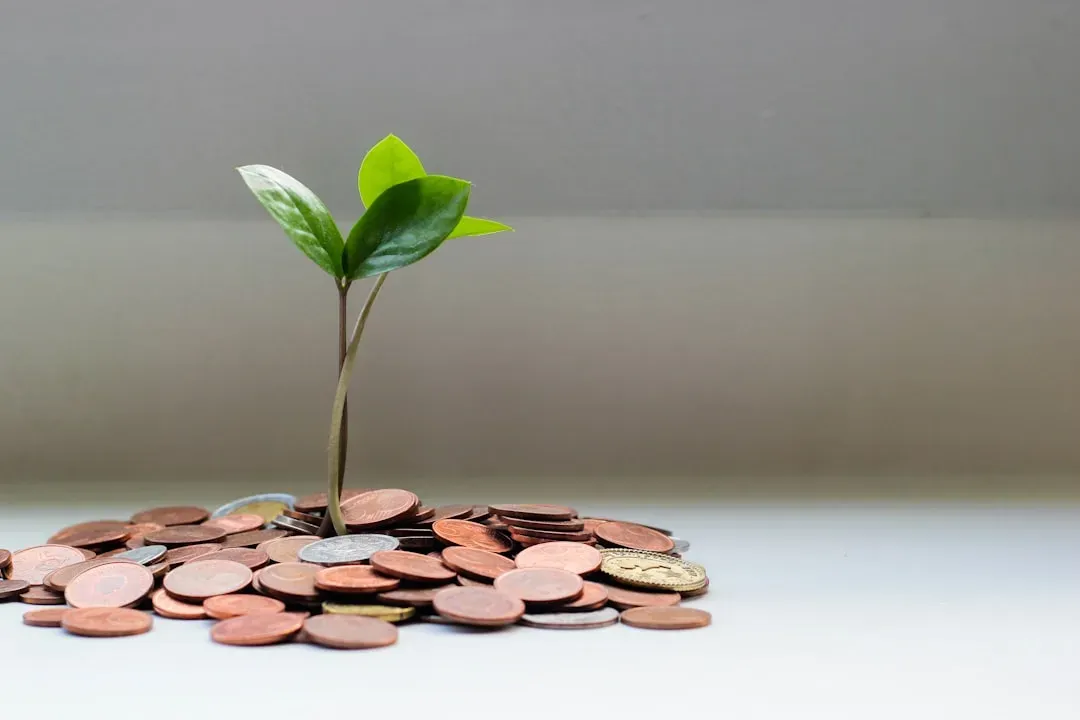
Over the past couple of decades, there has been a clear shift in how many advisors think about their work. Instead of treating portfolios as static machines that just need the right settings, more of them are viewing client finances as living systems embedded in a larger environment. Markets, laws, technology, demographics, climate risk – all of these external forces act like changing weather patterns. A plan that does not account for those shifts is about as fragile as a single-species crop in a drought-prone region.
This ecological mindset also changes how advisors talk about risk and reward with clients. Rather than promising smooth lines and constant growth, they are more likely to explain cycles, volatility, and occasional drawdowns as natural features of a complex system. The goal becomes building resilience instead of obsessively smoothing every bump. That can be uncomfortable to hear, but it is far more honest and much closer to how real-world systems, from ecosystems to economies, actually behave.
In practice, this often means integrating more scenario planning: what if interest rates stay high, what if inflation returns, what if certain industries shrink while others boom? Advisors sometimes map out ranges of outcomes rather than a single forecast, acknowledging uncertainty rather than pretending to eliminate it. This is essentially the same logic species use by spreading out, adapting diets, or evolving backup traits. It is humble, grounded, and surprisingly empowering once you stop expecting certainty.
There is also a growing appreciation for the “behavioral ecology” of money – the way humans actually act under stress, greed, fear, and social pressure. Many advisors now see their role as partly psychological: helping clients avoid self-destructive reactions during downturns, just as a good naturalist would help a conservation project avoid interventions that do more harm than good. In both worlds, survival often depends less on having perfect information and more on avoiding the worst possible moves at the worst possible times.
How You Can Apply These Survival Lessons To Your Own Money

You do not need a framed license on your wall to start using these ancient survival patterns in your own financial life. Begin by asking a brutally honest question: is your money more like a diverse forest or a single cornfield? If your career, investments, and even your home value all depend on one industry or one region, you are exposed in ways that might not show up until something goes badly wrong. Spreading your bets – across different skills, income sources, and asset classes – can feel slower at first but pays off when life throws curveballs.
Next, take a hard look at how adaptable you really are. If your budget only works when everything goes right, that is a sign your financial ecosystem is too brittle. Building an emergency fund, keeping debt in check, and staying flexible about lifestyle expectations all serve the same function as backup food sources or migration routes in nature. They give you room to maneuver when conditions change instead of forcing you into desperate, short-sighted decisions.
Finally, give compounding the respect it deserves. You do not need a perfect plan; you need a good-enough plan that you actually stick to for years. Automating investments, increasing contributions when your income rises, and resisting the urge to constantly tinker with your portfolio are small behavioral choices that echo the slow, steady growth processes that shape mountains and forests. They are not flashy, but they are powerful in a way that only becomes obvious with time.
I have seen plenty of people with high incomes and clever ideas get knocked flat by a single shock because their finances were fragile in ways they never questioned. And I have also seen people with very average salaries quietly build real security by behaving a bit more like those unglamorous, resilient species that simply refuse to go extinct. The gap between those two outcomes is rarely raw intelligence; it is usually structure, habits, and time.
Conclusion: Survival, Not Genius, Is the Real Financial Superpower

When you strip away the jargon, a lot of sophisticated financial advice boils down to three ancient truths that life on Earth has been testing for ages: diversify your exposure, adapt when the environment shifts, and let small advantages compound quietly over long periods. You do not have to be a genius stock picker to benefit from these lessons; you just have to stop playing a fragile game in a world that keeps reminding us it can change faster than our predictions. In that sense, the people who win financially are not the ones with the wildest bets, but the ones whose plans can take a hit and keep going.
If you feel like your money life is one bad break away from disaster, that is not a personal failure – it is a design problem. The good news is that design can change. You can start making your finances look less like a glass sculpture and more like a scruffy, resilient ecosystem that bends but does not break. In a world that celebrates fast wins and flashy risks, choosing survival as your strategy is almost a rebellious act. The real question is: if nature has already shown us what works, are we brave enough to actually follow its lead?