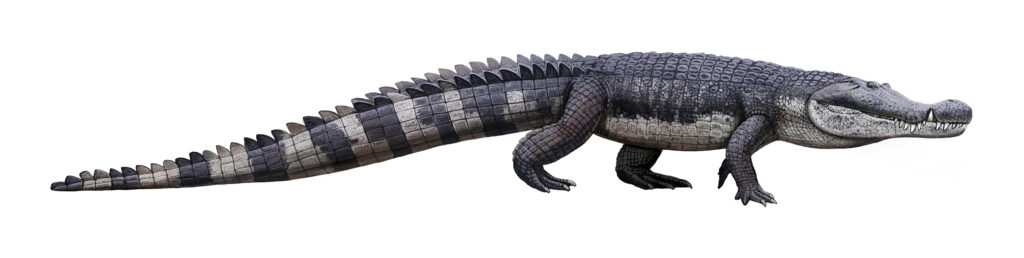
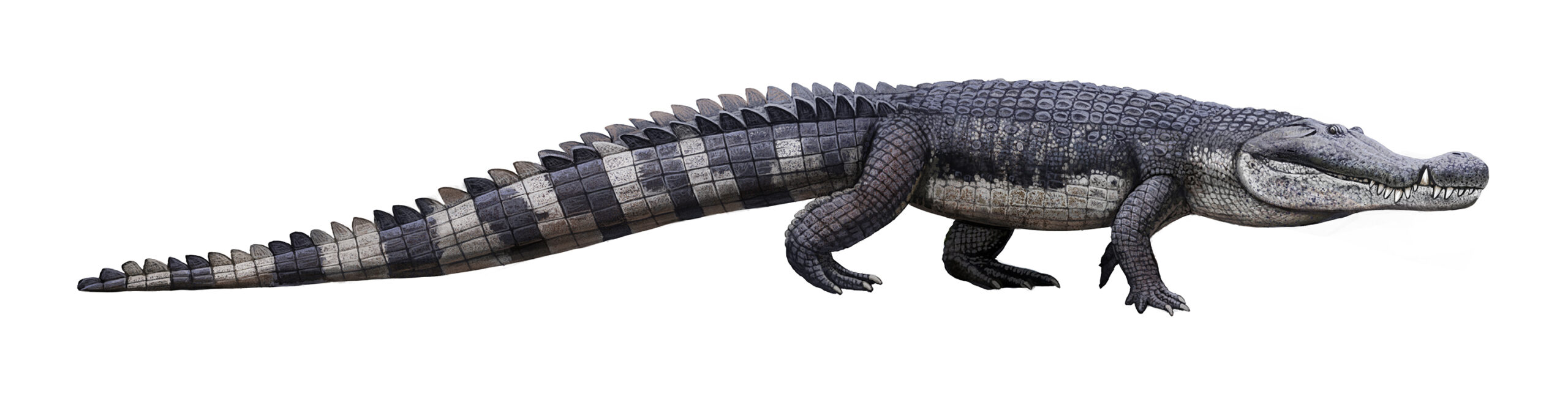
Cartersville, Georgia – Paleontologists have unveiled the first scientifically accurate replica of Deinosuchus schwimmeri, a colossal crocodile that terrorized the rivers and coastal plains of the southeastern United States 80 million years ago. This school bus-sized predator, a relative of modern alligators, now stands mounted at the Tellus Science Museum, drawing visitors to envision the Late Cretaceous world. Decades of fossil hunts culminated in this display, honoring the creature’s role as an apex hunter.
A Legacy Named for Tireless Research
A Legacy Named for Tireless Research (Image Credits: Upload.wikimedia.org)
Deinosuchus schwimmeri received its name in 2020, a tribute to Dr. David R. Schwimmer, a geology professor at Columbus State University whose 40-year career uncovered key fossils across the Southeast. Schwimmer’s fieldwork, funded by National Geographic grants, yielded the first Deinosuchus remains in Georgia during the 1980s. His 2002 book, King of the Crocodylians, detailed the genus’s paleobiology and remains a cornerstone reference.
Researchers Adam Cossette and Christopher Brochu formalized the species in the Journal of Vertebrate Paleontology, reassigning eastern fossils previously linked to other names. This smaller, more abundant eastern form contrasted with larger western relatives. Schwimmer’s efforts also produced evidence of bite marks on dinosaur bones and fossilized dung, published in 2010. “Bones and fossils tell us only part of the story,” Schwimmer noted. “Fully assembled replicas become a blueprint for better understanding these dynamic animals.”
Built for Domination: Anatomy and Hunting Prowess
Deinosuchus schwimmeri measured up to 31 feet long and weighed over two tons, dwarfing today’s alligators. Its broad, crushing snout held thick, grooved teeth ideal for pulverizing bone. A secondary bony palate allowed breathing while mostly submerged, and robust osteoderms armored its body for both water and short land excursions.
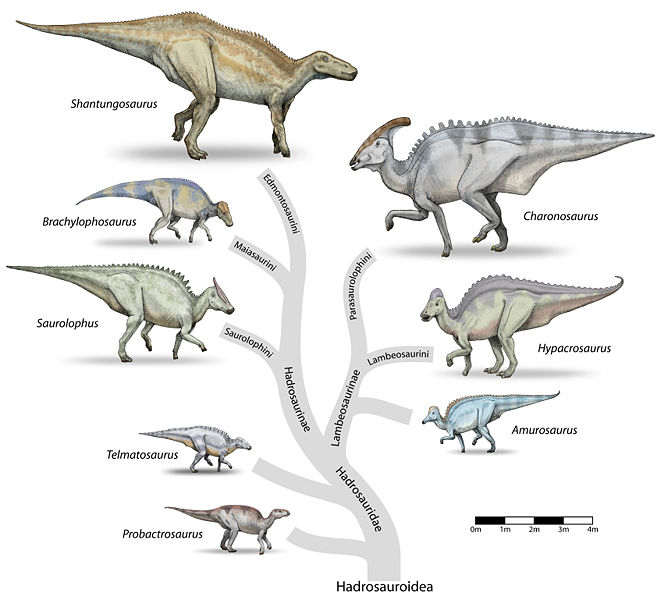
This predator ambushed prey at river edges, capable of death rolls to dismember victims. Fossil evidence reveals meals of dinosaurs like hadrosaurs and theropods, alongside turtles and fish. Bite marks on hadrosaur vertebrae confirm its “dinosaur-killer” moniker. Eastern populations thrived in brackish bays, filling the niche of top carnivores amid dinosaur-dominated ecosystems.
- Length: Up to 31 feet (9.45 meters)
- Weight: More than 2 tons
- Skull features: Inflated nares, bulbous snout tip
- Adaptations: Submerged breathing, land-walking capability
- Prey: Dinosaurs, sea turtles, large fish
- Lifespan: 35-50 years, based on growth rings
Fossils Unearthed in Georgia’s Ancient Formations
Specimens of Deinosuchus schwimmeri appear frequently in Georgia’s Blufftown Formation, dated to 82 million years old, the earliest known for the genus. Sites near the Alabama border in the Gulf Coastal Plain yielded teeth, osteoderms, vertebrae, and bone fragments. Western Georgia discoveries, including those studied by Schwimmer, preserved partial skulls and jaws now housed in museums like the Smithsonian and Tellus.
These fossils paint a picture of a humid, riverine habitat teeming with life. Eastern Deinosuchus outnumbered western kin, suggesting favorable conditions despite smaller sizes. Hazards like flooding may have limited growth, yet abundance underscores their success as generalist hunters.
| Feature | D. schwimmeri (Eastern) | D. riograndensis (Western) |
|---|---|---|
| Average Size | 19 feet | Larger maxima |
| Abundance | More common | Rarer |
| Habitat | Coastal plains, rivers | Brackish bays |
| Prey Focus | Opportunistic | Dinosaur specialists |
The Tellus Replica: A Paleontological Milestone
Tellus Science Museum commissioned the replica after two years of collaboration with Triebold Paleontology and Schwimmer’s expertise. High-resolution 3D scans of fossils ensured anatomical precision, from dermal armor to skeletal pose. Unveiled in December 2025, it stands as the world’s only such mount, immersing visitors in Cretaceous Georgia.
Museum staff highlight its educational impact. “The addition of Deinosuchus schwimmeri allows us to provide a more detailed picture of this area’s ecosystem,” said Hannah Eisla, director of education. Rebecca Melsheimer added, “Seeing it is far more impactful.” The display underscores local paleontology’s role in global science.
Key Takeaways
- Deinosuchus schwimmeri ruled southeastern rivers 80 million years ago as a versatile apex predator.
- Named for Dr. David Schwimmer’s pioneering research, with first Georgia fossils from the 1980s.
- Tellus Museum’s replica, built from 3D-scanned fossils, offers unprecedented accuracy and insight.
Deinosuchus schwimmeri’s story reveals a predator perfectly tuned to its era, bridging watery realms and land with lethal efficiency. This Georgia replica not only revives a lost giant but also invites reflection on prehistoric survival tactics amid environmental shifts. What do you think about this ancient ruler of the rivers? Tell us in the comments.