Most people associate ancient cave art with Europe. You probably picture the painted bison of Altamira or the horses of Chauvet. Yet North America holds its own remarkable underground legacy, one that remained largely unknown to outside researchers until just a few decades ago.
Similar cave art had never been found in North America until a pivotal 1980 discovery, and artwork deep under the ground was entirely unknown even as late as that year, despite how much archaeology had been done in the region since the colonial period. Since then, the story has changed dramatically. From the limestone corridors of Alabama to the high desert of Oregon, these five caves hold art, artifacts, and inscriptions that continue to reshape our understanding of the people who lived here long before written history.
Mud Glyph Cave, Tennessee: Where North America’s Cave Art Story Begins
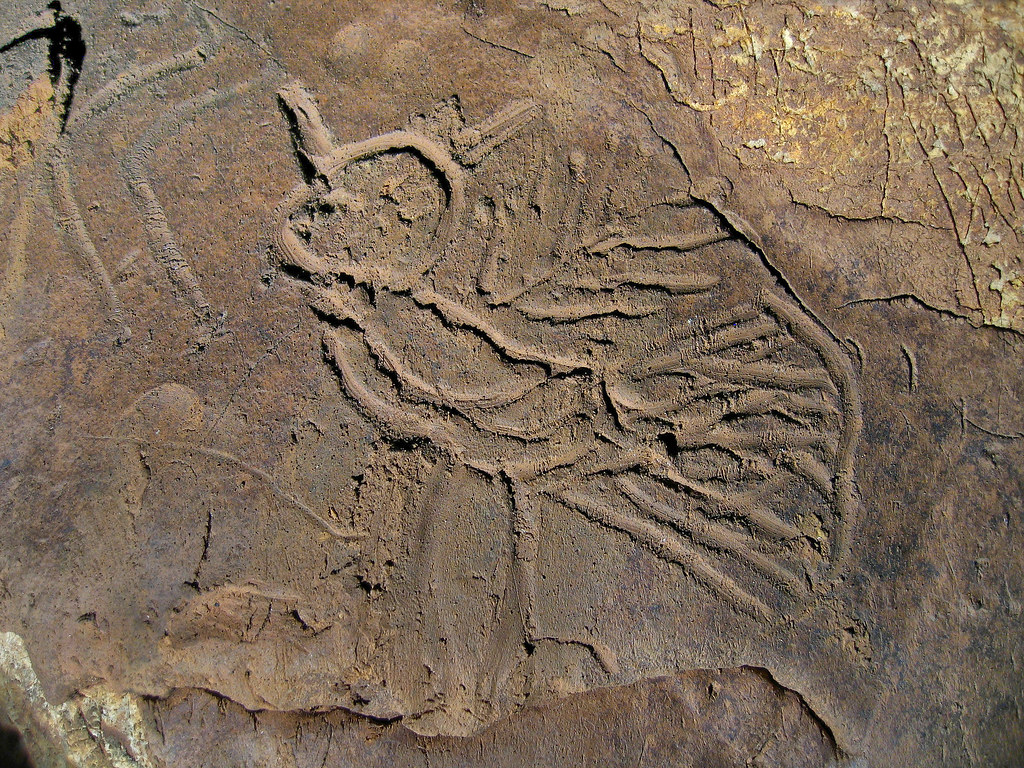
On a cold winter day in 1980, a group of recreational cavers pushed through a narrow, wet passage south of Knoxville, Tennessee. They eventually entered a high and relatively dry passage deep in the cave’s dark zone, beyond the reach of external light, and on the walls around them, they began to see lines and figures traced into remnant mud banks laid down long ago when a stream flowed at that higher level. No modern or historic graffiti marred the surfaces.
The Tennessee cavers recognized they were seeing something extraordinary and brought archaeologist Charles Faulkner to the cave, who initiated a research project there and named the site Mud Glyph Cave. His archaeological work showed that the art was from the Mississippian culture, some 800 years old, and depicted imagery characteristic of ancient Native American religious beliefs. They saw images of animals, people, and transformational characters blending human characteristics with those of birds, and those of snakes with mammals. The discovery triggered something much bigger than one cave: a reckoning with how much had gone unseen.
19th Unnamed Cave, Alabama: The Largest Cave Art in North America
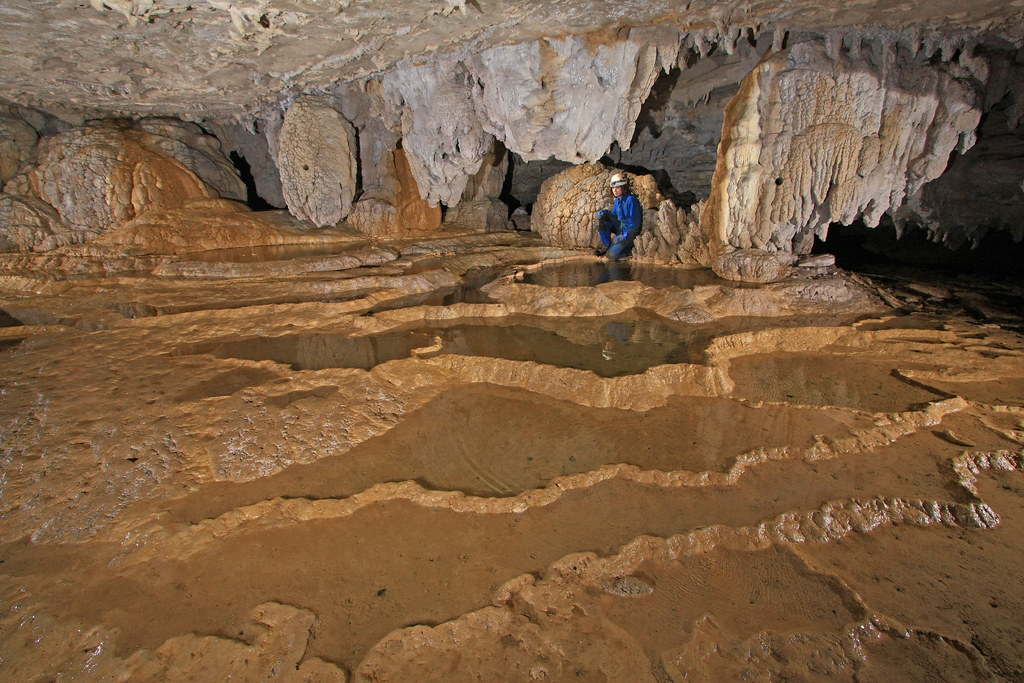
The 19th Unnamed Cave, arbitrarily named and numbered to protect its location on private land, is found in Alabama and features more than 3 miles of underground passageways. It is the most extensive of all known cave art sites in the Southeastern United States. Its exact location remains a closely guarded secret, with researchers concerned that exposure would lead to irreversible damage from looters or casual visitors.
As researchers manipulated 3D photogrammetry images to make the drawings more visible, five huge glyphs that were previously too large and faint to be seen came into relief. They included three humanlike beings dressed in regal garments, a swirling figure with a rattlesnakelike tail, and a long serpent with scales. The images measure between 0.93 meters and 3.37 meters long, making the biggest of them the largest cave art in North America. Kept preserved in the mud for a millennium down three miles of damp corridors, just the lightest touch could wipe the artworks away. If it weren’t for the damp stillness of the cave, the art would have likely dried out and eroded away centuries ago. The artists who created these figures had to lie on their backs in a chamber barely tall enough to crouch in, working from imagination alone, unable to view their creation in its entirety.
Manitou Cave, Alabama: Cherokee Voices Written in Stone
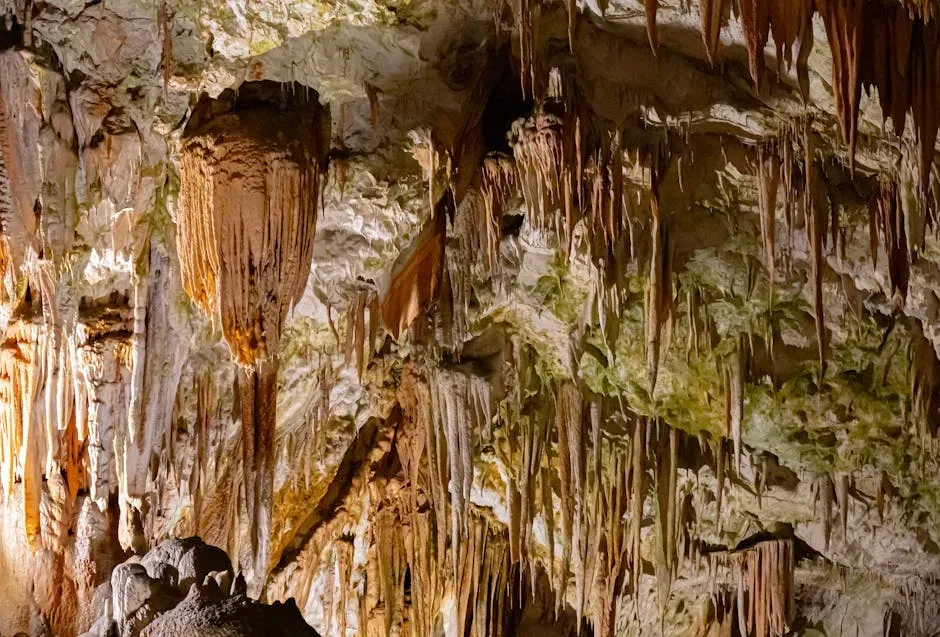
Inside Manitou Cave in modern Alabama, nineteenth-century Cherokees carried out sacred ceremonies, recording their activities on the walls using Cherokee syllabary, a system invented in nearby Willstown by Cherokee scholar Sequoyah. The inscription records an important ritual event that took place in 1828. The inscriptions were written in the Cherokee syllabary, a writing system formally adopted by the Cherokee just three years prior in 1825, and the Manitou Cave inscriptions are among a few rare examples of historic Cherokee writing recently found on the walls of caves.
These inscriptions reveal evidence of secluded ceremonial activities at a time of crisis for the Cherokee, who were displaced from their ancestral lands and sent westward on the Trail of Tears in the 1830s. The ceiling inscriptions are written backwards, as if addressing readers inside the rock itself. The inscriptions indicate that caves like Manitou were seen by the Cherokee as spiritually potent places where wall embellishment was appropriate in the context of ceremonial action. You’re looking at one of the most emotionally charged archaeological finds in North American history, a people recording their identity in darkness at the very moment their world was being dismantled above ground.
Dunbar Cave, Tennessee: 10,000 Years of Sacred History
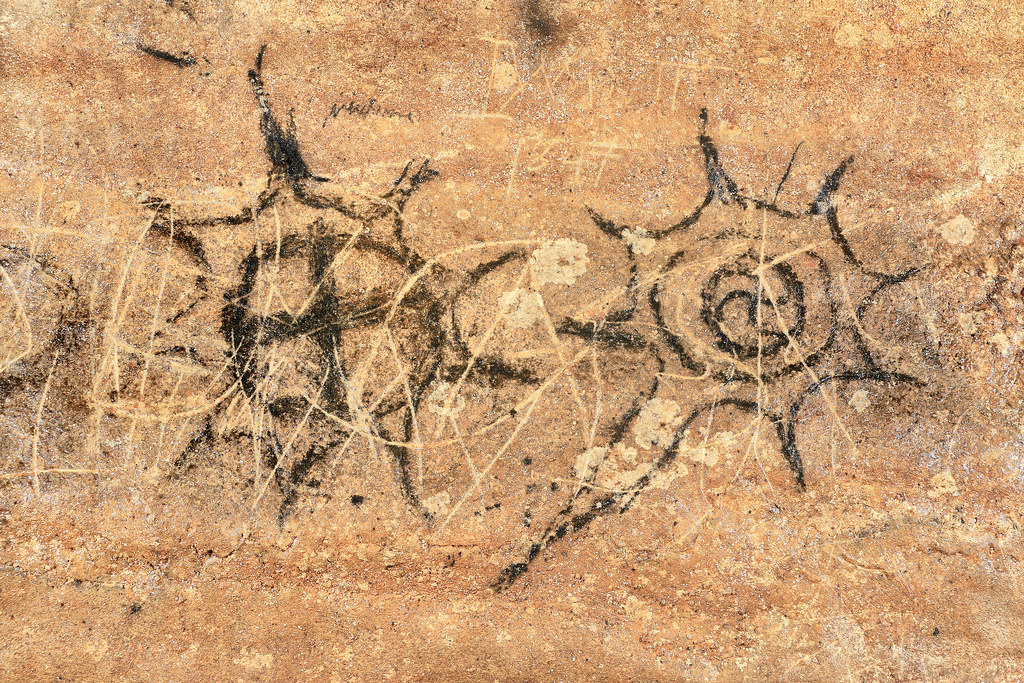
Dunbar Cave State Park has the oldest known cave art on the continent, according to Distinguished Professor of Anthropology Jan Simek at the University of Tennessee. Excavations in the cave mouth in the 1970s revealed that people had been using Dunbar Cave for at least 10,000 years. A site discovered within the Cumberland Plateau, which cuts across Tennessee between Chattanooga and Nashville, was drawn 6,000 years ago, making it the oldest cave art yet dated in North America.
When in 2005 researchers identified drawings on the limestone walls of the cave’s interior as Mississippian era indigenous drawings, about 200 to 400 years older than the first Spanish exploration into Tennessee, a better understanding of what the cave was used for began to take shape. Both pictographs and petroglyphs were found on the same wall and seem to depict celestial symbols. More recently, Cherokee syllabary has been found inside Dunbar Cave as well. The Cherokee language is the only Native American language to have a written alphabet, created by Sequoyah in the 1820s. Having a written language helped the Cherokee leave messages behind in the secrecy of caves during and after the Indian Removal. Dunbar Cave isn’t simply an archaeological site. It’s a layered record of human meaning spanning millennia.
Paisley Caves, Oregon: Artifacts from the Edge of Human Memory
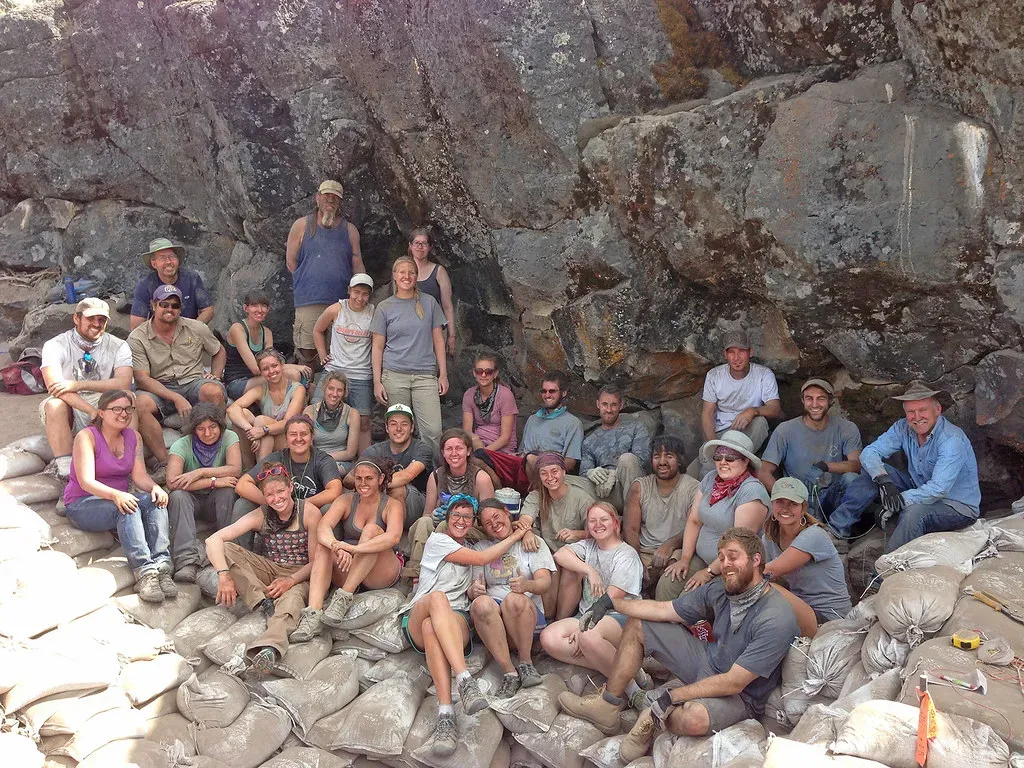
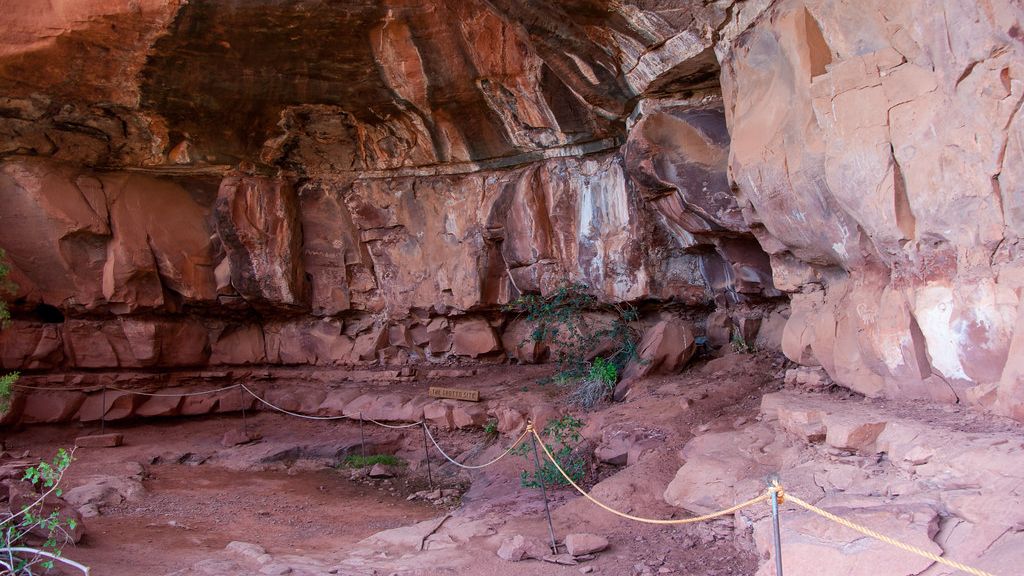
The Paisley Caves, more formally known as Paisley Five Mile Caves, in south-central Oregon are among the oldest archaeological deposits in North America. The seven creases that create the caves were etched into a low basalt ridge during the ice age by waves moving across Lake Chewaucan. Research results published in Science Advances confirmed that people were living at the site a thousand years before the appearance of the Clovis people, long thought to be the continent’s first inhabitants. These caves don’t hold dramatic murals. What they hold is something rarer: direct biological evidence of the continent’s earliest known people.
Cultural materials such as sage cordage and grass threads, obsidian and bone tool fragments, wooden pegs, cut animal bones, and evidence of fire hearths have been discovered in the caves intermingled with Pleistocene animal bones. Evidence of baskets and rope, plant fibers, wooden artifacts, and animal bones were also found at the caves. Pollen and other plant minerals extracted from the coprolites suggest that people came to the site in the spring and early summer. They also provide evidence that the people in the caves ate everything from edible roots to bison, horse, and even animals as big as mastodon. The area is so arid and the caves so dry that artifacts and ancient remains have been extremely well preserved over time. You won’t find a painted ceiling here, but you will find something arguably more profound: the physical traces of people who walked this continent when mammoths still roamed it.
Conclusion: A Continent Still Revealing Itself
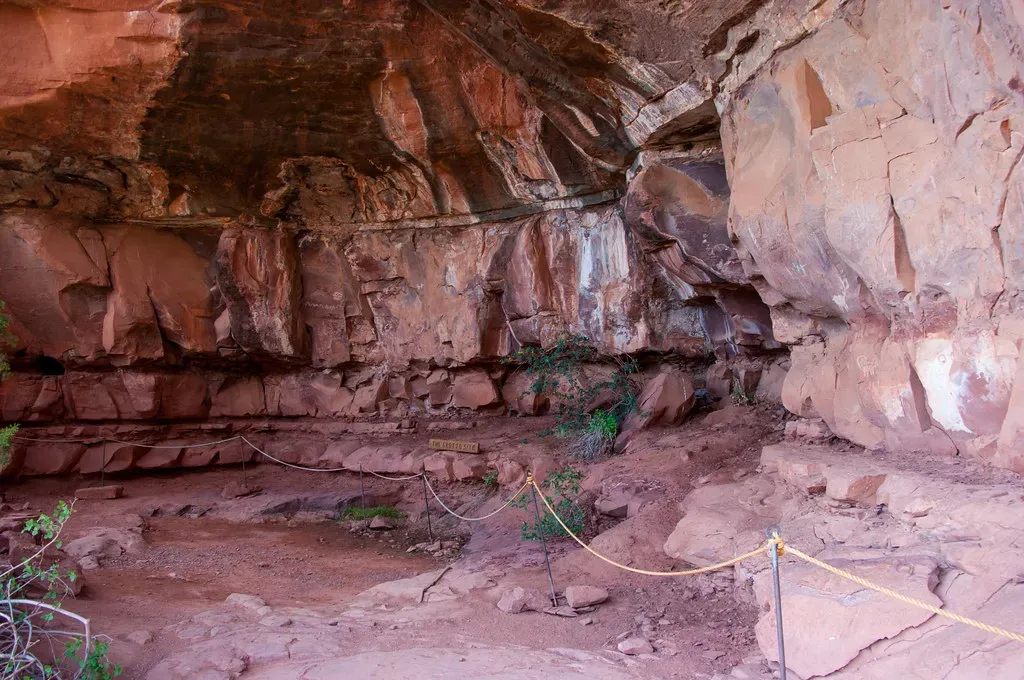
What’s striking about all five of these sites is how recently most of them entered the scientific record. As surveys continue, researchers uncover more dark cave sites every year, and with each new discovery, the tradition is beginning to approach the richness and diversity of the Paleolithic art of Europe, where 350 sites are currently known. Archaeologists have now cataloged 92 dark-zone cave art sites in Tennessee, Alabama, Georgia, Kentucky, Virginia, and West Virginia, with a few more sites known in Arkansas, Missouri, and Wisconsin.
The research raises important questions about when exactly an archaeologist’s work is done. In the world underground, the evidence suggests there’s plenty left to find, and even sites that have already been considered may be candidates for photogrammetry studies that could reveal as-yet unseen artifacts. Researchers have learned a great deal by working with the living descendants of the cave art makers, the present-day Native American peoples of the Southeast, about what the cave art means and how important it was and is to Indigenous communities.
The caves covered in this article aren’t relics of a vanished world. They’re active chapters in a living story, one that modern technology and Indigenous knowledge are only just beginning to tell together. The ground beneath North America holds more than most people ever imagined, and it’s still giving up its secrets.