Most of us grew up hearing that the Age of Dinosaurs was the defining chapter in Earth’s prehistory. T-Rex, Triceratops, Brachiosaurus – these names are burned into our collective imagination. Yet here’s something that rarely gets told in the schoolroom: long before the first dinosaur ever set foot on ancient ground, an entirely different group of extraordinary creatures already ruled the planet. They were the proto-mammals, and their story is so wild, so surprising, that it honestly deserves far more attention than it gets.
These creatures were not dinosaurs, not quite reptiles, and not yet true mammals. They were something gloriously in-between, occupying an evolutionary sweet spot that would eventually give rise to every furry, warm-blooded creature alive today, including you. From sail-backed predators to saber-toothed ambush hunters, their world was violent, fascinating, and utterly unlike anything you might picture. Let’s dive in.
1. Dimetrodon: The Sail-Backed Predator You’ve Been Misidentifying Your Whole Life
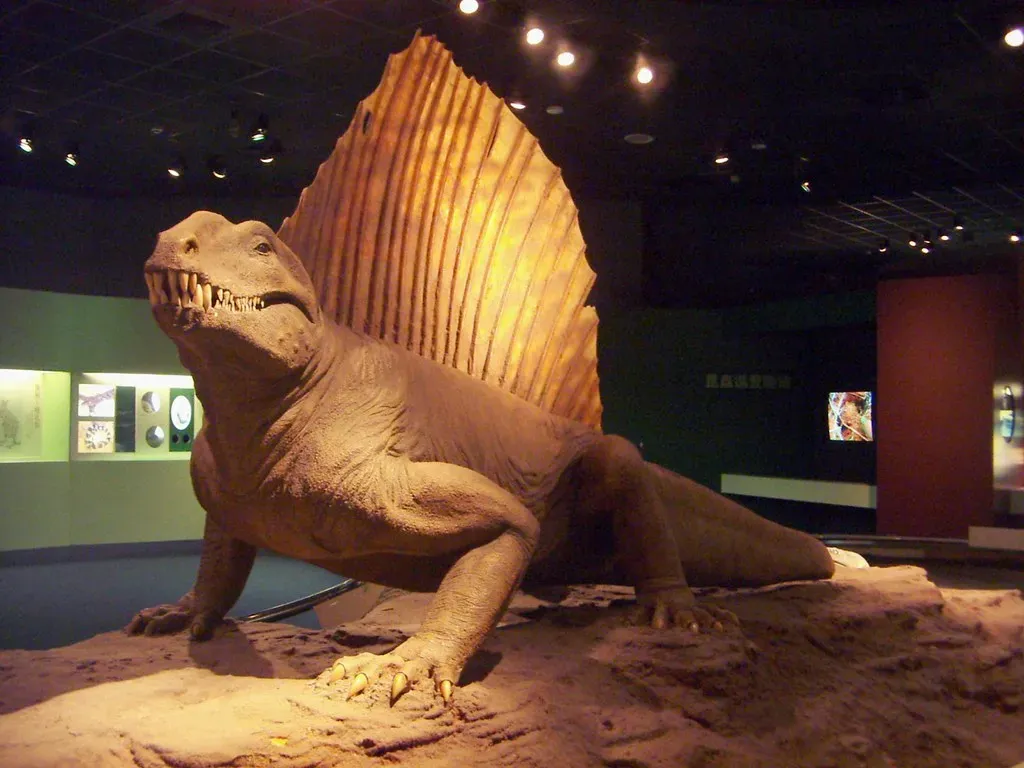
Let’s be real: most people who recognize Dimetrodon think it’s a dinosaur. You’ve probably seen it in children’s books, toy sets, maybe even museums labeled alongside Tyrannosaurus. Dimetrodon is often mistaken for a dinosaur or portrayed as a contemporary of dinosaurs in popular culture, but it became extinct by the middle Permian, some 40 million years before the appearance of dinosaurs. That gap in time is enormous. To put it in perspective, it’s roughly twice the span of time that separates us from the non-avian dinosaurs themselves.
Recognized for its distinctive sail-like dorsal fin, which extends from the base of its skull to its tail, Dimetrodon was a carnivorous quadruped that could grow up to 3 meters (10 feet) long. Although reptile-like in appearance and physiology, Dimetrodon is much more closely related to mammals, as it belongs to the closest sister family to therapsids, the latter of which contains the direct ancestor of mammals. Think about that the next time you look in a mirror. You share a deeper evolutionary bond with this sail-backed predator than it ever had with any dinosaur. Honestly, that’s one of the most mind-bending facts in all of paleontology.
Dimetrodon was a carnivore that grew to a length of more than 3.5 metres and had a large “sail” on its back that may have functioned in temperature regulation. The sail was presumably formed by elongated vertebral spines connected by a membrane containing many blood vessels. The purpose of the spine sail is unknown, though speculation ranges from courtship displays to temperature regulation. It’s hard to say for sure, but that mystery alone makes Dimetrodon one of the most talked-about creatures in prehistoric research. Its name (“two measures of teeth”) refers to differently sized teeth, including front canines plus smaller slicing teeth behind, marking it as one of the earliest vertebrates to develop specialized, differentiated dentition. Something that you yourself inherited, in a way.
2. Gorgonopsid: The Original Saber-Tooth That Terrorized the Permian World
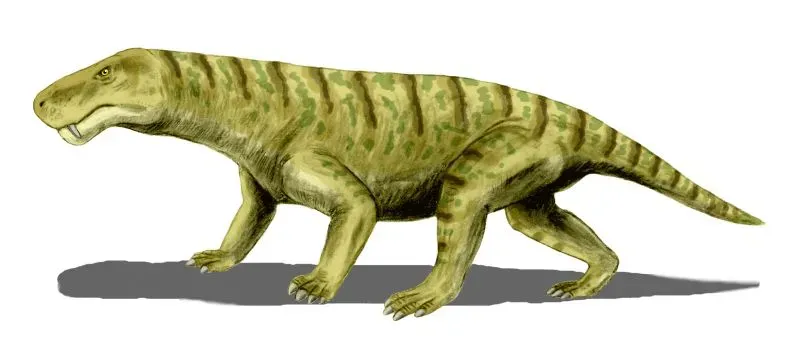
If you thought saber teeth were invented by the famous Smilodon of the Ice Age, you’d be off by about 250 million years. One of the most characteristic traits of Gorgonops and other gorgonopsids were their sabre teeth, the first sabre teeth on the planet. That’s a staggering claim. These weren’t just early carnivores. They were the original architects of terror in a world still figuring itself out, long before the dinosaurs even existed as a concept.
Earlier gorgonopsids in the Middle Permian were quite small, with skull lengths of 10 to 15 cm, whereas some later genera attained massive, bear-like sizes with the largest being Inostrancevia, up to 3.5 m in length and 300 kg in body mass. Their mammalian specializations include differentiated tooth shape, a fully developed temporal fenestra, pillar-like rear legs, and ear bones. So you’re looking at a creature that was already starting to walk like a mammal and sense like one, tens of millions of years before any mammal would step onto the scene.
Together, these teeth and jaws made effective killing weapons, but were useless at chewing meat, and the gorgonopsids probably fed in a manner similar to modern Komodo dragons or crocodilians – they ripped away chunks of flesh and swallowed them whole. Gorgonops was a type of stem-mammal that flourished during the Permian, but died out before the Mesozoic, as it became extinct during the Permian-Triassic extinction event, also known as the Great Dying, which caused the extinction of about 53% of biological families. They came so close to surviving into the age that might have been theirs.
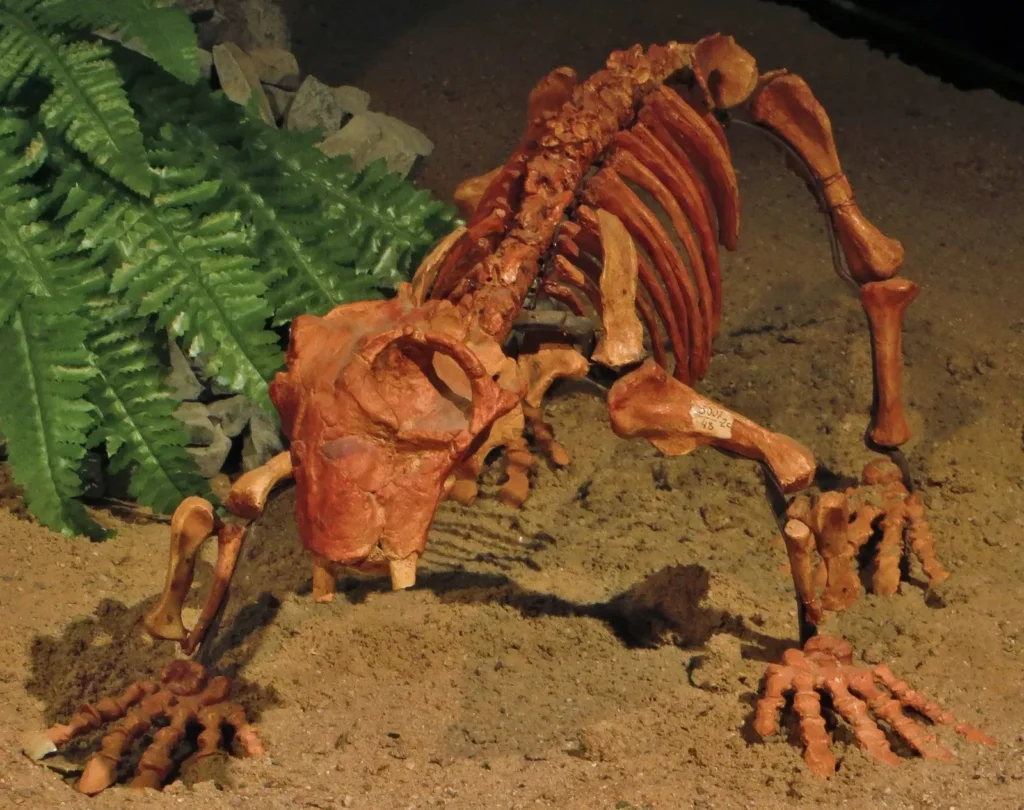
3. Moschops: The Gentle Giant With a Head Built for Battle
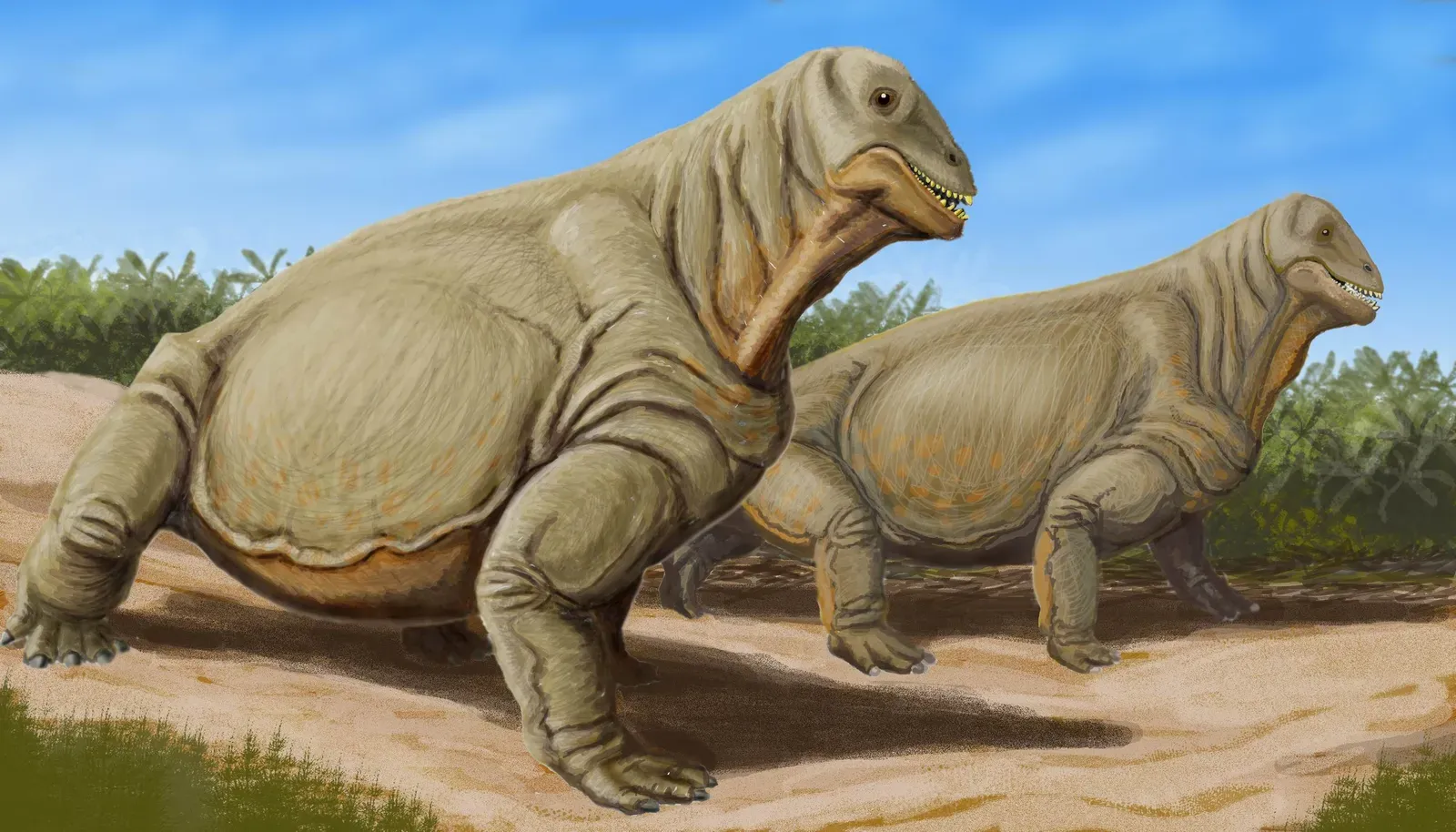
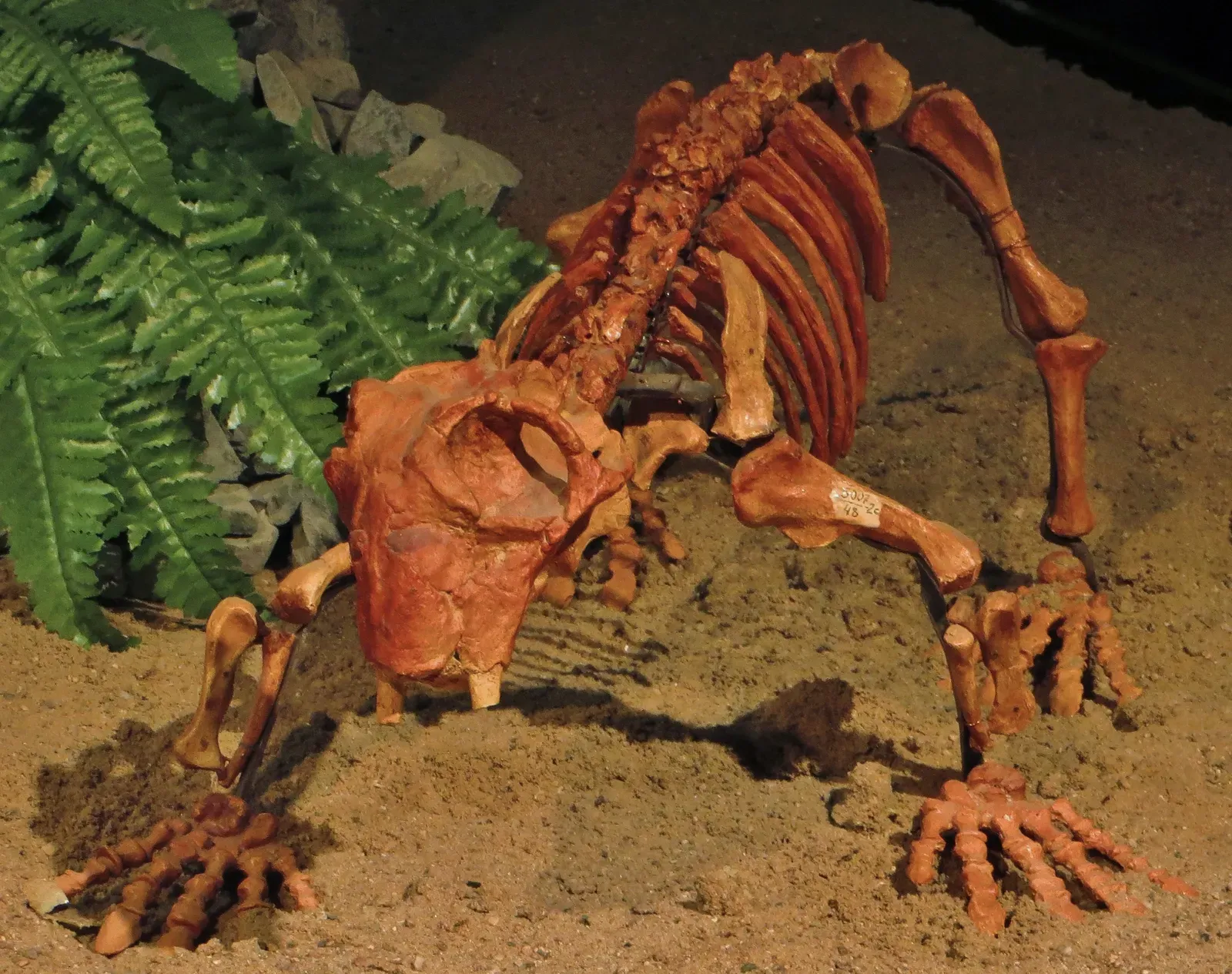
Not everything in the Permian world was fangs and fury. Enter Moschops, a creature that looks, at first glance, like someone assembled it from spare animal parts. Moschops, which is Greek for “calf face,” is an extinct genus of therapsids that lived in the Guadalupian epoch, around 265 to 260 million years ago. Moschops were heavy-set dinocephalian synapsids, measuring 2.7 metres in length, and weighing an average of 129 kilograms and up to roughly 327 kilograms at maximum body mass. Imagine something the rough shape of a hefty cow crossed with a very odd lizard, and you’re starting to get there.
Due to its long-crowned, stout teeth, it is believed that Moschops was a herbivore feeding on nutrient-poor and tough vegetation, like cycad stems. It spent most of its days grinding through some of the toughest plant material the Permian had to offer. Moschops had a thick skull, prompting speculation that individuals competed with one another by head-butting. Their elbow joints allowed them to walk with a more mammal-like gait rather than crawling, which is a small but significant step on the long road toward the way you walk today. Something as seemingly trivial as an elbow angle turned out to be a preview of the future.
4. Lystrosaurus: The Most Successful Survivor in Earth’s History
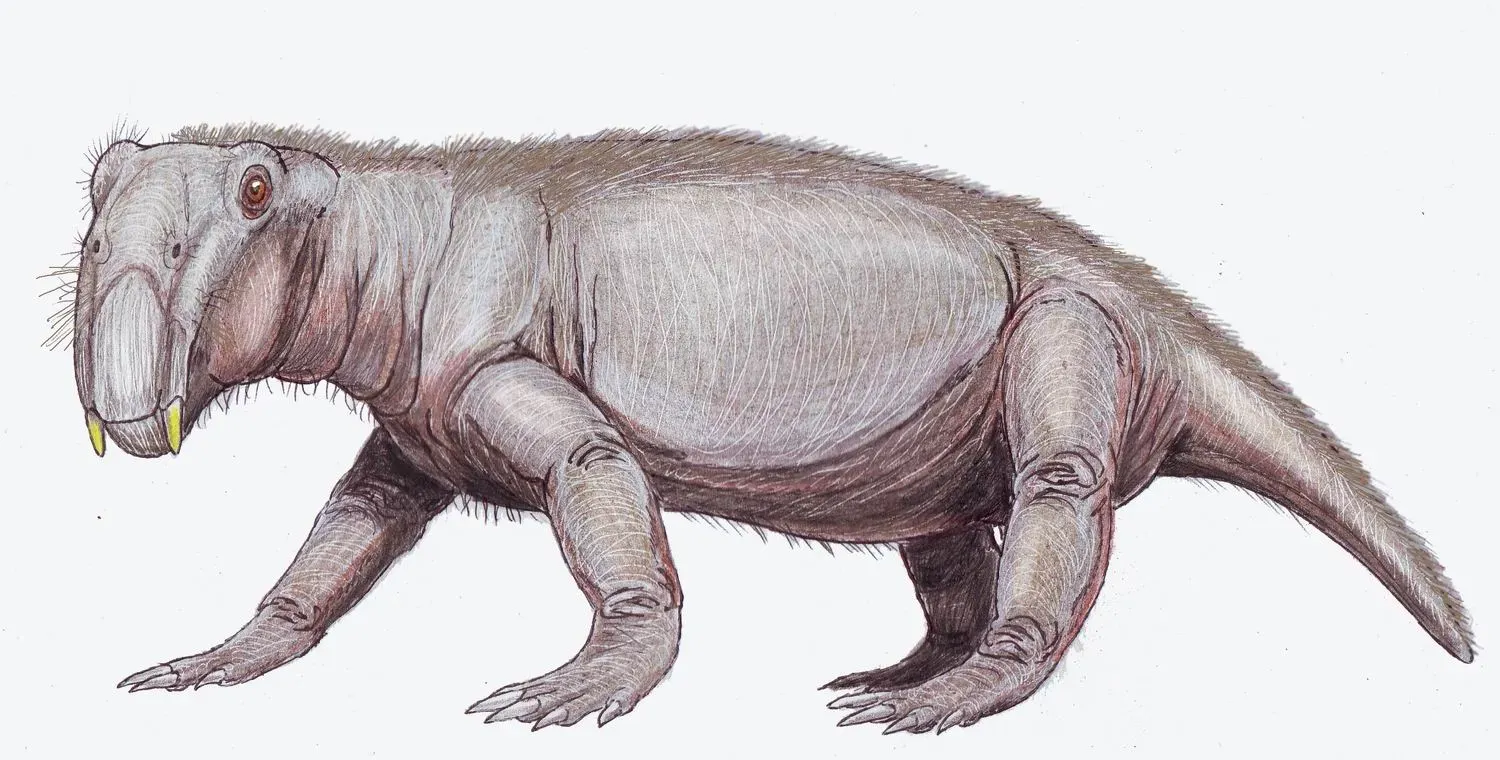
If any creature deserves the title of “ultimate survivor,” it might just be Lystrosaurus. It is notable for being a survivor of the Permian-Triassic extinction event, which killed around 90% of life on Earth. While nearly everything else perished in the most catastrophic mass extinction our planet has ever known, Lystrosaurus not only survived, it thrived. During the Early Triassic, Lystrosaurus made up around 75% of all vertebrate life on land. That’s not dominance – that’s monopoly. A single genus rewriting the entire biological rulebook of a planet.
Lystrosaurus was roughly 1 metre long and was heavily built. It had dorsally located eye orbits, an unusual beaklike face, and two tusks set deeply in the upper jaw. The structure of the palate and mandible indicates that Lystrosaurus had a horny beak similar to that of a turtle, and the anatomy of the skull indicates that it had a herbivorous diet. Growth marks observed in some fossil tusks suggest that the Lystrosaurus species that lived in Antarctica could enter a state of prolonged sleep similar to hibernation. It was, in essence, a small burrowing, beaked, tusk-bearing animal that somehow did what giants could not. It survived everything the planet threw at it, and then went on to carry the mammal line forward into a new world.
Lystrosaurus fossils may serve as indicators of the boundary between the Permian and Triassic periods and also are part of the body of evidence supporting the theory of continental drift. Lystrosaurus fossils occur across former Gondwana, including southern Africa, India, and Antarctica, making the genus important in discussions of ancient continental connections. I think the fact that this small, pig-like creature helped scientists prove the reality of continental drift is genuinely one of the most underappreciated scientific stories ever told.
5. Cynognathus: The Dog-Jawed Proto-Mammal That Almost Was
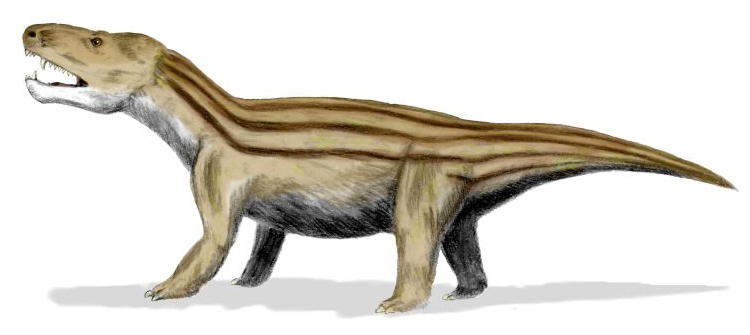
Cynognathus is often described as “dog-like” and “wolf-like” in contrast with the more primitive, lizard-like Dimetrodon, and with good reason. By the time you reach Cynognathus, you’re looking at something that starts to feel disturbingly familiar. Living about 245 million years ago in the Middle Triassic, Cynognathus crateronotus was named in 1895 by Harry Seeley from fossils found in South Africa’s Karoo Basin. Cynognathus was among the most derived cynodonts and the biggest, reaching about 6.7 feet in length.
Cynognathus’ mammal-like features include further reduction in the number of bones in the lower jaw, a secondary bony palate, cheek teeth with a complex pattern in the crowns, and a brain which filled the endocranial cavity. During the evolutionary succession from early therapsid to cynodont to eucynodont to mammal, the main lower jaw bone, the dentary, replaced the adjacent bones. Thus, the lower jaw gradually became just one large bone, with several of the smaller jaw bones migrating into the inner ear and allowing sophisticated hearing. Those very same bones that migrated into the ear are the ones you use to hear sound right now. That is not a metaphor. That is literal anatomy.
Cynognathus has traditionally been considered the prototypical cynodont and the prototypical therapsid, often cited as the “missing link” between reptiles and mammals in the same way Archaeopteryx is for reptiles and birds. Additionally, because its fossils are also known from Argentina and Antarctica, Cynognathus was one of the key fossils used by Alfred Wegener to argue for the Pangea hypothesis and the theory of continental drift. One creature, two world-changing scientific contributions. Not bad for something that lived a quarter of a billion years ago.
Conclusion: Your Ancient Family Tree Is Far Stranger Than You Think
Here’s the thing: we tend to think of mammals as the end-product of evolution, the final polished result of hundreds of millions of years of refinement. But the story told by these five creatures is something more humbling and far more awe-inspiring. Therapsids and other synapsids really were some of the dominant vertebrates on land . The mammal line came to dominate the Permian period, some 299 to 252 million years ago, when all land was conjoined into the supercontinent Pangaea.
These were not primitive failures warming up for the real show. They were the real show. They ruled, they evolved, they survived catastrophes that wiped out the vast majority of life on Earth, and they passed something irreplaceable on to us. You yourself are the living result of countless improbable survivals, breathtaking adaptations, and over 300 million years of evolutionary ingenuity. The bones in your ear, the teeth in your jaw, the way your legs move beneath your body – all of it traces back to creatures like these.
So the next time someone mentions the Age of Dinosaurs as the pinnacle of prehistoric life, you’ll know better. The mammals came first. They built the blueprint. The dinosaurs just borrowed the stage. What part of this ancient story surprises you most? Tell us in the comments below.