Imagine standing next to a creature so massive that its single footprint could swallow a small car whole. That is not a scene from a science fiction film. That was Tuesday for the Mesozoic era. For millions of years, certain dinosaurs roamed this planet at sizes so staggering that even today’s largest land animals, the elephant and the giraffe, seem almost quaint by comparison.
The herbivorous sauropod dinosaurs of the Jurassic and Cretaceous periods were the largest terrestrial animals ever, surpassing the largest herbivorous mammals by an order of magnitude in body mass. Yet the question that keeps paleontologists up at night has never been fully answered: why did they get so unbelievably big? The science is surprising, the theories are bold, and a few of them will genuinely change how you picture these ancient giants. Let’s dive in.
Theory 1: The Evolutionary Arms Race Between Predators and Prey
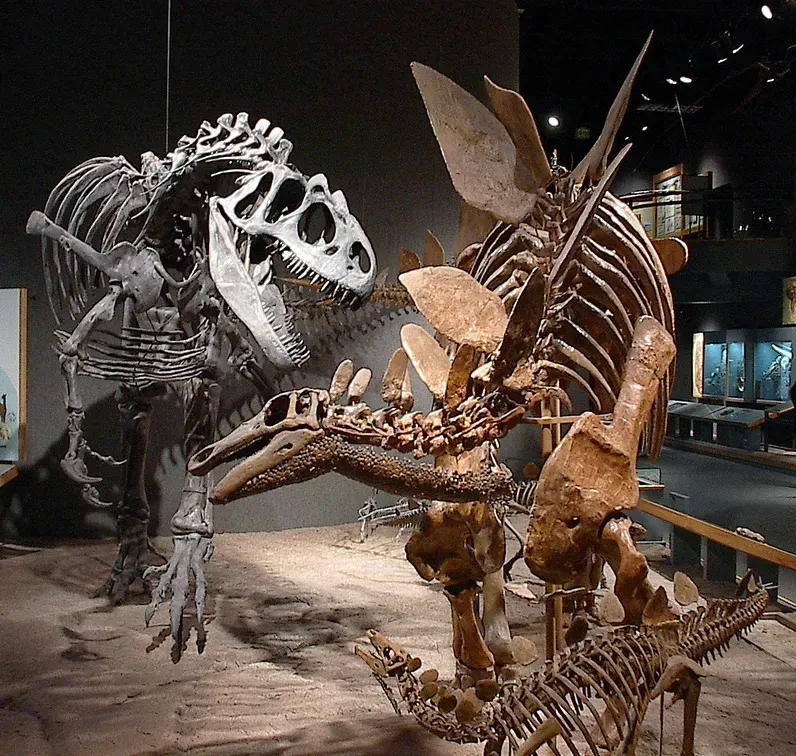
Let’s be real, size is power. You do not need a PhD in paleontology to understand that a bigger body makes you harder to kill. It seems fairly logical that the larger an animal is, the less vulnerable to predators it becomes. When it comes to dinosaurs, herbivores were massive, therefore carnivorous species had to become larger to keep up their spot at the top of the food chain. Herbivores like sauropods grew larger to protect themselves from predators, but they did so for many other reasons as well.
Here is where it gets truly fascinating. Based on modeling analysis, researchers predicted the largest T. rex could have weighed close to 15,000 kg, which meant this carnivore could have been capable of eating a sauropod. This predation could then, in turn, prompt sauropods to grow even larger. As one researcher noted, “there’s almost like an arms race going on,” suggesting that evolutionary pressure may have significantly contributed to sauropods’ gigantism. Think of it like a slow-motion cold war played out over millions of years, each side quietly building bigger weapons, and the “weapons” just happened to be their own bodies.
Theory 2: The Incredible Feeding Efficiency of Long Necks and No-Chew Digestion
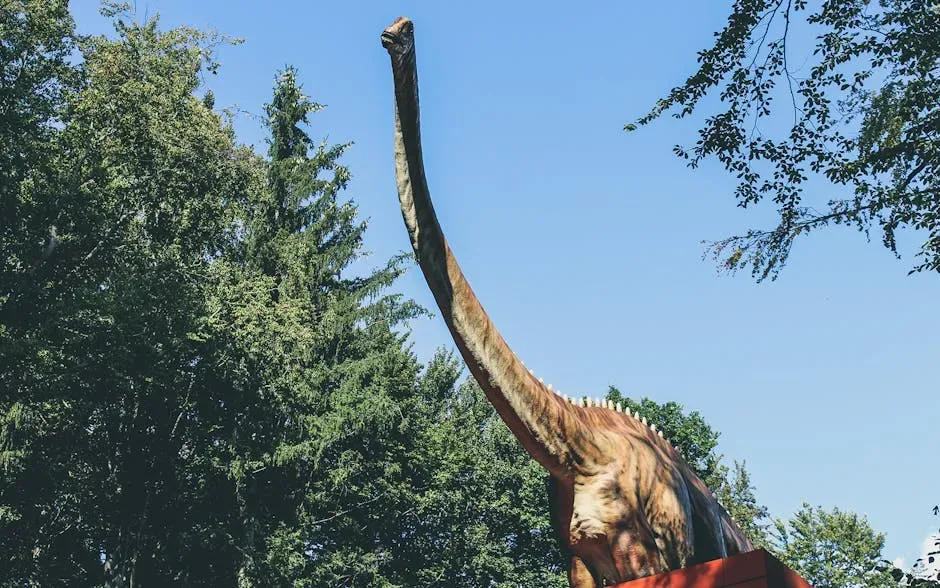
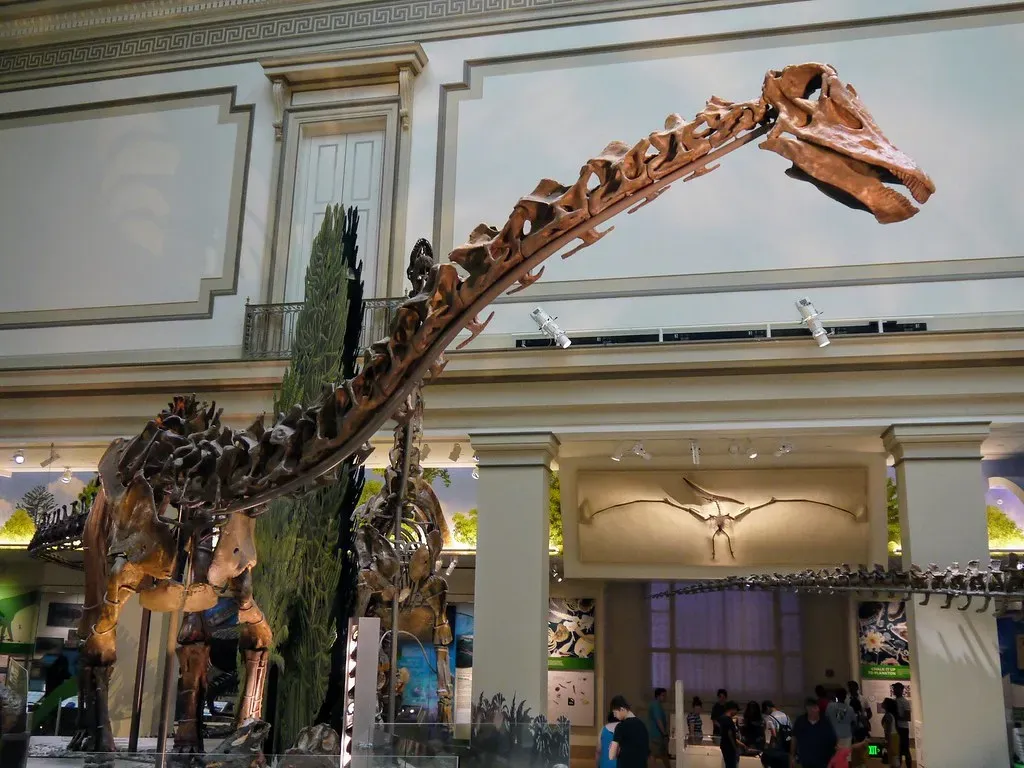
Sauropods had hollow bones, did not chew their food, had incredibly long necks, and likely possessed huge stomachs. These traits are theorized to be key in how they attained their enormous size. Undoubtedly, their long necks allowed them to reach food other animals could not, which made a bigger size more advantageous for them. Picture a giraffe, then multiply that advantage by a factor of ten. That is roughly the idea.
As sauropods’ stomachs grew in size, researchers think they evolved the ability to store food for a long period of time. They could consume a huge amount of food very fast by swallowing it whole. Then their stomachs would do the slow work of grinding it down over the course of weeks, which would slowly release the nutrients to fuel the massive bodies. Honestly, it is one of the cleverest biological hacks in the history of life on Earth. You skip the time-costly step of chewing, shunt all that saved energy into growth, and keep getting bigger.
Theory 3: Rapid Growth Rates Fueled by a Warm-Blooded Metabolism
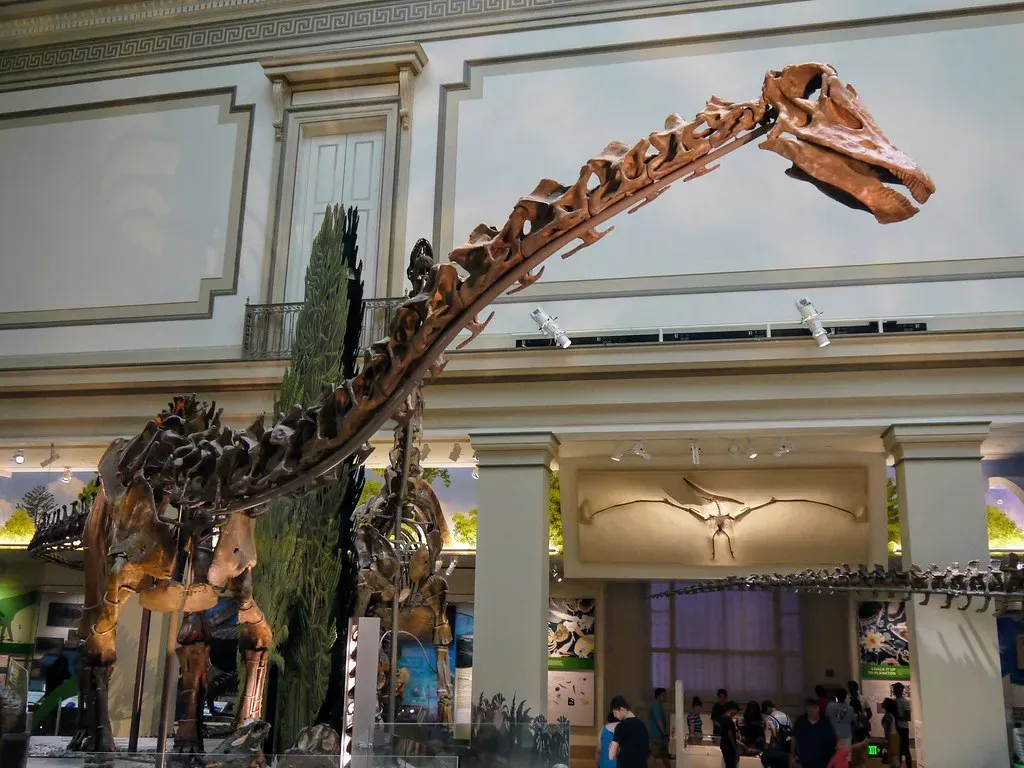
For a long time, people assumed dinosaurs were sluggish, cold-blooded reptiles just lazily basking in prehistoric sunshine. That picture turned out to be spectacularly wrong. In the modern world, the largest animals are endothermic, meaning warm-blooded. Significant evidence has been developed showing that non-avian dinosaurs, including sauropods, were endothermic. Their endothermy permitted rapid growth, as evidenced by histological studies.
Scientists have developed a surprisingly clever way of reading a dinosaur’s growth story. If you look at a cross section of dinosaur bone tissue, you can see a series of lines, like tree rings, that correspond to years of growth. You can count the lines of growth and the space between them to see how fast the dinosaur grew. It is like reading a diary written in calcium, and what those bones reveal is extraordinary. The largest dinosaurs sometimes took as little as ten years or so to get to their truly immense sizes, while some others would have taken decades, revealing vastly different growth rates and durations in the largest dinosaurs. That rate of growth is nothing short of astonishing.
Theory 4: The Reproductive Strategy That Made Gigantism Possible
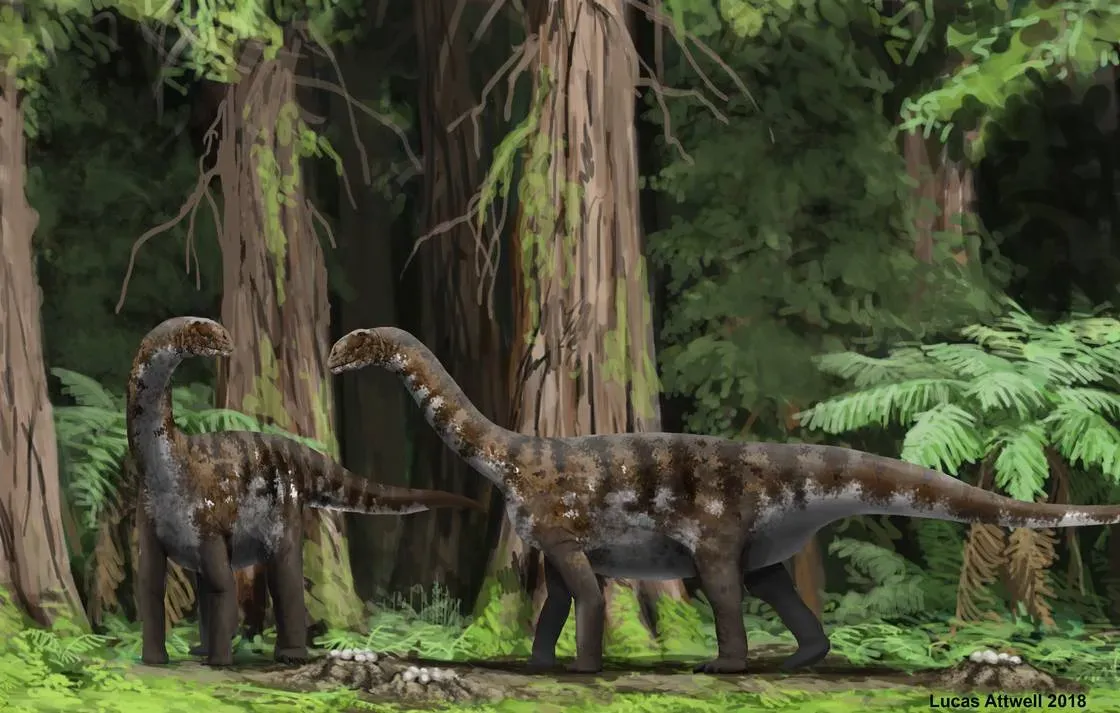
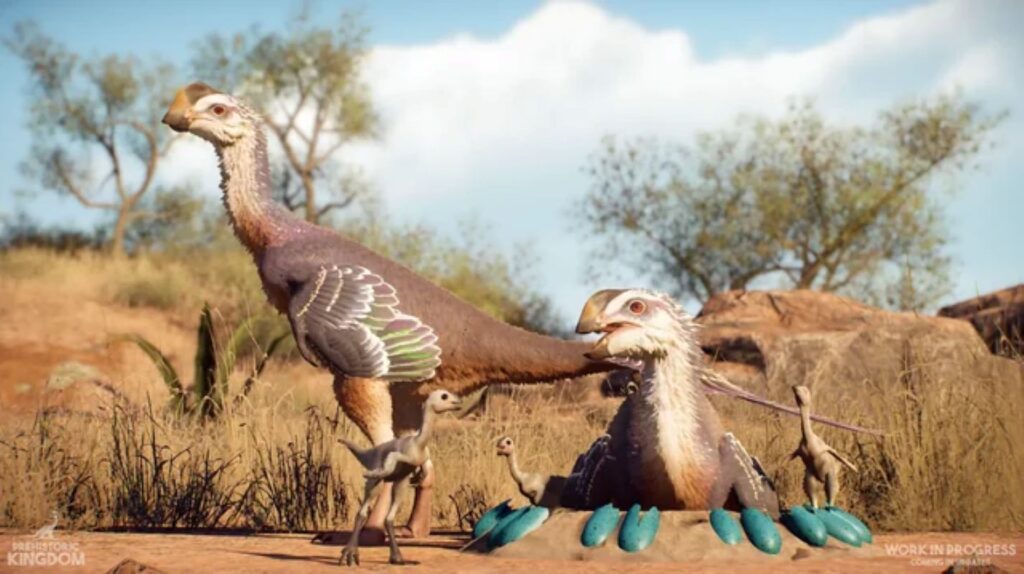
You might think having enormous babies would be the logical way to produce enormous adults. Surprisingly, the opposite was true. The biggest dinosaurs started off very, very small. Sauropod mothers laid clutches of about ten eggs at a time in small nests, and the embryonic dinosaurs developed in eggs about the size of a large grapefruit. Once they hatched, these little dinosaurs grew at an absolutely fantastic rate. It is a bit like being born the size of a loaf of bread and growing into the size of a house within your teenage years.
The reason sauropods could attain such large sizes has just as much to do with reproduction as skeletal architecture and specialized soft tissues. Rapid growth and the production of numerous small eggs optimized their reproductive strategy, increasing the chances of juvenile survival. Because parents did not need to invest enormous energy into individual offspring, they could produce many at once. The ones that survived the brutal Mesozoic landscape simply kept growing and growing, unconstrained by the enormous metabolic cost of giving birth to large young, something that limits mammals enormously today.
Theory 5: Hollow Bones, Air Sacs, and the Secret Engineering of a Giant
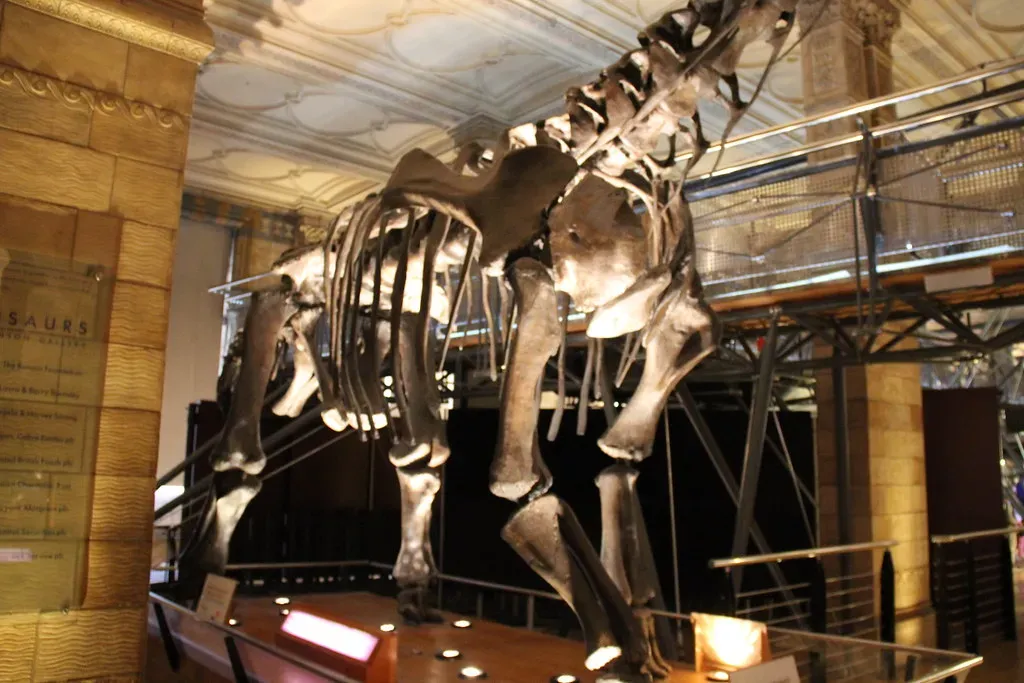
Here is the thing: being enormous comes with serious engineering problems. How do you support dozens of tonnes of body weight? How do you pump enough oxygen to fuel every cell? Dinosaurs, it turns out, solved both problems in genuinely breathtaking ways. As part of their respiratory system, sauropods had a complex network of air sacs that gave them two advantages. Not only did the air sacs allow the dinosaurs to breathe more efficiently, more like birds than mammals, but the soft tissues invaded bone to make the skeletons of these dinosaurs lighter without sacrificing strength. Indeed, even at around 100 feet long, Supersaurus has been estimated to weigh between 35 and 40 tons.
Their long necks relied on two key traits: hollow, or pneumatized, bones of the spine, as well as a small head, which allowed the neck to be light. The only way they could get away with having such a small head was because they did not need to chew their food. A chewing head needs to be big in order to accommodate big jaw muscles and strong, heavy bones to crush food. It is a cascade of brilliant biological trade-offs, each one unlocking the next, each one making colossal size not just possible but inevitable. Sauropod gigantism relied on a combination of inherited traits and evolutionary innovations, enabling resource efficiency.
Conclusion: The Mystery That Still Captivates Us
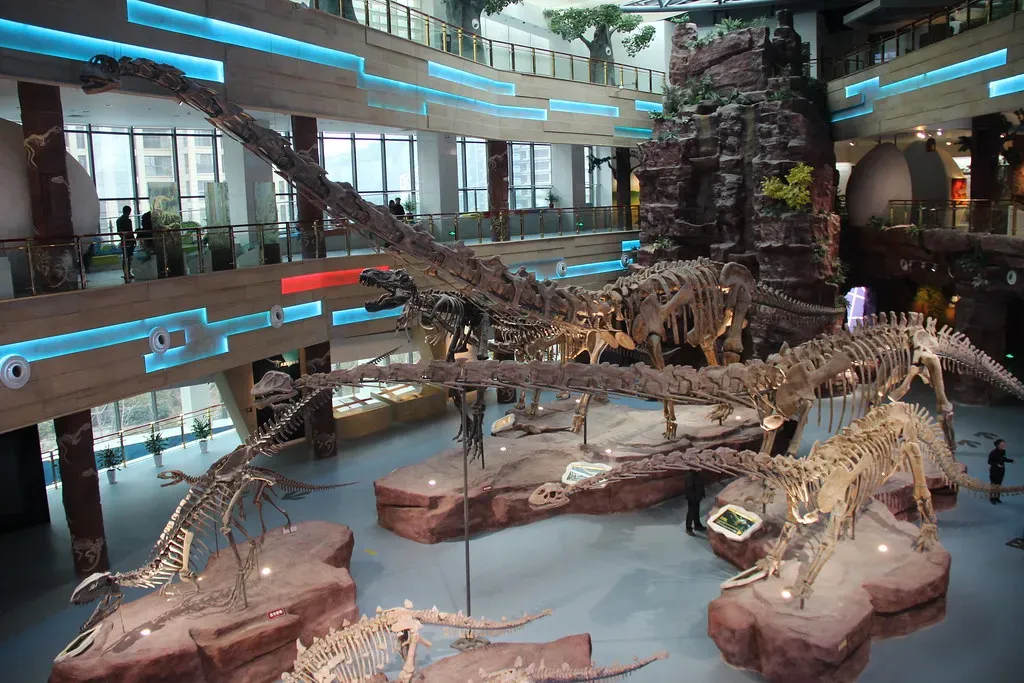
What makes dinosaur gigantism so endlessly compelling is that no single theory fully explains it. It was not one lucky mutation or one environmental shortcut. The story of dinosaur gigantism is, at its core, a story of stacked advantages. Feeding efficiency, skeletal engineering, reproductive strategy, warm-blooded metabolism, and the relentless pressure of predation all converged over tens of millions of years to produce creatures that still stop us dead in our tracks in museum halls today.
The fossil record shows that sauropods scaled up in different times and places, likely for an array of reasons. The repeated evolution of gigantic dinosaurs hints that there were many pathways to the sauropods’ impressive stature, not just one. I think that is the part that should genuinely humble us. We may never know the complete picture. Yet every bone pulled from the ground, every growth ring counted under a microscope, pulls us a little closer to understanding what it truly meant to be the largest creature ever to walk this Earth.
So the next time you stand in front of a sauropod skeleton at a natural history museum, look up and ask yourself: what combination of pressures, accidents, and adaptations had to align perfectly across millions of years to create something this impossibly grand? What would you have guessed?