The United States sits on some of the most geologically dramatic real estate on Earth. From towering canyon walls to bubbling volcanic plains, this country is essentially a giant open book on prehistoric life. Honestly, most people walk past these places marveling at their beauty without ever realizing they are literally stepping over billions of years of hidden history.
You might think you know what these iconic spots are about. But beneath the postcard-perfect scenery, there is a far older story being told, one involving ancient seas, petrified forests, prehistoric sharks, and soft-bodied creatures that rewrote evolutionary science. Get ready to look at these landmarks in a completely different way. Let’s dive in.
The Grand Canyon, Arizona: Earth’s Most Spectacular Timeline
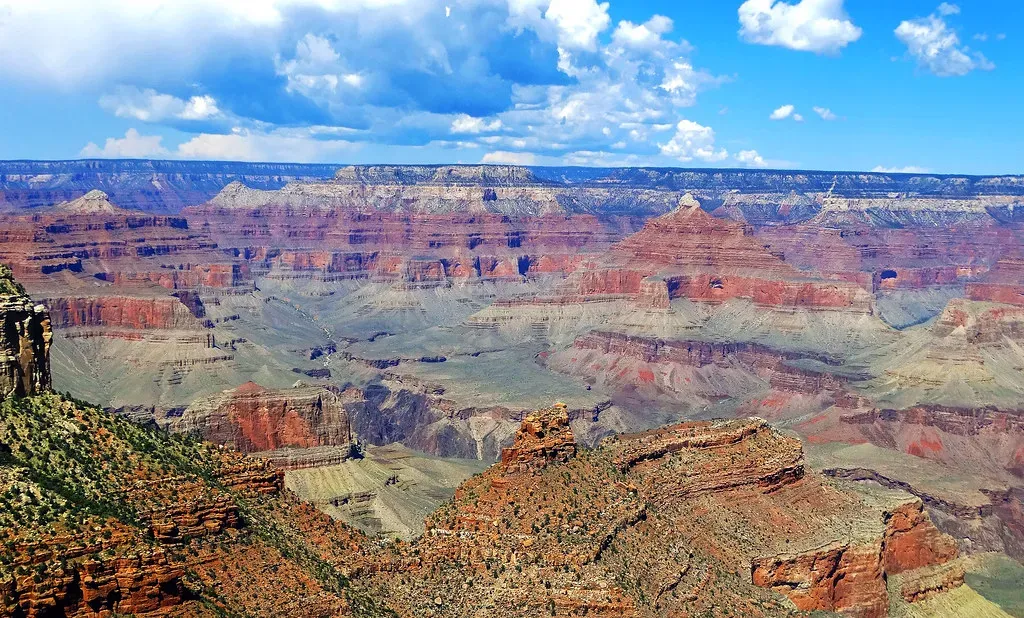
Here is a jaw-dropping fact to start you off: when you stand at the rim of the Grand Canyon and look down, you are gazing at nearly two billion years of Earth’s history stacked in front of you like the world’s most dramatic layer cake. The Grand Canyon offers glimpses into roughly a third of Earth’s entire geologic history, as well as one billion years of plant and animal fossils. That is not a metaphor. That is just Tuesday at the Grand Canyon.
What you might not realize is the sheer variety of prehistoric life locked inside those colorful walls. Standing on the Kaibab Limestone on the South Rim, you are essentially walking on top of what was once a vast ocean full of sea life, and if you look closely at the stone at your feet, you can find small, round crinoid fossils shaped like little ancient sea lilies. More recently, researchers discovered something even more extraordinary. Scientists uncovered exquisitely preserved remains of ancient animals including rock-scraping molluscs, filter-feeding crustaceans, and toothed worms, all dating back to the Cambrian explosion, when most major animal groups first appeared. The Canyon, it turns out, was not just a scenic wonder. It was a hotbed of early evolution.
Yellowstone National Park, Wyoming: The Volcanic Vault of Ancient Life
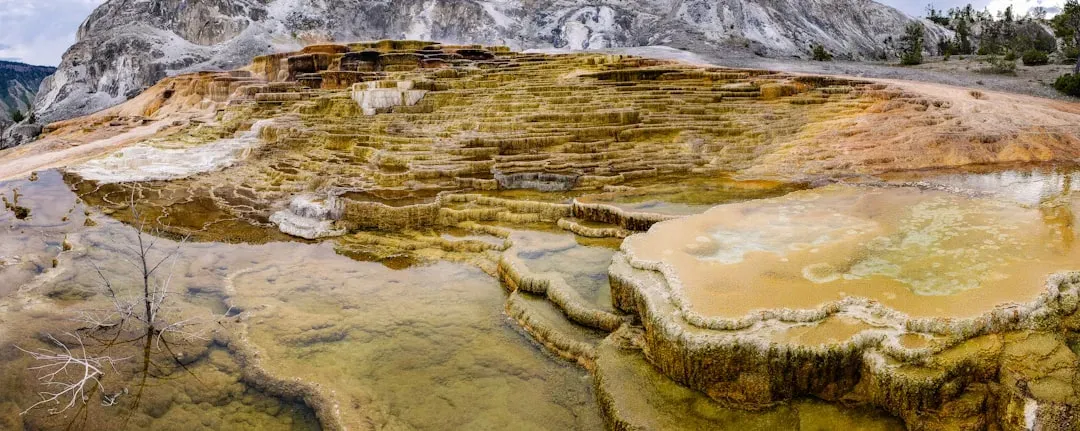
Most people visit Yellowstone for Old Faithful and the wildlife. Fair enough. But there is a prehistoric dimension to this place that almost nobody talks about, and it is frankly astonishing. Yellowstone has fossils enough to rival other national parks renowned for their fossil riches, like Petrified Forest and Dinosaur National Monument, with fossils that tell the story of volcanic eruptions that buried entire forests and that are the basis for entire evolutionary theories. You would never guess it from the tourist brochures.
One of the most surreal prehistoric features you can encounter here involves entire forests frozen in time. Specimen Ridge in the northeastern section of the park preserves a sequence of at least 27 individual Eocene petrified forests covered by volcanic ash and debris, first reported in the tales shared by mountain men entering Yellowstone during the 1830s. Think about that for a moment. Twenty-seven layers of forests, one on top of the other, each one buried by a volcanic event and then replaced by another living forest, only to be buried again. Ancient sequoias, much like the giants that now live in California, were abundant in the Eocene in Yellowstone. The park you are walking through today is built on the bones of a completely different world.
Badlands National Park, South Dakota: The Fossil Paradise Nobody Expected
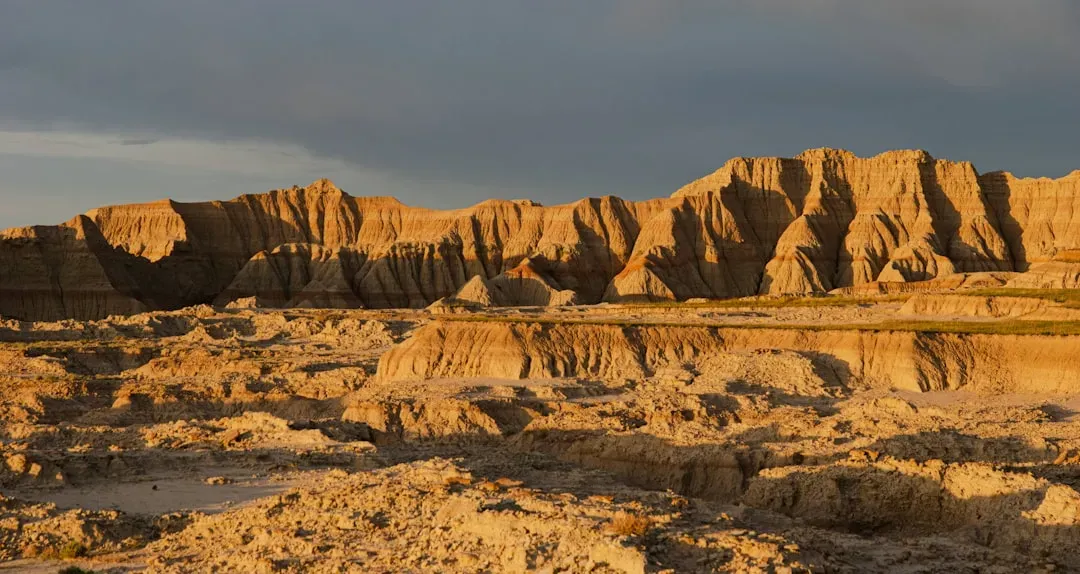
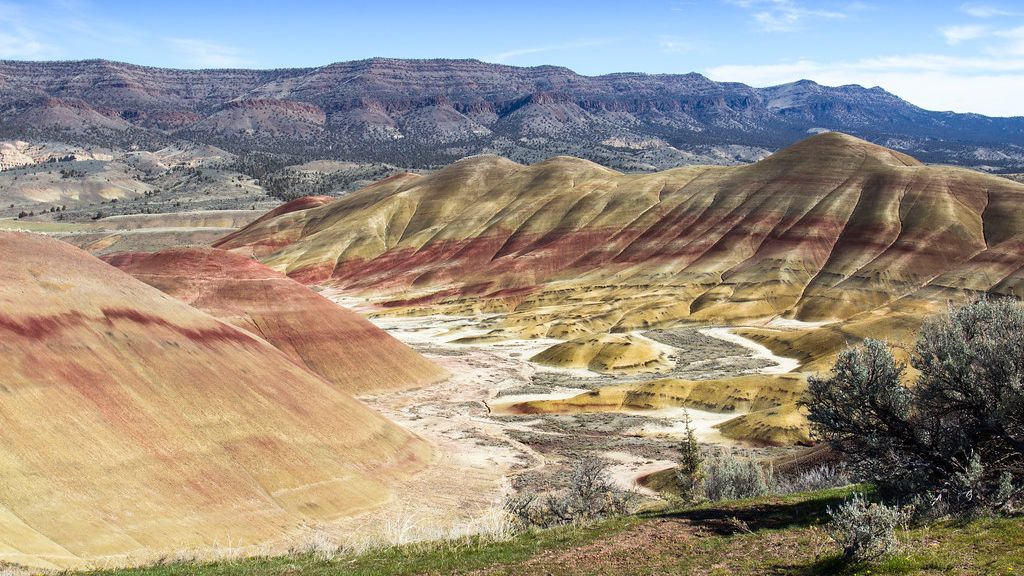
Let’s be real, the Badlands look like something from another planet. Those jagged spires and eroded buttes look almost alien, which makes it all the more wild that underneath those surreal formations lies one of the richest fossil graveyards in the entire world. Badlands National Park has the world’s richest Oligocene epoch fossil beds, dating back up to 35 million years. And the fossils keep coming to the surface, almost as if the land itself cannot stop revealing its secrets.
What you will find here is not the standard dinosaur fare you might expect. Some of the most common fossils found in the Badlands include Oreodonts (a sheep-like herbivore distantly related to the camel), Mesohippus (a three-toed horse), and Subhyracodon (a hornless rhinoceros), along with more unique finds like the Nimravid, a carnivore which is cat-like in appearance. In fact, while you won’t find dinosaur fossils in the Badlands, the park does have the highest concentration of mammal fossils in the entire national park system. That detail alone should stop you in your tracks. This is where the story of mammals, your evolutionary ancestors, is written most clearly in stone.
Mammoth Cave, Kentucky: Where Prehistoric Sharks Lurk in the Dark
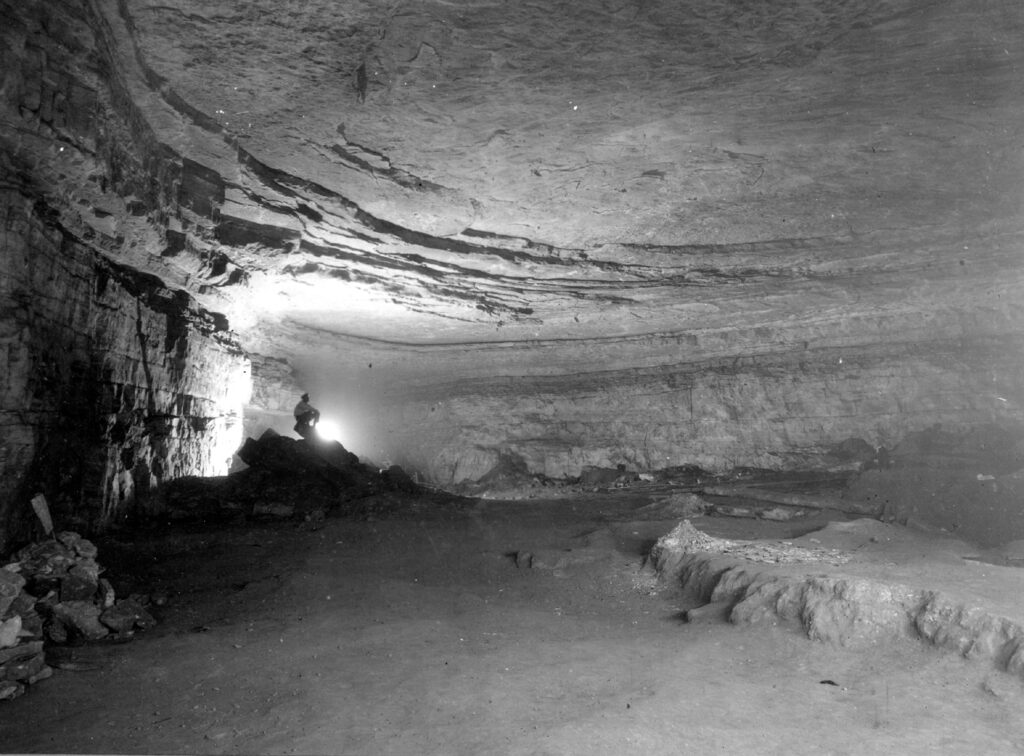
You would not normally associate a cave in Kentucky with prehistoric sharks, but that is exactly the kind of surprise that makes geology so endlessly fascinating. I think this is perhaps the most underrated prehistoric discovery site in the entire country. According to the Park Service’s timeline, the prehistoric seas deposited layers of limestone at Mammoth Cave about 325 million years ago, and rainwater began dissolving that rock to form the cave’s passages about 10 million years ago. In other words, the cave you can walk through today began as the floor of an ancient ocean.
What researchers have been pulling out of those limestone walls in recent years is nothing short of spectacular. Over 70 species of sharks and other fish have been identified from the Ste. Genevieve Formation, including four new species. Some of these discoveries came from a single curious park superintendent finding a lone tooth in 2019. In February 2024, the park announced the discovery of two additional shark species, Troglocladodus trimblei and Glikmanius careforum, identified by fossils in the Ste. Genevieve Formation and St. Louis Limestone, both species estimated to have reached 10 to 12 feet in length. A dark, winding cave in Kentucky, hiding ancient ocean sharks. You honestly cannot make this stuff up.
Natural Bridge, Virginia: A Half-Billion-Year-Old Arch Hiding in Plain Sight
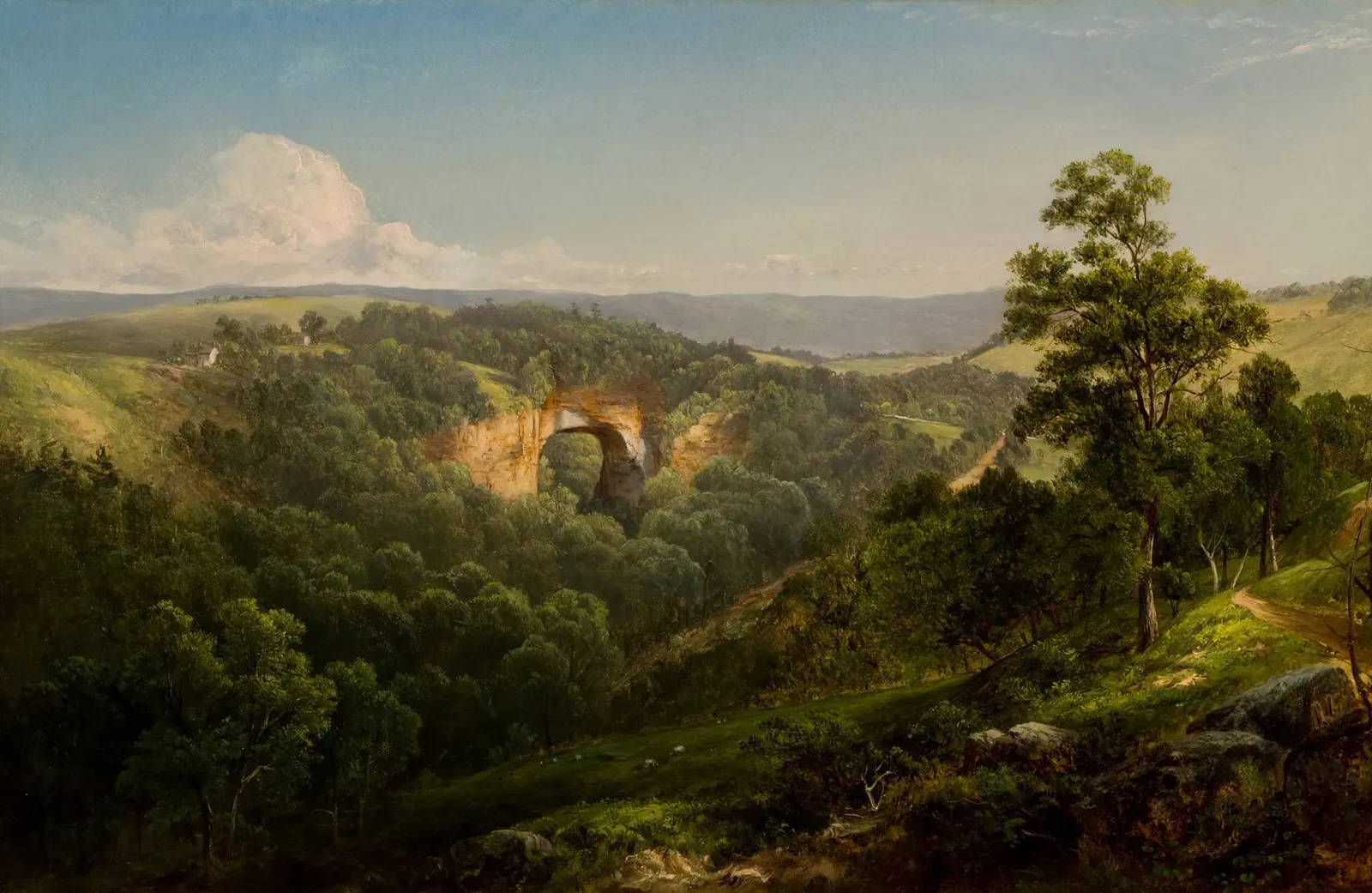
There is something quietly dramatic about Natural Bridge in Virginia that most visitors completely miss. It looks like a beautiful natural arch over a pretty gorge, and sure, it is that. But here is the thing: Natural Bridge is an estimated 500 million years old, dating back to the Ordovician period, and is part of the Beekmantown formation. That is older than most life forms you can even imagine. To put it another way, this arch existed for hundreds of millions of years before the dinosaurs ever appeared.
The geological backstory is as gripping as its age. In the heart of Virginia’s Shenandoah Valley, this 215-foot-tall limestone wonder sits at the center of a gorge carved by Cedar Creek, which flows beneath the towering bridge. The limestone itself was once part of a shallow tropical sea, teeming with ancient marine organisms whose compressed remains literally built the arch over geological time. The bridge has long been a sacred site for the Monacan Indian Nation, and Thomas Jefferson purchased the Natural Bridge in 1774. It is hard to say for sure which is more remarkable: that half a billion years of Earth history is just standing there in rural Virginia, or that most people drive right past it without a second thought.
Conclusion: The Past Is Closer Than You Think

What ties all five of these places together is something genuinely humbling. You do not need to travel to some remote research outpost or dig through academic journals to connect with Earth’s prehistoric past. It is right there, waiting for you in Arizona, Wyoming, South Dakota, Kentucky, and Virginia.
These are not just beautiful landscapes to photograph and post online. They are living archives, places where billions of years of planetary history are written into the rocks beneath your feet. Every eroded canyon wall, every petrified tree stump, and every fossilized shark tooth is a page in a story that started long before humans existed.
Next time you visit one of these places, slow down. Look at the rock layers. Think about the ancient seas, the buried forests, and the creatures whose remains are still being discovered by curious rangers and seven-year-olds on hiking trails alike. The prehistoric world is not gone. It is just waiting to be noticed. Which of these geological wonders would you most want to explore? Tell us in the comments.