You might think was all about the creatures themselves, those towering, ferocious, impossibly large animals stomping across a planet that looks nothing like the one you live on today. Honestly, you’d only be half right. During the time dinosaurs ruled the Earth, the planet underwent numerous geological changes that shaped the continents and oceans as we know them today. Those changes weren’t just backdrops to the action. They were the stage directors.
Think of it like this: you can’t understand the play without understanding the theater. The geological forces that carved, flooded, erupted, and split the Mesozoic world didn’t just coexist with the dinosaurs. They made them possible. The Mesozoic Era lasted from about 252 to 66 million years ago and was characterized by the dominance of dinosaurs, a hot greenhouse climate, and the tectonic breakup of Pangaea. What you’re about to read will completely change how you see these ancient beasts and the world they called home. Let’s dive in.
Pangaea: The Supercontinent That Gave Dinosaurs Their Stage
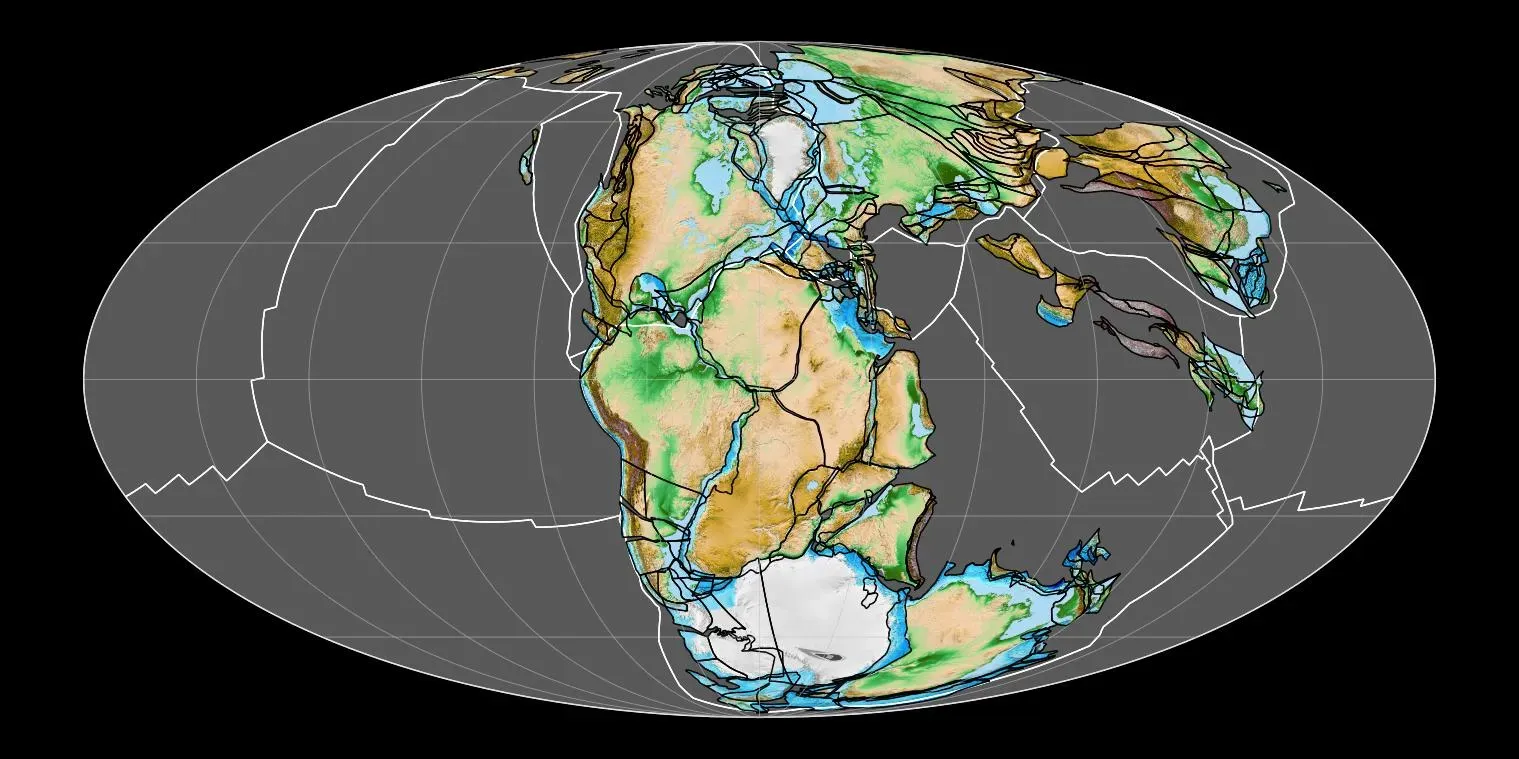
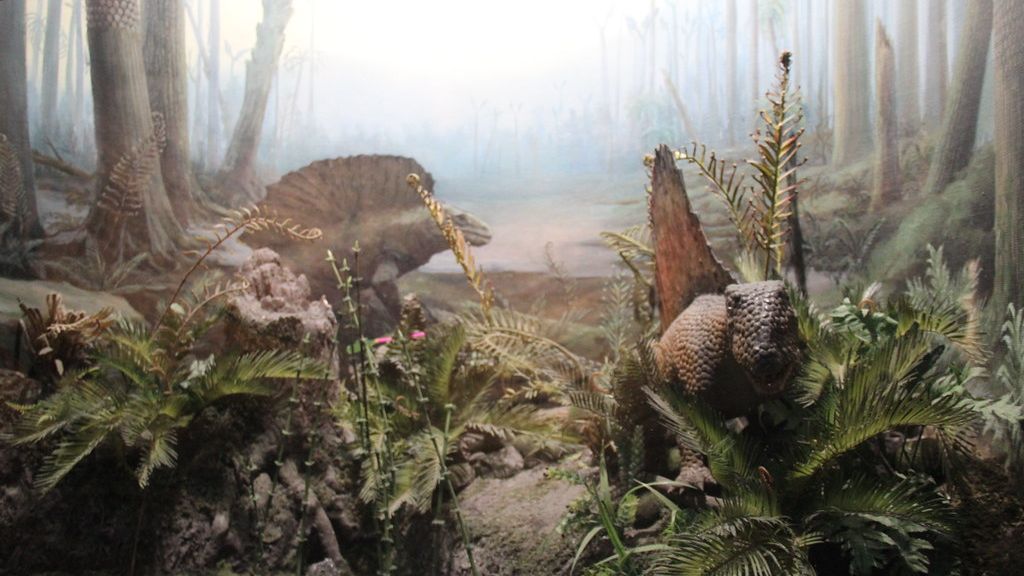
Here’s the thing about Pangaea. It wasn’t just one big land mass sitting quietly in the middle of a prehistoric ocean. It was a geological pressure cooker, a single slab of crust so enormous that its interior was almost entirely cut off from the moderating influence of ocean moisture. The Early Triassic was dominated by deserts in the interior of the Pangaea supercontinent. The Earth had just witnessed a massive die-off in which nearly all life became extinct. That catastrophic clean-slate moment was, in a very dark way, the opening act that allowed dinosaurs to eventually rise.
At the beginning of during the Triassic Period, about 230 million years ago, the continents were arranged together as a single supercontinent called Pangea. During the 165 million years of dinosaur existence, this supercontinent slowly broke apart, its pieces spreading across the globe into a nearly modern arrangement. That slow unraveling was not just geography changing. It was evolution being forced to adapt, innovate, and diversify on a massive scale. Think of it as the ultimate isolation experiment, where populations of dinosaurs were gradually separated by widening oceans and made to evolve in their own directions.
As the landmasses that had once made up the supercontinent of Pangaea continued to separate throughout the period, the plants and animals of the different regions began to differentiate along individual evolutionary paths according to the particular environments they inhabited. The breakup didn’t just scatter animals across the globe. It created entirely new ecological theaters, each with its own rules. Pangaea’s breakup had the effect of producing more shallow water habitat as overall shoreline length increased, and new habitats were created as channels between the smaller landmasses opened and allowed warm and cold ocean waters to mix. On land, the breakup separated plant and animal populations, but life-forms on the newly isolated continents developed unique adaptations to their new environments over time, and biodiversity increased.
The Tethys Sea: The Vanished Ocean That Warmed a World
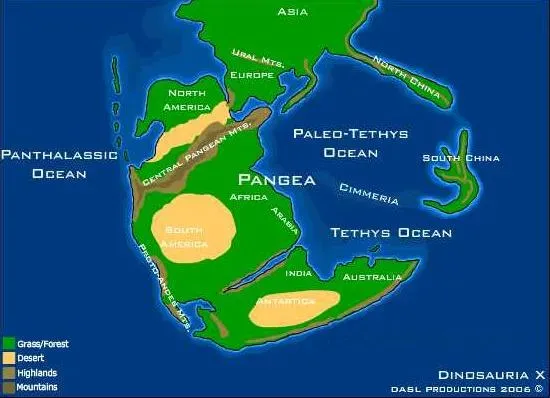
You’ve probably never heard of the Tethys Sea, and honestly, that’s one of geology’s greatest injustices. This was no ordinary ocean. Centered on the equator and stretching across the ancient world, Pangea was shaped roughly like a large capital C, and within the cradle lay a separate body of water known as the Tethys Ocean. It sat right in the middle of everything, like a warm bath at the heart of the ancient world, and its influence on climate and life was staggering.
During the Jurassic, the breakup of Pangea into Laurasia to the north and Gondwana to the south resulted in a gradual opening of Tethys into a dominant marine seaway of the Mesozoic. A large volume of warm water flowed westward between the continents and connected the major oceans, most likely playing a large role in Earth’s heat transport and climate control. In other words, the Tethys was acting as the planet’s thermostat. It kept temperatures hospitable enough for dinosaurs to grow to sizes that still seem impossible today. The Tethys Sea connecting the tropical oceans east to west also helped to warm the global climate. Without it, the Mesozoic world would have been a colder, more hostile place, and the giants of the Jurassic might never have existed at all.
During its heyday in the Mesozoic Era, the Tethys Sea was more than just water. It was teeming with life. From vibrant coral reefs to diverse marine creatures like ammonites and ichthyosaurs, this body of water fostered ecosystems that thrived under warm temperatures. Eventually, the sea closed as continents continued colliding. Ancient seafloor sediments now help compose the lithified scaffold of the Alps, the Carpathians, the Pamirs, and of course the Himalayas. The mountains you see on a map today are, in a sense, the bones of the Tethys.
The Morrison Formation: Geology’s Greatest Dinosaur Time Capsule
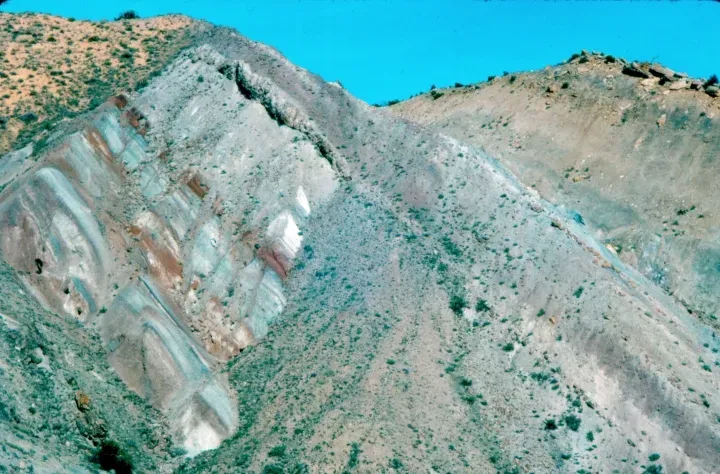
If you want to understand the richness of the Jurassic world in one geological stroke, look no further than the Morrison Formation. The Morrison Formation is a distinctive sequence of Upper Jurassic sedimentary rock found in the western United States which has been the most fertile source of dinosaur fossils in North America. Spanning vast stretches of Utah, Colorado, and Wyoming, this layered rock record is essentially a library written in stone, and the stories it tells are extraordinary.
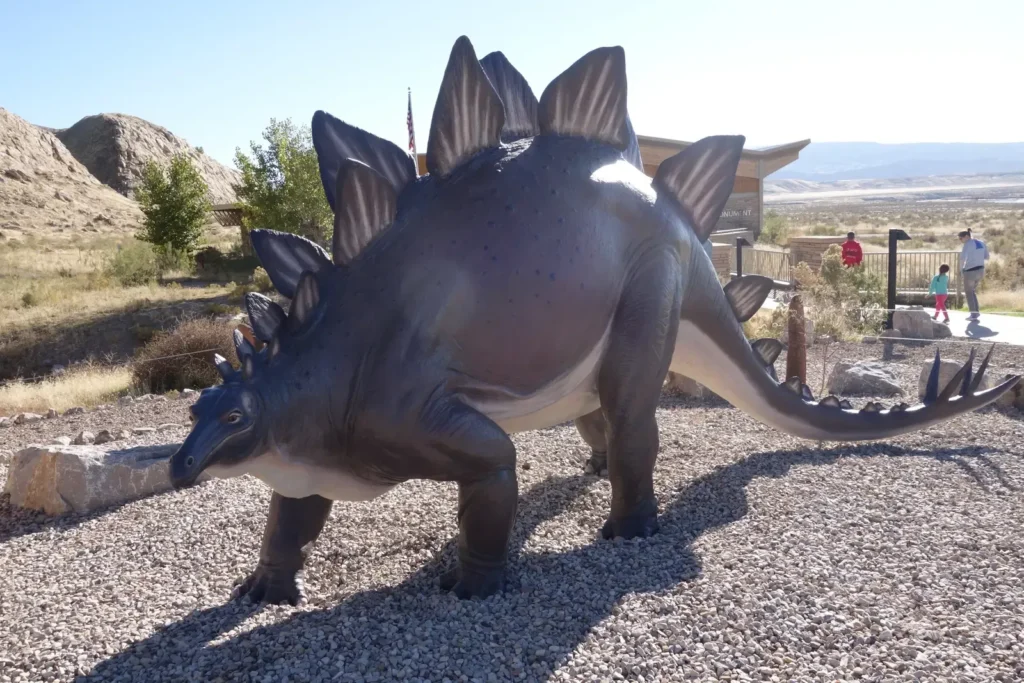
During the Jurassic, mudstone and sandstones were deposited in lowland areas and river channels throughout the Rockies and Colorado Plateau, forming the Morrison Formation, which is famous for its abundant dinosaur fossils. What makes this formation so remarkable is not just what it preserved, but how. The sedimentary conditions created by ancient rivers, lakes, and seasonal floodplains acted like a natural burial system, locking creatures in place before they could scatter or decay. Hundreds of dinosaur fossils have been discovered here, including Allosaurus, Ceratosaurus, Torvosaurus, Camptosaurus, several species of Stegosaurus, and a very broad range of sauropods.
It’s hard to say for sure just how many species remain undiscovered within the Morrison Formation, but paleontologists keep finding new ones. Utah’s most well-known dinosaur fossils are Late Jurassic in age and are found mainly in the Morrison Formation, which dates to approximately 150 million years ago. Dinosaur fossils from the Morrison Formation are displayed at Dinosaur National Monument quarry in northeastern Utah and at the Cleveland-Lloyd Dinosaur Quarry in east-central Utah. For those who love dinosaurs, visiting this region is about as close as you’ll ever get to walking through deep time.
Mesozoic Volcanism and the Triassic-Jurassic Boundary: Death and Rebirth
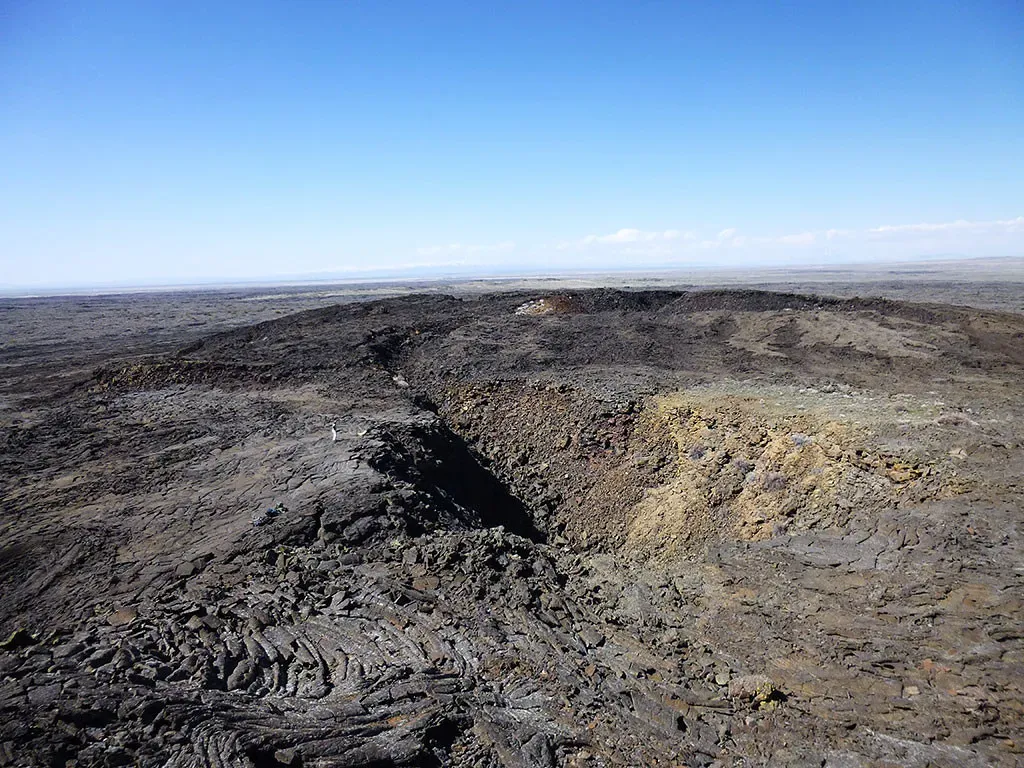
Let’s be real. One of the most underappreciated geological events in wasn’t the one that ended them. It was the one that cleared the way for them. Just as the Triassic emerged from the ruin of the Paleozoic, the Jurassic began in the fallout of the Triassic mass extinction. Roughly eighty percent of the planet’s species were wiped out around 200 million years ago due to volcanic activity in what is now the Atlantic Ocean. That catastrophic volcanic event, linked to what geologists call the Central Atlantic Magmatic Province, reshaped everything.
The Triassic-Jurassic extinction event saw many archosaurs, most synapsids, and almost all large amphibians become extinct, as well as roughly a third of marine life, in Earth’s fourth mass extinction event. The cause is debatable, with flood basalt eruptions at the Central Atlantic Magmatic Province cited as one possible cause. Think of those volcanic eruptions as a terrifying reset button, one that opened up enormous ecological niches. The creatures that survived suddenly found themselves in a world with far less competition. These tropical conditions enabled by the split of Pangaea made for the perfect breeding ground for new dinosaurs, and the Triassic extinction wiped out the archosaurs, leaving their environments empty and ready to be acquired by the next generation of dinosaurs.
Sea levels began to rise during the Jurassic, probably caused by an increase in seafloor spreading. The formation of new crust beneath the surface displaced ocean waters by as much as 200 meters above today’s sea level, flooding coastal areas. A warmer, wetter, more diverse world emerged from the ashes of volcanic catastrophe. It almost sounds poetic, that the same geological violence that killed so many creatures also fertilized the soil for the most spectacular chapter in the story of land animals on this planet.
The Chicxulub Crater: The Geological Full Stop on
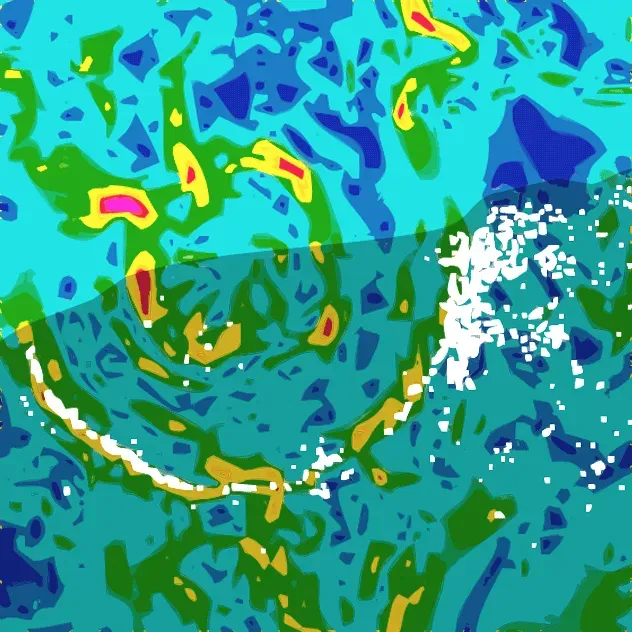
No list of geological wonders from the dinosaur age would be complete without the most dramatic event of all. It was formed slightly over 66 million years ago when an asteroid about ten kilometers in diameter struck Earth. The crater is estimated to be 200 kilometers in diameter and is buried to a depth of about one kilometer beneath younger sedimentary rocks. To put that in perspective, you could fit a small country inside the scar this rock left behind, and it is now hidden almost entirely from view beneath layers of limestone and the Gulf of Mexico.
The impact of the asteroid, estimated to be six miles wide and traveling at 40,000 miles per hour, released energy equivalent to 100 trillion tons of TNT, causing widespread fires, tsunamis, and climatic shifts. The immediate devastation was staggering. The original rocks of the Chicxulub region were sulfur rich, but the crater region shows a significant lack of sulfur content, indicating that the impact vaporized most of the sulfurous minerals and released several hundred gigatons of sulfur into the atmosphere, creating a haze of sulfuric acid. This could have led to acid rain, acidifying and changing the chemical composition of the oceans.
The skies were darkened for months, and after the global wildfires subsided, temperatures across Earth plummeted. So much debris was thrown into the atmosphere that much of the planet’s plant life would have died from lack of sunlight. Larger creatures such as the dinosaurs would have been hard-pressed to survive. What makes the Chicxulub Crater fascinating beyond its destructive legacy is what it tells you about resilience. Chicxulub is the only crater on Earth with an intact peak ring, a geological formation caused by the uplift of melted rock at the time of impact. Scientists are still drilling into it, still learning from it, still reading the geological signature of the single worst day in the history of life on this planet.
Conclusion: The Earth Itself Was the Greatest Force in Dinosaur History
When you step back and look at the full 186-million-year run of the Mesozoic Era, something becomes clear. The story of dinosaurs was never really just about dinosaurs. It was about a planet in motion. Volcanism cleared the way for them. The breakup of Pangaea shaped how they evolved and migrated. The Tethys Sea kept their world warm. The Morrison Formation preserved their legacy. An asteroid buried it.
Every one of these geological events is a reminder that life on Earth exists at the pleasure of forces far larger and more ancient than any creature walking its surface. The dinosaurs didn’t just live on this planet. They were sculpted by it, separated by it, nourished by it, and ultimately ended by it. The Earth during the time of the dinosaurs was a constantly changing world. From the formation of the supercontinent Pangaea to its fragmentation into today’s continents, tectonic movements and the formation of new oceans shaped the planet and the life on it. These changes not only created the landscapes we know today, but also played a crucial role in the evolution and diversity of dinosaurs.
There’s something humbling about that, isn’t there? The next time you look at a mountain range or stand at the edge of an ocean, consider that you might be looking at the remnants of a world that once belonged to the greatest animals that ever lived. What do you think would have happened if any one of these geological events had gone differently? Drop your thoughts in the comments.