Long before your favorite nature documentaries had anything dramatic to film, the world was a very different, and honestly far more terrifying, place. Roughly 66 million years ago, the dinosaurs were wiped from existence, and what followed was not a peaceful world of gentle mammals quietly grazing in meadows. What followed was an explosive, relentless arms race of predators, each more ferocious than the last, fighting to dominate a rapidly changing planet.
The Cenozoic Era started with the Cretaceous-Paleogene extinction event, when many species, including the non-avian dinosaurs, became extinct. It is commonly known as the Age of Mammals because the terrestrial animals that dominated both hemispheres were mammals. What you might not realize is just how ruthless some of those mammals, and other creatures, truly were. Buckle up, because the five predators ahead will make you glad you weren’t alive millions of years ago. Let’s dive in.
1. Megalodon: The Ocean’s Most Terrifying Killing Machine
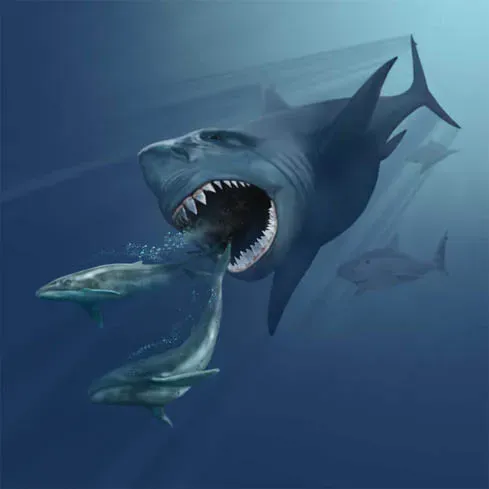
Here’s a creature that genuinely makes the great white shark look like a goldfish. Otodus megalodon, meaning “big tooth,” is an extinct species of giant mackerel shark that lived approximately 23 to 3.6 million years ago, from the Early Miocene to the Early Pliocene epochs. You are looking at a predator so large, so powerful, and so dominant that it essentially ruled every ocean on the planet for millions of years without serious competition.
Roughly up to three times the length of a modern-day great white shark, it is the largest shark to have ever lived. It had a powerful bite with a jaw full of teeth as large as an adult human’s hand, and they likely could tear chunks of flesh from even the largest whales of the time. Scientists calculate that a bite from a megalodon jaw could generate force of up to 40,000 pounds, which would make it the strongest bite in the entire animal kingdom. When you put those numbers into perspective, it is genuinely staggering.
Around 2.6 million years ago, around the time when the megalodon disappears from the fossil record, large mammals in the ocean were undergoing significant changes in response to a changing climate. At the beginning of the Miocene, marine mammals were at the height of their diversity and abundance, especially the megalodon’s favorite prey, small whales. But later during the Pliocene, there was a drop in ocean temperatures that likely contributed to the megalodon’s demise. Honestly, it is hard to say for sure exactly what sealed its fate, but the loss of this apex predator left a void in the ocean that has never truly been filled since.
2. Smilodon: The Saber-Toothed Cat That Rewrote the Rules of Predation
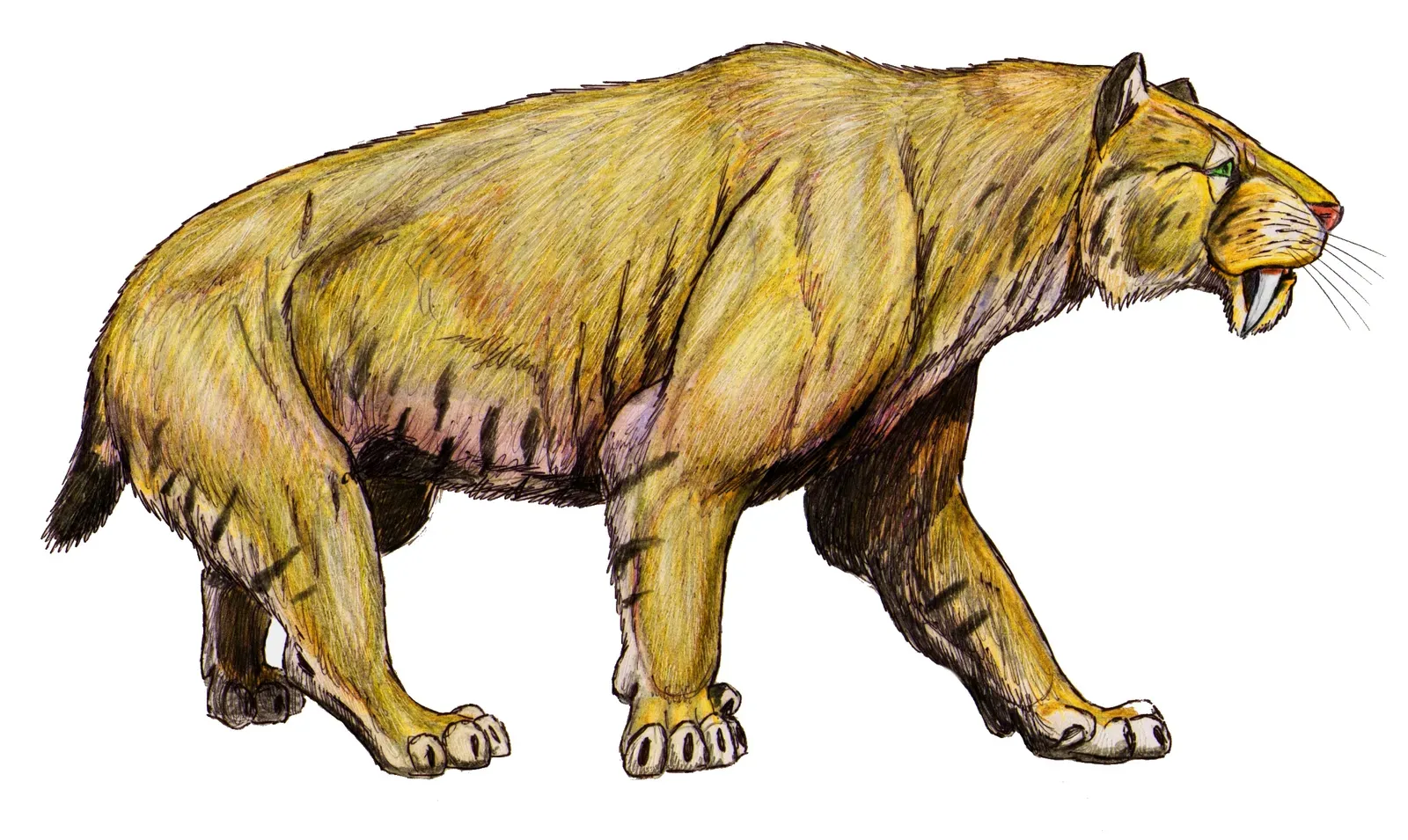
If you picture a saber-toothed cat, you probably imagine a lone, sleek predator stalking through the shadows. Let’s be real though, the truth is far more complex and far more fascinating. Smilodon was the most famous saber-toothed cat that reigned over the Americas during the Ice Age of the Cenozoic Era. However, despite its name, it is not a direct ancestor of modern tigers or lions. It belongs to the Machairodontinae subfamily, a group of felines that independently evolved saber-like canine teeth and then went extinct.
Its immense upper canine teeth, up to 20 centimeters long, were probably used for stabbing and slashing attacks, possibly on large herbivores such as the mastodon. Several physical adaptations of Smilodon suggest such a hunting technique: its skull was modified to accommodate the attachment of strong neck muscles for bringing the head down, the lower canines were reduced, and the molars formed shearing blades with no trace of grinding surfaces. Think of those fangs less like butcher knives and more like precision surgical instruments, evolved over millions of years.
An unusual number of healed injuries in the Smilodon bones at La Brea makes it unlikely that these cats were solitary. More than 5,000 of the Smilodon bones at La Brea have marks of injury or illness: tooth decay, heavily worn arthritic joints, broken legs and dislocated elbows that would have occurred before the animals’ tar burial. Dramatic examples include crushed chests and spinal injuries, which the cats somehow survived. About 10,000 years ago, as the Earth warmed and the Ice Age ended, Smilodon disappeared. The main cause of its extinction is thought to be its hunting style. Due to climate change, its main prey, large herbivores such as mammoths, mastodons, and ancient bison, became extinct or their numbers dwindled one after another.
3. Phorusrhacidae: The Terror Birds That Dominated an Entire Continent
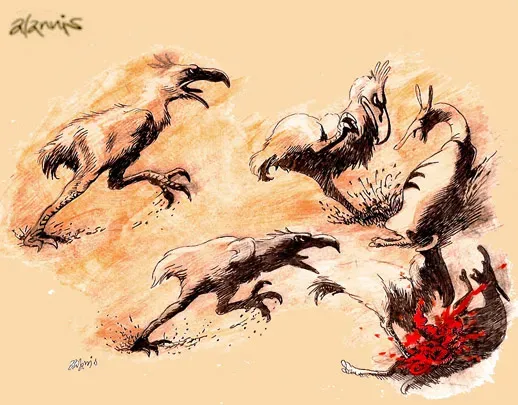
Imagine a bird the size of a small car. Now imagine it is fast, ferocious, and has a beak designed like a battle axe. That is more or less what you are dealing with here. Phorusrhacids, colloquially known as terror birds, are an extinct family of large carnivorous, mostly flightless birds that were among the largest apex predators in South America during the Cenozoic era. I know it sounds crazy, but birds, not lions or bears, were the top killers on an entire continent for tens of millions of years.
These large terrestrial predators exploited new ecological niches and evolved to dominate their respective environments. Prominent predatory characteristics, including large body size, long powerful legs, and akinetic skulls reinforced for striking prey, facilitated their rise to apex predator status. Scientists theorize that the large terror birds were extremely nimble and quick runners, able to reach speeds of 48 km/h. When you factor in a hooked beak built to deliver downward killing blows, you start to understand why smaller mammals of the time lived in absolute terror.
Titanis walleri, one of the larger species, is known from Texas and Florida in North America. This makes the phorusrhacids the only known large South American predator to migrate north in the Great American Interchange that followed the formation of the Isthmus of Panama land bridge. Their conventionally accepted temporal range covers from 62 to 1.8 million years ago, meaning they dominated for an almost incomprehensible stretch of time. Even by prehistoric standards, that is an extraordinary run at the top.
4. Andrewsarchus: The Mysterious Wolf-Faced Giant of the Eocene
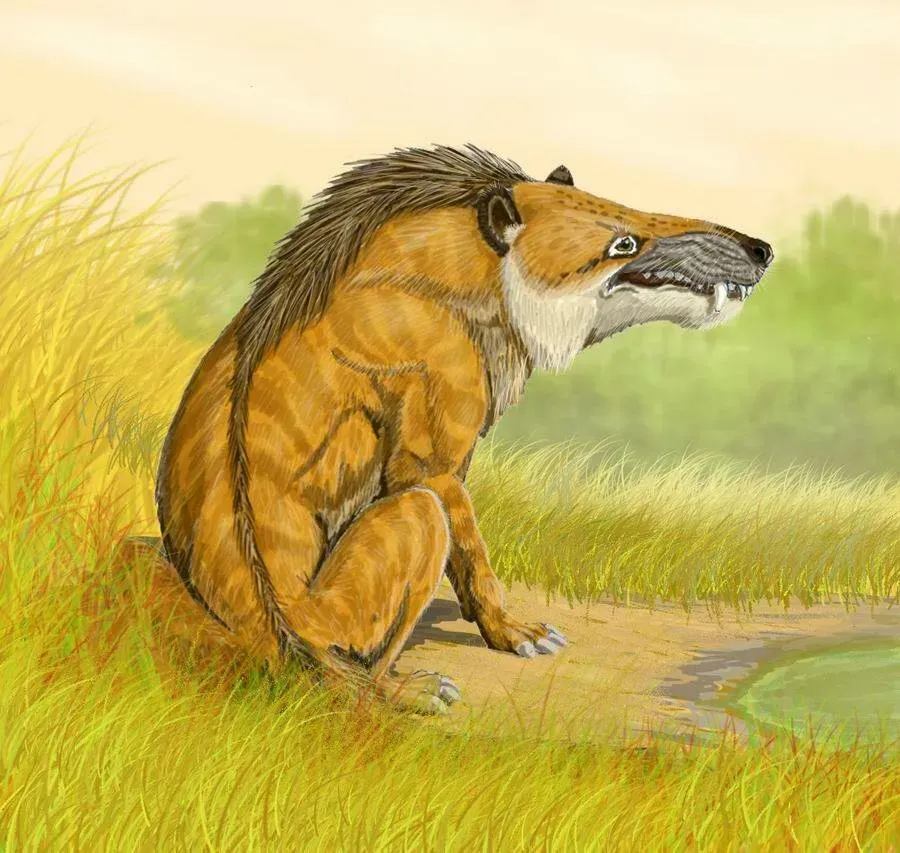
Here is where things get genuinely mysterious. Andrewsarchus, meaning “Andrews’ ruler,” is an extinct genus of artiodactyl that lived during the Middle Eocene in what is now China. Because Andrewsarchus is only known from a single skull, whether it was an active predator or an opportunistic scavenger is open to debate. Andrewsarchus is known only from an enormous skull, roughly 83 centimeters long and 56 centimeters wide. Yet from that one skull, scientists have pieced together the image of one of the most formidable land predators that ever walked the Earth.
Based on skull measurements, Andrewsarchus may have been the largest ever carnivorous mammal that lived on land. Andrewsarchus was a meat-eater and scavenger that, despite its appearances, was not related to modern scavengers like coyotes, dogs, wolves, or even hyenas. Bizarrely, it had hooves on its feet instead of claws. In fact, its nearest modern relatives are hoofed animals like sheep and goats, as it was related to modern day ungulates on one hand and to cetaceans, whales and dolphins, on the other. Honestly, the idea that the most terrifying land predator of its age was basically a very aggressive cousin of a sheep is one of the most mind-bending facts in all of paleontology.
The Eocene Period was the warmest during the Cenozoic, characterized by subtropical and temperate forests. The fossil was found in a coastal area, indicating that it lived and hunted there. Most researchers place its disappearance within the broader context of Eocene-Oligocene extinction events, particularly the “Grande Coupure” around 33.9 million years ago. This period marked a significant cooling of global climates, leading to the expansion of grasslands. Such habitat transformation likely affected the prey base and ecological niche that Andrewsarchus exploited.
5. The Dire Wolf (Aenocyon dirus): The Ice Age Hunter You Underestimate
![5. The Dire Wolf (Aenocyon dirus): The Ice Age Hunter You Underestimate ([1], Public domain)](https://nvmwebsites-budwg5g9avh3epea.z03.azurefd.net/dinoworld/b592709321272401b5369ab51bd90728.webp)
You may think you know the dire wolf from popular fiction. But the real animal was something far more grounded, and in many ways, far more impressive than any fictional version. The dire wolf was the largest dog on the planet at the time. It is shown hunting down Bison antiquus and Mexican horses in large packs. The Neogene Period was characterized by further mammalian expansion and the emergence of grasslands that influenced predator-prey dynamics. The dire wolf was perfectly shaped to exploit exactly that environment.
An apex predator, Smilodon primarily hunted large mammals. Isotopes preserved in the bones of S. fatalis in the La Brea Tar Pits reveal that ruminants like bison and camels were most commonly taken by the cats there. The dire wolf shared these same hunting grounds and competed fiercely for them. The dire wolf is skeletally not much larger than the grey wolf, but the bones are thicker and the muscle attachment points are much more strongly developed, which indicates that it had a larger muscle mass, making it a bigger animal. It was not about brute size. It was about raw, concentrated power in every bite.
The Smilodon and the dire wolf went extinct at overlapping times. In reality, Arctodus went extinct first, around 12,000 years ago, whereas Smilodon went extinct around 10,000 years ago, with the dire wolf lasting up to 9,500 years ago. The dire wolf was actually one of the last great Ice Age predators to disappear. Debate about the extinction of some of North America’s large mammal species swings between blaming humans and climate change. Whatever the cause, the disappearance of the dire wolf marked the end of an extraordinary predatory dynasty.
Conclusion: A World We Can Barely Imagine
Looking back at these five predators, you start to appreciate just how wild and untamed the Cenozoic world truly was. During the Cenozoic Era, mammals began to dominate the Earth, evolving into some of the most diverse and fascinating creatures to ever roam the planet. This era, often referred to as the “Age of Mammals,” saw the rise of many iconic species, from the towering mammoths to the swift saber-toothed cats. Yet the predators behind them were every bit as remarkable as the giants they hunted.
Each of these animals tells a story of evolution under pressure, of survival through specialization, and ultimately of extinction when the world changed faster than they could adapt. From the ocean-ruling Megalodon to the continent-dominating terror birds, from the mysterious Andrewsarchus to the pack-hunting dire wolf, these creatures were not mere footnotes in natural history. They were the architects of entire ecosystems.
We tend to think of today’s predators, wolves, sharks, lions, as the pinnacle of nature’s ferocity. After reading this, you might want to reconsider that assumption. Which of these five prehistoric hunters surprised you the most? Let us know in the comments below.