You already know the T-Rex. You’ve seen it in movies, on lunchboxes, in museum atriums. It’s basically the rockstar of the prehistoric world, complete with its own action figure line. But here’s the thing – it might not even crack the top five when you’re talking about truly nightmare-inducing ancient beasts. The prehistoric Earth was a staggering parade of horror, and some of its most terrifying residents have been almost completely overlooked by popular culture.
These are the creatures that should be keeping you up at night. Not because they’re famous, but precisely because they aren’t. Get ready to rethink everything you thought you knew about prehistoric terror. Let’s dive in.
Sarcosuchus: The “Super Croc” That Ate Dinosaurs for Breakfast
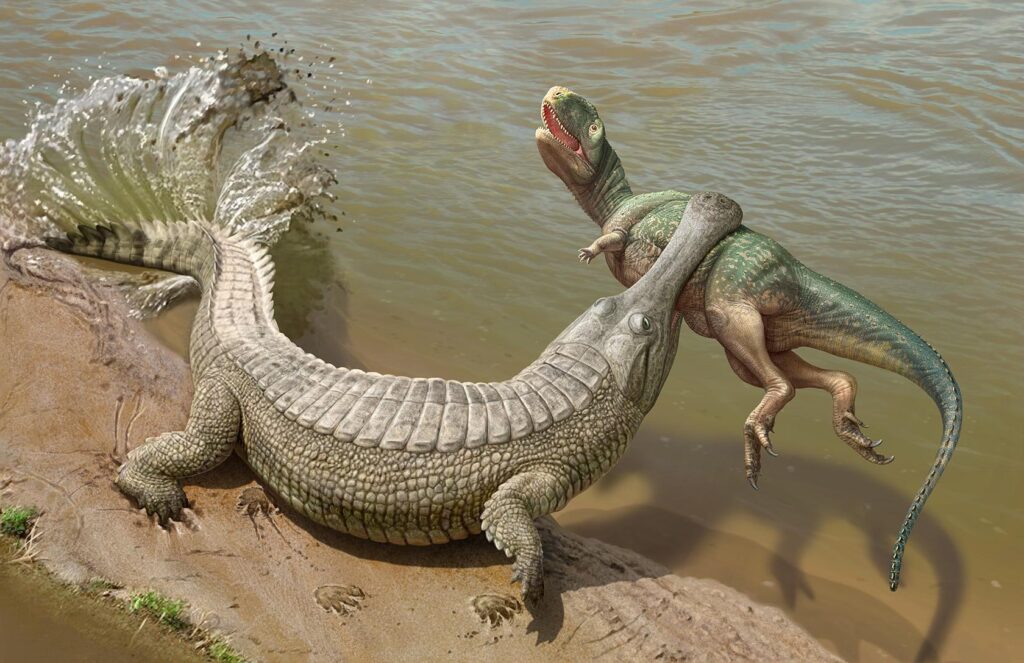
Picture yourself wading through a prehistoric river in what is now Africa or South America, sometime around 110 million years ago. You hear nothing. Then the water moves. Sarcosuchus was a 40-foot-long, 10-ton, crocodile-like reptile from the Cretaceous era that lived in what are now Africa and South America. That’s not a typo. Forty feet. For context, that’s about the length of a city bus, except this one has teeth.
It had a six-foot-long skull that contained 132 teeth, and what truly sets this creature apart is that Sarcosuchus was larger than almost all of the dinosaurs that lived in the same environment, with evidence pointing to a diet that included large terrestrial prey – this monster ate dinosaurs. The T-Rex may have been the king of the land, but Sarcosuchus was the undisputed emperor of the riverbanks, and no creature in its ecosystem was truly safe.
Titanoboa: The Snake That Would Make an Anaconda Feel Inadequate
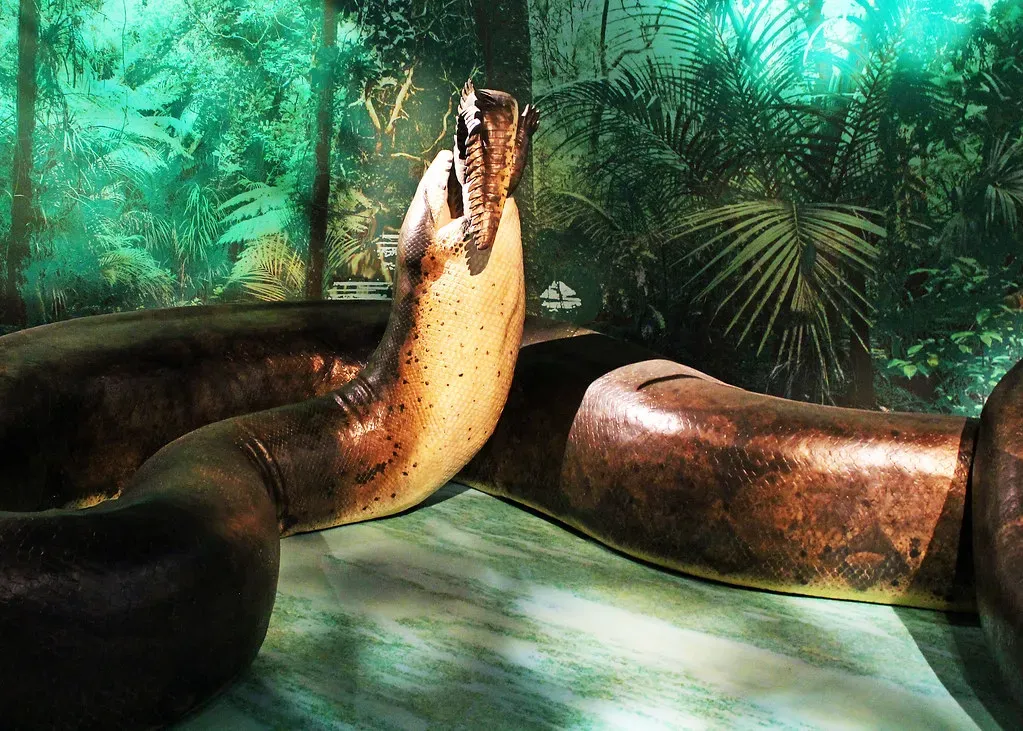
If you’ve ever felt mildly uneasy around a garden snake, prepare yourself. This giant snake could reach lengths of up to 42 feet and weighed over a ton. For reference, even the longest anacondas ever discovered have never surpassed 30 feet. Let that sink in. Titanoboa wasn’t just a big snake – it was in a completely different category of terrifying.
Titanoboa likely lived in or very near the water, where it could ambush and kill other species. Its huge size and powerful bite force allowed it to constrict and consume large prey, making it one of the most dangerous extinct animals of the prehistoric world. Honestly, if you thought the apex predator slot after the dinosaurs went extinct was just sitting empty, Titanoboa had some very strong opinions about that. It ruled the Colombian rainforests roughly 60 million years ago, and nothing argued with it.
Arthropleura: The Eight-Foot Millipede That Roamed the Ancient Forests
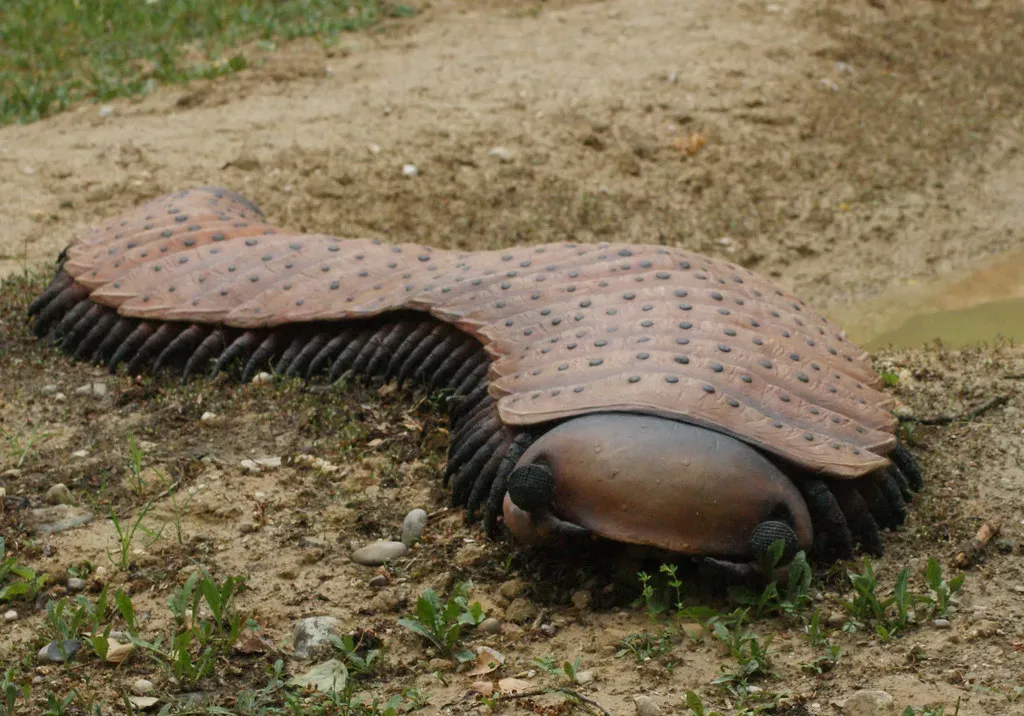
I know it sounds crazy, but hear me out. In the Carboniferous period, Arthropleura roamed the Earth with between 32 and 64 jointed legs. This terrifying creature is the largest land invertebrate ever discovered, capable of growing up to 8 feet long and nearly 2 feet wide, with articulated armored plates covering its entire body, and it may have weighed close to 110 pounds. Imagine something like a modern millipede, then multiply it by roughly everything that is wrong with the universe.
First discovered in the 1850s, Arthropleura remained a mystery to researchers because only its body could be found. It was not until October 2024 that a fossil find startled experts – the head of an Arthropleura was seen for the first time after a scan of an intact fossil was done, and through this scan the Arthropleura evolutionary mystery was finally solved, as it was discovered to belong to both the millipede and centipede families. So you didn’t just have one type of nightmare ancestor – it was a fusion of two. You’re welcome.
Phorusrhacidae: The Terror Birds That Could Outrun a Racehorse
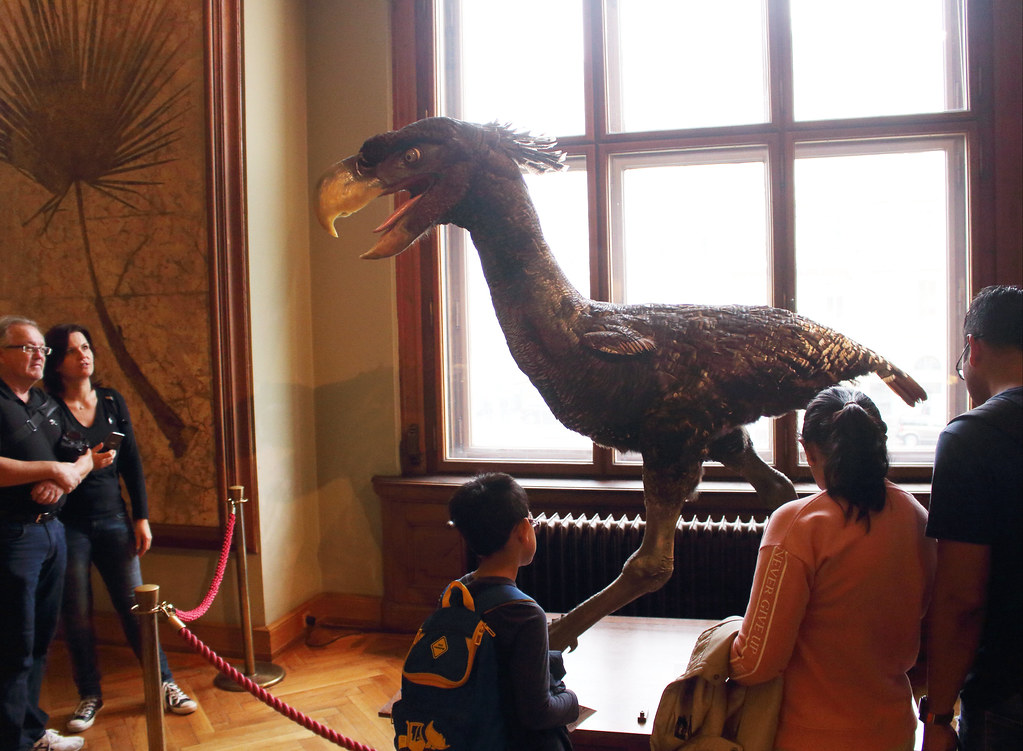
If someone told you to picture a terrifying bird, you’d probably think of an eagle or maybe an emu on a bad day. You would not imagine something that could literally outrun you, your car, and most of your excuses for avoiding the gym. Paleontologists call the extinct birds of the Phorusrhacidae family in South America the “terror birds,” ranking them among the planet’s scariest extinct animals. With powerful beaks capable of inflicting deadly wounds, these creatures were natural predators that almost certainly instilled fear in the earliest people who might have encountered them.
Imagine a 10-foot-tall Phorusrhacos using its huge beak like a hatchet against its victims. The terror birds were mostly flightless, but they made up for their lack of flight with the ability to run up to 60 mph. Experts say the animal could probably run faster than 40 mph to catch its meals – that’s similar to the top speed of present-day racehorses, meaning human beings would have had no chance at escaping this prehistoric nightmare. Speed. Beak like a pickaxe. Absolutely no interest in being your friend. Terrifying doesn’t even begin to cover it.
Deinosuchus: The Crocodilian That Made T-Rex Look Like a Rookie
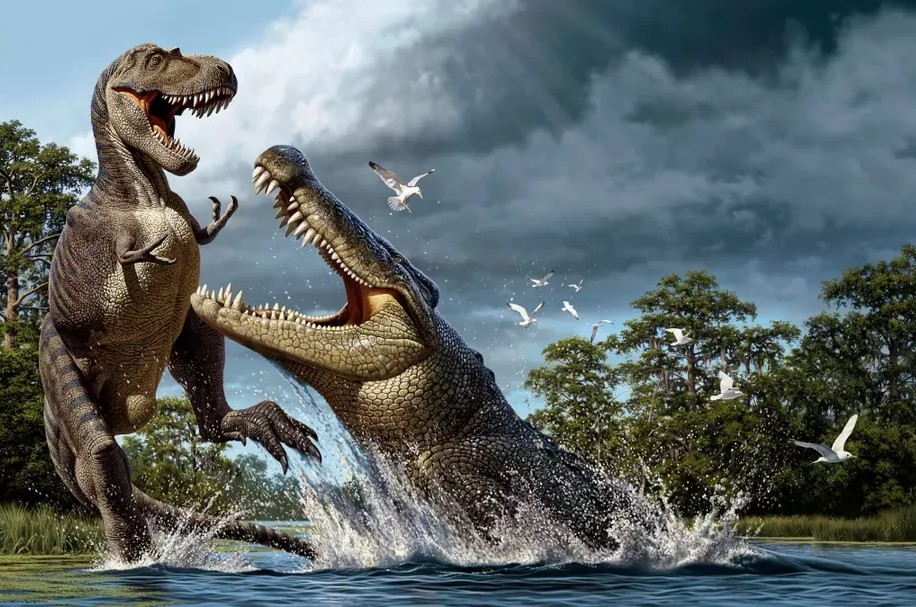
Let’s be real – when you find out a crocodile once matched a T-Rex in raw body weight, you start questioning a few things. Deinosuchus grew up to 40 feet long and could range from 13,000 to 15,000 pounds, or about the same weight as a fully grown Tyrannosaurus rex. It’s one of those facts that seems impossible until you sit with it for a moment. This wasn’t a prehistoric crocodile in the charming, manageable sense. This was a living siege weapon.
With an incredibly powerful bite force, the Deinosuchus was capable of crushing the bones of even the biggest dinosaurs. It also likely fed on prehistoric birds, turtles, fish and other extinct animals. It was, in the most literal sense, an equal-opportunity destroyer. Any predator that can move between land and water is even harder to escape when it wants to eat you. Deinosuchus was the definition of that. T-Rex at least stayed on land. Deinosuchus gave you absolutely no safe zone.
Conclusion: The T-Rex Was Just the Beginning
The T-Rex gets the poster. It gets the movies, the museums, the merchandise. Honestly, it earned most of that. But the prehistoric world was an extraordinarily dangerous place, full of creatures that evolved abilities the T-Rex never even had – river ambushes, crushing constriction, speed that left no escape route, and jaws that could end a dinosaur on the banks of a Cretaceous river.
What’s really striking is how many of these creatures existed in the gaps between the famous names we all know. Evolution didn’t just produce one terrifying predator and call it a day. It filled every ecosystem, every river, every ancient forest with something ready and willing to make sure you didn’t make it home. It’s hard to say for sure which of these five you’d least want to encounter, but I suspect the answer depends entirely on whether you’re near water.
The next time someone tells you the T-Rex was the scariest creature to ever walk this Earth, you’ll know better. The prehistoric world had far more nightmare fuel than one famous tyrant lizard. So, which of these five creatures do you think deserves more attention? Tell us in the comments.