Dinosaurs get all the glory. The T. rex, the Triceratops, the Brachiosaurus – they have blockbuster movies, museum wings, and entire TV channels devoted to them. Fair enough, honestly. They were incredible. But here’s the thing: the prehistoric world was far stranger, far wilder, and far more baffling than any Jurassic Park film ever dared to suggest.
Buried in ancient rock and forgotten ocean floors are creatures so alien in their design that scientists have spent decades – sometimes over a century – arguing about which end is the head. These are not your average fossilized reptiles. These are the true outlaws of evolutionary history. Get ready for a journey into the genuinely unexplained. Let’s dive in.
1. The Tully Monster: Illinois’ Alien Fossil That Nobody Can Classify
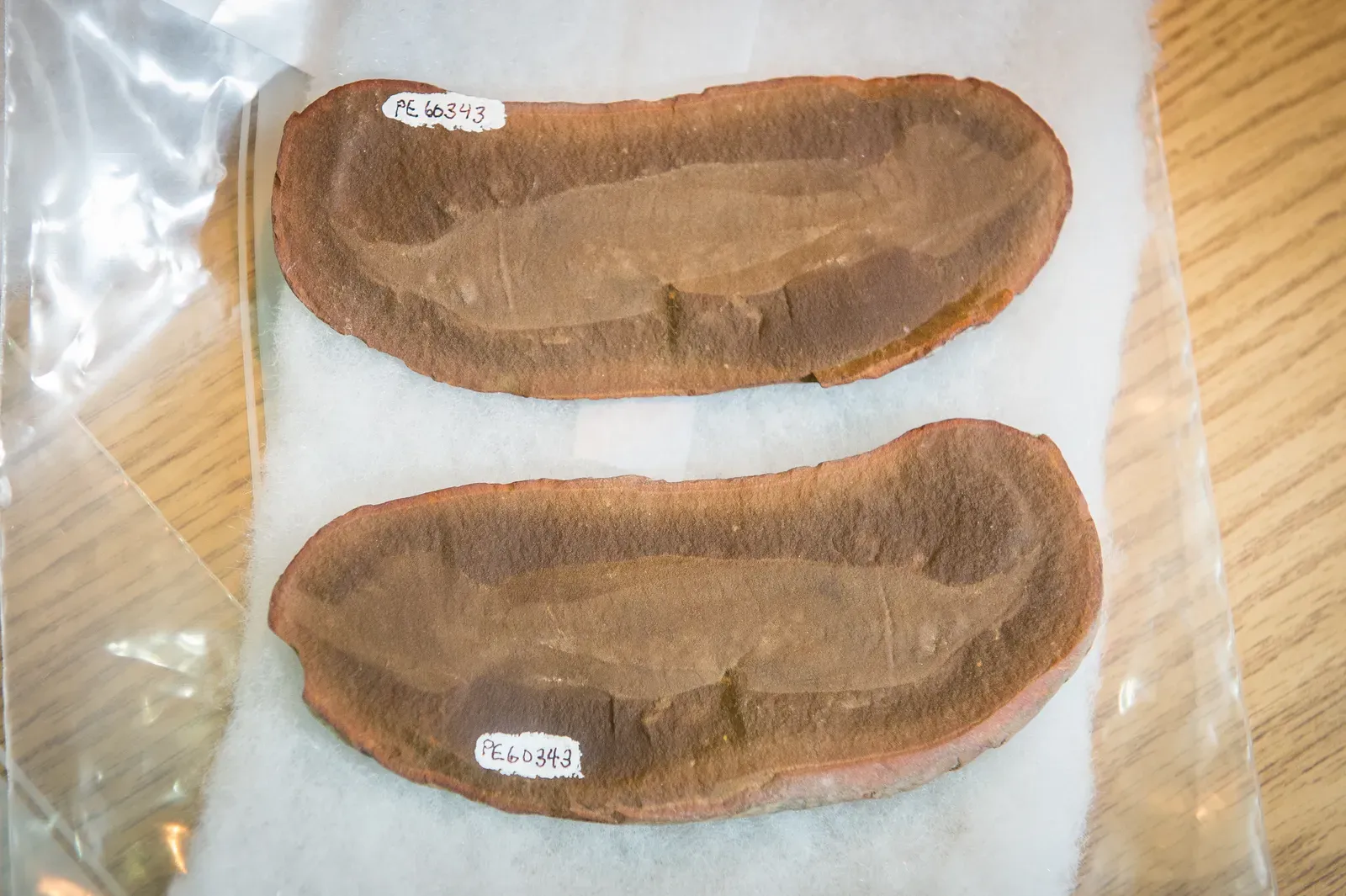
Imagine discovering a creature so bizarre that the world’s best scientists couldn’t even decide which kingdom of life it belonged to. Amateur collector Francis Tully found the first of these fossils in 1955 in a fossil bed known as the Mazon Creek formation, and when he took the strange creature to the Field Museum of Natural History, paleontologists were completely stumped as to which phylum it belonged to. That’s not a small problem. That’s like finding an animal and not being able to tell if it’s more closely related to a snail, a worm, or a fish. For decades, nobody had a clue.
Tully monsters lived in Illinois 307 million years ago, and they look like something out of science fiction – aquatic animals with tube-shaped bodies up to a foot long, skinny snouts ending in a toothed jaw or claw, and eyes at the end of short stalks. Its classification has been the subject of controversy, and interpretations of the fossil have likened it to molluscs, arthropods, conodonts, worms, tunicates, and vertebrates. Scientists literally couldn’t agree on what category of animal it was, let alone what species. Even more surprisingly, no one knows when the animal first appeared on Earth or when it went extinct – its existence in the fossil record is confined to the Illinois mining site, dating back 300 million years. One creature, one location, endless mystery.
2. Hallucigenia: The Creature Scientists Got Completely Wrong – Twice
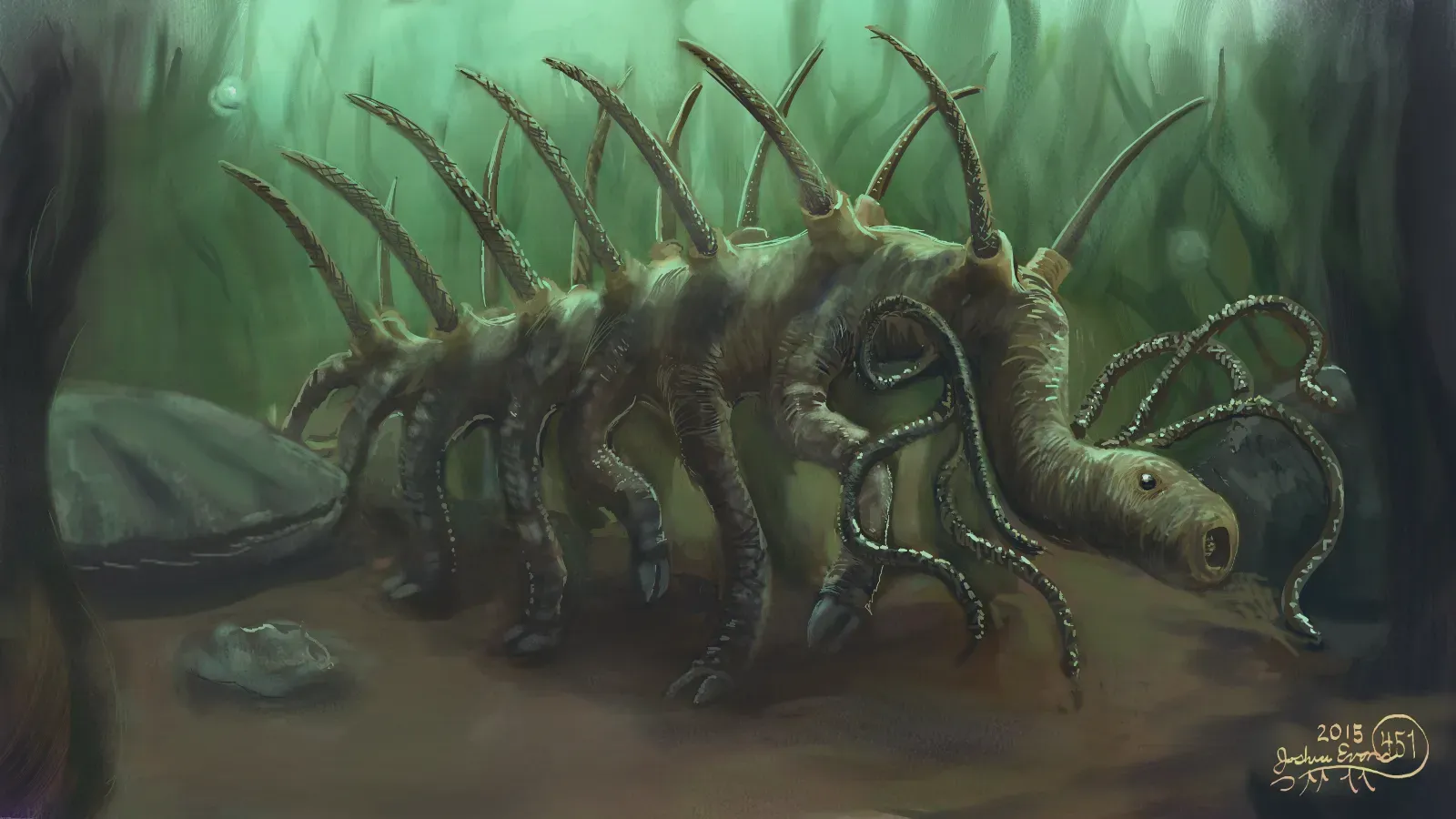
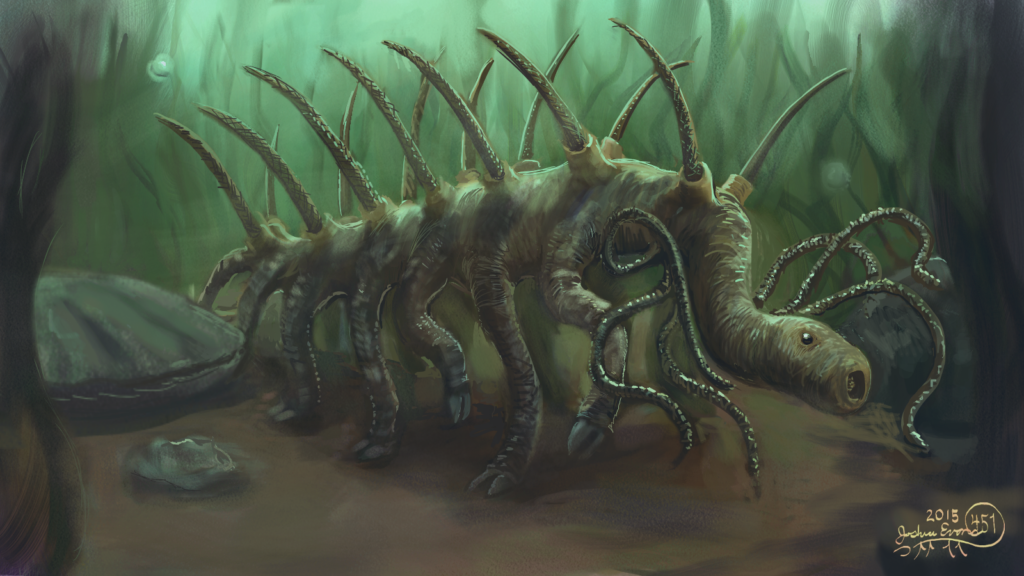
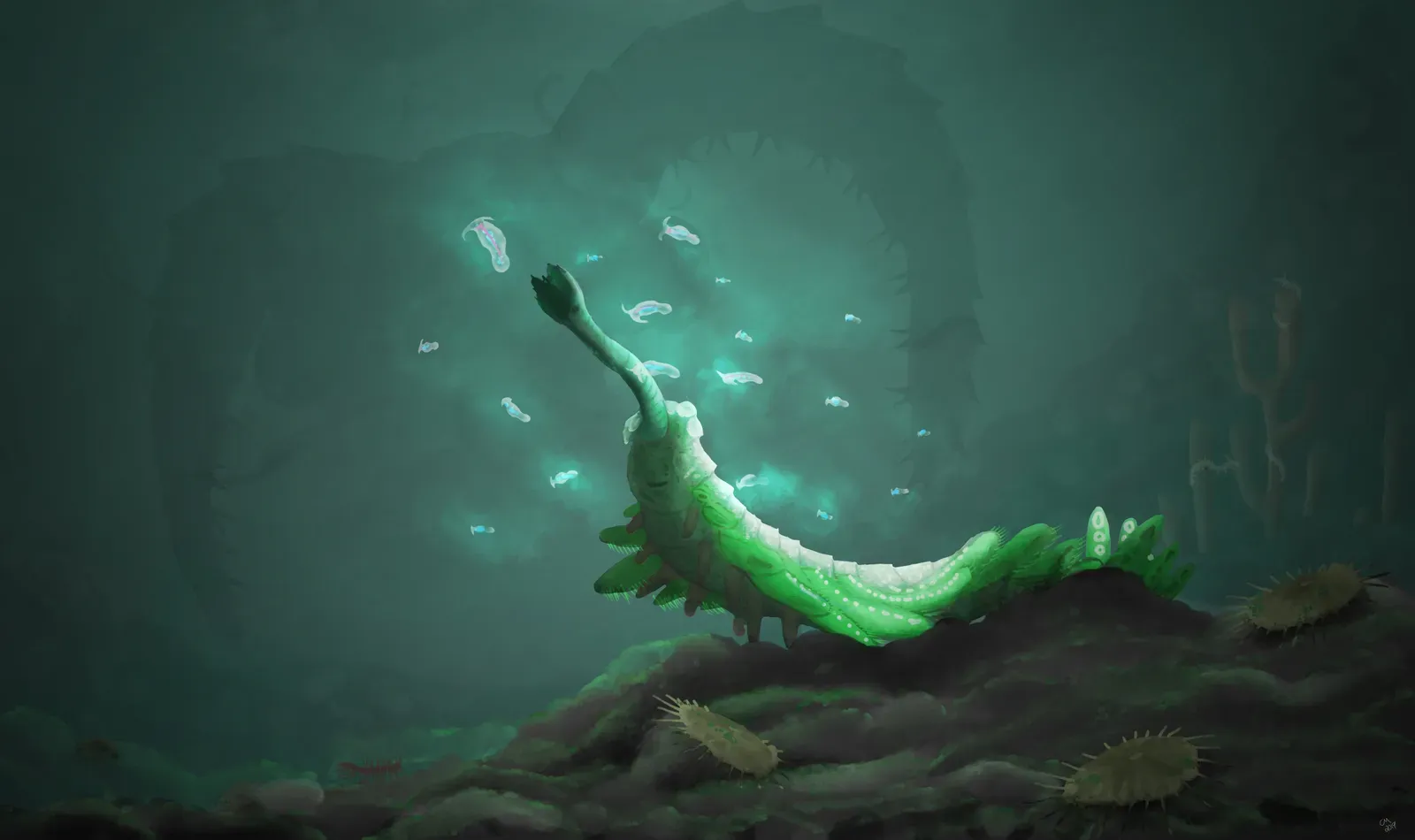
Few stories in paleontology are as humbling as the story of Hallucigenia. In his 1977 redescription of the organism, Simon Conway Morris recognized the animal as something quite distinct, for which he proposed the name Hallucigenia because of the “bizarre and dream-like appearance of the animal.” He wasn’t exaggerating. What he saw defied all logic. Legs that looked like tentacles, spines that looked like legs, and a blob at one end that nobody could confidently call a head. It was, in the most literal sense, a hallucination made of bone.
When it was identified in the 1970s, it was reconstructed both backwards and upside down: the spines along its back were originally thought to be legs, its legs were thought to be tentacles along its back, and its head was mistaken for its tail. That’s two complete reconstruction errors at once. Think about that for a moment. Hallucigenia lived approximately 505 million years ago during the Cambrian Explosion, a period of rapid evolution when most major animal groups first appear in the fossil record. Paleontologists from the University of Toronto and the University of Cambridge found that this weird creature had a throat lined with needle-like teeth – a previously unidentified feature which could help connect the dots between it, modern velvet worms and arthropods. Even righted and properly oriented, this little worm-like creature still manages to upend everything scientists thought they understood about early animal evolution.
3. Helicoprion: The Buzzsaw Fish That Broke Paleontology for Over a Century
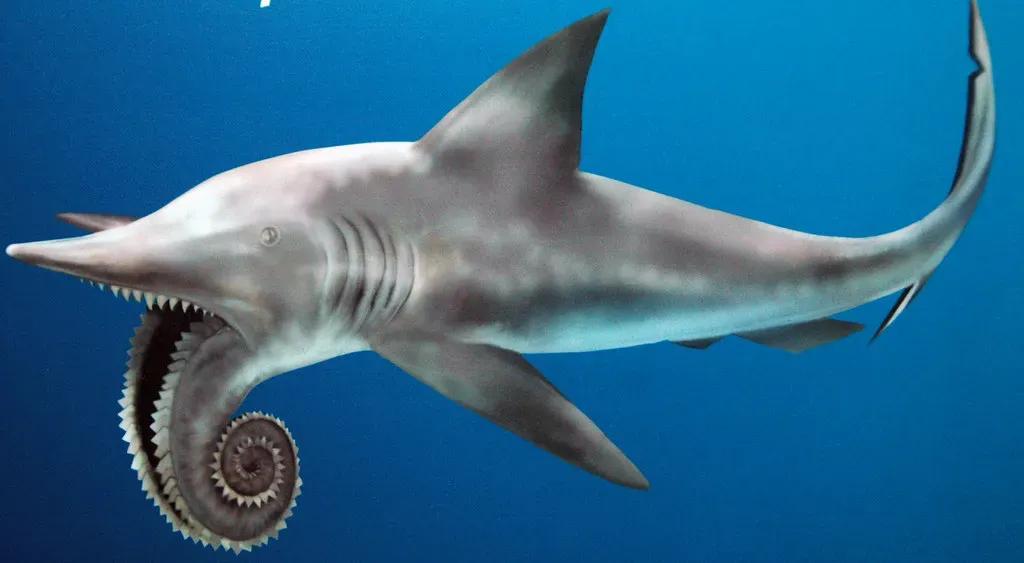
Picture yourself stumbling across an enormous spiral of teeth embedded in rock, with absolutely no body attached to them. That’s exactly what happened when Helicoprion was first named in 1899 by Alexander Karpinsky on the basis of fossils discovered in Russia and Australia, the generic name meaning “spiral saw.” For a fish that could grow to impressive lengths, the only thing left behind was its teeth. The fossils of this 270-million-year-old fish long mystified scientists because, for the most part, the only remains of the fish are its teeth, as its skeletal system was made of cartilage which doesn’t preserve well, and no one could determine how these teeth – that look similar to a spiral saw blade – fit into a prehistoric fish with a poor fossil record.
The guesses scientists made over the years were, let’s be real, a little wild. Over a century of speculation produced visions of sharks with whorls hanging off their snouts, lower jaws, dorsal fins, caudal fins, and even embedded deep in their throats. The answer, when it finally came, was equally jaw-dropping. A digital reconstruction of the Helicoprion indicates that the spiral began at the back of the mouth, near the hinge that joins the upper and lower jaws, and curled forward, filling the place where a tongue would be – as the whorl continued to grow, it curled underneath and fused with the lower jaw, remaining entirely within the creature’s mouth, and without any teeth in its upper jaw, the Helicoprion used its one curling row of teeth to slice up its soft-bodied prey. Oh, and it wasn’t even a shark. The same team also learned that the Helicoprion is not a true shark, but is a chimaera – chimeras or “ghost sharks” make up a group of cartilaginous fish that branched off from sharks more than 400 million years ago.
4. Anomalocaris: The World’s First Apex Predator That Looked Like Nothing Alive Today
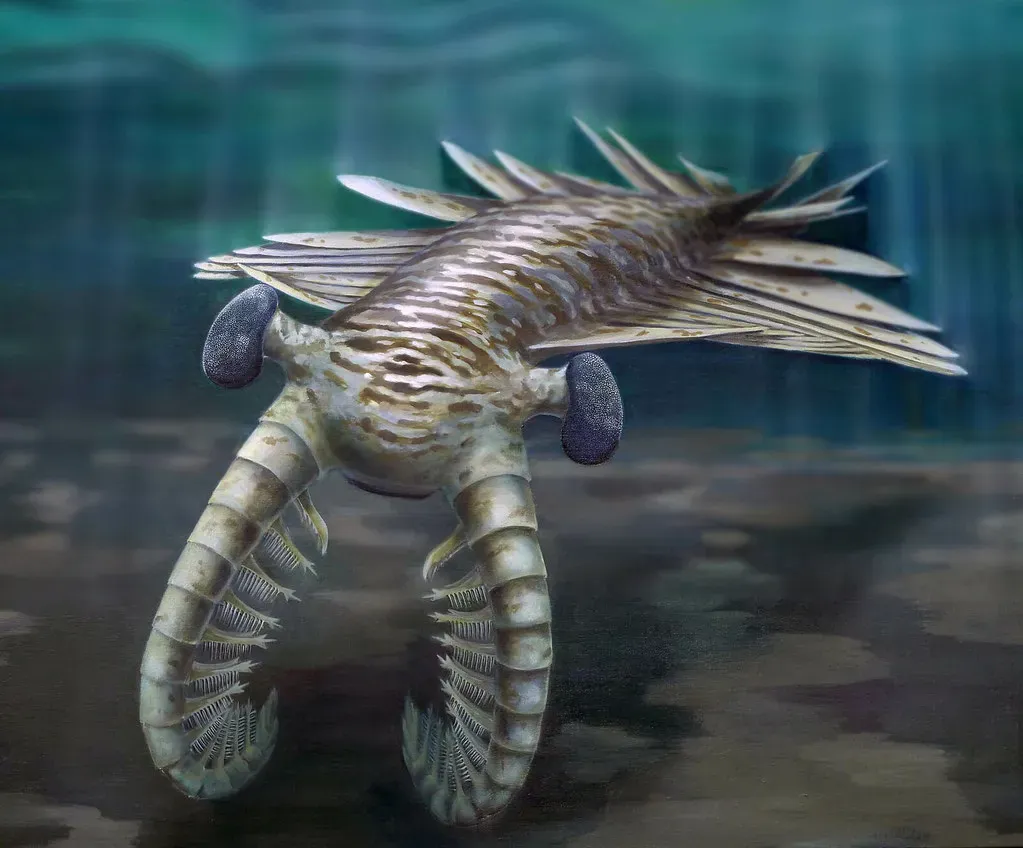
Before the dinosaurs, before mammals, before almost anything you’d recognize, there was Anomalocaris – and it ruled. This bizarre-looking animal was Anomalocaris, or “unusual shrimp,” and is widely regarded as the world’s first apex predator – the killer whale of its day. Think about that title for a second. The very first top predator in the history of life on Earth looked like a fever dream drawn by a child who had never seen a real animal. Anomalocaris was one of the most peculiar and formidable predators of the Cambrian period, around 520 million years ago – measuring nearly three feet long, this marine creature had a soft, segmented body and a mouth full of radiating plates, resembling a pineapple slicer, which it used to crush its prey.
What makes Anomalocaris especially perplexing is how long it took scientists to even put it together correctly. For years, its different body parts were discovered separately and classified as completely different animals. The mouth was thought to be a jellyfish. The front claws were mistaken for shrimp. It took multiple fossil discoveries before researchers realized all these pieces belonged to the same terrifying organism. The wide array of peculiar forms speaks to a time of incredible experimentation by nature, leading to the dynamic tapestry of life we see today. Anomalocaris, more than almost any other creature, represents just how creative – and confusing – early evolution could be.
5. Arthropleura: The Giant Millipede the Size of a Car That Nobody Fully Understands
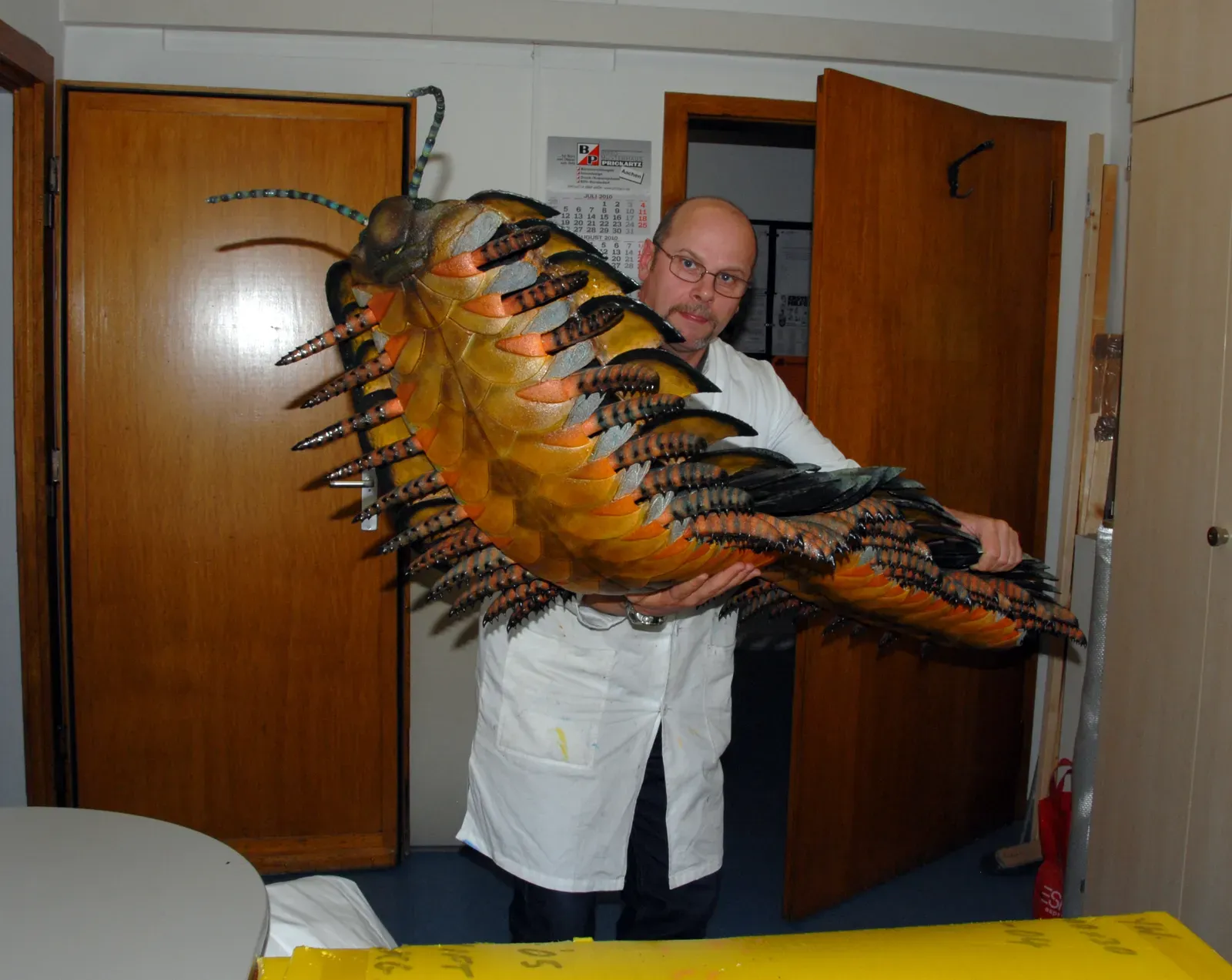
Here’s something that might haunt your dreams: a millipede the size of a small car wandering through ancient forests. The Arthropleura was a colossal millipede-like creature that roamed the lush coal forests during the Carboniferous period, roughly 340 million years ago, and growing over eight feet long, it holds the title of the largest known land invertebrate. For context, that’s bigger than most motorcycles. And it had legs – lots of them. The kind of creature that would make anyone rethink their relationship with the outdoors.
Its extensive, armor-like segments and jointed legs made it a formidable presence in its environment, likely feeding on decomposed plant material, and Arthropleura’s size and survival are credited to the vast array of vegetation and high oxygen levels of the time, offering a glimpse into a period when invertebrates ruled the forest floors. Honestly, the oxygen theory is one of the more sobering facts in all of prehistoric science. The air back then was so rich that invertebrates could grow to monstrous proportions – a rule that no longer applies today, thankfully. Despite its size, much about Arthropleura’s behavior, its reproduction, and even its precise feeding habits remain poorly understood. It was enormous, armored, widespread – and in many ways, still a genuine mystery.
Conclusion: The Strangest Stories Are Still Being Written
Dinosaurs will always capture people’s imaginations, and there’s a reason for that. They were spectacular. But the prehistoric world was a much stranger, more layered, and more bewildering place than most people ever realize. The Tully Monster still doesn’t have a universally agreed-upon classification. Hallucigenia was reconstructed completely wrong for years. Helicoprion baffled the scientific community for over a century. Anomalocaris was assembled from misidentified parts. Arthropleura could grow to the size of a vehicle because the atmosphere was fundamentally different.
Each of these creatures is a reminder that nature, at its most creative, is stranger than any fiction. As paleontologists continue uncovering the mysteries of the past, these extraordinary beings remind us of the planet’s awe-inspiring history and the perpetual march of evolution. The fossil record is barely scratched. Somewhere out there, buried beneath millions of years of rock and sediment, there are almost certainly creatures even more baffling than anything on this list. Which of these five prehistoric puzzles surprised you the most?