The ground beneath your feet is far older than any map can describe. Across the United States, there are places where the Earth’s skin has been peeled back, millions of years of history exposed to the open sky, waiting for anyone curious enough to look closely. These are not just scenic destinations. They are open books written in stone, and every layer tells a story that scientists are still working to fully translate.
Some of these secrets involve ancient seas that once covered what is now dry desert. Others involve creatures that walked, hunted, and died long before humans took their first steps. If you have ever looked at a canyon wall and felt that peculiar, electric sense that something monumental happened here, you are not wrong. Let’s dive in.
The Grand Canyon, Arizona: A Two-Billion-Year Time Machine
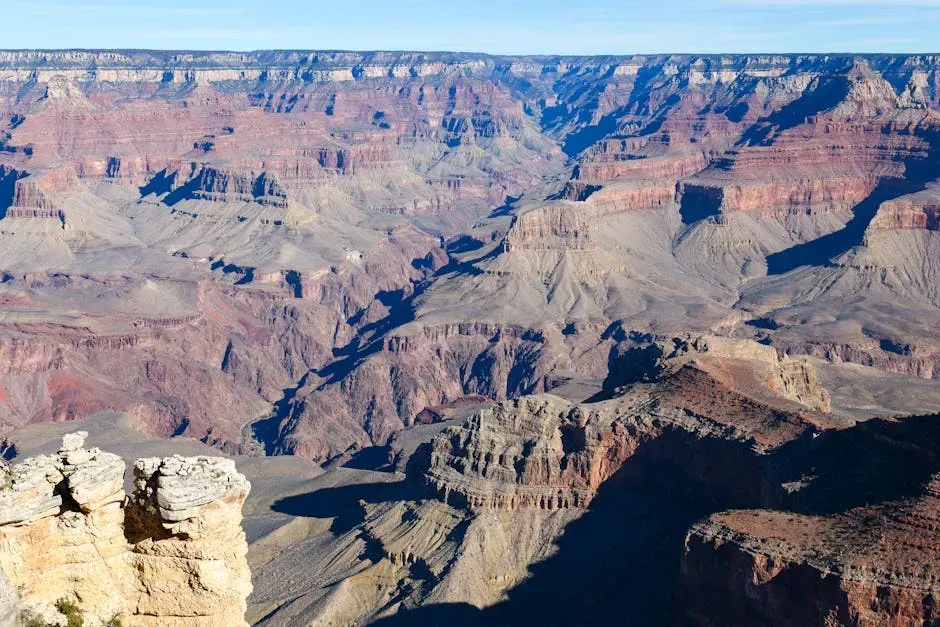
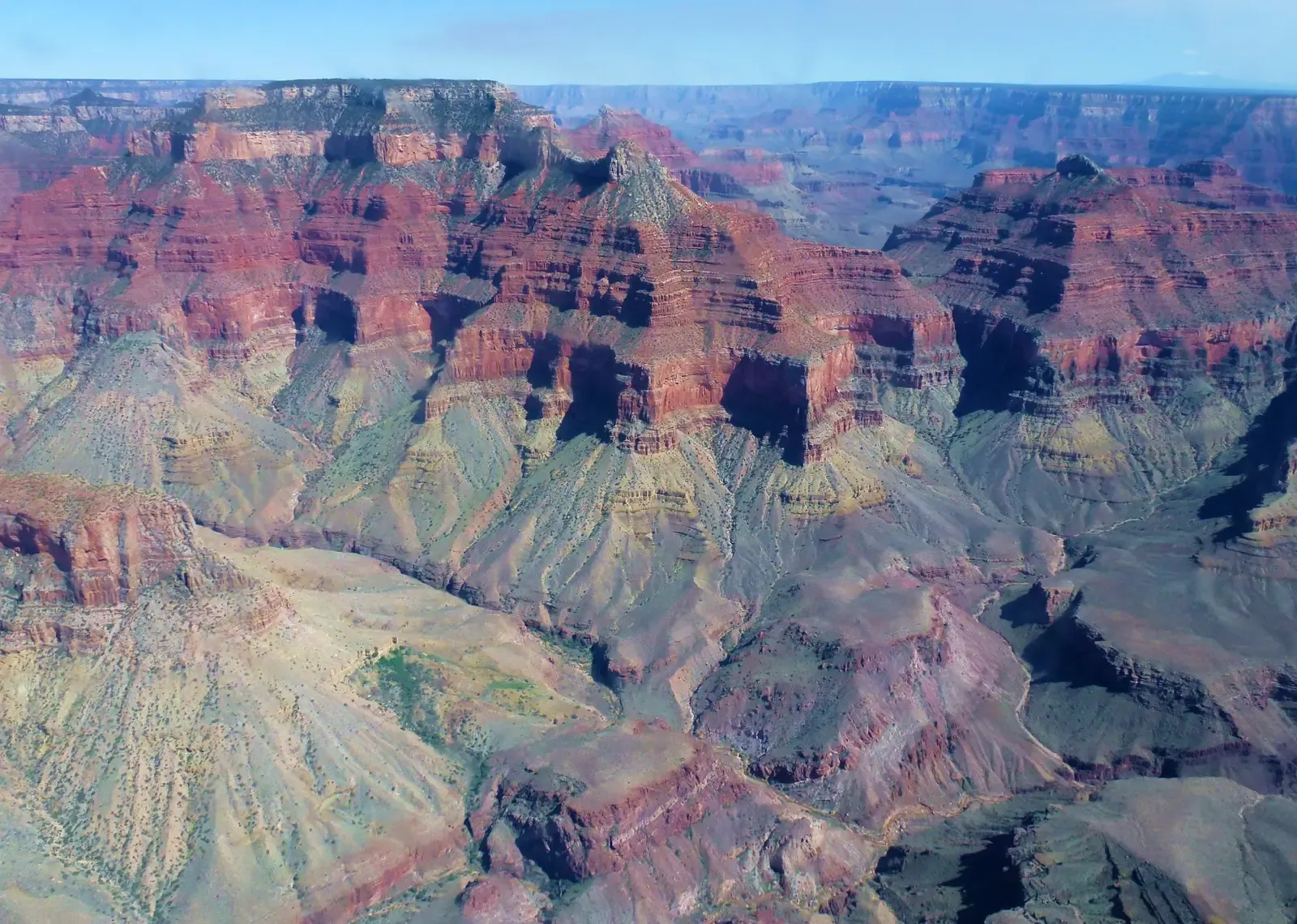
Honestly, the Grand Canyon is one of those places where even photographs fail to prepare you for the reality of it. The major geologic exposures in the Grand Canyon range in age from the two-billion-year-old Vishnu Schist at the bottom of the Inner Gorge to the 270-million-year-old Kaibab Limestone on the Rim. Think about that for a moment. That bottom layer of dark rock existed before complex life even appeared on this planet. You are not just looking at a canyon. You are looking at nearly half the age of the Earth itself.
The nearly 40 major sedimentary rock layers exposed in the Grand Canyon range in age from about 200 million to nearly 2 billion years old, and most were deposited in warm, shallow seas and near ancient, long-gone sea shores in western North America. It is a mind-bending thought that the parched landscape of Arizona was once the floor of a tropical ocean. The Grand Canyon also offers one of the most visible examples of a worldwide geological phenomenon known as the Great Unconformity, in which 250 million-year-old rock strata lie back-to-back with 1.2 billion-year-old rocks. That gap in the record, roughly a billion years of Earth history simply missing, is one of the most haunting geological mysteries science has yet to fully explain.
Geology has always been recognized as central to the canyon’s significance, and it has been designated as a UNESCO World Heritage site for being “among the Earth’s greatest ongoing geological spectacles.” The Paleozoic strata contain many fossils that help scientists learn about the geologic history of North America, and most of the fossils are ocean-dwelling creatures, telling us that the area now in the middle of Arizona was once a sea. It is hard to decide what is more astonishing: the sheer scale of the canyon or the staggering depth of time it holds.
Dinosaur National Monument, Utah and Colorado: The World’s Greatest Dinosaur Graveyard
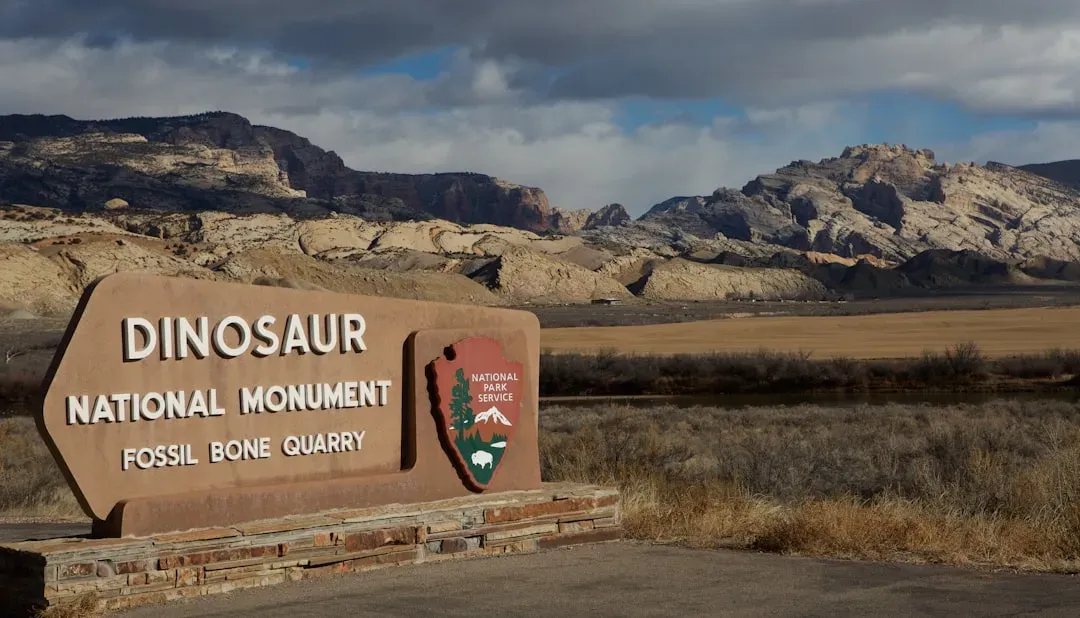
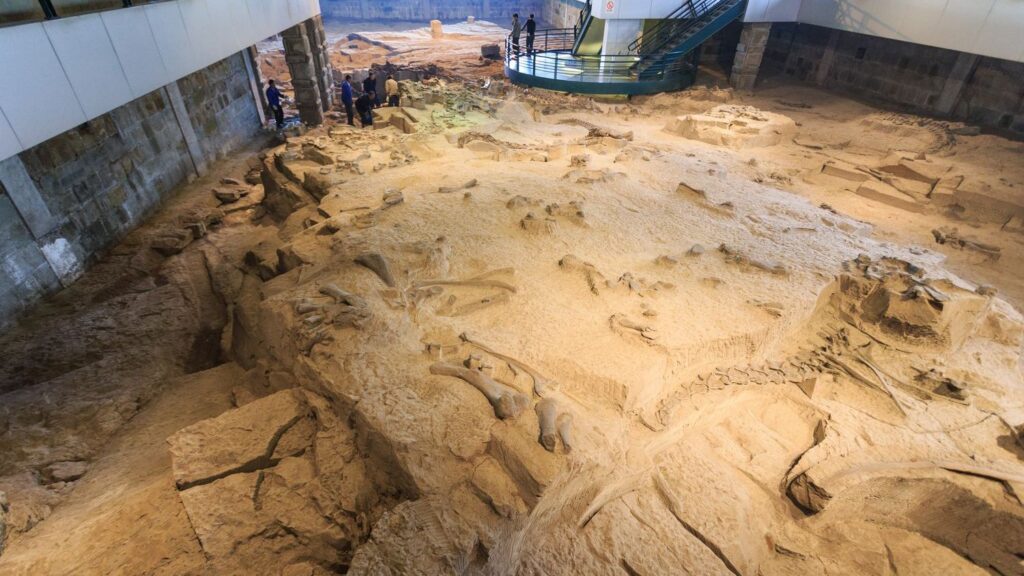
Here’s the thing about Dinosaur National Monument – its name is not exaggerating, not even slightly. The Morrison Formation is a distinctive sequence of Upper Jurassic sedimentary rock found in the western United States and has been the most fertile source of dinosaur fossils in North America. The monument sits right at the heart of this extraordinary geological formation, and what has been uncovered here is nothing short of staggering. Today, the fully enclosed Quarry Exhibit Hall allows visitors to view over 1,500 fossils still in place in an exposed sandstone wall of the Morrison Formation.
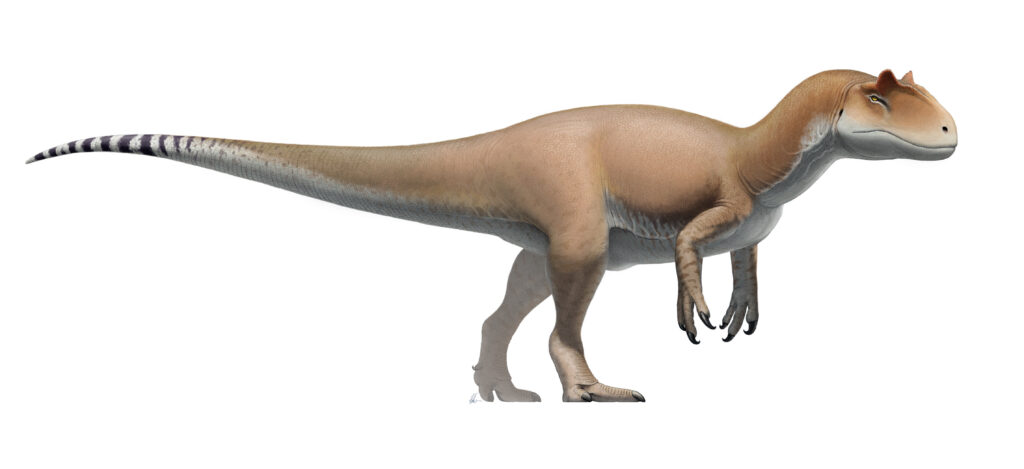
The Morrison Formation was deposited during the Late Jurassic, between approximately 157 and 150 million years ago, across rivers, floodplains, lakes, and other environments. At this time North America was farther south and the Rocky Mountains did not yet exist. Flowering plants had not yet evolved; instead, the land was covered by ferns, cycads, and horsetails, with stands of conifer trees, ginkgoes, and tree ferns. It truly is a window into a world so radically different from ours that it might as well be another planet. Fossils of nearly 50 different species of dinosaurs have been discovered in the Morrison Formation, including the large predatory Allosaurus, while other meat-eating dinosaurs found here include Coelurus, Ornitholestes, and the horn-nosed Ceratosaurus. Each fossil is a piece of a puzzle depicting an ecosystem that no longer exists.
The story of Dinosaur National Monument began on August 17, 1909, when Earl Douglass of the Carnegie Museum found eight vertebrae of an Apatosaurus, which led to the opening of the famous Dinosaur Quarry, and in 1915, President Woodrow Wilson designated the 80 acres surrounding the quarry as a national monument. I think it is genuinely wonderful that one man’s discovery on a single summer day opened a window the entire world could peer through. Among the iconic sauropods discovered here are the big Camarasaurus at roughly 50 feet long, the bigger Apatosaurus at around 70 feet long, and the biggest Diplodocus at almost 85 feet long.
Yellowstone National Park, Wyoming: A Supervolcano Hiding Ancient Secrets
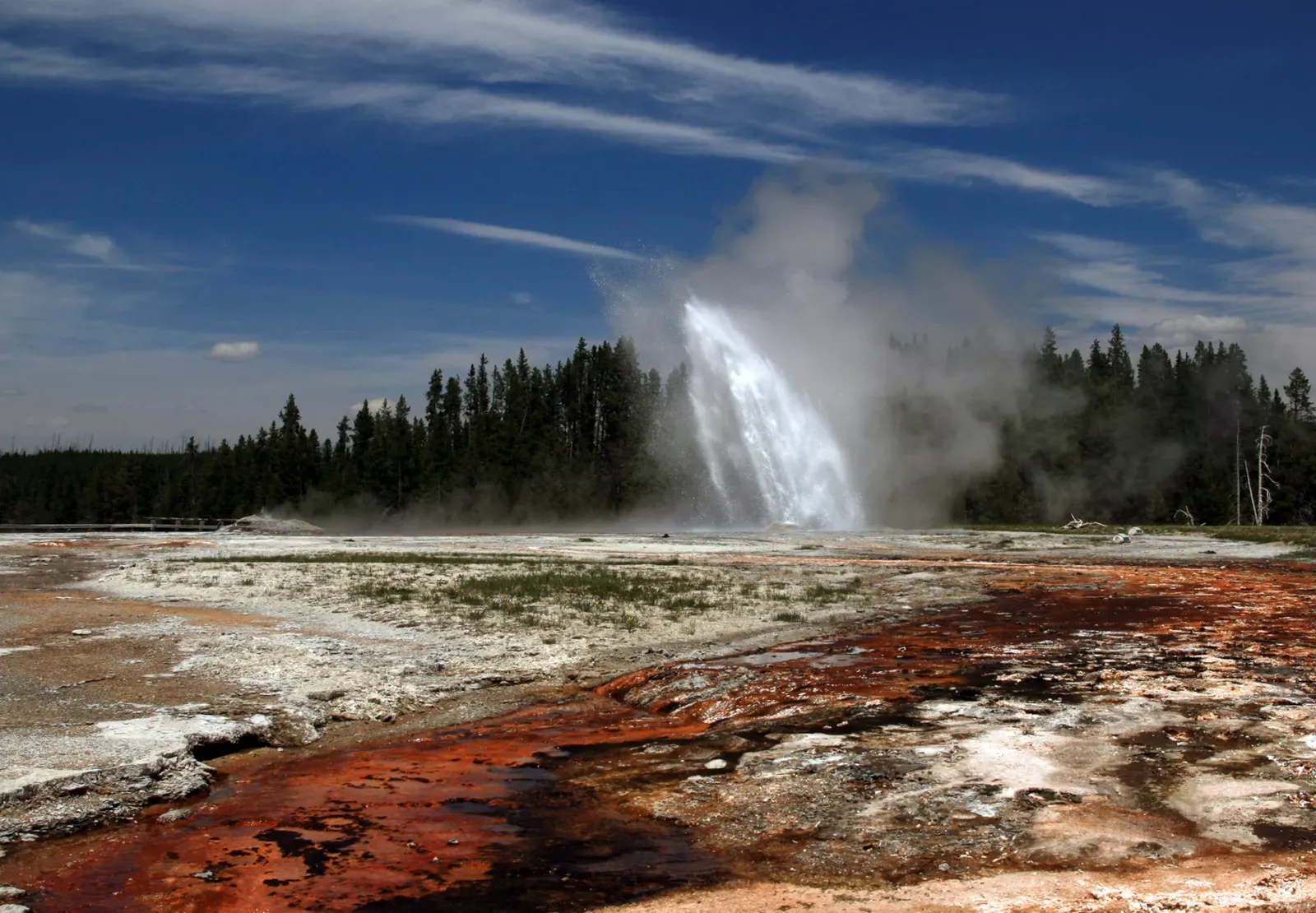
Most visitors come to Yellowstone for the geysers. Old Faithful, the Grand Prismatic Spring, the steaming thermal pools. Let’s be real, those things alone are worth the trip. These geothermal and geologic features and the biological life that lives among them at Yellowstone National Park are part of the Yellowstone Caldera, the largest supervolcano in North America. The entire landscape is, in essence, sitting on top of a geological time bomb. But there is a much deeper story here that very few people even know about.
Yellowstone has a secret that very few visitors are even aware of: Yellowstone has fossils, enough to rival other national parks that are renowned for their fossil riches, like Petrified Forest and Dinosaur National Monument. In Yellowstone, there are fossils that tell the story of volcanic eruptions that buried entire forests, that detail a slow change in Yellowstone’s climate, and that are the basis for entire evolutionary theories. That is a remarkable claim, and it holds up. The Mesozoic Era is represented at Yellowstone with geologic formations preserving Triassic, Jurassic, and Cretaceous rock strata and fossils, and the Cretaceous rocks in the park include both marine and terrestrial environments preserving fossil plants, invertebrates, fish, and even dinosaurs in remote locations of the park.
To see these pre-caldera records, you must go to the outer periphery of the Yellowstone Caldera, where sedimentary rocks and the fossils they contain preserve a history of life extending back approximately 500 million years, and some of the oldest fossils can be found in the middle Cambrian rocks in the northwest region of the park. A one-day fossil expedition from the Museum of the Rockies in the 1990s was able to find a piece of turtle shell, dinosaur egg fragments, and what is thought to be a skeleton of an aquatic reptile known as a plesiosaur. It’s hard to say for sure what more systematic exploration would uncover, but the potential is clearly extraordinary.
Badlands National Park, South Dakota: The Golden Age of Mammals Frozen in Stone
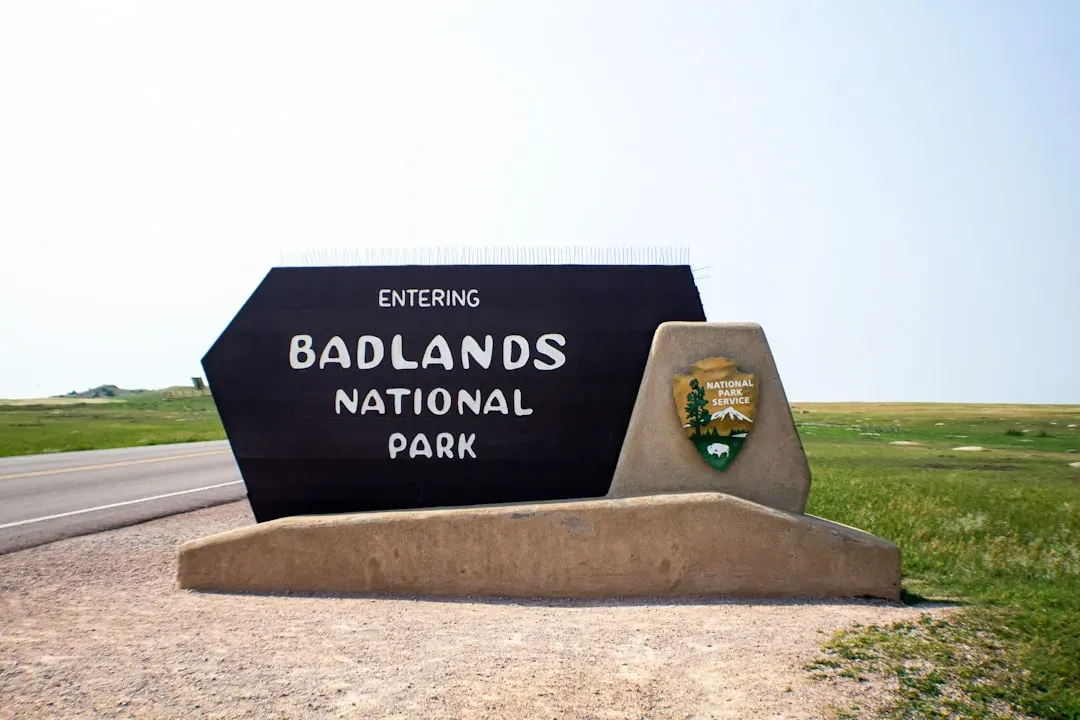
The Badlands of South Dakota look like they belong on Mars. Jagged spires, striated ridges, crumbling buttes in shades of rust and grey and cream. The Badlands are a striking landscape of eroded buttes and pinnacles, where erosion has exposed ancient sediment layers, and this geological wonder has revealed a vast array of fossils. What those fossils reveal, though, might surprise you. This place does not hold dinosaurs. It holds something just as jaw-dropping.
Badlands National Park deposits contain one of the world’s richest fossil beds, with finds of more than 250 fossil vertebrate species, including both herbivores and carnivores. Ancient horses and rhinos once roamed here, as did cat-like mammals and tiny, hornless deer. Even gigantic marine reptiles called mosasaurs once swam the shallow inland sea located in what is now arid landscape in and around the Badlands. The sheer variety is staggering. The park has the highest concentration of mammal fossils in the entire national park system.
This national park has undergone several environmental changes, from a warm, shallow inland sea to lush forest to sub-tropical open woodlands and grasslands, and mammals, vegetation, and even insects left behind evidence of their lives during the late Eocene and early Oligocene epochs. Thirty-two million years after a saber-tooth cat stalked prey on the landscape known today as Badlands National Park, a 7-year-old girl working for her Junior Ranger badge spotted the animal’s fossilized skull protruding from a hillside. That story alone tells you everything you need to know about what lies just beneath the surface of this extraordinary place.
The Bighorn Basin, Wyoming: Where Dinosaurs and Evolution Collide
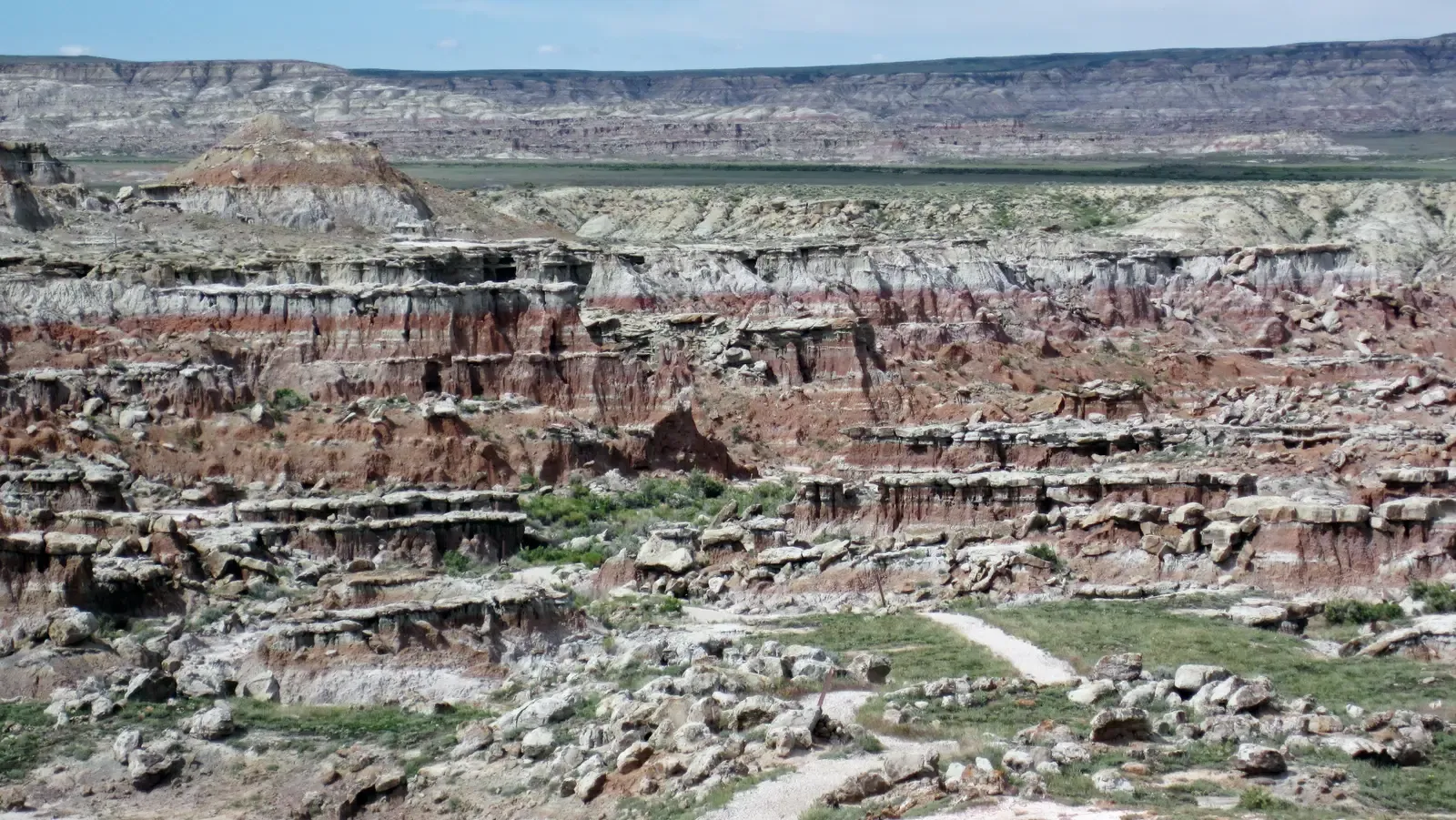
Far fewer tourists make it to the Bighorn Basin than to Yellowstone or the Grand Canyon, and that is something of a gift if you value the feeling of genuine discovery. Between 70 and 150 million years ago, the Bighorn Basin sat at a spot where rivers emptied into a shallow ocean formed during a much hotter global climate pattern, and what makes the Bighorn Basin so remarkable is that for almost the last 500 million years, almost without interruption, it had rivers or oceans covering the area. That near-continuous geological record makes it extraordinarily valuable to scientists.
There are so many amazing discoveries that are completely revolutionary to paleontology that came from the Bighorn Basin. Deinonychus, the species that established the evolutionary link between dinosaurs and birds, was found in the 1960s near Bridger. That fossil sparked a debate over whether some dinosaurs were slow, plodding, cold-blooded creatures or more dynamic, warm-blooded ones akin to modern ostriches or emus. That one discovery quite literally changed the way science understood dinosaurs. It is not an overstatement to say the Bighorn Basin rewrote the textbooks.
The process formed a giant bowl that has revealed a striated, asymmetrical, billion-year geological history running along the landscape, accessible across a multitude of varied sites, all without the need for drilling or deep digging. You do not have to be a paleontologist to feel the weight of deep time here. The Bighorn Basin’s unique geology, both during the era of dinosaurs and today, makes it a uniquely productive place for fossil hunting. Walking across its open, wind-scoured terrain feels less like hiking and more like time travel.
Conclusion: The Earth Has Always Had Stories to Tell
Every one of these geological wonders is, in the most literal sense, a library. The Grand Canyon’s layered walls, the bone-packed cliffs of Dinosaur National Monument, the hidden fossil riches of Yellowstone, the ancient mammal graveyards of the Badlands, the evolutionary revelations buried in the Bighorn Basin. Each one is telling a story that spans hundreds of millions of years, and we are still learning how to read it fully.
What strikes me most is how much remains undiscovered. Paleontologists work the same sites for decades and keep finding new things. A seven-year-old stumbles upon a saber-tooth skull on a morning hike. A single one-day expedition in Yellowstone turns up dinosaur egg fragments no one expected to find. The Earth is not done revealing its secrets. It is only done waiting for us to pay attention.
These places are not just geology. They are memory, planetary and primordial, preserved in stone. The next time you stand at the rim of a canyon or walk across a wind-eroded badland, consider what is actually beneath your feet. Which of these five geological wonders would you visit first, and what do you think is still waiting to be found?