New Zealand – Fifty-nine healthy chicks have hatched in recent weeks, offering a vital boost to the critically endangered kākāpō during one of its most successful breeding seasons in years.
From Near-Extinction to Cautious Recovery
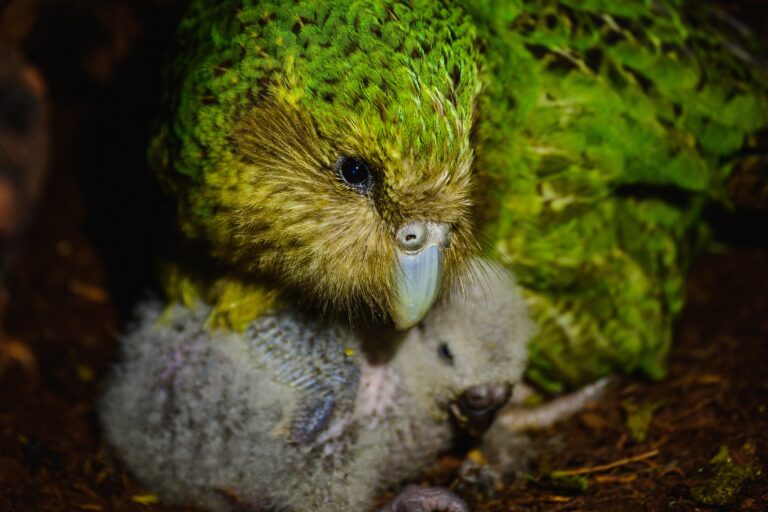
From Near-Extinction to Cautious Recovery (Image Credits: Imgs.mongabay.com)
The kākāpō population plummeted to just 51 individuals in the 1990s, pushing the unique flightless, nocturnal parrot to the verge of disappearance. Conservation efforts relocated the survivors to three predator-free islands: Whenua Hou, Pukenui, and Te Kāhahu-o-Tamatea. Today, 236 adults remain, a testament to decades of dedicated work.
The first chick of 2026, named Tīwhiri-A1-2026, emerged on February 14, breaking a four-year breeding hiatus since 2022. Remote monitoring and weekly tallies, even scribbled on a refrigerator door, track progress publicly.
Rimu Fruit Boom Sparks Rare Breeding Surge
Kākāpō reproduce only during mast years when native rimu trees produce abundant fruit, an event occurring every two to four years. This season’s heavy crop triggered widespread mating among nearly all breeding-age females. From 140 fertile eggs identified so far, 52 chicks hatched directly, with seven more confirmed remotely, totaling the 59 healthy fledglings.
Experts predicted high fruiting rates of 50-60% across the islands, potentially involving up to 87 females. Each typically raises one chick, feeding it rimu berries, though multiples occur in strong seasons. The 2019 record of 73 fledglings sets a benchmark this effort may challenge.
Precision Monitoring Sustains the Species
The Department of Conservation leads intensive oversight, fitting every bird with radio transmitters to track leks, nests, and growth. Teams intervene with incubators and hand-rearing when needed, though strategies shift toward less hands-on management for natural resilience. “Every new chick brings the species further from the brink of extinction,” said Deidre Vercoe, operations manager for kākāpō recovery. “There’s always a sense of hope and optimism for the future.”
Partners like Ngāi Tahu and Meridian Energy provide crucial support, from infrastructure to funding. Ngāi Tahu views the kākāpō as a taonga, or treasure, emphasizing cultural restoration. “Success is not just about the number of new chicks,” Vercoe noted. “We want to create healthy, self-sustaining populations of kākāpō that are thriving, not just surviving.”
Reintroduction Dreams Face Ongoing Hurdles
Not all chicks will fledge; survival demands vigilant protection from weather and disease. Long-term plans target reintroduction to former habitats like Rakiura, pending predator eradication. “One of our future aspirations through Predator Free Rakiura is to return the kākāpō back to its original home,” stated Tāne Davis of Te Rūnanga o Ngāi Tahu.
Reduced interventions this season, including unnamed chicks at Ngāi Tahu’s request, signal a maturing program. As numbers climb toward 300, focus turns to viable wild populations across New Zealand’s landscapes.
Key Takeaways
This breeding milestone underscores human-wildlife partnership’s power against extinction. What do you think about these conservation triumphs? Tell us in the comments.