There’s something almost dreamlike about picturing a world where giants ruled every corner of the Earth, from scorching deserts to lush, steaming river systems. Long before humans arrived, dinosaurs carved out their place in environments so dramatically different from our own that they might as well belong to another planet. Dinosaurs thrived for over 160 million years in Mesozoic ecosystems, displaying diverse ecological and evolutionary adaptations.
What’s genuinely stunning is that these creatures didn’t just survive in one type of habitat. They conquered nearly all of them. Just like modern ecosystems have evolved to thrive in a particular temperature range today, dinosaurs evolved for their environment during the Mesozoic Era, about 252 to 66 million years ago. The Earth was much warmer back then, with no polar ice caps and higher sea levels, creating a range of ecosystems and living environments significantly different from the ones we see now. So buckle up, because you’re about to travel back to six of the most astonishing ancient worlds these creatures ever called home.
The Dense Jurassic Forests: A Green Kingdom of Giants
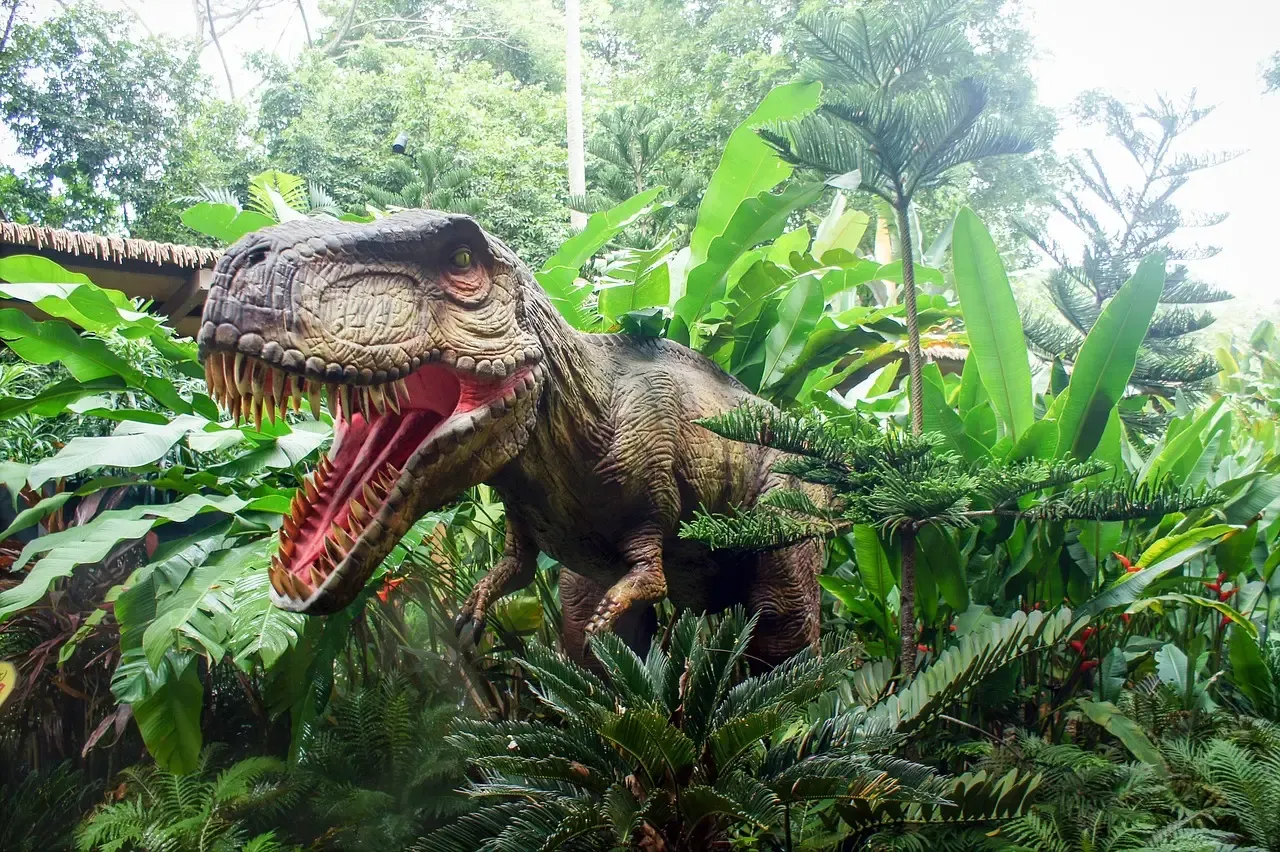
Picture walking into a forest so thick with towering conifers and ferns that the sky barely peeks through the canopy above you. That was the daily reality for countless dinosaur species during the Jurassic Period. The lush forests of the Jurassic period played a significant role in shaping the evolution of dinosaurs, dominated by a variety of coniferous and fern-like plants, creating a dense and diverse ecosystem. It wasn’t just a backdrop. It was a living, breathing trap for the unwary and a paradise for those adapted to thrive within it.
Forest ecosystems were home to herbivorous dinosaurs such as the Stegosaurus, while predators also used to hide among the plants and leaves. Think about that for a moment. These forests were both pantry and battlefield at the same time. The dense vegetation provided cover from predators and allowed dinosaurs to lay their eggs in hidden nests, which likely played a crucial role in the reproductive success and survival of many dinosaur species. Honestly, there’s something deeply clever about that, using the very thickness of the forest as your own personal shield.
The Vast Floodplains: Where Herds and Hunters Roamed Free
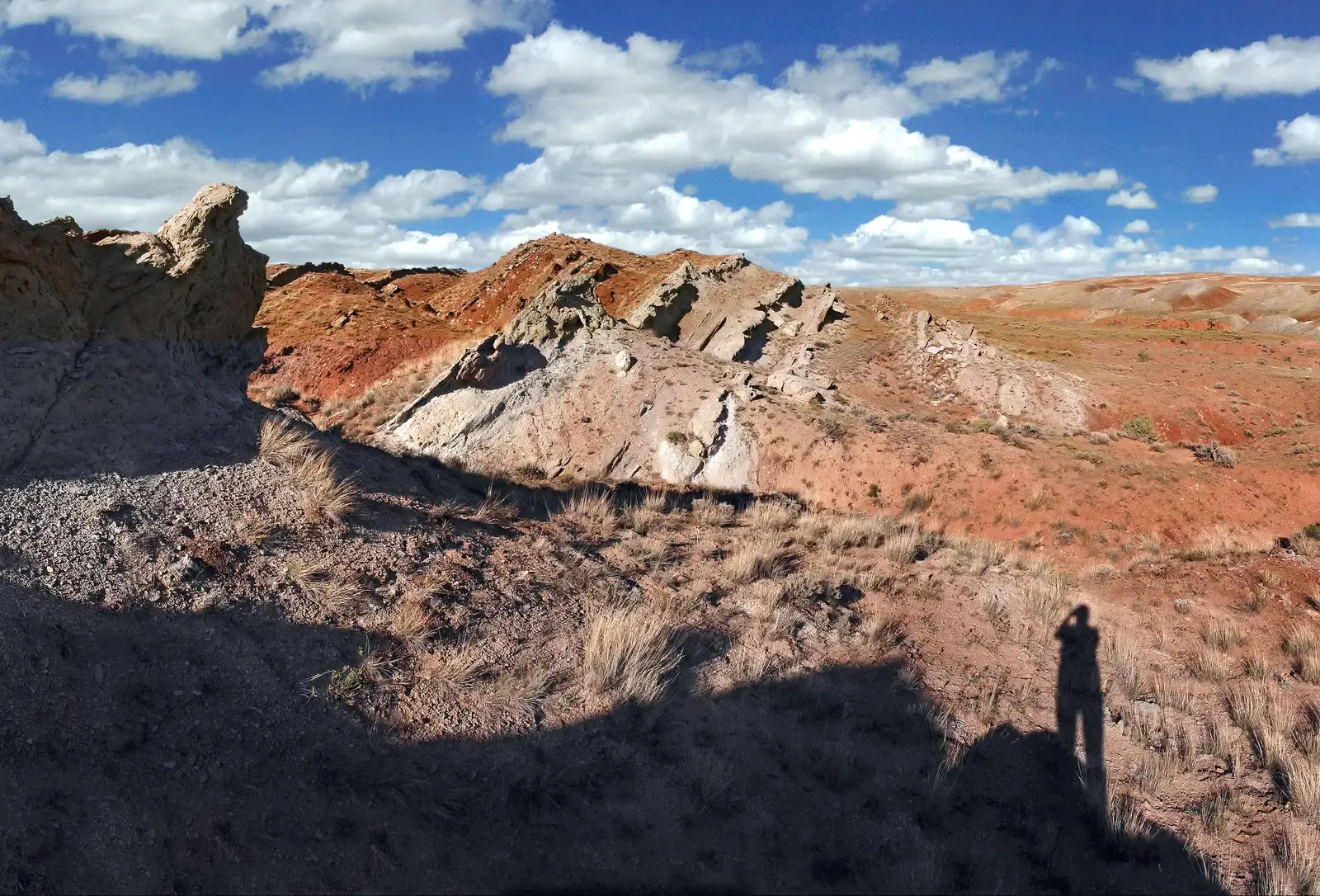
If you think of the African Serengeti today, with its endless plains and migrating herds, you have a rough idea of what floodplain environments during the Mesozoic looked like. On a grander, wilder scale, of course. Most dinosaur fossils are known from lowland environments, usually floodplains, deltas, lake beds, stream bottoms, and even some marine environments, where their bones apparently washed in after death. These open landscapes were critical hubs of dinosaur activity.
Herds of plant-eating dinosaurs such as Ceratopsians, Hadrosaurs, and Ornithopods, as well as meat eaters such as Velociraptors and Tyrannosaurs, would roam extensive flatlands looking for food. The floodplains were not a peaceful meadow. They were a constant, high-stakes hunt. Skeletons of Deinonychus unearthed in Montana were mixed with fragmentary bones of the herbivore Tenontosaurus, and this evidence strongly suggests that Deinonychus hunted in packs. Pack hunting on an open plain. Let’s be real, that’s genuinely terrifying to imagine.
The Steamy Cretaceous Swamps: A World of Mud, Mangroves, and Monsters
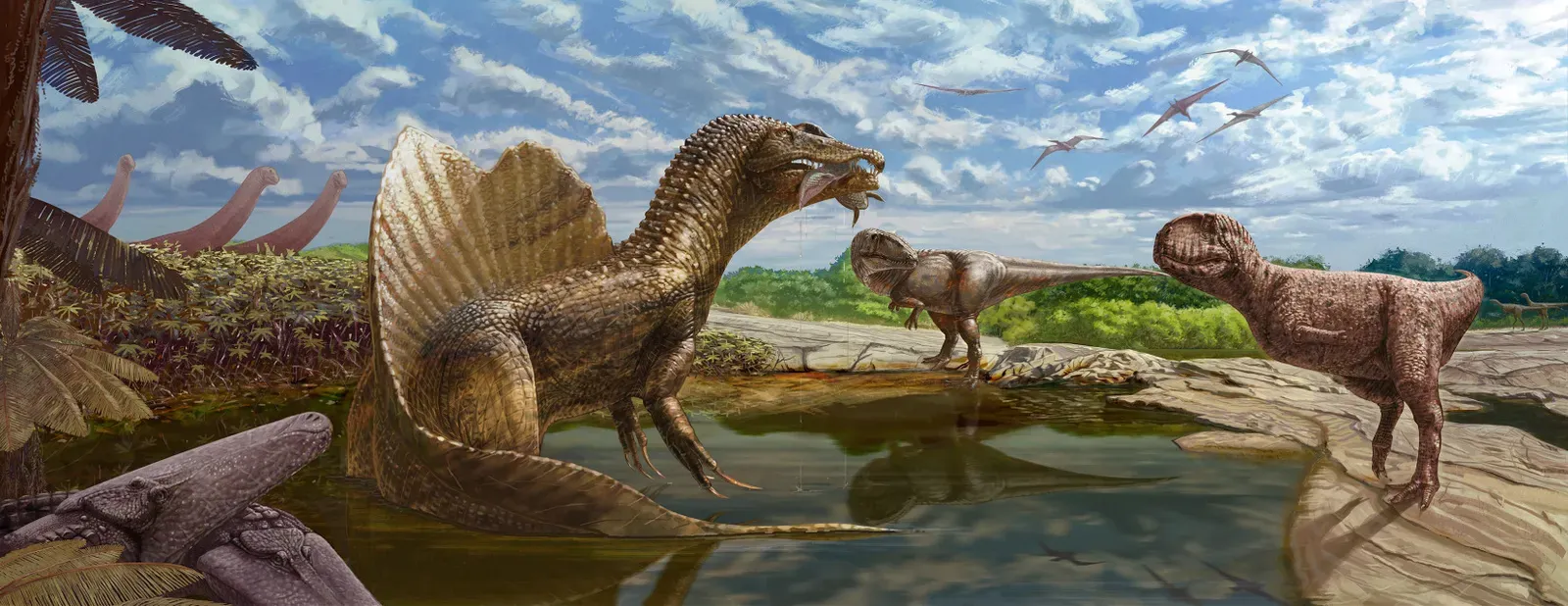
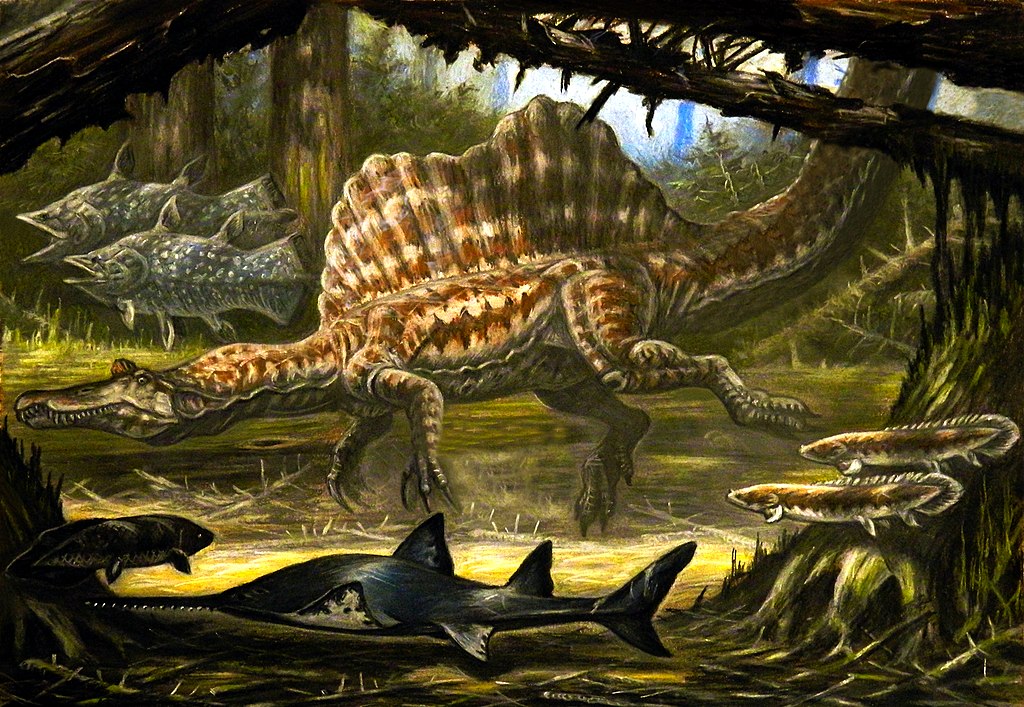
Swamps and river deltas are ideal places for the preservation of fossils. Steamy swamps existed along the edges of the Cretaceous continents, where wet-loving trees such as swamp cypresses dominated these areas, providing the perfect habitat for fish-eating dinosaurs such as Spinosaurus. These weren’t the quiet wetlands you might picture. They were dense, murky, and teeming with life at every turn.
Spinosaurus lived in a humid environment of tidal flats and mangrove forests alongside many other dinosaurs, as well as fish, crocodylomorphs, lizards, turtles, pterosaurs, and plesiosaurs. It was basically a prehistoric rush-hour traffic jam of predators. The coexistence of so many large carnivores suggests strong ecological partitioning, with each predator exploiting a different food source or habitat. Within this crowded and dangerous ecosystem, Spinosaurus appears to have occupied a unique role, with anatomy ideally suited for exploiting aquatic prey that other theropods could not efficiently access, potentially reducing direct competition with terrestrial predators while taking advantage of an abundant food source.
The Ancient Desert Badlands: Survival at Its Most Brutal
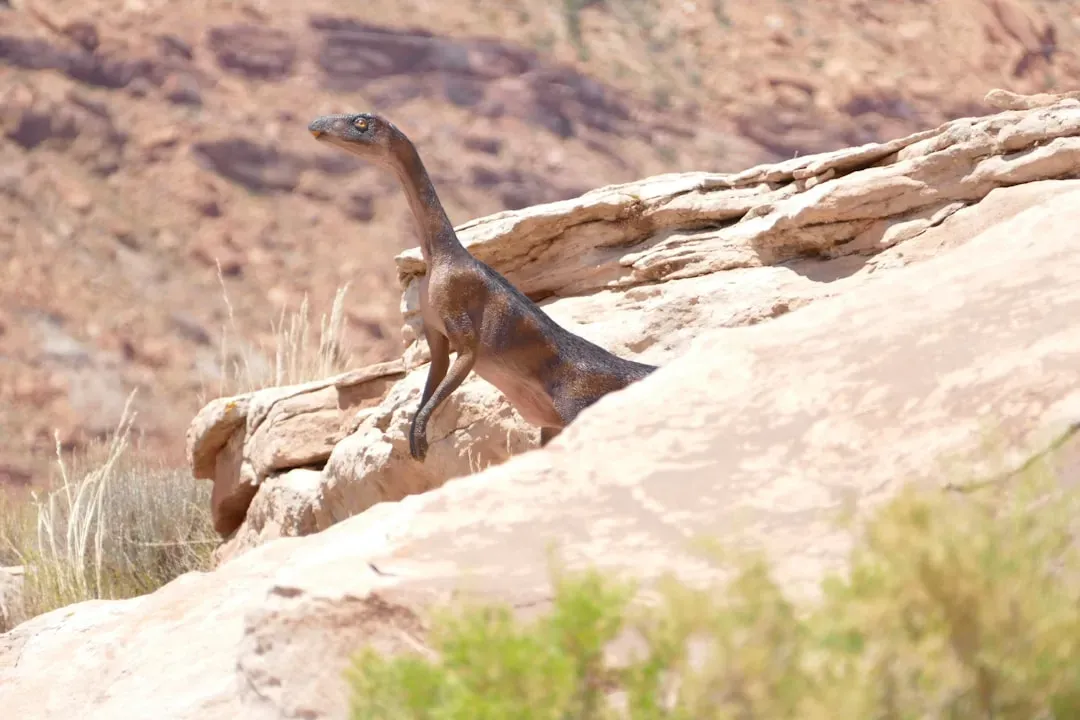
Here’s the thing most people don’t realize: dinosaurs weren’t only creatures of lush, tropical paradise. Some of them lived in environments that would challenge even the toughest desert animals alive today. Dinosaurs were not limited to lush forests and verdant landscapes. They also thrived in arid environments, and evidence suggests that some dinosaurs were well-adapted to desert habitats. The idea that a giant reptile survived in the Mesozoic equivalent of the Sahara is both surprising and deeply impressive.
Dinosaurs took on challenging desert terrain and conditions, with the Protoceratops, Oviraptor, and Velociraptor inhabiting the Gobi Desert during the Mesozoic Era. What makes this environment even more dramatic is what the fossils tell us about life and death within it. An entwined fossil of a Protoceratops fighting a Velociraptor was preserved by a violent sandstorm during the Late Cretaceous period. You couldn’t script anything more cinematic. Two ancient rivals, locked in mortal combat, frozen in time by a wall of sand. The open vistas of the desert would have been ideal for long-legged running dinosaurs such as Gallimimus.
The Triassic Riverbanks: Where It All Began
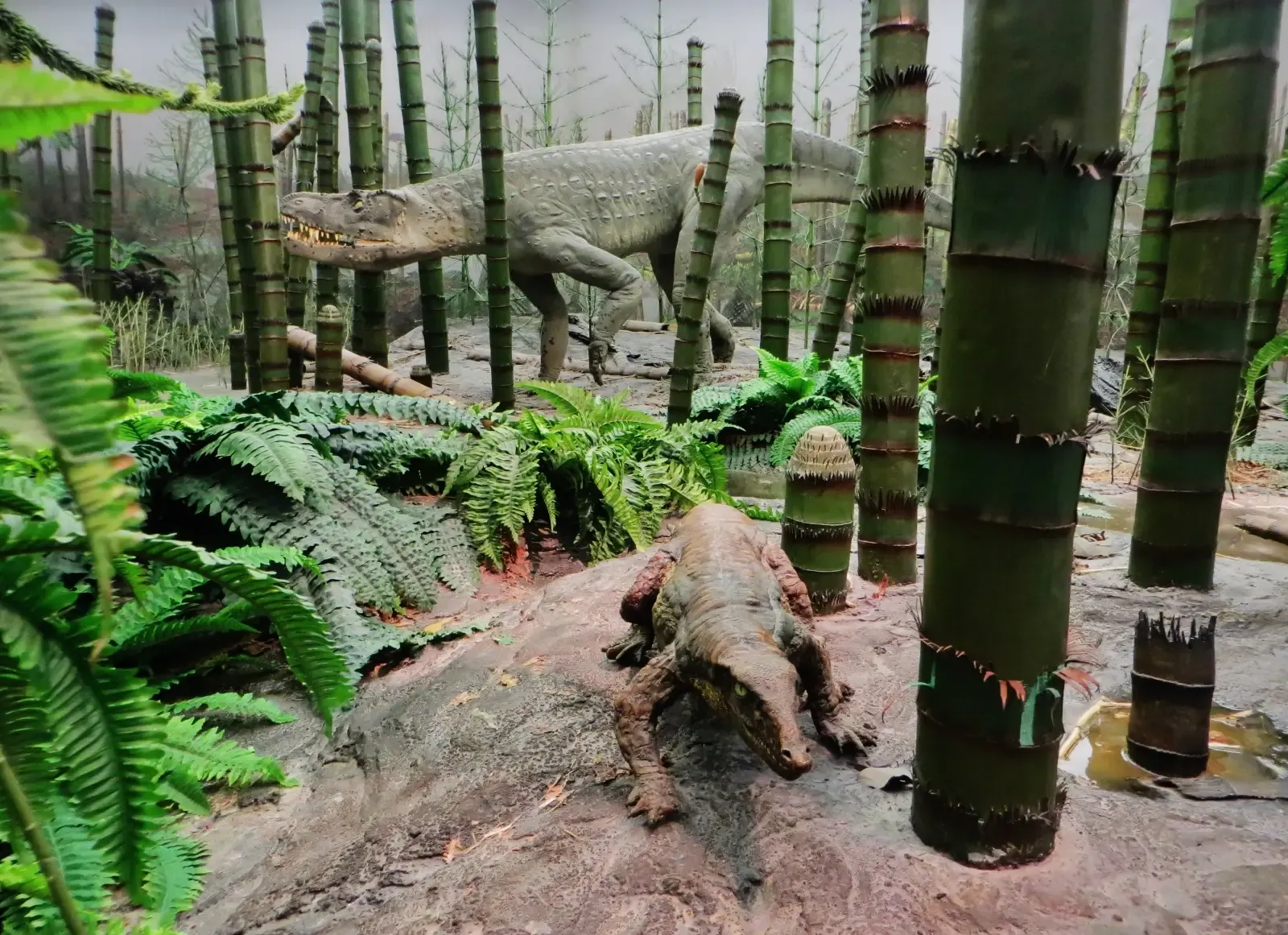
During the Triassic, all the landmasses of the world were joined together, forming the single supercontinent Pangaea. Because the continent was so huge, most inland areas were a long way from the ocean, and there were extensive deserts, with only around the edges of the continent enough moisture for any vegetation. It’s wild to think that dinosaur life as we know it essentially bootstrapped itself from the edges of this colossal, largely barren landmass.
Plant and animal life was most common along the banks of rivers near the sea. The river banks were covered with ferns, and the shallow water supported reed beds of horsetails. Early carnivorous dinosaurs such as Herrerasaurus hunted in these thickets. Think of these riverbanks as the cradle of the dinosaur world. Everything that came after, every T. rex, every Brachiosaurus, every feathered theropod, can trace its lineage back to something that survived in these narrow green ribbons of life along a Triassic river. One of the most primitive dinosaurs, the Herrerasaurus, had powerful hind limbs and a long tail held straight for balance, and as an agile hunter, it had short front limbs designed to capture prey.
The Cretaceous Wetlands of Europe: A Flooded World Hidden in Plain Sight
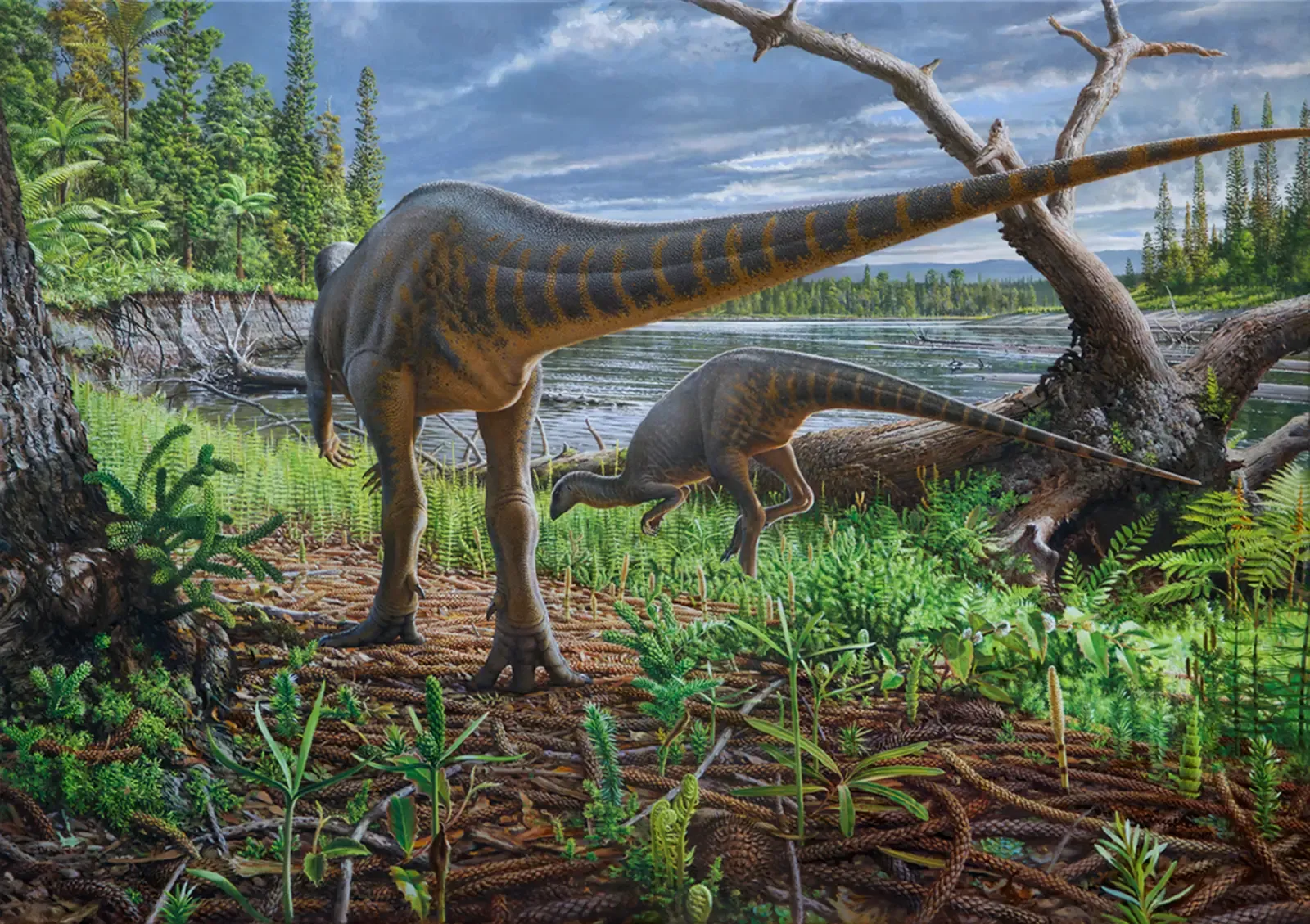
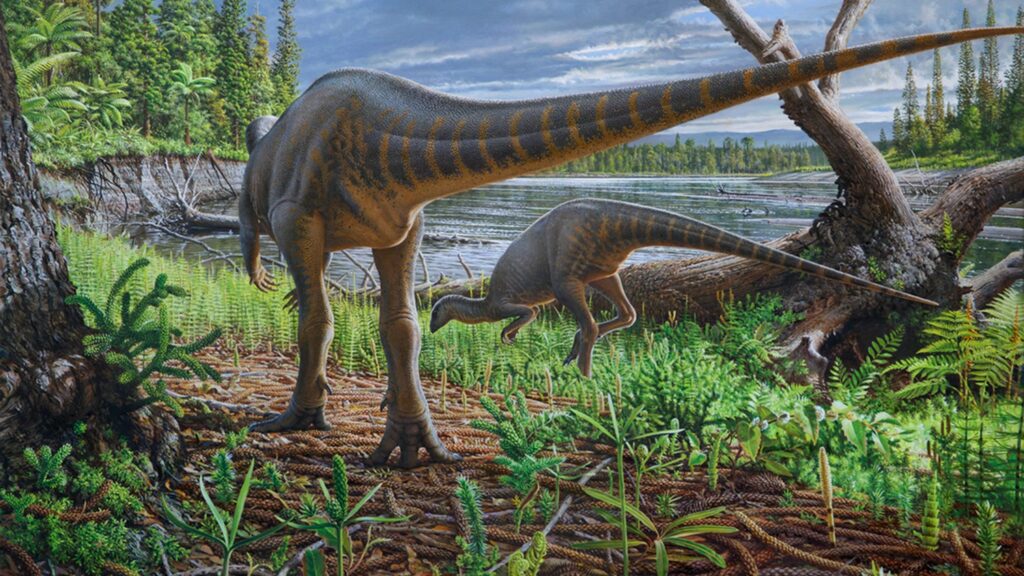
You might not immediately picture Western Europe as a hot spot for Mesozoic drama, but during the early Cretaceous Period, much of it was covered in a system of warm, shallow wetlands that buzzed with life. Water from hills and mountains would flow down to create soggy low-lying plains. These wetlands covered most of Europe during the early Cretaceous period and were inhabited by herbivores such as Iguanodon, Polacanthus, and Hypsilophodon. These weren’t isolated lakes. They were vast, interconnected flood systems that essentially made Europe a dinosaur archipelago.
By the Cretaceous, flowering plants had begun to evolve, and dinosaurs with efficient chewing mechanisms, such as Corythosaurus, could both browse from trees and graze close to the ground. This was a world in ecological transformation. The landscape was shifting, plants were evolving, and so were the creatures feeding on them. The rise of angiosperms, or flowering plants, contributed greatly to the dramatic transformation of the Earth’s biodiversity and landscapes. As flowers evolved, so did insects, bees, birds, and other land-dwelling animals. It was a domino effect of evolution, all set in motion across these waterlogged European plains.
Conclusion: A World More Vivid Than You Ever Imagined
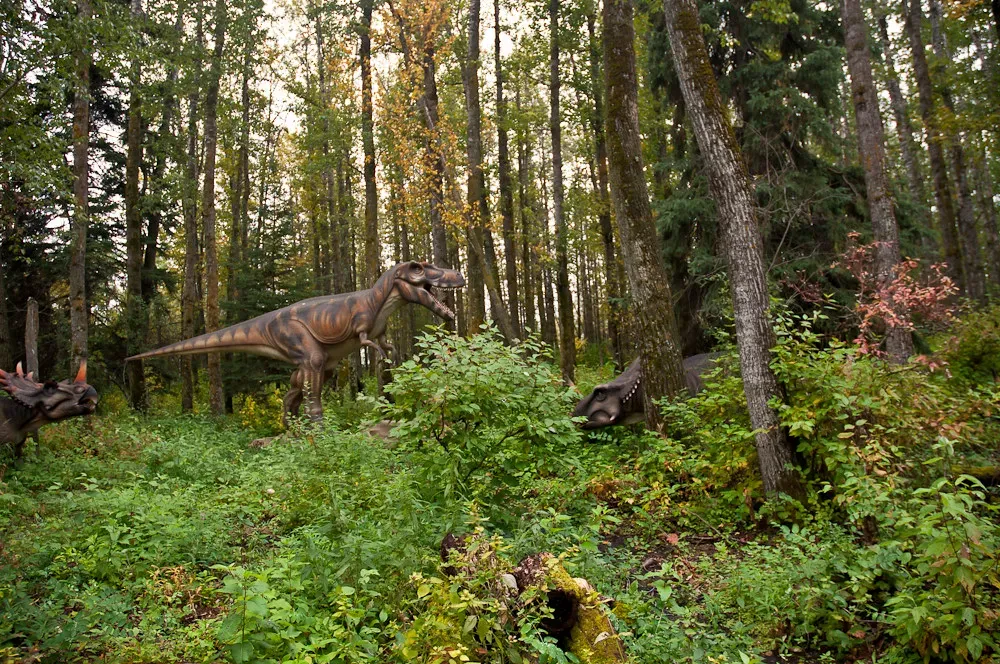
When you step back and look at all six of these environments together, something remarkable comes into focus. Dinosaurs weren’t creatures of just one world. They were the masters of many. From Triassic riverbanks to steaming Cretaceous swamps, from European wetlands to Gobi Desert sandstorms, they filled every available niche with astonishing adaptability. Their ecology was shaped by large-scale climatic and biogeographic changes, with factors including temperature fluctuations and the breakup of Pangaea influencing species richness, ecological diversity, and biogeographic history.
It’s hard not to feel a little humbled by all of this. We talk about adapting to change like it’s a modern challenge, but dinosaurs wrote the original rulebook on it across hundreds of millions of years. Dinosaurs were remarkable creatures that adapted to live in nearly every environment on Earth, from dense jungles to open plains, deserts to coastal regions, thriving in habitats that provided them with the food and resources they needed to survive. The real question worth sitting with is this: which of these six ancient worlds would you have wanted to witness for yourself, and which one would have sent you running the fastest?