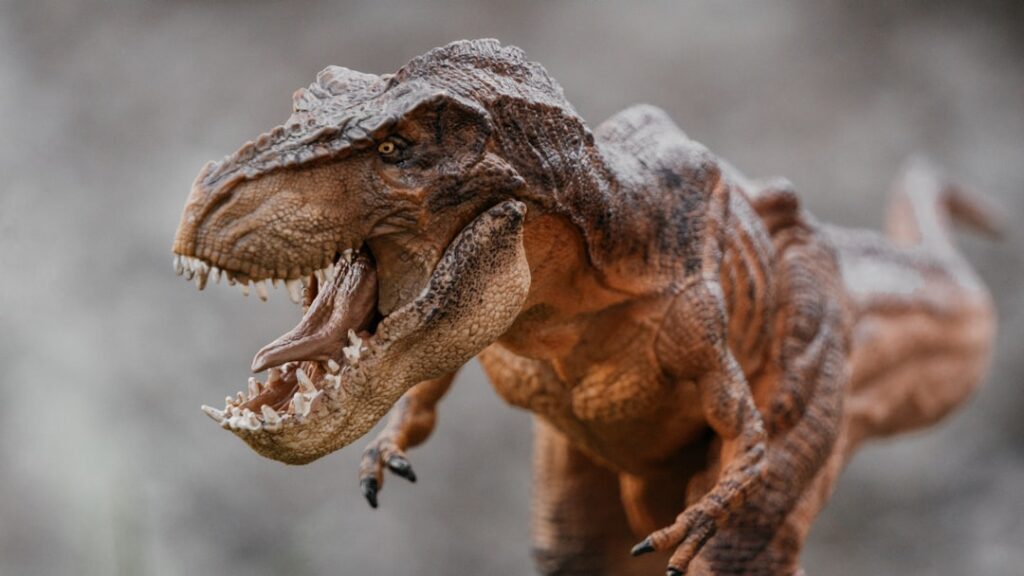
We’ve all grown up thinking of Tyrannosaurus rex as the ultimate prehistoric nightmare. The king of the dinosaurs. The apex predator that ruled everything with an iron jaw. Pop culture has practically crowned this giant as untouchable, ripping through Jurassic landscapes with nothing standing in its way.
Here’s the thing though. The Cretaceous wasn’t some safe kingdom where T-Rex lounged around unchallenged. There were others out there, equally terrifying, sometimes even more brutal. Some of them were armored tanks with bone-crushing weapons. Others were massive carnivores built for speed and lethality. What would happen if these prehistoric monsters crossed paths? Who would actually walk away? Let’s get into it.
Spinosaurus: The River Monster That Fought Differently
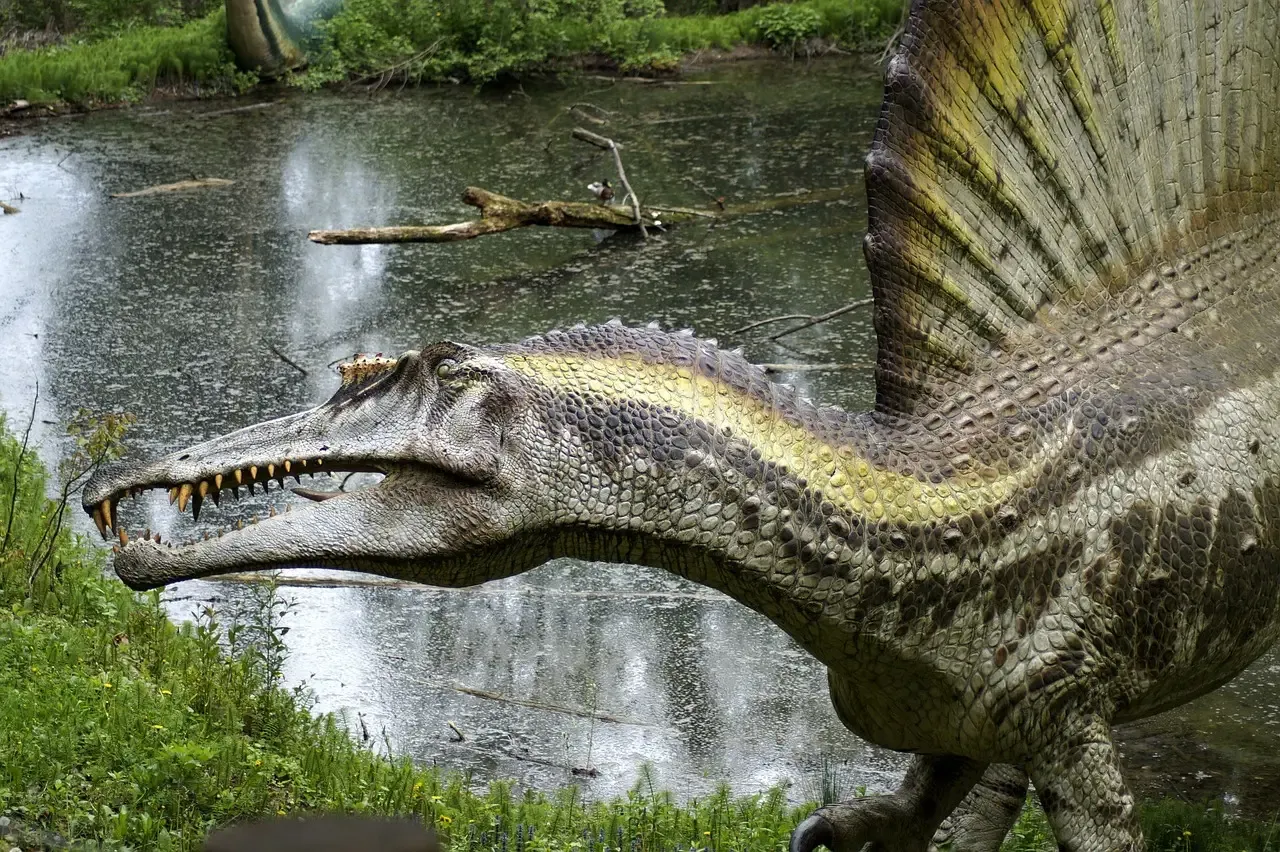
Spinosaurus was the largest carnivorous dinosaur, and that alone should make you pause. Weighing around 31,000 pounds and standing roughly 23 feet tall, this creature could reach 60 feet in length. Unlike T-Rex, which hunted on land, Spinosaurus ruled both water and shorelines, making it a different kind of threat altogether.
With a crocodile-like body adapted for swimming and a body length of about 20 meters, Spinosaurus was ferocious. Its claws were massive, designed to snag large fish and tear into prey that wandered too close to rivers. T-Rex had the bite advantage, no question, but Spinosaurus had reach, size, and an environment where the tyrant king would struggle. If the battle happened near water, things could get messy fast.
Giganotosaurus: The Southern Rival Built for Giants
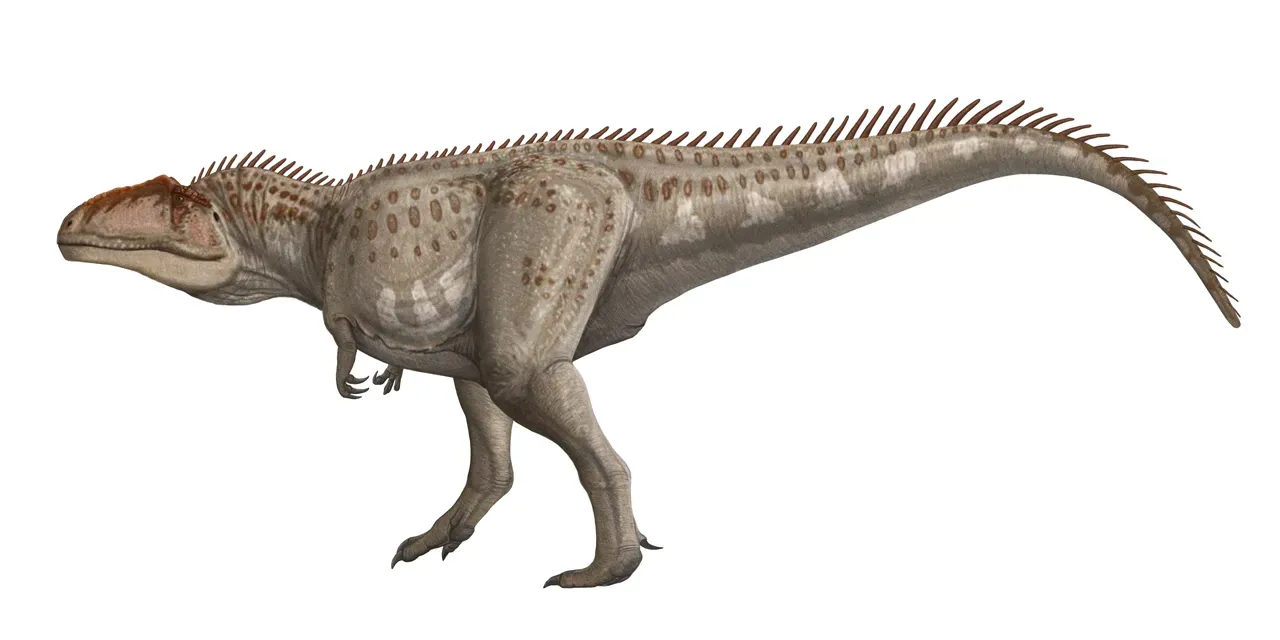
Let’s be real, Giganotosaurus is the dinosaur that makes T-Rex fans nervous. This predator may have stretched up to 43 feet in length, edging ahead of T-Rex which maxed out closer to 40 feet. Giganotosaurus was even heavier still, maxing out around 14 tons.
Some scientists believe Giganotosaurus was even larger than T-Rex, large enough to swallow a human whole. It likely fed on young sauropods, dinosaurs that could be ten times its own size. Giganotosaurus had a long, slender skull built for slicing meat, with sharp teeth better suited for slashing than crunching. While Giganotosaurus may have been the larger animal, T-Rex had the advantage in bite force and mass, but if these two were dropped into a pit, many paleontologists believe T-Rex would come out on top. Still, on a good day, the southern giant could absolutely pull off a win.
Triceratops: The Horned Tank That Never Backed Down
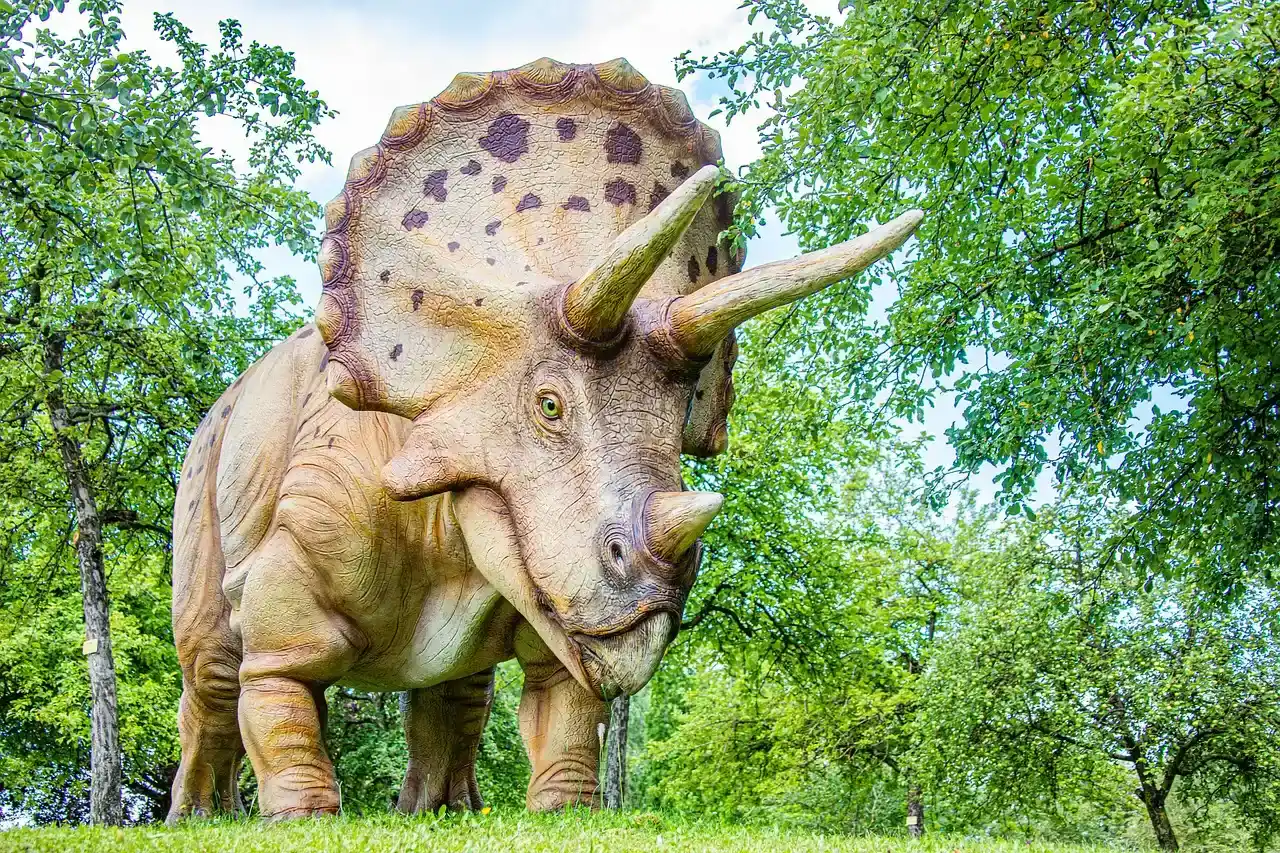
Now we’re talking about an herbivore that could genuinely wreck a T-Rex. Honestly, people underestimate how dangerous Triceratops was. Members of the Triceratops genus weighed somewhere between 12,000 and 20,000 pounds. The horns were a foot wide at their base and tapered into mean points that could skewer a T-Rex.
A charging Triceratops could bury its horns in a Tyrannosaurus rex, puncturing vital organs and killing it. The entire gargantuan skull was attached to the body via a ball joint, allowing Triceratops to swivel its head around with remarkable speed. Paleontologist Peter Dodson estimated that in a battle against a bull Triceratops, the Triceratops had the upper hand and would successfully defend itself by inflicting fatal wounds using its sharp horns. The herbivore doesn’t always win, but it had the tools to make T-Rex think twice.
Ankylosaurus: The Walking Fortress With a Wrecking Ball Tail
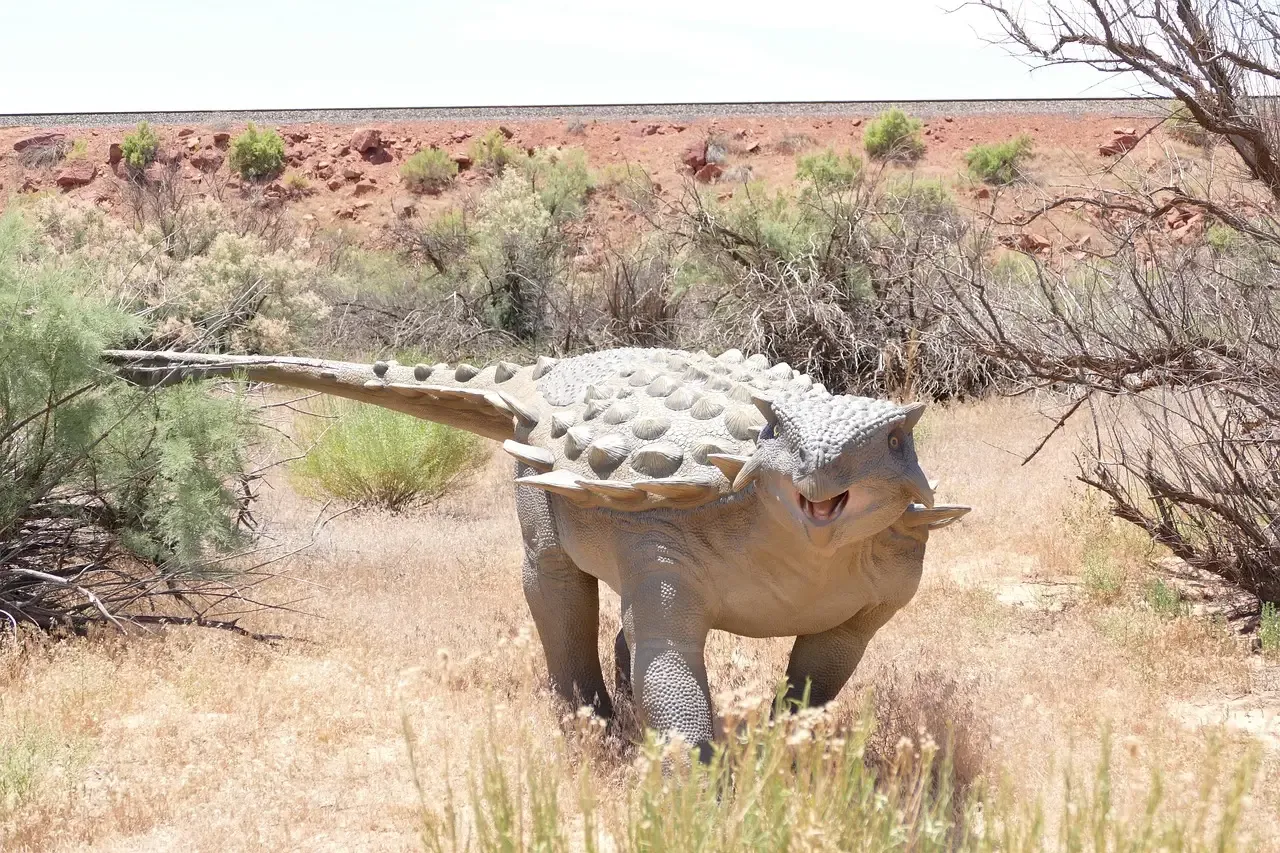
Imagine trying to bite into a dinosaur covered head to toe in bony armor, even on its eyelids. That’s Ankylosaurus. The tail club of Ankylosaurus seems to have been an active defensive weapon, capable of producing enough of an impact to break the bones of an assailant.
Having dimensions of 1.7 meters height at the hips, 6 to 8 meters in length, and a weight of 4.8 to 8 metric tons, Ankylosaurus was one of the largest and heavily armored dinosaurs of its time. The fat bony tail club of Ankylosaurus proved another formidable opponent that could easily break bone with direct impact, and for large carnivores like Tyrannosaurus Rex, a broken bone could easily mean death by starvation or infection. One solid swing to T-Rex’s leg, and the predator would be crippled. Game over.
Carcharodontosaurus: The Shark-Toothed Nightmare From Africa
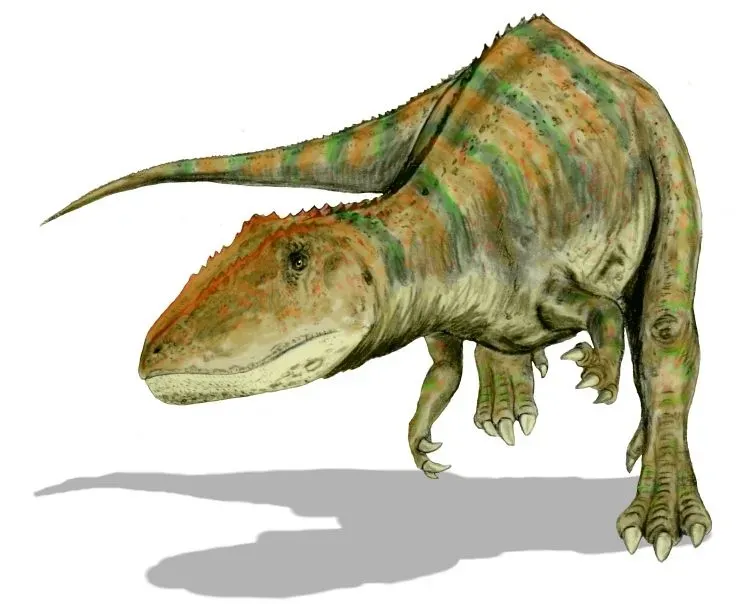
Carcharodontosaurus was estimated to be 12 to 12.5 meters in length and approximately 5 to 7 metric tons in body mass, making it one of the largest known theropod dinosaurs. This African giant had teeth like a great white shark, serrated and built for slicing through flesh.
Where T-Rex was rather heavy-bodied, bulky, and slow, Carcharodontosaurus was more streamlined and agile, with more flexible necks than Tyrannosaurus. Carcharodontosaurus was a massive, fearsome predator with a robust build, and its formidable teeth and powerful jaws would have made it one of the top predators of its time. If it came down to a fight, this wasn’t a guaranteed T-Rex victory. Speed, agility, and those slashing teeth could tip the scales.
Alamosaurus: The Titan That Crushed by Sheer Size Alone
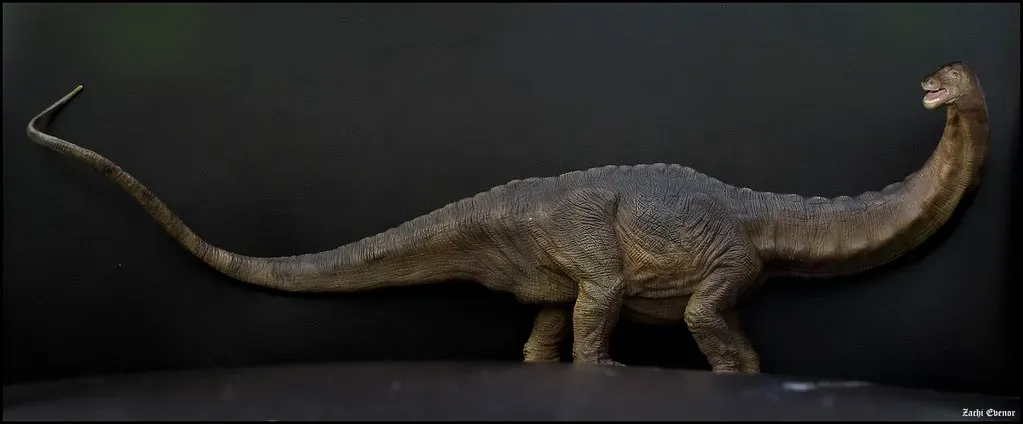
Sometimes the fight isn’t even fair. The largest specimen of Alamosaurus sanjuanensis suggested the dinosaur measured about 98 feet long, stood upwards of 25 feet tall, and weighed nearly 100,000 pounds. This wasn’t a predator. It was a sauropod, a plant-eater, but size matters when you’re that massive.
Alamosaurus lived alongside T-Rex during the waning days of the Cretaceous. One accidental stomp from this giant, and even the tyrant king would be done. T-Rex could hunt young or weak individuals, but taking on a healthy adult Alamosaurus? That’s a death wish. The sheer mass difference makes this one of the most one-sided matchups imaginable.
Conclusion
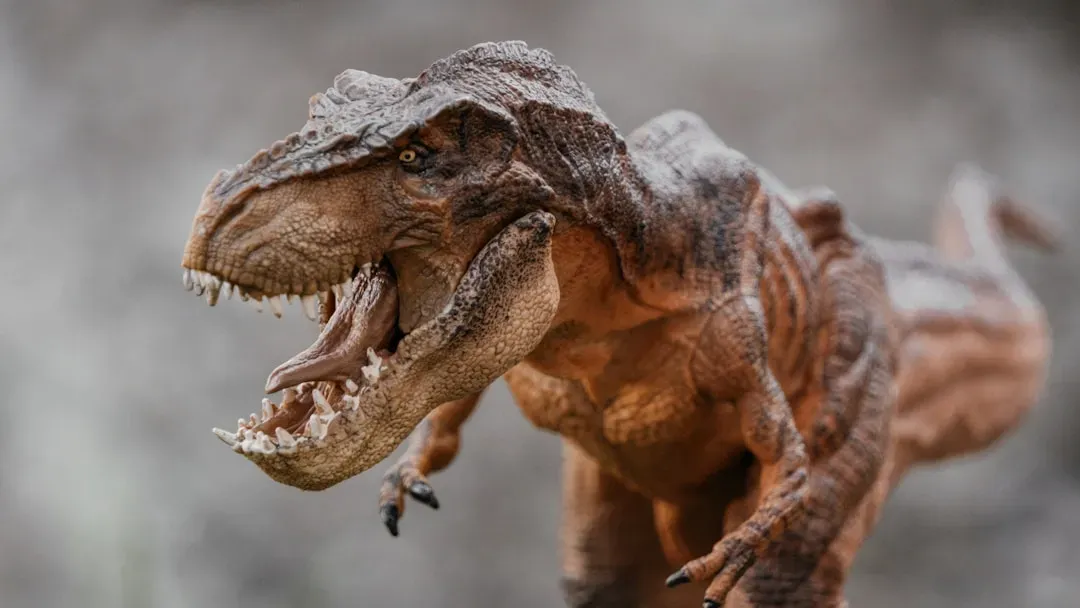
T-Rex earned its reputation as one of the most fearsome predators to ever walk the Earth. The crushing bite, the thick build, the raw power. All of it is real, all of it terrifying. Still, the Cretaceous was a battlefield filled with other giants, armored herbivores, and equally deadly carnivores. Some had weapons that could shatter bone. Others had size that made resistance pointless. A few had agility and teeth designed to bleed you out slowly.
So was T-Rex truly invincible? Not quite. It had rivals, competitors, and threats that could hold their own or even come out on top under the right conditions. The prehistoric world wasn’t a kingdom with one ruler. It was a brutal arena where survival meant adapting, fighting, and sometimes just avoiding the wrong opponent at the wrong time. What do you think? Could any of these ancient beasts have actually brought down the king? Tell us in the comments.