You’ve probably heard about dinosaurs like T. rex and Triceratops, but have you ever wondered about the creatures that roamed the land long before dinosaurs even existed? New Mexico holds secrets from eras that stretch back hundreds of millions of years. While massive dinosaurs often steal the spotlight, the state’s ancient past is filled with remarkable reptiles that predate them by tens of millions of years.
These lesser-known creatures tell a story of evolution, adaptation, and survival through some of Earth’s most dramatic climate changes. From tree-climbing predators to armored herbivores, New Mexico’s fossil record reveals a world that would seem utterly alien to us today. Let’s dive into six incredible facts about these ancient reptiles that time almost forgot.
The Dawn Climber That Rewrote Reptile History
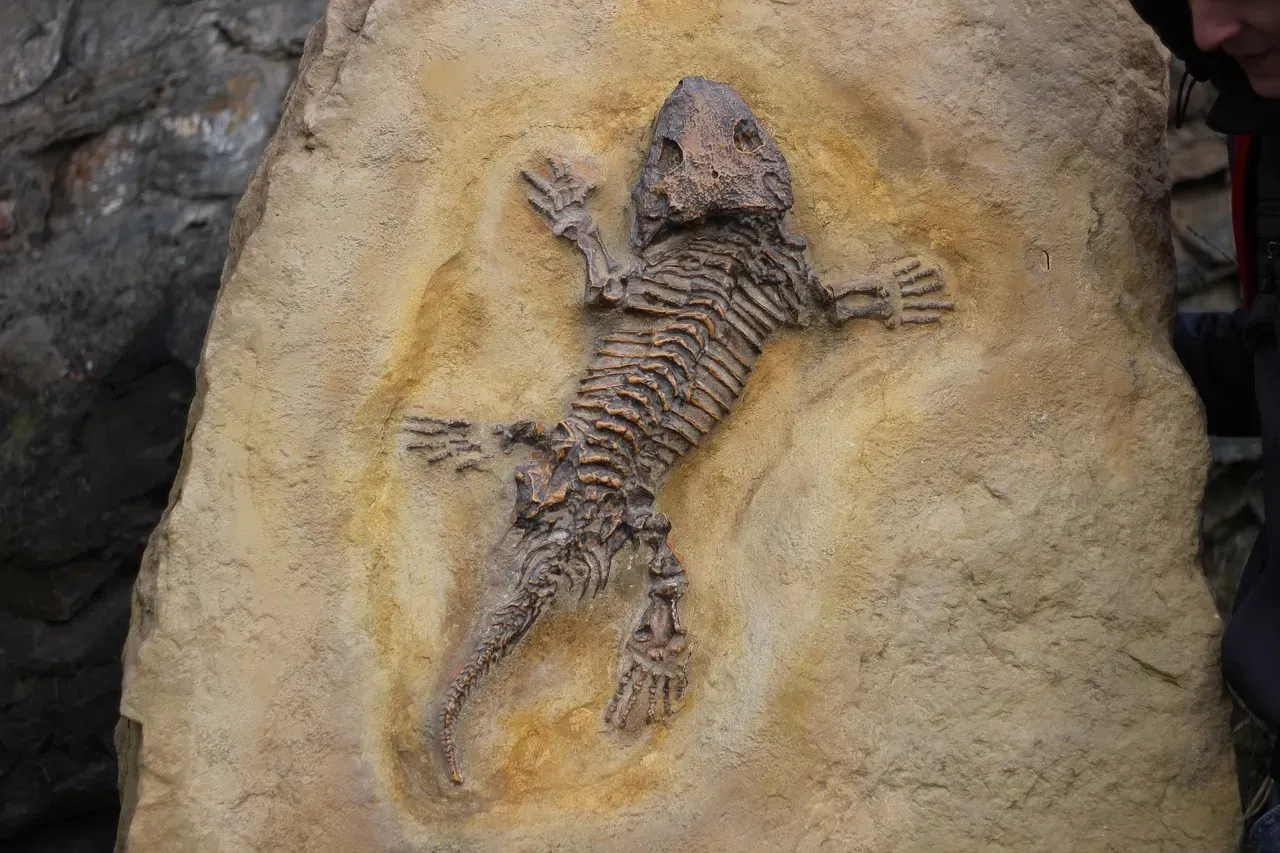
Eoscansor, meaning “dawn climber,” was discovered in New Mexico and represents a groundbreaking find in paleontology. This discovery pushed back our understanding of when reptiles began climbing by at least 15 million years, as the oldest previously known climbing reptile was from rocks in Germany dating to roughly 290 million years ago. What makes this even more remarkable is that Eoscansor lived during the Pennsylvanian Period, a time when scientists thought reptiles were far less diverse in their behaviors.
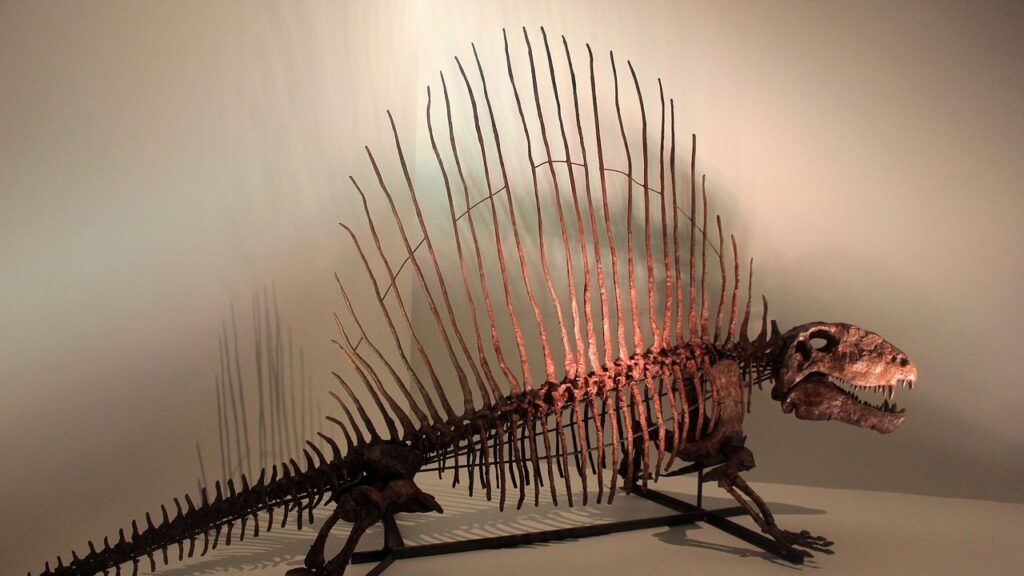
Many anatomical features from the fossil skeleton, especially the limbs, hands, and feet, indicate that it almost certainly climbed trees, and its teeth indicate it was a predator that likely ate insects. This reptile is a eupelycosaur, a group of extinct reptiles that includes the familiar sail-backed reptile Dimetrodon, which is often mistaken for a dinosaur. Think about it: while other reptiles were still figuring out life on the ground, this tiny creature was already mastering the treetops.
Footprints Frozen in Time for 280 Million Years
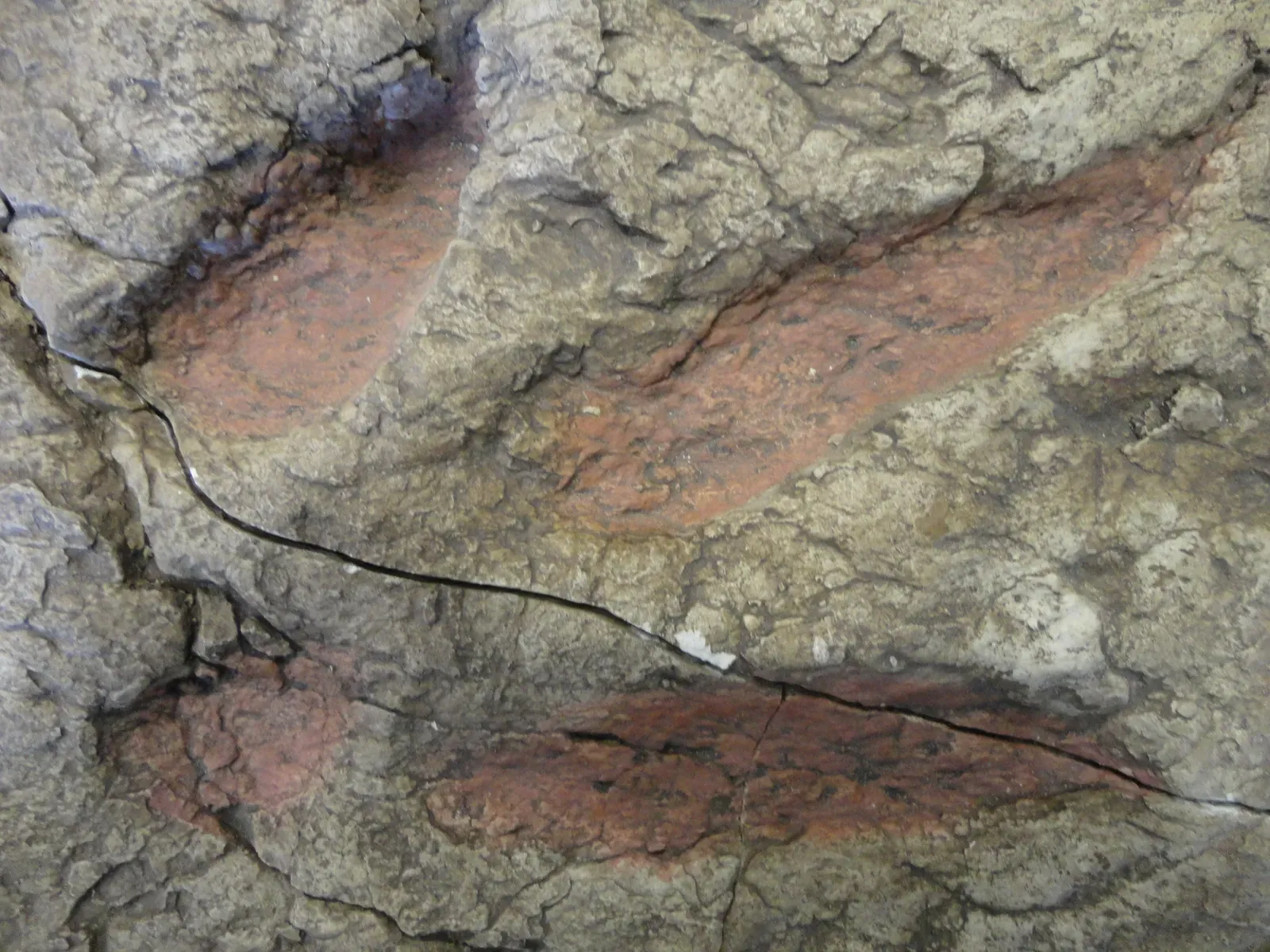
The Prehistoric Trackways National Monument includes a major deposit of Paleozoic Era fossilized footprint megatrackways within approximately 5,280 acres, containing footprints of numerous amphibians, reptiles, and insects dating back 280 million years. These aren’t just random marks in stone. The site contains one of the most scientifically-significant Early Permian track sites in the world.
Footprints, body impressions, burrows, drag marks from various parts of the body like the tail and belly, and even marks left by swimming just above the bottom are preserved in fine detail, including traces left by ancient arthropods, crustaceans, amphibians, and reptiles. Let’s be real, finding bones is impressive, but discovering the actual footprints of creatures walking around before dinosaurs existed? That’s something else entirely. The formations were deposited near the sea shore in tidal flat environments, but many of the species represented were probably associated with fresh water.
Dimetrodon: The Sail-Backed Predator That Wasn’t a Dinosaur
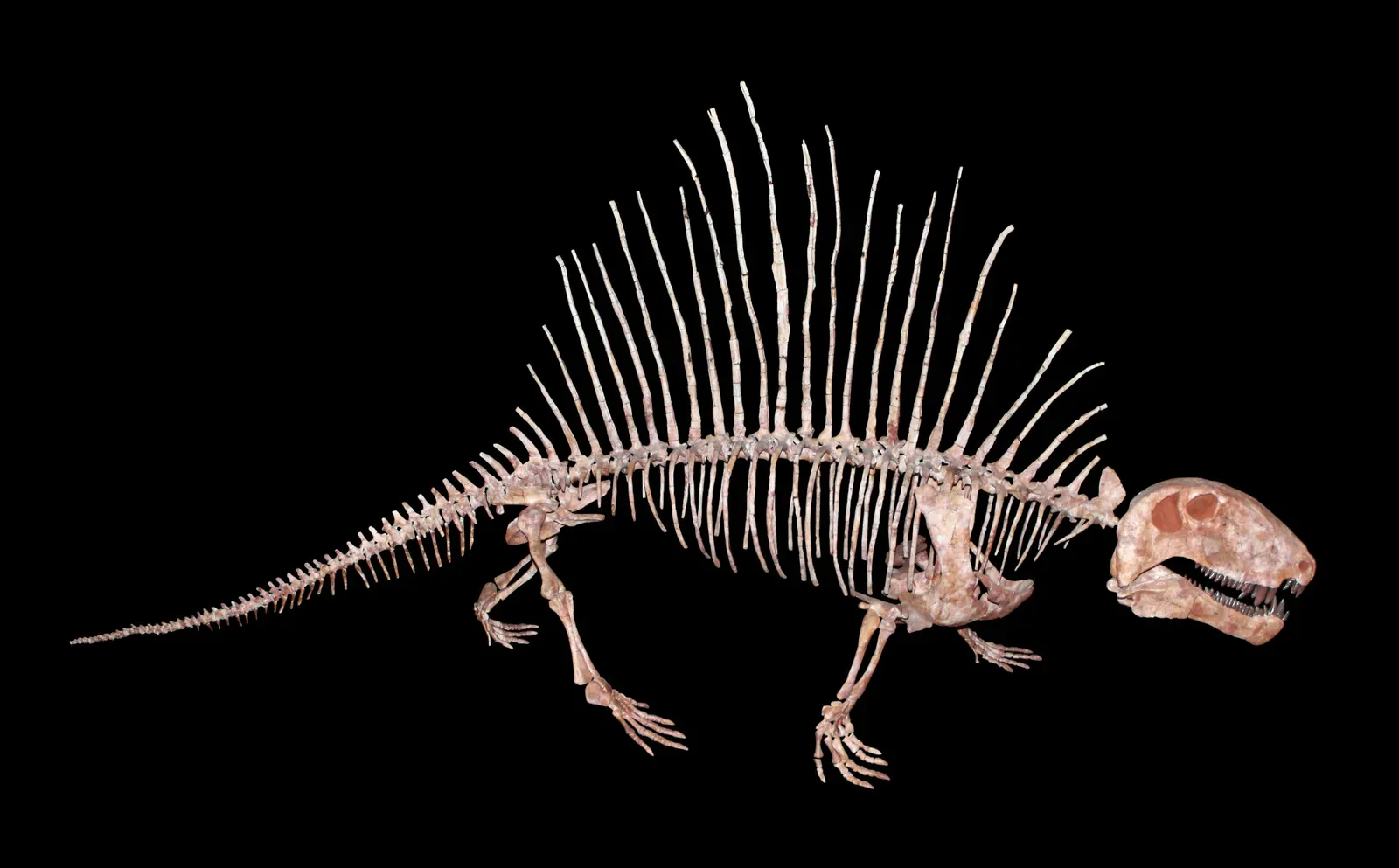
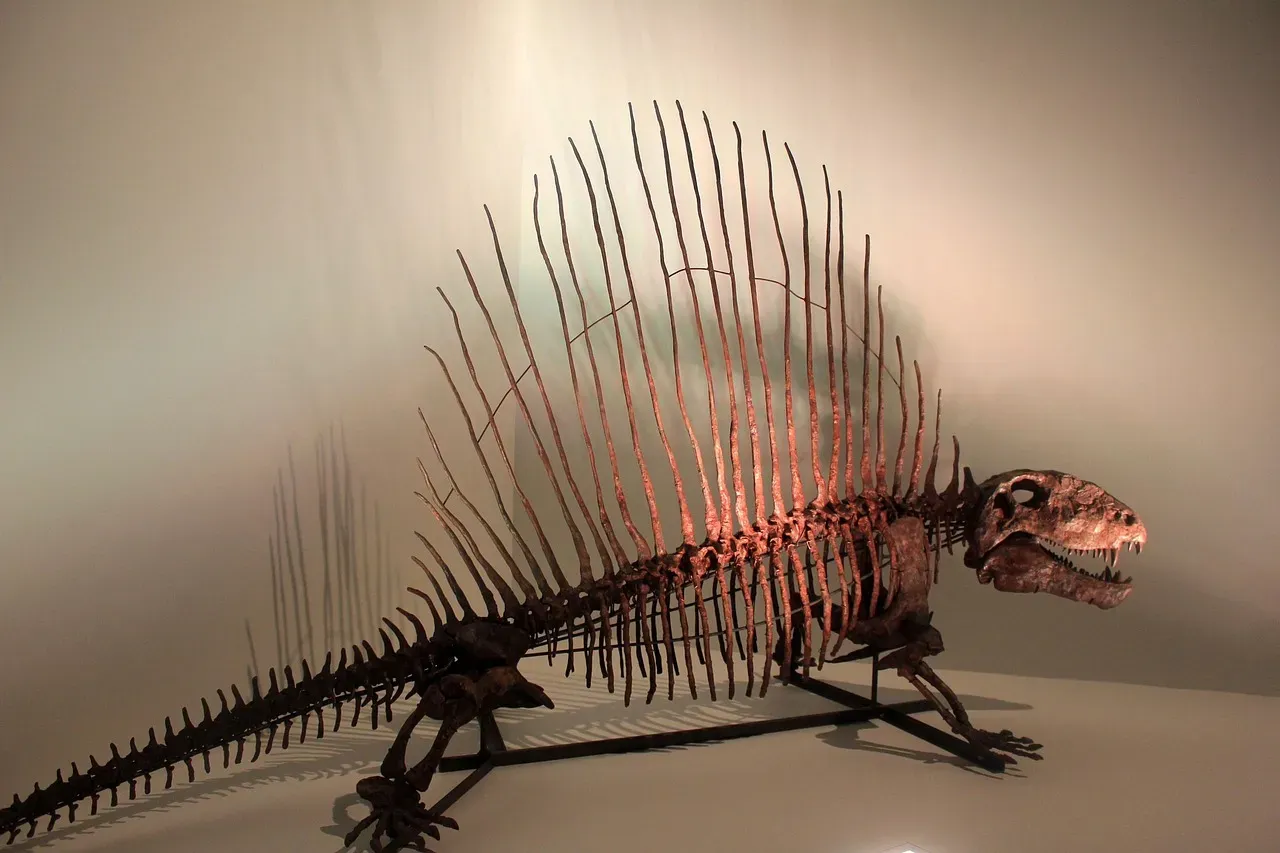
Here’s something that surprises most people: Although reptile-like in appearance and physiology, Dimetrodon is much more closely related to mammals, as it belongs to the closest sister family to therapsids, the latter of which contains the direct ancestor of mammals. Fossils of Dimetrodon are known from New Mexico, Arizona, Utah and other areas that were part of the supercontinent Euramerica during the Early Permian.
This extinct genus lived during the Early Permian period, around 295 to 272 million years ago, and with most species measuring between roughly 6 to 15 feet long, the most prominent feature is the large neural spine sail on its back formed by elongated spines extending from the vertebrae. New Mexico’s terrestrial environments were inhabited by creatures such as Aerosaurus, Edaphosaurus, Limnoscelis, Ophiacodon, and Sphenacodon. The sail might have helped regulate body temperature or served as a display feature, honestly, scientists are still debating its exact purpose.
Ghost Ranch: A Reptile Graveyard With Crocodile Cousins
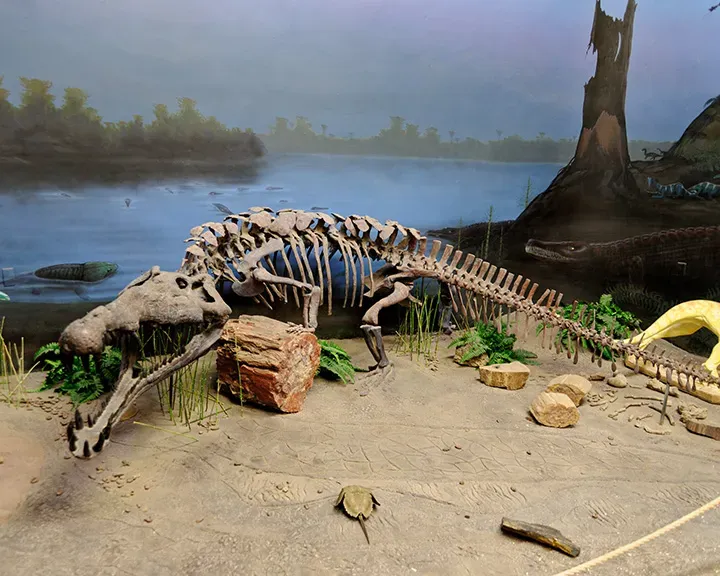
Paleontology began in earnest at Ghost Ranch in 1928, when the fossilized remains of crocodile-like reptiles including phytosaurs and aetosaurs were discovered by researchers from the University of California. The remains of animals from the Triassic era, including dinosaurs, reptiles, and fishes, have all been discovered here, often preserved in exquisite condition. Ghost Ranch became famous for its dinosaur discoveries, but the reptiles found there deserve equal attention.
Phytosaurs were distant relatives of crocodiles, but looked very much like them, with one obvious difference being that phytosaur nostrils were not at the end of the snout, as in crocodiles, but on top of a short bony ridge in front of the eyes. Aetosaurs were crocodile cousins that looked something like the armored dinosaurs that did not have tail clubs, and these armored animals were primarily herbivorous and had skeletal features that would have been good for digging up plants. It’s hard to say for sure, but the diversity of reptile life at Ghost Ranch suggests a thriving ecosystem more complex than most people imagine.
When Reptiles Dominated Before Dinosaurs Took Over
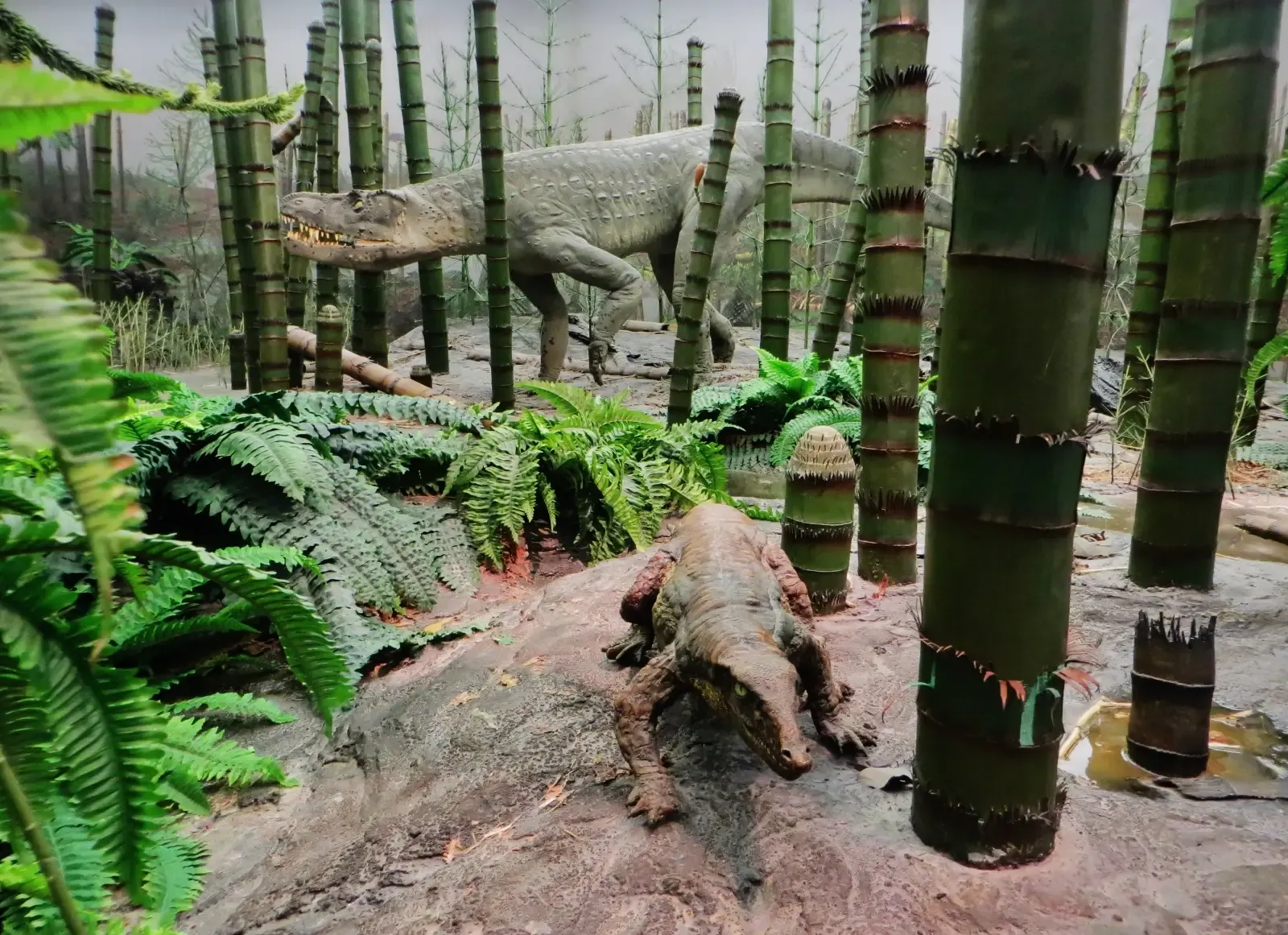
The first major adaptive radiation of reptiles consisted of the Synapsida, or mammal-like reptiles, which are now totally extinct, but which dominated the terrestrial fauna from the late Pennsylvania, throughout the Permian and for much of the Triassic periods. Reptiles were relatively rare during the Permian compared to mammalian ancestors, but things took a major shift during the Triassic when reptiles underwent a massive explosion in the number of species and morphological variety.
New Mexico’s fossil record captures this pivotal transition in Earth’s history. The Permian-Triassic climatic crises, a series of climatic shifts driven by global warming that occurred between roughly 265 million and 230 million years ago, caused two of the largest mass extinctions in the history of life, eliminating a staggering 86 percent of all animal species worldwide. The fossils represent some of New Mexico’s most significant paleontological discoveries, including Jurassic and Cretaceous-era dinosaurs, inland sea ammonites, and 200 million-year-old reptiles and amphibians. The diversity you’ll find in New Mexico’s rock layers is truly mind-boggling.
The Ancient Reptile Record That Keeps Rewriting Textbooks
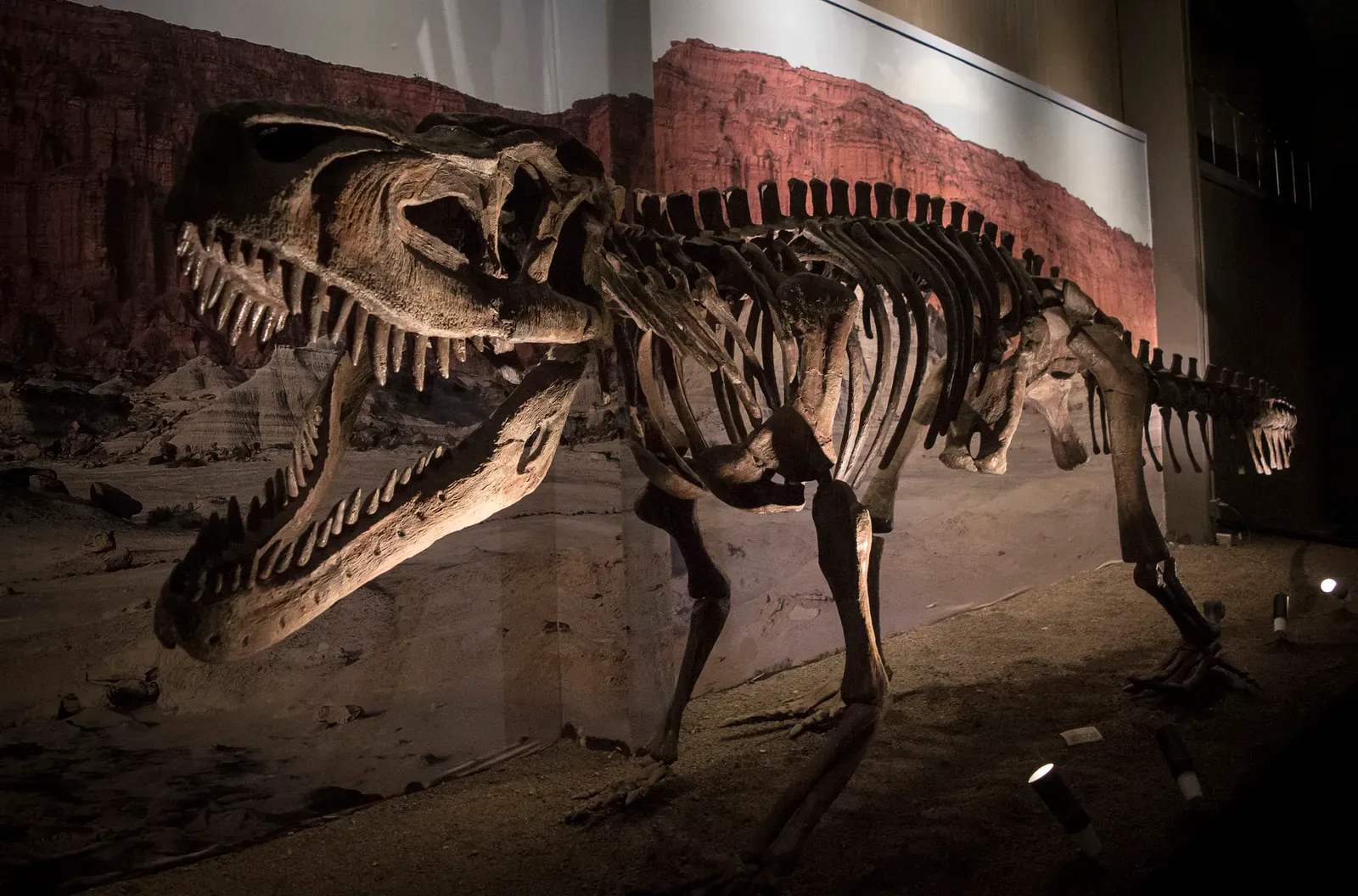
The fossil record of New Mexico is exceptionally complete and spans almost the entire stratigraphic column, with more than 3,300 different kinds of fossil organisms found in the state, and more than 700 of these were new to science and more than 100 of those were type species for new genera. That’s an absolutely staggering number when you think about it. New Mexico isn’t just rich in fossils; it’s practically rewriting the paleontology textbooks.
The Hall of Ancient Life showcases around 300 never-before-seen fossils from ancient fish, amphibians, invertebrates, reptiles, and more uncovered across the state. The discovery is a significant addition to New Mexico’s fossil record, which is already among the most robust in the nation, and additionally, the discovery demonstrates that reptiles were much more diverse in anatomy and behavior during the Pennsylvanian Period than was previously known. Every new discovery adds another piece to the puzzle of how life evolved on our planet.
Final Thoughts
New Mexico’s ancient reptiles offer us a window into worlds that existed long before humans, before mammals dominated the land, and even before the age of dinosaurs. These creatures adapted, evolved, and thrived through climate changes more extreme than anything we face today. From the tiny tree-climbing Eoscansor to the sail-backed Dimetrodon, each species tells a story of survival and innovation.
The next time you walk across New Mexico’s stunning landscapes, remember that beneath your feet lies evidence of hundreds of millions of years of life. These lesser-known reptiles may not have the fame of a T. rex, but their stories are just as captivating. What other secrets do you think are still hidden in New Mexico’s rocks, waiting to be discovered?