When you think about prehistoric life, you probably imagine massive dinosaurs roaming the earth. Yet there was an entirely different world happening above them, one filled with creatures that ruled the air with an elegance that still captures our imagination today.
These flying reptiles flourished throughout the Mesozoic Era, spanning from 252 million to 66 million years ago. Pterosaurs were actually the first vertebrates to evolve powered flight, which is honestly mind-blowing when you consider they achieved this feat millions of years before birds even existed. The skies belonged to them for an astonishingly long time. Let’s explore six remarkable species that showcased just how diverse and graceful these ancient fliers truly were.
Quetzalcoatlus: The Giant of the Skies
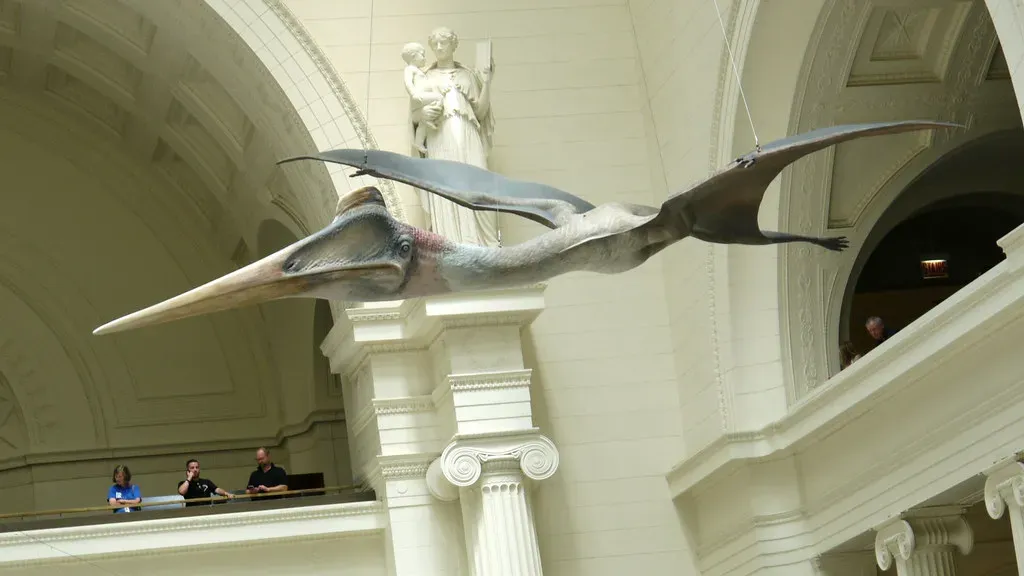
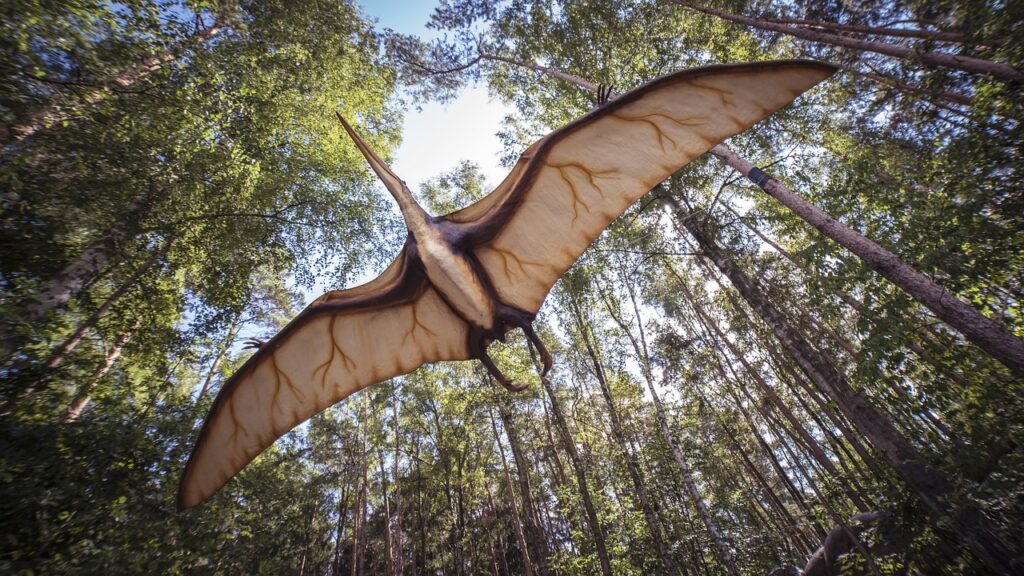
Imagine standing on a beach during the Late Cretaceous and looking up to see a creature with the wingspan of a small aircraft soaring overhead. Quetzalcoatlus northropi is widely believed to have been the largest flying creature that ever lived. This massive pterosaur stood about 5 meters tall and had a wingspan of up to 11 meters.
It had a long neck, large eyes, a long pointed beak and toothless slender jaws, while its head was topped by a short bony crest. Its long neck in Q. northropi reached up to 3 meters in length, which supported a massive crested head of roughly the same size. It had a long jaw with no teeth, and it likely used its jaw to probe for food in the wet marshy areas it inhabited, with feeding behavior compared to modern birds such as egrets and herons.
Pteranodon: The Ocean Soarer
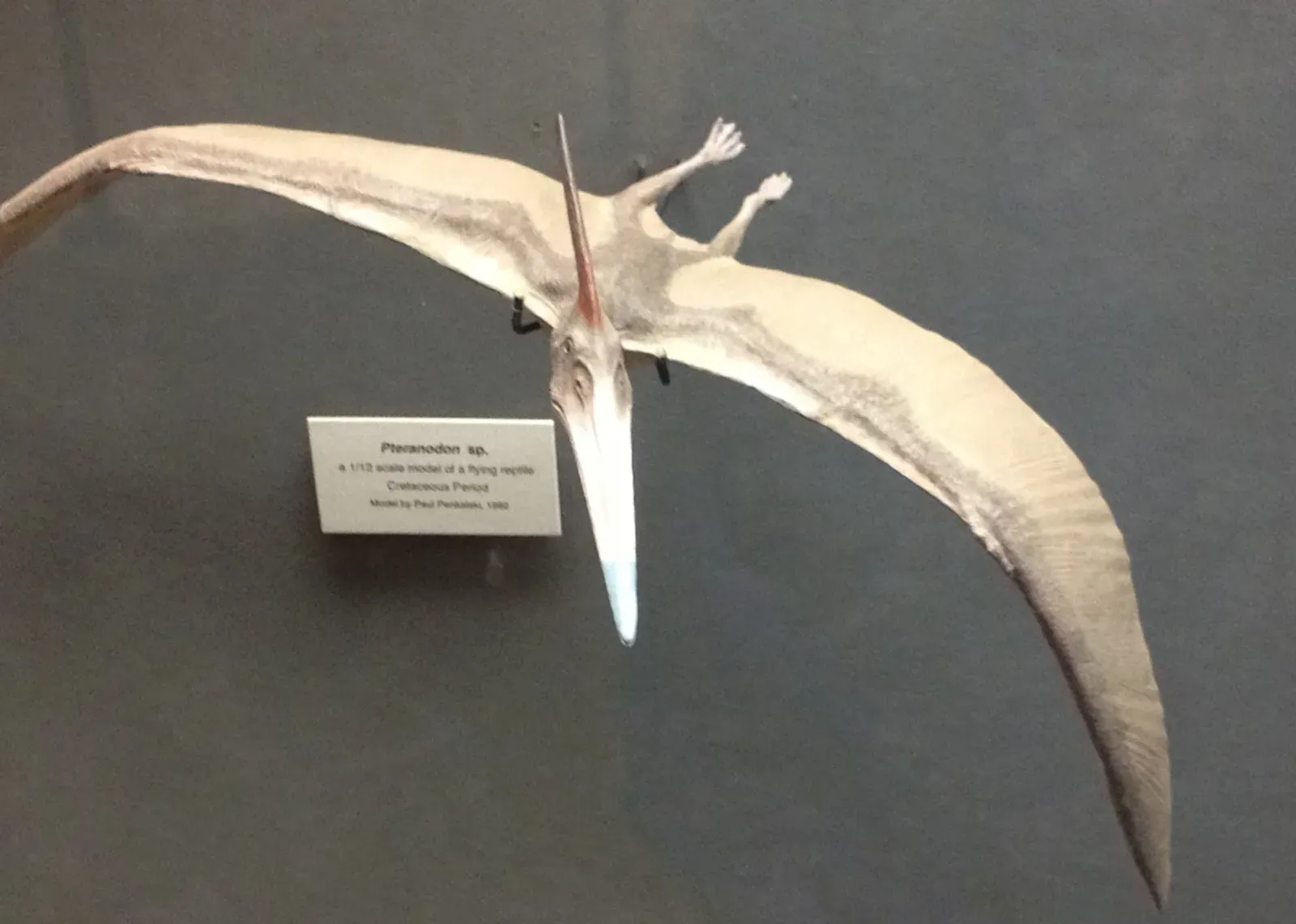
Pteranodon had a wingspan that ranged from 9 to 20 feet and it’s thought that it spent its time soaring over open ocean in the hunt for fish. Unlike earlier pterosaurs such as Rhamphorhynchus and Pterodactylus, Pteranodon had toothless beaks similar to those of birds. What really sets this species apart, though, is something you can’t miss.
The most distinctive characteristic of Pteranodon is its cranial crest, with these crests consisting of skull bones projecting upward and backward from the skull, and the size and shape of these crests varied due to a number of factors including age, sex, and species. The wing shape of Pteranodon suggests that it would have flown rather like a modern-day albatross, based on the fact that Pteranodon had a high aspect ratio similar to that of the albatross.
Rhamphorhynchus: The Long-Tailed Fisher
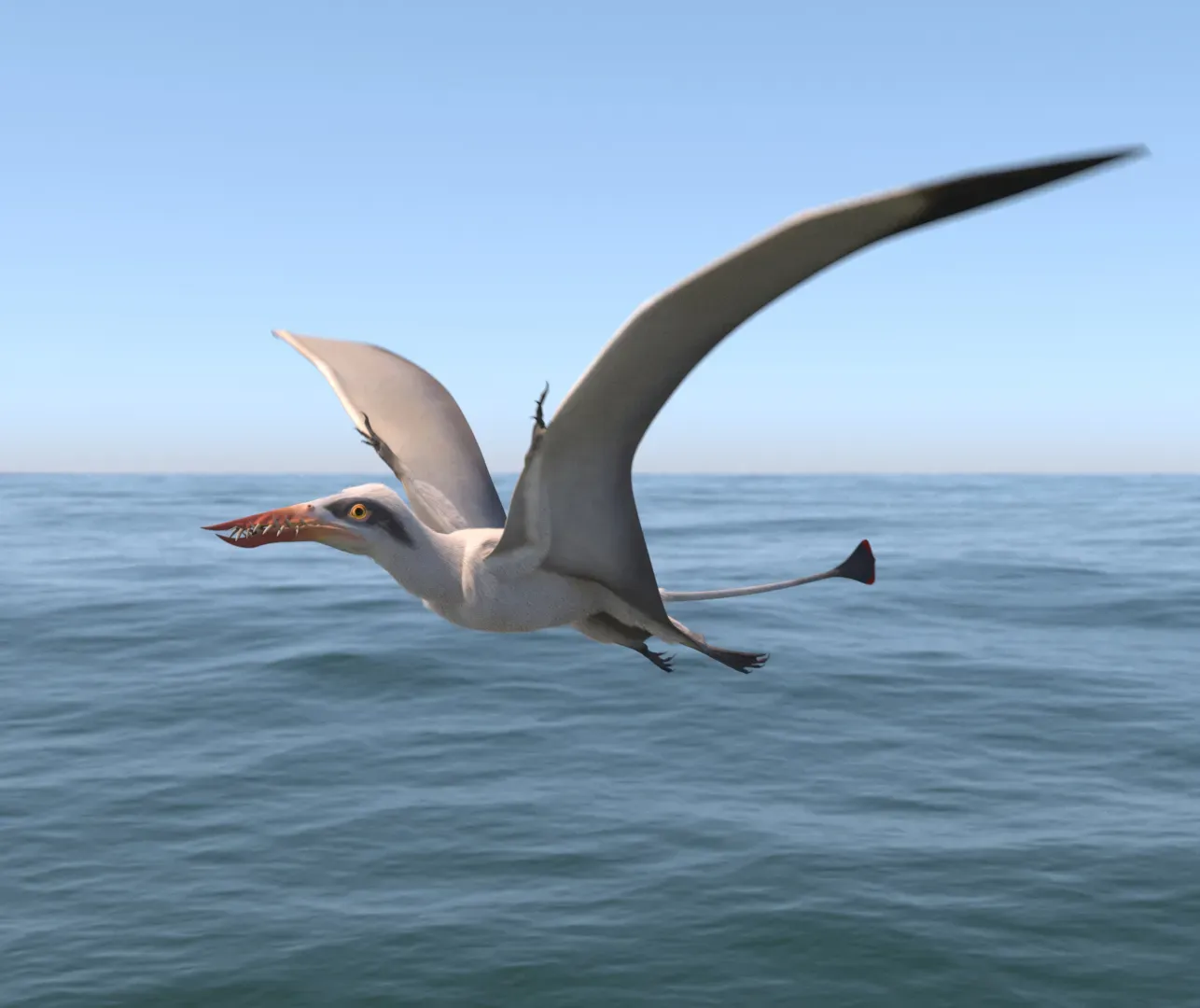
Rhamphorhynchus is a genus of long-tailed pterosaurs from the Jurassic period. The largest known specimen has an estimated wingspan of 1.8 metres. This species shows us what the earlier pterosaurs looked like before they evolved into the short-tailed giants of the Cretaceous.
Like other non-pterodactyloid pterosaurs, Rhamphorhynchus had a long tail with a vane at the end, with the shape of the vane changing as the animal matured, starting out as an oval in juvenile specimens, then becoming diamond shaped as it grew. It was a piscivore with teeth that seemed to function as a fish trap for grabbing swift-moving prey from just below the waves, with evidence of its diet coming from a specimen with the small herring-like fish Leptolepides caught in its throat.
Dimorphodon: The Two-Toothed Hunter
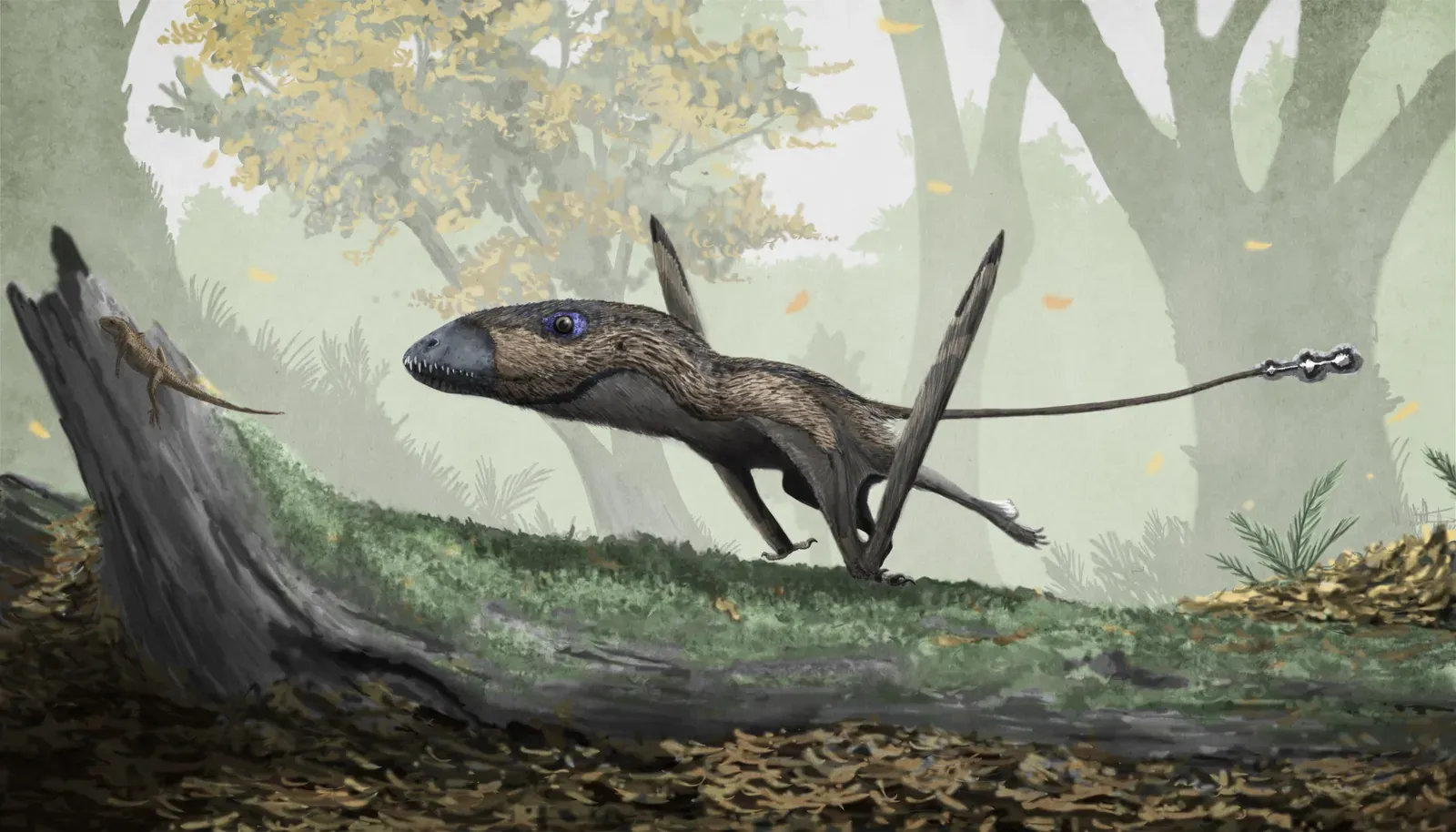
Dimorphodon is a genus of medium-sized pterosaur that lived in Europe during the early Jurassic Period about 201 to 191 million years ago, with its name meaning two-form tooth, referring to the fact that it had two distinct types of teeth in its jaws. Here’s the thing that makes Dimorphodon instantly recognizable: its head was disproportionately massive for its body size.
Dimorphodon had a particularly large head for a pterosaur with a short neck, and its appearance is sometimes described as a raptor with wings, giving it a strange lizard-like impression. Recent studies have suggested that Dimorphodon likely hunted small vertebrates, though it still would have consumed small invertebrates like insects. It was about the size of a seagull with a maximum wingspan of 1.4m.
Tapejara: The Crested Brazilian
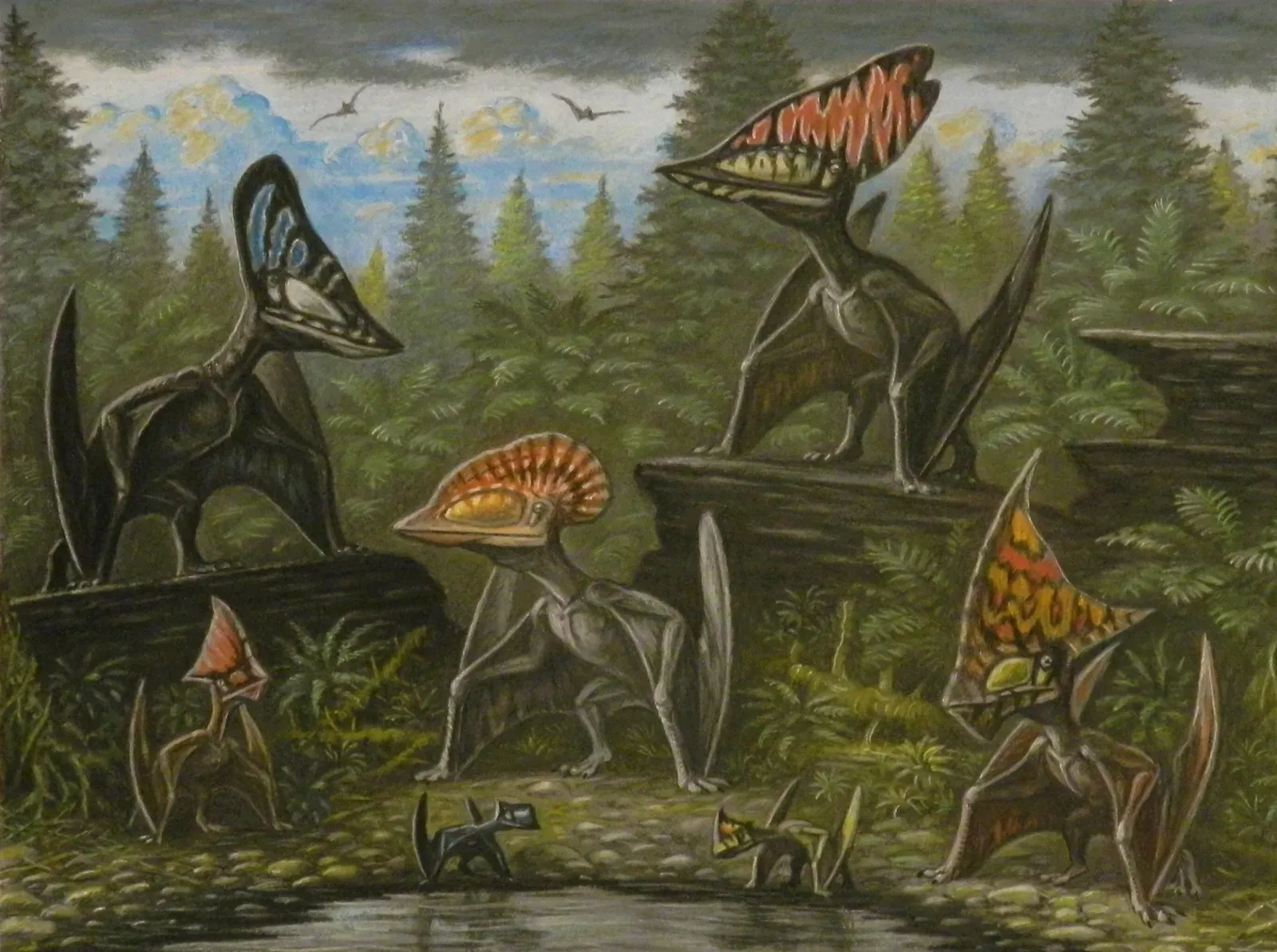
Tapejara was a small pterosaur with a wingspan of approximately 1.23 to 1.3 metres. Its crests consisted of a semicircular crest over the snout and a bony prong which extended back behind the head. The sheer size and elaborate nature of this crest suggest it played a major role in the animal’s life, likely for attracting mates or establishing dominance.
Hailing from the Early Cretaceous Romualdo Formation of Brazil, Tapejara was described as a new genus in 1989. Tapejara has been inferred to be cathemeral, being active throughout the day for short intervals. Like other tapejarids, Tapejara is thought to have been an arboreal frugivore or omnivore, feeding on high-growing fruits with its parrot-like beak.
Anhanguera: The Fish-Eating Devil
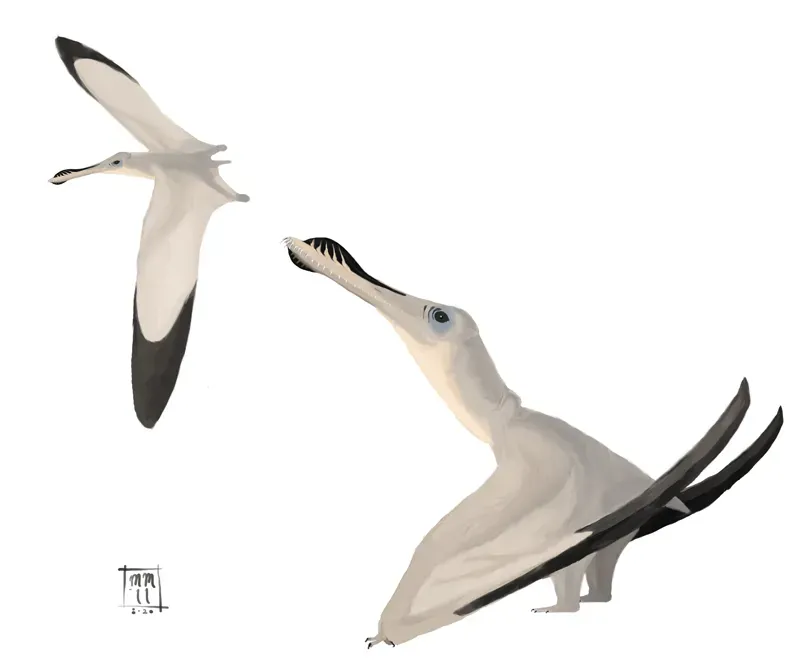
Anhanguera was a fish-eating animal with a wingspan of about 4.6 meters. Like many other anhanguerids, Anhanguera had rounded crests at front of its upper and lower jaws, which were filled with angled, conical but curved teeth of various sizes and orientations. The name itself comes from Brazilian indigenous language and translates to something like “old devil” or “spirit protector,” which feels fitting for such a formidable predator.
A study in 2003 showed that Anhanguera held its head at an angle to the ground due to its inner ear structure, which helped the animal detect its balance. These enormous backwards curving teeth belong to the 100-million-year-old Brazilian pterosaur Anhanguera, and like some other fish-eating reptiles its long jaws widened into a rosette-shaped snout. This specialized anatomy made it perfectly adapted for snatching fish from ancient waters.
Conclusion
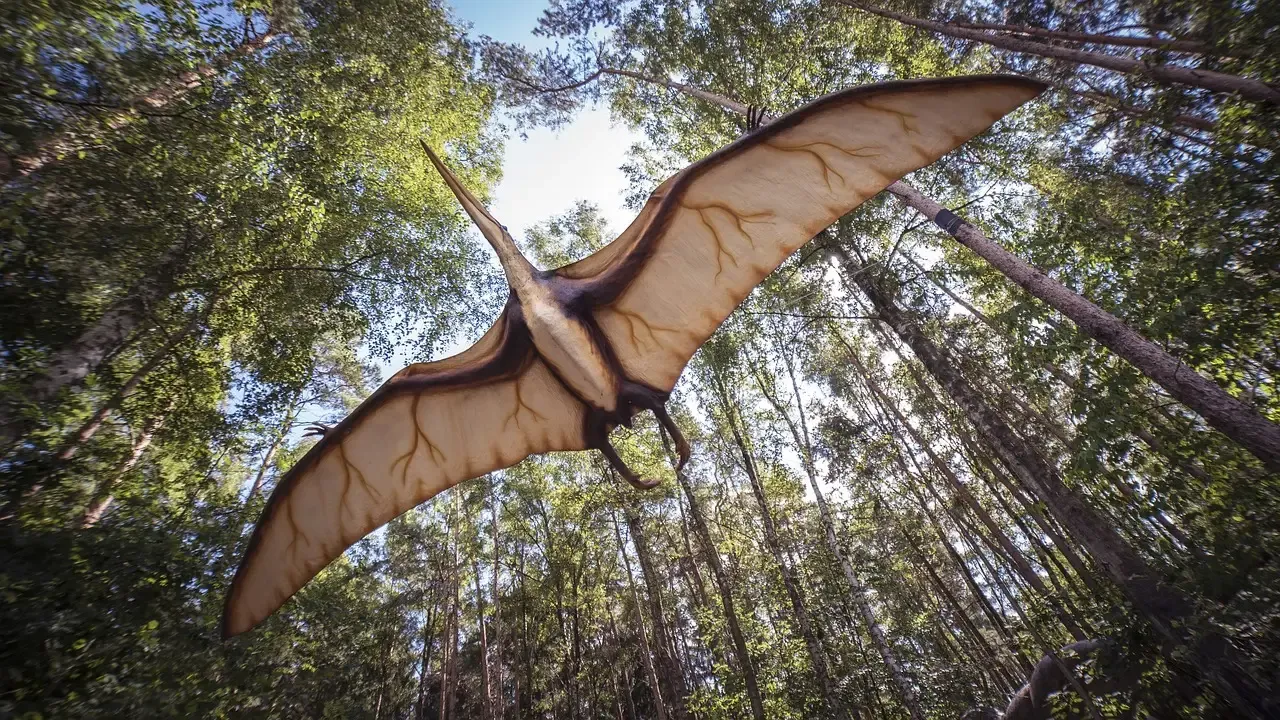
These six pterosaur species represent just a glimpse into the incredible diversity of creatures that once ruled the prehistoric skies. From the towering Quetzalcoatlus stalking prey on land to the graceful Pteranodon gliding effortlessly over ancient oceans, each species evolved unique adaptations that allowed them to thrive in their respective environments. Their hollow bones, specialized wings, and remarkable hunting strategies showcase nature’s ingenuity in solving the challenge of flight.
What’s truly striking is how different each species was from the others, filling ecological niches that wouldn’t be occupied again until birds evolved millions of years later. The next time you watch a bird soar overhead, remember that pterosaurs perfected powered flight long before any bird ancestor ever left the ground. Which of these ancient fliers do you find most fascinating?