Imagine a world where continents shifted like puzzle pieces, temperatures soared to levels we can barely comprehend today, and creatures beyond our wildest imagination ruled every corner of land, sea, and sky. You’re about to discover why one particular chapter in Earth’s history stands out among all others. We’re not talking about a few million years of gradual change here. This is nearly two hundred million years of absolute transformation.
The story starts with devastation and ends in extinction. Yet in between, life exploded into forms so diverse and magnificent that scientists are still discovering new species from this period at roughly two per week. Think you know all about this era from movies and documentaries? Let’s dive deeper into what truly made this time unprecedented.
Earth Operated Like a Massive Greenhouse Without Ice Caps
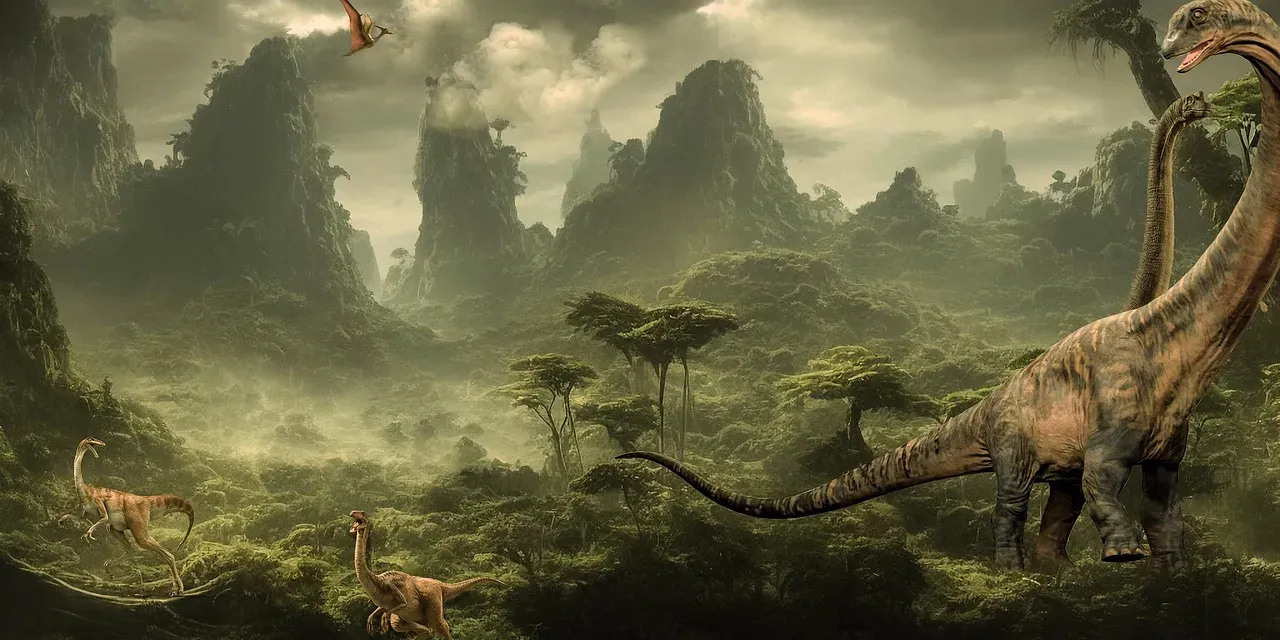
You could have traveled from the equator to the poles during most of the Mesozoic and never encountered ice, because Earth was fundamentally hotter than today with far less temperature difference between regions. The mid-Cretaceous period around one hundred million years ago was probably the warmest in Earth’s entire history, with average temperatures potentially six to twelve degrees warmer than present day. Picture forests growing where Antarctica sits today, with polar temperatures possibly reaching levels comparable to a pleasant spring day in modern temperate zones.
Higher atmospheric carbon dioxide levels are thought to have nearly eliminated the typical north to south temperature gradient we experience today. This created what scientists call a “hot greenhouse climate” where tropical conditions extended far beyond what we’d consider normal. The breakup of Pangaea in the Jurassic paved the way for this humid greenhouse climate with minimal temperature differences between latitudes, and the Cretaceous was even hotter with most of the world probably covered by dense, humid forests. It’s hard to say for sure, but this kind of globally warm climate created opportunities for life to flourish in ways that simply aren’t possible when ice caps lock up vast amounts of water and create harsh polar conditions.
A Single Supercontinent Broke Apart Into the World We Know
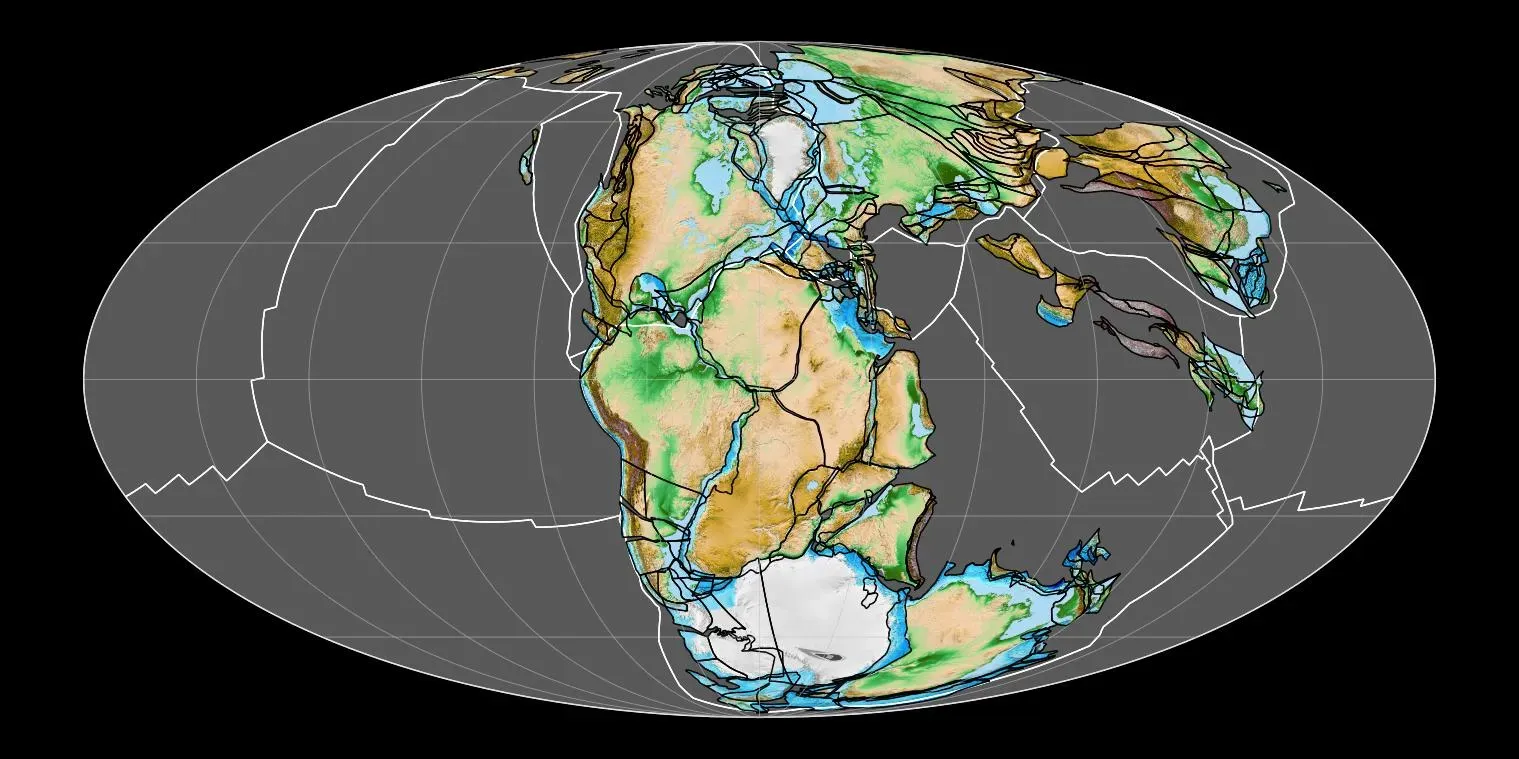
At the start of the Mesozoic, all of Earth’s continents were joined together into the supercontinent Pangaea, and by the close of the era, Pangaea had fragmented into multiple landmasses. This wasn’t just continents drifting slowly. The era featured the dramatic rifting of Pangaea, which gradually split into a northern continent called Laurasia and a southern continent called Gondwana. Imagine the entire geological face of the planet rearranging itself like a slow-motion explosion captured over a hundred million years.
Temperature fluctuations and the breakup of Pangaea influenced species richness, ecological diversity, and biogeographic history in profound ways. The separation created isolated populations of creatures that evolved independently. The movement of continents and rising sea levels created a range of new environments, which accelerated the evolution of new species, and animal life developed staggering diversity thanks to new habitats and food sources. This tectonic reshuffling essentially set up natural evolutionary laboratories on different continents, allowing dinosaurs and other organisms to take wildly different paths depending on where they ended up.
Dinosaurs Ruled for Over One Hundred Sixty Million Years
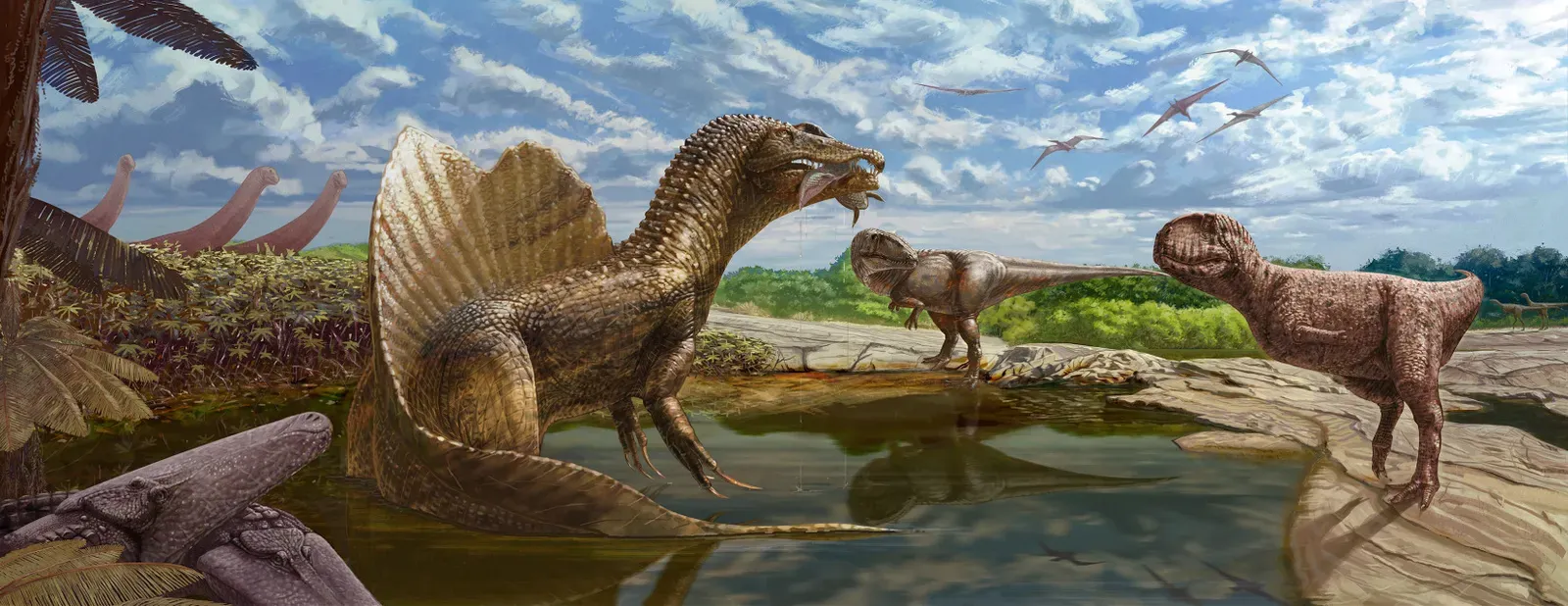
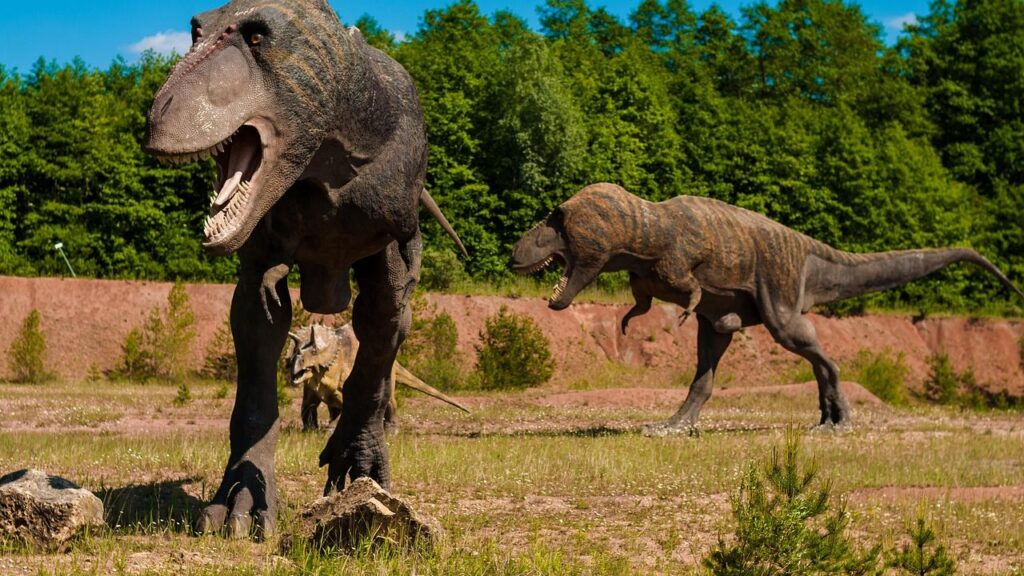
Let’s be real, when you think of the Mesozoic, you think dinosaurs. Dinosaurs first appeared in the Mid-Triassic and became the dominant terrestrial vertebrates in the Late Triassic or Early Jurassic, occupying this position for about one hundred fifty or one hundred thirty-five million years until their demise at the end of the Cretaceous. To put that in perspective, modern humans have only been around for roughly two hundred thousand years. Dinosaurs thrived for over one hundred sixty million years in Mesozoic ecosystems, displaying diverse ecological and evolutionary adaptations.
They didn’t just survive either. They absolutely dominated. Giant plant-eating dinosaurs roamed the Earth with smaller but vicious carnivores stalking them. The plentiful plant supply allowed huge plant-eating sauropods like Apatosaurus, Diplodocus, and Brachiosaurus to evolve into some of the largest animals to have ever walked the Earth, and by the end of the Jurassic their herds dominated the landscape. Some of these creatures were so massive that a single animal could weigh as much as multiple modern elephants combined. Sauropods reached their largest sizes in the Cretaceous, with the biggest being titanosaurs, and Patagotitan was a staggering thirty-seven and a half meters long. Honestly, the sheer scale of these animals is almost beyond comprehension when you really think about it.
The First Birds, Mammals, and Flowering Plants Appeared
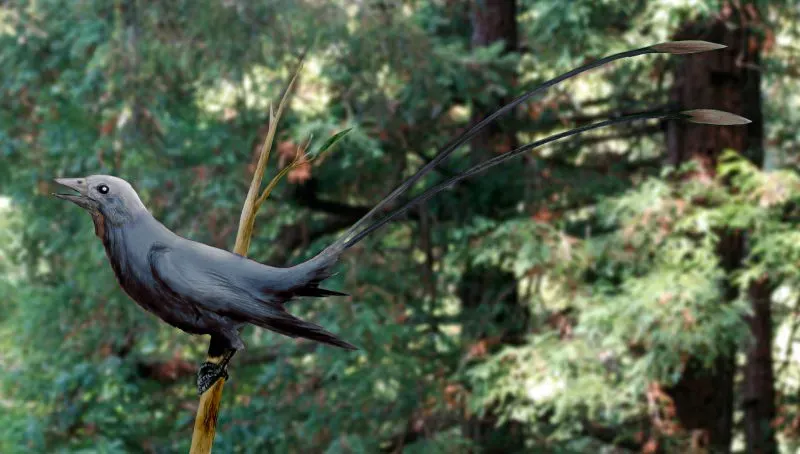
Here’s the thing most people don’t realize: the Mesozoic wasn’t just about dinosaurs getting bigger and scarier. Archaic birds appeared in the Jurassic, having evolved from a branch of theropod dinosaurs, then true toothless birds appeared in the Cretaceous. Think about that for a moment. You had dinosaurs gradually developing feathers and taking to the skies, eventually becoming the birds we see today. The first mammals also appeared during the Mesozoic, though they would remain small, less than fifteen kilograms, until the Cenozoic.
Flowering plants appeared in the Early Cretaceous and would rapidly diversify through the end of the era, replacing conifers and other gymnosperms as the dominant group of plants. This revolutionized the entire food chain. One of the biggest changes on land was the transition to angiosperm-dominated flora, with angiosperms originating in the Cretaceous, switching many plains to grasslands by the end of the Mesozoic, and by the end of the period they had replaced gymnosperms and ferns as the dominant plant in the world’s forests. These flowering plants created entirely new ecological niches and relationships with insects. The Mesozoic essentially planted the seeds, literally and figuratively, for the modern biological world we inhabit today.
Life Bounced Back From Earth’s Worst Mass Extinction
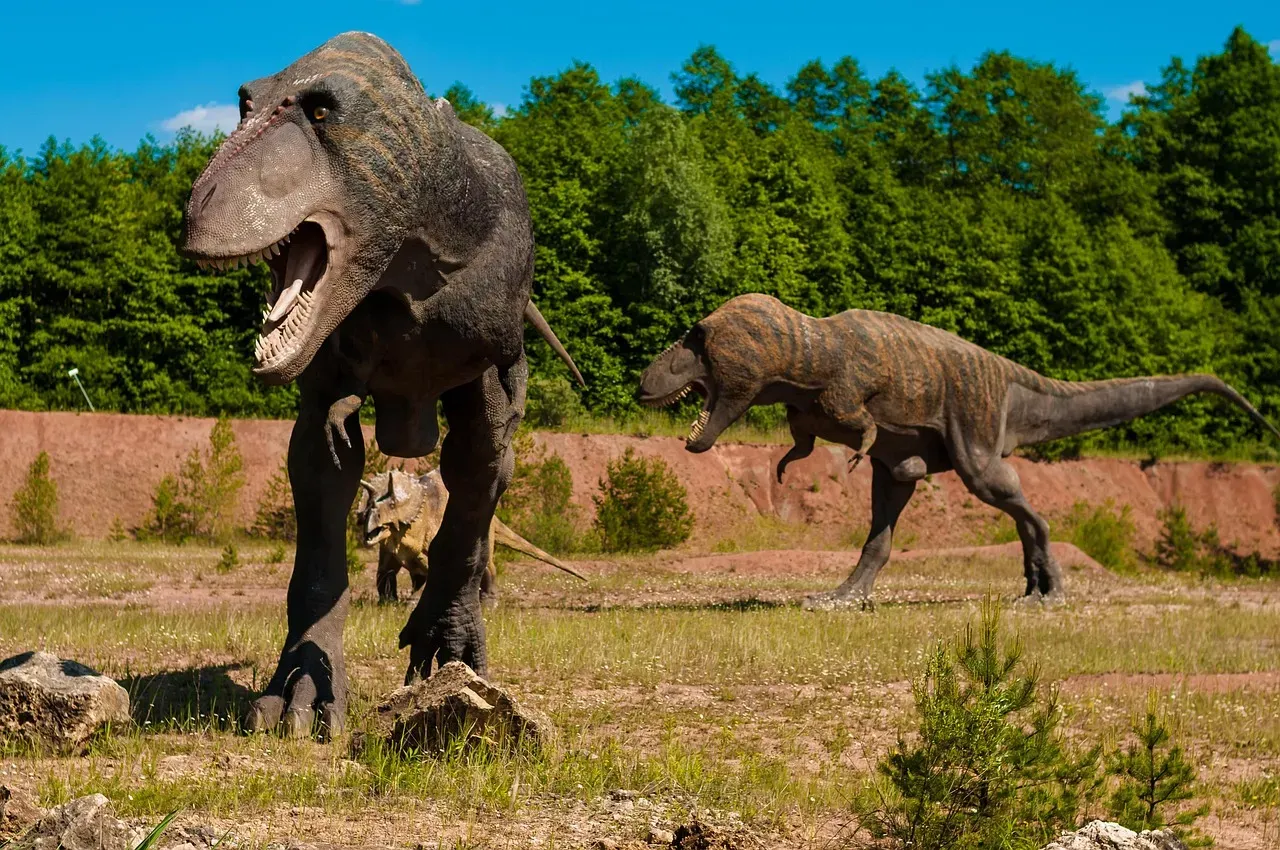
The Mesozoic began in the wake of the Permian-Triassic extinction event, the largest mass extinction in Earth’s history, during which it has been estimated that up to ninety to ninety-six percent of marine species became extinct, earning it the name the Great Dying. Imagine nearly all life on Earth wiped out in what might have been a geologically brief period. The planet was essentially a devastated wasteland.
The end-Permian extinction wiped out ninety-six percent of marine life and seventy percent of all terrestrial species on the planet, and life slowly rebounded, eventually giving way to a flourishing diversity of animals from massive lizards to monstrous dinosaurs. Recent research indicates that it took much longer for the reestablishment of complex ecosystems with high biodiversity, complex food webs, and specialized animals in various niches, beginning in the mid-Triassic four to six million years after the extinction and not fully proliferating until thirty million years after. Life didn’t just come back. It came back stronger, weirder, and more diverse than ever before. This recovery story is genuinely one of the most remarkable chapters in the history of life on this planet.
Shallow Seas Covered Vast Continental Areas
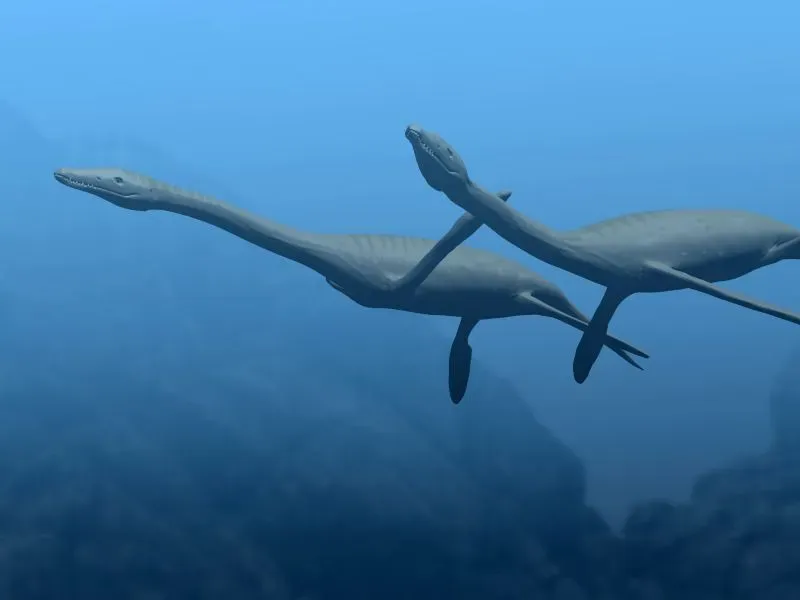
Sea levels began to rise during the Jurassic, probably caused by an increase in seafloor spreading, and the formation of new crust beneath the surface displaced ocean waters by as much as two hundred meters above today’s sea level, flooding coastal areas. You’d be surprised how different the map looked. Much of each continent was covered with shallow continental oceans and inland seas, with North America, Europe, Asia, and Africa becoming a series of islands, and the part of the United States between the Rocky Mountains and the Appalachians and Ozarks was mostly underwater.
Large marine reptiles such as plesiosaurs, along with coiled-shell ammonites, flourished in these seas. These weren’t small ponds either. These were massive inland seas teeming with life forms that we can barely imagine today. Sea levels rose and fell repeatedly during the Cretaceous Period, and at the highest point there were many shallow seas separating parts of the continents we know today, with Europe made up of many smaller islands. The interplay between rising seas and fragmenting continents created an incredible mosaic of aquatic and terrestrial environments that supported an explosion of biodiversity unlike anything seen before or since.
Conclusion
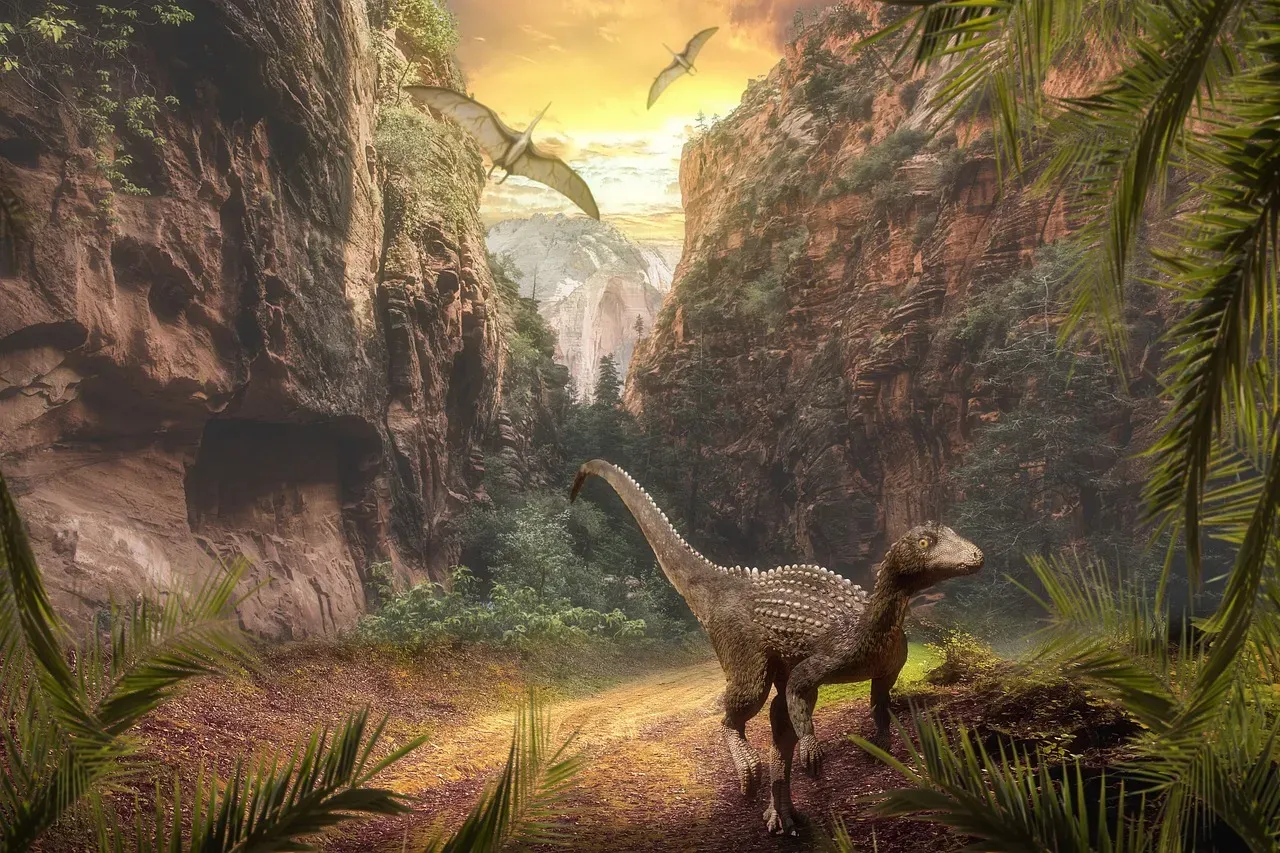
The Mesozoic Era represents a unique convergence of geological, climatic, and biological events that transformed Earth in ways that continue to shape our world today. From a devastated post-extinction landscape, life rebounded with extraordinary creativity and scale. The combination of a greenhouse climate, continental breakup, shallow seas, and evolutionary innovations created conditions that allowed dinosaurs to dominate for an almost incomprehensible stretch of time while simultaneously giving rise to birds, mammals, and flowering plants.
Dinosaur macroevolution was essentially a one hundred sixty million year natural experiment on the effects of dramatic geographic and climatic changes, impacting terrestrial ecosystems at multiple levels. This makes the Mesozoic not just a fascinating period to study, but a crucial window into understanding how life responds to planetary-scale changes. What do you think would have happened if that asteroid hadn’t struck sixty-six million years ago? Would dinosaurs still rule the Earth today?