When most people think of prehistoric life, their minds go straight to T. rex or Triceratops. It makes sense. Hollywood has spent decades making sure of that. Yet here’s the thing: dinosaurs were just one small chapter in a long and utterly mind-bending story of life on Earth. Long before them, alongside them, and after they vanished, creatures roamed this planet that were so bizarre, so anatomically outrageous, that they almost defy belief.
Long before humans walked the Earth, our planet was home to some truly mind-boggling creatures that pushed the boundaries of what we think animals can look like or how they might behave. From giant sea scorpions to walking whales, these ancient animals seem more like something out of science fiction than actual history. Honestly, once you meet these seven beasts, you may never look at a Stegosaurus the same way again. Let’s dive in.
Anomalocaris: The Ocean’s First Nightmare
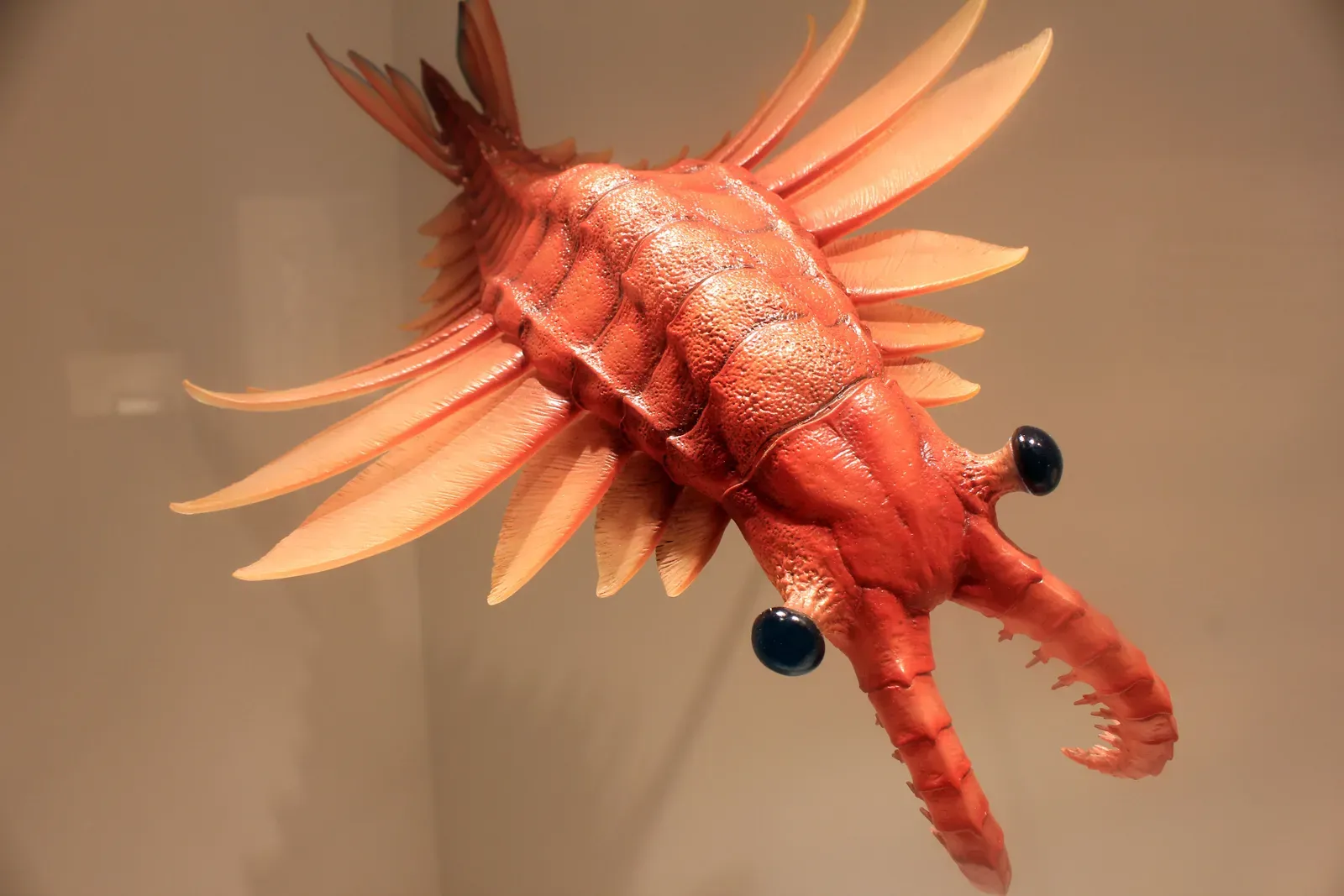
Imagine swimming in an ancient sea and coming face to face with something that looks like a shrimp designed by a committee of fever dreamers. That was Anomalocaris, one of the most startling predators ever to have lived. Its name means “weird shrimp,” and it was related to modern arthropods, though it’s hard to tell how closely. Paleontologists who first encountered different parts of this creature described them separately as a shrimp, a sea cucumber, a jellyfish, and even a jellyfish on top of a sponge, not realizing all those fossils belonged to just two species of the same animal.
With its big eyes and grasping mouthparts, Anomalocaris is now understood to have been a major predator in the Cambrian seas, probably snacking on trilobites. It could reach a meter in length, which was absolutely gigantic by Cambrian standards. In fact, it’s considered the biggest predator known from its time. Think of it as the killer whale of a world that had only just figured out what having a body even meant. Creepy? Absolutely. Fascinating? Even more so.
Helicoprion: The Creature With a Buzzsaw for a Jaw
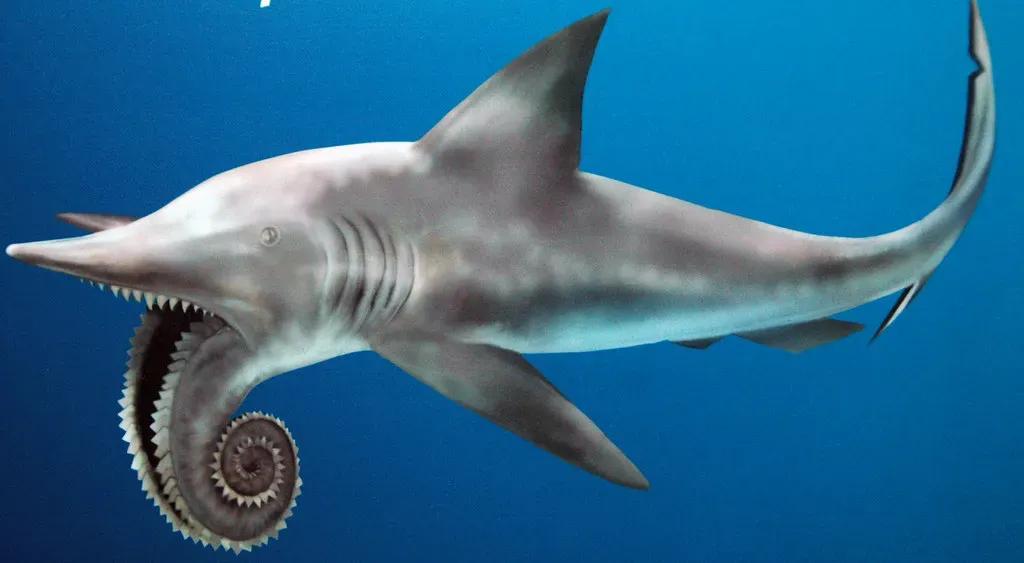
Helicoprion is not only a candidate for the weirdest fossil ever found, but also for the most enduring scientific mystery in paleontology. This 270-million-year-old fish was first described in 1899 based on its buzzsaw-shaped whorl of teeth and nothing else. For decades, scientists argued furiously about where exactly those teeth belonged on its body. Some thought it was on its nose. Others thought the back. It turns out, reality was even stranger.
With the later discovery of portions of a jaw, the location of its buzzsaw-like teeth was finally confirmed to fill the lower jaw. Strangely, there were no upper teeth at all, meaning this creature could essentially gum and bite you at the same time. The jaw would close and rotate the teeth backwards, much like a circular saw blade, and it probably fed on the soft bodies of squid and other cephalopods. If you’ve ever felt squeamish about a trip to the dentist, be glad you weren’t swimming in Permian waters.
Opabinia: Five Eyes and a Backwards Mouth
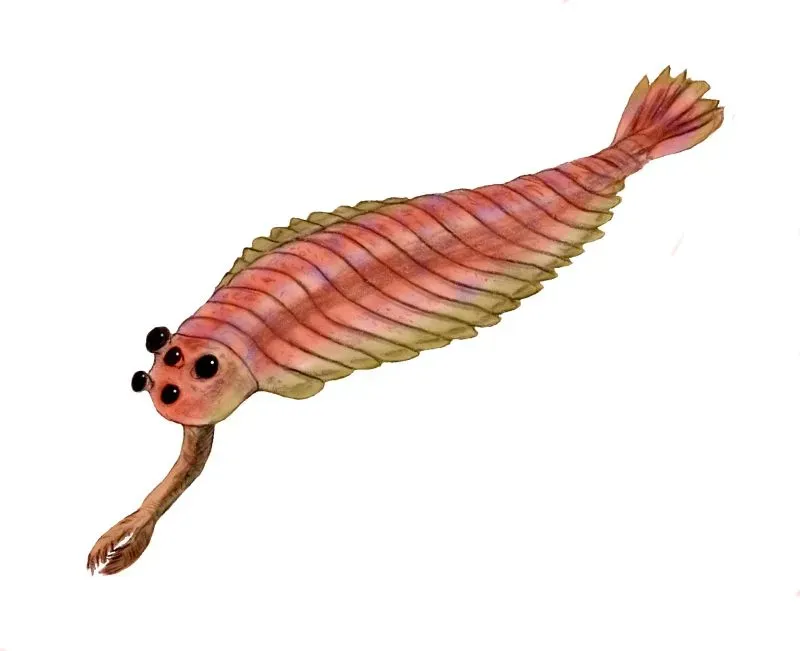
Opabinia swam the seas of the Cambrian, between 541 and 485 million years ago, and is considered weird even by scientists. The creature vaguely resembled a shrimp or a lobster with 15 segments on an elongated body and no legs, seemingly moving through undulating lobes on the sides of its body, though it’s hard to determine whether it swam freely or skipped along the seafloor. That alone would earn it a spot on this list, but wait. There’s more.
To make it even stranger, Opabinia had five bulbous, insect-like eyes sitting on its head, and there was also a long grasping arm about one third the size of its body right at the front of its head with a claw at the end. It likely grabbed food with this claw and then brought it backward to a mouth that faced toward the rear of the body. I know it sounds crazy, but this creature is 100 percent real, and when its reconstruction was first presented to a scientific audience in 1975, the room reportedly burst out laughing. Nature was clearly in an experimental phase.
Arthropleura: The Millipede the Size of a Car
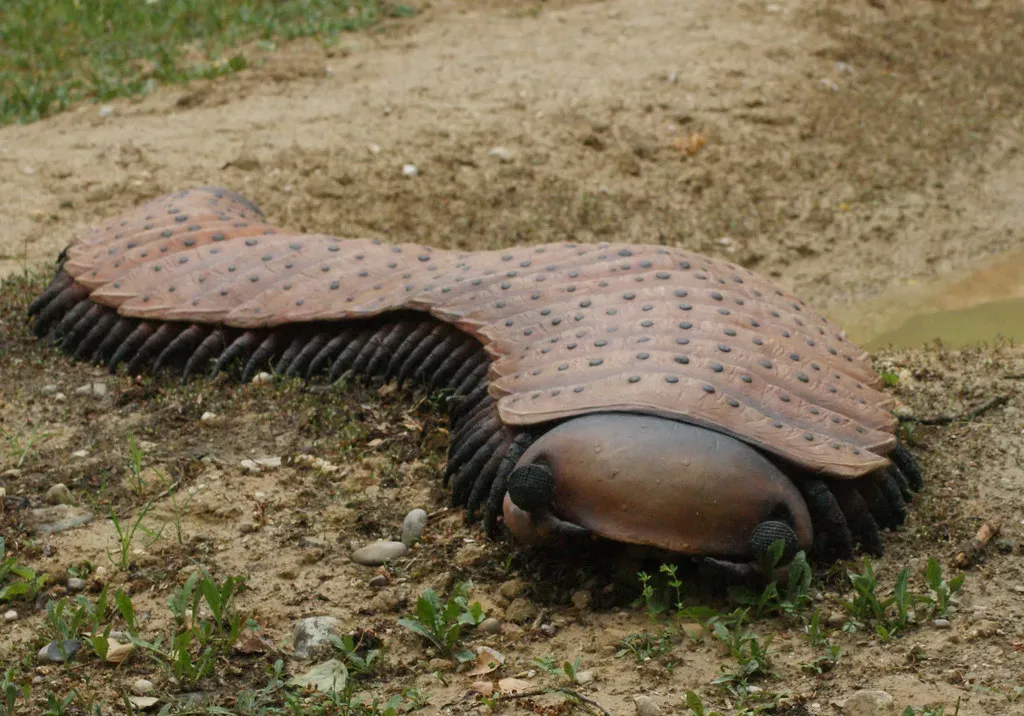
Arthropleura, spanning over two meters in length, was a true giant among arthropods. Picture a millipede the size of a small train, traversing vast prehistoric forests. Its presence was both awe-inspiring and terrifying. Despite its daunting size, Arthropleura was actually herbivorous, feeding on the lush vegetation of its era. You can breathe a small sigh of relief on that last point, though honestly, running into something that large on a forest floor would be nightmare enough.
After the emergence of the first true animals around 700 million years ago, evolution ran amok, creating countless bizarre groups before the dinosaurs finally arrived 450 million years later. Arthropleura is one of the most dramatic examples of that wild evolutionary experimentation. It could grow to the size of a large sofa and thrived in the oxygen-rich forests of the Carboniferous period. Though its immense form might suggest a predator’s lifestyle, its diet tells otherwise, and it serves as a reminder of the sheer diversity and unexpected paths evolution can take.
Dunkleosteus: The Armored Fish With a Self-Sharpening Bite
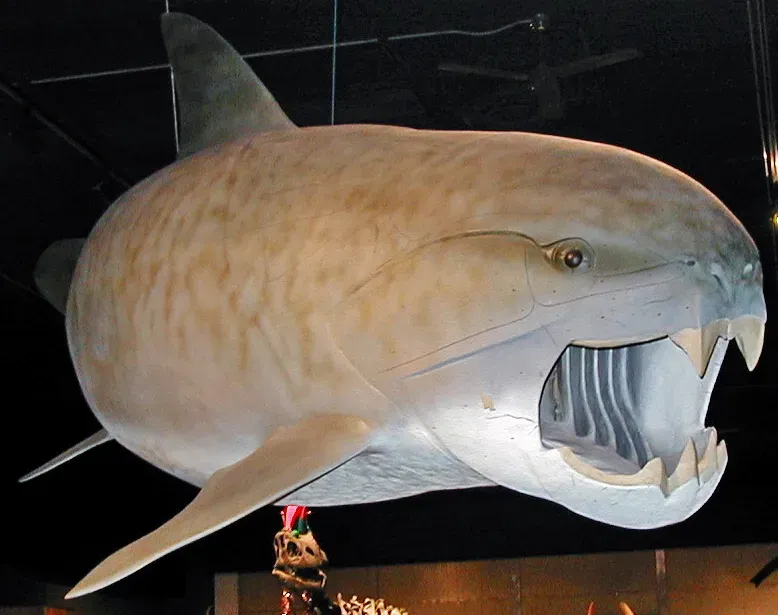
Here’s a creature that makes even the great white shark look a little underprepared for battle. Dunkleosteus is certainly one of the most terrifying water dwellers ever to have lived. The brutish fish lived during the Late Devonian period, roughly 370 to 360 million years ago, a time often referred to as the “age of fish.” It was armored like a tank, and its bite was something out of a nightmare.
This massive armored fish from the Devonian lacked traditional teeth, but its jaw contained razor-sharp protrusions of bone that it used to pierce and cut through prey. These bony edges grew continuously and, as they did, rubbed against those of the opposing jaw, effectively acting like self-sharpening shears. Scientists have speculated that its jaws could generate up to 8,000 pounds of bite force per square inch. For perspective, a lion’s bite generates roughly 650 pounds per square inch. Yes, you read that right. Dunkleosteus wasn’t just strange. It was practically industrial.
Estemmenosuchus: The Crowned Crocodile That Confused Everyone
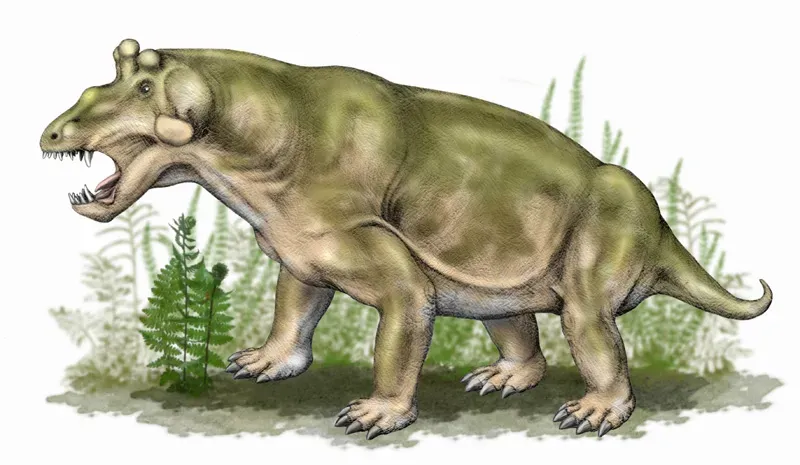
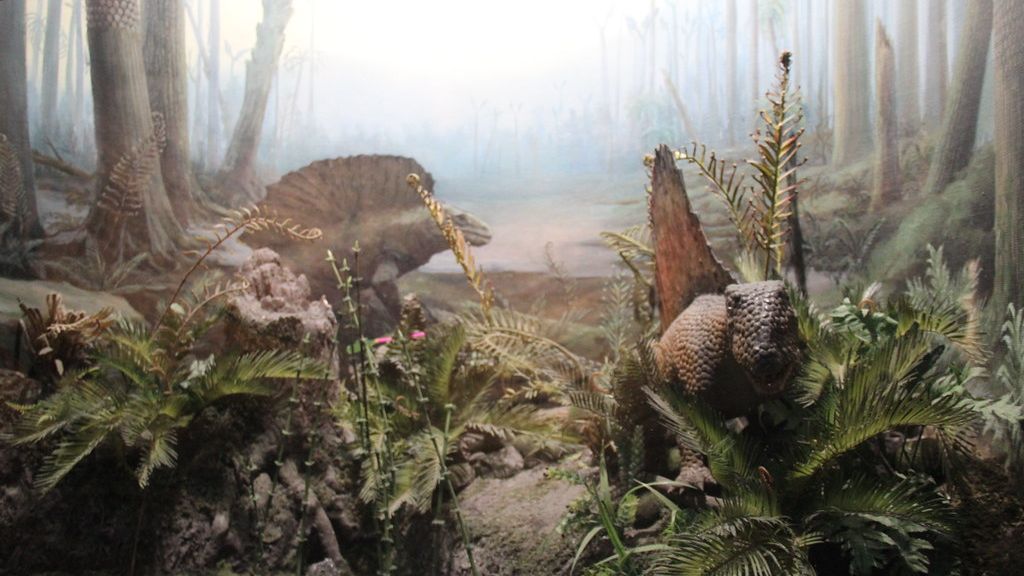
Estemmenosuchus was a large therapsid that lived about 267 million years ago. Therapsids are the group of animals that eventually evolved into mammals. Estemmenosuchus is a spectacular example of just how funky that group could look. Its name literally means “crowned crocodile,” and its face was rimmed with a bizarre collection of horn-like protrusions jutting outward in all directions.
Scientists can’t quite agree on whether this creature was a herbivore or a carnivore. Its canines and sharp incisors suggest it could hunt, but it also had a robust body form that seemed perfect for digesting plants. Some researchers suggest it was an omnivore that ate both plants and meat. So you had an animal roughly the size of a small car, covered in bony head ornaments, that science still can’t fully classify. The strangest feature remains its face, with bony ridges or horn-like protrusions that seemed to explode outward in all directions, possibly used for defense, display, or contests of dominance like head-butting. Honestly, it looks like something a child designed on a dare.
Andrewsarchus: The Hoofed Monster That Ate Everything
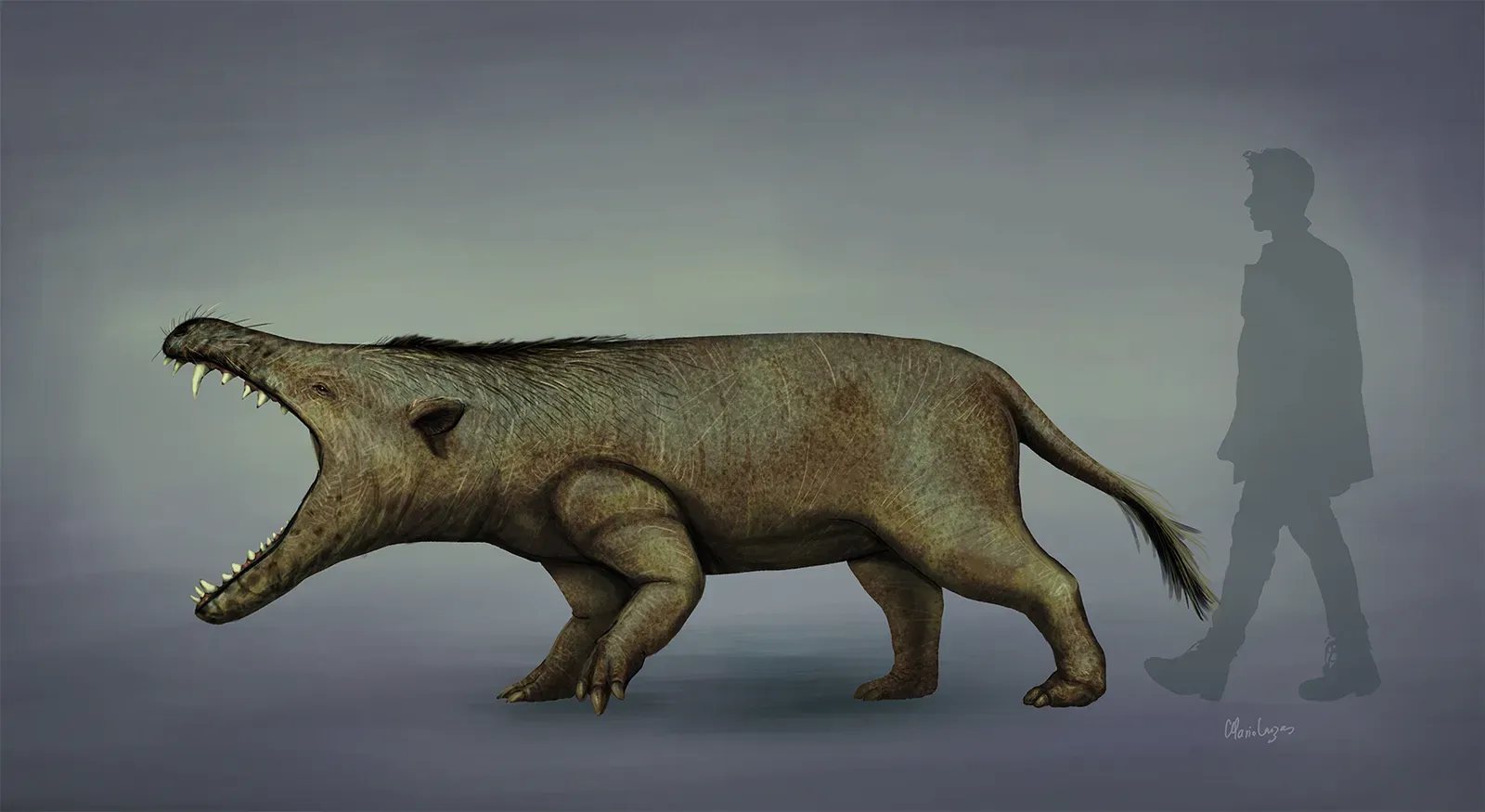
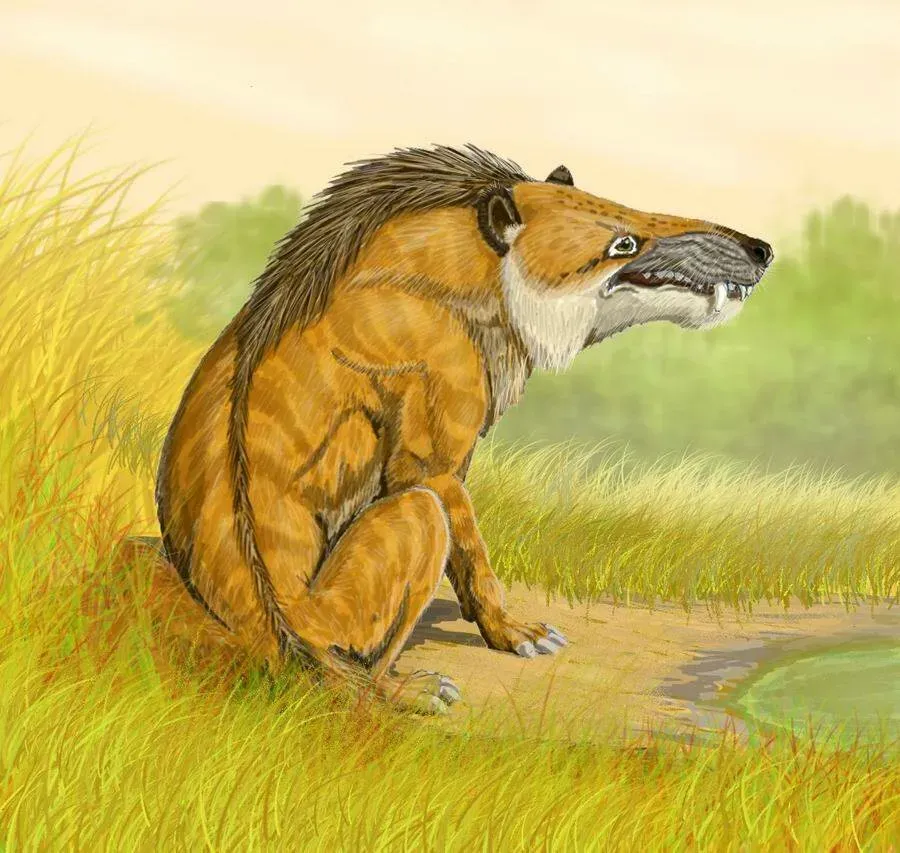
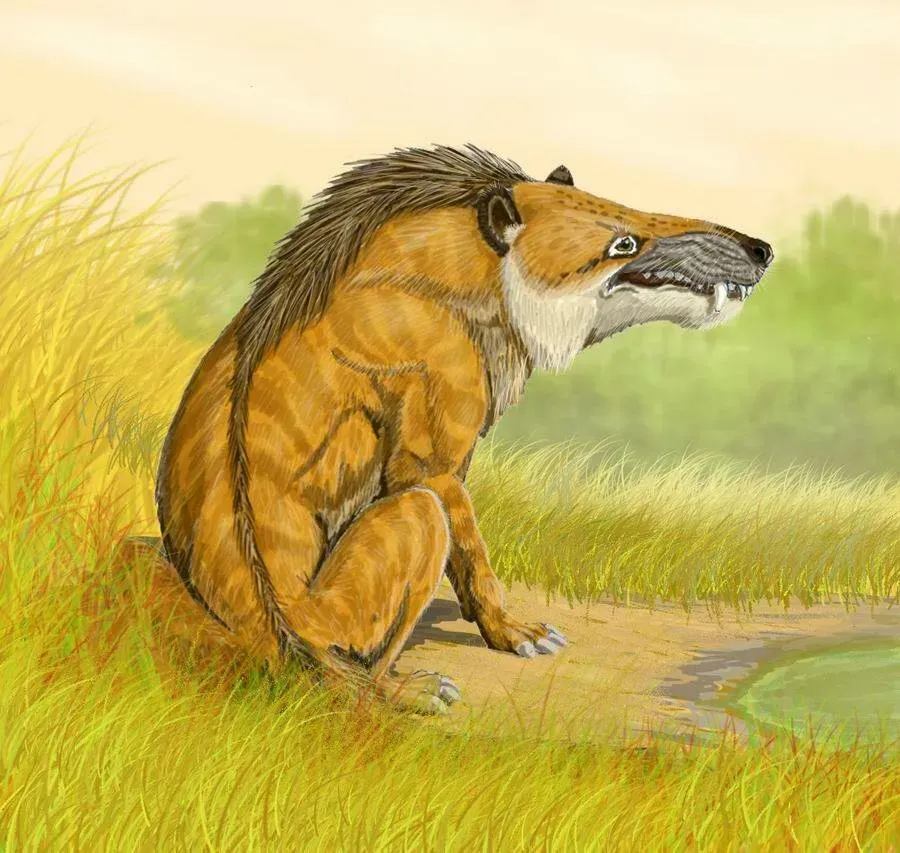
Andrewsarchus was a large mammal that lived during the Paleogene period. It was an early artiodactyl, a group that includes hoofed animals related to hippos and whales. Discovered in Mongolia by naturalist Roy Chapman Andrews, after whom the genus was named, Andrewsarchus was a large-snouted predator that, based on skull measurements, may have been the largest carnivorous mammal ever to live on land.
The heavily built, wolf-like animal walked on four short legs and had a long body and tail with hoofed feet. It had a terrifying snout with large, bone-crushing teeth and could have weighed anywhere between roughly 1,764 pounds to over 2,200 pounds. Its monumental size makes Andrewsarchus the largest known meat-eating land mammal that ever lived, and those hoofed feet actually place it in a group more closely related to hippos and whales. Let that sink in for a moment. The biggest land predator mammal of all time was essentially a distant cousin of the friendly hippopotamus.
Conclusion: The Stranger Side of Prehistoric Life
Dinosaurs deserve their fame, no question. Yet the Earth’s prehistoric story is so much richer, stranger, and more jaw-dropping than pop culture gives it credit for. From a five-eyed Cambrian oddity with a backward-facing mouth to a car-sized millipede crunching through ancient forests, these seven beasts make it clear that life on this planet has never played it safe.
The deeper you look into Earth’s ancient past, the more it feels like you’re reading a science fiction novel that someone forgot to label as fiction. Evolution, unconstrained and experimental, produced forms that defy every expectation we have about what an animal should look like. It’s humbling, a little unsettling, and completely magnificent all at once.
Next time someone tells you dinosaurs were the strangest things to ever walk, swim, or crawl on this planet, you’ll know better. The real question is: which of these seven bizarre beasts surprised you the most? Drop your thoughts in the comments.