Long before paleontology had a name, long before museum halls displayed towering skeletons under controlled lighting, people were already finding bones. Enormous, inexplicable, deeply unsettling bones. And they did exactly what you or I would probably do: they told stories about them.
Imagine stumbling upon a massive skull buried in the earth, its teeth longer than your forearm and eye sockets that could swallow your fist. For ancient peoples who had no concept of extinction or deep time, those discoveries must have felt like glimpses into another world entirely. Honestly, it’s hard to blame them. The gap between “unidentified giant bone” and “it must be a monster” isn’t that wide when you have no science textbook to consult.
What follows is a journey through seven remarkable ancient cultures whose most powerful myths may have had something very real, and very prehistoric, lurking beneath them. Some connections are well-supported; others remain tantalizing theories. Either way, the story is extraordinary. Let’s dive in.
The Ancient Greeks and the One-Eyed Giant
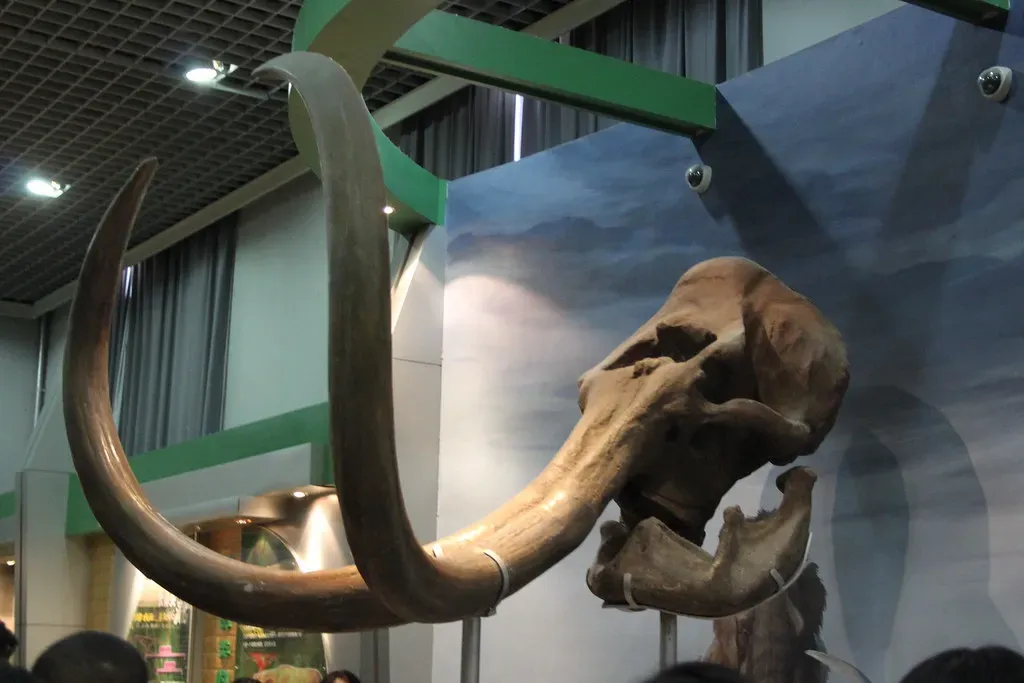
The ancient Greeks were fantastic storytellers and the likely creators of many mythical creatures, from gorgons to minotaurs. None of their creations, however, is better known than the Cyclops, the one-eyed giant that Odysseus famously defeats in Homer’s epic poem The Odyssey. You’ve heard this story since childhood, probably. A hulking, terrifying creature with a single enormous eye, living in a cave, crushing men like insects. Scary stuff. The question is: where did this image actually come from?
These one-eyed giants have been written about in Greek and Roman mythology since at least the fifth century B.C., associated mostly with Sicily and the Aeolian Islands. Yet 200,000 years before those islands were inhabited by ancient Greeks, they were the stomping grounds of mammoths. Fossils of these elephant relatives are often found in caves, and their skulls are a bit confusing at first glance. The large hole on the front of the skull is actually for the trunk and nasal cavity, but it’s easy to see how it could be interpreted as an eye socket. So there you have it. One strange-looking mammoth skull, one Greek storyteller with a vivid imagination, and suddenly you have one of the most enduring monster myths in all of Western literature. A single nasal cavity. That’s all it took.
The Scythians, the Greeks, and the Gold-Guarding Griffin
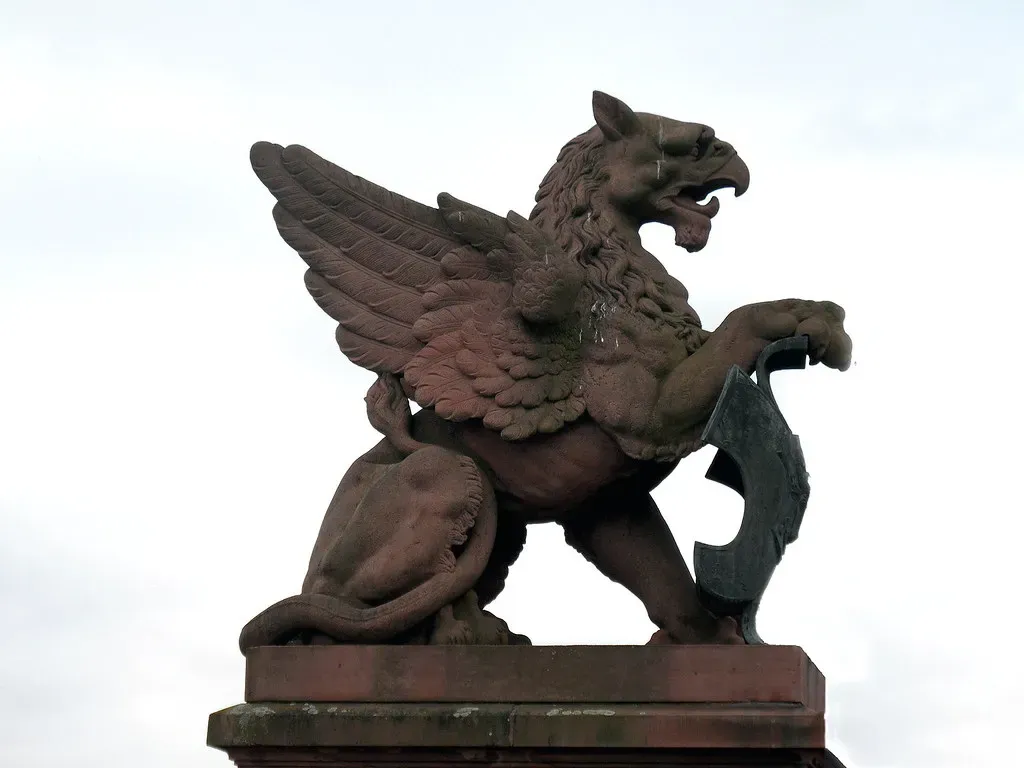
Here’s a theory that has sparked decades of academic debate, and honestly, it’s one of the most compelling connections on this entire list. The griffin myth began around 5,000 years ago and entered the Greek narrative as early as the 8th century BCE. Picture it: a fearsome creature with the body of a lion and the head and wings of an eagle, perched atop mountains of gold, daring anyone to come near.
The legend of the gold-guarding griffin sprang from tales first told by Scythian gold-miners, who, passing through the Gobi Desert at the foot of the Altai Mountains, encountered the skeletons of Protoceratops and other dinosaurs that littered the ground. A fossil of a Protoceratops, with just the bones remaining, could easily be mistaken for a four-legged mammal with the head of a bird. Given that the lion was to many cultures the most fearsome mammal while the eagle was the most fearsome flying creature, it is not surprising that those two animals were chosen. It’s worth noting that not everyone agrees. A study conducted by Dr. Mark Witton and Richard Hing, palaeontologists at the University of Portsmouth, challenged the popular assumption that the half-animal, half-bird griffin was inspired by Protoceratops fossil material found by ancient nomads. The debate continues. Regardless, the geographical overlap between griffin folklore and Protoceratops fossil sites in Central Asia is hard to dismiss entirely.
Ancient China and the Dragon Bones That Cured Disease
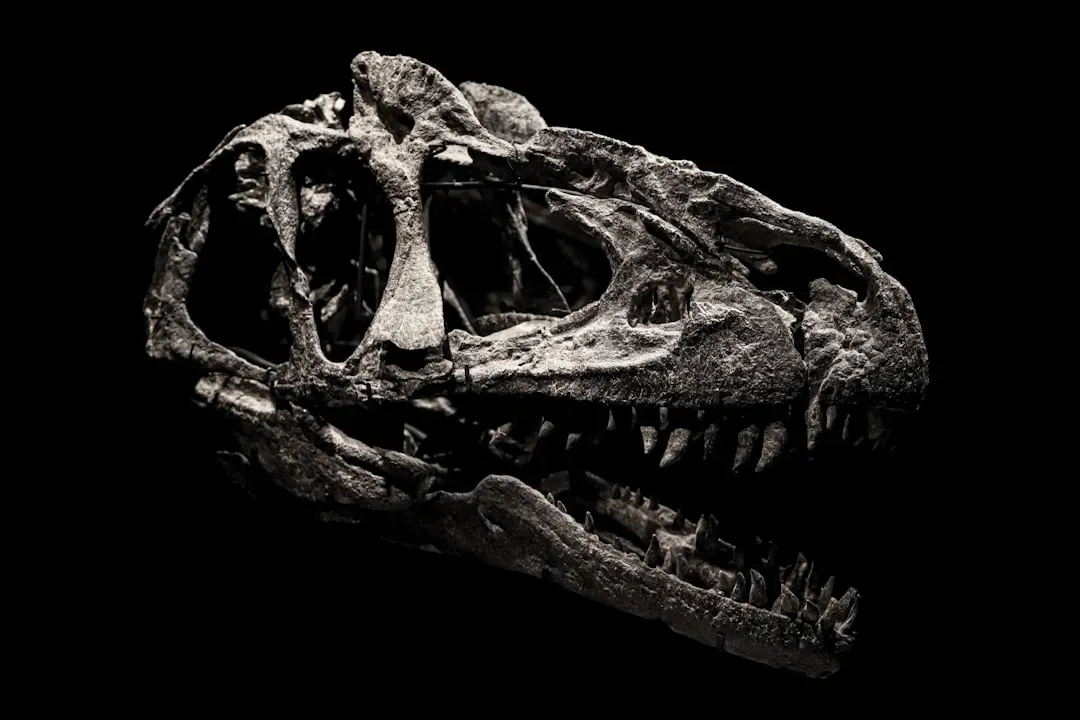
If you think the Western world had an interesting relationship with fossils, wait until you hear about China. Long before modern paleontology existed, Chinese apothecaries were grinding up dinosaur fossils and selling them as powerful medicine. These “dragon bones” were believed to cure everything from malaria to madness, commanding prices that would make modern fossil collectors weep. You read that correctly. Genuine dinosaur fossils, pulverized and swallowed.
For over two millennia, Chinese medicine men collected massive quantities of fossil bones from sites across the country. They didn’t know they were handling Tyrannosaurs and Triceratops-like creatures, but they recognized something extraordinary in these ancient remains. The bones were so perfectly preserved and so unlike anything in their modern world that they could only belong to the legendary dragons of Chinese mythology. The Chinese 龍 (lóng) echoes the elongated spines of Mamenchisaurus, discovered in regions where dragon worship originated millennia before formal paleontology. The irony here is almost poetic. While Western scientists were dismissing dragon tales as pure fantasy, Chinese merchants were literally selling dragon remains in their apothecary shops.
Native Americans and the Sky-Dominating Thunderbird
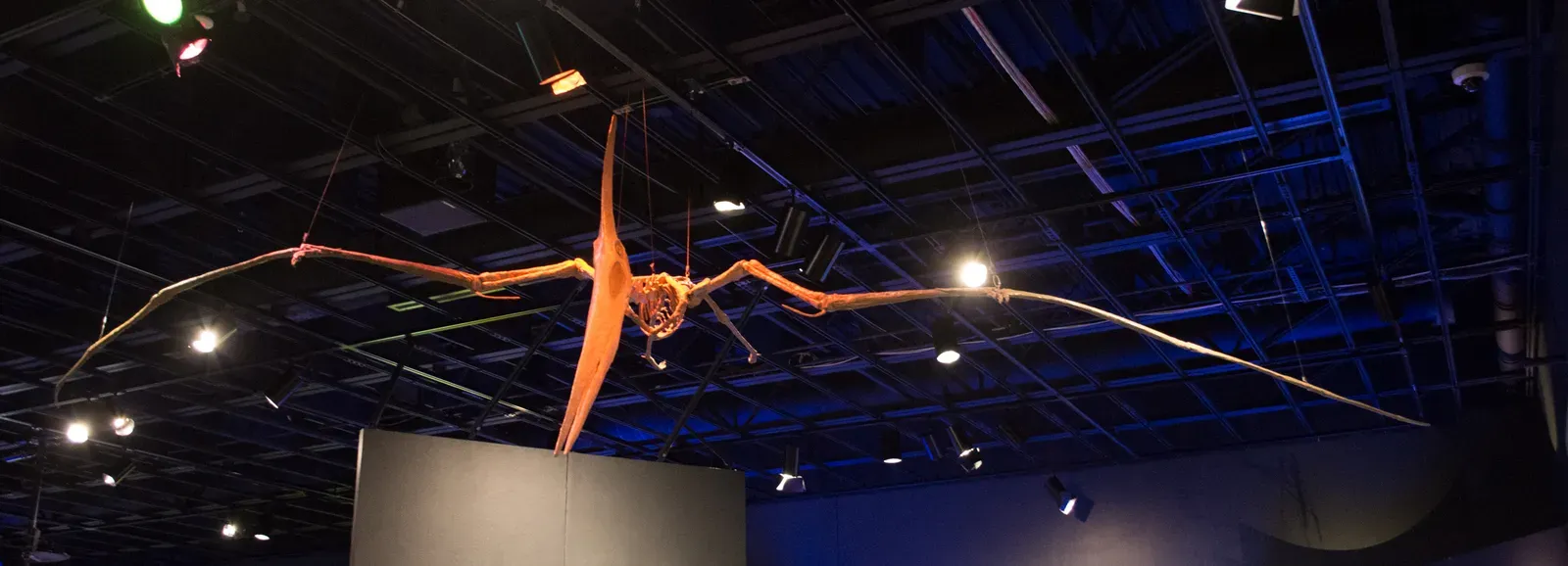
The Thunderbird is a mythological bird-like spirit in North American Indigenous peoples’ history and culture. It is considered a supernatural being of power and strength. It is frequently depicted in the art, songs, and oral histories of many Pacific Northwest Coast cultures, but is also found in various forms among some peoples of the American Southwest, the East Coast, Great Lakes, and Great Plains. The Thunderbird didn’t just appear in one tribe’s stories. It was everywhere, which already suggests something powerful was driving the narrative.
These northern teratorns encountered humans at the end of the Pleistocene, roughly 11,000 years ago. They probably influenced the various Thunderbird myths of the Native Americans, stories which are still told today. Reports of Thunderbird sightings go back centuries, and the fossil record does show that giant birds, teratorns, with wingspans between roughly 12 and 18 feet, were likely contemporary with early humans. Think about that scale for a moment. A bird with a wingspan the length of a school bus, casting a shadow the size of a small building as it soared overhead. You’d build a mythology around that too.
Aboriginal Australians and the Terror of the Bunyip
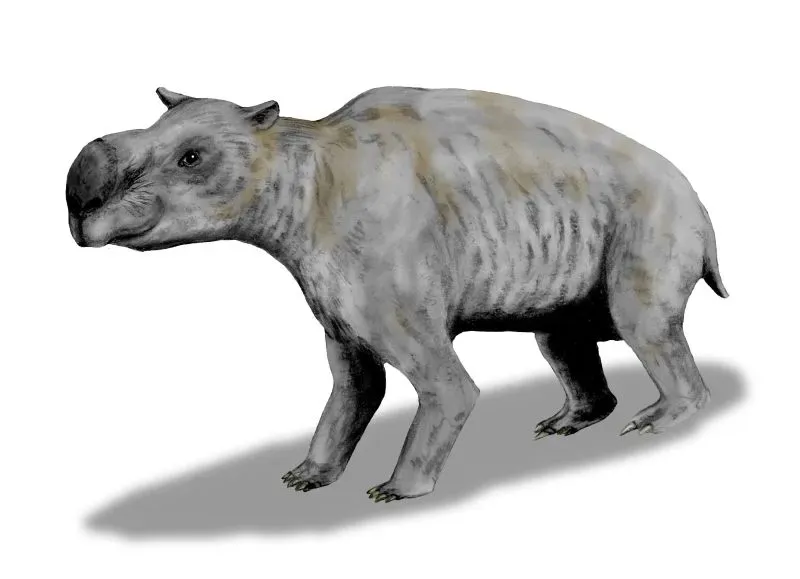
Aboriginal Australians have maintained an oral tradition spanning over 60,000 years, making them uniquely positioned to preserve memories of encounters with prehistoric creatures. That number alone should make you stop and think. Sixty thousand years of continuous storytelling. That’s not myth. That’s memory on a geological scale.
One intriguing explanation for the Bunyip legend is the possibility that it represents a cultural memory of extinct Australian megafauna. This theory, first proposed by Dr. George Bennett of the Australian Museum in 1871, suggests that Aboriginal stories of the Bunyip might be based on encounters with creatures like the Diprotodon, Zygomaturus, or Palorchestes. These massive marsupials, some of which could grow to the size of a rhinoceros, roamed Australia until relatively recently in geological terms. The last of these creatures are thought to have died out around 40,000 years ago, potentially overlapping with human habitation of the continent. The Bunyip, a semi-aquatic, dog-faced man-eater from Aboriginal Australian mythology, is thought to have been inspired by Diprotodon. Some suggest that Aboriginal legends of this monster may have stemmed from finds of fossilised bones, or even cultural memories of the time when the first Australians lived alongside Diprotodon. It’s hard to say for sure, but the geographic overlap between Bunyip legend sites and Diprotodon fossil deposits throughout Australia is striking enough to deserve serious attention.
The Ancient Carthaginians and the Giants of North Africa
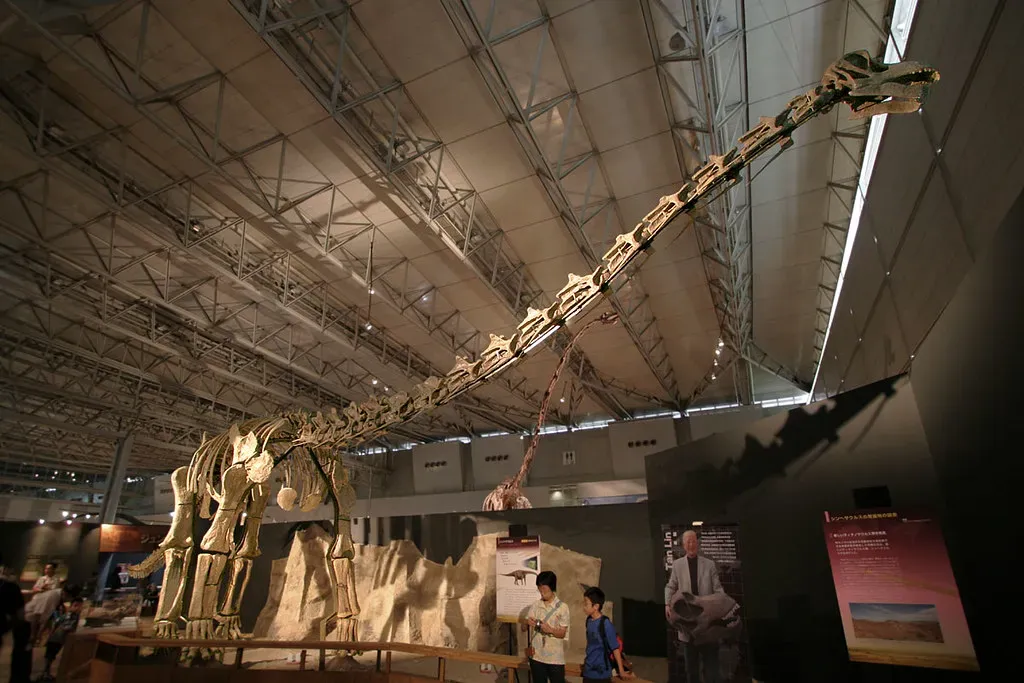
This one doesn’t get nearly enough attention, and I think that’s a shame. In North Africa during the third to second century B.C., Carthaginians were digging trenches when they came upon two fossilized skeletons, each about 34 feet long. The skeletons were assumed to be those of mythic giants, and Phlegon of Tralles, who served Hadrian, claimed that the skeletons were proof that all life forms were becoming smaller. The philosophical leap from “giant fossil” to “proof of universal shrinkage” is genuinely wild, but you can follow the internal logic.
This area, ancient Carthage on the Gulf of Tunis, is rich with mastodon fossils, deinotheres, and mammoths. These were the actual creatures leaving those enormous bones in the Carthaginian soil, though no one at the time had any framework to understand that. The Greeks and Romans were well aware that a different breed of creatures once inhabited their lands. They frequently encountered the fossilized bones of these primeval beings, and they developed sophisticated concepts to explain the fossil evidence, concepts that were expressed in mythological stories. You have to admire that, in a way. They were doing their best version of science with the tools available to them.
The Indigenous Peoples of the Americas and Their Fossil Monsters
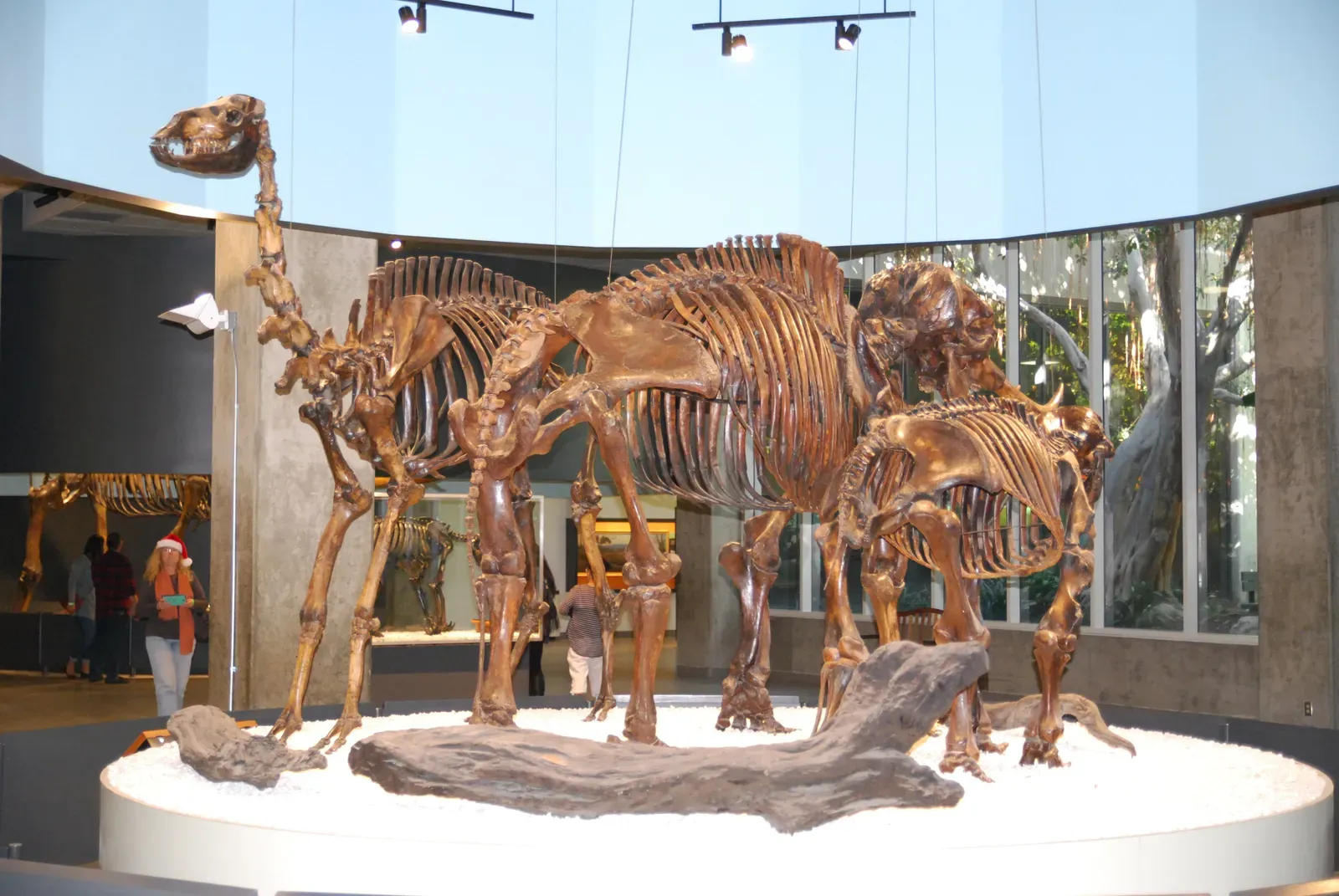
In 2005, researcher Adrienne Mayor published the book Fossil Legends of the First Americans, in which she argued that many stories from Native American cultures are directly inspired by ancient discoveries of fossils of prehistoric creatures. The range and variety of these connections across the Americas is genuinely breathtaking. It’s not just one tribe, one region, or one type of creature.
Included in these findings are myths about monster bison, giants that were neither man nor animal but were probably based on mastodon bones, a giant monster that promised its own extinction thought to be a mammoth, giants in Tlaxcala, Mexico believed to have killed all the ancestors of the Tlaxcalteca people presumed to be inspired by Colombian mammoth fossils, bird monsters that were probably fossilized prehistoric birds of prey, giant lizards assumed to be Triceratops-like creatures, and sea creatures that battled flying creatures assumed to be the marine fossils of mosasaurs and pterosaurs. Ancient cultures were very attuned to the natural world around them and made careful observations of the fossils in their environment. Based on their understanding of how the world works, they came up with imaginative explanations for the histories they saw in the bones and rocks they found. Let’s be real: that’s not superstition. That’s a form of inquiry. It’s curiosity wearing mythological clothing.
Conclusion
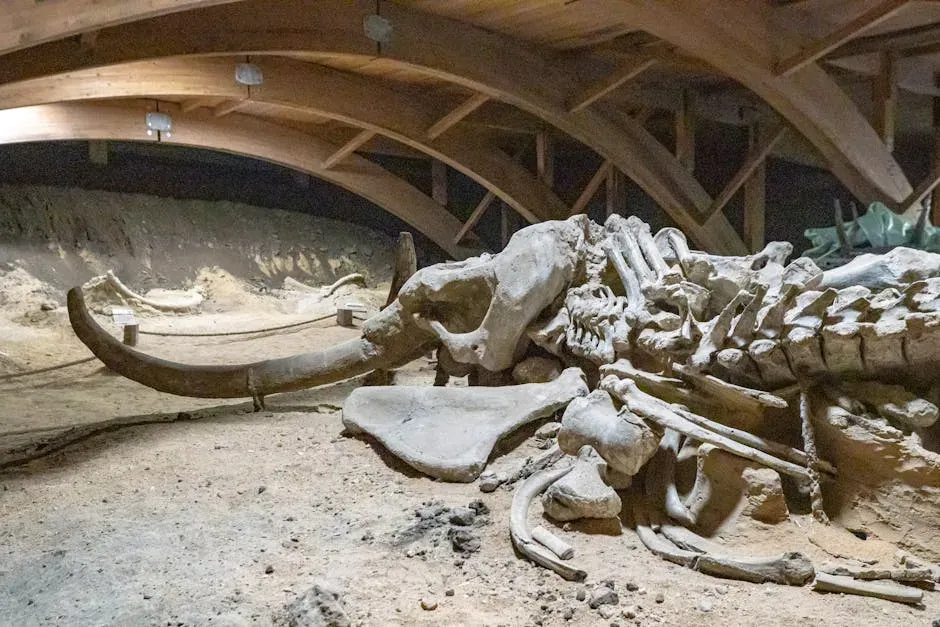
What ties all seven of these cultures together is something deeply human: the refusal to leave an unexplained bone just sitting there. Long before paleontology emerged as a science, cultures across the world encountered fossils. Fossils have sparked human curiosity for millennia. Though the thoughts of our ancient ancestors can’t be known, there’s compelling evidence that they discerned the unique patterns and distinctive nature of prehistoric life’s remnants.
The myths these people created weren’t born of ignorance. They were born of observation, of careful attention to the physical world, filtered through the cultural lenses they had available. There may be small morsels of truth at the heart of many myths and legends, but it’s nearly impossible to trace them back to a single point of origin and prove they were inspired by real-life prehistoric creatures. All we can really do is speculate as to their origins. Nevertheless, it’s interesting to think how our ancestors may have interpreted the remains of extinct animals and how those interpretations may have shaped their view of the world around them.
The bones spoke. The stories answered. Some of those stories are still with us today, which means in a strange and beautiful way, the prehistoric world never truly went silent. What do you think, could the monster under your culture’s mythological bed actually be a fossil? Tell us in the comments.