Millions of years before humans ever walked the Earth, something far more dramatic was playing out across ancient floodplains, dense jungles, and scorching deserts. Creatures of almost unimaginable size were locked in brutal, life-or-death struggles that would determine who ate, who survived, and who shaped the very ecosystems around them. These weren’t just random fights. They were evolutionary events.
You might think paleontology is a quiet science, full of careful brushing and cataloguing. Honestly, it is. But buried within the bones and sediments are stories of breathtaking violence that science is only beginning to fully decode. Let’s dive in.
1. T. rex vs. Triceratops: The Clash of the Cretaceous Titans
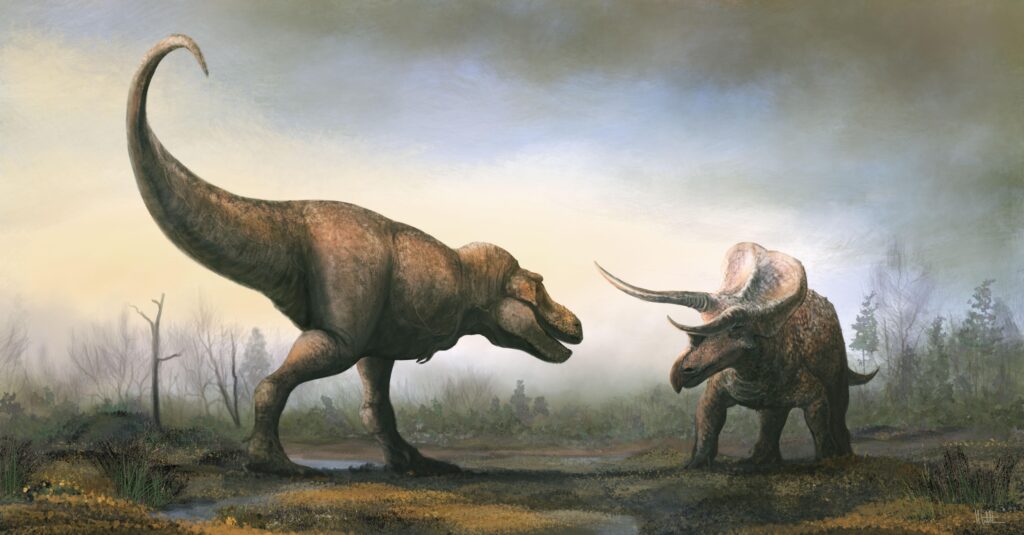
Here’s the battle that started every playground argument since the first dinosaur book was printed. One of the most iconic battles in dinosaur history is that of T. rex and Triceratops, two behemoths that lived during the Late Cretaceous period and were among the most fearsome creatures of their time. Think of it like a living freight train trying to take down a walking tank. Neither side was built to lose easily.
The T. rex was a massive predator weighing up to 7 tons, while the Triceratops was a powerful herbivore weighing up to 12 tons. The T. rex had powerful jaws and sharp teeth, while the Triceratops had a large frill and impressive horns on its head. When examining the skeletons of dinosaurs living at the same time as T. rex, more and more cases where T. rex bite marks are being found. These did not always result in the death of the animal, as many fossil specimens show regrowth of bone at the site of the wound. In addition to bite marks, T. rex teeth have even been found embedded in the bones of their prey. You read that right. Evidence of actual attacks, healed wounds, survived ordeals. This wasn’t just theory.
2. Velociraptor vs. Protoceratops: The Most Famous Frozen Fight in History
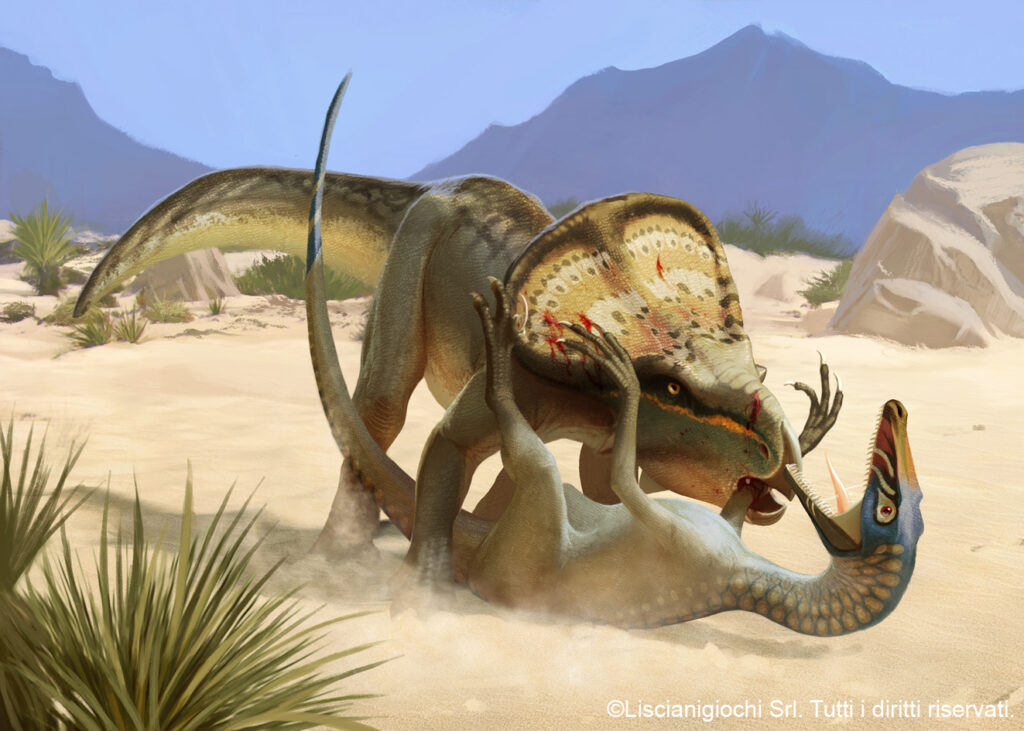
If you want real drama, forget Hollywood. About 80 million years ago during the Cretaceous Period in the Gobi Desert, two dinosaurs were locked in deadly combat. A hungry Velociraptor dug its sharp toe-claw into the neck of a Protoceratops, while the Protoceratops bit the Velociraptor’s arm with its sharp beak. Then, suddenly, they were buried alive. The moment was frozen forever, mid-struggle, mid-breath.
The fossil specimen, found in the Late Cretaceous Djadokhta Formation of Mongolia in 1971, preserves a Protoceratops andrewsi and Velociraptor mongoliensis locked in combat between 75 million and 71 million years ago and provides direct evidence of predatory or agonistic behaviour in non-avian dinosaurs. Nicknamed the “Fighting Dinosaurs,” this is often called one of the greatest fossil specimens ever found. It’s the prehistoric equivalent of a security camera catching a crime in progress. I think nothing in paleontology hits quite as hard as this one.
3. Allosaurus vs. Stegosaurus: When the Hunter Became the Hunted
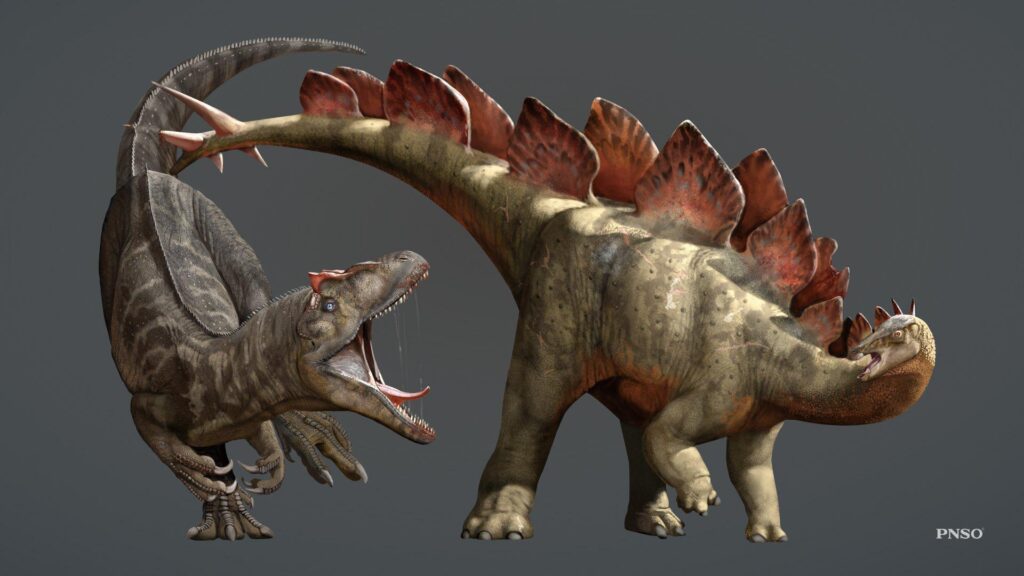
Here’s where things get truly interesting, because this battle didn’t always end the way you’d expect. In several reports, individuals of the large predator Allosaurus have been found with puncture wounds from encounters with Stegosaurus. Robert Bakker and colleagues reported an Allosaurus specimen with multiple large wounds through its pelvis, roughly the size of the tail spikes carried by stegosaurs, known popularly as thagomizers. This Allosaurus was so severely injured that it did not recover and eventually died of its wounds. The prey fought back, and won.
In the Late Jurassic ecosystem, Stegosaurus and Allosaurus represented two distinctly different survival strategies. As a typical representative of herbivorous dinosaurs, Stegosaurus evolved a comprehensive defense system, while as a top predator, Allosaurus developed efficient hunting techniques. These two dinosaurs coexisted in the Morrison Formation approximately 155 to 145 million years ago. Using bipedal strides, Allosaurus could reach speeds of 21 to 35 mph. Stegosaurus, however, could only move at speeds of around 3.5 to 4.3 mph. Speed didn’t always decide the outcome. That tail spike was a lethal equalizer.
4. Spinosaurus vs. Carcharodontosaurus: Africa’s Clash of the Monster Kings
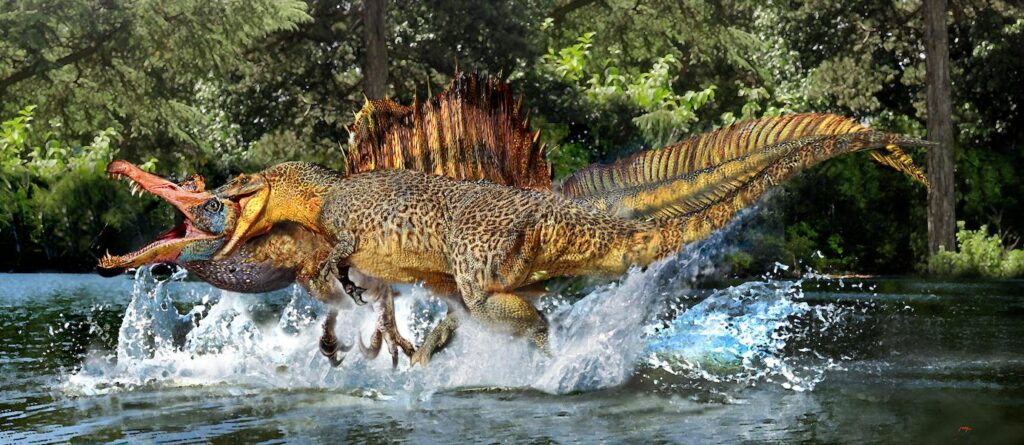
Imagine two of the largest carnivores that ever existed sharing the same patch of ancient North African wetland. Spinosaurus is among the largest known terrestrial carnivores, with other large carnivores comparable to Spinosaurus including theropods such as Tyrannosaurus, Giganotosaurus, and the contemporary Carcharodontosaurus. These two were literal neighbors in time and space. Let’s be real, the tension must have been extraordinary.
Many gigantic theropods are known from North Africa during this period, including both species of Carcharodontosaurus as well as the spinosaurid Spinosaurus and the possible ceratosaur Deltadromeus. North Africa at the time was blanketed in mangrove forests and wetlands, creating a hotspot of fish, crocodyliforms, and pterosaur diversity. Spinosaurus shared its world with massive predators such as Carcharodontosaurus and the horned dinosaur Ouranosaurus. Unlike these competitors, Spinosaurus appears to have focused on aquatic prey. That ecological divide may have kept full-scale war between them to a minimum. Still, territory is territory, and resources were finite.
5. Giganotosaurus vs. Argentinosaurus: South America’s David and Goliath
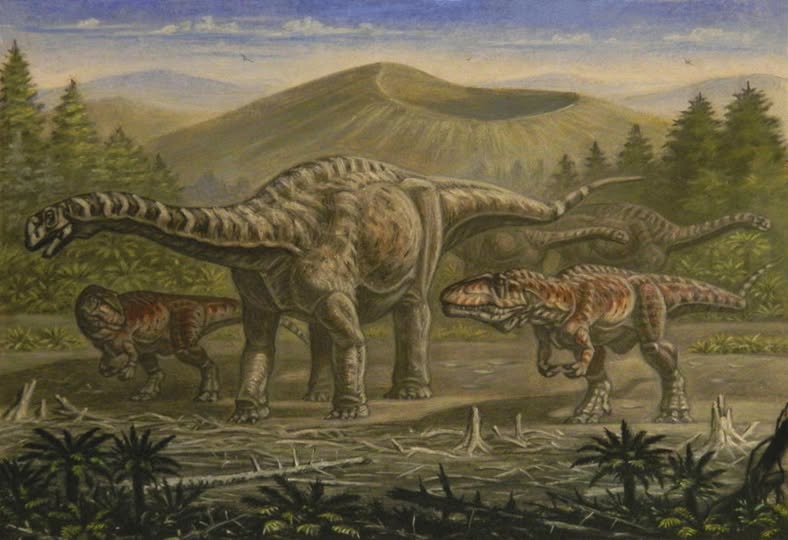
You want to talk about sheer scale? Giganotosaurus lived in what is now Argentina, during the early Cenomanian age of the Late Cretaceous period, approximately 99.6 to 95 million years ago. It was one of the most powerful hunters to ever stalk the southern hemisphere. Its potential prey, Argentinosaurus, was one of the largest animals to ever walk on land. It’s a bit like a great white shark deciding to chase a blue whale.
Discovered in Argentina, Giganotosaurus measured up to 43 feet long and weighed over 8 tons. Its longer skull housed blade-like teeth perfect for slicing flesh. Some scientists believe it hunted Argentinosaurus, one of the largest dinosaurs ever. Many apex predators may have fought lower-ranking hunters as the latter attempted to climb the food chain, but Giganotosaurus was firmly at the very top. Whether you view this contest as predator versus prey or power versus power, it stands as one of prehistory’s most staggering matchups.
6. Repenomamus vs. Psittacosaurus: The Day the Mammal Won
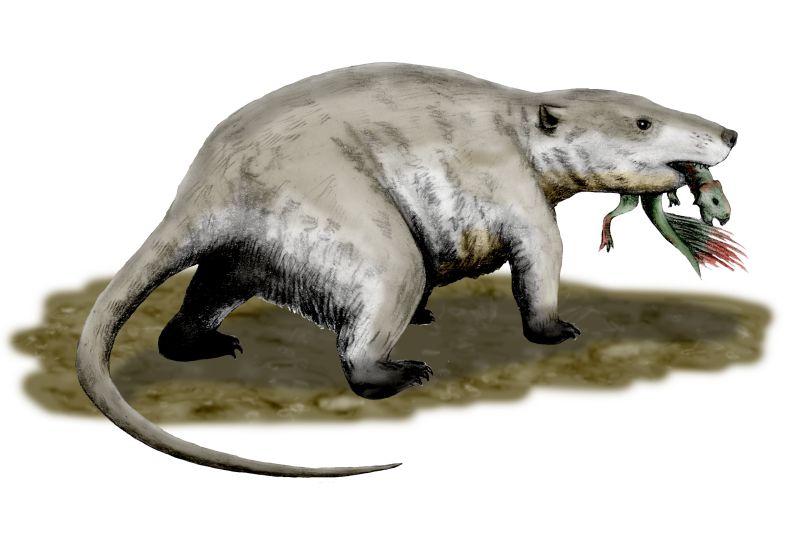
This one will genuinely surprise you. Everyone assumes dinosaurs were always on top. They weren’t. A small badger-like mammal and a young bipedal dinosaur were locked in “mortal combat” around 125 million years ago before being entombed by a sudden volcanic eruption, creating a stunning fossil that perfectly preserves their fight to the death. A mammal, taking on a dinosaur. Shocking doesn’t even cover it.
The epic fossil was unearthed from the Liujitun fossil beds in China’s Liaoning Province in 2012. The area has been dubbed “China’s dinosaur Pompeii” because volcanic mudflows during the mid-Mesozoic era rapidly covered the area and perfectly preserved the unfortunate creatures in its path. The most convincing evidence that the mammal was the winner is that its teeth were embedded in the dinosaur’s ribcage when the animals died, having potentially just delivered the killing blow. That detail still blows my mind every single time.
7. T. rex vs. Edmontosaurus: The Apex Predator and Its Greatest Test
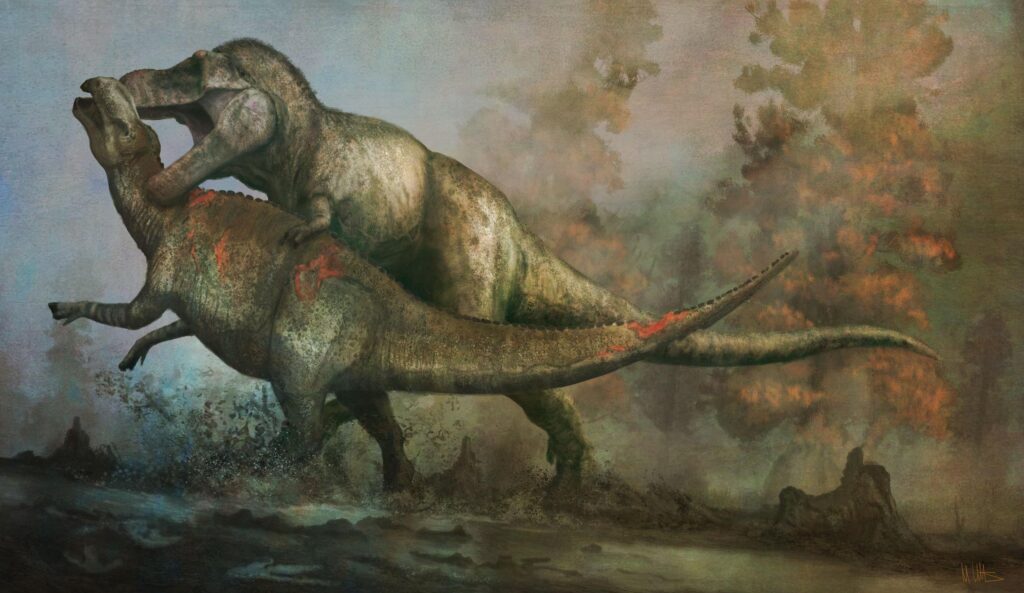
By far the largest carnivore in its environment, Tyrannosaurus rex was most likely an apex predator, preying upon hadrosaurs, juvenile armored herbivores like ceratopsians and ankylosaurs, and possibly sauropods. Among these hadrosaurs, Edmontosaurus was one of the most common prey animals in its range. But calling it a simple target would be a massive mistake. These were large, herd-forming animals that could reach lengths of nearly 40 feet.
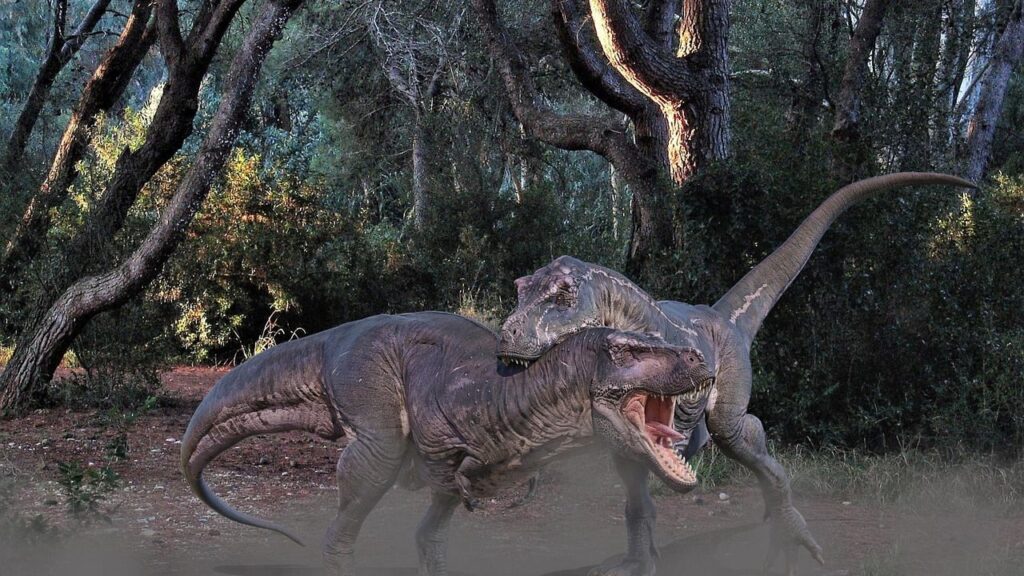
Mounting evidence suggests T. rex was a capable predator but would also have taken advantage of an easy meal like another freshly-dead dinosaur. Whereas other dinosaurs may have had to close their mouths around prey several times to deliver a series of weakening bites, Tyrannosaurus only had to bite once. That single-strike killing power made it terrifyingly efficient. T. rex was enormous, stretching up to 40 feet long and weighing as much as nine tons, with jaws lined with serrated teeth the size of bananas, capable of delivering one of the strongest bites of any land animal in history. Against a fleeing Edmontosaurus herd, even this monster had to work for its meal.
Conclusion: The Battles That Built a World
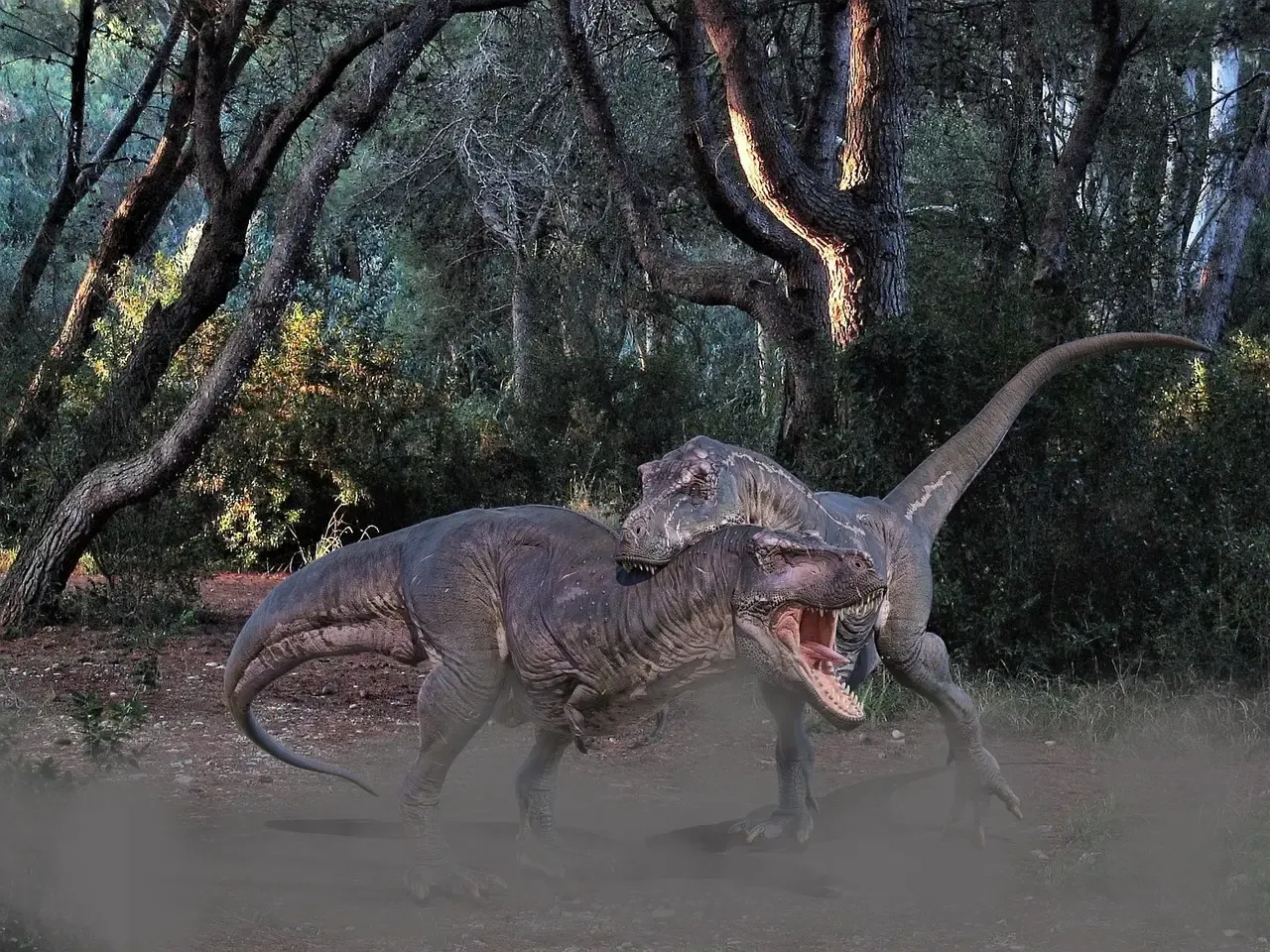
What makes these prehistoric clashes so endlessly fascinating is that they weren’t just violent spectacles. They were the engine of evolution itself. An evolutionary arms race is a process in which predators and prey continually adapt and evolve to outsmart each other. Every horn that grew longer, every hide that thickened, every claw that sharpened, was a direct response to conflict. The battlefields were the laboratories.
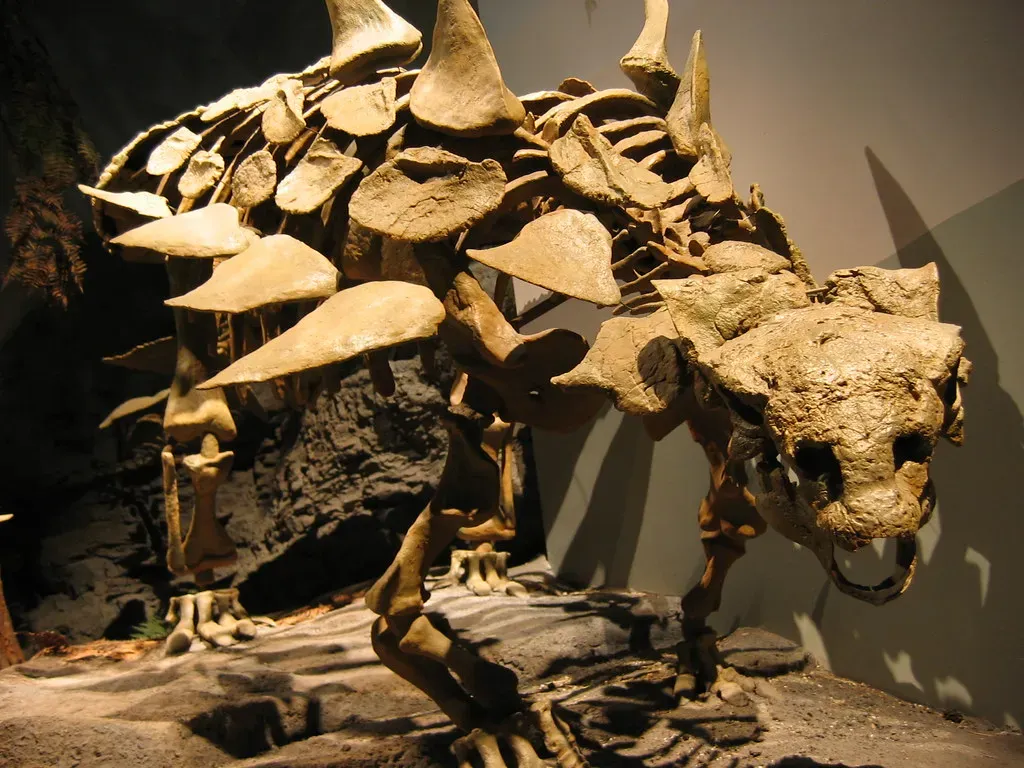
We can come up with theories by looking at today’s predators and dinosaur fossils. Theropods with short forelimbs and sharp claws likely used their talons to swipe at their opponents. Carnivores could also rely on their teeth to bite prey and sometimes deliver the killing blow. Herbivores like Ankylosaurus or Stegosaurus likely used defensive body features like their spikes or tails to protect themselves. Nature’s logic, then and now, remains ruthlessly consistent. Survive, adapt, repeat.
The next time you look at a fossil in a museum case, consider what it actually took to get there. Behind every polished bone is a story of a creature that lived, fought, and fell in a world so raw it makes our modern world look positively gentle. Which of these seven battles do you find most jaw-dropping? Tell us in the comments below.