Imagine standing next to a creature so massive that its heart alone would dwarf a small car. Picture a predator with teeth longer than your forearm, or a gentle giant whose wingspan could cover a tennis court. These aren’t figments of imagination – they’re the real titans that once dominated our planet, and their fossil remains continue to shatter our understanding of just how large life can grow.
The discovery of these prehistoric giants has revolutionized paleontology, forcing scientists to reconsider the biological limits of animal size. Each fossil tells a story of evolutionary extremes, environmental pressures, and the incredible diversity of life that existed millions of years ago. From the deepest ocean trenches to the highest mountain peaks, these colossal creatures ruled their domains with an authority that modern animals can barely comprehend.
The Titan of the Deep: Leedsichthys problematicus

When paleontologists first uncovered fragments of Leedsichthys problematicus in 1886, they had no idea they were looking at the remains of the largest bony fish that ever lived. This Jurassic giant stretched an estimated 54 feet in length, making it longer than a school bus and dwarfing today’s largest bony fish by a factor of three.
What makes Leedsichthys truly remarkable isn’t just its size, but its feeding strategy. Despite being a massive predator, this gentle giant was a filter feeder, cruising through ancient seas with its mouth agape to capture plankton and small fish. Its gill rakers, the comb-like structures used for filtering, were so large that early researchers mistook them for ribs.
The discovery of more complete specimens has revealed that Leedsichthys possessed a unique skeletal structure that allowed it to reach such enormous proportions. Unlike modern bony fish, its vertebrae were only partially ossified, creating a lighter but still sturdy framework that could support its massive body without the crushing weight that would doom smaller fish scaled up to similar sizes.
The Sky’s Former Ruler: Quetzalcoatlus northropi

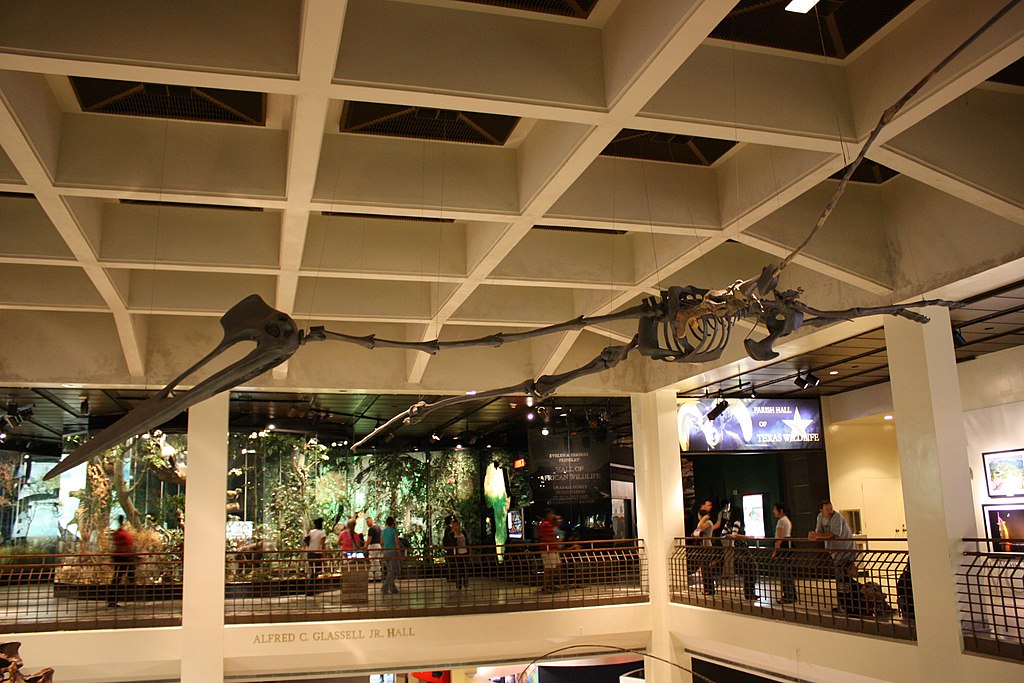
Picture a giraffe with wings, and you’re getting close to visualizing Quetzalcoatlus northropi, the largest flying animal ever discovered. With a wingspan reaching 36 feet, this pterosaur could glide across Late Cretaceous skies like a living aircraft, casting shadows that would terrify any ground-dwelling creature below.
The physics-defying nature of Quetzalcoatlus has puzzled scientists for decades. How could an animal with hollow bones and a lightweight build generate enough lift to become airborne? Recent studies suggest these giants were masters of soaring, using thermal currents and ridge lift to stay aloft for hours with minimal energy expenditure.
What’s even more astounding is that Quetzalcoatlus likely spent much of its time on land, stalking prey like a massive stork. Its long, powerful legs and robust build suggest it was equally at home hunting small dinosaurs and other terrestrial creatures, making it one of the most versatile predators of its time.
The Walking Earthquake: Argentinosaurus huinculensis

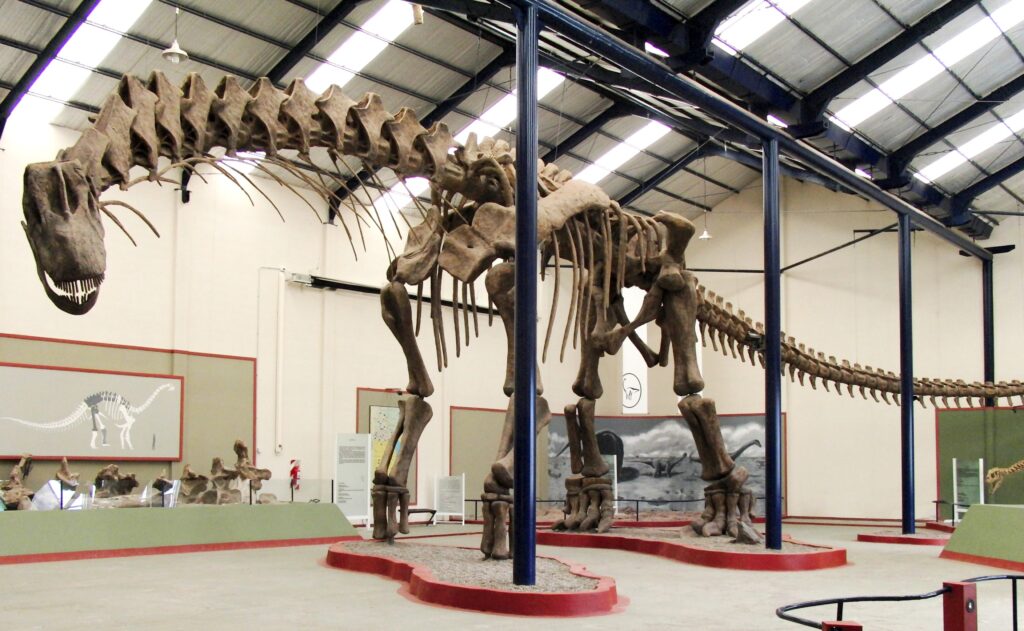
When you think of dinosaurs, size matters, but nothing prepared the scientific community for Argentinosaurus huinculensis. This titanosaur from Argentina redefined what we thought possible for land animals, with estimates suggesting it reached lengths of up to 130 feet and weights approaching 100 tons, equivalent to about 12 African elephants.
The sheer scale of Argentinosaurus challenges our understanding of biomechanics and physiology. How did its heart pump blood ap that impossibly long neck? How did it support its weight without its legs buckling? The answers lie in a series of evolutionary innovations, including air-filled vertebrae that reduced weight while maintaining strength.
Perhaps most remarkably, Argentinosaurus lived in herds, meaning the ground would have shaken as these giants moved across the landscape. Their footprints, preserved in ancient riverbeds, tell the story of massive migrations that shaped entire ecosystems through their presence alone.
The Ocean’s Ultimate Predator: Livyatan melvillei

Long before great white sharks terrorized the seas, there was Livyatan melvillei – a sperm whale with teeth so massive they make a T. rex look modest. This Miocene monster possessed the largest teeth ever recorded in any animal, with some specimens measuring over 14 inches in length and weighing several pounds each.
Unlike modern sperm whales that primarily feed on squid, Livyatan was designed for hunting other whales. Its robust skull and powerful jaw muscles could deliver bone-crushing bites that would have made short work of even the largest prey. The discovery of bite marks on contemporary whale fossils provides chilling evidence of their predatory prowess.
What makes Livyatan particularly fascinating is that it coexisted with Carcharocles megalodon, the giant shark. These two apex predators likely competed for the same prey, creating one of the most intense predator-prey dynamics in Earth’s history. The ocean was their battlefield, and only the largest and most powerful survived.
The Armored Fortress: Dunkleosteus terrelli

Before sharks dominated the seas, there was Dunkleosteus terrelli – a 30-foot-long armored fish that redefined what it meant to be a marine predator. This Devonian monster didn’t have teeth in the traditional sense; instead, it possessed razor-sharp bone plates that could slice through anything with the force of a hydraulic press.
The bite force of Dunkleosteus has been calculated at over 11,000 pounds per square inch, making it one of the most powerful biters in Earth’s history. To put this in perspective, that’s enough force to bite through a car door or crush a small tree. Its victims didn’t stand a chance against this living can opener.
What’s truly remarkable about Dunkleosteus is its evolutionary timing. It lived during the Devonian period, often called the “Age of Fishes,” when vertebrates were just beginning to experiment with size and predatory strategies. Dunkleosteus represented the pinnacle of prehistoric marine predation, an evolutionary peak that wouldn’t be matched for millions of years.
The Gentle Giant of the Jurassic: Diplodocus carnegii

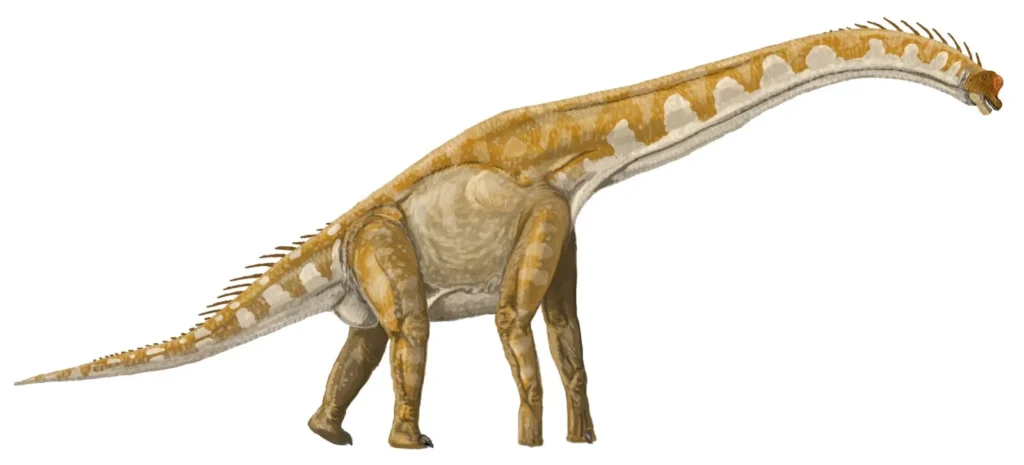
While Argentinosaurus claimed the title of heaviest, Diplodocus carnegii earned fame as one of the longest land animals ever discovered. Stretching up to 90 feet from nose to tail, this Jurassic giant was built like a suspension bridge, with its incredibly long neck and tail balanced by a relatively compact body.
The engineering marvel of Diplodocus lay in its lightweight construction. Its vertebrae were filled with air sacs, similar to those found in modern birds, reducing weight while maintaining structural integrity. This innovation allowed it to reach extraordinary lengths without becoming too heavy to move effectively.
Recent studies have revealed that Diplodocus could use its massive tail as a weapon, cracking it like a whip to produce sonic booms that could be heard for miles. This peaceful-looking giant was far from defenseless, capable of delivering devastating blows to any predator foolish enough to threaten it.
The Winged Serpent: Hatzegopteryx thambema

Even among pterosaurs, Hatzegopteryx thambema stood out as something truly extraordinary. This Romanian giant possessed not only an impressive wingspan of up to 33 feet but also a build that was far more robust than its contemporaries. While other pterosaurs were built for soaring, Hatzegopteryx was designed for power.
What sets Hatzegopteryx apart is its unusual hunting strategy. Unlike other pterosaurs that primarily fed on fish, this giant was likely a terrestrial predator, using its massive size and strength to hunt dinosaurs and other large prey. Its thick, powerful neck and robust skull suggest it could deliver devastating strikes to ground-dwelling victims.
The discovery of Hatzegopteryx has forced scientists to reconsider the diversity of pterosaur lifestyles. These weren’t just flying reptiles – they were aerial apex predators that dominated both sky and land, representing one of evolution’s most successful experiments in powered flight.
The Swimming Nightmare: Liopleurodon ferox

The Jurassic seas harbored a predator so fearsome that its name means “smooth-sided tooth.” Liopleurodon ferox was a pliosaur that reached lengths of up to 80 feet, making it one of the largest marine predators ever discovered. Its massive head, comprising nearly a quarter of its total body length, housed jaws filled with teeth the size of bananas.
What made Liopleurodon truly terrifying wasn’t just its size, but its speed and maneuverability. Unlike modern whales, which are built for endurance, Liopleurodon was designed for sudden, explosive attacks. Its powerful flippers could propel it through the water with surprising agility, making it the ultimate ambush predator.
The fossil record shows that Liopleurodon preyed on everything from fish to other marine reptiles, including smaller pliosaurs. Its bite marks have been found on ichthyosaurs and plesiosaurs, providing direct evidence of its predatory behavior. The Jurassic seas were its hunting ground, and few creatures were safe from its devastating attacks.
The Bone-Crushing Titan: Sarcosuchus imperator

Known as “SuperCroc,” Sarcosuchus imperator was a Cretaceous crocodilian that made modern crocodiles look like house pets. Reaching lengths of up to 40 feet and weighing as much as 8 tons, this African giant redefined what we thought possible for crocodilian evolution.
The skull of Sarcosuchus alone measured over 6 feet in length, housing a jaw filled with over 100 teeth designed for gripping rather than cutting. Unlike modern crocodiles that primarily ambush prey from the water, Sarcosuchus was likely semi-terrestrial, capable of pursuing prey on land with surprising speed and agility.
What makes Sarcosuchus particularly remarkable is its longevity. These giants could live for over 50 years, continuing to grow throughout their lives. The largest specimens were likely ancient individuals that had survived decades of competition and environmental challenges, becoming the undisputed rulers of their aquatic domains.
The Feathered Colossus: Gigantoraptor erlianensis

The discovery of Gigantoraptor erlianensis in 2007 shattered preconceptions about dinosaur size and behavior. This massive oviraptorosaur stood 16 feet tall and weighed over 1.5 tons, making it larger than most predatory dinosaurs despite being primarily herbivorous. Its discovery proved that gentle giants existed even among the most bird-like dinosaurs.
What makes Gigantoraptor truly fascinating is its probable appearance. While no direct evidence of feathers has been found, its close relationship to smaller, feathered oviraptorosaurs suggests it was likely covered in a coat of primitive feathers. Imagine a creature the size of a small building covered in colorful plumage – it would have been one of the most spectacular sights in the Cretaceous world.
The lifestyle of Gigantoraptor remains somewhat mysterious, but its long legs and powerful build suggest it was capable of surprising speed. This gentle giant likely lived in flocks, using its size and numbers to deter predators while foraging for plants and possibly small prey across the ancient landscapes of Asia.
The Polar Predator: Tiktaalik roseae

While not the largest creature on this list, Tiktaalik roseae deserves recognition for redefining our understanding of evolutionary transitions. This 9-foot-long fish from the Canadian Arctic represents one of the most important fossil discoveries in paleontology, bridging the gap between fish and tetrapods in ways that revolutionized our understanding of vertebrate evolution.
What makes Tiktaalik extraordinary isn’t just its size, but its unique combination of features. It possessed gills and scales like a fish, but also had a neck, robust ribs, and limb-like fins that could support its weight on land. This “fishapod” could walk on the bottom of shallow streams and venture onto land for short periods.
The discovery of Tiktaalik has provided crucial insights into one of evolution’s most important transitions. Its fossils show that the movement from water to land wasn’t a sudden leap but a gradual process that took millions of years. This ancient predator paved the way for all terrestrial vertebrates, including us.
The Spine-Backed Sailor: Spinosaurus aegyptiacus

Recent discoveries have revealed that Spinosaurus aegyptiacus was even more remarkable than previously thought. This massive predator, stretching up to 50 feet in length, wasn’t just one of the largest predatory dinosaurs – it was also semi-aquatic, making it unique among large theropods.
The distinctive sail on its back, formed by elongated neural spines, likely served multiple purposes. It may have been used for display, thermoregulation, or even as a stabilizing fin while swimming. New evidence suggests that Spinosaurus spent much of its time in water, using its crocodile-like snout and webbed feet to catch fish and other aquatic prey.
What’s truly revolutionary about Spinosaurus is how it challenges our understanding of dinosaur ecology. While most large theropods were terrestrial hunters, Spinosaurus carved out a unique niche as a semi-aquatic predator. Its discovery has forced scientists to reconsider the diversity of dinosaur lifestyles and the complexity of Cretaceous ecosystems.
The Deep-Time Perspective: What These Giants Tell Us

These seven fossil finds represent more than just impressive statistics – they’re windows into evolutionary experiments that pushed the boundaries of what’s biologically possible. Each discovery has forced scientists to expand their understanding of biomechanics, physiology, and ecological relationships in ways that continue to influence modern research.
The existence of these giants also raises profound questions about the relationship between size and success. Why did some lineages evolve to become massive while others remained small? What environmental pressures drove these evolutionary arms races? The answers lie hidden in the fossil record, waiting to be discovered by future generations of paleontologists.
Perhaps most importantly, these discoveries remind us that our planet has hosted forms of life that dwarf anything alive today. They challenge our human-centered perspective on nature and inspire us to think more broadly about the possibilities of life itself. In a world where we’re constantly discovering new species and pushing the boundaries of biological knowledge, these ancient giants serve as humbling reminders of just how extraordinary life can become.
Conclusion
The fossil record continues to surprise us with revelations about the incredible diversity and scale of prehistoric life. These seven discoveries have not only redefined our understanding of animal size limits but have also opened new avenues of research into biomechanics, evolution, and ecology. As we continue to uncover more fossils and develop new technologies for studying them, who knows what other giants await discovery in the rocks beneath our feet? What other limits of life are yet to be shattered by the next incredible find?