There is something quietly overwhelming about standing on ground that existed long before humans, long before dinosaurs, long before life itself left its first trace. You look at a canyon wall or a volcanic tower and realize you are staring at time, raw and unfiltered, encoded in stone. It is humbling in the best possible way.
These formations are not just pretty landscapes. They are geological textbooks carved by wind, water, ice, and time itself. Across the United States, seven extraordinary places hold those ancient stories with stunning clarity. Some you already know. Others might genuinely surprise you. Let’s dive in.
1. The Grand Canyon, Arizona – A Mile-Deep Journey Through Two Billion Years
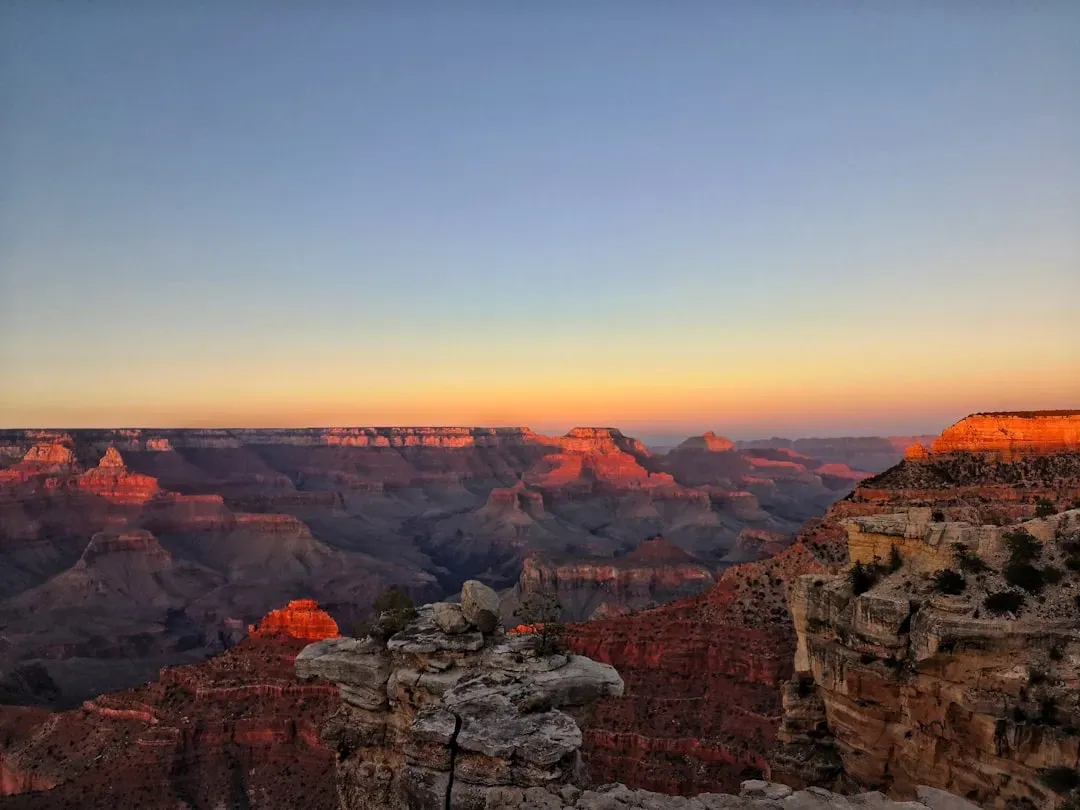
Honestly, no list like this could start anywhere else. The Grand Canyon in Arizona spans 277 miles in length, up to 18 miles in width, and over a mile deep, carved by the Colorado River over millions of years, exposing layers of rock that date back nearly two billion years. Think about that for a moment. Two billion years of history, just sitting there in plain sight, layered like the world’s most dramatic cake.
Hailed as one of the Seven Wonders of the World, the Grand Canyon exhibits the largest section of geologic time on Earth, and hiking to the bottom means passing through a third of the planet’s age. The park also contains excellent exposure of the world-renowned Great Unconformity, an impressive angular unconformity occupying 1.2 billion years in the rock record. That gap in time between rock layers is not just a scientific curiosity. It is a mystery that geologists are still actively debating today.
The colorful and diverse rock formations, including the reds of the Supai Group, the browns of the Hermit Shale, and the whites of the Kaibab Limestone, create a breathtaking tapestry of colors. You can even see formations like the Vishnu Schist at the canyon’s base, which represents some of the oldest exposed rock on Earth. Standing at the South Rim feels less like sightseeing and more like a quiet confrontation with deep time.
2. Yellowstone National Park, Wyoming – The Supervolcano Sleeping Beneath Your Feet
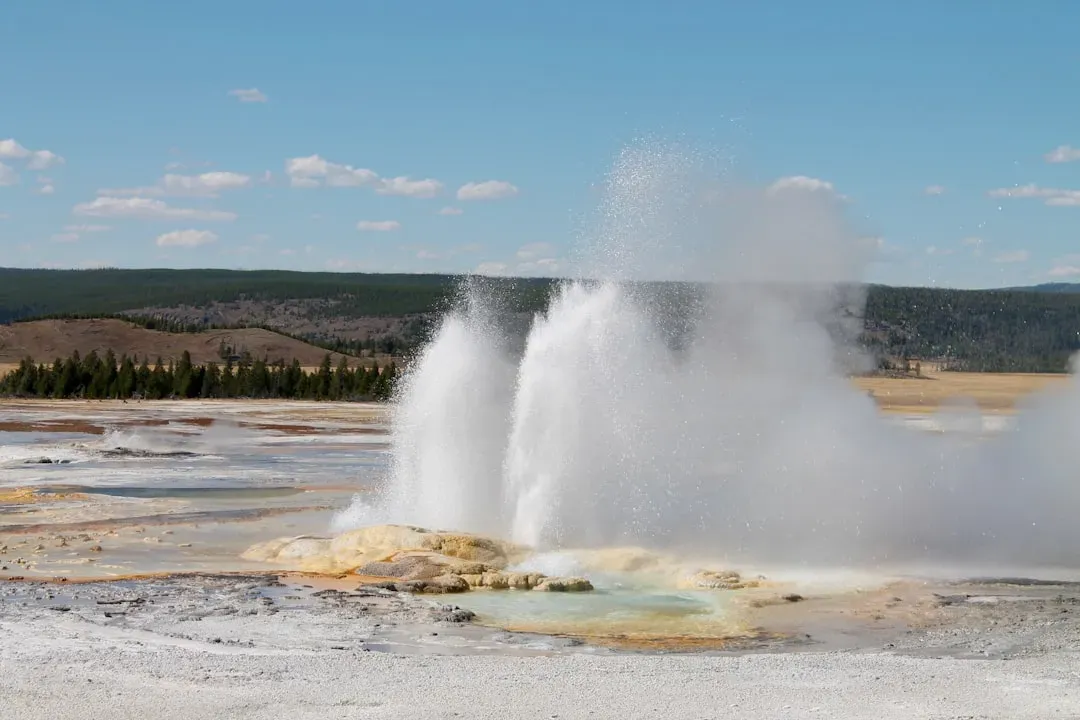
Here is the thing about Yellowstone that most casual visitors never fully register: you are walking on top of one of the most powerful volcanic systems on the planet. Yellowstone National Park sits inside an ancient volcanic caldera with magma, in some places only a few miles underground, powering the park’s famous geysers, hot springs, fumaroles, and mud pots. It is essentially a giant pressure cooker with a scenic view.
Yellowstone contains over half of the roughly one thousand or so known geysers in the world, including Steamboat, the world’s tallest geyser. Super-heated water, trapped in underground channels, sends bubbles of steam upward which eventually lifts the water and causes the geyser to overflow. The overflowing geyser releases enough pressure to allow the trapped water to violently boil, and the resulting steam shoots the water dramatically out of the ground. When you see Old Faithful erupt, you are watching the planet breathe.
3. Devils Tower, Wyoming – The Sacred Monolith That Defies Easy Explanation
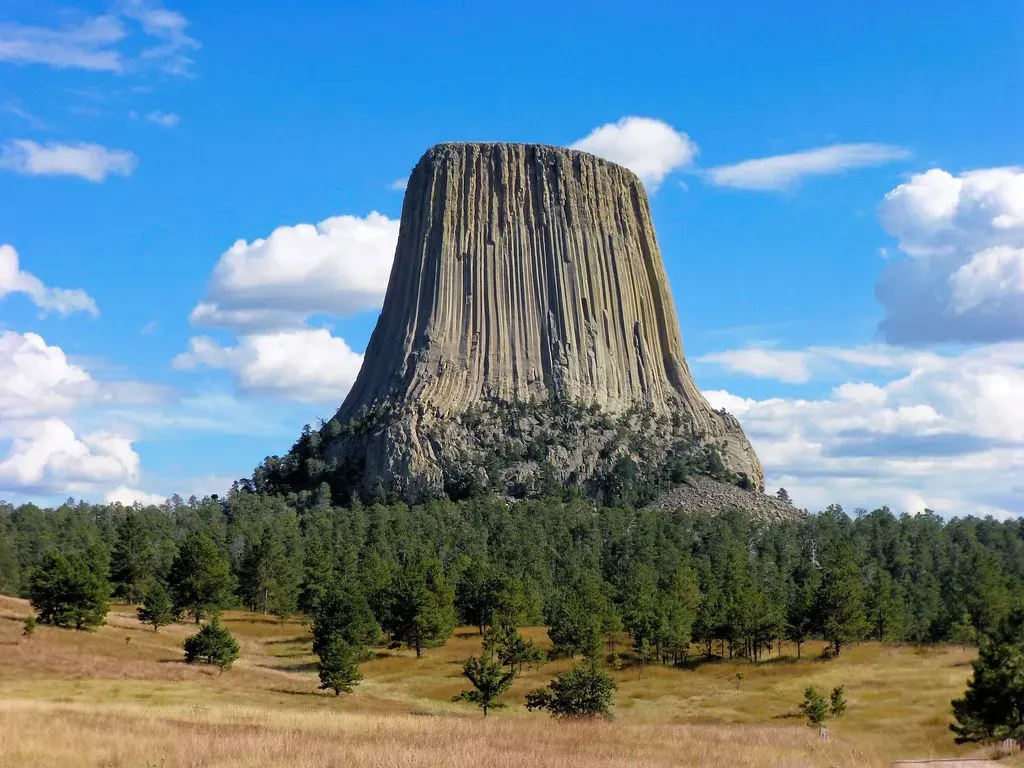
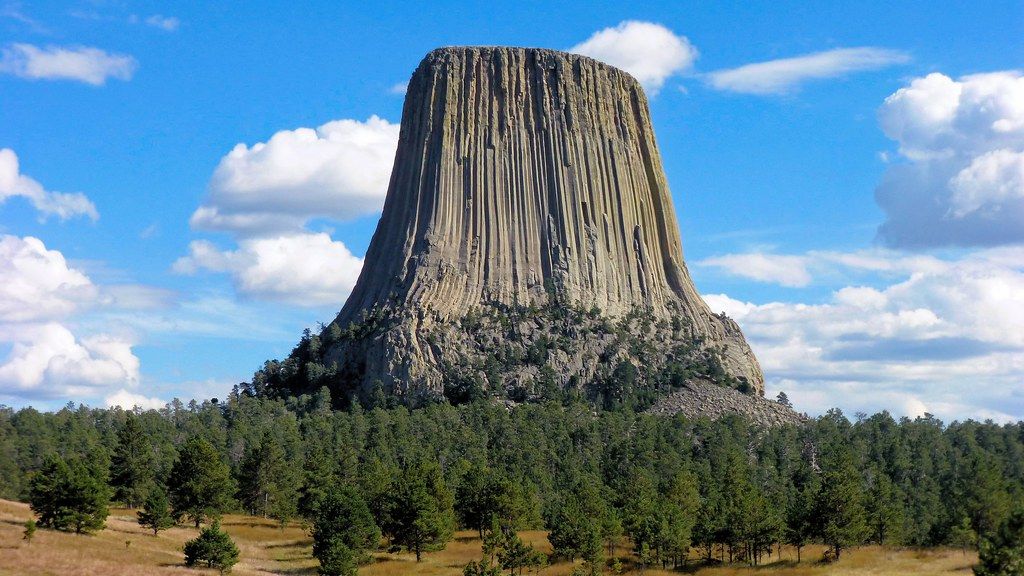
Devils Tower was the first declared National Monument of the United States in 1906 by President Theodore Roosevelt, and is located in the Black Hills of Wyoming. This towering column of igneous rock rises dramatically from the surrounding plains like something from another planet, reaching a height of 867 feet above the surrounding landscape. I know it sounds crazy, but standing at its base, you genuinely half-expect someone to have built it on purpose.
Its unique appearance features vertical columns and hexagonal patterns, which were formed by the slow cooling and solidification of molten rock, followed by millions of years of erosion that stripped away the softer surrounding rock layers. The oldest rock found in Devils Tower is from the Triassic period, around 225 million years ago. Native American tribes have long considered this formation sacred, weaving legends around its creation. Standing at its base, you cannot help but feel the weight of that history, both geological and cultural.
4. Mammoth Cave, Kentucky – The Longest Known Cave System on Earth
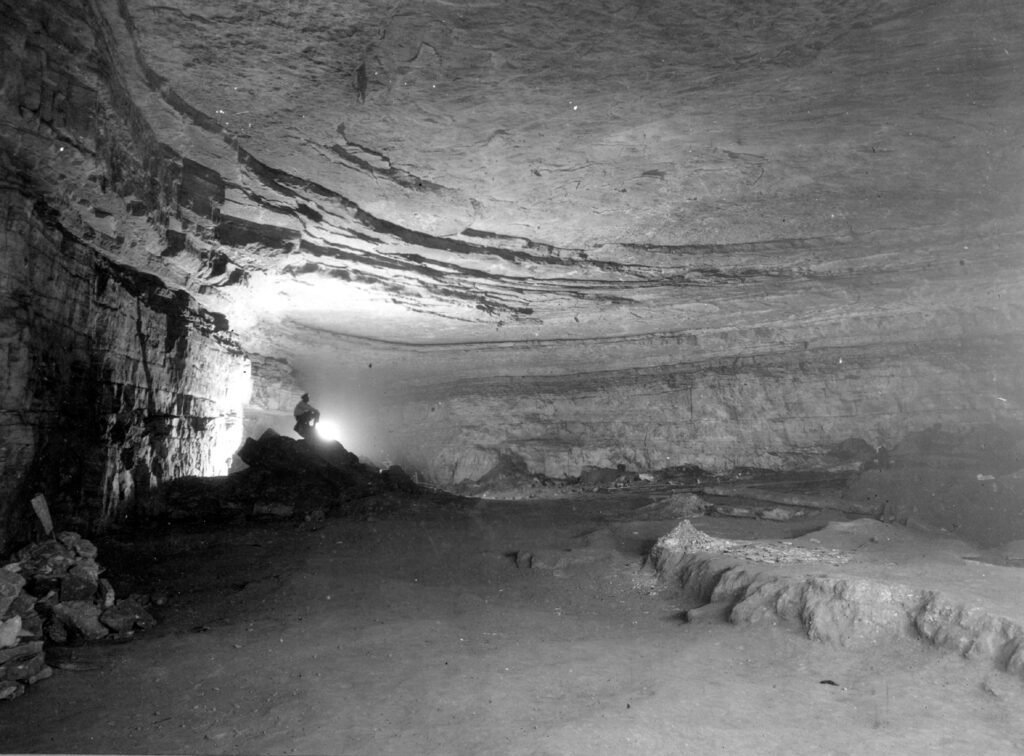
You might not immediately think of Kentucky when you imagine geological wonders, but let’s be real – what lies beneath the rolling bluegrass hills of this state is genuinely jaw-dropping. Holding the title as the longest cave system in the world, Mammoth Cave has more than 400 miles of explored passages, carved by acidic groundwater that dissolved the rock over millions of years, creating vast caverns and delicate, otherworldly formations. For scale, that is roughly the driving distance from New York City to Detroit, all underground.
About 360 miles have been surveyed so far, and geologists estimate that the cave system’s total length is about 1,000 miles. The cave runs through 350-million-year-old limestone, composed partly of shells deposited when Kentucky was at the bottom of a shallow sea. A wide river later replaced the sea and left a layer of sandy sediment on top of the limestone. Water dissolves limestone more readily than sandstone, so over millions of years, rivers and rainwater seeped through and eroded the limestone, creating caves. It is quite literally the skeleton of an ancient sea, hollowed out by time.
5. Crater Lake, Oregon – The Ghost of a Vanished Volcano
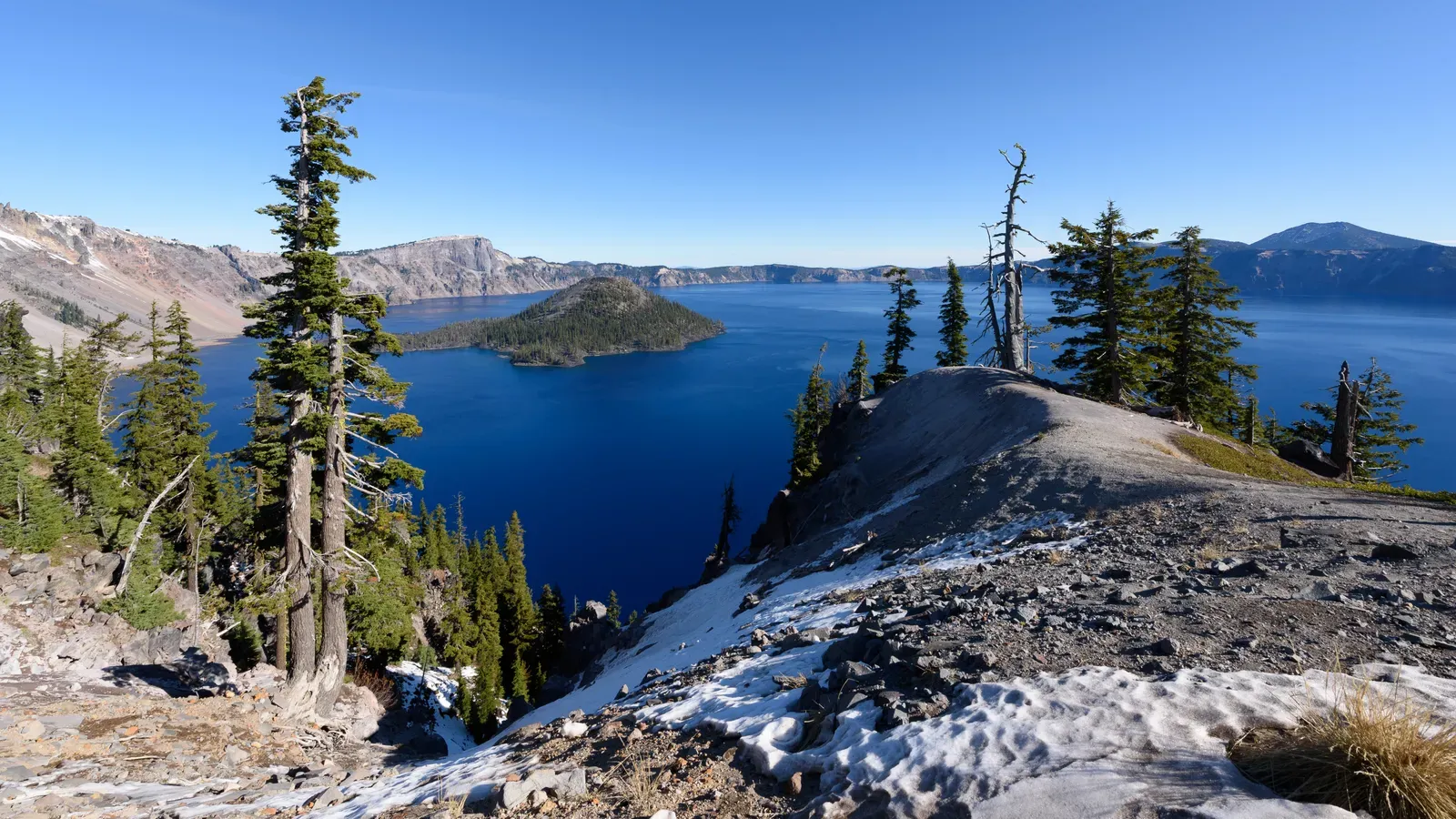
Crater Lake in Oregon is the deepest lake in the United States, formed around 7,700 years ago when Mount Mazama erupted and collapsed. Its pristine blue waters are fed solely by rain and snow, making it one of the clearest lakes in the world. No rivers flow in or out. The water you see there has essentially arrived from the sky, collecting inside the hollow shell of a mountain that essentially exploded itself out of existence.
Native American legends tell of the lake’s origin as a battle between the sky god and the mountain god, resulting in the mountain’s destruction. Visitors are drawn to its serenity and hiking trails, where they can see Wizard Island, a volcanic cone that rises from the lake’s surface. Wizard Island is a volcano growing inside the crater of another volcano. It is nested geological drama at its finest, and it is hard not to find that a little bit mind-bending.
6. The Badlands, South Dakota – An Alien World Built From Ash and Time
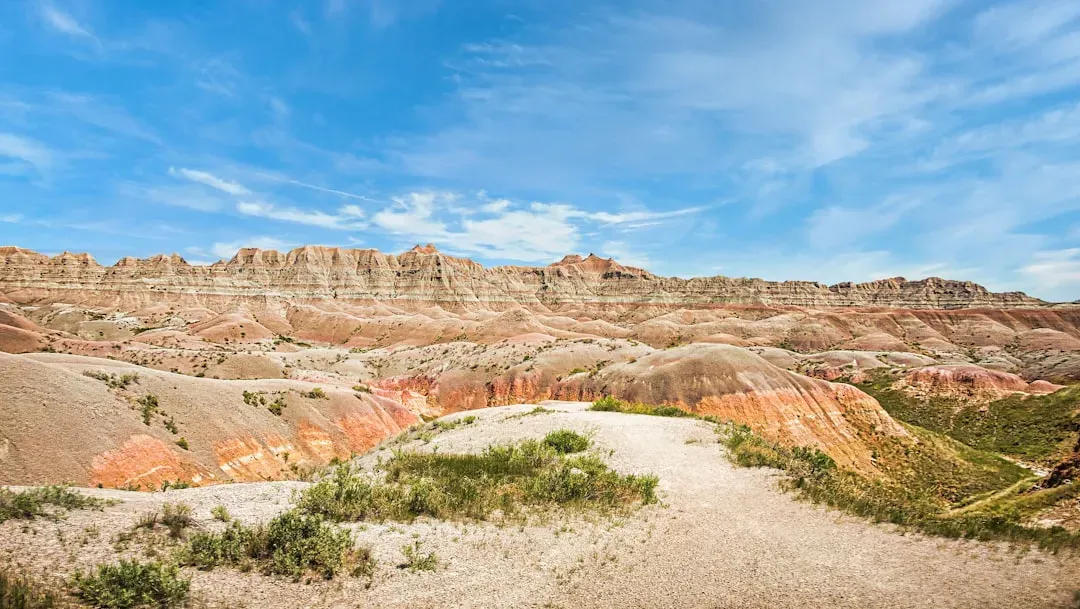
The Badlands contains some of the world’s most bizarre and alien-looking landscapes, classic examples of badland topography. The poorly consolidated bedrock, consisting of loose sediment and volcanic ash, is quickly eroded by infrequent rainstorms. Resulting mud mounds, spires, and ridges resemble miniature mountain ranges. You might look at a photograph of the Badlands and genuinely wonder which planet it was taken on. There is something almost cinematic about the place.
What makes the Badlands especially compelling is that beneath those surreal spires lies one of the richest fossil beds in the entire world. The formations here preserve an extraordinary record of ancient mammals from the Eocene and Oligocene epochs, creatures that roamed the area tens of millions of years ago when the climate was dramatically different. From ancient canyons carved by rivers to towering volcanic peaks and unique rock formations, these sites tell a story billions of years in the making, serving as windows into Earth’s dynamic history and showcasing processes like erosion, volcanic activity, and plate tectonics.
7. Carlsbad Caverns, New Mexico – The Underground Chamber Forged by Acid
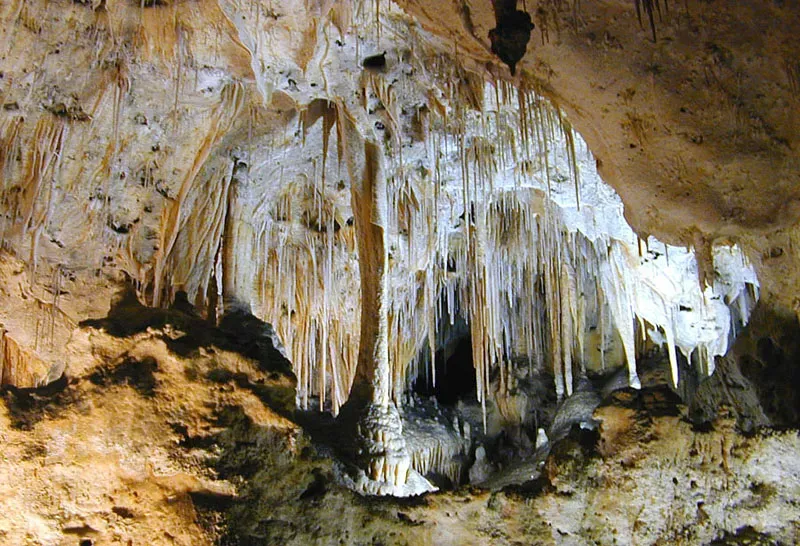
The park contains more than 100 known caves, including the nation’s deepest limestone cave at 1,604 feet and third longest. Carlsbad Cavern, with one of the world’s largest underground chambers, displays an amazing array of cave and karst features. Think about exploring a space so massive that several football fields could fit comfortably inside it, all formed naturally underground. It sounds unreal, but there you are.
What makes Carlsbad truly unique among cave systems is how it was formed. Rising sulphur-rich fluids mixed with fresh ground water to form sulphuric acid, which is responsible for the formation of this cave system. Most caves form when rainwater slowly trickles through cracks. Carlsbad, however, was dissolved from the inside out by acid rising upward from below. It is a geological process so unusual that it turned the whole standard cave-formation model on its head when scientists first figured it out. With stalactites, stalagmites, and gypsum flowers decorating its halls, Carlsbad Cavern is both a geological wonder and a portal to the mysterious underground world.
A Final Thought Worth Carrying With You
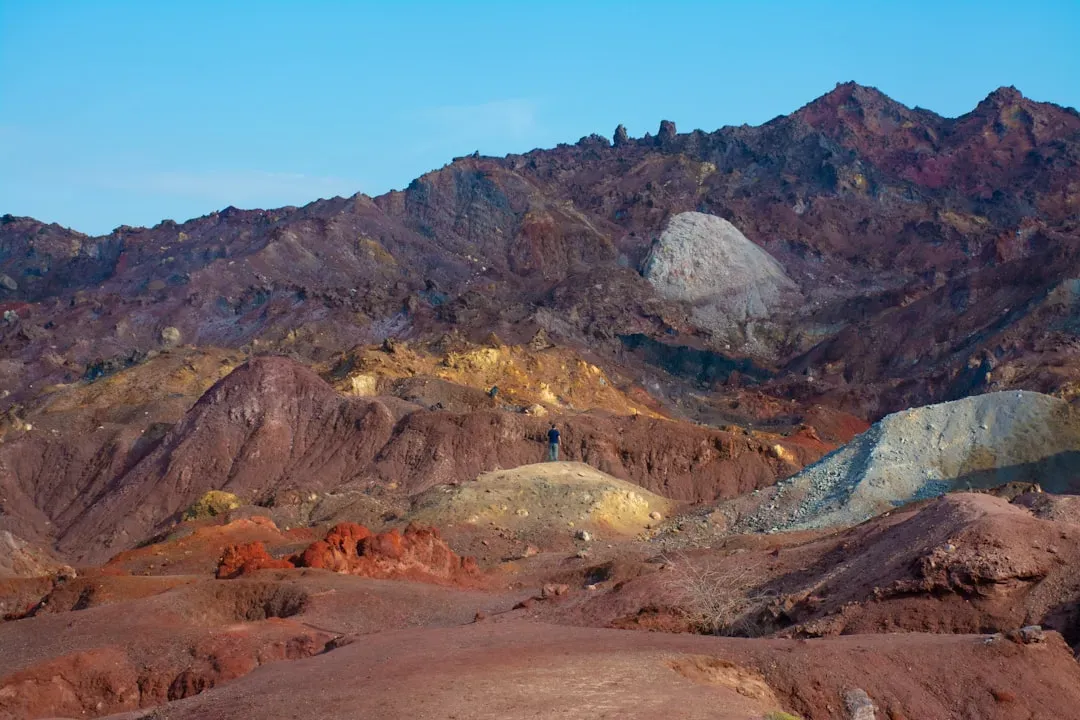
What strikes me most about all seven of these places is not their size or their age. It is the fact that they are still here. Still eroding, still steaming, still shifting, still forming. Geological sites are the Earth’s living timeline, etched into its surface through eons of relentless change and raw power. These natural wonders, from jagged peaks to hidden caves and fiery springs, serve as the planet’s open journal, narrating stories of ancient seas, molten lava flows, and tectonic shifts.
Each of these seven wonders is, in its own way, a reminder that the ground beneath your feet has a biography older and wilder than anything you could imagine. You just have to show up and read it. Which of these ancient places would you most want to stand inside of? Drop your answer in the comments and let’s talk geology.