You might think of fossils as dusty museum pieces, something schoolchildren squint at on field trips before rushing to the gift shop. Honestly, I used to think that too. The truth, though, is far more astonishing. Fossils are nature’s own time capsules, hard-won windows into billions of years of planetary history, each one capable of rewriting entire chapters of science. Some of these ancient remains were so unexpected, so perfectly preserved, that they didn’t just confirm what researchers suspected – they shattered everything that was considered settled.
There are fossils that, on the day they are found, completely change the direction of science. The acceptance of evolutionary theory, the understanding of humanity’s place in the animal kingdom, the emergence of life onto land – none of these insights came from assumptions. All became clear thanks to specific fossils. So buckle up, because this journey reaches back billions of years, to a world you would barely recognize. Let’s dive in.
1. Stromatolites: The Planet’s Oldest Known Fossils
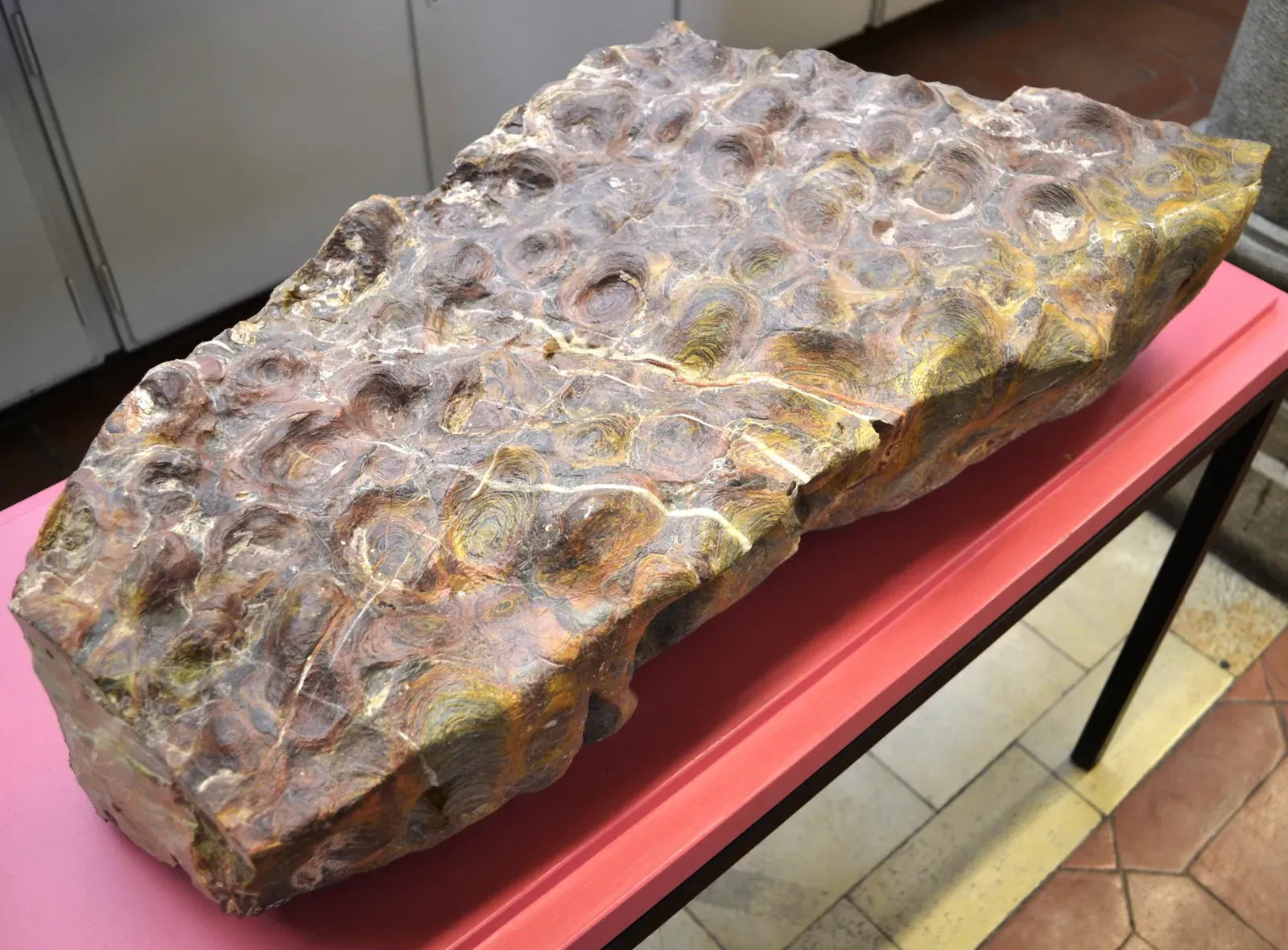
If you want to find the absolute beginning of life on Earth, you look at stromatolites. These unassuming, layered rock structures hold a secret that still sends shivers down the spines of geologists worldwide. The earliest direct known life on Earth are stromatolite fossils found in 3.480-billion-year-old geyserite uncovered in the Dresser Formation of the Pilbara Craton of Western Australia. Think about that for a moment: nearly three and a half billion years of history, locked inside what looks like a striped rock.
This particular discovery represents some of the earliest life on this planet, with the stripes formed by layer after layer of cyanobacteria, which formed mounds over time. What’s almost unbelievable is that stromatolites still exist today on the coasts of places like Australia – and after billions of years, cyanobacteria are still alive and kicking. This is the equivalent of finding a living dinosaur sunning itself on a beach. Here’s the thing: these tiny organisms didn’t just survive – they literally built the atmosphere you’re breathing right now. Cyanobacteria fossils revealed the origin of the oxygen atmosphere, showing that oxygen didn’t exist naturally on Earth but was produced by living things over billions of years.
2. The Apex Chert Microfossils: Life at 3.5 Billion Years
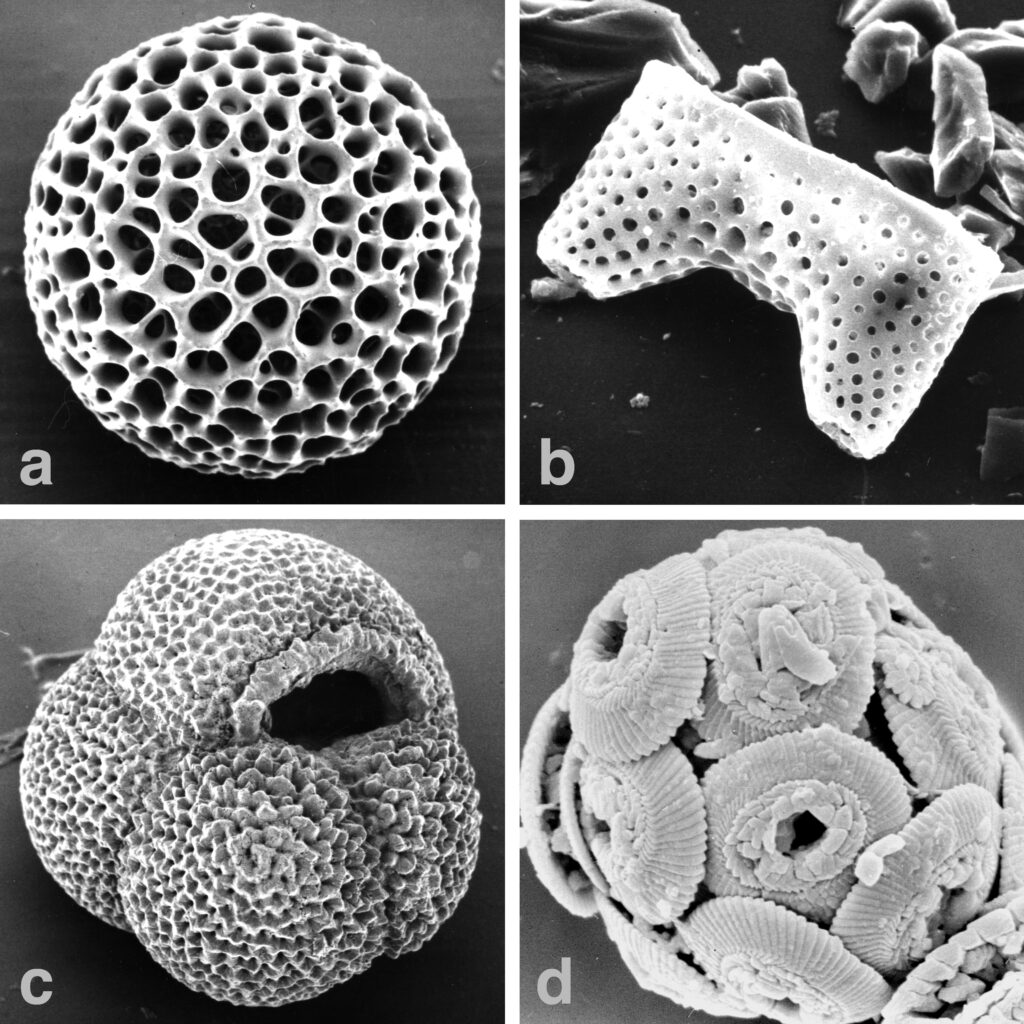
If stromatolites are the broad canvas, the Apex Chert microfossils are the fine brushstrokes. Researchers at UCLA and the University of Wisconsin–Madison confirmed that microscopic fossils discovered in a nearly 3.5 billion-year-old piece of rock in Western Australia are the oldest fossils ever found and the earliest direct evidence of life on Earth. You can’t see these fossils with the naked eye – they’re about the width of a human hair divided into eight parts. Yet their importance is enormous.
The team identified a complex group of microbes: phototrophic bacteria that would have relied on the sun to produce energy, Archaea that produced methane, and gammaproteobacteria that consumed methane, a gas believed to be an important constituent of Earth’s early atmosphere before oxygen was present. I think what’s most humbling about this is that these weren’t primitive blobs – they were already a functioning, diverse community. Each microfossil is about 10 micrometers wide; eight of them could fit along the width of a human hair. Yet, ancient as they are, each one is a full chapter of early biological complexity.
3. The Burgess Shale: A Snapshot of the Cambrian Explosion
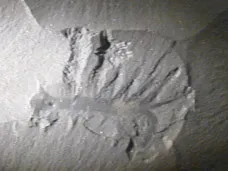
Discovered high in the Canadian Rockies, the Burgess Shale is arguably one of the most important fossil sites ever found. It doesn’t just preserve bones – it preserves entire soft-bodied creatures, which is extraordinarily rare. The Burgess Shale in Canada preserves an extraordinary variety of soft-bodied organisms from the Cambrian Explosion, around 500 million years ago, offering a glimpse into the early diversification of complex life forms on Earth. You could think of it as a perfectly preserved photograph of an alien world.
The Burgess Shale fossils provide important insights into the diversity and evolution of life during the Cambrian period, a time when many major groups of animals first appeared in the fossil record. The fossils include a wide variety of creatures, including arthropods, mollusks, and chordates, many of which have no living descendants or close relatives. Some of the most famous Burgess Shale organisms include Anomalocaris, Hallucigenia, and Opabinia, which have unusual and sometimes bizarre body plans that challenge ideas about what early animals looked like. Honestly, some of these creatures look like nightmares drawn by a child – five eyes, claws where mouths should be, tentacles in all the wrong places. The exceptional preservation of the Burgess Shale fossils is due to the unusual conditions in which they were buried, which included a rapid burial by sediment and a lack of oxygen, preventing decay and allowing soft tissues to be preserved.
4. The Jiangchuan Biota: Rewriting the Timeline of Complex Life
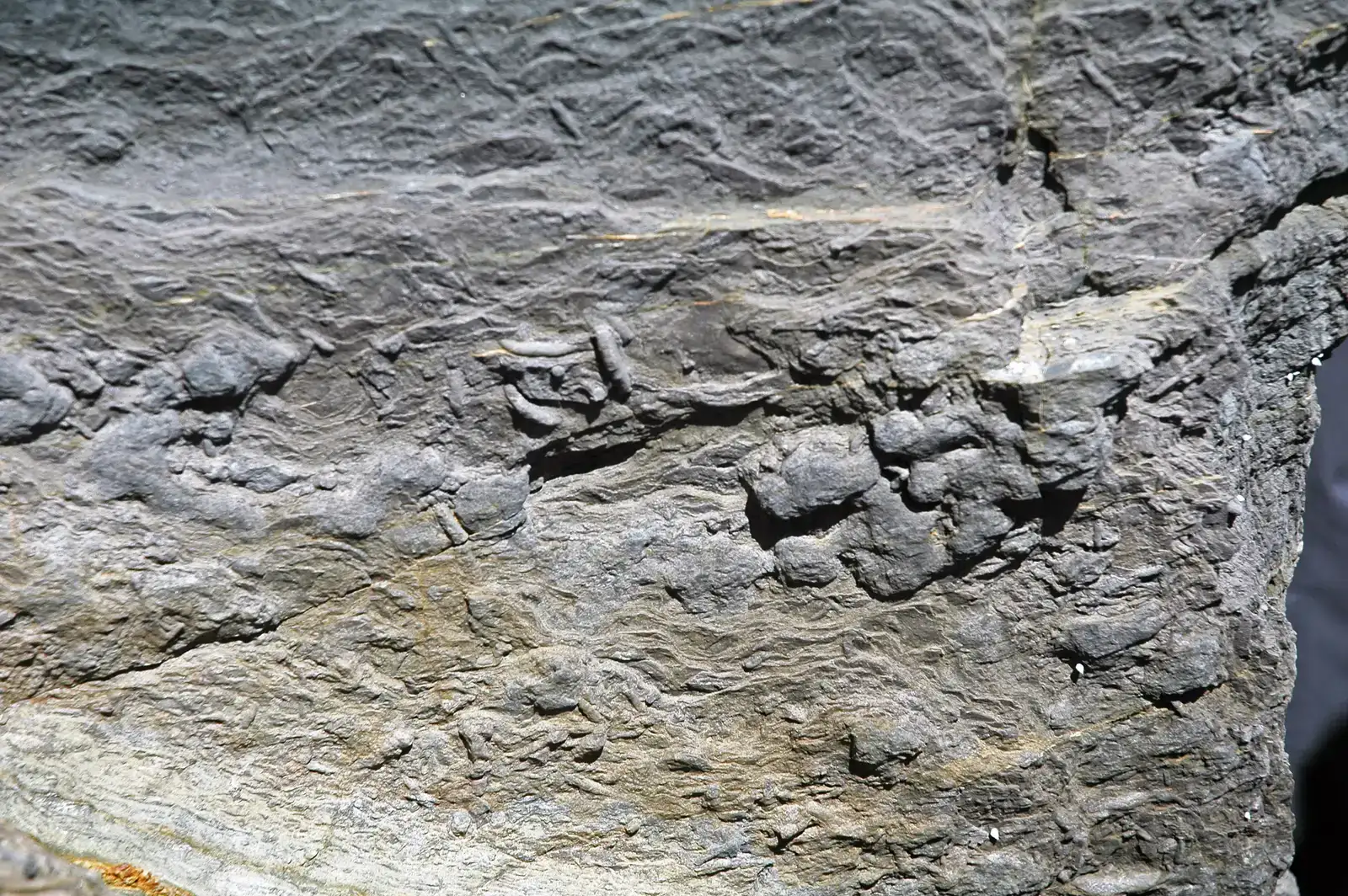
Just when scientists thought they had the story of early animal life worked out, a remarkable fossil site in southwest China turned that narrative on its head. Scientists from Oxford University’s Museum of Natural History, the Department of Earth Sciences, and Yunnan University uncovered a remarkable fossil site in southwest China, known as the Jiangchuan Biota, which contains more than 700 fossil specimens dating back between 554 and 539 million years. That might not sound shocking until you consider the implications.
Earlier, scientists believed that complex animals appeared mainly during the Cambrian explosion, around 535 million years ago. This discovery now shows that complex life began earlier than expected. The Jiangchuan Biota is essentially a bridge – a transitional community between two of Earth’s most dramatic eras. The fossils also include worm-like animals with bilateral symmetry, meaning the body has two equal halves, just like humans, and some of these early creatures had advanced feeding systems. It’s hard to overstate how significant this is: you are, in a very real sense, distantly connected to these worms from half a billion years ago.
5. Tiktaalik: The Fish That Walked Onto Land
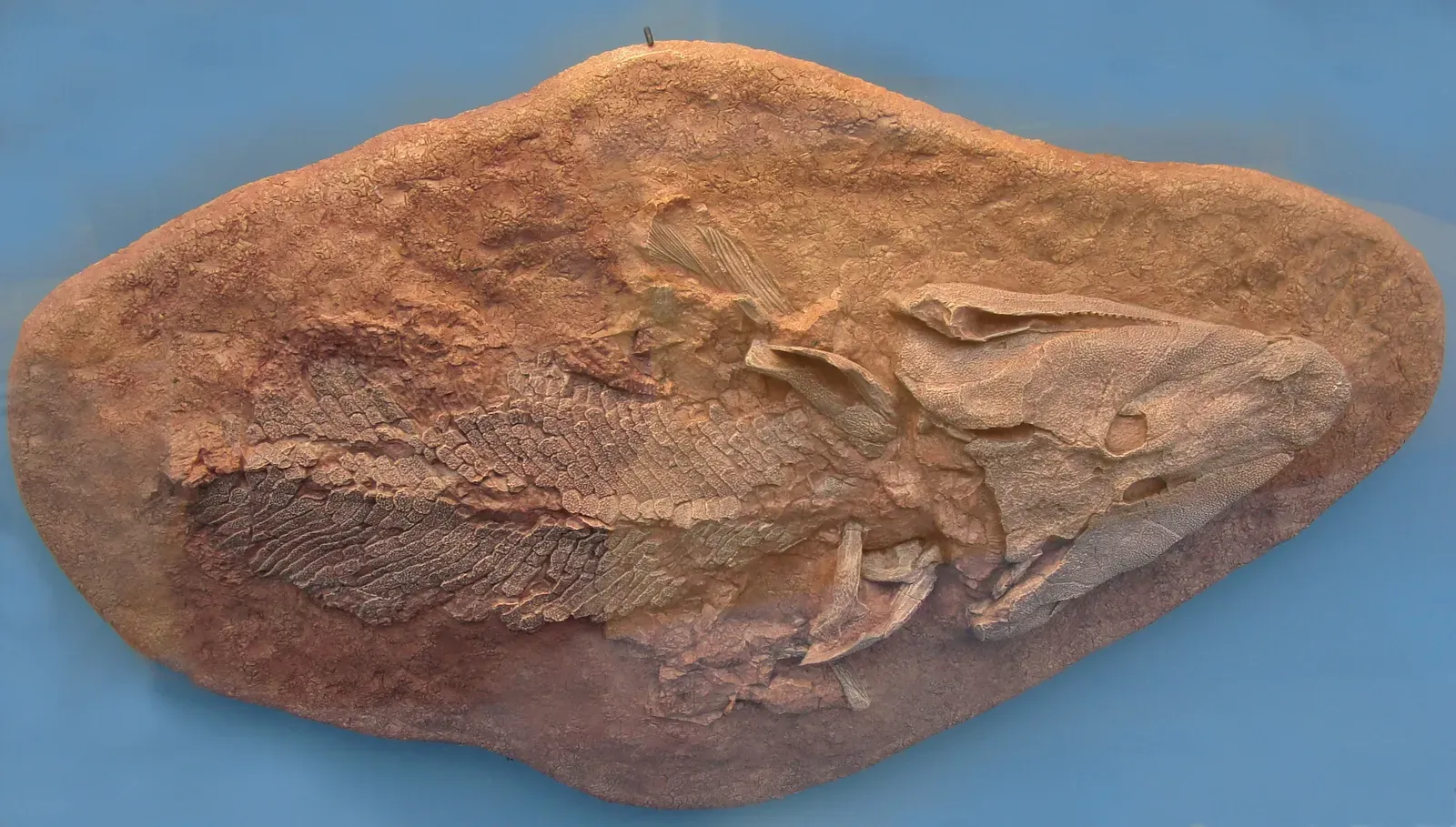
derivative work: Petter Bøckman (talk), CC BY-SA 3.0)
If you want a fossil that truly reads like science fiction, meet Tiktaalik. Tiktaalik lived approximately 375 million years ago and is representative of the transition between non-tetrapod vertebrates such as fish and early tetrapods, the first four-limbed land animals. It was both fish and something else entirely. Unearthed in Arctic Canada, Tiktaalik is a non-tetrapod member of bony fish, complete with scales and gills, but it has a triangular, flattened head and unusual, cleaver-shaped fins. Its fins have thin ray bones for paddling like most fish, but they also have sturdy interior bones that would have allowed Tiktaalik to prop itself up in shallow water.
Those fins and other mixed characteristics mark Tiktaalik as a crucial transition fossil, a link in evolution from swimming fish to four-legged vertebrates. This and similar animals might be the common ancestors of all vertebrate terrestrial fauna. In simpler terms, without Tiktaalik’s evolutionary cousins making that first leap onto land, there would be no reptiles, no mammals, and no you. Tiktaalik was believed to be the best representative of the alleged transitional species scientists needed to understand evolution, and this discovery was crucial because it changed the public’s understanding of tetrapod anatomy and evolutionary biology as a whole. That’s a lot of weight for one ancient fish to carry.
6. The Ediacaran Fossils: Earth’s First Animals
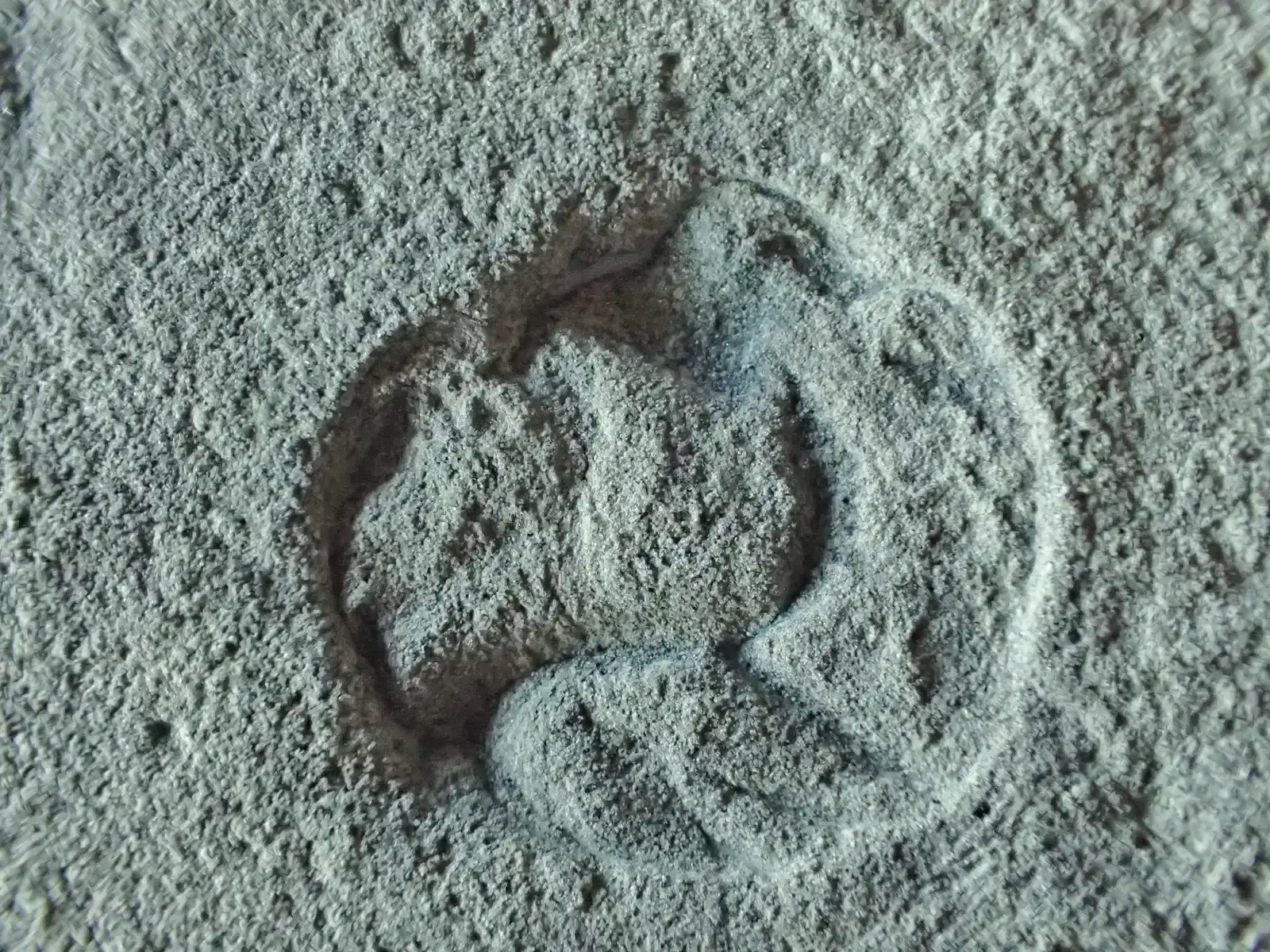
Before the Cambrian Explosion made complex life a crowded affair, a softer, quieter world existed – the Ediacaran period. Fossils visible to the naked eye have been found in rocks dating back 600 million years, corresponding to the Cambrian diversification and the preceding Ediacaran, in which soft-bodied organisms are preserved. These Ediacaran creatures look like nothing alive today – some resembled quilted fronds, others like circular discs or feathery mats pressed into ancient seafloor mud.
A recent discovery in Australia’s Flinders Ranges has added thrilling new detail to this picture. A newly discovered Flinders Ranges fossil dating back more than half a billion years is revealing fascinating information about the first animal life on our planet, with researchers from American universities and the South Australian Museum unearthing more than a dozen specimens of the new fossil at Nilpena Ediacara National Park. What stands out about this find is the complexity it implies. This sort of symmetry indicates a certain level of genetic complexity – humans are bilaterally symmetrical but have a number of asymmetries, for example the location of the heart and appendix. It’s a startling reminder that even before the Cambrian, life was already experimenting with the body plans that would define all future animals, including us.
7. Lucy: The Fossil That Put a Face on Human Origins
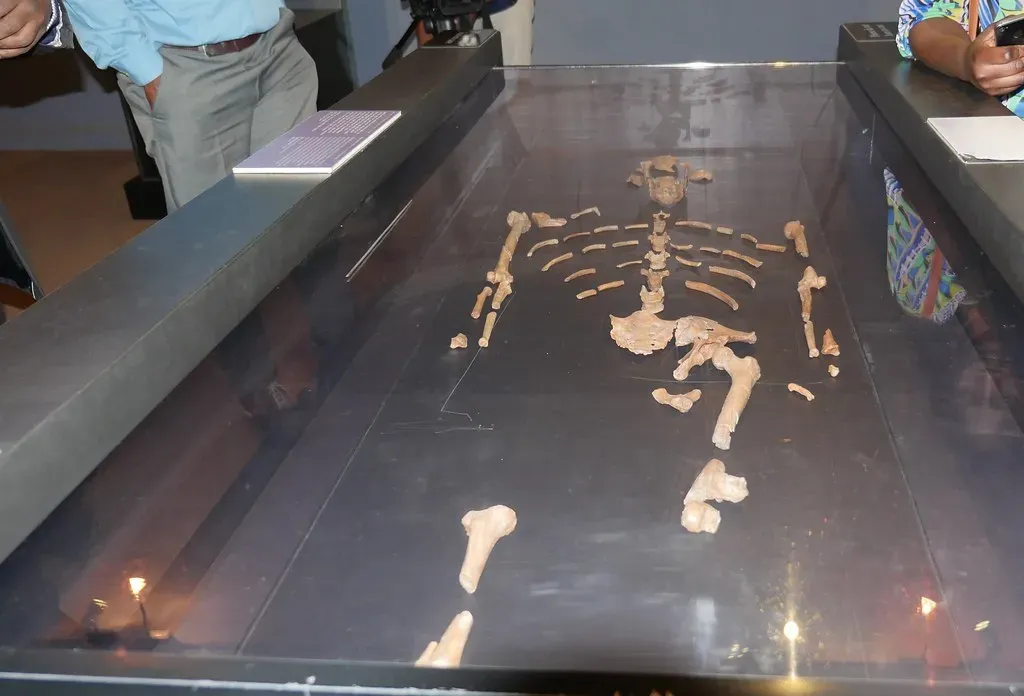
Of all the fossils on this list, Lucy is perhaps the one that hits closest to home – literally. AL 288-1, commonly known as Lucy, is a collection of several hundred pieces of fossilized bone comprising 40 percent of the skeleton of a female of the hominin species Australopithecus afarensis. It was discovered in 1974 in Ethiopia, at Hadar, a site in the Awash Valley of the Afar Triangle, by Donald Johanson, and is dated to about 3.2 million years ago. That night at the dig camp, when the discovery was made, the team reportedly played a Beatles song on repeat. The name stuck.
The skeleton presents a small skull akin to that of non-hominin apes, plus evidence of a walking-gait that was bipedal and upright, akin to that of humans; this combination supports the view of human evolution that bipedalism preceded increase in brain size. That detail alone overturned decades of assumptions. Scientists had long believed that bigger brains came first, then upright walking. Lucy proved the opposite. Lucy’s fossils confirmed that hominins became bipedal – able to walk on two legs – before the development of large brains. She wasn’t just a skeleton. She was a plot twist in the story of humanity, and an extraordinarily important one at that. At the time of her discovery, she was the oldest, most complete hominin skeleton ever discovered, and her discovery supported the scientific view that human evolution was a gradual process involving the appearance and survival of transitional forms over long periods of time.
Conclusion
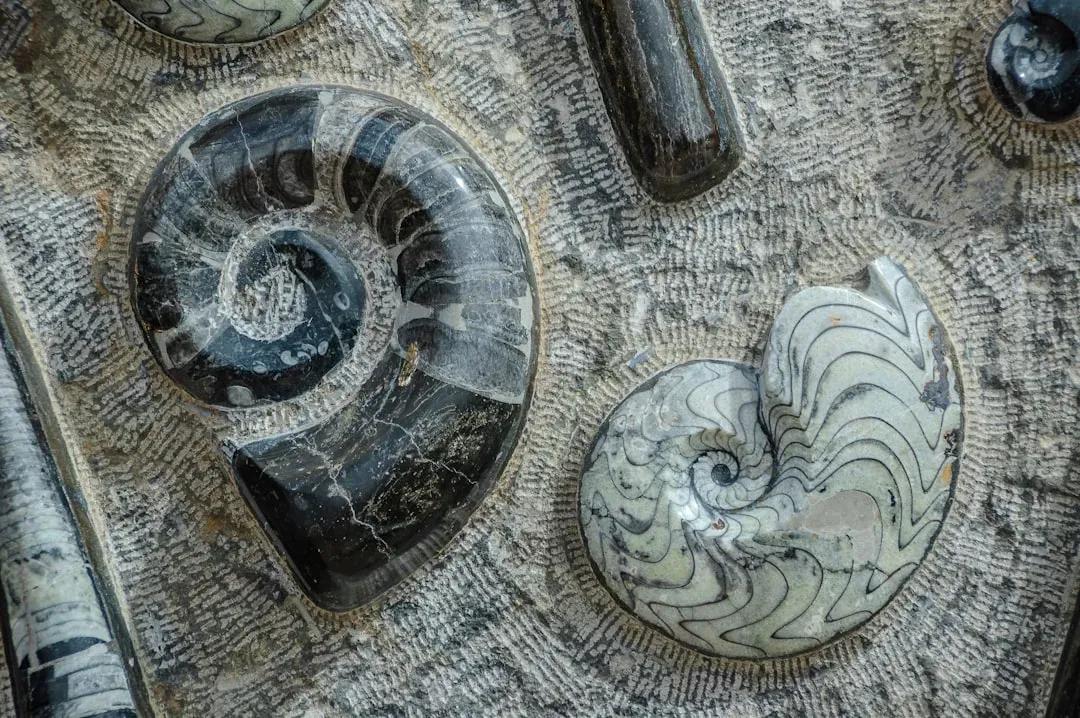
What is striking about all seven of these fossils is that none of them were expected to reveal quite what they did. Each one arrived as a surprise, a correction, a revelation. From the ancient microbial mats of Western Australia to the upright-walking ancestor preserved in Ethiopian rock, every discovery peeled back another layer of Earth’s staggering biography.
The real significance of paleontology lies in how such discoveries illuminate the grand history of life on Earth. From its beginnings more than three billion years ago to the present day, fossils record how life adapted or perished in the face of major environmental challenges. There’s something deeply moving about that idea. These creatures never knew they would one day tell their story to us – but here we are, listening.
The next time you walk past a fossil display in a museum, stop for a moment longer than you planned. You’re not just looking at a rock. You’re looking at a letter from the deep past, written in bone and stone, addressed to anyone curious enough to read it. Which of these seven discoveries surprised you the most? Share your thoughts in the comments below.