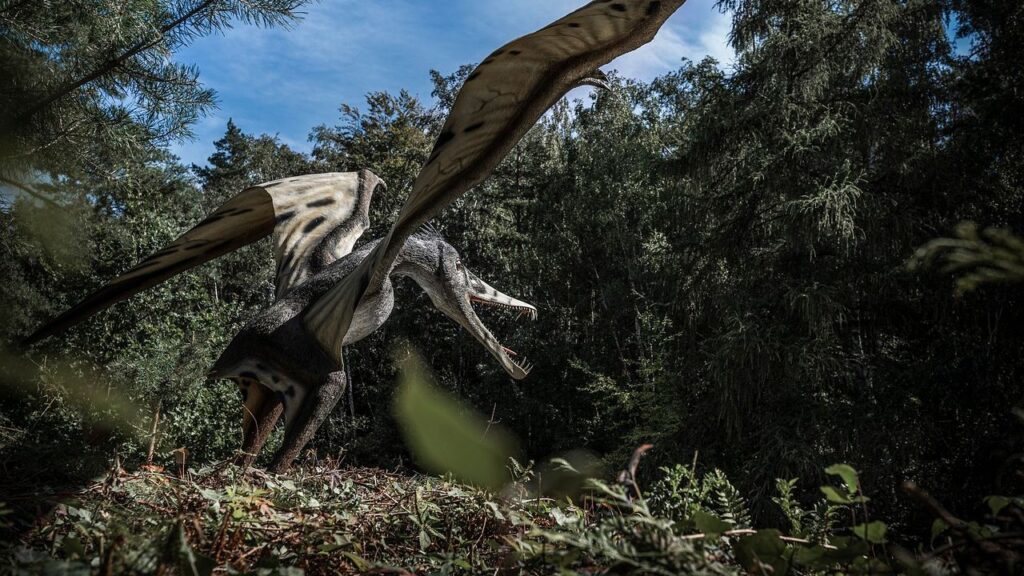
Long before the first sparrow ever chirped or a hawk circled over open fields, the skies of our ancient world belonged to some of the most jaw-dropping creatures that ever lived. We’re talking about winged reptiles so massive, so bizarre, and so brilliantly adapted that they make today’s birds look almost ordinary. These animals were truly remarkable in their own right: they were the first vertebrates to evolve flight, tens of millions of years before birds or bats.
Here’s the thing, though. Most people either confuse them with dinosaurs or have no idea just how wild and diverse these creatures actually were. They were a diverse group, with many species adapted to different niches and habitats. They had different diets, reflecting their lifestyles and habitats. Some ate fish, picking them off as they skimmed over water surfaces, while many were probably opportunistic feeders, grabbing whatever they could. From sky giants the size of small planes to nimble filter feeders that resembled prehistoric flamingos, the story of these ancient flyers is more incredible than most people realize. Let’s dive in.
Quetzalcoatlus: The Sky Giant That Stood as Tall as a Giraffe
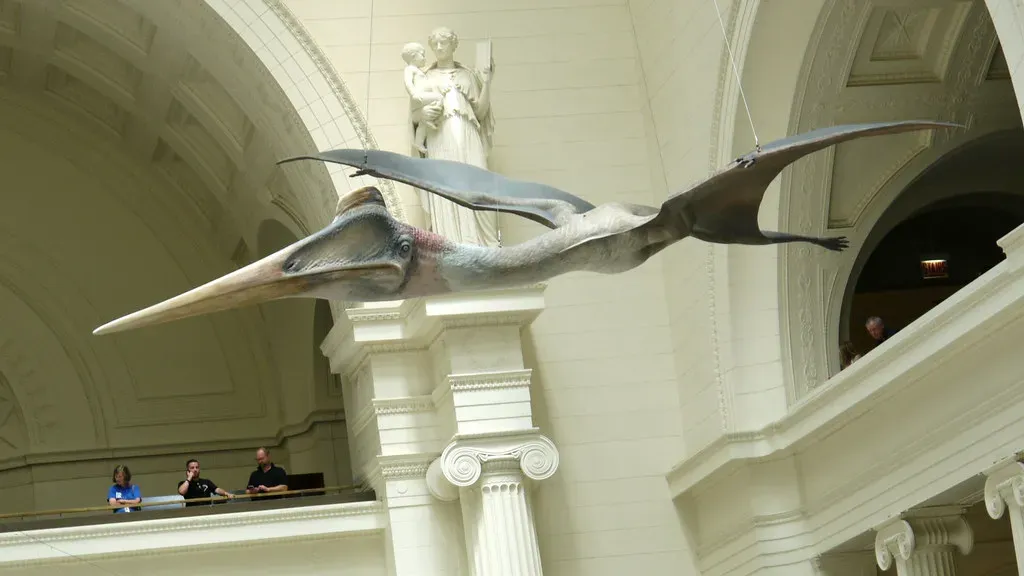
If you want to talk sheer intimidation factor, nothing comes close to Quetzalcoatlus. It was one of the largest animals ever to fly, with a wingspan estimated at around 11 metres (36 feet). When standing upright, it was about the height of a modern giraffe at 5.5 metres. Despite its huge size, its skeleton was of extremely light construction. Honestly, the idea of something that tall being airborne still sounds like science fiction.
The first person to discover this creature’s fossil was 22-year-old Douglas Lawson, who unearthed the wing bones in Big Bend National Park in 1975. The name of this flying reptile comes from the Aztec feathered serpent god Quetzalcoatl. Like most flying reptiles, scientists believe that Quetzalcoatlus was primarily a carnivore. It most likely hunted smaller dinosaurs and other reptiles, which it then devoured whole. Some researchers believe it may have even been capable of taking down oversized prey, such as ancient crocodiles. A truly terrifying predator that patrolled both air and ground.
Pteranodon: The Iconic Winged Hunter of the Cretaceous Coast
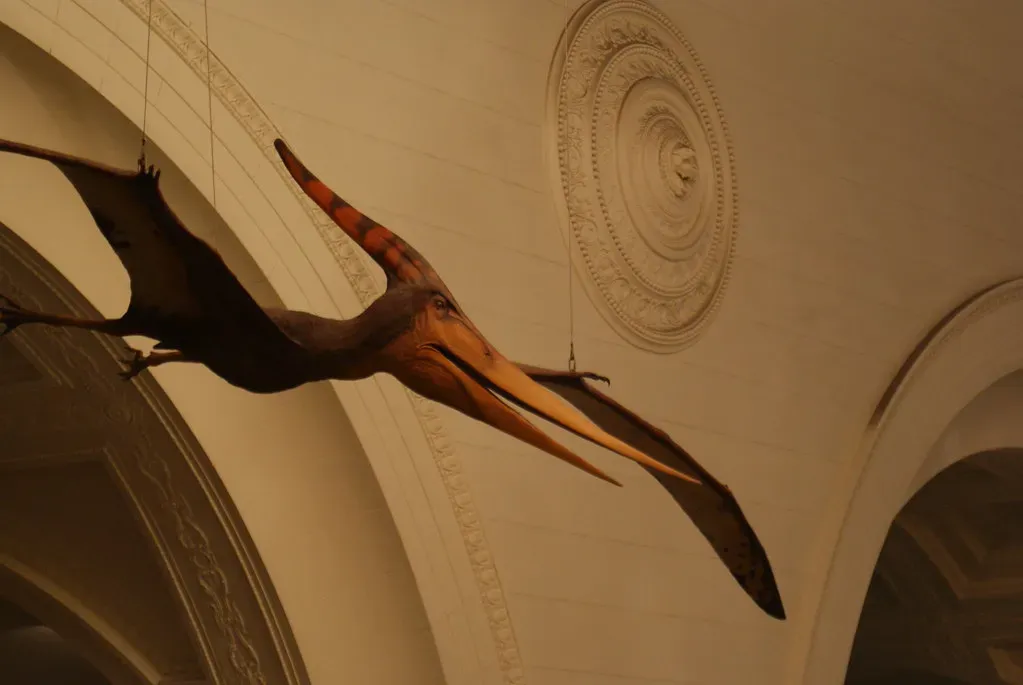
When most people picture a “flying dinosaur,” it’s almost always Pteranodon that pops into their mind. The name “Pteranodon” translates to “winged and toothless,” which is fitting because one of its most distinguishing characteristics is its complete lack of teeth. With a wingspan that could reach an astonishing 33 feet, Pteranodon was one of the largest flying animals ever to exist. Its long, backward-sweeping crest and elongated beak made it a striking figure against the backdrop of coastal cliffs and sandy beaches, where it hunted for fish and other marine life.
This pterosaur was an expert glider, using thermal updrafts, rising columns of warm air, to soar effortlessly for long distances. This energy-efficient flying technique allowed Pteranodon to cover vast areas in search of food without tiring quickly. Pteranodon is also believed to have been a social creature, often seen flying in groups. This behavior not only provided safety in numbers but also made it easier to locate schools of fish, showcasing the importance of teamwork in the animal kingdom. Think of it as the pelican of the Cretaceous, but roughly ten times more spectacular.
Hatzegopteryx: The Dragon of Transylvania
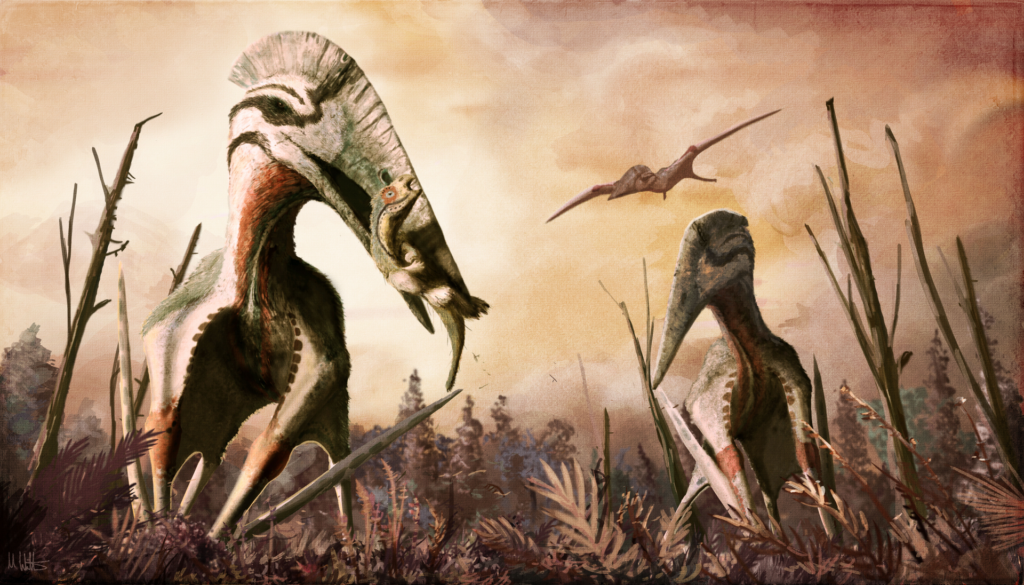
If Quetzalcoatlus was the sky giant of North America, then Hatzegopteryx was its terrifying European cousin. About 66 million years ago, it wasn’t Dracula that terrorized Transylvania, but a different winged beast. This creature was the apex predator of a strange island ecosystem free of large theropods, in which pterosaurs ruled supreme. The largest of its known remains indicate it was among the biggest pterosaurs, with an estimated wingspan of 10 to 12 metres. Unusually among giant pterosaurs, Hatzegopteryx had a very wide skull bearing large muscular attachments, bones with a spongy internal texture instead of being hollow, and a short, robust, heavily muscled neck capable of withstanding strong bending forces.
When paleontologists first discovered its fossil remains back in 1991, they thought the fossils belonged to a theropod, the group that includes T. rex. The mistake was an easy one to make. Large theropods are much more common than large pterosaurs, and researchers were basing their assessment on only a few fossil fragments. Unlike pteranodons, which were primarily fish-eaters, azhdarchids like Hatzegopteryx were aerial predators of terrestrial prey, like giant storks. It’s hard to say for sure just how fearsome it truly was, but the fossil evidence paints a picture that’s nothing short of hair-raising.
Rhamphorhynchus: The Long-Tailed Ace of the Jurassic Skies
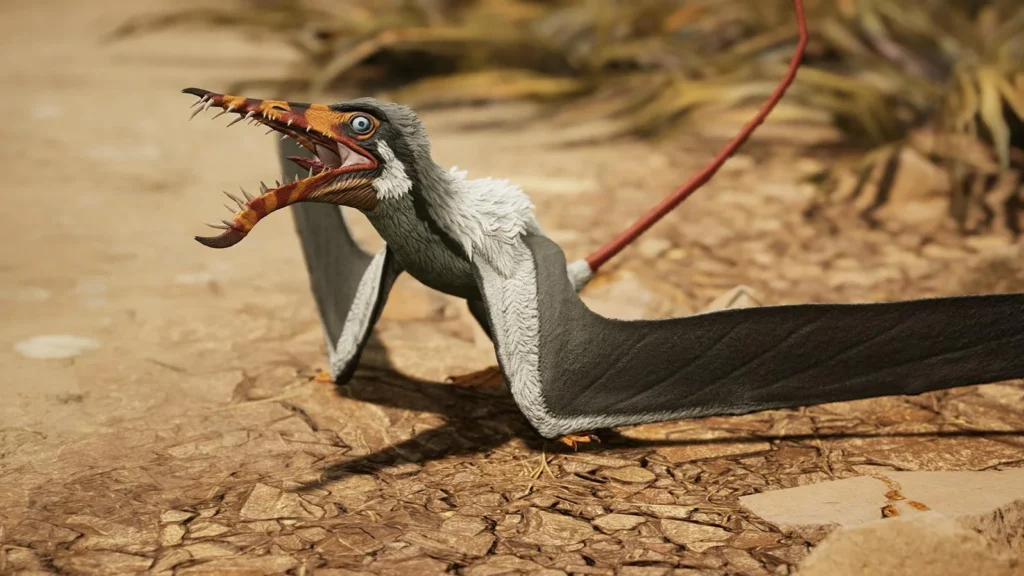
Not every ancient sky ruler was a sky-scraping giant. Rhamphorhynchus proves that being smaller doesn’t mean being less fascinating. Rhamphorhynchus lived during the Late Jurassic period, roughly 150 million years ago. It’s well-known for its long, narrow wings and a relatively short body. It had a wingspan ranging from about 1.5 to 2.5 metres, or 5 to 8 feet. One of its most distinctive features is its long, slender tail, which had a diamond-shaped fin at the tip. Think of it as nature’s version of a stealth kite, built for speed and precision.
Rhamphorhynchus walked using a plantigrade style, meaning it walked with the whole foot touching the ground. Rhamphorhynchus has even been found with fish remains within its abdominal cavities, which is about as solid evidence as you can get that a creature was an active, successful hunter. Rhamphorhynchus belonged to a group characterized by their long tails and toothed jaws. That tail fin wasn’t just for show, it likely acted as a rudder during tight aerial maneuvers, giving Rhamphorhynchus precision control that many of its much larger cousins simply didn’t have.
Pterodactylus: The Original “Pterodactyl” That Started It All
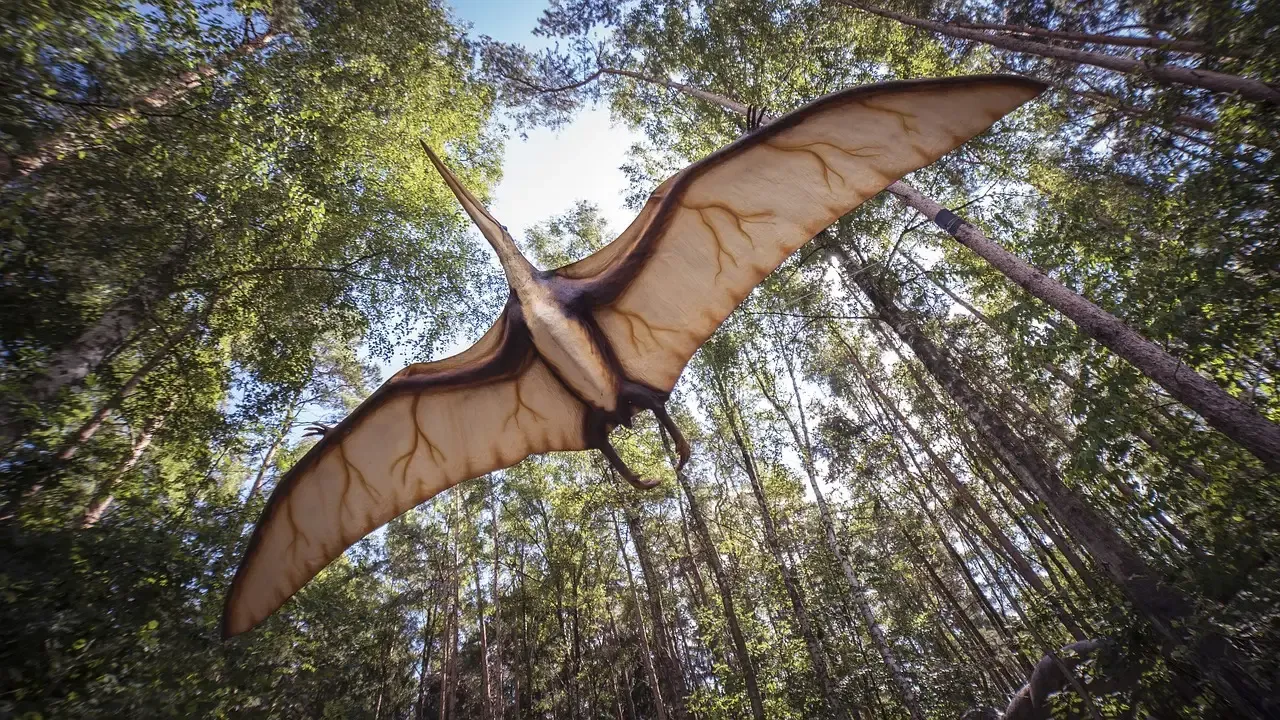
Let’s be real, most of us grew up calling every flying prehistoric reptile a “pterodactyl.” Turns out, there’s actually a specific animal behind that overused name. The first pterosaur ever discovered was Pterodactylus, identified in 1784 by Italian scientist Cosimo Collini, who initially thought he had discovered a marine creature that used its wings as paddles, according to the Geological Society of London. The name “Pterodactylus” translates to “winged finger,” which describes its large wing formed by a skin and muscle membrane stretching from its elongated fourth finger to its body.
Pterodactylus antiquus, the only known species of the genus, was a comparatively small pterosaur, with an estimated adult wingspan of about 3.5 feet (1.06 metres). Its wings were supported by a very elongated fourth finger, and it had a robust, lightweight body that made it well-suited for flight. Like other pterosaurs, Pterodactylus was likely a fish eater, hunting in coastal areas and possibly scavenging or foraging near the shorelines. Small it may have been, but Pterodactylus had the kind of evolutionary elegance that makes paleontologists genuinely excited. It was also the creature that launched the entire field of pterosaur science.
Pterodaustro: The Prehistoric Flamingo Nobody Talks About
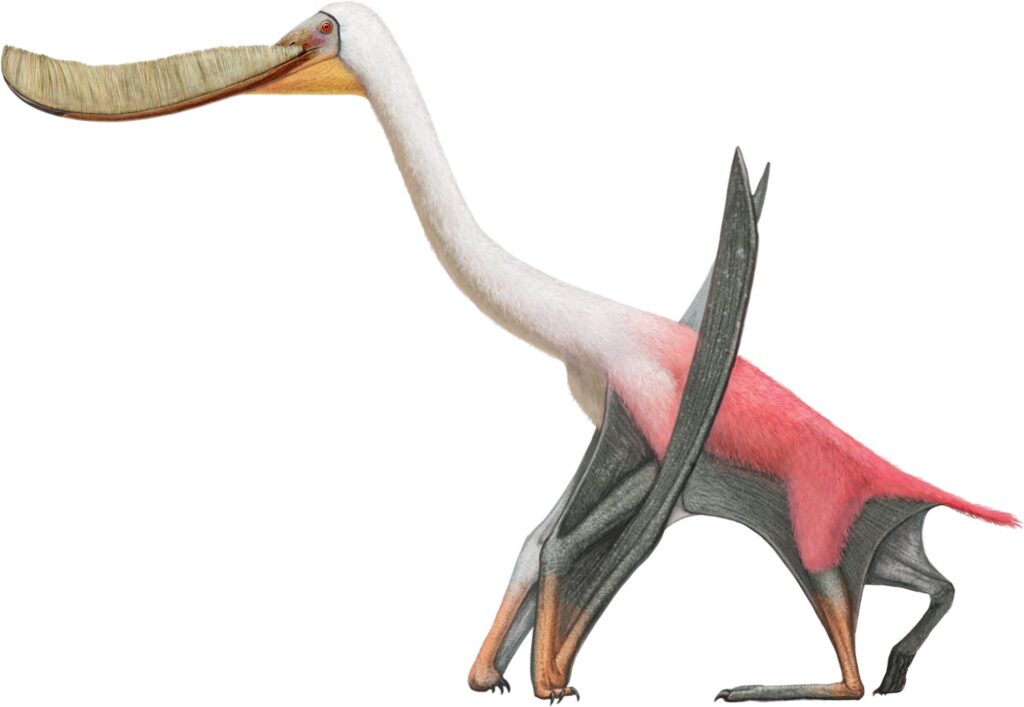
I think Pterodaustro might be the most underrated pterosaur of them all. Most people have never even heard of it, which is a shame. Pterodaustro is an extinct genus of pterosaur that lived during the Late Jurassic period, around 160 million years ago. It was a relatively small pterosaur, with a wingspan of about 2.5 metres. One of its most distinctive features was its long, slender jaws lined with a set of fine, needle-like teeth. These teeth were specialized for filtering food, much like the beaks of modern flamingos or some fish-eating birds.
Pterodaustro had beaks with hundreds of fine needle-like teeth, which suggests they were used for straining plankton. The comparison to a flamingo isn’t just poetic. It reflects a real evolutionary strategy: filter-feeding from shallow water bodies, tilting its elongated snout through the surface to strain microscopic organisms. The flying reptiles diversified to fill many ecological niches, and the skulls and teeth of different types of pterosaur reflect their diets. Specializations include tweezer-shaped bills and flat teeth for crushing shellfish, sharp interlocking teeth for catching fish, and large numbers of thin, comb-like teeth for filtering food from water. Pterodaustro is living proof that evolution can produce the same ingenious solutions across millions of years and wildly different species.
Dimorphodon: The Jurassic Predator With Two Very Different Kinds of Teeth
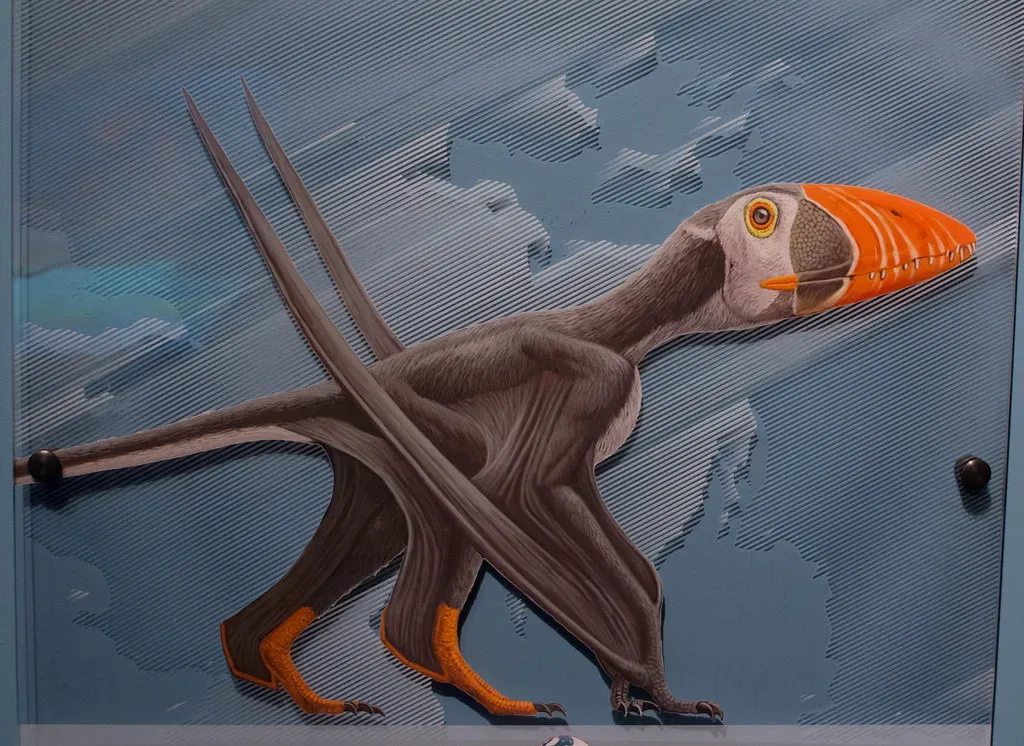
Dimorphodon is another pterosaur that doesn’t get nearly enough attention, and yet it holds some genuinely fascinating secrets. Dimorphodon lived during the early Jurassic period and is known for its two distinct types of teeth and robust skull. The flying apparatus of this pterosaur included its strong hind limbs and a long tail. Its wingspan may have been roughly 4.5 feet (1.4 metres), and it likely ate insects or fish. The famous English fossil hunter Mary Anning was the first person to find this pterosaur fossil, which she uncovered in the 1820s.
Dimorphodon is one of the earliest-known pterosaurs, placing it at a particularly intriguing point in the evolutionary story of flight. Smaller pterosaurs like Dimorphodon may have been more like smaller birds. With shorter wings, they would likely have been much more agile in the air. That agility, combined with its unusual double-dentition, suggests it was an opportunistic hunter that could adapt its diet to whatever was available, part insectivore, part fish hunter. In a world ruled by enormous predators, being small, fast, and flexible was sometimes the smartest strategy of all.
Conclusion: Ancient Masters of the Sky
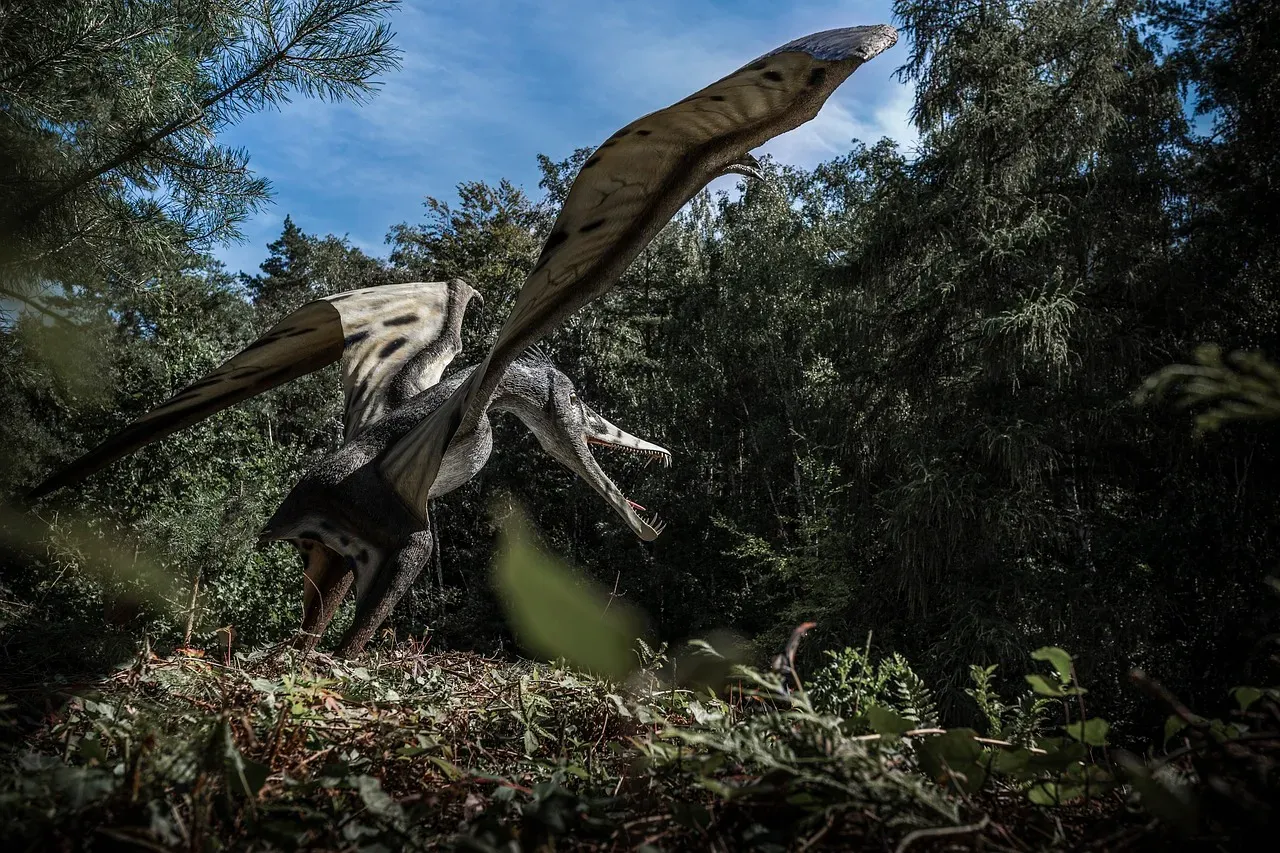
Back in the Mesozoic Era, a group of reptiles called pterosaurs were the dominant force in the air. In fact, pterosaurs were the first vertebrates to evolve powered flight. From the towering Quetzalcoatlus to the delicate, filter-feeding Pterodaustro, these creatures occupied every corner of the prehistoric sky with astonishing variety and ingenuity.
Sadly, like many incredible creatures of the past, the pterosaurs met an untimely end. The same event that likely led to the extinction of most dinosaurs, a meteorite impact, also wiped out these fantastic flyers. Although pterosaurs are no longer present in our modern world, their legacy lives on in the form of the many flying animals that have evolved since their extinction. Birds, bats, and insects have all filled the niches left vacant by pterosaurs, continuing the story of life in the skies.
Every time you glance up and watch a bird ride a thermal current high above you, you’re witnessing the distant echo of something far older and far grander. The skies were conquered long before wings had feathers. What creature from this list surprised you the most? Drop your thoughts in the comments.