Some animals look like they woke up on the wrong side of evolution. You look at their skulls, their claws, the weapons bolted onto their bodies, and you just know they were not built for calm, reflective conversations. Prehistoric life was brutally competitive, and many creatures carried the anatomical equivalent of a permanent “do not mess with me” sign. While we can’t literally measure their moods, we can read the clues written in bone, teeth, and armor and take a pretty good guess about who spent a lot of time in fight mode rather than flight mode.
In this article, we’ll look at seven prehistoric creatures whose anatomy, behavior (as far as we can tell), and ecological roles strongly suggest they were the rage machines of their time. From clawed “murder turkeys” to armored tank-lizards with built‑in tail clubs, these animals were exquisitely designed for confrontation. We’ll keep it grounded in what science actually supports, but we’ll also lean into the very human feeling you get when you look at one of these skeletons and think: that thing absolutely .
Tyrannosaurus rex: The Skull That Screamed “Do Not Disturb”
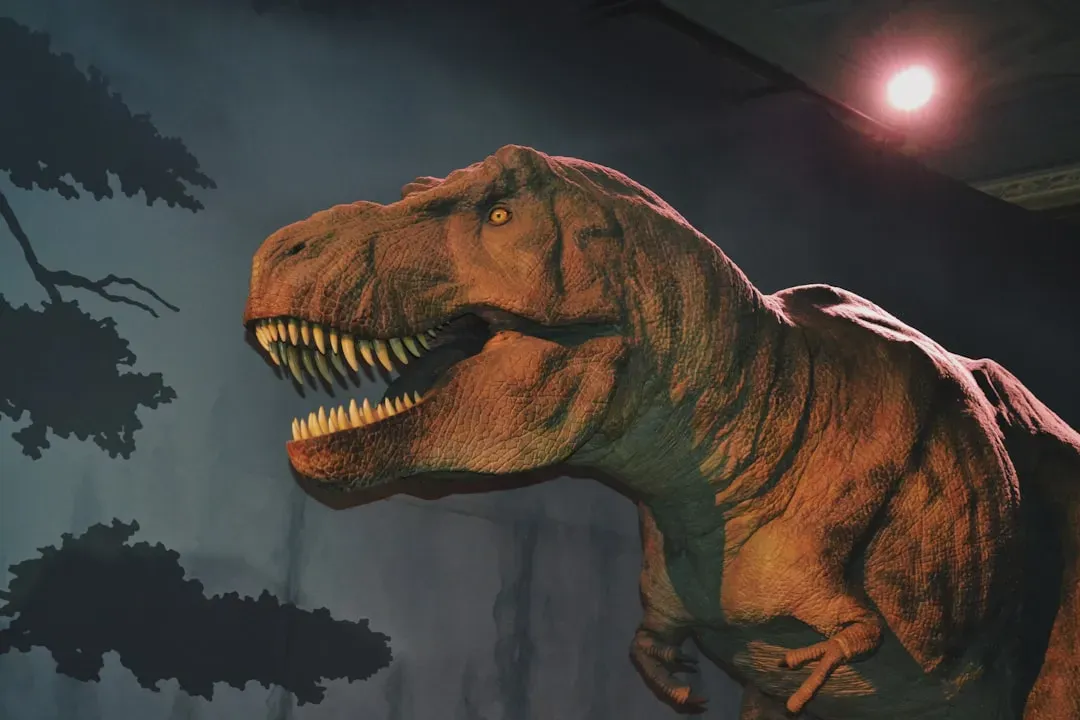
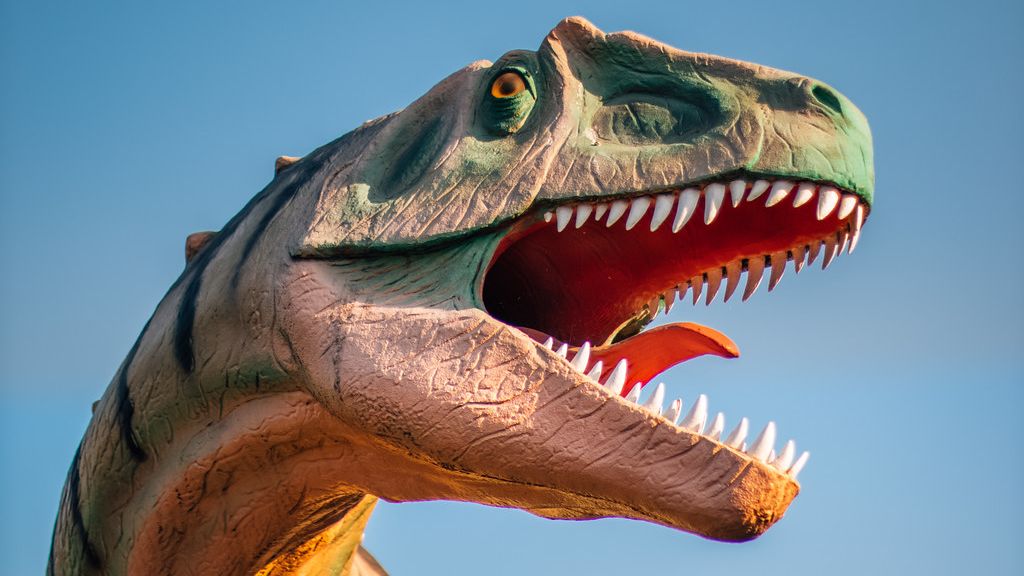
Tyrannosaurus rex is the obvious headliner here, and honestly, it earned the spot. This animal had one of the most powerful bites of any land predator known, with a massive, heavily built skull packed with thick, cone‑shaped teeth designed less for slicing and more for crushing bone like it was snack food. The skull and neck vertebrae show enormous muscle attachment areas, meaning its whole head worked like a living hydraulic press. That is not the anatomy of a gentle nibbler; it is the toolkit of something that routinely pushed violent force right to the limit of what its skeleton could handle.
Even more telling, many T. rex fossils show healed bite marks from other T. rex individuals, especially on the face and jaws. That strongly hints at regular intraspecific combat, whether over territory, food, or mates. Imagine being so confrontational that your social life involves biting members of your own species hard enough to scar bone, and yet both combatants often lived to tell the tale. Add in a body built like a muscular, tail‑balanced biped, and you get an image of a predator that not only hunted large prey, but also routinely picked fights with anything – or anyone – that got in its way. If any dinosaur was a walking temper problem, it was this one.
Ankylosaurus: The Armored Tank With a Weaponized Tail
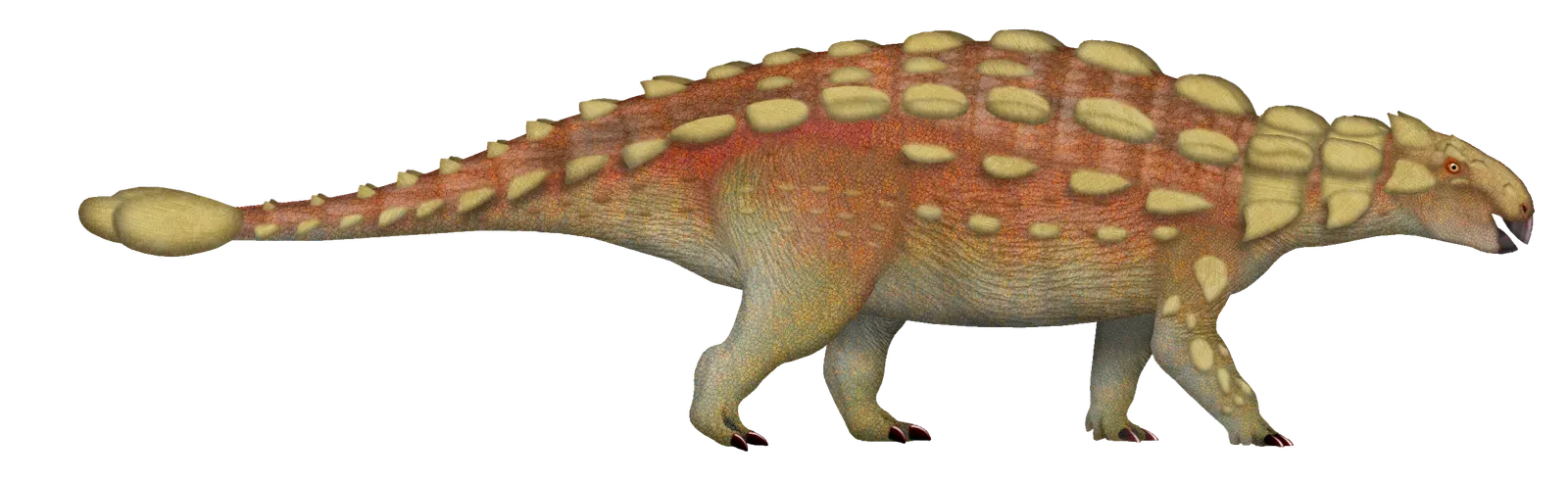
Ankylosaurus looks like evolution said, “What if we made a tank angry?” and then just went for it. Its back and sides were covered in heavy bony plates and knobs, forming a kind of built‑in riot gear from neck to tail. The real star, though, was that tail: a stiffened, reinforced handle ending in a massive bony club. Studies of its anatomy suggest it could swing that club with bone‑shattering force, easily strong enough to break the legs of large predators. You do not engineer a prehistoric sledgehammer onto an animal unless violence shows up pretty often in its life.
There is fossil evidence that tyrannosaurs may have taken blows from ankylosaur tail clubs, including crushed tail vertebrae and damaged leg bones that fit the pattern you would expect from a heavy lateral impact. That suggests these animals were not just passively armored; they were actively swinging back at anything bold enough to attack. In a modern analogy, Ankylosaurus feels less like a passive turtle and more like a bouncer in full gear, calmly enduring aggression and then retaliating with terrifying precision. If you wandered into its personal space, you might not get chased very far, but you absolutely risked leaving on fewer working limbs than you arrived with.
Velociraptor (And Its Raptor Cousins): The Blade‑Clawed Brawlers
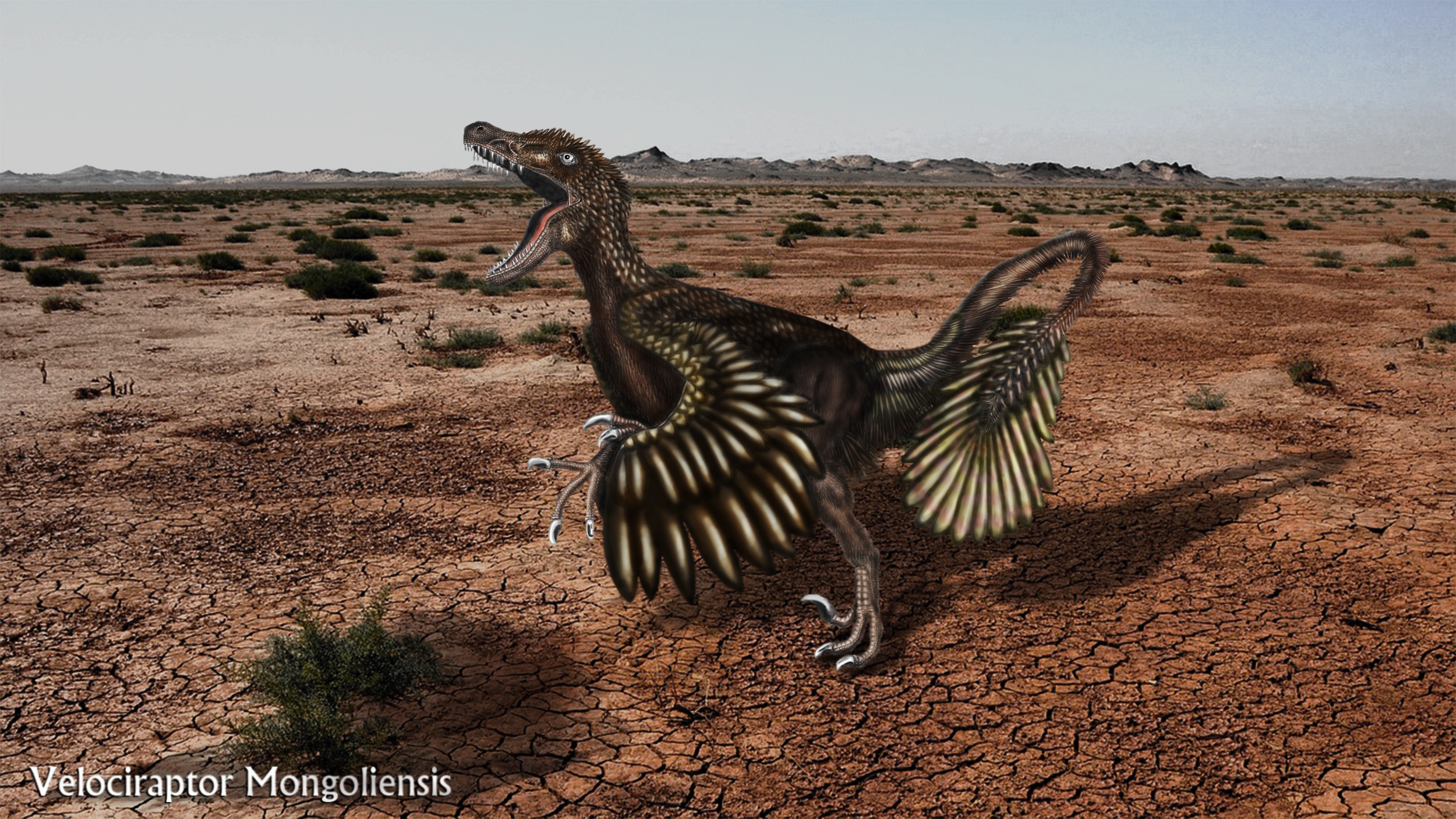
The real Velociraptor was smaller than the movie version, but honestly that might make it even more intense. This dinosaur carried a large, curved “killing claw” on each hind foot, held off the ground and apparently used in grappling and slashing during attacks. Its hands had long, curved claws as well, and its skull was narrow with sharp, serrated teeth suited to gripping flesh. These are the design choices of an animal that spent a lot of time physically wrestling with struggling prey, not politely scavenging leftovers from the ground.
Some fossil specimens preserve raptors literally locked in combat with other dinosaurs, including one famous find where a raptor’s claw is buried in the body of a much larger herbivore, both animals apparently dying mid‑fight. That frozen moment tells you a lot about their mindset: they were willing to tackle prey that could fight back hard, to the point of mutual destruction when things went wrong. I sometimes think of them as the prehistoric equivalent of those small, intense dogs that have no idea they are not the size of a bear. Raptors may not have been huge, but their anatomy and fossil behavior scream “I dare you” at anything in their ecological lane.
Deinonychus: The Pack‑Hunting Problem Child
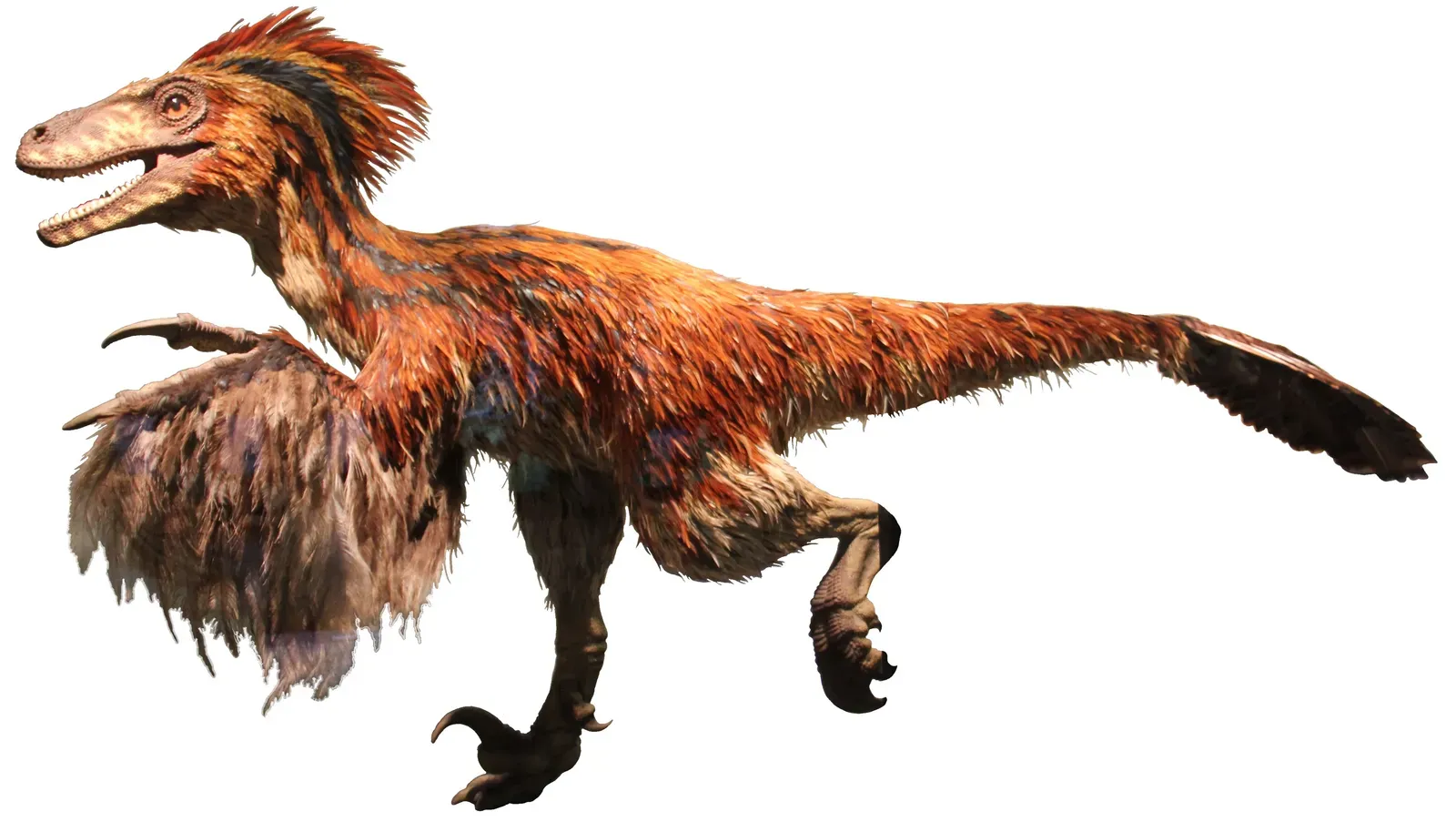
If Velociraptor was the compact troublemaker, Deinonychus was the bigger, more dangerous cousin that made teachers nervous. It had the same iconic sickle claws on its feet, but scaled up to a body several times larger, with powerful legs, grasping hands, and a rigid tail that likely helped stabilize fast, agile movements. The discovery of Deinonychus in the twentieth century helped change how scientists saw dinosaurs, from slow and lumbering to active, athletic, and possibly warm‑blooded. Its entire build suggests an animal primed for explosive, coordinated aggression.
Fossil sites preserving multiple Deinonychus bones along with the remains of large herbivores hint at the possibility of group hunting, or at least multiple individuals feeding on the same carcass. Whether they truly hunted cooperatively the way wolves do is debated, but the repeated association suggests they were not shy about piling into the same dangerous situation together. That willingness to attack large, dangerous prey – and to do it in numbers – paints a picture of an animal whose life involved constant, high‑risk confrontations. If you dropped Deinonychus into a modern ecosystem, it would be the kind of predator that every other animal learns to avoid the hard way.
Smilodon (Saber‑Toothed “Tiger”): Built for Close‑Range Carnage
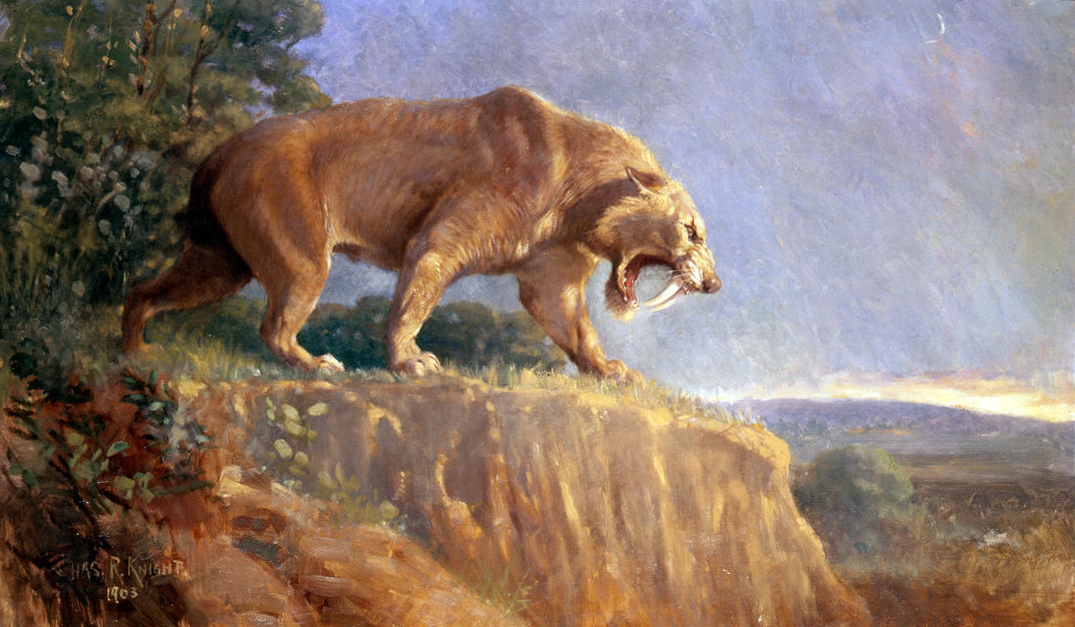
Jumping forward in time to the Ice Age, Smilodon is the classic saber‑toothed cat that looks permanently furious, even as a skeleton. Its upper canine teeth were long, flattened blades, vulnerable to breakage if used carelessly, so it likely delivered precise, powerful bites to soft areas like the neck or throat. To make that work, its body evolved into a stocky, muscular frame with incredibly strong forelimbs, perfect for wrestling large prey to the ground and pinning them while delivering a targeted killing bite. That is not a calm, low‑contact strategy; that is up‑close, full‑body engagement.
Many Smilodon skeletons show signs of healed injuries, including broken bones that would have been crippling in the short term, suggesting that injured individuals survived long enough to heal, possibly with help from group living or at least scavenging opportunities. That implies a life filled with high‑impact struggles against large, dangerous herbivores like bison or ground sloths. Imagine an animal that routinely jumps onto something several times its own weight, hangs on through kicks and thrashing, and then tries to land a surgical strike with fragile but deadly fangs. Even if we do not project modern “anger” onto it, the everyday reality of being Smilodon was basically living in permanent combat mode.
Sarcosuchus: The Giant Croc That Made Rivers Terrifying
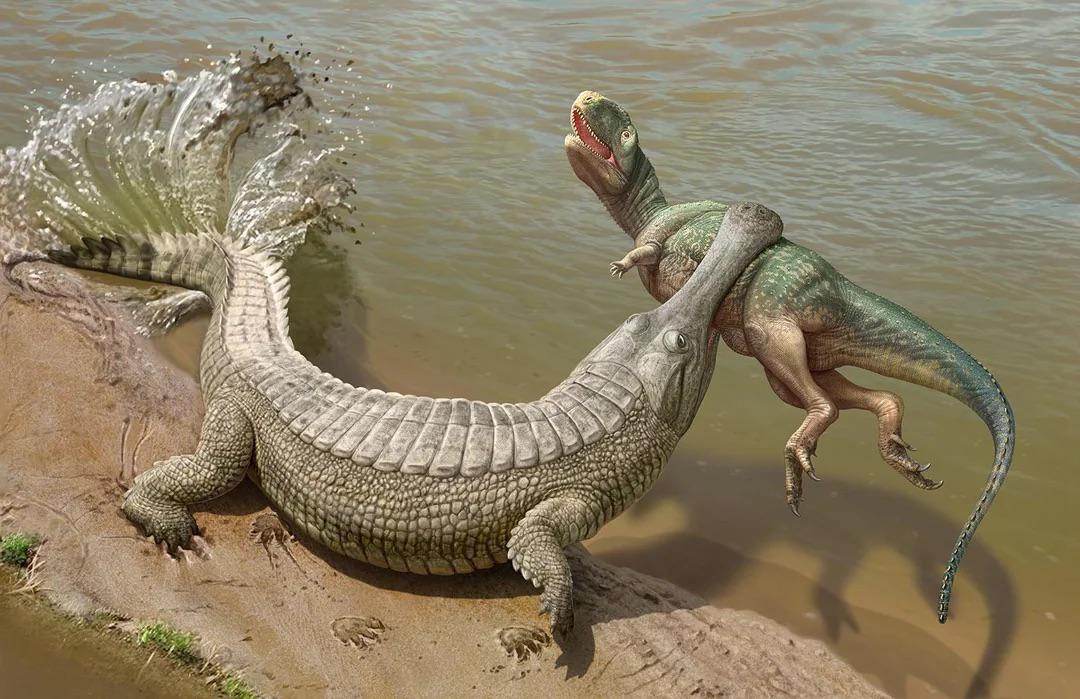
Sarcosuchus, often nicknamed “SuperCroc,” lived millions of years before modern humans and turned ancient rivers into no‑go zones. It was much larger than most living crocodilians, with a long, robust snout, powerful jaws, and a body that could ambush anything unfortunate enough to enter the water’s edge. Its skull structure and teeth point to a diet that included large prey, not just fish, meaning it probably behaved like a supersized version of modern Nile or saltwater crocodiles. Those living relatives are already notorious for sudden, explosive attacks; scale that attitude up, and you get something that feels like pure prehistoric hostility emerging from the water.
The lifestyle of a big ambush predator is one long stretch of stillness punctuated by bursts of extreme violence. Sarcosuchus likely lurked half‑submerged, motionless and patient, then lunged with terrifying speed when a dinosaur or other animal got too close. It did not need to chase prey over long distances because it turned the shoreline itself into a trap. If you have ever watched footage of modern crocs dragging animals into the water, you can mentally upscale that scene and get a pretty good picture of Sarcosuchus in action. Whether or not it “felt” rage, it weaponized surprise and power in a way that would read as pure malice to anything unlucky enough to be on the menu.
Megaraptor (And Other Giant Clawed Theropods): The Over‑Armed Enforcers
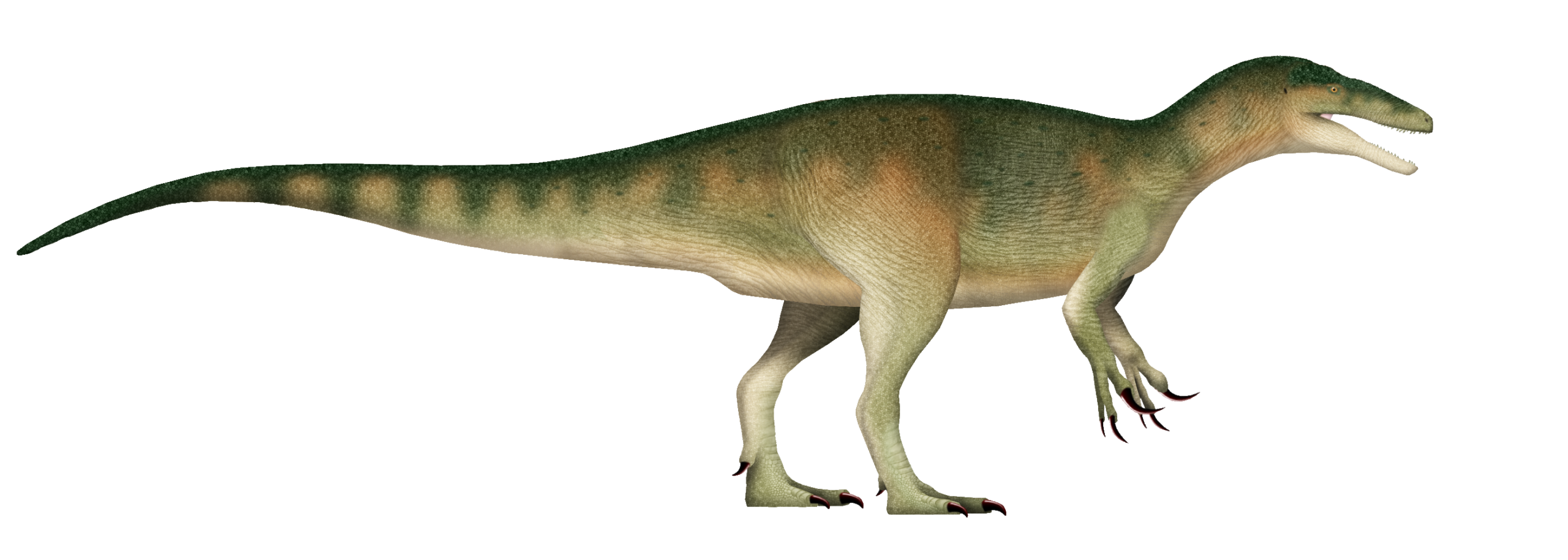
Megaraptor is one of those dinosaurs whose name alone sounds like trouble, and its anatomy backs that up. Early on, researchers thought its huge, sickle‑shaped claw belonged on the foot, like a giant raptor dinosaur, but later evidence strongly suggested the massive claws were actually on its hands. That means this predator probably attacked with enormous, hooked hand claws, backed by sharp teeth and a sleek, agile body. Imagine a dinosaur that basically fights with oversized meat hooks attached to muscular arms; it is hard not to assign a certain mean streak to that kind of design.
The exact hunting style of Megaraptor and its close relatives is still debated, but the combination of speed, large size, and terrifying armament makes one thing very likely: confrontations with prey were fast, intense, and often brutal. This was not a stealthy little insect eater or a casual scavenger. It lived in ecosystems filled with other large predators and big herbivores, which means competition and conflict would have been baked into its daily routine. To me, Megaraptor feels like the prehistoric equivalent of that one over‑equipped action movie character who carries way more weapons than anyone reasonably needs. When evolution gives you claws like that, you are not negotiating; you are enforcing.
Conclusion: Were They Angry, Or Just Doing Their Jobs?
We will never know what these animals felt, and it is important to say that out loud. Dinosaurs, saber‑toothed cats, and giant crocodiles were not villains; they were highly specialized products of their environments, doing exactly what natural selection set them up to do. But when you look at the scars on their bones, the armor and clubs, the blade‑like teeth and hooks, it is hard not to see them as the short‑tempered enforcers of their ecosystems. Their bodies were built around conflict, and their daily survival almost certainly meant frequent, violent encounters with prey, rivals, and sometimes even members of their own species.
Personally, I think calling them creatures with “anger issues” is more about us than about them. We see our own emotions in their weapons and scars, the same way we see faces in clouds or personalities in house cats. Still, there is something honest and oddly comforting about admitting that some beings in Earth’s history were walking confrontations, living on a knife edge of power and risk. It reminds us that life has always been intense, messy, and thrillingly dangerous long before humans showed up to name it. When you look at these seven prehistoric bruisers, which one would you least want to meet on a bad day – and did your instincts surprise you?