America has always been a land of buried secrets. Beneath its highways, national parks, college campuses, and construction sites lies an extraordinary underground archive – one that rewrites history with every shovelful of dirt. What you might not realize is just how many jaw-dropping discoveries have happened right here on US soil, in fields and ponds and sandy deserts that most people drive past without a second thought.
From footprints that challenge everything you were taught about early human migration to 7,000-year-old brains still intact inside ancient skulls, the story of American anthropology is far stranger, and far more thrilling, than any textbook lets on. Let’s dive in.
1. The Ancient Human Footprints at White Sands, New Mexico
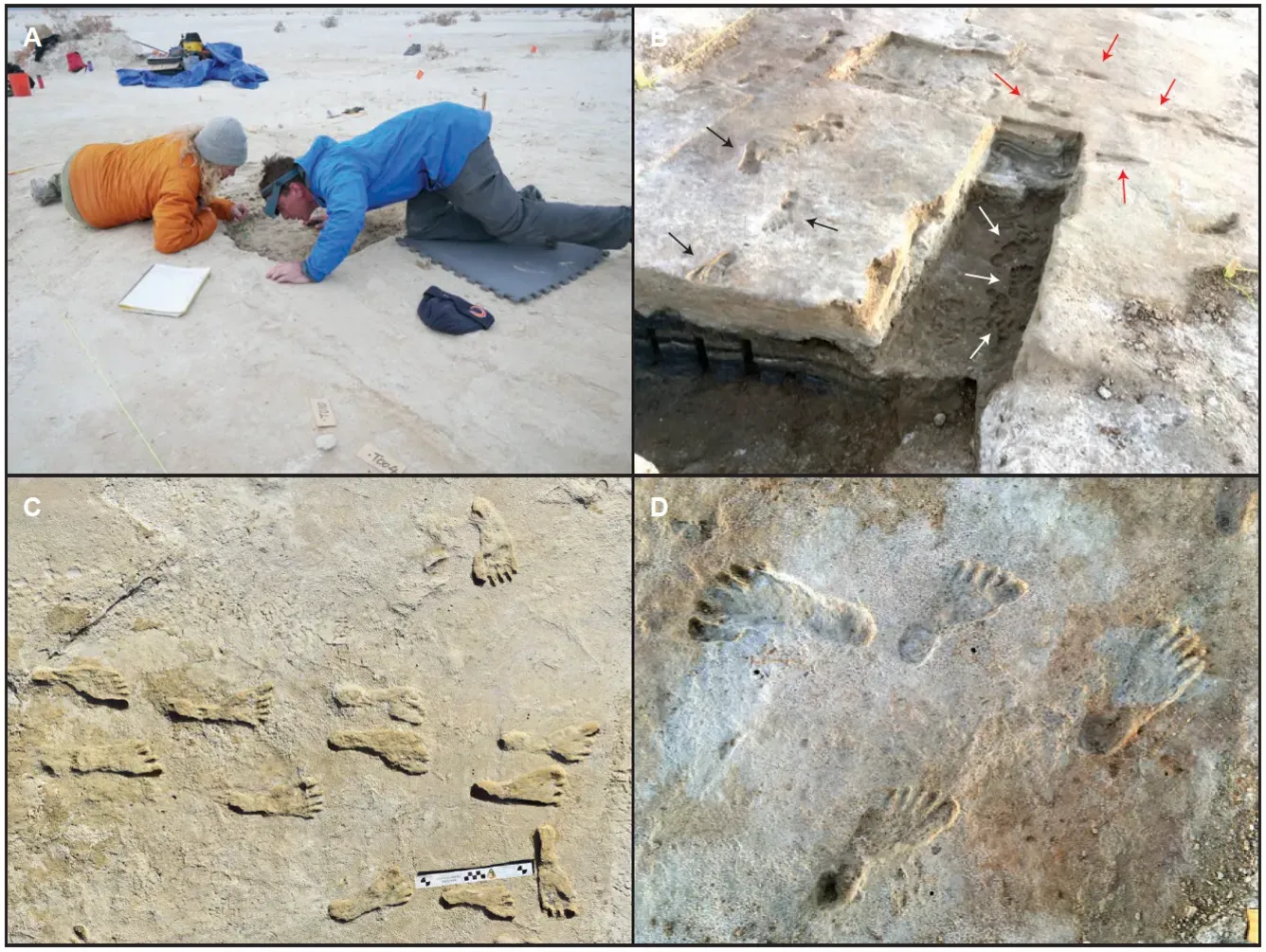
Honestly, few archaeological finds in recent memory have shaken the scientific world quite like the footprints discovered at White Sands National Park. These fossilized prints were made between 23,000 and 21,000 years ago along the shores of an ice age lake that once filled the Tularosa Basin in south-central New Mexico. To put that into perspective, that’s like finding a perfectly preserved handshake between modern humans and the woolly mammoth era.
This finding fundamentally changes the timeline on North American human habitation, turning back the clock of human arrival in the Americas by nearly 10,000 years. The prints were not just scattered marks either. The vast majority were made by teenagers and children, with few large adult footprints found in the excavated surfaces, leading researchers to believe that teens and children were assigned tasks such as fetching and carrying near the lake bed while adults engaged in more skilled activities elsewhere. When you picture a prehistoric teenager running errands around an ice age lake while mammoths roamed nearby, it suddenly feels very human.
2. The Topper Site Stone Tools, South Carolina
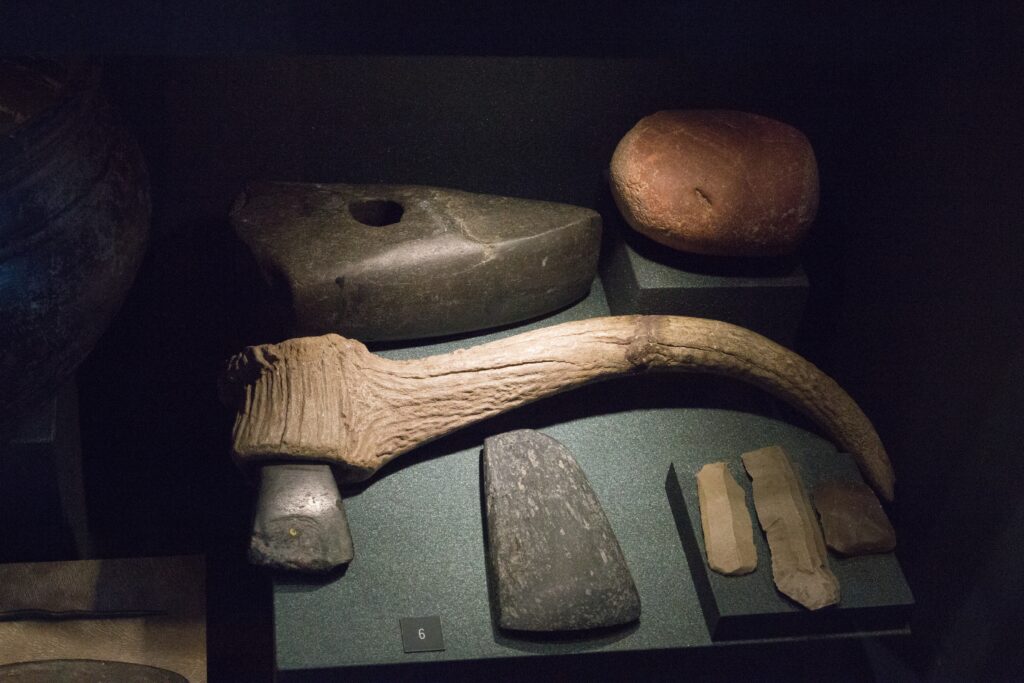
Here’s a find that sparked one of the most heated debates in American archaeology. For many decades, the long-established chronological marker for America’s first arrivals centered on discoveries made near Clovis, New Mexico, including expertly crafted fluted spear points and other artifacts that served as the type site for America’s earliest definitive cultural manifestation. That standard got rocked hard by what was dug up along the Savannah River.
In 1998, University of South Carolina archaeologist Albert C. Goodyear dug below the 13,000-year Clovis level at the Topper site and found unusual stone tools up to a meter deeper. Radiocarbon dating indicated that artifacts excavated from a Pleistocene terrace were recovered from soil dating approximately 50,000 years, implying an even earlier arrival for humans in the hemisphere than previously believed, well before the last ice age. Over the last half-century, conventional attitudes about the arrival of humans in North America have undergone repeated shifts, with estimates of the earliest human activity continually pushed back to more distant times. The Topper site sits at the center of that ongoing revolution.
3. The Windover Bog Bodies and Their Intact Brains, Florida
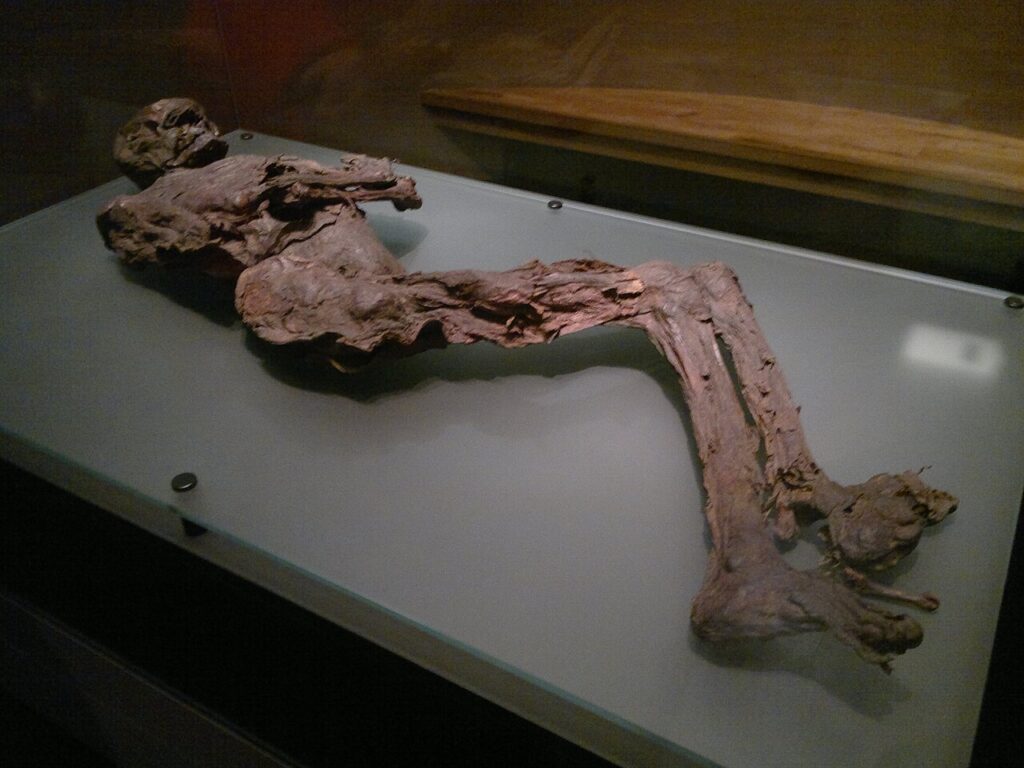
Imagine a construction backhoe operator reaching into a Florida pond in 1982, only to pull up a bucket full of ancient human skulls. That is exactly what happened. The Windover Archeological Site is a Middle Archaic archaeological site and National Historic Landmark in Brevard County near Titusville, Florida, where skeletal remains of 168 individuals were found buried in the peat at the bottom of the pond. What came next was even more astonishing.
The Windover skeletons still retained brain matter, hair, skin and other delicate soft tissues that are almost never found in archaeological remains of this age. Over 90 intact brains were recovered from the skulls, the oldest preserved human neural tissue ever found, with cell structure still visible under a microscope. The DNA indicated that the Windover peoples carried genetic markers that link them to ancient populations from Asia and that they do not match any native populations alive in North America today. It is hard to think of a more profound or eerie window into the ancient past than a 7,000-year-old brain that science can still read.
4. The Meadowcroft Rockshelter Artifacts, Pennsylvania
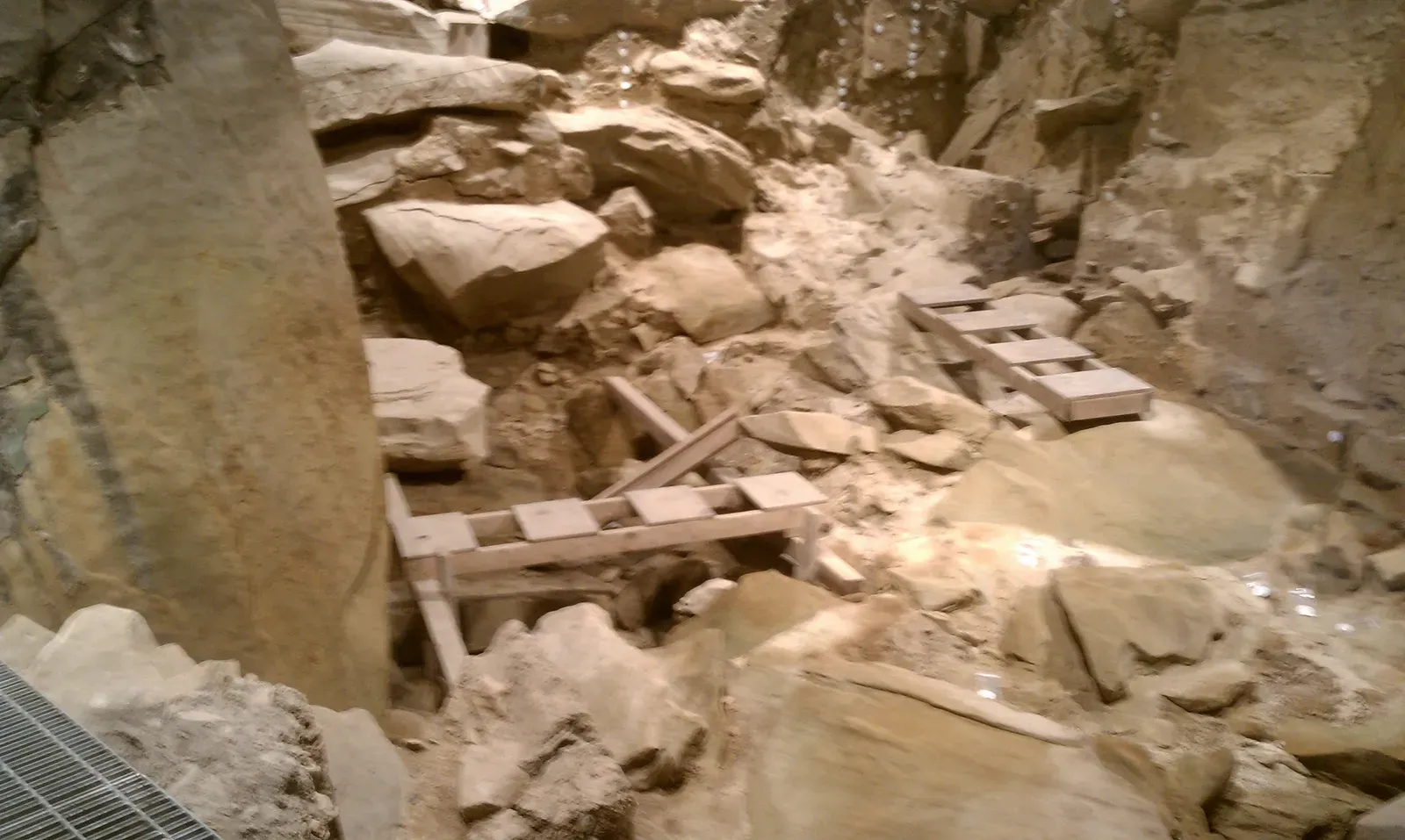
Known as one of the most significant prehistoric sites in North America thanks to its careful preservation, Meadowcroft was discovered in the 1950s and has been a key location for the study of early human habitation. Dating back more than 16,000 years, the rockshelter harbored a wealth of artifacts, from stone tools to weapons, that tell the story of the life of early humans in the area. For a site tucked quietly in southwestern Pennsylvania, this place carries enormous weight in the broader conversation about when people first walked on American land.
Pottery, plant and animal remains, and a hearth – one of the earliest to be discovered in North America – have all been excavated at the site. Think of it like finding an ancient campfire that never quite went out in the historical record. More and more archaeological finds like this reveal a complex picture of how and when people first arrived in North America. Meadowcroft is not just a curiosity – it is a cornerstone of that picture, and one that continues to generate productive academic debate decades after its initial excavation.
5. The Wyoming Prehistoric Needles, 13,000-Year-Old Tailoring Evidence
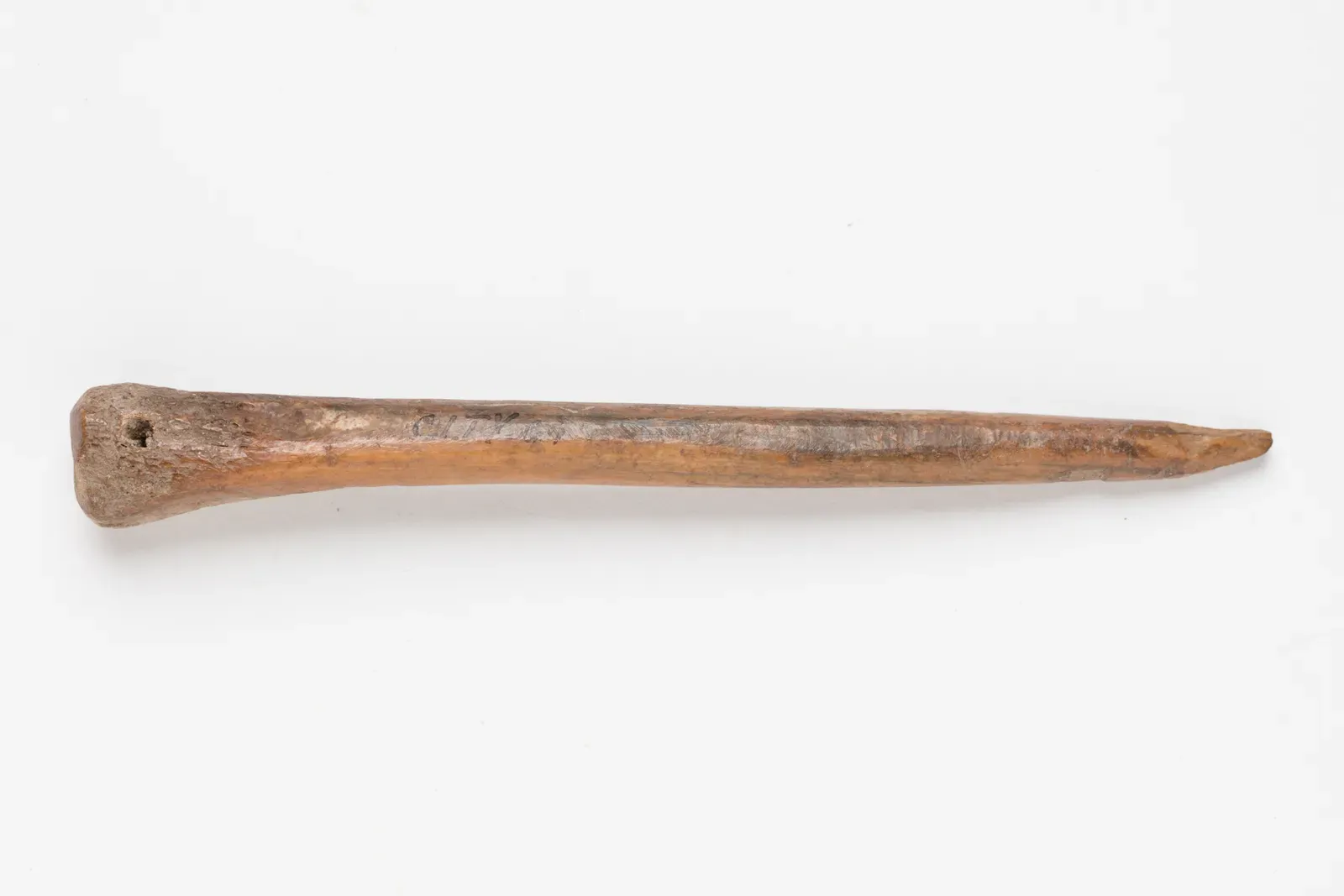
Catalogue record
Photo, CC BY 4.0)
You might not think of ancient needles as headline-grabbing artifacts, but stay with me here. A collection of 32 prehistoric needle fragments dating back 13,000 years were unearthed in Wyoming between 2015 and 2022, and the discovery of these tiny artifacts, now held at the University of Wyoming, provides strong evidence of the earliest tailored garment production. This is not just sewing history. This is survival history.
These garments, warmer and more robust than simple draped fabrics, enabled modern humans to travel to northern latitudes and eventually colonize the Americas. A 2024 study found that they were made from the limbs and paw bones of small mammals such as red foxes, bobcats, hares, rabbits, and the now-extinct American cheetah. It is a strangely poetic detail – that the very clothing made from ancient animals may have helped humans survive long enough to eventually find, and study, those same remnants thousands of years later. Sometimes archaeology gives you those perfect loops of irony.
6. The Cooper’s Ferry Projectile Points, Idaho
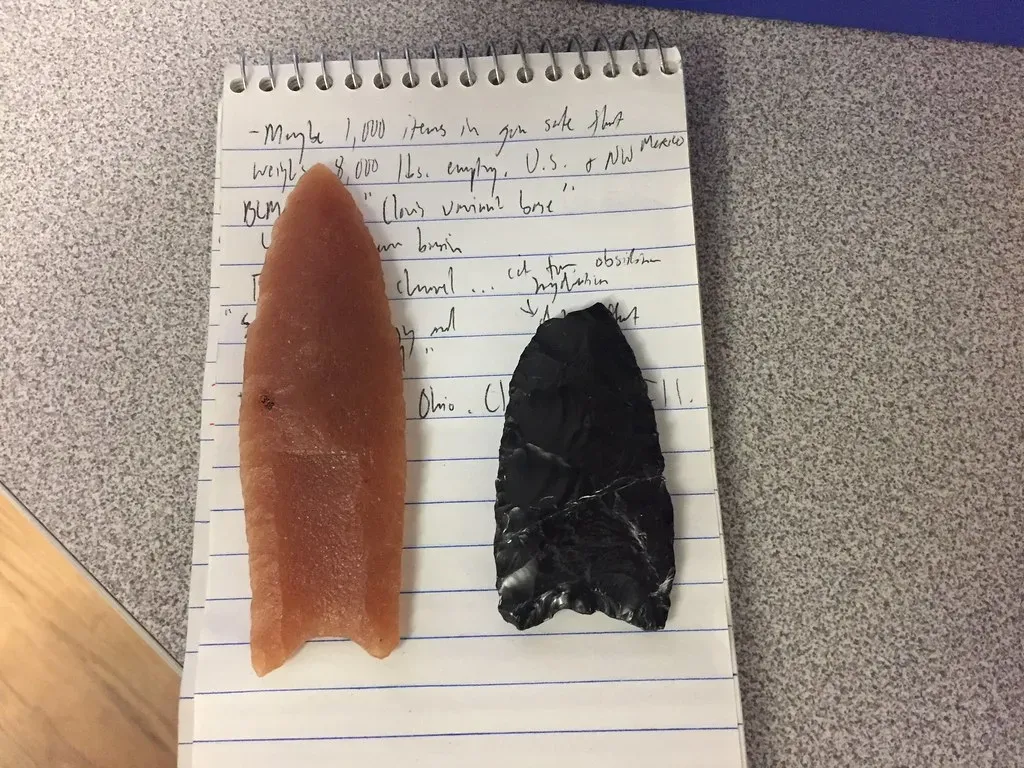
The remote Snake River country of Idaho is not where most people expect history-making discoveries. Yet the Cooper’s Ferry site has delivered exactly that. The archaeological site of Cooper’s Ferry, Idaho, sits in a valley at a bend of the Lower Salmon River – an excellent place to live, with resources close at hand. Excavations at the site uncovered evidence of hearth fires, animal butchery, and stone toolmaking, the earliest of which were dated in 2019 to around 15,000 to 16,000 years ago.
The spear points unearthed at Cooper’s Ferry in 2022 are particularly notable. At roughly 15,700 years old, they are 3,000 years older than the Clovis points found throughout North America. Even more tantalizing, a collection of 14 stone projectiles discovered by archaeologists at Cooper’s Ferry in 2022 resemble similarly shaped stone projectiles carved even longer ago across the Pacific on the island of Hokkaido in Japan. That is not a footnote – that is a potential rewrite of how the first Americans arrived on this continent, and it’s the kind of connection that keeps anthropologists awake at night.
7. The Jamestown Burn Layer and Colonial Artifacts, Virginia
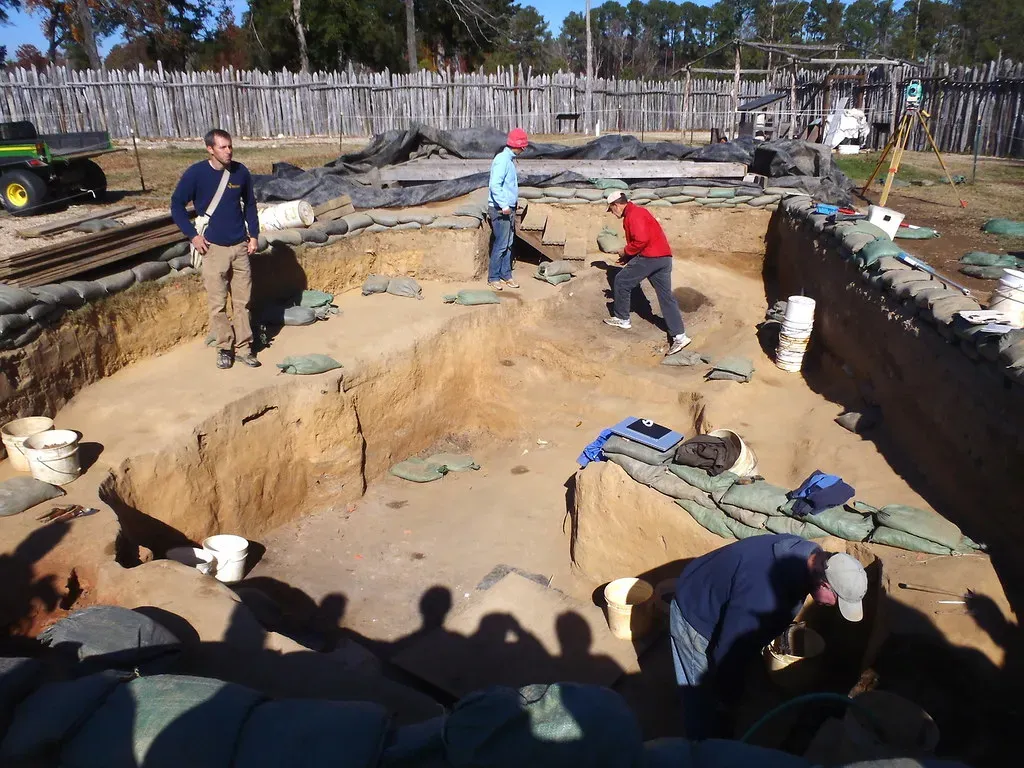
Not all remarkable American digs reach back into the Ice Age. Some unearth the very roots of the nation itself. In 2021, archaeologists in Jamestown, Virginia – the site of the first permanent British colony in North America – discovered a layer of charcoal and burned earth near where the parish church once stood, just below artifacts confidently dated to the 1670s. The findings confirm historical accounts from the era: that a blaze broke out in Jamestown in 1676 during a rebellion led by Nathaniel Bacon, the first major uprising in the British colonies a hundred years before the revolution.
It is one thing to read about Bacon’s Rebellion in a history book. It is another thing entirely to put a trowel in the ground and find the actual ashes. In the summer of 2023, archaeologists at Colonial Williamsburg unearthed a barracks burned by the British during the Revolutionary War. The barracks was only used during the war – built in 1776 and razed in 1781 – which makes it a particularly intriguing time capsule. British General Cornwallis burned its buildings en route to his pivotal defeat at Yorktown, and key artifacts include gun hardware, lead shot chewed by bored soldiers, and high-end ceramics. That chewed lead shot is, I think, one of the most quietly human details in all of American archaeology – a bored soldier fidgeting with lead centuries ago, leaving behind a fingerprint of boredom for us to find.
Conclusion
What you take away from these seven discoveries depends on who you are. If you’re a history enthusiast, you see a series of revelations that keep dismantling old certainties. If you’re a scientist, you see a discipline that never stops asking harder questions. While most digs continue to make extraordinary finds using the time-tested techniques and tools of archaeology, it is clear that newer technologies are changing what we know about the past, with ancient DNA, ground-sensing technology, and even artificial intelligence playing a part in recent discoveries.
The most exciting thing about American anthropology in 2026 is not what has already been found. It is everything still waiting underground – beneath a parking lot in Virginia, a sand dune in New Mexico, or a quiet Florida pond that nobody’s thought to look at yet. The ground beneath your feet may be holding a story that no one has read yet. What would you hope it says?