For most of human history, dinosaurs were imagined as cold, solitary killing machines – creatures that stomped through the Mesozoic era caring about little beyond their next meal. That image has been completely shattered by what paleontologists have been quietly uncovering from the rock record over the past few decades. The story emerging from fossil sites around the world is far warmer, far more complex, and honestly, far more fascinating than any movie has given us credit for.
Dinosaurs, despite their fearsome reputation, exhibited parental care behaviors similar to those seen in modern animals, and fossilized evidence such as nests and eggs provides remarkable insights into these parental instincts. From colonial nurseries in Montana to frozen family portraits in China, the fossils don’t lie. So, let’s dive into the seven most extraordinary fossil discoveries that prove dinosaurs were, in their own ancient way, devoted parents.
1. Maiasaura and the “Egg Mountain” Nesting Colonies of Montana
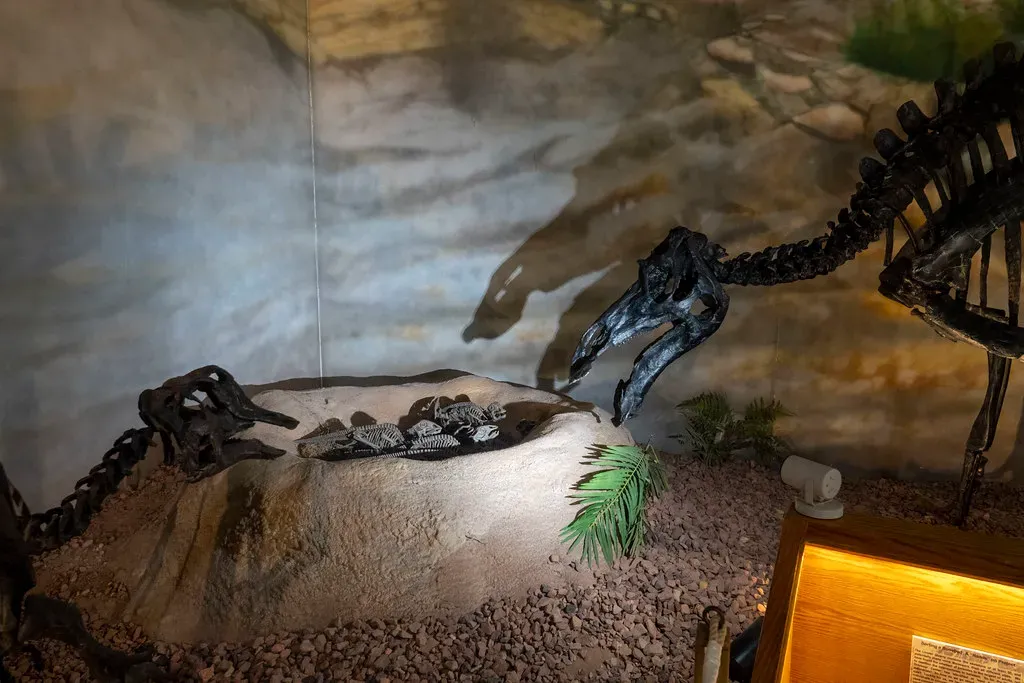
If you want to talk about the fossil that changed everything, this is the one. In the 1970s, paleontologist Jack Horner discovered what was later dubbed “Egg Mountain” in Montana – a gigantic, fossilized nesting site of hundreds of specimens of duck-billed Maiasaura dinosaurs from up to 80 million years ago. It wasn’t just a nest or two scattered in the dirt. It was an entire community, preserved in stone, and it hit the paleontology world like a thunderbolt.
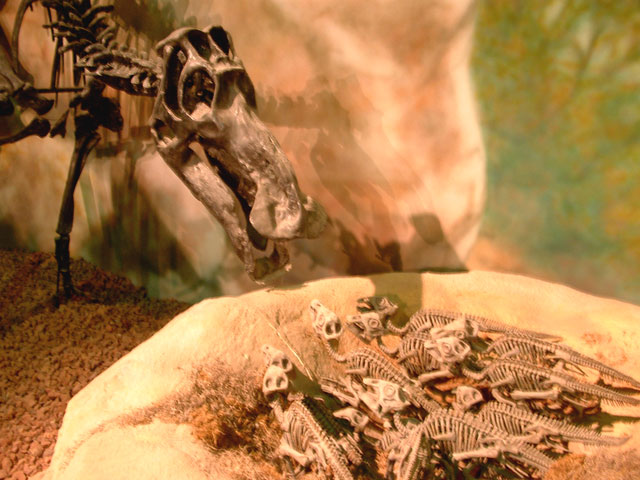
The fossils of the duck-billed dinosaur Maiasaura indicate these animals nested in groups and cared for their young – discoveries which helped shift both the public and scientific perception of dinosaurs and their behavioral complexity. The name Maiasaura itself translates to “good mother lizard,” and honestly, that name was earned. At Egg Mountain, evidence of trampled eggshells suggests that the hatchlings were in the nest for a prolonged period, and along with the shells, there was plant matter in the nests, suggesting parents may have fed the young before they ventured out into the world. You don’t feed your kids and then claim you weren’t parenting.
The clutches of Maiasaura eggs were spread apart, meaning the dinosaur nested in colonies, and these nesting grounds were preserved in successive layers, meaning that parents returned to the same grounds to mate, possibly every year – much like many birds today, a behavior ornithologists call “nest site fidelity.” Think of it like a prehistoric summer camp that the whole family returned to, season after season. That level of behavioral consistency is genuinely moving when you stop and think about it.
2. “Big Mama” – The Citipati osmolskae Brooding Fossil
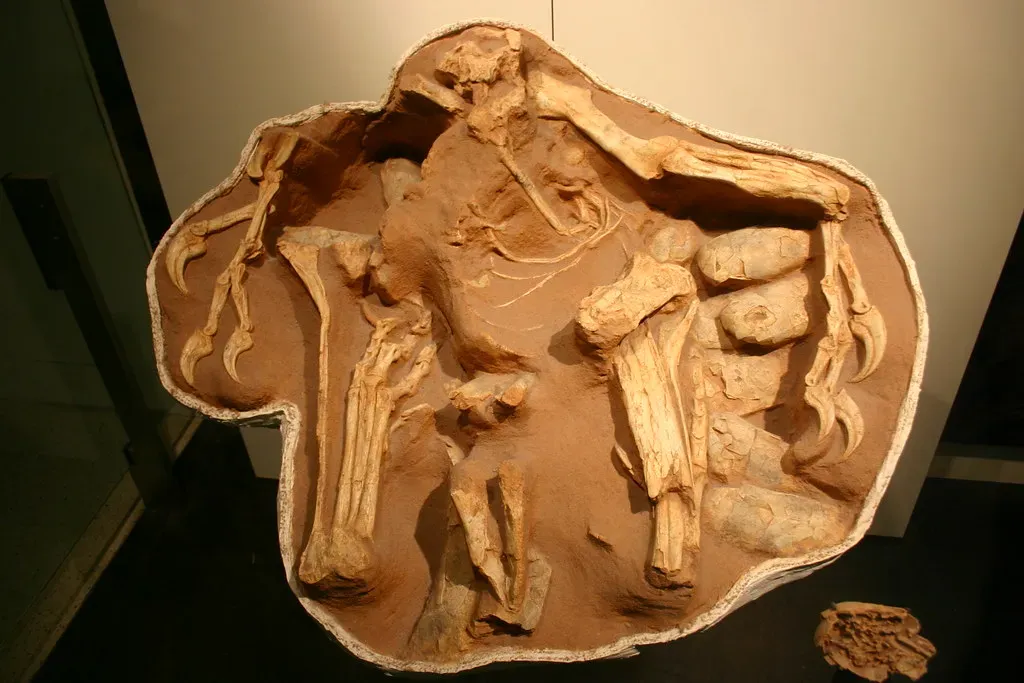
Here’s the thing about first impressions – they can be spectacularly wrong. Oviraptor, whose name is derived from the Latin for “egg thieves,” was first discovered in the 1920s in association with eggs that were originally thought to belong to the small ceratopsian dinosaur Protoceratops, and based on this find, scientists believed Oviraptor may have stolen and eaten other dinosaurs’ eggs – but it has now been confirmed that those eggs actually belonged to Oviraptor itself. A wrongly named dinosaur, cleared of the charges after seventy years. That’s quite the plot twist.
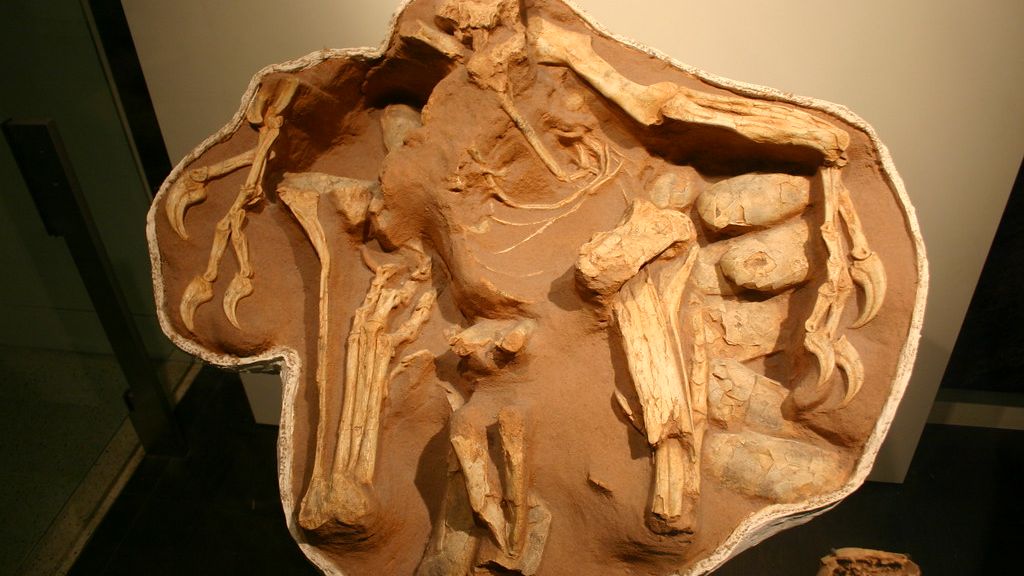
There is no other evidence that it stole eggs – in fact, oviraptorids show substantial evidence of putting their lives on the line for their young, and the Citipati osmolskae fossil dubbed “Big Mama” was a discovery that provided substantial evidence for how dinosaurs behaved with their eggs. Researchers found a 75-million-year-old Mongolian dinosaur that was fossilized sitting right on top of a nest, dubbed it “Big Mama,” and observed that these dinosaurs sat on their nests in a very bird-like way with their bodies positioned in the center and their arms held over the eggs – their bodies would have been covered in large, down-like feathers that helped conceal and insulate the eggs. That is not the behavior of a creature that doesn’t care. That is devotion, locked in stone.
3. Psittacosaurus and Its 34 Hatchlings – A Family Portrait in China
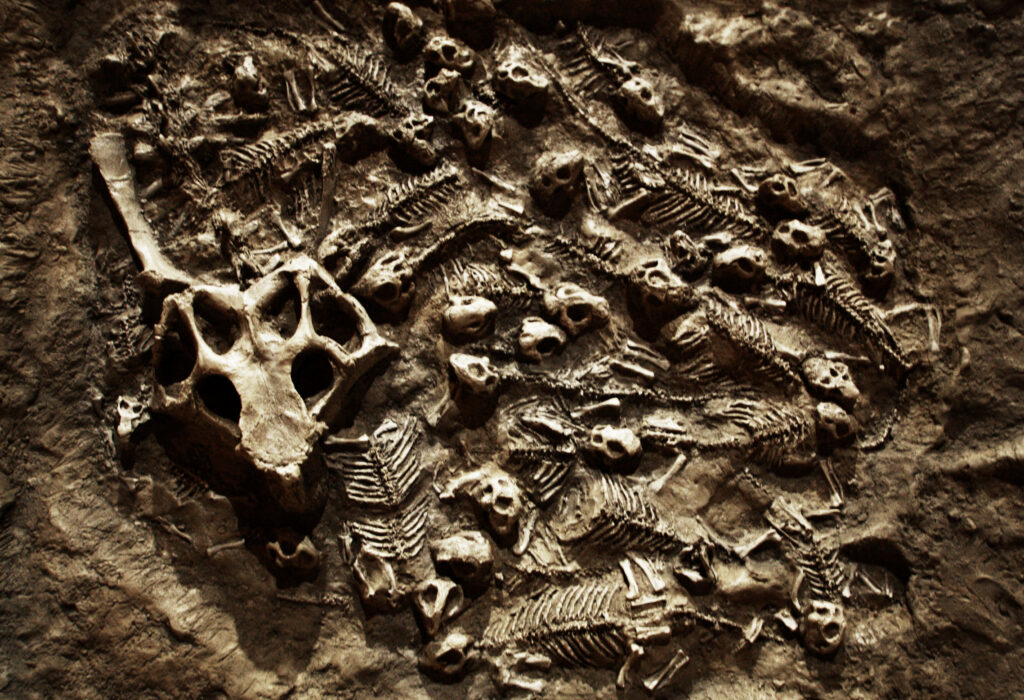
Some fossils tell a story. This one tells a tragedy. Fossil hunters in China unearthed what looks like the final resting place of an adult dinosaur with 34 offspring – a discovery that shows at least some after they hatched, and in the fossilized group of horned dinosaurs called Psittacosaurus, a fully grown individual is surrounded by 34 youngsters, all huddled within an area of just half a square meter. Whatever killed them, they died together.
The youngsters are all around 20 centimeters long, suggesting they represent a single brood, and the fossils’ lifelike crouching poses raise the question of what killed and preserved them so perfectly – although a volcanic eruption might seem the obvious culprit, it is more probable that they were entombed when an underground burrow collapsed or drowned by rising floodwaters. The image of a parent surrounded by its young, heads raised, in what may have been their final moments together – I think that speaks more powerfully about dinosaur parental care than any textbook entry ever could. This unique discovery shows that at least some after they hatched out, and suggests that the parental instincts of present-day birds and reptiles such as crocodiles may have a common evolutionary precursor.
4. The Massospondylus Nesting Site – 190 Million Years of Parenting
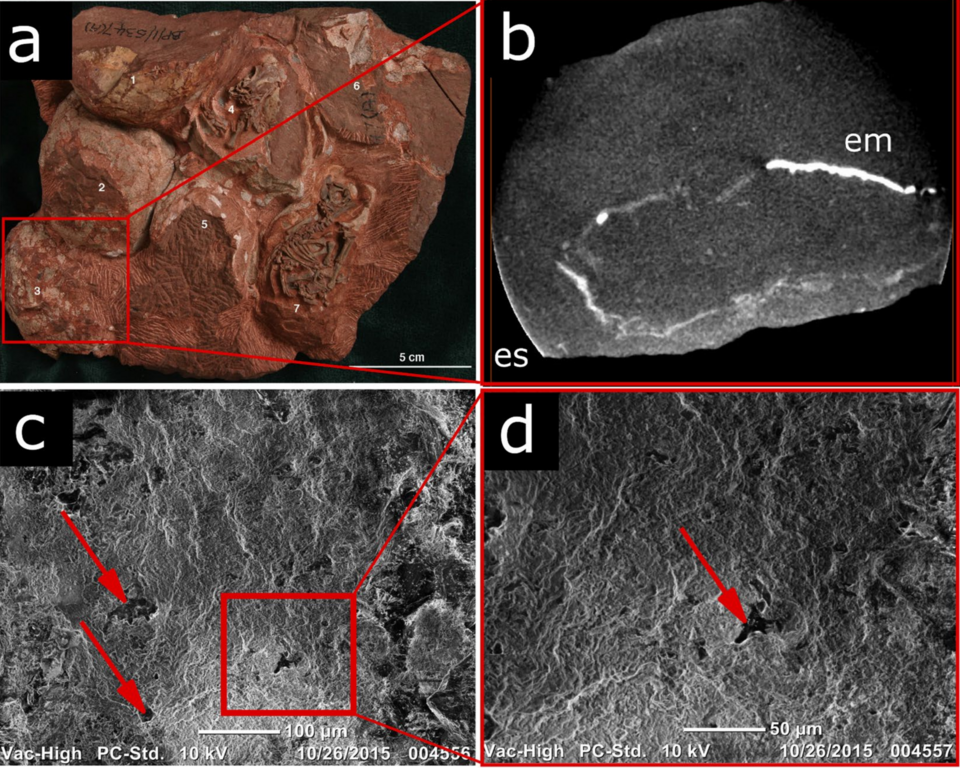
You want ancient? Try 190 million years old. An excavation at a site in South Africa has unearthed the 190-million-year-old dinosaur nesting site of the prosauropod dinosaur Massospondylus, revealing significant clues about the evolution of complex reproductive behavior in early dinosaurs. An excavation program started in 2006 yielded multiple in-place egg clutches, documenting the oldest known dinosaurian nesting site – predating other similar sites by more than 100 million years – and the presence of numerous clutches in at least four distinct horizons within a small area provides the earliest known evidence of colonial nesting in a terrestrial vertebrate.
Based on the large size of the head of the embryos combined with a small pelvic girdle and underdeveloped vertebrae in the tail, these dinosaurs likely moved around very little after they hatched, and the embryonic remains show underdeveloped teeth which would have made eating difficult – leading researchers to conclude that these young would have struggled to survive on their own and that Massospondylus adults may have actively cared for them. Think about that for a second. A newborn animal with no teeth and an oversized head, completely dependent on its parent. The distribution of the nests in the sediments indicates these early dinosaurs returned repeatedly to the same site – a behavior known as “nesting fidelity” – and the highly organized nature of the nests suggests the mother may have carefully arranged the eggs after she laid them.
5. Mussaurus patagonicus – The Jurassic Graveyard That Rewrote History
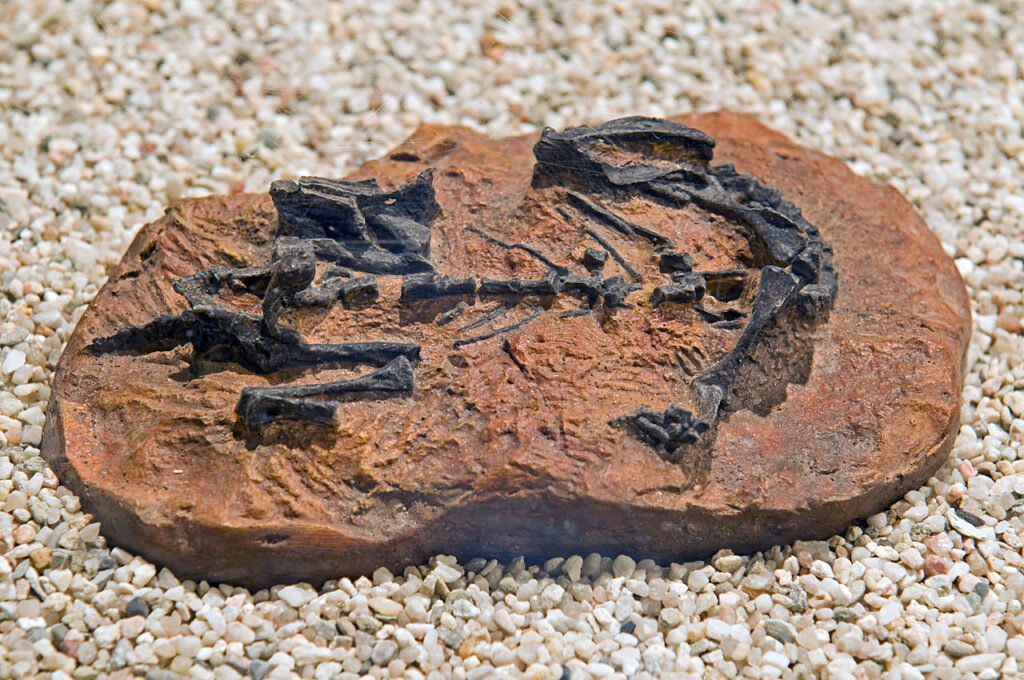
Imagine stumbling upon an ancient graveyard where an entire community of dinosaurs – eggs, babies, teenagers, and adults – all died together and were preserved in extraordinary detail. That is exactly what paleontologists found in Patagonia. A vast trove of fossils unearthed in Argentina’s southern Patagonia region offers the oldest-known evidence that some dinosaurs thrived in a complex and well-organized herd structure, with adults caring for the young and sharing a communal nesting ground – the fossils include more than 100 dinosaur eggs and the bones of about 80 juveniles and adults of a Jurassic Period plant-eating species called Mussaurus patagonicus.
The researchers observed that the fossils were grouped by age – dinosaur eggs and hatchlings were found in one area, while skeletons of juveniles were grouped in a nearby location, and remains of adults were found alone or in pairs – a phenomenon called “age segregation” that the researchers believe is a strong sign of a complex, herd-like social structure, with the dinosaurs likely working as a community, laying their eggs in a common nesting ground while juveniles congregated in “schools” and adults roamed and foraged. As of 2021, Mussaurus represents the earliest unequivocal evidence of complex social behavior in dinosaurs, with these findings predating the previous records of herd-living dinosaurs by at least 40 million years. Let that sink in – communal parenting, 193 million years ago.
6. Oviraptorid Mega-Clutch Nests and Brooding Behavior
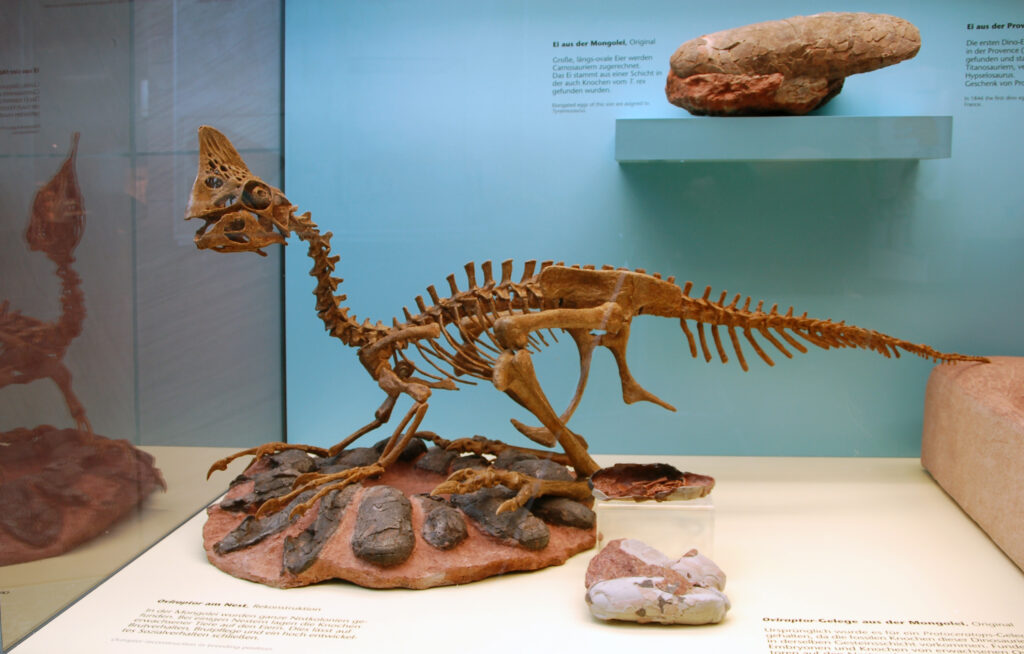
If Maiasaura is the star of parental devotion among herbivores, then the oviraptorids are the champions among meat-eaters – or what we used to think were meat-eaters. Scientists know from previous finds that oviraptorids laid two eggs at a time in a clutch of 30 or more, which means the mother would have had to stay with, or at least return to, the nest repeatedly – laying her pair of eggs, arranging them carefully in a circle and burying them appropriately, every day for two weeks to a month. That is not passive reproduction. That is active, sustained commitment.
Fossils suggest oviraptorids laid their elongated oval eggs in a near-perfect ring shape, with two or three rings stacked on top of one another, leaving a spot in the middle for them to rest their weight – with ring sizes ranging from less than 40 centimeters to well over 2 meters in diameter, such that the dinosaur’s body may still have had contact with the eggs. Several deinonychosaur and oviraptorosaur specimens have been found preserved on top of their nests, likely brooding in a bird-like manner, and the ratio between egg volume and body mass of adults among these dinosaurs suggests that the eggs were primarily brooded by the male, similar to many modern ground-dwelling birds. The parallel to modern emus and ostriches is impossible to ignore – and it is absolutely deliberate evolution at work.
7. Protoceratops Nest with 15 Juveniles – Proof of Post-Hatching Care in the Gobi Desert
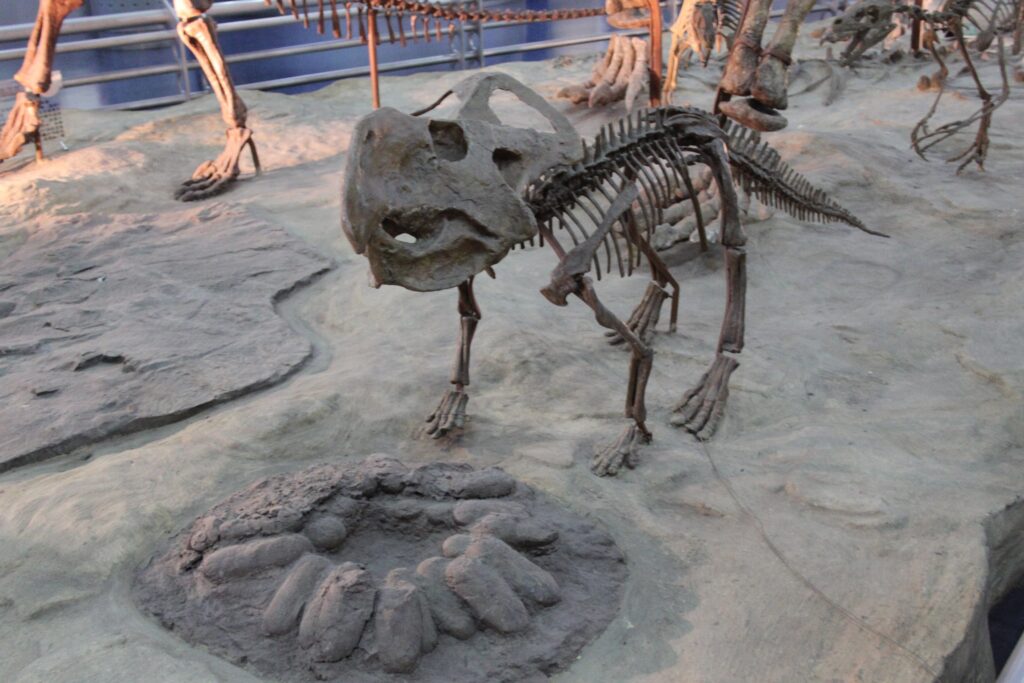
Mongolia’s Gobi Desert has given paleontology some of its greatest gifts, and this one is no exception. A nest of the dinosaur Protoceratops andrewsi – a sheep-sized plant-eater related to Triceratops – was discovered in the Gobi Desert in Mongolia, and the nest contained the remains of 15 infant dinosaurs. Fifteen youngsters in a single nest, all together, is not an accident of fossilization. That is a family snapshot.
The infants in the nest were about 4 to 6 inches long and likely no more than one year old, according to researcher David Fastovsky, a vertebrate paleontologist at the University of Rhode Island. The critical detail here is that they were all together, well past the hatching stage, suggesting they were being watched over rather than abandoned. Since Protoceratops andrewsi was a relatively primitive member of its group of dinosaurs, the ceratopsians, nesting and parental care might have been traits found within other ceratopsians as well, such as Triceratops. Think about that the next time you look at a Triceratops model – that famous horned giant may have been just as devoted a parent as the duck-billed Maiasaura.
Conclusion: Ancient Instincts, Timeless Bonds
What these seven fossils collectively reveal is something that should genuinely move us. Dinosaurs were not mindless reptilian automatons simply laying eggs and marching off into the sunset. There is growing evidence for parental care in some dinosaurs which carried over into birds, and for both groups, the behavior goes back tens, if not hundreds, of millions of years. The instinct to protect, feed, and nurture offspring is one of the oldest stories nature has ever told.
From Montana’s community nurseries to the windswept plains of Patagonia, the fossil record keeps insisting on the same remarkable truth: parenting is ancient. Parental care in dinosaurs matters in an ecological sense – it can show how behavior changes in response to climate changes and other events, and that could show us how behavior might change today and tell us if there are animals we need to be protecting right now. Dinosaurs were parents before we were mammals. They loved before we could name the feeling.
So the next time someone calls a dinosaur a “dumb lizard,” you can politely point them toward Egg Mountain, toward “Big Mama,” or toward that little Psittacosaurus family huddled together in their final moments. What would you have guessed – that creatures from 80 million years ago would teach us something profound about the enduring power of parental love? Tell us your thoughts in the comments below.