Think you know everything about dinosaurs? Think again. These ancient creatures have been captivating our imaginations for generations, but so much of what we believe about them comes from outdated textbooks, blockbuster movies, and long-debunked theories. The truth is far stranger and more fascinating than fiction. Recent discoveries have turned decades of assumptions on their heads, revealing a prehistoric world we barely recognize anymore.
What if the most fearsome predator wasn’t actually what you thought? What if the colors we’ve imagined were completely wrong? Prepare yourself, because the dinosaurs you’re about to meet might shatter everything you learned in school.
Not All Dinosaurs Went Extinct
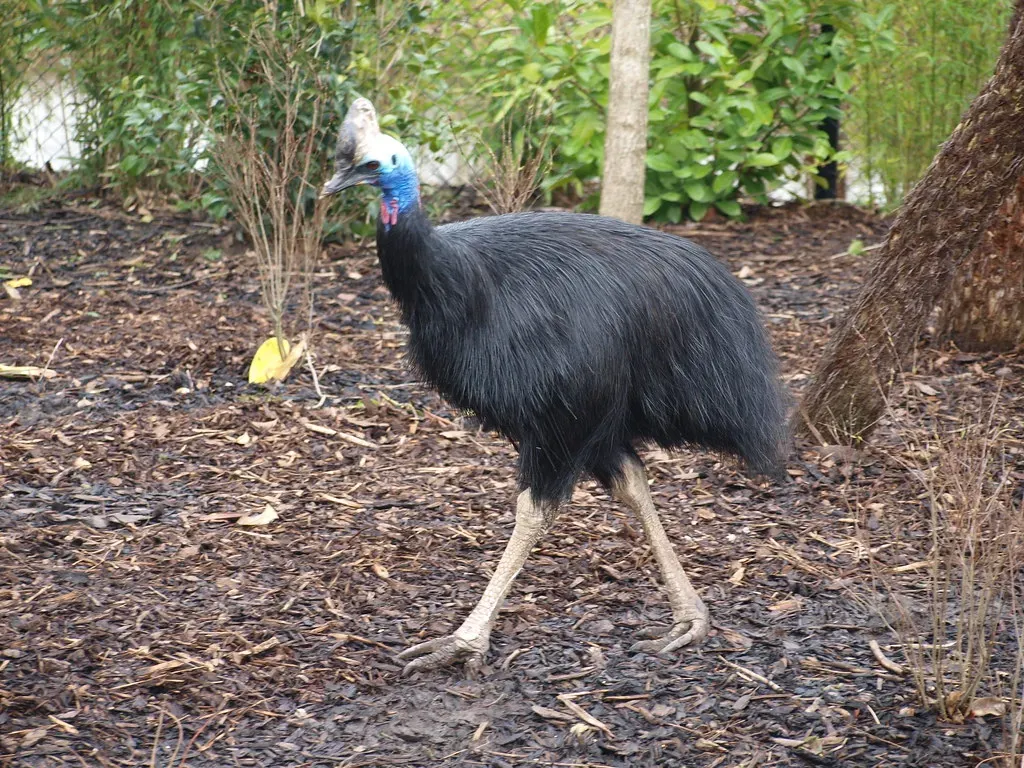
Here’s the thing that really messes with people’s heads: dinosaurs never actually disappeared. Birds are a weird type of dinosaur that developed wings and the ability to fly, making them every bit as much of a dinosaur as T. rex or Triceratops. That pigeon pecking at crumbs outside your window? It’s literally a living dinosaur. When that massive asteroid slammed into Mexico’s Yucatán Peninsula roughly sixty-six million years ago, it did wipe out most dinosaur species. Still, one entire family survived the catastrophe.
There are more species of birds alive today, at least 10,000, than any other group of land-living animals with backbones. So technically, we’re still living in the age of dinosaurs. They’re just smaller now, and they sing at dawn instead of roaring. Next time someone calls something a dinosaur as an insult for being outdated, remind them that dinosaurs are thriving all around us. They adapted, evolved, and conquered the skies while most other creatures couldn’t keep up.
T. Rex Wasn’t The Biggest Bad Guy Around
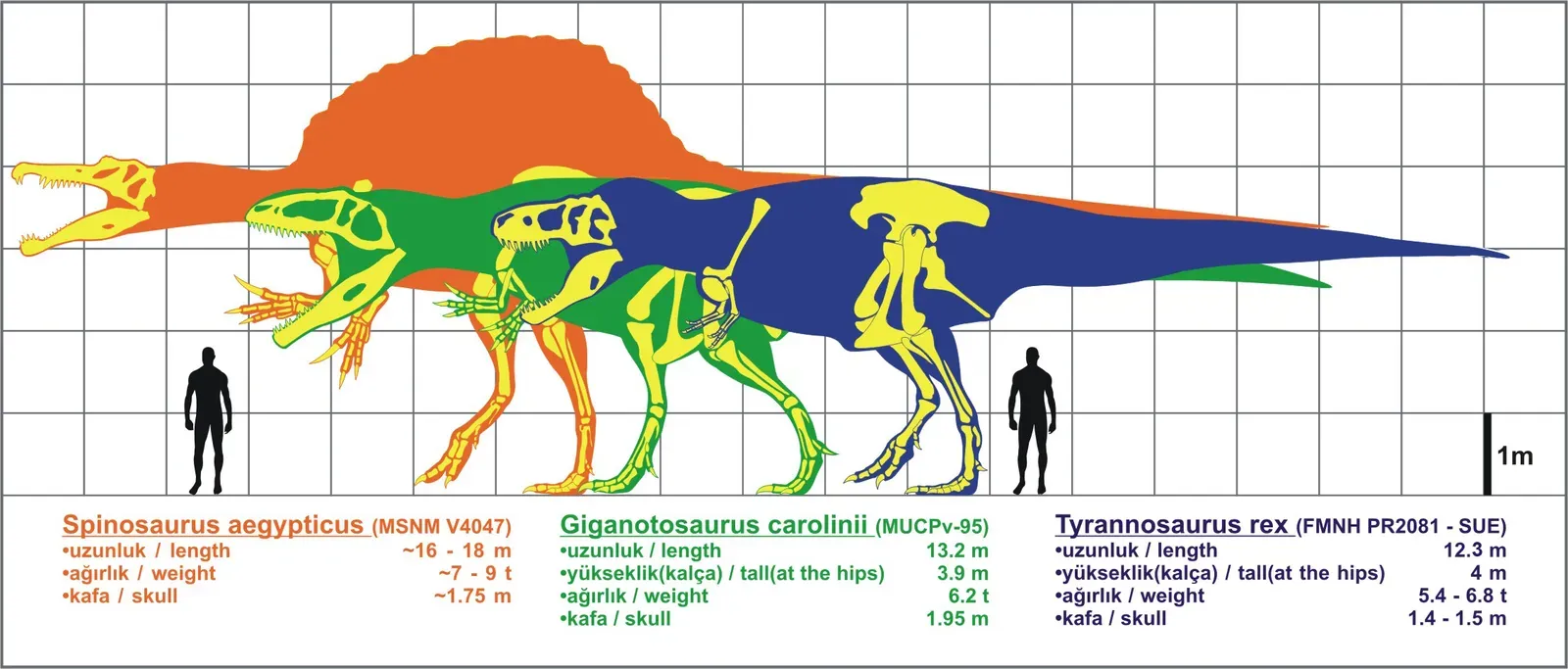
Pop culture has crowned Tyrannosaurus rex as the ultimate prehistoric predator, the undisputed heavyweight champion of the Cretaceous. Let’s be real though, that crown might not fit as snugly as we thought. Recent discoveries have shown that other large theropods, such as the Spinosaurus and Giganotosaurus, likely rivaled or even exceeded the T. Rex in terms of size. Spinosaurus, for instance, was adapted for hunting in water and could have been even longer than T. rex.
What’s even more fascinating is the recent confirmation that Nanotyrannus is different from T. rex, including fewer tail vertebrae and more teeth than T. rex, as well as longer and stronger forearms. For decades, scientists argued whether Nanotyrannus was its own species or just a teenage T. rex. Turns out, multiple tyrannosaur species actually shared the same hunting grounds. The Cretaceous ecosystem was far more complex and competitive than anyone imagined.
Dinosaurs Were Actually Colorful
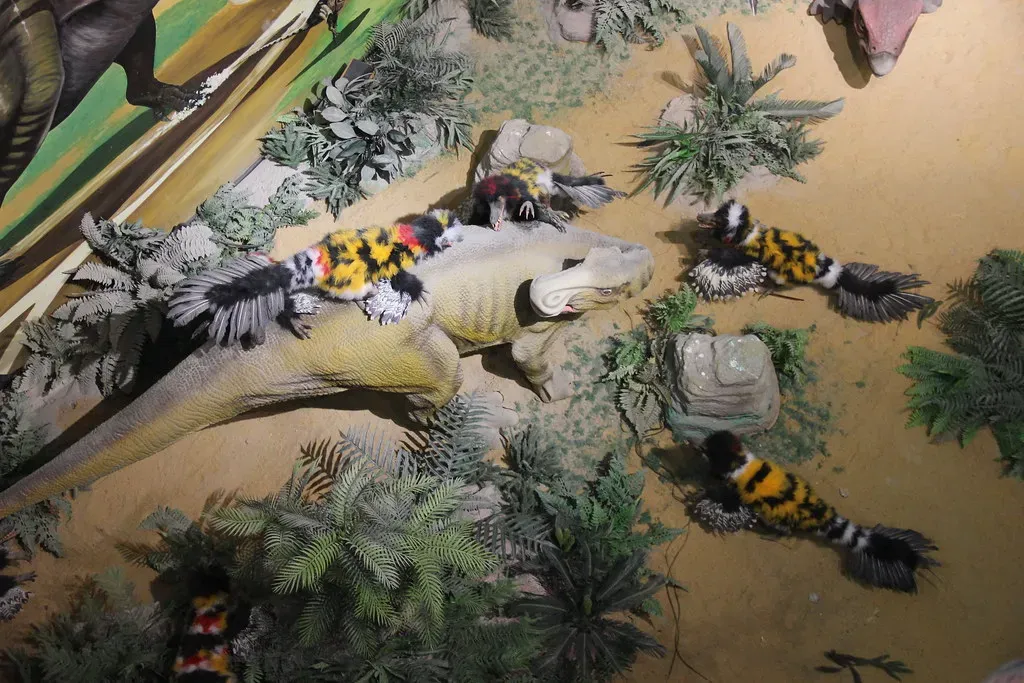
Forget those drab gray and brown depictions you’ve seen in old museum paintings. Paleontologists can tell what colors some dinosaurs were because they’ve found really well-preserved fossilized feathers containing structures called melanosomes, which held pigments, and their different shapes and arrangements indicate what colors they were. This is genuinely one of the most mind-blowing scientific breakthroughs in recent years.
A small carnivorous dinosaur in northeastern China called a Sinosauropteryx probably had a striped brown tail and a raccoon-like bandit mask. Can you imagine stumbling across that in the Cretaceous forest? Some dinosaurs even had iridescent feathers that shimmered like a hummingbird’s throat. These weren’t just random color patterns either. Bright hues likely helped attract mates, while stripes and spots provided camouflage from predators and prey. The Mesozoic world was probably as vibrant and gaudy as a tropical rainforest today.
Many Dinosaurs Had Feathers, Not Scales
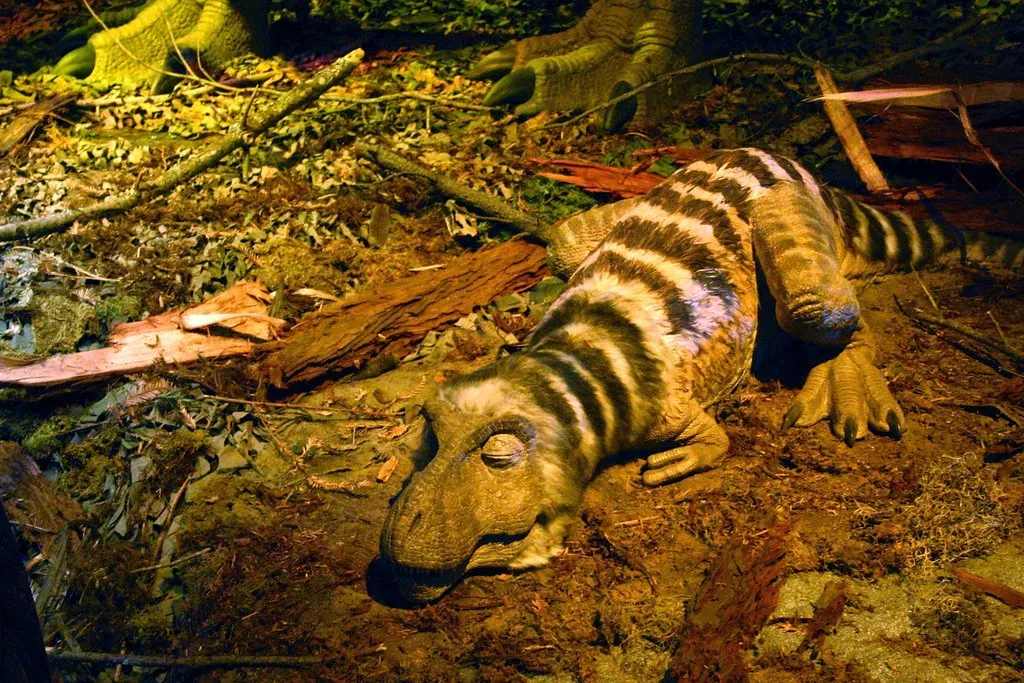
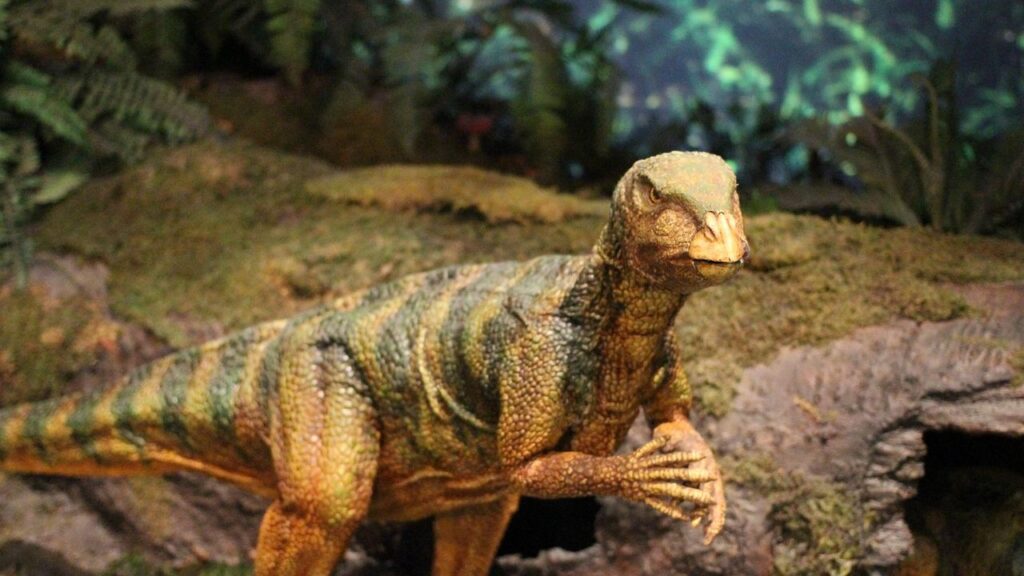
This fact still throws people for a loop. In 1997 a small carnivorous dinosaur named Sinosauropteryx was found to be covered not with scales, but a soft, fuzzy down, and since then, feathers have been discovered on plant-eating ornithopods, fanged heterodontosaurs, and many families of carnivorous dinosaurs including Tyrannosauridae. Yes, you read that correctly. T. rex was probably covered in feathers, not the scaly skin we’ve seen in countless movies.
These weren’t flight feathers necessarily. Many feathered dinosaurs were completely flightless and used their plumage for insulation, protection from harsh weather, and visual displays to impress potential mates. Paleontologists have discovered species after species of extinct dinosaurs that were also covered in feathers, which were flightless theropods that may have used their feathery body coverings for insulation, protection from the elements and as displays for potential mates. Picture a massive, fluffy T. rex stalking through a forest, feathers rippling as it moves. That image is far more accurate than the leathery monster from Jurassic Park.
Dinosaurs Lived Alongside Mammals for Millions of Years
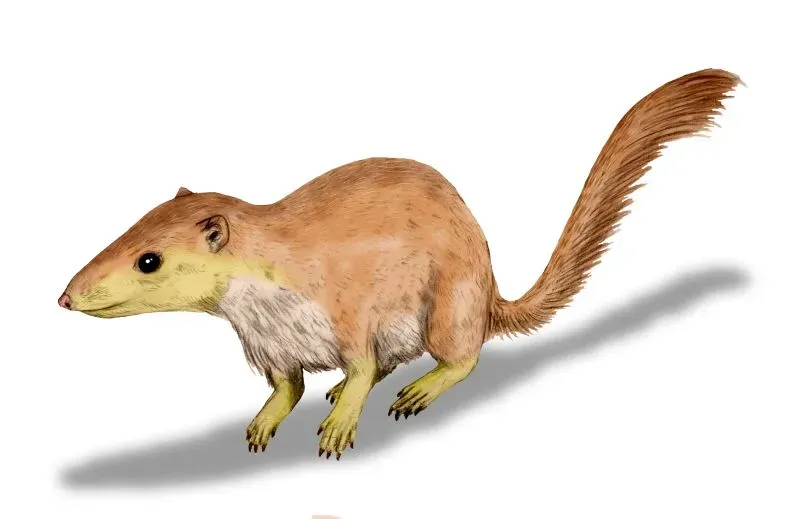
The popular narrative goes like this: first dinosaurs ruled, then they died out, and finally mammals took over. Completely wrong. Mammals and dinosaurs appeared at the same time about 216 million years ago, and for 150 million years, they evolved side-by-side, but mammals hid in the underbrush and came out at night, never getting larger than the size of an opossum. Small, furry mammals scurried beneath the feet of giants for an incredibly long time.
They weren’t competing for the same ecological niches. Dinosaurs dominated during the day, while mammals carved out a nocturnal existence in the shadows. Most were shrew-sized, keeping their heads down and staying out of trouble. Only after the mass extinction event sixty-six million years ago did mammals finally get their chance to shine and diversify into everything from tiny bats to enormous whales. Those millions of years spent hiding in the underbrush taught mammals survival skills that eventually paid off big time.
Most Dinosaurs Were Actually Small
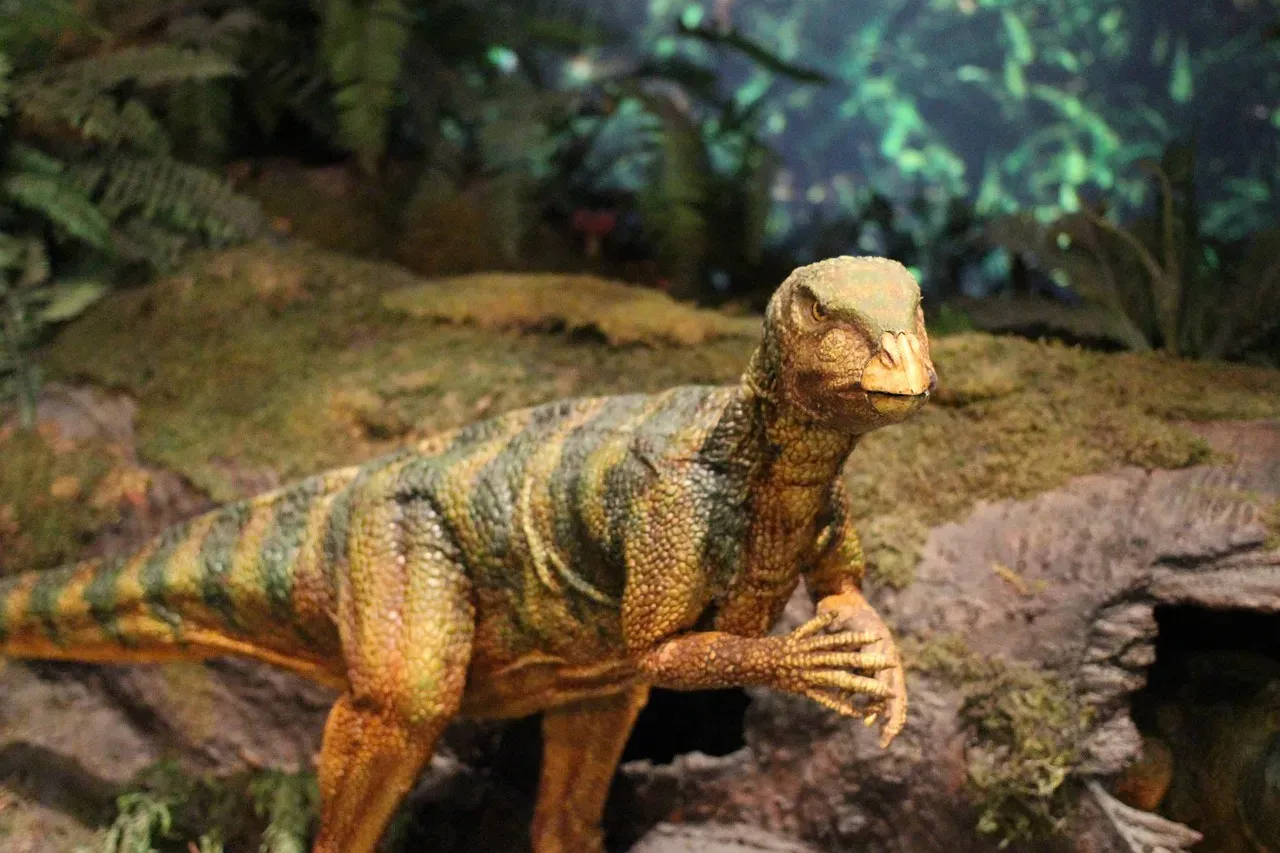
Sure, the giants grab all the headlines. Who doesn’t love a good sauropod stretching its neck up to munch on treetops? Recent years have seen an explosion in the number of small species discovered, such as the cat-sized raptor Hesperonychus, the rabbit-sized plant-eater Tianyulong, and the quail-sized insect-eater Parvicursor. These little guys were probably far more common than their towering cousins, but tiny bones don’t fossilize as easily as massive skeletons.
Even the infamous Velociraptor, terrifyingly enlarged in Jurassic Park, was actually about the size of a golden retriever in real life. Many newly discovered species challenge our notion of what a dinosaur should look like. Some were no bigger than chickens. The smaller species were likely more numerous and played crucial roles in their ecosystems, hunting insects, spreading seeds, and keeping various populations in check. They just don’t make for blockbuster movie monsters, so they get overlooked.
Dinosaur Discoveries Are Accelerating Rapidly
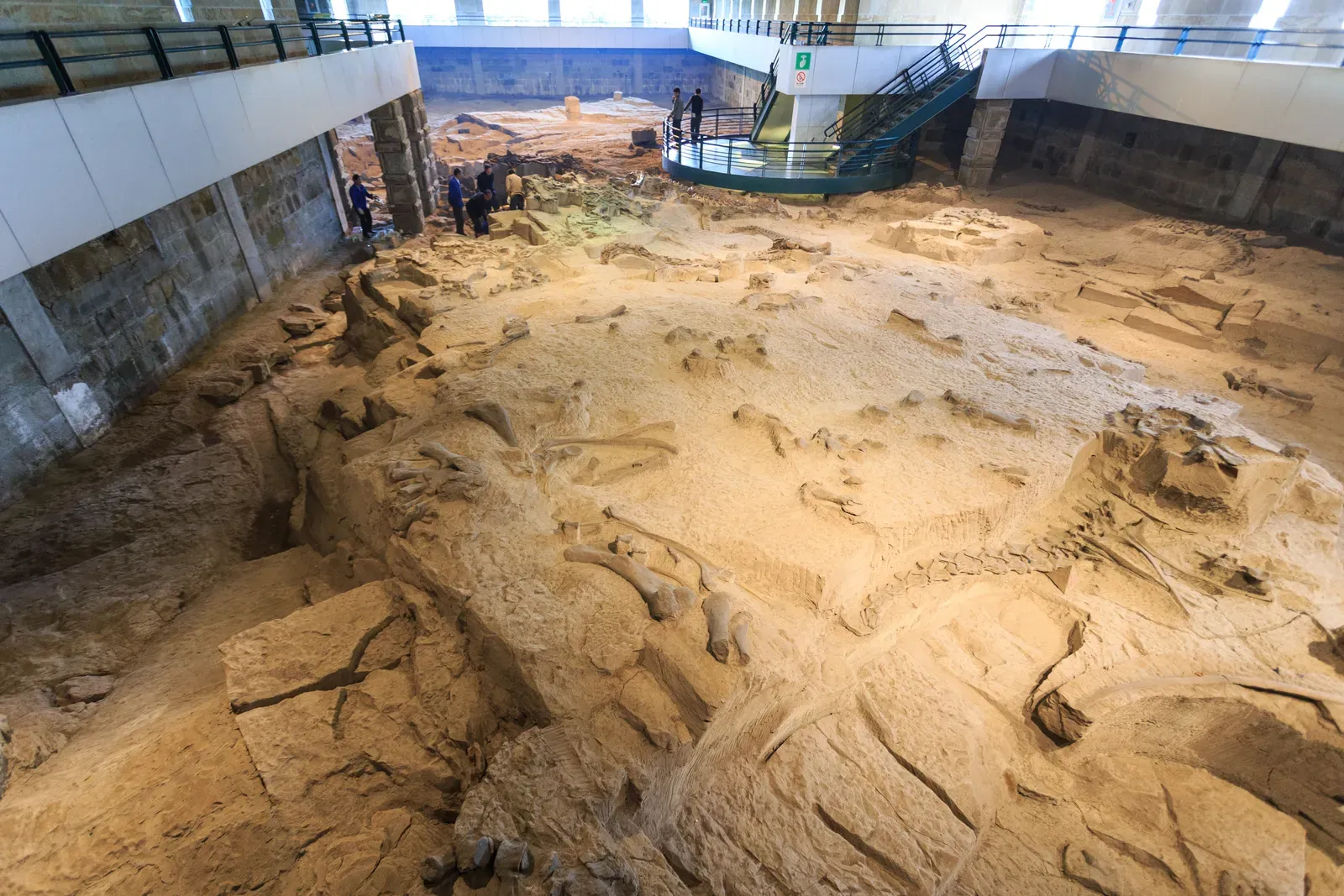
You might think we’ve already found most of the dinosaurs that ever existed. Not even close. The year 2025 has so far seen the discovery of 44 new dinosaur species, nearly one a week. Paleontologists around the world are digging up new fossils at an astonishing pace, with roughly one new species identified every week on average. Technology has revolutionized the field, allowing scientists to examine fossils in ways previous generations could only dream of.
Researchers have found that fossilized dinosaur eggshells contain a natural clock that can reveal when dinosaurs lived. Advanced imaging techniques can now detect preserved soft tissues, melanosomes, and even metabolic molecules inside bones millions of years old. Countries that never had major paleontology programs are now training their own scientists, uncovering incredible fossils in places barely explored before. We’re living through a golden age of dinosaur discovery, and the next jaw-dropping find could happen tomorrow. What we know about dinosaurs today will likely seem primitive compared to what we’ll understand a decade from now.
Conclusion
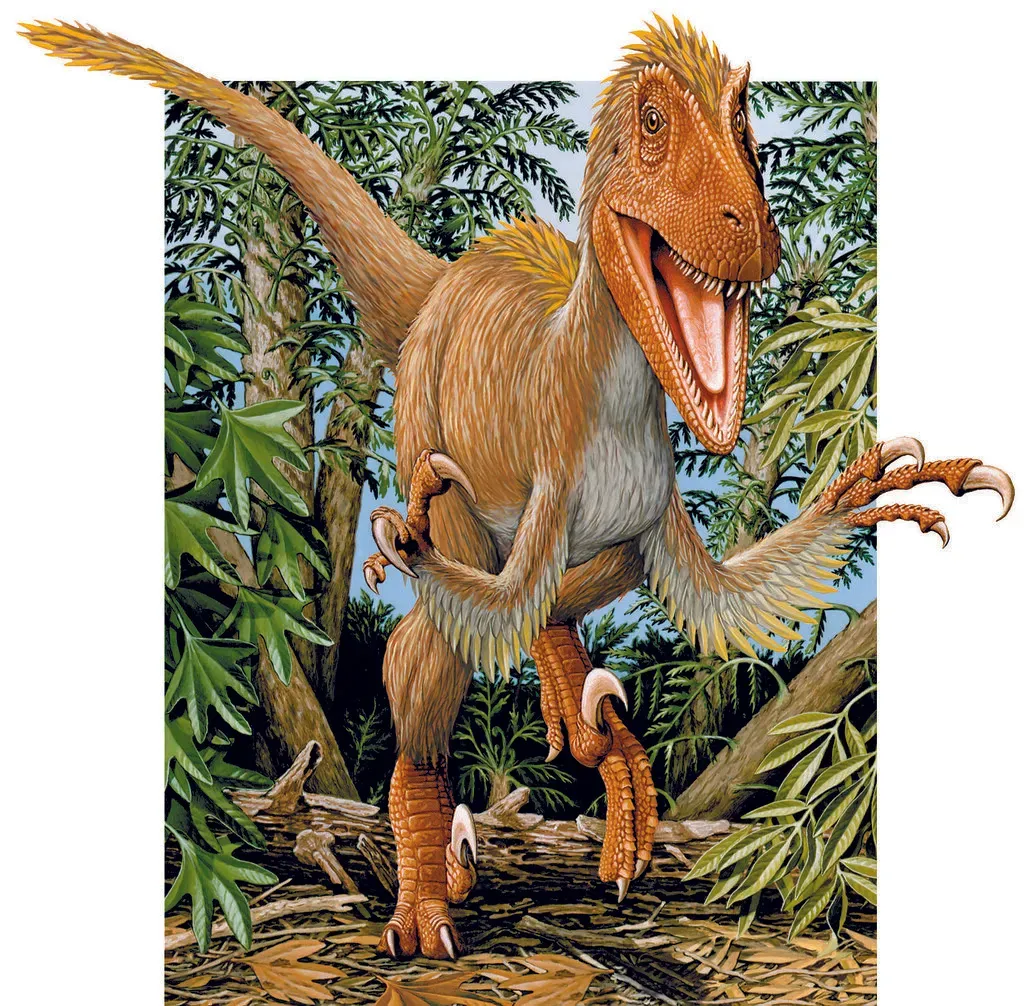
The dinosaurs we thought we knew have been replaced by creatures far more complex, colorful, and fascinating than we ever imagined. From feathered T. rexes to tiny cat-sized predators, from vibrant color patterns to the realization that birds are living dinosaurs, nearly everything has changed. Science keeps pushing forward, rewriting the story with every fossil unearthed and every new discovery analyzed.
These ancient animals weren’t the slow, dull, scaly monsters of old movies and dusty textbooks. They were dynamic, diverse, and often downright bizarre creatures that dominated Earth for over 150 million years. What do you think about these revelations? Did any of these facts completely surprise you?